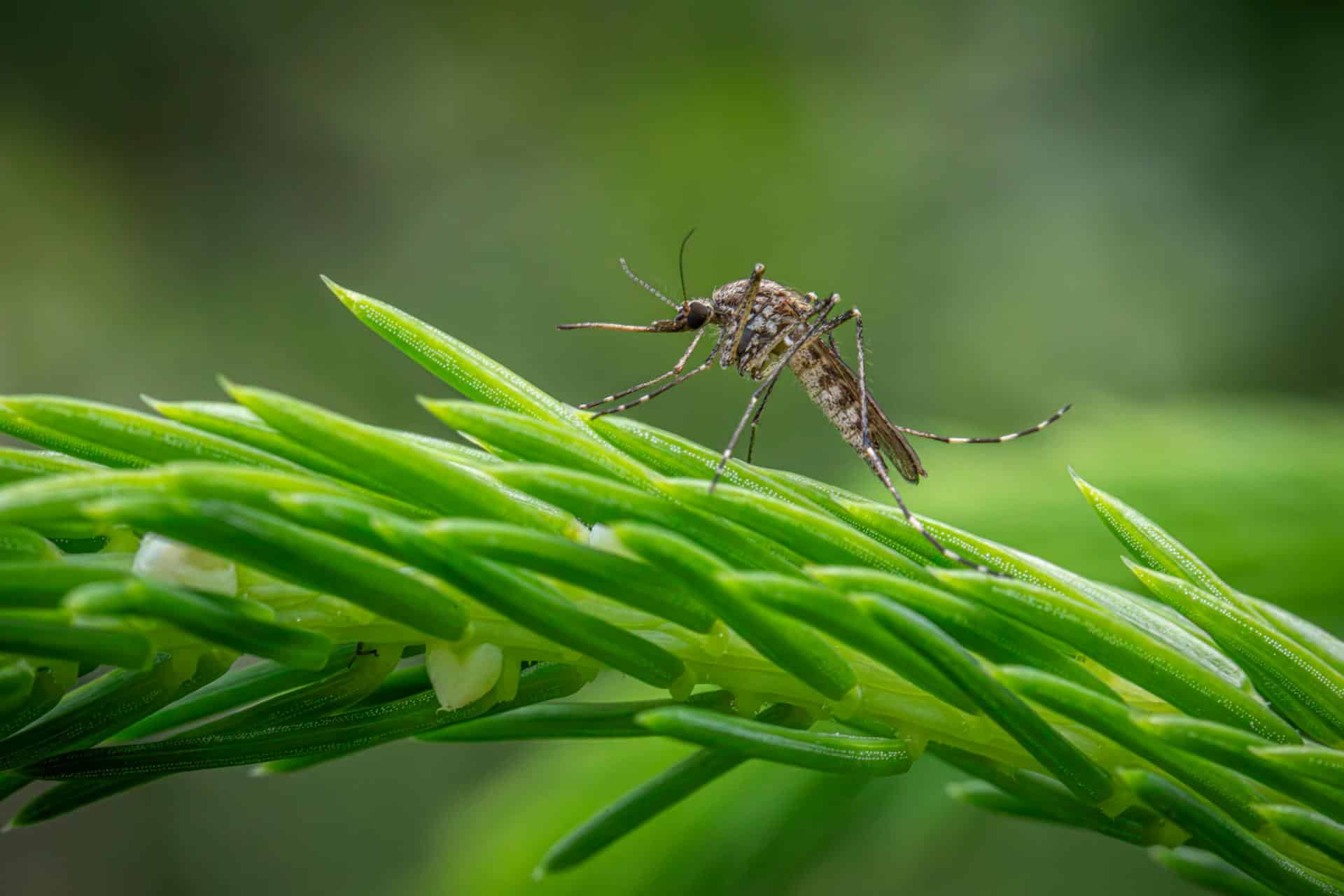
You know that moment when you reach for your favorite cereal or open a bag of flour, only to spot tiny brown specks moving around?
Those are the uninvited guests we call little brown pantry bugs, and they have a knack for making themselves at home in all your dry goods.
These sneaky insects love cozy spots filled with grains, cereals, nuts, pasta, and even pet food.
While they won’t harm you or your family directly, they can quickly turn your pantry staples into their personal buffet.
Understanding what draws them in and how they operate makes getting rid of them and keeping them away totally manageable.
What Do Little Brown Pantry Bugs Look Like?
Spotting these pantry invaders starts with knowing what to look for.
Most little brown pantry bugs are incredibly small, ranging from just 1 to 10 millimeters long, with brown or tan coloring that helps them blend right into your dried goods.
Some are fliers, like Indian meal moths with their distinctive wings, while others are crawlers, such as beetles and weevils that scuttle around your shelves.
Key identification clues:
- Body shape (round, elongated, or beetle-like)
- Movement patterns (flying vs. crawling)
- Presence or absence of wings
- Size relative to a grain of rice
Common Types of Little Brown Pantry Bugs
When it comes to pantry pests, not all little brown bugs are created equal. Knowing which type has invaded your space helps you tackle the problem more effectively and prevent future infestations.
1. Grain & Rice Weevils
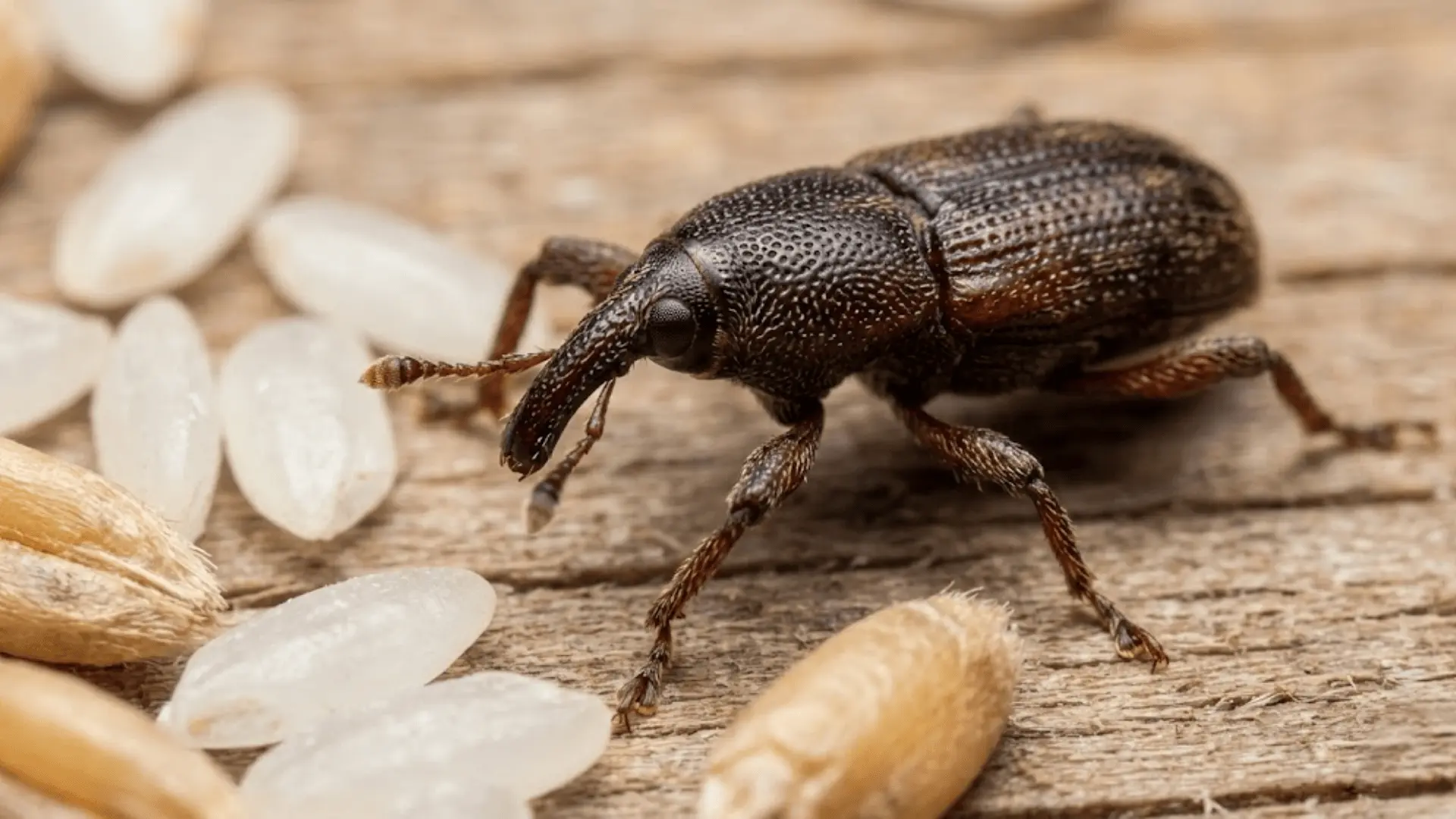
Size: 2 to 4 millimeters long
These small dark-brown beetles are easy to spot thanks to their distinctive elongated snouts that look almost trunk-like. You’ll typically find them burrowing into rice, grains, and beans, where they lay their eggs.
The tricky part? Their larvae actually hatch and develop inside the food kernels themselves, making infestations harder to detect until they’re already established.
2. Flour Beetles & Grain Beetles
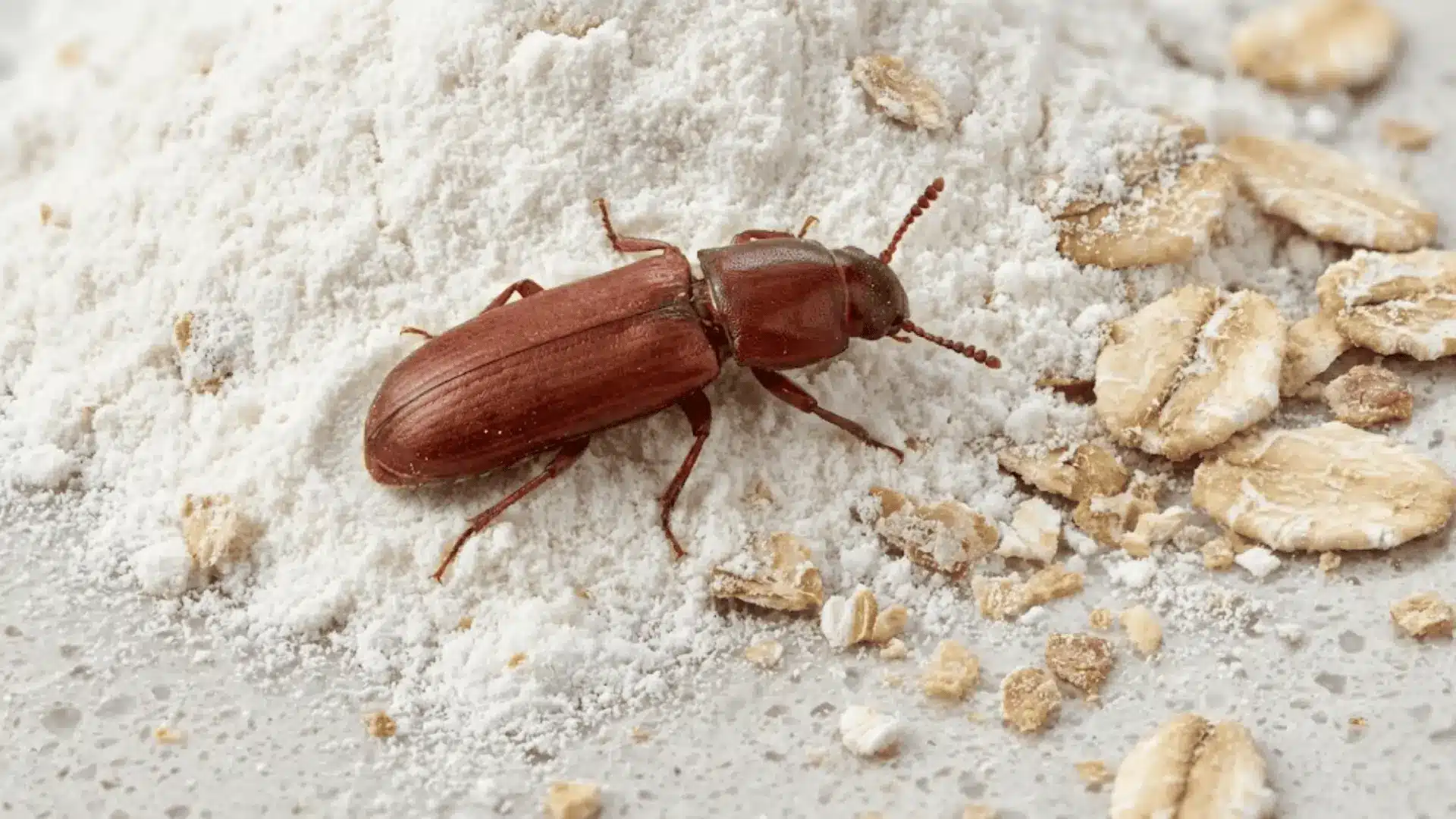
Size: 3 to 4 millimeters long
Tiny, reddish-brown, and elongated, these beetles have a talent for infiltrating just about every dry good in your pantry.
They’re particularly fond of flour, cereal, pasta, and anything with a fine, powdery texture. Their flat bodies let them squeeze into packaging easily, and they reproduce quickly once they’ve settled in.
3. Cigarette Beetles & Drugstore Beetles
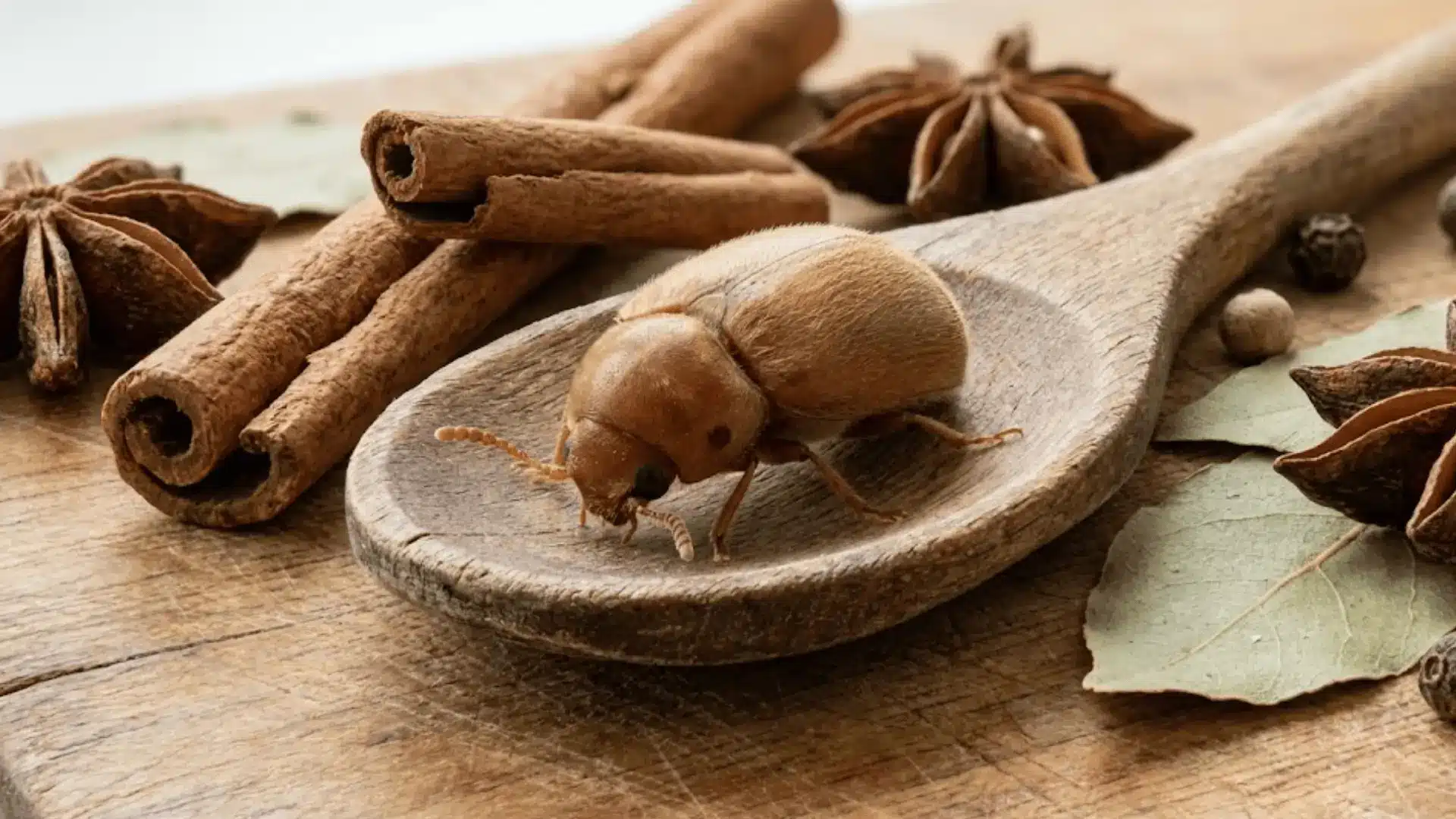
Size: 2 to 3 millimeters long
Light brown and oval-shaped, these little beetles are less picky eaters than their cousins. They’ll happily chew through spices, dried herbs, pet food, and even non-food items like books or dried flowers.
Their rounded bodies and ability to bore through packaging make them particularly persistent pests.
4. Indian Meal Moths
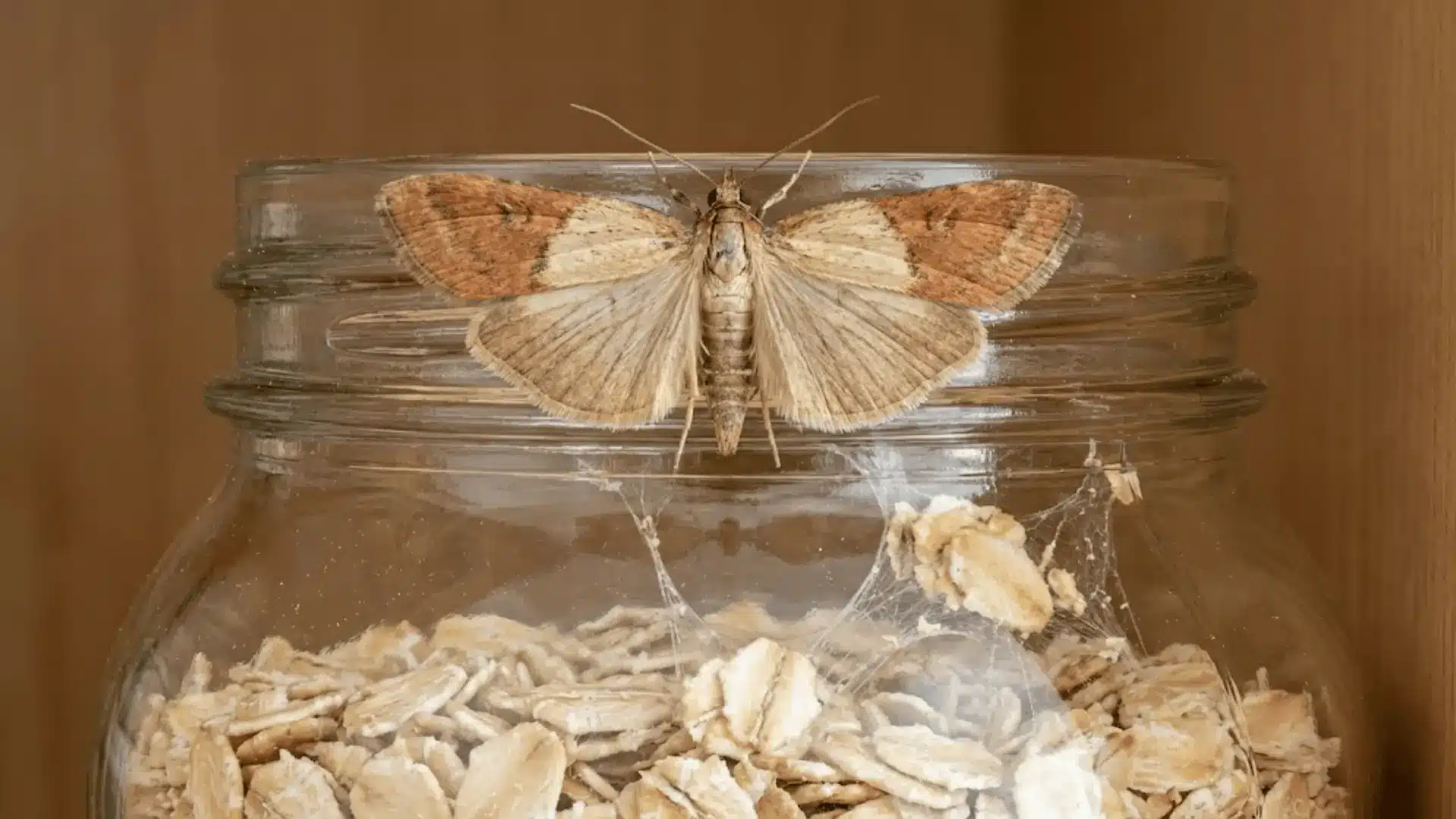
Size: 8 to 10 millimeters long (wingspan)
Unlike the beetles, these are brownish moths with tan or greyish wings that you might spot fluttering around your kitchen.
Their larvae are the real troublemakers, leaving behind silky webbing in contaminated food like cereal, nuts, dried fruit, and pet food. If you see webs in your pantry items, these moths are likely the culprits.
Signs You Have a Pantry Bug Infestation
If you’re wondering whether those few bugs you spotted are just a fluke or a full-blown problem, watch for these telltale signs.
Pantry pests leave behind clues that make their presence hard to ignore once you know what to look for.
| Sign | Where to Look | What It Indicates |
|---|---|---|
| Flying moths or crawling beetles | Cupboards, shelves, around food containers | Active breeding population established |
| Webbing in packages | Cereal, flour, grains, nuts | Indian meal moth larvae feeding |
| Tiny holes in the packaging | Bags, boxes, plastic containers | Beetles boring through or hatching inside |
| Fine powder or larvae | Flour, rice, pasta, spices | Direct feeding and reproduction in food |
How to Get Rid of Little Brown Pantry Bugs?
Spotting pantry bugs can feel overwhelming, but tackling them doesn’t have to be complicated. Follow these straightforward steps to clear out the infestation and reclaim your kitchen space.
Remove & Deep Clean Your Pantry
Start by pulling everything out of your pantry and inspecting each item carefully. Toss any compromised foods into sealed plastic bags before throwing them away to prevent bugs from escaping.
Empty all shelves completely, then vacuum every crack, crevice, and corner where eggs might be hiding. Finish by washing all surfaces with warm, soapy water or a vinegar solution to eliminate any remaining traces.
While you’re at it, keep an eye out for tiny brown household bugs that might have wandered in from other areas of your home.
Natural Solutions & Prevention Tools
Once your pantry is clean, keep bugs away using gentle, food-safe methods that actually work without harsh chemicals.
- Place bay leaves, whole cloves, or cinnamon sticks on shelves to deter bugs.
- Use essential oils like peppermint or eucalyptus on cotton balls in corners.
- Freeze susceptible foods for 3 to 4 days to kill hidden eggs and larvae.
- Set up pheromone traps to monitor and reduce moth populations.
- Sprinkle food-grade diatomaceous earth in cracks and shelf edges, the same way you might handle pseudoscorpions in homes that hide in similar spaces.
Skip household insecticides near food; they can’t reach bugs sealed inside packages and risk contaminating what you eat.
How to Prevent Future Pantry Bug Infestations?
Getting rid of pantry bugs is only half the battle. The real win comes from making sure they never return, and that means creating an environment where these pests simply can’t thrive.
- Transfer dry goods into airtight containers made of glass, metal, or heavy-duty plastic to block access and keep bugs out.
- Store vulnerable items like flour, nuts, and grains in the fridge or freezer for added protection against eggs hatching.
- Rotate your pantry stock using the first-in, first-out method so older items get used before they sit too long and attract pests.
- Deep clean your pantry shelves at least twice a year, vacuuming corners and wiping surfaces to catch any hidden eggs or crumbs.
- Seal cracks and gaps around cabinetry and baseboards to eliminate entry points where bugs might sneak in from outside.
These simple habits create a fortress around your food, keeping your pantry fresh and pest-free for the long haul.
The Bottom Line
Dealing with little brown pantry bugs might feel like a hassle at first, but once you understand their habits and take action, you’re back in control of your kitchen.
A clean pantry, proper storage, and a few natural deterrents go a long way in keeping these pests from making a comeback.
Your dry goods deserve better than uninvited guests, and now you’ve got everything you need to protect them.
Have questions or tips that worked for you? Drop a comment below and share your experience with fellow readers tackling the same challenge.