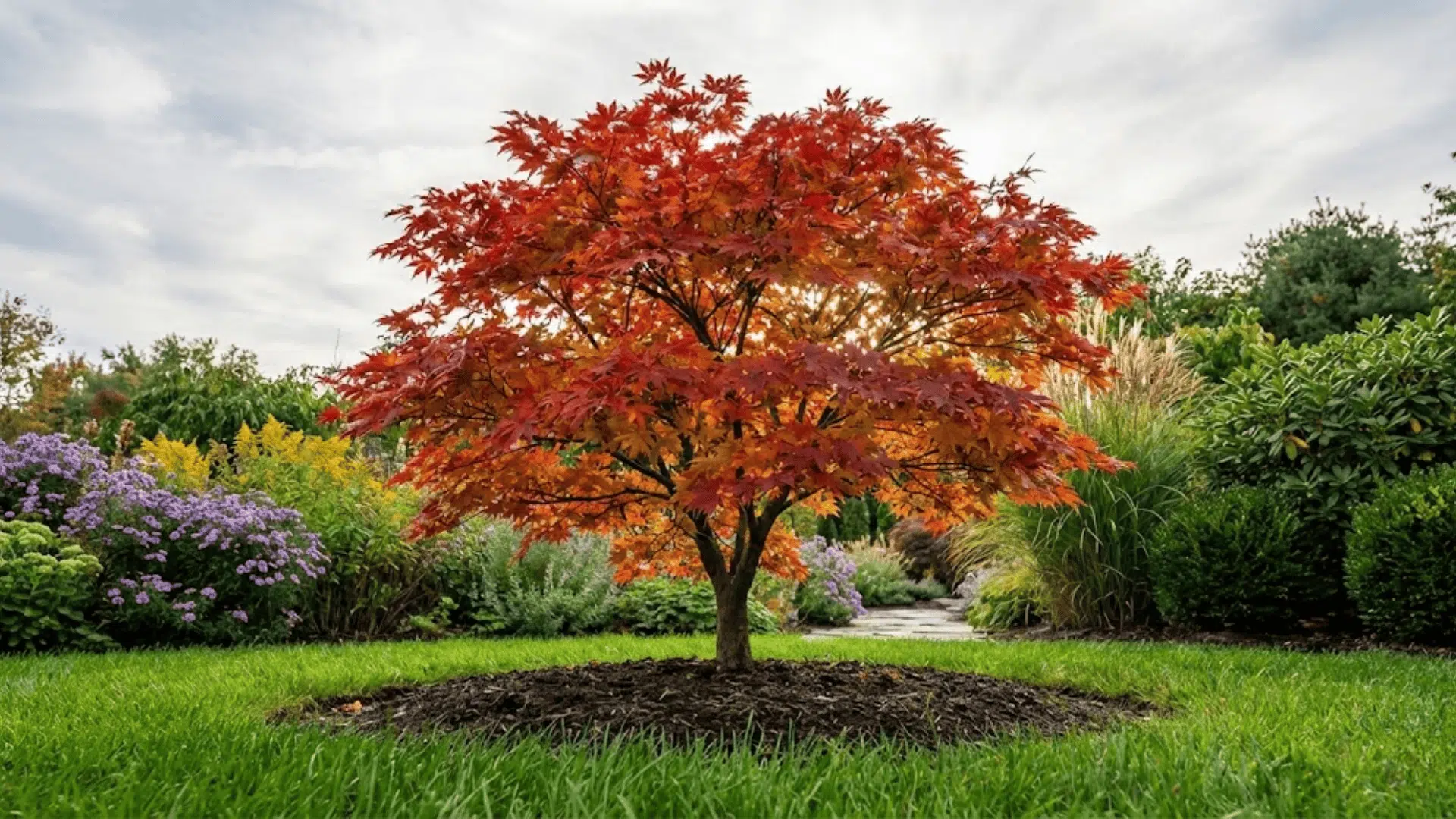
Japanese maples have earned their place as garden favorites for good reason. Their distinctive foliage and graceful branching create visual interest that evolves through every season.
We’ll walk you through everything you need to know about Japanese maple care, covering essentials for newcomers and deeper insights for seasoned gardeners looking to refine their approach.
The truth is, many common problems with these trees stem from a handful of preventable mistakes.
Once you understand what Japanese maples actually need, rather than what we assume they need, keeping them healthy becomes surprisingly straightforward.
You’ll learn to read your tree’s signals and respond with confidence, ensuring it becomes that signature piece your landscape has been missing.
Understanding Japanese Maple Trees
Japanese maples belong to the Acer palmatum family, though you’ll also find related species like Acer japonicum in garden centers.
These deciduous trees grow slowly, reaching 15 to 25 feet, though many cultivars remain smaller. Their layered branching pattern and palmate leaves make them standout ornamental choices as focal points or understory plants.
When choosing a variety, you’ll encounter two main growth habits: upright types that develop a classic tree shape, and weeping forms that cascade downward. Leaf colors range widely across cultivars.
| Leaf Color | Popular Varieties | Why Gardeners Choose Them |
|---|---|---|
| Red/Purple | ‘Bloodgood’, ‘Emperor I’ | Hold their color through summer heat, deliver reliable fall intensity |
| Green | ‘Sango-kaku’, ‘Viridis’ | Brighten shaded spots, offer coral bark that pops in winter |
| Variegated | ‘Butterfly’, ‘Beni-schichihenge’ | Add layered interest in containers without taking over small spaces |
Dwarf and compact varieties like ‘Shaina’ or ‘Crimson Queen’ work perfectly for containers and tight garden spaces.
Where to Plant a Japanese Maple?
Location makes all the difference when it comes to Japanese maple success.
Getting the climate, light, and soil conditions right from the start saves you from battling uphill against your tree’s basic needs.
Ideal Climate and USDA Hardiness Zones
Japanese maples perform best in USDA Hardiness Zones 5 through 8, though some cultivars push those boundaries.
Understanding your zone helps choose varieties that thrive, not just survive.
| Zone Range | Temperature Tolerance | Considerations |
|---|---|---|
| Zones 5-6 | Cold hardy to -20°F | Choose proven cultivars like ‘Bloodgood’, and protect from late spring frosts |
| Zones 7-8 | Ideal range, mild winters | Widest variety selection, watch for adequate winter chill hours |
| Zones 9+ | Heat stress likely | Requires afternoon shade, consistent moisture, and select heat-tolerant varieties |
Cold snaps below -20°F can damage branches, while prolonged heat above 95°F stresses foliage. Microclimates in your yard matter too; a sheltered corner often provides an extra half-zone of protection.
Sunlight Requirements
Most Japanese maples thrive in partial shade, particularly in warmer climates where afternoon sun can scorch leaves.
In cooler regions, they handle more direct light, but even there, protection during the hottest part of the day keeps foliage looking its best.
Red and purple varieties typically need more sun to maintain their deep color, while green types tolerate shadier spots.
Too much shade causes leggy growth and muted fall color, while excessive sun leads to crispy, browned leaf edges.
Soil Requirements
Japanese maples aren’t overly fussy, but they do have clear preferences that directly impact their health.
- Well-draining soil is non-negotiable; waterlogged roots spell trouble fast.
- Slightly acidic pH between 5.5 and 6.5 keeps nutrients available and foliage vibrant.
- Rich in organic matter for moisture retention without becoming soggy.
- Avoid heavy clay unless you amend it significantly with compost and coarse sand.
If your native soil is dense clay or pure sand, work in several inches of compost before planting. A raised bed or mounded planting area solves drainage issues without extensive soil replacement.
Test your pH with an inexpensive kit; sulfur lowers it if needed, while lime raises it, though most soils in maple-friendly zones lean naturally acidic.
How to Plant a Japanese Maple Tree?
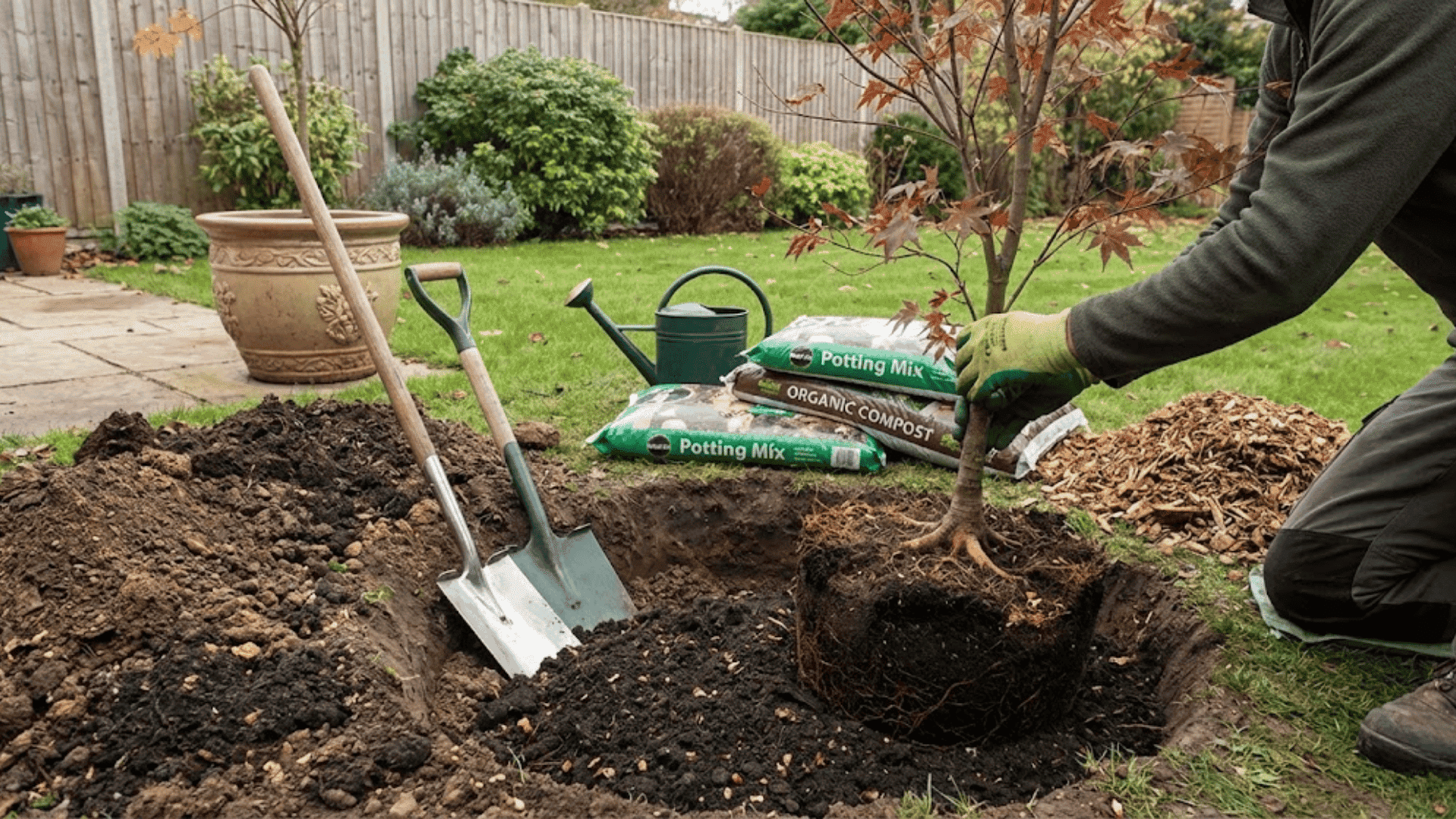
Planting sets the foundation for everything that follows. Take your time with this step, and your tree will reward you with decades of beauty.
When to Plant Japanese Maple?
Fall planting gives Japanese maples the best start, allowing roots to establish before summer heat arrives.
Spring works too, particularly in colder zones where fall-planted trees risk winter damage before rooting in. In mild climates (Zones 7-8), fall through early spring offers a generous planting window.
Avoid summer planting unless you’re prepared for intensive watering; transplant shock combined with heat stress makes survival much harder.
Container-grown trees have more flexibility than bare-root stock, which should only go in during dormancy.
Step-by-Step Planting Instructions
Getting the planting depth and hole preparation right prevents common issues like root rot and poor establishment.
- Step 1: Dig a hole 2 to 3 times wider than the root ball but no deeper; you want the root flare at or slightly above ground level.
- Step 2: Roughen the sides of the hole with your shovel to prevent root circling in compacted soil.
- Step 3: Remove the tree from its container and gently tease out circling roots, trimming any that are damaged or dead.
- Step 4: Set the tree in the hole, backfill with native soil mixed with compost, and water thoroughly to eliminate air pockets.
- Step 5: Apply a 2-3 inch layer of mulch around the base, keeping it several inches away from the trunk to prevent rot.
Planting Japanese Maple in Containers
Container growing opens up Japanese maples to patios, balconies, and spaces where in-ground planting isn’t possible.
- Step 1: Choose a pot at least 18-24 inches in diameter with drainage holes; dwarf varieties can start smaller, but plan to upsize every few years.
- Step 2: Use a high-quality potting mix designed for container trees, not garden soil, which compacts and drains poorly in pots.
- Step 3: Plant at the same depth as the nursery container, water deeply, and position the tree where it gets appropriate light for its variety.
Container maples need more attention than in-ground plantings. They’ll require regular watering since pots dry out faster, and you’ll need to repot or root-prune every 3-5 years to prevent them from becoming rootbound.
Watering Japanese Maple Trees
Watering needs shift dramatically based on age and season. Newly planted trees need deep watering 2-3 times weekly during their first growing season to establish roots.
Once established, they’re surprisingly drought-tolerant, typically requiring supplemental water only during dry spells lasting more than a week.
Summer heat increases demands, while spring and fall reduce them.
Signs of Overwatering
Too much water suffocates roots and creates the perfect environment for fungal problems. Watch for these warning signs that you’re being too generous with the hose.
- Leaves turn yellow and drop, even though the soil feels constantly wet
- Soft, mushy spots appear on the trunk near the soil line
- Fungal growth or a sour smell develops around the base
- New growth looks weak and pale despite regular watering
Signs of Underwatering
Japanese maples tell you pretty clearly when they’re thirsty, though by the time symptoms show, stress has already set in.
- Leaf edges turn brown and crispy, starting at the tips and working inward
- Foliage wilts during the day but doesn’t perk up overnight
- Leaves curl inward or drop prematurely, especially during hot afternoons
- Growth slows noticeably, and new leaves emerge smaller than usual
Adjust your watering schedule based on what your tree shows you. Check soil moisture 2-3 inches deep, not on a fixed schedule. During heat waves, even established trees benefit from a deep soak when the topsoil dries out.
Fertilizing Japanese Maples
Japanese maples don’t demand heavy feeding. In fact, over-fertilizing causes more problems than skipping it entirely.
Fertilize only when you notice slow growth, pale leaves, or poor color that watering adjustments don’t fix. Skip fertilizing newly planted trees for their first year; let roots establish first.
| Fertilizer Type | Application Rate | When to Apply |
|---|---|---|
| Slow-release granular (10-10-10 or similar) |
1-2 lbs per inch of trunk diameter | Early spring before bud break |
| Organic compost or aged manure | 2-3 inch layer around the drip line | Fall or early spring |
| Acid-loving plant fertilizer | Half-strength of label recommendation | Spring and midsummer |
| Liquid fish emulsion | Diluted per instructions, monthly | Growing season only |
Apply fertilizer around the drip line where feeder roots actively absorb nutrients, not against the trunk. Water thoroughly after application to move nutrients into the root zone.
Stop fertilizing by late summer so your tree can harden off properly before winter rather than pushing vulnerable new growth.
Pruning and Shaping Japanese Maple Trees
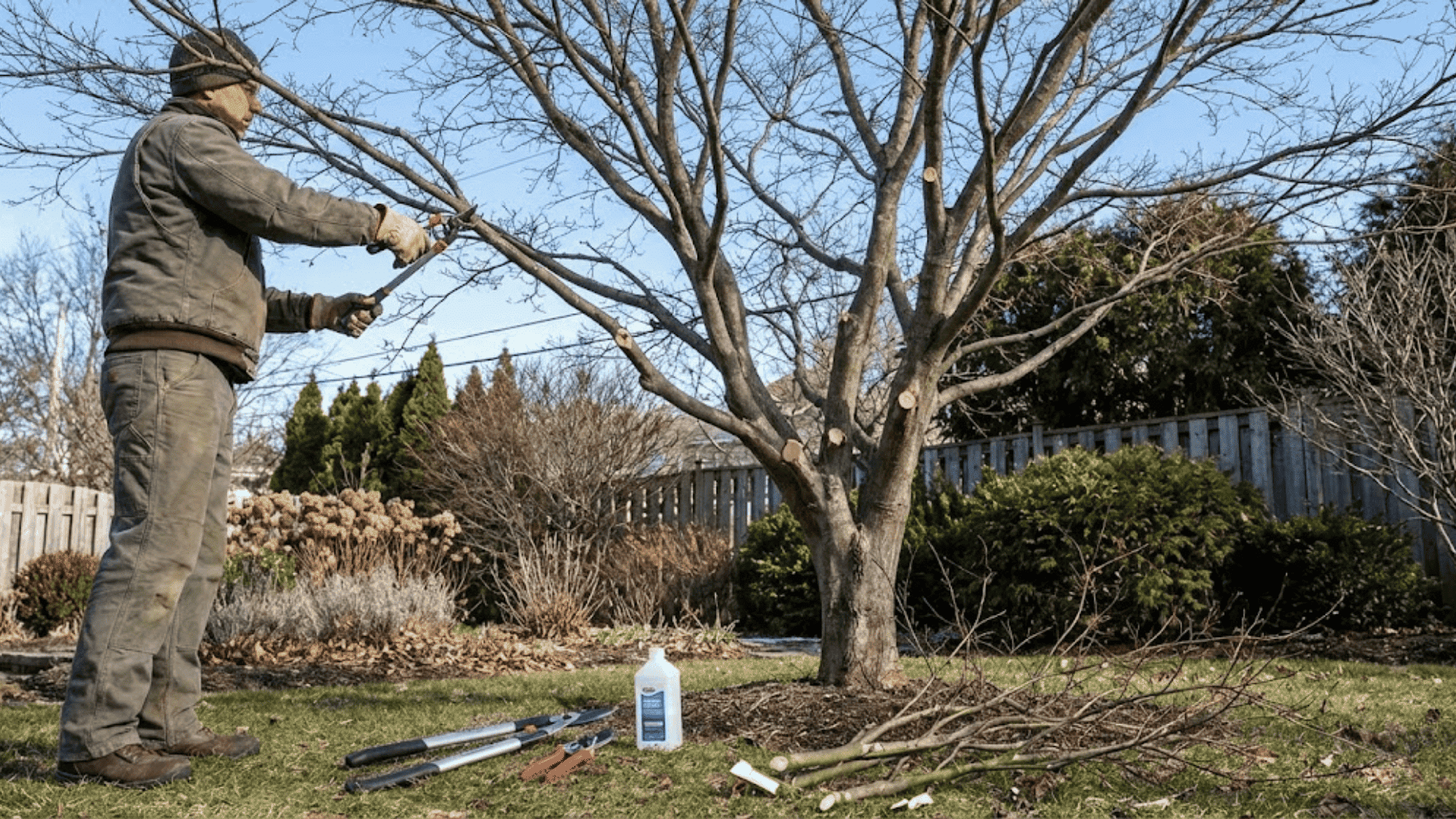
Late fall through winter offers the ideal pruning window when trees are dormant, and sap flow has stopped.
Pruning during active growth causes excessive bleeding that weakens the tree.
Avoid pruning in spring when buds are swelling; you’ll lose that pretty new growth. Summer pruning works for minor corrections, but risks stress during heat.
How to Prune Properly?
Thoughtful pruning improves your tree’s natural form rather than fighting against it. Work slowly and step back frequently to assess your progress.
- Step 1: Use sharp bypass pruners for branches under ¾ inch and a pruning saw for anything larger; clean cuts heal faster than ragged ones.
- Step 2: Start by removing any dead, diseased, or broken branches back to healthy wood or the branch collar.
- Step 3: Cut out branches that cross or rub against each other, keeping the one with better positioning and angle.
- Step 4: Thin crowded areas by removing entire branches at their base rather than shortening them, which maintains the natural growth pattern.
- Step 5: Step back between cuts to evaluate the overall shape; you’re revealing the tree’s structure, not creating a new one.
Never remove more than 20-25% of the canopy in a single season. Japanese maples respond poorly to heavy pruning, often sending up awkward water sprouts that ruin their graceful form. Make cuts just outside the branch collar where the branch meets the trunk, angling away from the remaining wood to promote proper healing.
Mulching and Root Care of Japanese Maple Trees
Mulching protects shallow Japanese maple roots from temperature swings and moisture loss while suppressing weeds that compete for nutrients.
A 2-3 inch layer of organic mulch like shredded bark, wood chips, or composted leaves works best. These materials break down slowly, improving soil structure over time.
Avoid fresh wood chips, which can temporarily tie up nitrogen as they decompose.
Keep mulch 3-4 inches away from the trunk to prevent rot and discourage rodents from nesting against the bark.
Extend mulch to the drip line where feeder roots are active. Refresh the layer annually as it decomposes, but don’t pile new mulch on top of old; remove what’s broken down first to prevent overly deep layers that suffocate roots.
Common Japanese Maple Problems
Even well-cared-for Japanese maples occasionally run into issues. Catching problems early and understanding their causes makes treatment much more effective.
Problem 1: Brown, crispy leaf edges in hot weather
Solution: Increase watering frequency during heat waves and consider adding shade cloth for afternoon protection. Mulch helps retain soil moisture and keeps roots cooler during temperature spikes.
Problem 2: Aphids on new growth
Solution: Spray them off with a strong stream of water or apply insecticidal soap for persistent problems. Ladybugs and lacewings provide natural control if you avoid broad-spectrum pesticides.
Problem 3: Scale bumps on branches and leaves
Solution: Scrape off visible scale manually or apply horticultural oil during dormancy when scale is most vulnerable. Repeat applications may be needed for complete control.
Problem 4: Yellowing and wilting from root rot
Solution: Improve drainage immediately and reduce watering frequency. Severely infected trees often can’t be saved, making prevention through proper planting and watering practices critical.
Problem 5: One-sided dieback from Verticillium wilt
Solution: No cure exists; prune out affected branches well below the infection point and sterilize tools between cuts. Plant resistant varieties in areas where Verticillium has occurred previously.
Seasonal Japanese Maple Care Guide
Japanese maples have distinct needs as seasons change. Adjusting your care routine throughout the year keeps your tree healthy and looking its best.
| Season | Key Tasks | What to Watch For |
|---|---|---|
| Spring | Hold off watering until the soil warms; fertilize only if last year’s growth was weak | Sap bleeding from cuts; aphids on soft new growth; uneven bud break |
| Summer | Water deeply but less often; mist foliage during extreme heat | Leaf edges crisping by afternoon; color fading in red varieties |
| Fall | Skip fertilizer to harden wood; delay leaf cleanup for nutrient reabsorption | Brief color display indicating stress; fungal spots in wet weather |
| Winter | Wrap young trunks against sun scald; elevate containers to prevent freeze-thaw | Southwest bark splitting; branches snapping under wet snow |
Container-grown maples need extra winter care because their roots freeze faster in pots than in the ground. Move them to an unheated garage during extreme cold or wrap containers with insulation.
In-ground trees are generally hardy once established, though young trees benefit from burlap windbreaks in harsh climates.
Tips for Keeping Japanese Maples Healthy Long-Term
Japanese maples can live for decades when given the right foundation from the start. A few smart habits prevent most problems before they begin.
- Choose the planting site carefully from day 1 because moving established maples causes severe transplant shock and years of recovery.
- Water deeply rather than frequently to train roots to grow down instead of staying shallow and vulnerable.
- Resist the urge to over-prune or over-fertilize since Japanese maples thrive on benign neglect once established.
- Monitor soil pH every few years because it drifts over time and affects nutrient availability more than fertilizer does.
Learn to read your tree’s signals through its leaves, growth rate, and seasonal performance, then adjust only what actually needs changing.
Most long-term success comes from getting the initial planting right and then stepping back to let the tree do what it does best.
The Closing Note
Your Japanese maple will reward years of proper care with stunning seasonal displays and an increasingly graceful presence in your landscape.
Remember that these trees prefer consistency over constant fussing. Master the basics of Japanese maple care like appropriate watering, smart site selection, and minimal pruning, then let your tree settle into its rhythm.
Pay attention to what it tells you through its foliage and growth patterns, adjusting only when necessary.
Have questions about your specific variety or a challenge you’re facing? Drop a comment below and let’s troubleshoot together.
Here’s to growing a healthier, more beautiful maple that becomes the signature piece your garden deserves.