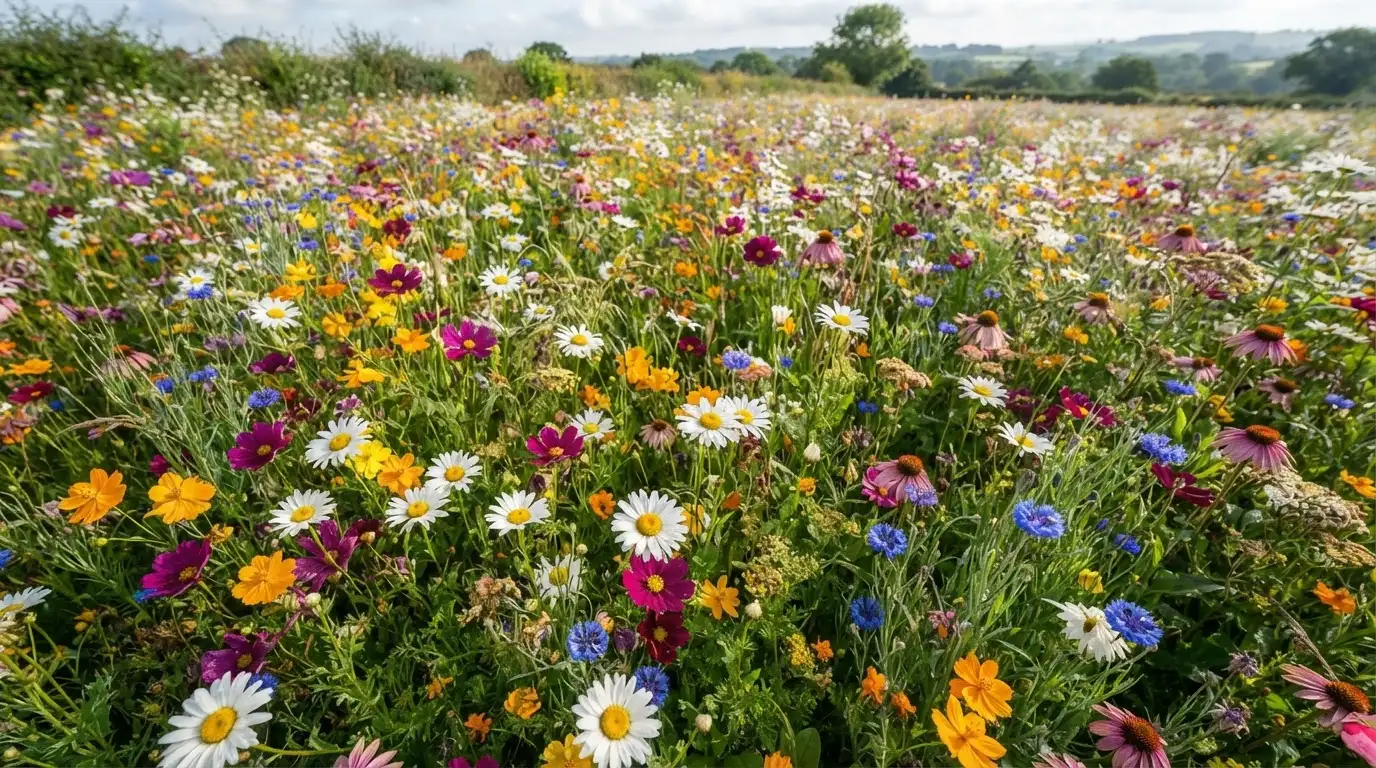
Bare patches of lawn don’t have to stay boring forever. Learning how to plant wildflower seeds turns wasted space into something buzzing with color and pollinators, without draining your weekend every single week.
Some gardeners believe planting seeds is just tossing them and walking away, often leading to disappointment.
Real results come from timing, soil prep, and a bit of patience.
Below, you’ll find how to select the right spot, prepare soil, sow seeds step by step, and ensure annual blooms.
Grab your gloves, because your yard is about to change.
When is the Best Time to Plant Wildflower Seeds?
Fall is most effective in colder areas, just before the first frost.
Seeds settle into the soil over winter and burst awake come spring.
Warmer climates? Aim for early spring instead, once the ground has thawed and is workable. Soil temperature matters more than the calendar date, so grab a thermometer if you’re unsure.
Skip the peak summer heat entirely; seeds struggle to germinate in scorching soil.
Avoid waterlogged spring mud too. Watch your local frost dates, check soil conditions, then plant with confidence.
Practical Tips from Community Members: Planting Wildflowers
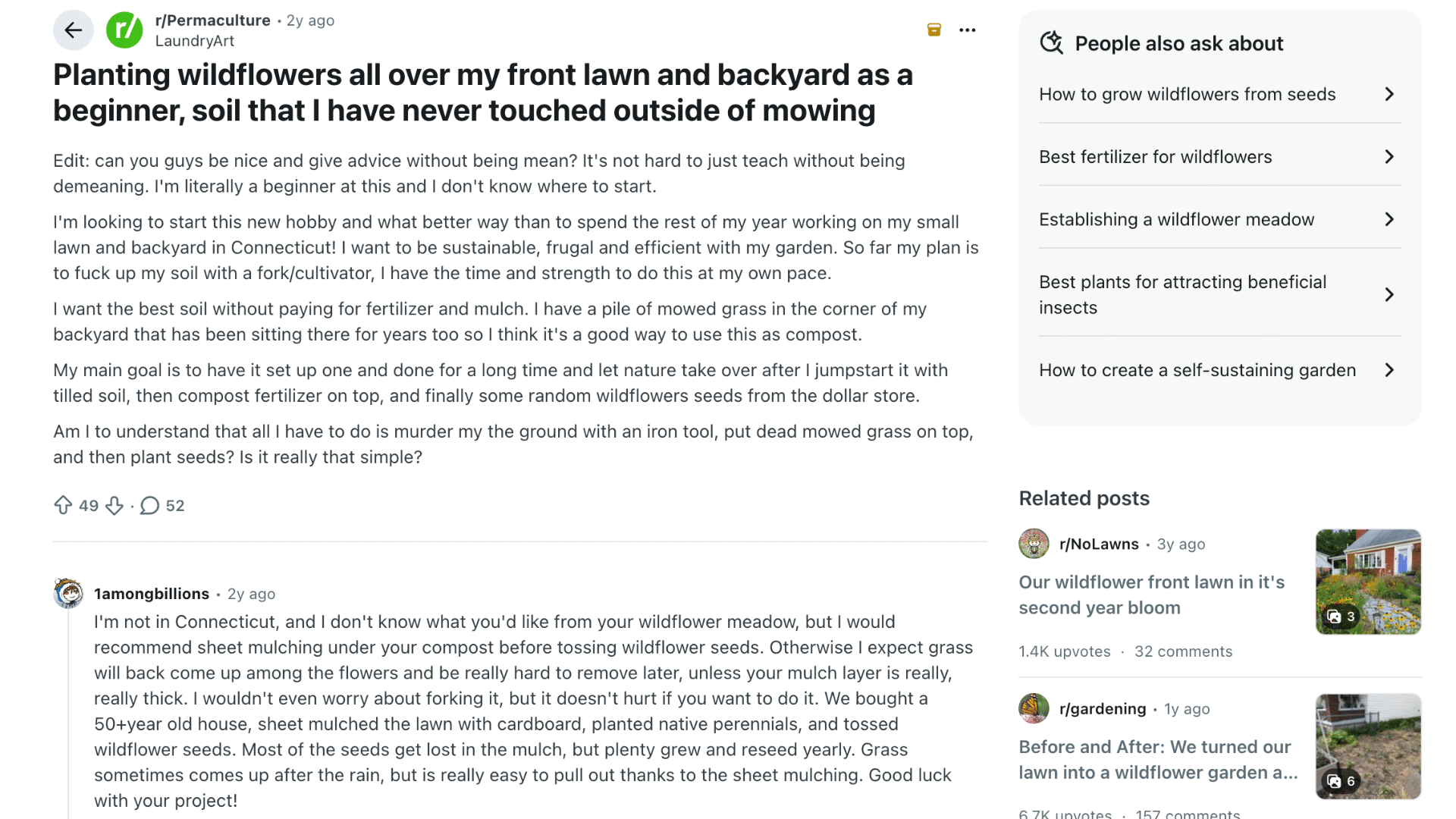
Reddit gardeners had plenty to say about this beginner’s plan.
Several warned against dollar-store seed mixes, as they often lack native species and may carry invasive plants.
Sheet mulching with cardboard or wood chips came up repeatedly as a smarter alternative to tilling.
One commenter shared a fast-growing flower in the wrong light toppled after a windstorm, letting weeds take over.
Others suggested checking soil pH first, sourcing seeds from regional native nurseries, and starting small with one species before expanding.
Community groups like Wild Ones were also mentioned as helpful local resources.
Choose Wildflower Seeds that Actually Fit Your Yard
Not all seed mixes are ideal for every yard. Choose your options based on your specific space.
| Yard Condition | Best Wildflower Choice |
|---|---|
| Full sun (6+ hours) | Black-eyed Susan, cosmos, zinnia |
| Partial shade | Columbine, foxglove, forget-me-not |
| Sandy soil | California poppy, lupine |
| Clay-heavy soil | Aster, coneflower |
| Small garden beds | Dwarf sunflower, sweet alyssum |
| Large open fields | Wild bergamot, blanket flower |
| Attracting pollinators | Milkweed, bee balm |
| Dry, drought-prone areas | Yarrow, gaillardia |
Pairing these with butterfly-friendly flower picks improves nectar access for pollinators.
Pick the Right Spot Before You Touch the Soil
Location determines everything before planting a seed.
Walk your yard and watch how light moves across it during the day. Note drainage too; puddles after rain signal trouble. Avoid spots near thirsty tree roots and windy areas, as they outcompete seedlings.
Too much can knock over tender sprouts before they root properly.
Pick a spot away from foot traffic and pets. Mark the area clearly, maybe with stakes or twine.
This step feels small but saves headaches later.
Prepare the Soil without Making It Too Rich
Wildflowers thrive on neglect, oddly enough. Rich, fertilized soil pushes leafy growth over blooms, so skip the compost this time. Clear the area first, pulling weeds and debris by hand.
Loosen the top layer lightly with a rake, just enough to break up crusted dirt.
Avoid tilling too deep; that stirs up dormant weed seeds you don’t want.
Rocky or compacted patches need a bit more work, but resist the urge to add fertilizer.
Lean soil promotes stronger roots and better flowering, leading to hardier plants with less effort.
How to Plant Wildflower Seeds Step by Step
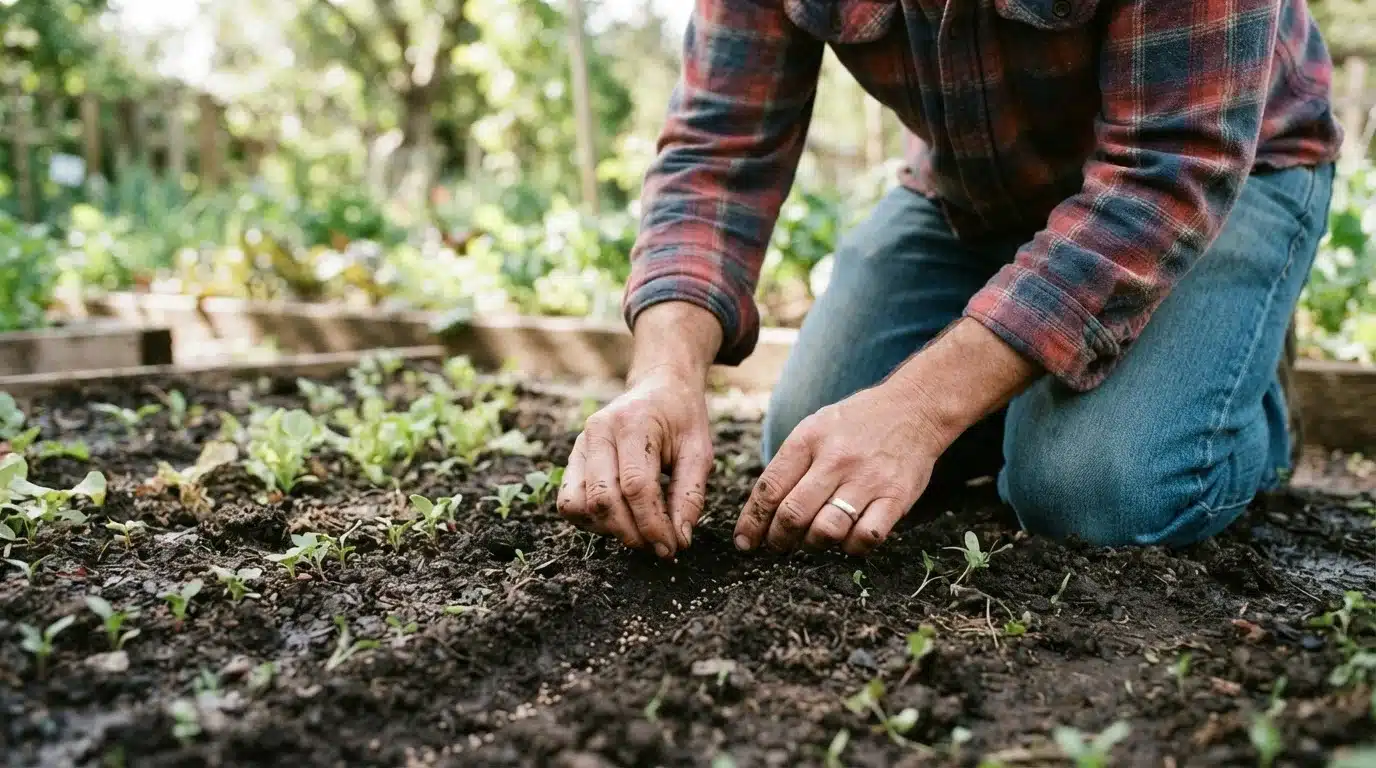
Growing a wildflower patch from scratch can be overwhelming until you break it into small, manageable steps.
Follow these steps to go from bare soil to bloom confidently.
Step 1: Mix Seeds with Sand
Combine your wildflower seeds with dry sand before scattering.
Sand acts as a filler, helping you see where you’ve already covered. Ratios vary by seed size and brand, so check your packet, but a common starting point is four to eight parts sand for every one part seed.
This trick prevents clumping and overcrowding in one spot while leaving other areas bare.
Step 2: Divide Your Area into Sections
Split larger spaces into smaller grids using stakes or string. Divide your seed mix evenly across each section.
This keeps distribution even instead of guessing by eye. Skipping this step often leads to patchy blooms, with dense clusters in one corner and empty gaps elsewhere. Even a rough grid works fine for smaller yards.
Step 3: Scatter Seeds by Hand
Broadcast the seed-sand mixture using a sweeping arm motion, moving steadily across each section.
Keep your hand low to reduce wind drift. Overlap slightly at section edges to avoid thin lines.
A calm day matters here, since breezy conditions scatter seeds unevenly and waste product.
Take your time rather than rushing the process.
Step 4: Press Seeds into the Soil
Walk over the seeded area or use a lawn roller to press seeds down firmly. Good soil contact matters more than depth for most wildflowers. Avoid burying seeds under a thick layer of dirt.
A light press keeps seeds in place during watering, rather than washing away or blowing off before germination.
Step 5: Water Gently and Consistently
Use a fine mist setting rather than a strong spray, which can displace seeds.
Keep the top inch of soil consistently moist for the first few weeks.
Water early morning to reduce evaporation. Once seedlings emerge, ease off gradually. Overwatering invites fungal issues, while underwatering stalls germination entirely during this fragile stage.
Step 6: Label and Mark Boundaries
Place small stakes or garden markers around the seeded perimeter.
This prevents accidental foot traffic or mowing before seedlings appear.
It also helps you track which sections have sprouted and which haven’t. Marking matters most in shared yards, where family members or pets might not realize new growth is underway.
Step 7: Monitor for Germination
Check daily for the first two weeks, then every few days after. Germination times vary widely by species, sometimes ranging from one to four weeks. Some seeds sprout fast, others lag behind. Patience matters here.
Avoid disturbing the soil while waiting, and resist the urge to reseed too early if nothing’s visible yet.
Step 8: Thin Overcrowded Seedlings
Once sprouts reach a few inches tall, remove weaker ones growing too close together.
Crowded seedlings compete for light, water, and nutrients, stunting overall growth.
Snip extras at soil level instead of pulling to protect nearby roots. Thinning feels wasteful but produces stronger, healthier plants with better airflow and less disease risk.
Step 9: Maintain Through the First Season
Pull emerging weeds by hand before they establish.
Skip fertilizer and heavy watering once plants mature. Deadhead spent blooms to encourage more flowering through the season. Avoid mowing until fall, allowing seeds to drop naturally for next year’s growth.
Minimal intervention now sets up a self-sustaining meadow going forward.
How Much Wildflower Seed Do You Need?
Coverage rates vary by mix and species, so treat any number as a starting point rather than a fixed rule.
Many seed blends require about one ounce per 200 to 300 square feet, but denser meadow mixes may need more.
Always check the rate indicated on your seed packet, as manufacturers vary in their calculations depending on seed size and germination rate.
Buying slightly more than the estimate covers uneven distribution and the seeds birds pick off before they settle in.
What to Do After Planting Wildflower Seeds
Planting is just the beginning. What happens right after influences whether your seeds will take hold.
- Cover the area lightly with straw or netting to deter birds from picking off seeds.
- Keep pets and kids off the patch until sprouts are visibly established.
- Avoid using any herbicides or pesticides nearby, even on adjacent lawn areas.
- Check for erosion after heavy rain and reseed any washed-out patches.
- Expect some species to skip blooming in year one and flower the following season instead.
- Take dated photos weekly to track growth patterns and spot problem areas early.
- Keep a garden journal noting which sections germinated fastest for future reference.
Skipping chemical treatments near the bed also supports managing garden pollinators once your seedlings start flowering and drawing visitors.
How to Control Weeds without Killing Your Wildflowers
Weeds compete hard against young wildflowers, so early action matters.
Hand-pull invaders while the soil stays soft, gripping close to the base to remove the full root.
Learn to identify your seedlings early, since young wildflowers and weeds often look similar. A close-cut mulch layer around established plants can smother new weed growth without harming roots below.
Skip chemical herbicides entirely; they can’t distinguish between wanted and unwanted plants.
Regular light weeding, done in short sessions, beats one exhausting overhaul later.
Consistency prevails over intensity in winning this battle.
Why Your Wildflower Seeds Aren’t Growing
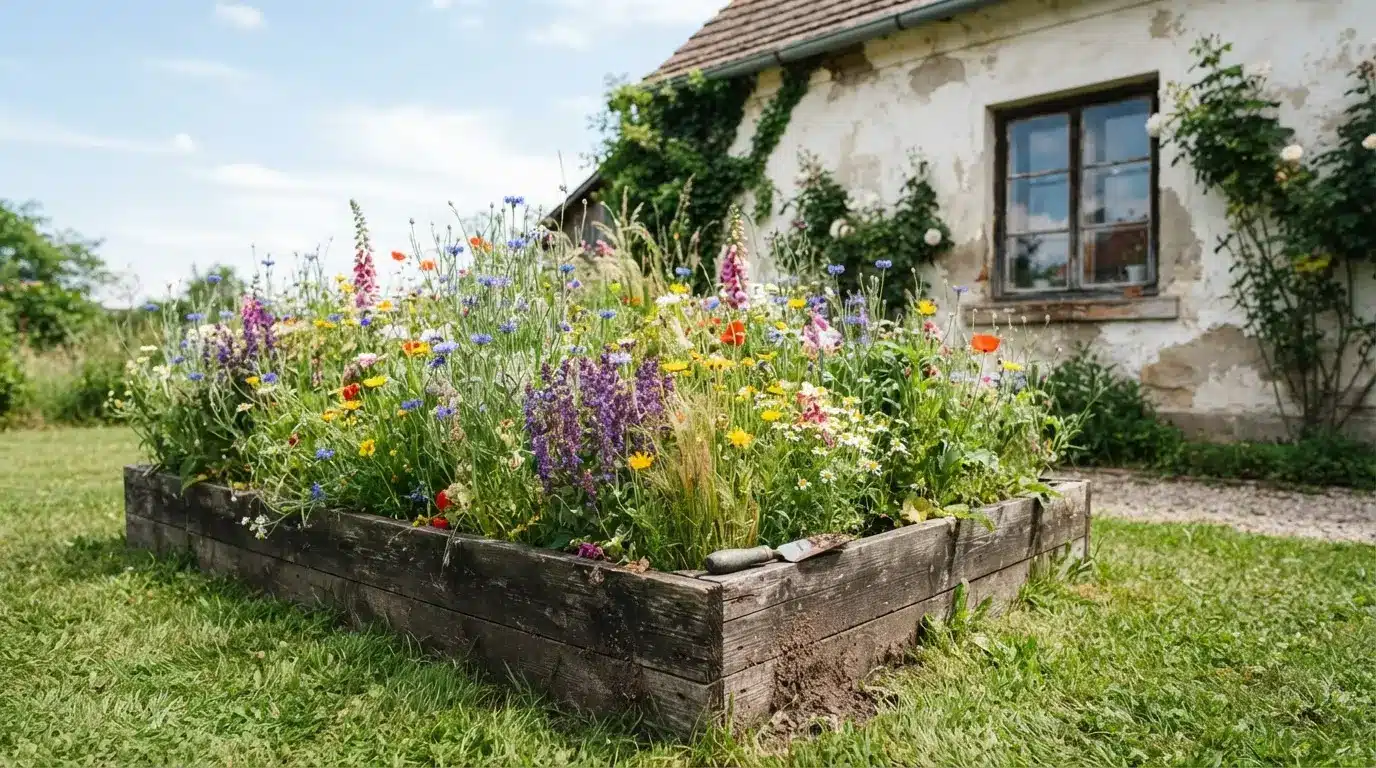
Poor germination usually traces back to a specific cause.
Seeds buried too deep struggle to reach sunlight and often rot before sprouting.
Old or expired seed packets lose viability over time, significantly cutting germination rates. Birds and rodents raid exposed seeds before they settle in. Compacted soil blocks root penetration, leaving seeds stranded.
Timing also matters; seeds sown during a heatwave or freeze rarely survive.
Test a small batch indoors on a damp paper towel to rule out dead seed stock
Fall vs. Spring Wildflower Planting: Which Should You Choose?
Both seasons work but suit different goals and climates. Compare them to decide what fits your yard.
| Factor | Fall Planting | Spring Planting |
|---|---|---|
| Climate suitability | Cold-winter regions | Mild or warm regions |
| Germination timing | Natural cold stratification over winter | Requires manual stratification for some species |
| Bloom results | Fuller, earlier blooms next season | Delayed blooms, sometimes patchy first year |
| Weed pressure | Lower, since weeds go dormant too | Higher, as weeds sprout alongside seedlings |
| Soil workability | Easier before ground freezes | Depends on spring thaw and mud levels |
| Maintenance needs | Minimal until spring | Requires closer early monitoring |
| Best for | Perennial, native mixes | Annuals and quick-blooming varieties |
How to Keep Wildflowers Coming Back Every Year
Self-seeding annuals and perennials both need a little help to return each season.
Let spent flower heads dry fully on the plant before removing them; that’s where next year’s seeds hide.
Skip fall cleanup; leave stems to protect through winter. Mow once in early spring, cutting high to avoid damaging new shoots. Divide overcrowded perennial clumps every few years to maintain vigor.
Choose regionally native species from the start, since they’ve adapted to your specific growing cycle already
Wildflower Seed Planting Mistakes that Waste the Most Seed
Even careful gardeners lose seed to avoidable errors. Spot these early to stretch your seed budget.
- Planting a single variety instead of a diverse mix, leaving gaps if one species fails.
- Buying cheap bulk mixes without checking the species list printed on the package.
- Scattering seed on a windy day, sending most of it into neighboring yards.
- Ignoring package instructions on seed-to-area coverage ratios, leading to overspending on extra bags.
- Storing leftover seed in humid conditions, which speeds up spoilage before next season.
- Planting immediately before a forecasted downpour, washing seeds into low-lying areas.
- Choosing a seed mix suited for a completely different hardiness zone than yours.
A Simple Wildflower Seed Planting Schedule
A rough timeline keeps the whole process on track.
Late summer works for gathering supplies and mapping out your planting area.
Early fall suits seeding in colder climates, right before ground freeze.
Late winter is prime time for indoor stratification if you’re holding seeds for spring. Early spring, once soil hits consistent workable temperatures, is your window in milder zones.
Midsummer shifts focus to maintenance and weeding rather than new seeding.
Late fall concludes the cycle, with stems remaining upright to serve as winter cover.
Frequently Asked Questions (FAQ’s)
1. Can I Plant Wildflower Seeds Directly into Existing Grass?
Not effectively; grass outcompetes seedlings, so clear or thin the turf first.
2. Do Wildflower Seeds Need Full Sun to Germinate?
Most varieties do, though some shade-tolerant species exist for darker patches.
3. How Long Do Wildflower Seeds Stay Viable in Storage?
Typically one to three years, if kept cool, dry, and dark.
4. Should I Fertilize Wildflowers once They Start Blooming?
No; fertilizer encourages leafy growth over flowers and weakens root systems.
5. Can I Mix Wildflower Seeds with Grass Seed for a Lawn Blend?
Yes, but mowing schedules conflict, so separate zones usually work better.
Wrapping It Up!
A thriving wildflower patch rewards effort spread across seasons, not one weekend of work. Small choices, like matching species to your soil or resisting the urge to fertilize, shape whether flowers flourish or fizzle out.
Setbacks happen even to careful gardeners, and that’s part of the process.
Keep notes, adjust as conditions shift, and let nature handle the rest once roots take hold.
Got a wildflower patch of your own?
Drop a comment with what worked, what didn’t, or which variety surprised you most this season.