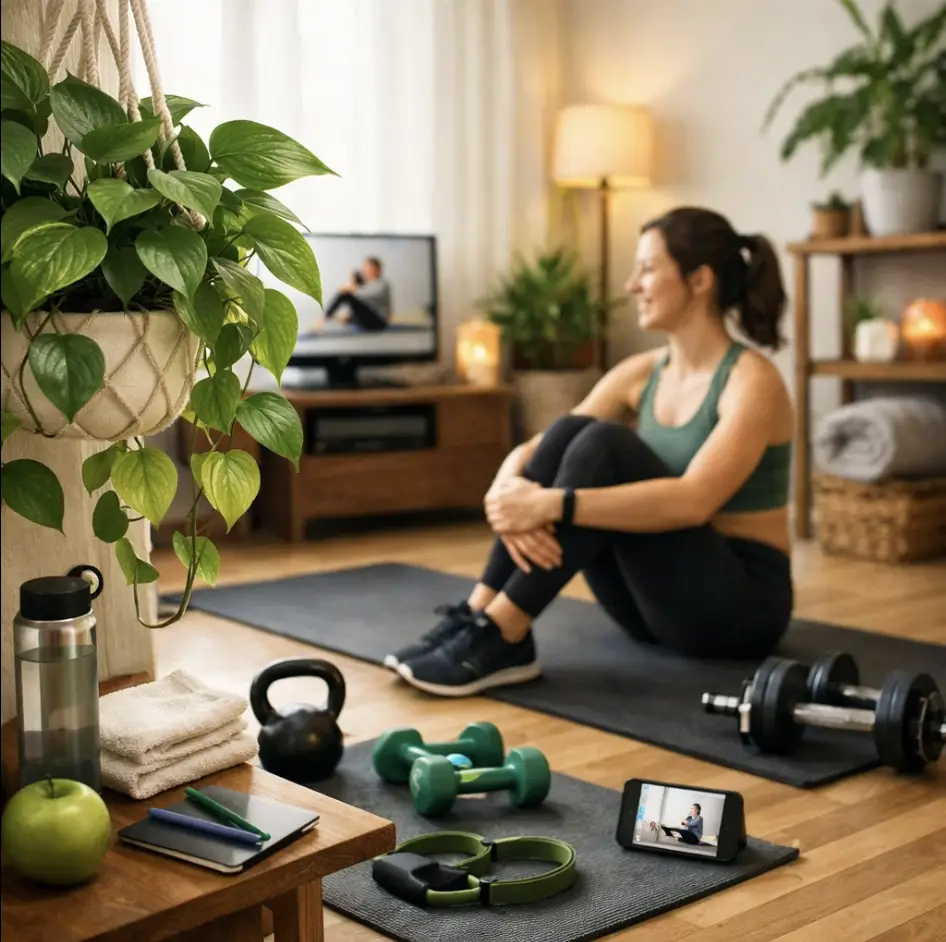
Your pothos plant doesn’t ask for much. Give it water, a bit of light, and the occasional check-in, and it just keeps growing. Turns out, your home workout routine can be just as low-maintenance.
Building a workout habit that sticks is about starting with what’s doable, making it fit your space, and keeping things simple enough that you’ll actually do them. Like starting a pothos from a single cutting, you can begin with basic moves and let your fitness routine grow into your daily life.
Forget about needing fancy gear or a picture-perfect gym setup. What really matters is finding an approach that fits your life so smoothly, working out feels as routine as watering your plants.
Building Sustainable Home Workout Habits
Just as your pothos needs the right environment, your workout routine needs a solid foundation—think motivation, a bit of planning, and a dose of consistency. The trick is making habits that fit into your life, not fight against it.
Finding Motivation for Long-Term Success
Motivation is tough if it’s only about squeezing into old jeans or looking good on a beach. Those reasons tend to vanish when things get hectic or progress slows.
Find reasons that really matter to you. More energy for your kids? Better sleep? Less stress after work? Write down three personal motivations and keep them somewhere you’ll see them—maybe taped to your mirror or fridge.
Celebrate the little wins instead of only chasing big goals. Did you squeeze in a 10-minute workout on a rough day? That’s a win. Tried something new? Another one. These moments add up, even if they seem small.
It helps to have someone in your corner. Maybe an accountability buddy or an online workout group. Just knowing someone’s expecting a check-in can nudge you to show up. Share a progress pic, your workout time, or just a quick message.
Set up a reward system that doesn’t revolve around snacks. After two weeks of sticking with your workouts, treat yourself to new socks or a massage ball. Your brain starts to link exercise with good stuff.
Designing an Eco-Friendly Exercise Routine
You really don’t need high-tech gear or energy-hogging machines. Bodyweight moves—push-ups, squats, lunges, planks—build real strength and cost nothing.
When you do want equipment, check out secondhand dumbbells, resistance bands, or yoga mats from local sellers. These things last ages and keep usable gear out of landfills. If you’re buying new, hunt for natural materials like cork yoga blocks or cotton bands.
Skip streaming-heavy workout videos. Download your favorites to watch offline and save a bit of energy. Or just memorize a simple circuit and ditch the screen altogether.
Get creative with what you already own. Fill old milk jugs with water for DIY weights. Use a sturdy chair for step-ups and dips. A towel on a hard floor? Perfect for slider moves.
Try to use natural light in your workout space and swap the AC for a fan if you can. Little changes, but they add up.
Creating a Consistent Home Workout Schedule
Pick a regular time slot for workouts. Your body starts to expect it, making it less of a chore. Mornings work for a lot of people—fewer distractions, less chance of skipping.
Start smaller than you think. Three 15-minute sessions a week? Way better than planning daily hour-long slogs you’ll never do. You can always ramp up later.
Put your workouts on your calendar like any other appointment. Block off the time, set a reminder, and lay out your workout clothes the night before so you’ve got one less thing to think about.
Have a backup for busy days. A 5-minute routine that hits the basics is better than nothing.
Try linking your workout to something you already do—like right after your morning coffee or before your evening shower. Stacking habits makes the new routine click faster.
Adapting Your Environment for Lasting Fitness
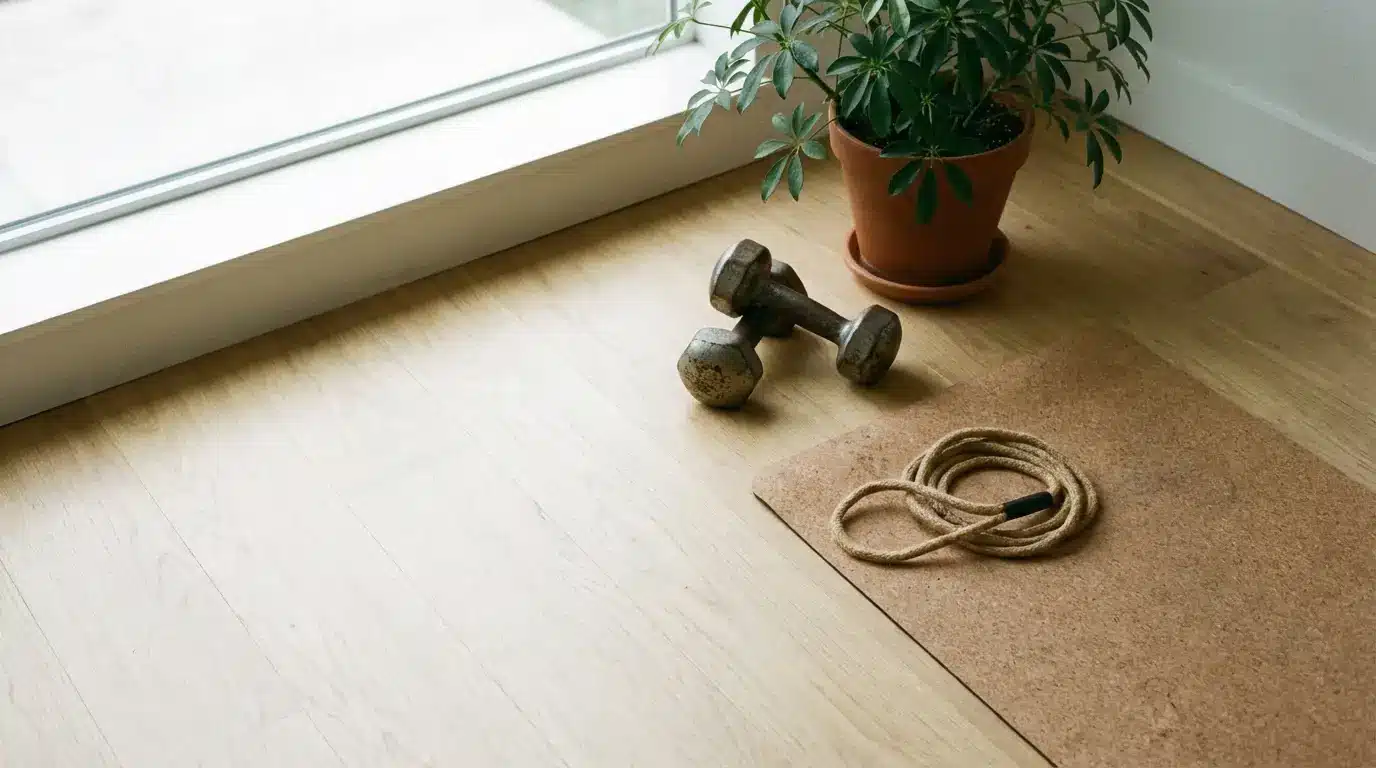
Your workout space matters almost as much as your exercises. Setting up the right environment with sustainable equipment and a bit of creativity can help your fitness routine stick around for the long haul.
Choosing Green Workout Equipment
No need for shiny new plastic gear. Check local marketplace apps or thrift stores for secondhand dumbbells, kettlebells, and resistance bands. Metal weights last forever and work just as well as anything new.
Natural materials are underrated. Cork yoga blocks, jute or cotton mats—they’re grippy, durable, and break down naturally when you’re done. Wooden parallettes or rings add function without plastic waste.
Your own body weight is free and creates zero waste. Push-ups, squats, lunges, planks—they get the job done. A sturdy chair or coffee table can double as a step-up or for tricep dips.
If you do go new, invest in things that last. A solid resistance band set or adjustable dumbbells might cost more upfront but save you clutter. Look for brands using recycled materials or offering repair programs.
Maximizing Small Spaces with Creativity
Don’t overthink your space. A corner of the bedroom or living room is enough. You really only need about 6×6 feet of clear floor for most moves. Move furniture aside before your workout and slide it back after.
Keep gear organized with vertical storage—wall hooks for bands and ropes, a basket or bin for weights and blocks. Out of sight, out of mind (until you need them).
Multi-use furniture is your friend. An ottoman with storage can hide your gear and double as a bench. The couch works for incline push-ups or stretching support.
Use what you’ve got. Filled water bottles for light weights, towels for sliders, stairs for cardio and legs. No need to buy more stuff if you don’t have to.
Incorporating Rest and Recovery Like a Pothos Plant
Pothos plants thrive because they balance bursts of growth with downtime. Your muscles? They need that same rhythm. Rest days are when your body actually rebuilds and gets stronger from all the work you put in.
Try to schedule at least one full rest day each week. Seriously, skip the tough stuff—no heavy lifting or long runs. If you’re itching to move, go for a walk or do some gentle stretching. Keeps you loose, but doesn’t overdo it.
On days you’re not pushing hard, think about active recovery. Yoga, swimming, maybe a slow bike ride—these get your blood flowing but don’t hammer your muscles.
Honestly, sleep matters more than any fancy workout. Shoot for 7 to 9 hours a night if you can. That’s when your muscles actually get a chance to repair and grow.
Pay attention to what your body’s telling you, just like you’d check if your plant needs water. If you’re always sore, wiped out, or just not performing like usual, it’s probably time to ease up. Maybe tack on another rest day or dial back the intensity for a bit.