A dead basil plant typically results from a mismatch between its needs and environment, not bad luck.
Fresh herbs year-round sound simple until the mint turns black or the parsley stalls out after two weeks.
Learning how to grow herbs indoors comes down to a handful of decisions: light, water, soil, and container.
Get those right, and herbs multiply faster than you can cook with them.
Get one wrong, and the same story repeats across every plant on the shelf.
Why Some Indoor Herb Gardens Thrive While Others Fail
Light has the greatest impact.
Most kitchens get bright shade, not real sun, and basil or rosemary stall out fast in that gap.
Watering habits matter just as much. Overwatering suffocates roots before underwatering ever gets the chance to.
Pot size trips people up too: cramped roots stunt growth, and oversized pots hold soggy soil for days.
Airflow gets ignored constantly. Herbs packed tightly on a windowsill invite mold and weak stems. Success usually comes down to matching each plant’s actual needs, not guessing and hoping the plant adjusts.
Choose the Right Herbs for Your Indoor Space
Not every herb suits a countertop or a shelf. Pick ones that fit your space and your cooking style.
| Herb | Best For | Common Use |
|---|---|---|
| Mint | Low-light corners | Teas, drinks, garnish |
| Thyme | Sunny windowsills | Roasts, soups, stews |
| Chives | Small pots, tight spaces | Toppings, eggs, salads |
| Parsley | Beginners | Garnish, sauces, salads |
| Cilantro | Cooler rooms | Salsas, curries, tacos |
A few herbs earn their keep simply by sitting close to where you cook, which is worth remembering when picking herbs suited for kitchen spaces near heat and steam.
Best Indoor Herb Gardens
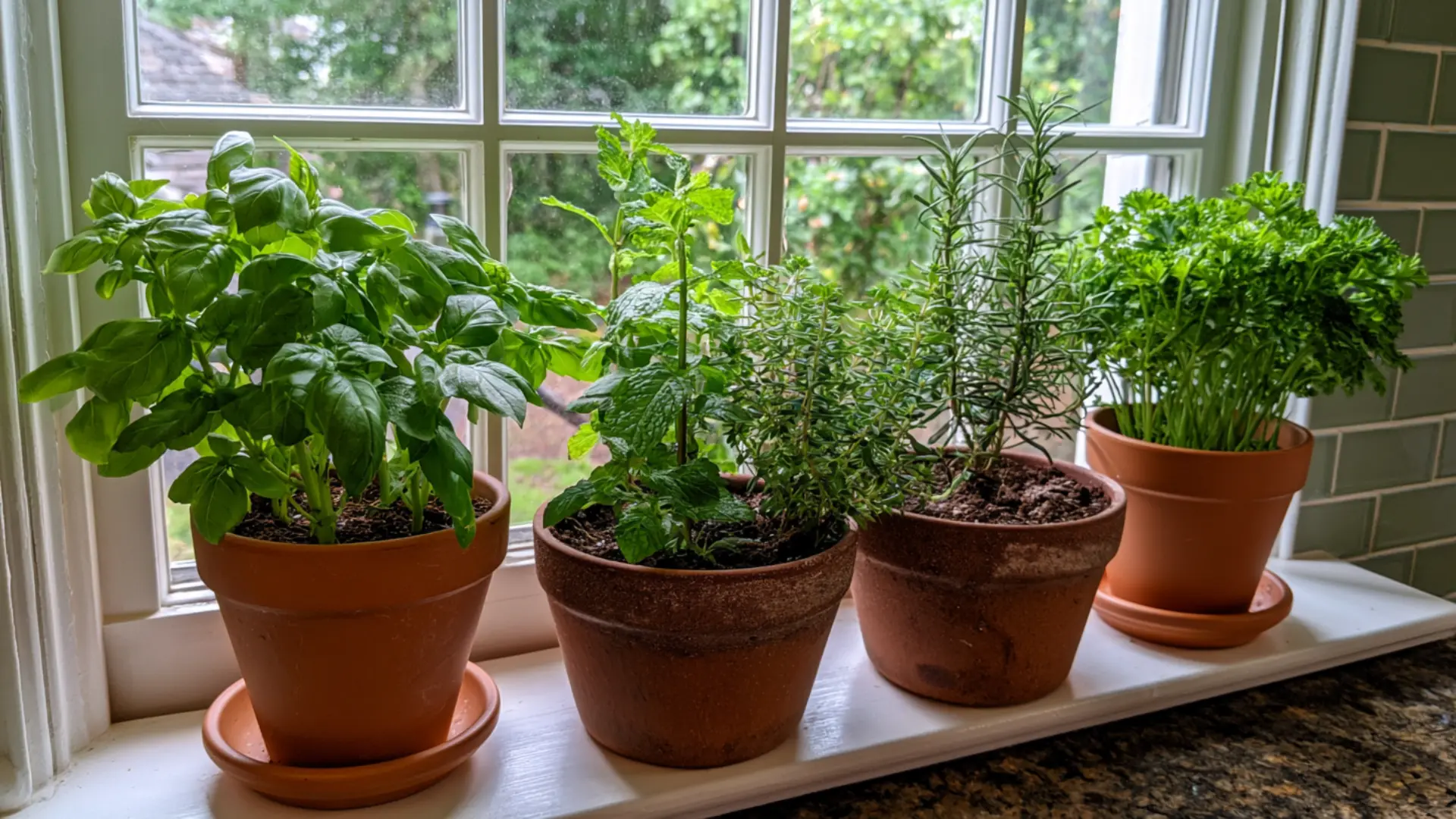
Some setups earn their space; others just take it up. Here’s what actually delivers results.
1. Windowsill Jars in Water: No soil needed here. Roots grow straight in water, and you can watch progress daily. Works best with cuttings like mint or basil rather than seeds.
2. Vertical Wall Planters: Great for tight kitchens. Stack pockets on a wall and free up counter space entirely. Watering takes more attention since gravity pulls moisture down.
3. Grow-Light Shelf Units: Built for apartments without strong sun. Timers control light cycles automatically. Herbs grow evenly instead of leaning toward one window.
4. Self-Watering Pots: A reservoir at the base feeds roots slowly. Cuts down on guesswork for busy schedules. Roots stay consistently moist without soggy soil.
5. Countertop Hydroponic Kits: Pumps circulate nutrient water directly to roots. Faster growth than soil setups. Higher upfront cost, but less daily maintenance overall.
Picking the Right Containers
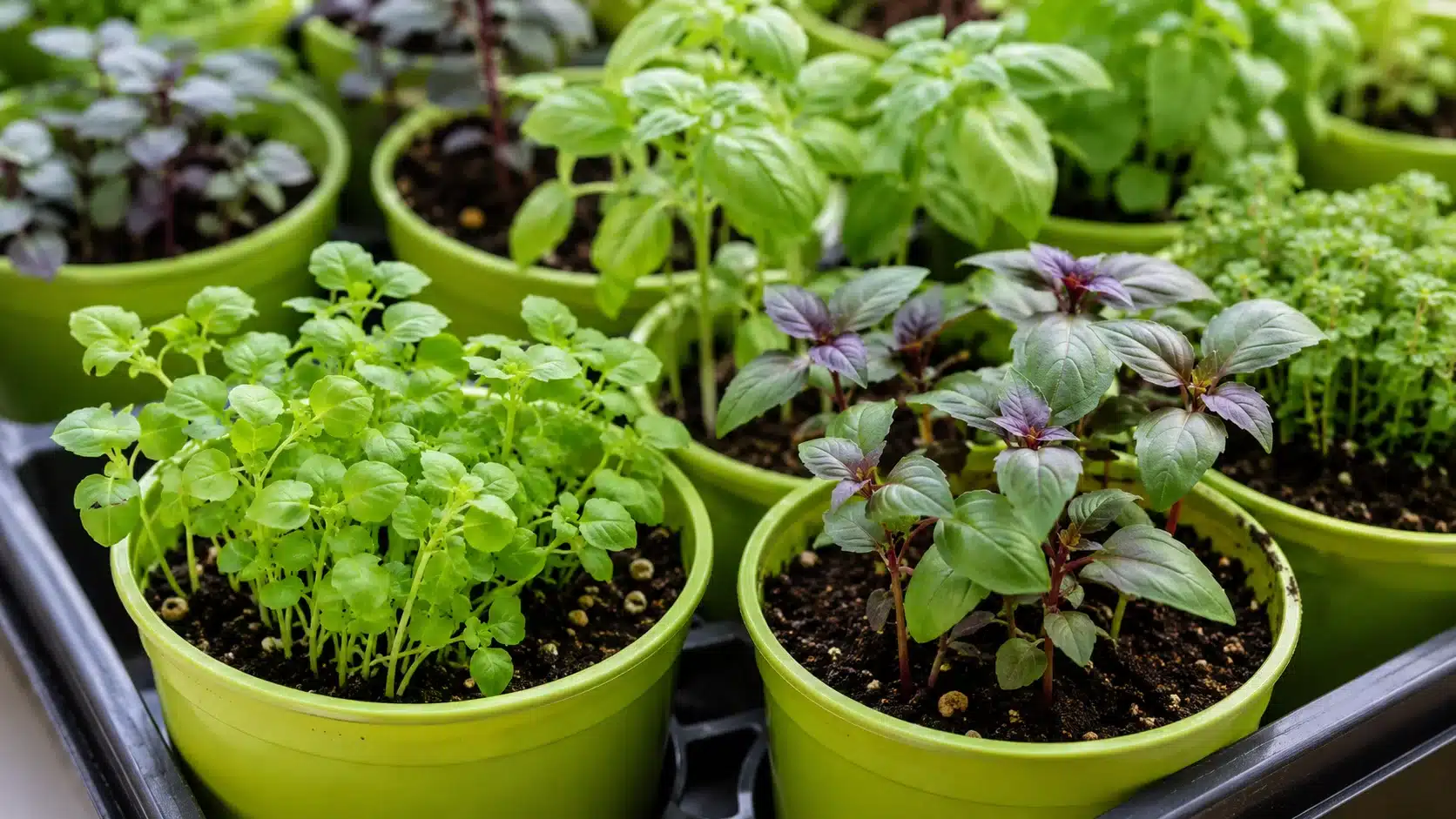
Material matters more than looks. Terracotta breathes and wicks away extra moisture, which suits herbs that hate wet feet, like rosemary or thyme. Plastic holds moisture longer, better for thirstier herbs like basil.
Always check for drainage holes first; without them, water pools and rots roots within days. Depth counts too.
Shallow-rooted herbs need only a few inches, while deeper-rooted plants require more space to spread downward.
Skip decorative pots with no holes unless you’re using them as outer covers for a properly drained inner pot.
The Best Soil Mix for Indoor Herbs
Good soil sets the stage before a single seed goes in. Here’s what actually belongs in the mix:
- Potting Mix Base: Not garden soil, which compacts indoors and suffocates roots.
- Perlite or Coarse Sand: Improves drainage and keeps mix from turning dense.
- Compost or Worm Castings: Adds slow-release nutrients without overwhelming young roots.
- Peat Moss or Coconut Coir: Holds moisture evenly so soil doesn’t dry out too fast.
- Neutral pH Range (6.0–7.0): Most culinary herbs grow best within this window.
Step-by-Step: How to Grow Herbs Indoors
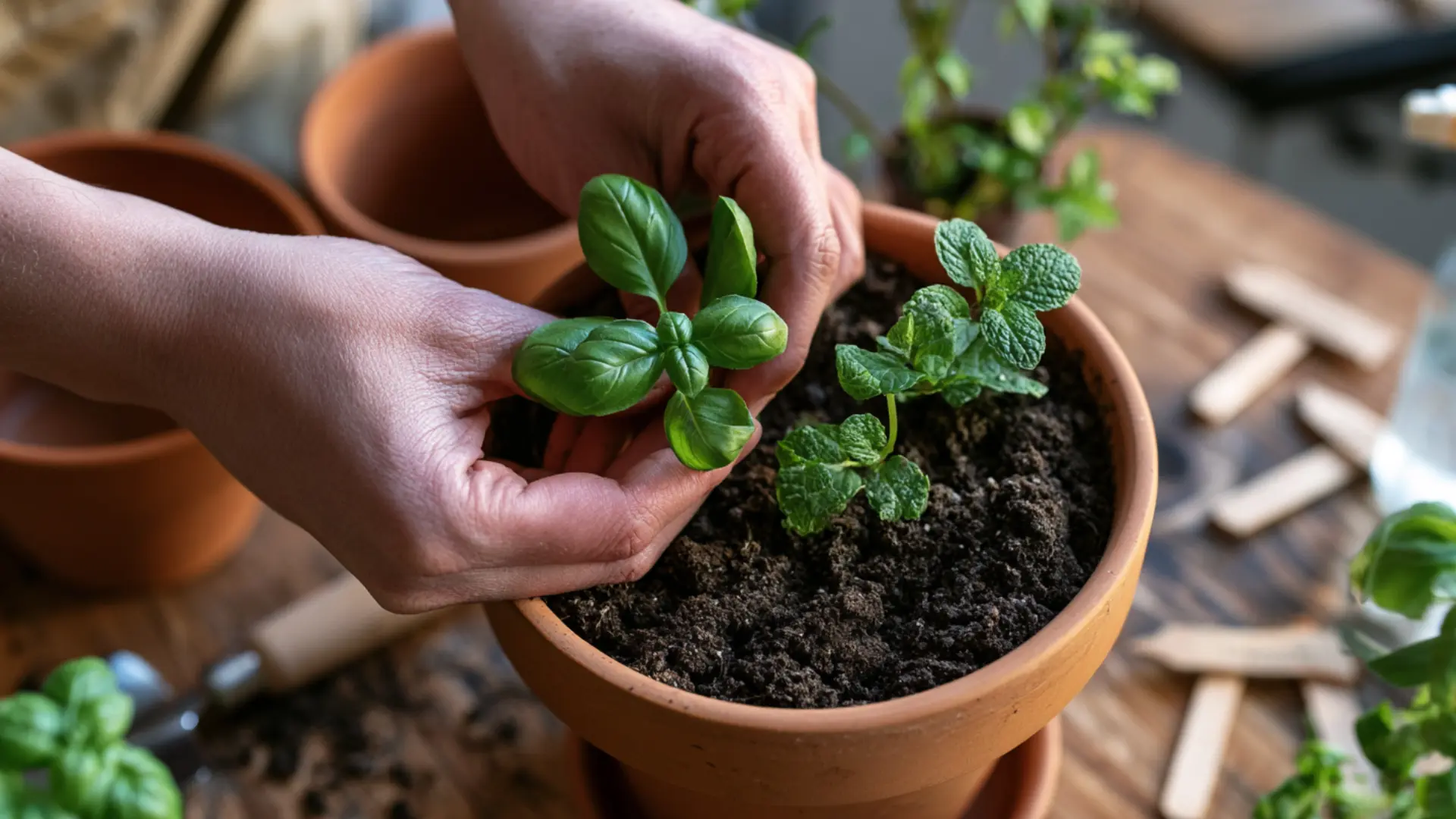
Growing herbs indoors is not complicated once broken into clear stages. Follow these steps in order, and skip none of them, for the best shot at a thriving windowsill garden.
Step 1: Decide Between Seeds and Cuttings
Seeds take longer but cost less and offer more variety. Cuttings root faster and skip the germination wait entirely.
Snip a four-inch stem below a leaf node for cuttings, then strip the lower leaves.
Seeds go directly into a moist mix, pressed lightly, not buried deep. Basil and mint root easily from cuttings, while cilantro and dill do better started from seed since they resent transplanting.
Step 2: Fill and Prep the Container
Add your soil mix until it sits about an inch below the rim.
Moisten it lightly before planting; a dry mix repels water later and creates air pockets around roots. Tap the container gently to settle the soil without compacting it. Leave enough space for a finger-depth hole per seed or cutting.
Skip fertilizer at this stage since fresh mix already has enough nutrients to start.
Step 3: Plant and Position Properly
Place seeds at a depth roughly twice their size, then cover lightly.
Set cuttings an inch deep, firming soil around the stem so it stands upright. Position the container somewhere it’ll stay permanently, since herbs dislike being moved once settled.
Rotate the pot slightly if light comes from one direction only, so growth doesn’t lean.
Step 4: Water Right After Planting
Water slowly until it drains from the bottom, then stop. This settles soil around roots and removes air gaps left during planting. Avoid soaking the mix repeatedly afterward; let the top layer dry slightly between waterings.
A spray bottle works well for seeds, since it won’t displace them the way a heavy pour might.
Step 5: Label and Track Progress
Mark each container with the herb name and planting date.
Memory fades faster than expected once several pots line up together.
Check daily for the first two weeks, watching for sprouts or new root growth on cuttings. Adjust placement early if leaves stretch unevenly toward the light, since correcting posture later is harder once stems harden.
Seeds or Starter Plants: Which Should You Begin With?
Both routes work, but they suit different priorities. Here’s how they stack up.
| Factor | Seeds | Starter Plants |
|---|---|---|
| Cost | Cheaper upfront | Pricier per plant |
| Speed | Slower to mature | Ready to harvest sooner |
| Variety | Wider selection available | Limited to what’s stocked |
| Effort | Needs closer early attention | Lower maintenance at the start |
| Risk | Higher failure rate early on | Sturdier, more forgiving |
Understanding Indoor Light
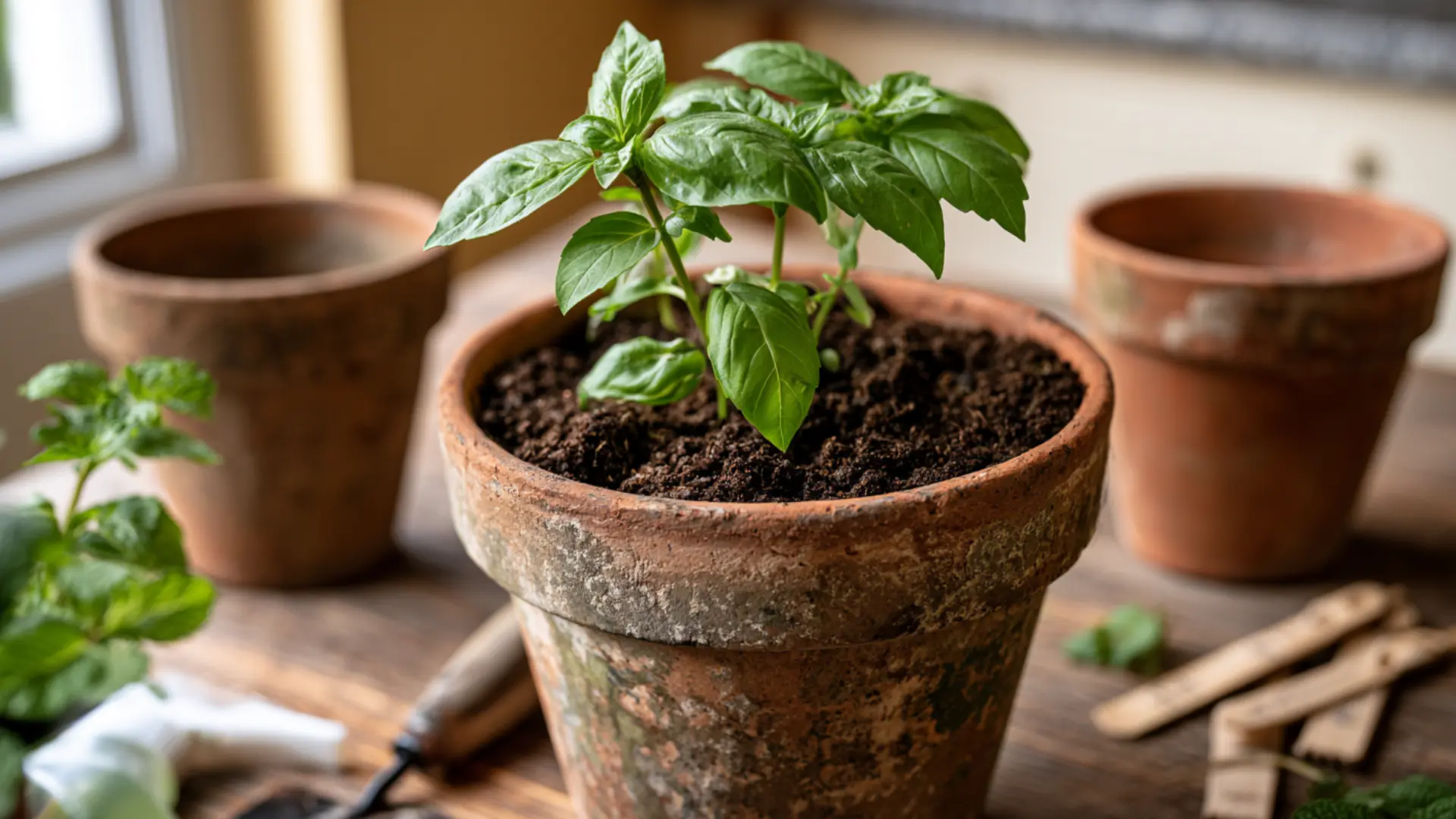
South-facing windows give the strongest, most direct rays, while north-facing ones stay dim year-round.
Most herbs need six hours of bright light daily to grow dense instead of leggy. Direct sun differs from bright shade; a plant near a window is not automatically getting enough.
If leaves turn pale or stems stretch upward awkwardly, that’s a signal, not a coincidence. Grow lights fill the gap in winter months when daylight hours shrink. Position them close, since distance weakens intensity fast.
Watering Herbs the Right Way
Check soil before watering, not the calendar. Stick a finger an inch down; if it’s dry, water thoroughly.
If it’s damp, wait another day.
Morning watering suits herbs better than evening, since damp soil overnight invites fungus. Pour slowly and evenly, letting water reach all sides of the pot, not just the center. Drainage should be visible within minutes.
Herbs like rosemary and thyme prefer drying out between waterings, while basil wilts fast if neglected.
Match frequency to the specific herb, not a fixed routine.
Temperature, Humidity & Airflow Requirements
Most herbs prefer 65-75°F, mimicking a comfortable room temperature.
Cold drafts near windows in winter can shock plants overnight.
Humidity matters too; dry indoor air, especially with heating running, stresses tropical herbs like basil faster than others. A nearby tray of water raises humidity slightly without extra effort.
Airflow prevents stagnant, damp conditions where pests and fungus thrive.
A small fan on low, run occasionally, keeps stems sturdy and naturally mimics an outdoor breeze.
Feeding Indoor Herbs Without Overdoing It
Herbs don’t need heavy feeding to thrive.
A diluted liquid fertilizer every four to six weeks covers most needs.
Overfeeding pushes fast, weak growth that tastes bland and bruises easily.
Skip fertilizer entirely for the first month after planting, since fresh soil already holds enough nutrients.
Yellowing lower leaves often signal hunger, not disease. Organic options like fish emulsion work gently, while synthetic blends act faster but demand more careful measuring to avoid burning roots.
Harvesting Herbs for Bigger and Healthier Plants
Harvesting isn’t just about grabbing what you need. Done right, it pushes plants toward fuller, bushier growth.
- Cut just above a leaf node, never in the middle of a bare stem.
- Harvest in the morning, when flavor and oil content peak.
- Never take more than a third of the plant at once.
- Pinch tips regularly on basil to stop early flowering.
Regular trimming signals the plant to branch out sideways instead of growing tall and thin.
Herbs like oregano and mint respond especially well to frequent cuts. Letting plants flower too early diverts energy away from leaf production, weakening flavor and slowing future growth.
Best Indoor Herb Garden Kits Worth Considering
Not every kit delivers, but a few trusted names consistently do. These stand out for reliability and results.
A hydroponic system with a built-in LED light.
It includes a six-pod herb kit with basil, parsley, dill, thyme, and mint, plus a bottle of plant nutrients. The app sends reminders for water and nutrient refills, so nothing gets forgotten mid-cycle.
Uses soil-based pods with self-watering wicks.
Quiet operation suits small kitchens. Slower than hydroponics but far more forgiving for beginners. Pods snap in without guesswork, and the design blends into countertops instead of looking like lab equipment.
Budget-friendly with refillable pods. Comes with a built-in grow light and timer.
Twelve pods run at once, so a single unit covers several herbs without needing extra hardware.
Growing Multiple Herbs Together
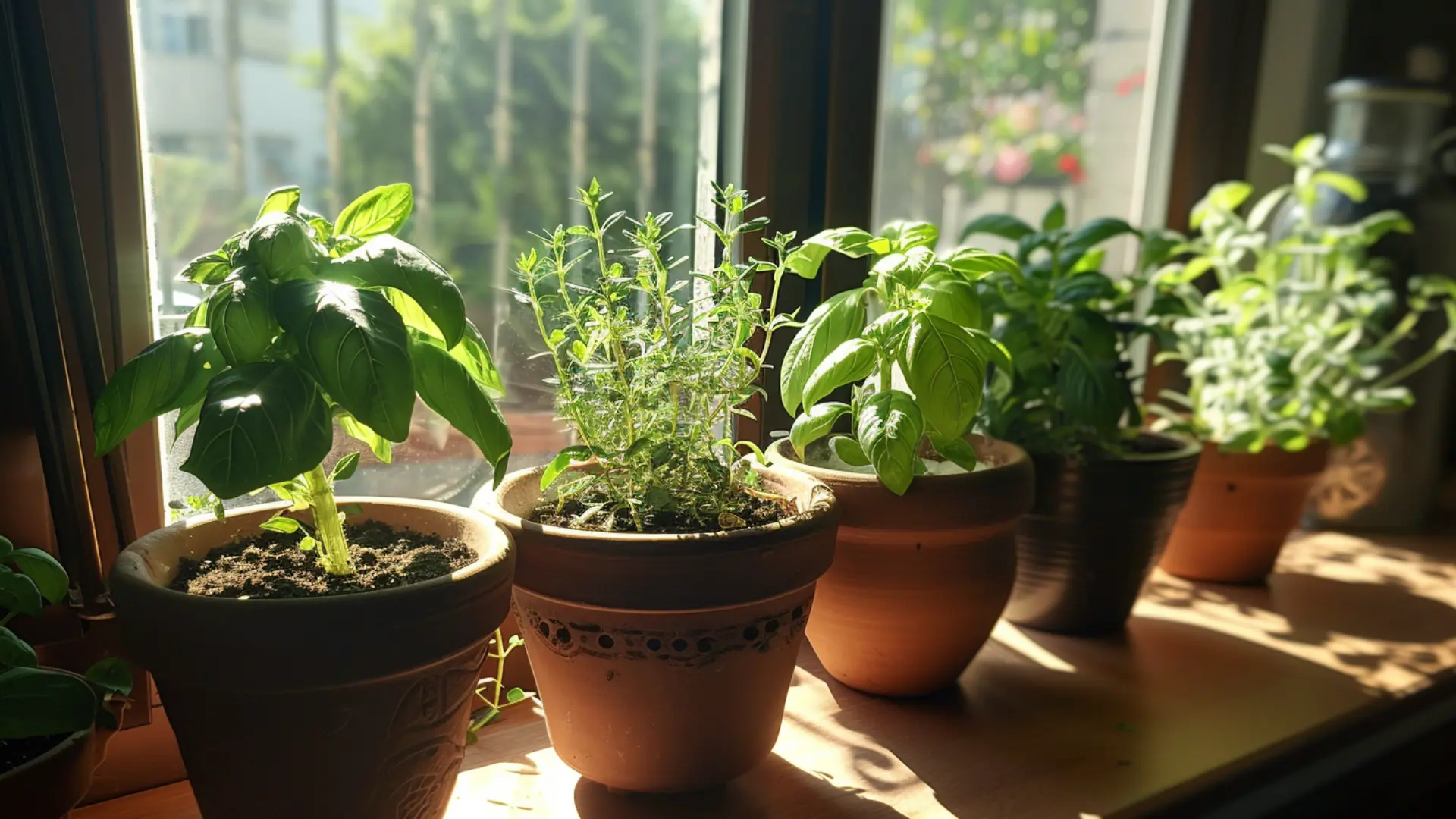
Not every herb plays well with others. Group plants with similar water and light needs, or one will always suffer.
Rosemary and thyme pair naturally since both like things dry.
Basil and mint, though, spread aggressively and choke out slower neighbors if left unchecked. Giving mint its own pot, the same approach used when growing mint indoors long-term, keeps it from taking over shared containers.
Give each plant enough room to breathe; crowding invites mold and stunts growth.
Stagger heights too, so taller herbs don’t block light from shorter ones nearby. Separate pots work better than one shared container for herbs with clashing needs, even if it takes up more counter space overall.
Seasonal Care Throughout the Year
Herbs don’t behave the same way in every season, so care has to shift along with them.
- Winter: Shorter days call for grow lights; keep plants away from cold drafts near glass.
- Spring: Growth speeds up fast; repot anything that’s outgrown its container.
- Summer: Heat pulls moisture out quicker, so check soil more often than usual.
- Fall: Growth slows naturally; ease off feeding as plants prepare to rest.
Common Indoor Herb Problems: Diagnosis & Solutions
Something always goes wrong eventually. Here’s how to spot it and fix it fast.
| Problem | Likely Cause | Fix |
|---|---|---|
| Leggy, stretched stems | Insufficient light reaching plant | Move closer to light source |
| Brown, crispy leaf edges | Low humidity or heat stress | Mist lightly or relocate away from vents |
| Wilting despite moist soil | Root rot from poor drainage | Repot with fresh, well-draining mix |
| Small dark specks on leaves | Pest infestation, often spider mites | Wipe leaves, apply insecticidal soap |
| Sudden leaf drop | Shock from temperature swing | Keep away from doors and cold windows |
Indoor Herb Garden Pest Control
Pests slip in through open windows or hitch a ride on new plants. Aphids and gnats show up most often indoors.
Isolate any new herb for a few days before placing it near others, since infestations spread fast in close quarters.
Neem oil handles most soft-bodied pests without harming the plant.
Sticky traps catch fungus gnats hovering near soil.
Wipe leaves down weekly with a damp cloth; it removes eggs before they hatch.
Avoid overwatering, since damp soil attracts gnats specifically. Catching pests early beats treating a full-blown outbreak later, so check leaves regularly instead of waiting for visible damage
Can You Successfully Grow Herbs Indoors?
Yes, but herbs aren’t houseplants that tolerate neglect; they need consistent light, water, and attention to actually produce usable leaves. Beginners often start with too many varieties at once and lose track of individual needs.
Starting small builds confidence before scaling up.
Kitchen herbs like basil, mint, and chives forgive minor mistakes better than fussier options like cilantro.
Indoor growing works reliably once light and watering routines settle into habit.
Patience matters more than any tool, since consistency determines whether herbs actually thrive long-term.
Wrapping It Up!
Growing herbs indoors turns an empty windowsill into a steady source of fresh flavor for everyday cooking.
With the right container, soil, and light, even a small corner can sustain a herb garden year-round. Whether starting with a simple pot or an indoor herb garden, the basics remain: enough light, watering, and regular harvesting.
A little consistency goes a long way toward healthy, productive plants.
Drop a comment below with the herbs currently growing on your windowsill.
Frequently Asked Questions (FAQ’s)
How Long Do Indoor Herbs Take to Grow?
Most herbs take four to six weeks to reach harvestable size from seed.
Can Herbs Grow without Direct Sunlight?
Yes, grow lights replace sunlight effectively when windows don’t provide enough hours.
Why Do My Indoor Herbs Keep Dying?
Overwatering and insufficient light cause most indoor herb deaths, more than any other factor.
Do Indoor Herbs Need Fertilizer Regularly?
No, a diluted feed every four to six weeks covers most indoor herb needs.
Can I Grow Herbs in Low-Light Apartments?
Yes, mint and chives tolerate low light better than sun-loving herbs like rosemary.