Stepping out to your garden and picking a banana you actually grew yourself sounds like a distant dream until you realize how genuinely doable it is.
Bananas are generous growers, happy in a sunny backyard or a well-placed container on your balcony.
They shoot up fast, bring that gorgeous tropical feel to any space, and produce fruit that tastes nothing like what you find at the store.
Planting, caring, and harvesting, this guide walks you through growing bananas at home, one simple step at a time.
So, You Think Bananas Grow on Trees?
Most people assume banana plants are trees, and honestly, that mix-up is completely understandable. They are actually herbs, making them arguably the most dramatic herb in any garden.
What looks like a sturdy trunk is simply layers of tightly packed leaves holding everything together.
The real magic happens underground, where a corm, a dense, root-like stem, anchors the plant and drives all that fast, lush growth.
New plants do not grow from seeds either. They come up as suckers, baby offshoots that shoot up naturally right beside the mother plant.
Best Banana Varieties for Home Growing
Not every banana plant is built the same, and picking the right variety from the start saves you a lot of guesswork later.
Here is a quick look at what grows best depending on your space.
| Variety | Height | Best For | Flavor/Use | Fruiting Time |
|---|---|---|---|---|
| Dwarf Cavendish | 1.5 to 2.5 m | Containers, small gardens | Sweet, creamy, great for eating fresh | 9 to 12 months |
| Super Dwarf Cavendish | Under 1.2 m | Indoors, tight balconies | Mild and sweet, a true snack banana | 10 to 14 months |
| Dwarf Red Banana | 2 to 2.5 m | Containers, decorative gardens | Rich, berry-like sweetness | 12 to 14 months |
| Cavendish | 3 to 3.5 m | Open backyards | Classic banana flavor, high yield | 9 to 12 months |
| Plantain | 3 to 4 m | Large garden spaces | Starchy, best cooked or fried | 12 to 15 months |
| Lady Finger | 4 to 5 m | Spacious backyards | Thin-skinned, honey-sweet | 14 to 20 months |
Your space, climate, and setup do most of the deciding. Keep these in mind before you buy:
- Space: Dwarf varieties are your best bet for containers or smaller spaces.
- Climate: Bananas love warmth, so cooler regions do better with container varieties that can be moved indoors.
- Indoor vs. outdoor: Stick to Super Dwarf Cavendish for indoor setups since it stays the most manageable.
Ideal Growing Conditions for Banana Plants
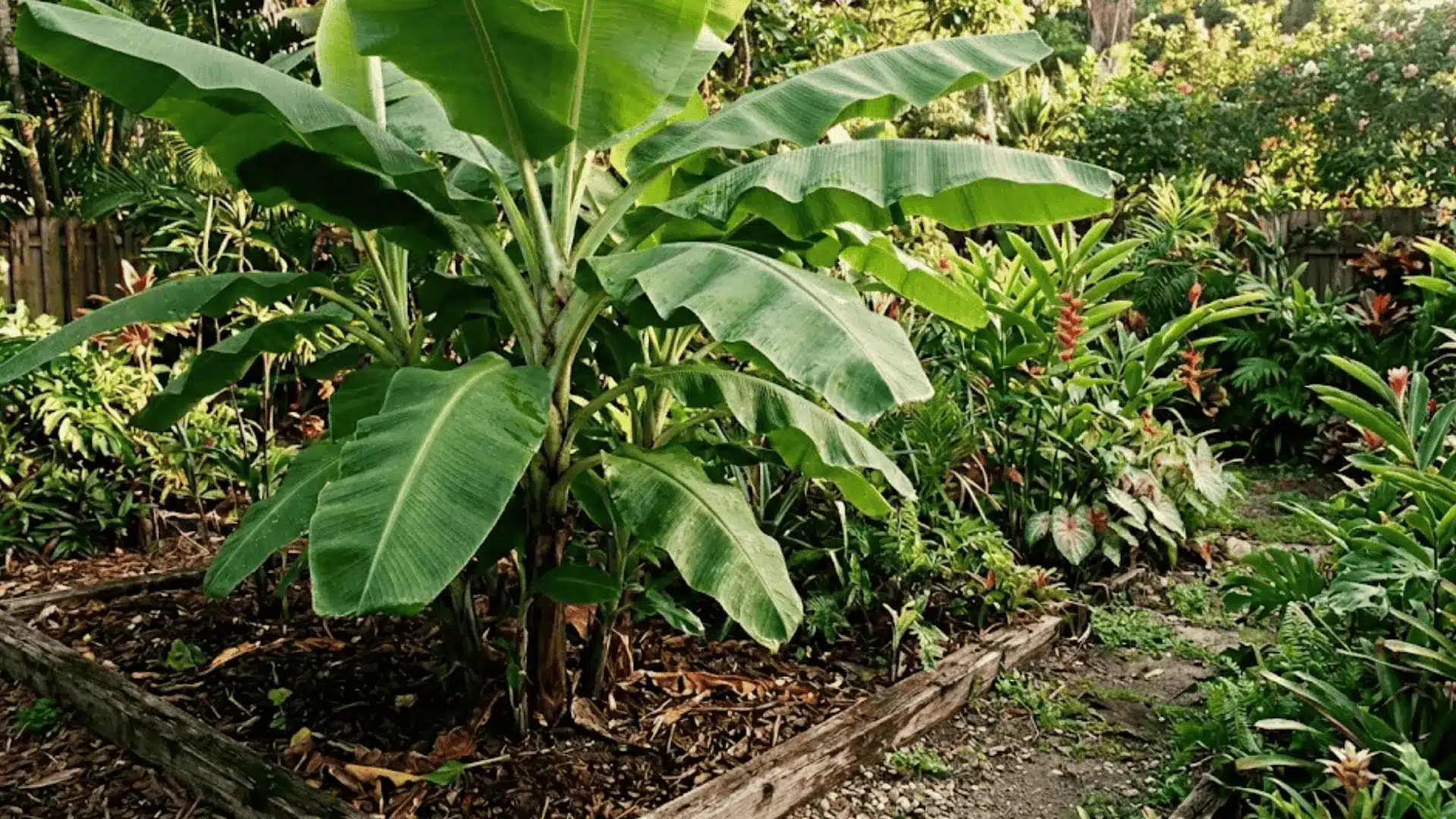
Banana plants are tropical at heart, and they genuinely thrive when you get their environment right. Give them the conditions they love, and they will grow faster than you expect.
Sunlight Requirements
Banana plants are sun lovers through and through. They need at least 6 to 8 hours of direct sunlight daily to grow well and fruit reliably.
A south-facing spot in your garden or the sunniest corner of your balcony works perfectly. Low light slows everything down, from leaf growth to fruiting, so placement really does matter here.
Temperature and Climate
These plants are happiest in warm, consistently tropical conditions. How they respond shifts quite a bit as temperatures drop, so it helps to know what to watch for.
| Temperature Range | Growth Stage | What to Expect | Action to Take |
|---|---|---|---|
| 25°C to 35°C | Peak growth | Thrives, fruits reliably | Maintain and water consistently |
| 15°C to 25°C | Slower growth | Leaves may look dull, and growth lags | Add mulch, reduce watering slightly |
| Below 15°C | Near dormancy | Growth nearly stops | Move containers indoors |
| Below 10°C | Stress zone | Risk of serious damage | Protect with a frost cloth or shelter |
Humidity Needs
Banana plants do best when the air around them stays consistently moist. Dry conditions show up quickly on the leaves, so keeping humidity up is worth the effort.
- Aim for 50% humidity or above for steady, healthy growth.
- Dry air causes leaf edges to brown and crisp up over time.
- Misting the leaves or placing a tray of water nearby helps indoor plants stay happy.
- Grouping plants together naturally raises humidity around them.
Soil Requirements for Growing Bananas
Bananas are hungry, thirsty plants, but they are surprisingly particular about what they grow in. Get the soil right and everything else becomes a whole lot easier.
What Goes into a Good Soil Mix?
Banana plants love soil that is rich, loose, and full of organic matter. A simple mix of garden soil, compost, and sand or perlite gives you that ideal balance of nutrition and drainage.
Keep the pH sitting between 5.5 and 7.0, slightly acidic to neutral, since anything outside that range makes it harder for the plant to absorb nutrients properly, no matter how much you feed it.
What Your Soil Should Never Do?
The one thing banana plants genuinely cannot tolerate is sitting in water. Poor drainage is one of the fastest ways to lose a plant, so keep these in mind when prepping your soil or pot.
- Waterlogged soil suffocates roots and triggers rot almost immediately.
- Avoid heavy clay soil as it holds too much moisture and compacts easily.
- Skip nutrient-poor sandy soil on its own since it drains too fast and starves the plant.
- Never plant in a container without drainage holes, no matter how good your soil mix is.
How to Plant Bananas at Home?
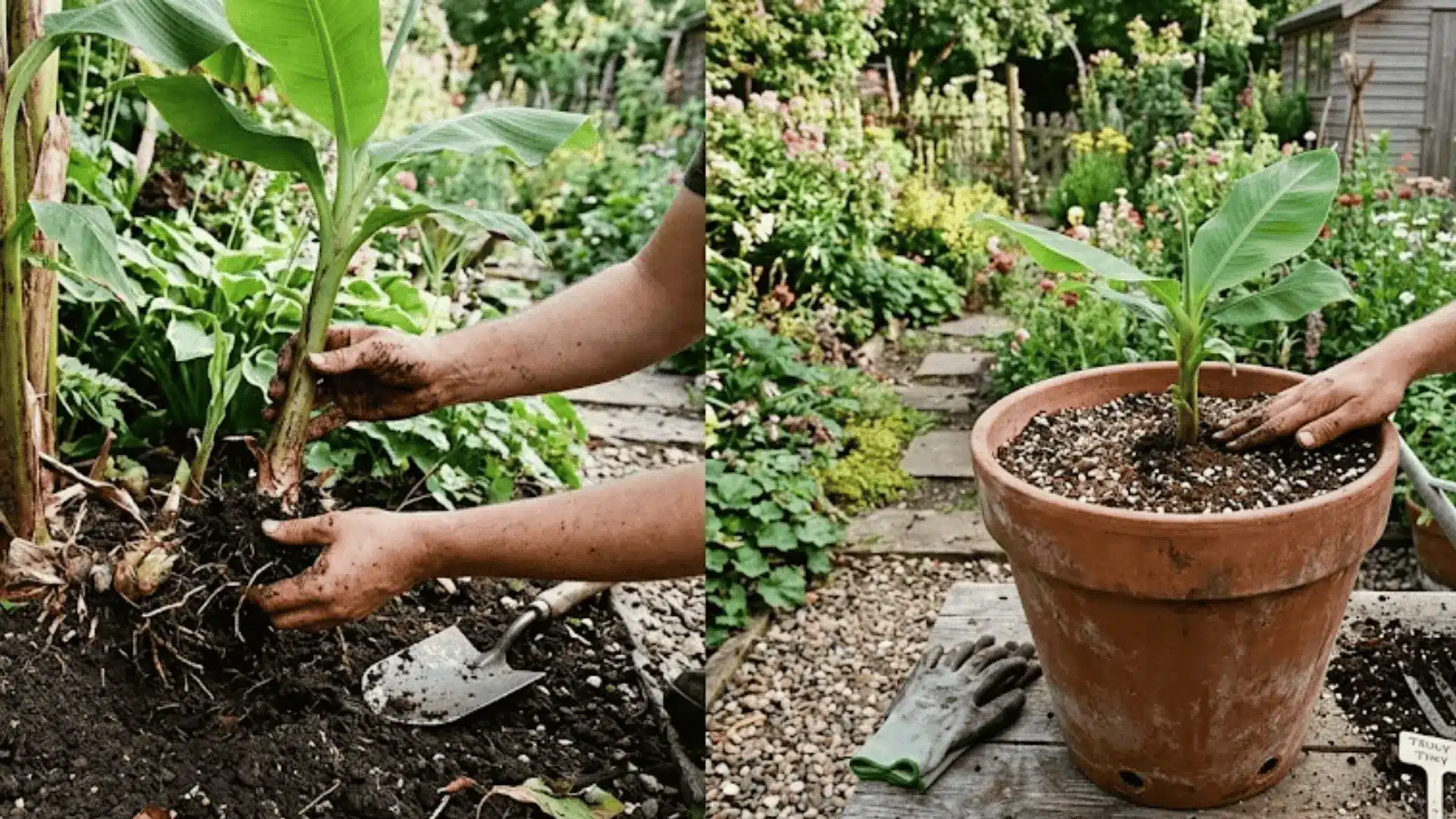
Planting bananas is more straightforward than most people think, and starting the right way sets your plant up for everything that comes after.
Here are the two most popular methods to get started.
Planting from Suckers
Suckers are the easiest and most reliable way to grow bananas at home. Pick a healthy one and follow these steps.
- Step 1: Select a sword sucker that stands between one and three feet tall with narrow, pointed leaves.
- Step 2: Separate it from the mother plant by cutting cleanly at the base without disturbing the roots too much.
- Step 3: Plant it in a hole at least 30 cm deep and firm the soil gently around the base.
- Step 4: Space your plants 1.5 to 2 meters apart to give each one enough room to spread.
Planting in Containers
Container planting works beautifully for smaller varieties and tight spaces. Getting the setup right from the start makes all the difference.
- Step 1: Choose a large pot in the 15 to 25 gallon range to give the roots enough room to grow.
- Step 2: Make sure the container has drainage holes at the bottom to prevent waterlogging.
- Step 3: Fill with your prepared soil mix of garden soil, compost, and perlite before planting.
- Step 4: Place the pot in the sunniest, warmest spot available, ideally south-facing.
Watering Banana Plants
Banana plants are thirsty growers, but drowning them is just as harmful as neglecting them.
The goal is to keep the soil consistently moist but never soggy, watering more generously during hot weather and pulling back during cooler months.
Getting this balance right honestly makes one of the biggest differences in how well your plant grows.
Signs Your Watering is Off
Your banana plant will always tell you when something is wrong; you just need to know what to look for. Watch out for these early signals.
- Yellow, drooping leaves are a strong sign that you are overwatering, and the roots need a break.
- Dry, crispy leaf edges mean the plant is thirsty and needs more frequent watering.
- Stunted new growth can point to inconsistent watering rather than a nutrient issue.
- Soggy soil that never dries is a red flag for poor drainage, not just overwatering.
Fertilizing Banana Plants
Banana plants are heavy feeders, meaning they pull a lot of nutrients from the soil and need regular replenishing to keep growing well.
Feeding them every three to four weeks during the growing season keeps things on track.
The two nutrients that matter most are nitrogen, which drives all that lush leaf growth, and potassium, which is key to healthy fruit development.
A balanced fertilizer works well in the early stages, but shifting toward a potassium-rich feed as your plant matures gives you the best shot at a good harvest.
Banana Plant Care and Maintenance
Once your banana plant is in the ground, a little consistent care goes a long way. These three simple habits keep your plant healthy, stable, and growing at its best.
1. Pruning
Banana plants do not need heavy pruning, but staying on top of dead or damaged leaves makes a real difference. Leaving them on the plant wastes energy and invites pests.
Trim them off cleanly at the base as soon as they start browning or looking worn, and your plant will redirect that energy toward new growth and fruiting instead.
2. Mulching
A generous layer of organic mulch around the base does quiet but important work. It locks in soil moisture, regulates temperature, and slowly feeds the plant as it breaks down.
Aim for a layer about 5 to 10 cm thick, keeping it slightly away from the stem to avoid rot. Compost, dried leaves, or straw all work really well here.
3. Supporting the Plant
Taller banana varieties can get top-heavy once they start bearing fruit, and a little support goes a long way. Staking the main stem with a sturdy bamboo pole or wooden stake prevents the plant from leaning or toppling over.
Tie it loosely so the stem can still move slightly, since some natural movement actually strengthens the plant over time.
Growing Bananas in Containers vs. Ground
Both methods work well, and the right choice really comes down to your space and how much flexibility you need.
Here is how they compare across what matters most.
| Factor | Container Growing | Ground Growing |
|---|---|---|
| Space Needed | Works in as little as a balcony corner with a 15 to 25-gallon pot | Needs at least 1.5 to 2 meters between plants |
| Best Varieties | Super Dwarf Cavendish, Dwarf Cavendish | Cavendish, Plantain, Lady Finger |
| Watering Frequency | Every 1 to 2 days in summer, it dries out fast | Every 2 to 3 days, the soil holds moisture longer |
| Yield Expectation | Smaller bunches, fewer hands per plant | Fuller bunches, higher fruit count per plant |
| Winter Care | Move indoors when the temperature drops below 15°C | Mulch heavily and protect in place |
| Ideal For | Renters, small gardens, cooler climates | Homeowners with outdoor space in warm regions |
Common Problems and Solutions
Even the most well-cared-for banana plants run into trouble sometimes. Here are the most common issues home growers face and what you can actually do about them.
Problem 1: My banana plant has not produced any fruit yet.
The Fix: This usually comes down to insufficient sunlight or irregular feeding. Move your plant to a sunnier spot and start feeding it a potassium-rich fertilizer every three to four weeks to nudge it toward fruiting.
Problem 2: The leaves on my banana plant are turning yellow.
The Fix: Overwatering or poor drainage is almost always the culprit here. Let the soil dry out slightly between waterings and check that your pot or planting bed is draining properly after each watering.
Problem 3: My banana plant leaves look pale and washed out.
The Fix: This points to a nitrogen deficiency rather than a watering issue. Switch to a nitrogen-rich fertilizer for the next few feeding cycles, and you should see the color improve within a few weeks.
Problem 4: I noticed tiny bugs and sticky residue on my banana plant.
The Fix: That is likely aphids or spider mites settling in. Wipe the leaves down with a neem oil solution or a mild insecticidal soap spray, and repeat every few days until the infestation clears up.
Still dealing with something that does not quite fit the above? The GardenWeb Banana Forum is one of the most active spaces where real growers troubleshoot everything from stubborn pups to dropping flowers.
How Long Do Bananas Take to Grow?
Patience is a big part of growing bananas, but the wait is genuinely worth it.
Most varieties take anywhere between 9 and 15 months to produce fruit from the time of planting, depending on the variety and your climate.
Warmer conditions naturally speed things up, while cooler temperatures can stretch that timeline out further.
Dwarf varieties in tropical or warm subtropical climates tend to fruit on the shorter end, while larger varieties in cooler regions take their time.
Once the plant fruits, each sucker that follows will continue the cycle without you having to start over.
Harvesting Bananas
Knowing when to harvest is one of those things that catches most first-time growers off guard.
The trick is to pick your bananas when the fruits are full-sized but still green, rather than waiting for them to turn yellow on the plant. Leaving them too long on the plant actually affects the flavor and texture once they ripen.
After cutting the bunch, let them ripen at room temperature away from direct sunlight, and they will turn beautifully sweet on their own.
A single bunch can take anywhere from a few days to a couple of weeks to fully ripen.
Tips to Grow Bananas Faster and Bigger
A few intentional habits can make a noticeable difference in how quickly and abundantly your banana plant grows. These are the ones that actually move the needle.
- Plant in large containers or deep ground soil to give the roots full room to expand.
- Water consistently, keeping the soil moist but never waterlogged between sessions.
- Feed every three to four weeks with a potassium and nitrogen-rich fertilizer during the growing season.
- Position your plant where it gets at least six to eight hours of direct sunlight daily.
- Remove suckers early so the mother plant channels all its energy into fruiting.
Get these right together, and your banana plant will not just survive, it will grow the way it was always meant to, fast, full, and rewarding.
Wrapping Up
Growing bananas at home is one of those deeply satisfying experiences that keeps giving back, season after season.
Once you understand what your plant needs and build a rhythm around it, the whole process feels far less intimidating than it looks.
That first unfurling leaf, the gradual bunch forming, and finally harvesting your own fruit is a progression that never gets old. Knowing how to grow bananas well truly changes how you see your garden or balcony space.
Start small, stay consistent, and let the plant do what it naturally does best.
Tried growing bananas at home or have questions about your plant? Drop them in the comments below!