
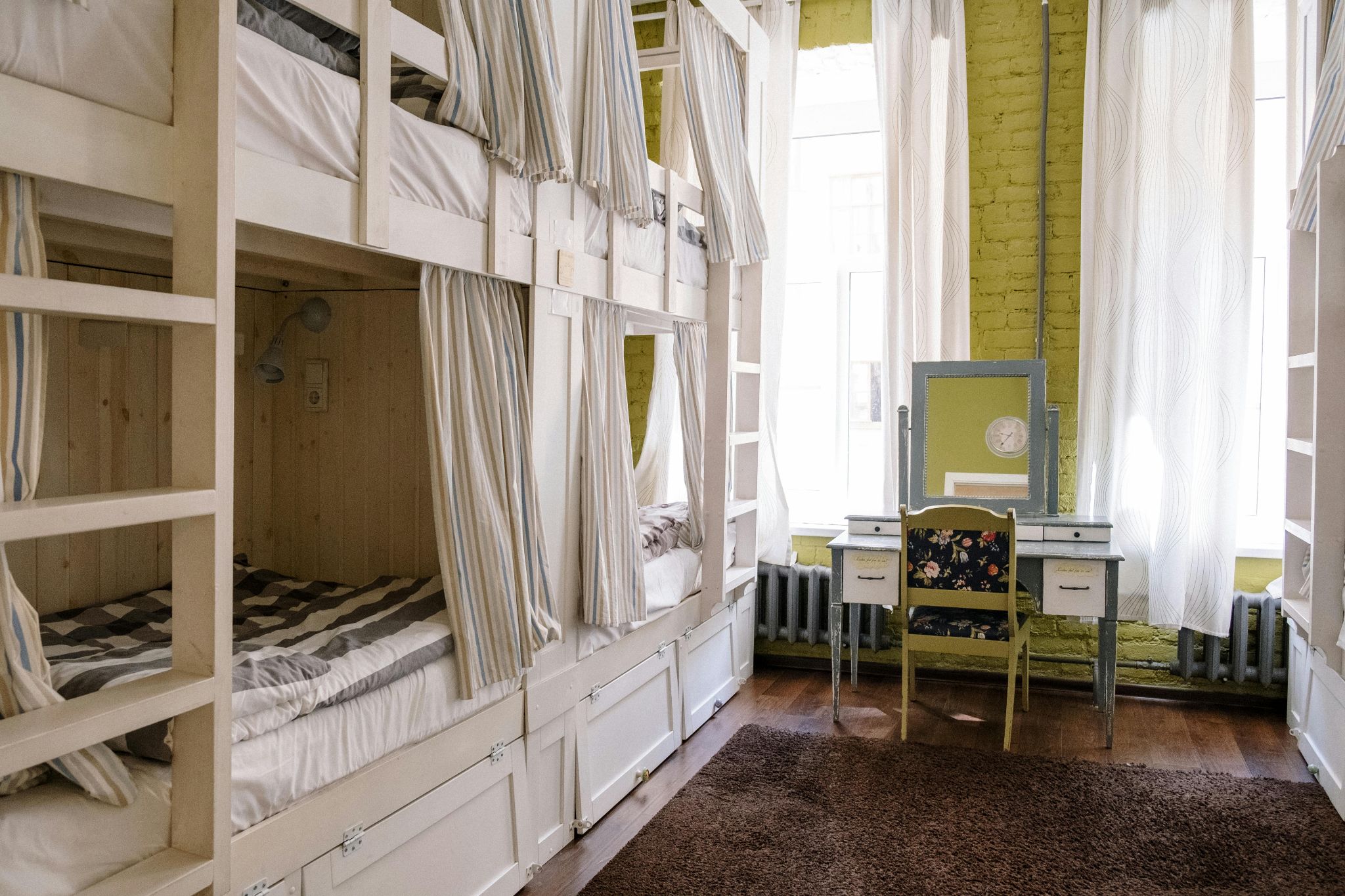
Most dorm rooms start as a blank, slightly hostile space. Cinder block walls, a mattress that has seen better decades, fluorescent lighting that makes everyone look vaguely exhausted. The first night in a university residence hall is rarely the cozy montage students imagine before move-in day. It is more often a moment of quiet realization: this is home now, and it needs work.
But here is something that rarely gets said out loud. The challenge is not money. It is intention. Students who manage to turn those same four institutional walls into something warm and personal are not spending more than anyone else. They are thinking differently about what a space actually needs to feel lived in.
The academic environment makes this harder than it sounds. A student buried in deadlines and scrambling to find a capstone project writer for a final semester assignment is not prioritizing curtain placement. Coziness becomes background noise when coursework fills every waking hour.
Research published in Environment and Behavior found that students in personalized living spaces reported higher satisfaction and measurably lower stress than those in unmodified rooms. Cornell University’s human ecology department has produced consistent findings on this: residential environments affect academic persistence more than most institutions acknowledge.
A student who just spent three hours hunting for reflective essay help and then walks back into a sterile, impersonal room has no real boundary between stress and rest. The space becomes an extension of the pressure rather than relief from it. That is not a decoration problem. It is a recovery problem.
So what actually works when it comes to dorm room decorating ideas that go beyond the generic mood board?
Light Changes Everything
The single biggest mistake students make is ignoring lighting. Overhead fluorescents are not designed for comfort. They exist for institutional visibility, and they do that job while making every room feel like a waiting area. Replacing them is usually prohibited. Supplementing them is not.
A small LED strip along the top of a bookshelf. A warm toned desk lamp swapped in for the default cool white option. Fairy lights threaded along a curtain rod or mounted with Command strips behind a mirror. These are not aesthetic gimmicks. Warm light in the 2700K to 3000K range has measurable effects on perceived room temperature and on mood.
IKEA’s TERTIAL and RANARP lamps have been bestsellers in student adjacent markets for years, partly because they work and partly because they are inexpensive enough that losing one at move out is not a loss worth grieving.
The shift from flat overhead light to layered warm light is one of the fastest, cheapest demonstrations of how to make a dorm room cozy without touching a single piece of furniture. That alone changes how the space feels after 6 p.m., which is when students actually spend time in their rooms as people rather than as study machines.
Textiles Do the Heavy Lifting
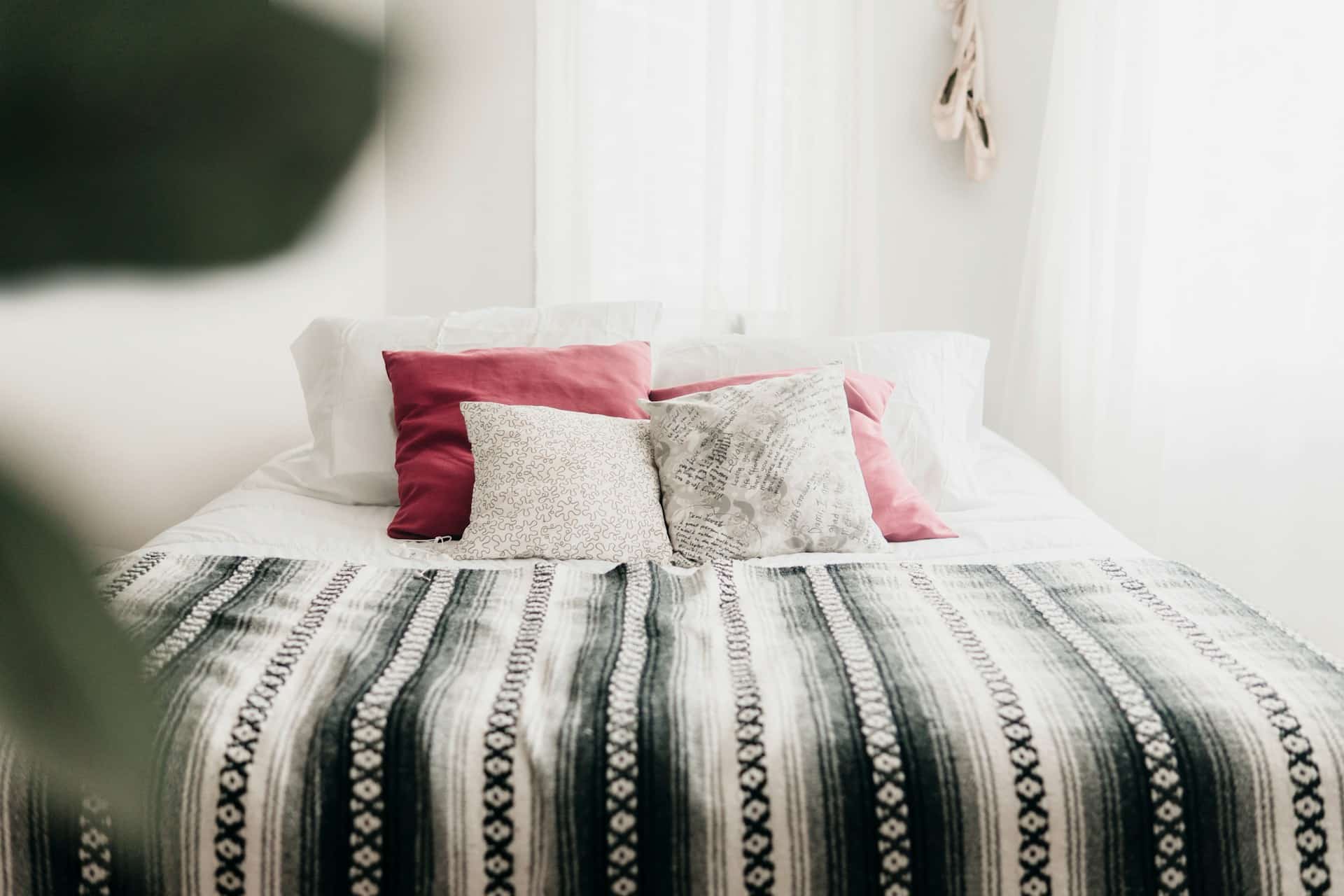
Hard surfaces read as cold. Carpet, throws, curtains, and bedding interrupt that reading. A single tapestry on the wall softens both acoustics and visual weight. A rug on the floor defines zones in a way that matters more than people expect in a room under 150 square feet: the bed zone ends here, the desk zone begins there, and the floor in between is not just dead space.
The budget version of this is well established. Thrift stores near major university campuses almost always carry textile overflow, particularly at the start of fall semester when move out donations from the previous year cycle through. Students near University of Michigan, NYU, and UC Berkeley have secondhand shopping ecosystems built around exactly this.
A woven throw that costs four dollars at Goodwill does the same functional work as a forty dollar one from a specialty shop.
A Reference Point: Cozy Dorm Room on a Budget
|
Item |
Estimated Cost |
Impact |
|---|---|---|
|
Warm LED desk lamp |
$15 to $30 |
High |
|
Throw blanket |
$8 to $25 |
High |
|
Small area rug |
$20 to $50 |
High |
|
USB fairy lights |
$6 to $12 |
Medium |
|
Tapestry or wall fabric |
$10 to $25 |
Medium |
|
Wax melts or diffuser |
$8 to $15 |
Medium |
|
Storage baskets |
$10 to $20 |
Medium |
|
Photo prints (CVS, Walgreens) |
$5 to $10 |
Low to medium |
None of these items require nails or drilling. Most are explicitly within standard residential life policies at universities across the U.S. and Canada.
The Organization Layer
Clutter undermines everything else. A room with good lighting and beautiful textiles still feels wrong if there is visual noise competing with every surface. Small dorm room organization tips tend to focus on under bed storage and vertical shelving, and that advice is sound, but there is a step before any of it: editing.
Students tend to arrive with too much. A dorm room is not a storage unit. The items that remain visible should be chosen, not just present. A collection of books stacked with some intention on a shelf reads as personal. A pile of mixed papers and random objects reads as chaos, regardless of what is underneath it.
Vertical space gets underused almost universally. Command strips hold shelves rated up to fifteen pounds when installed correctly. A pegboard mounted with strips becomes a modular, reconfigurable wall system. The Container Store’s Elfa shelving has become a staple in college residence halls partly because it leaves no permanent marks and can be sold or donated at year end without guilt.
The organizational choices that hold up best through a full academic year are not the most elaborate. They are the ones a student can maintain on a tired Tuesday in March, not just replicate after a YouTube tutorial in August.
Scent, Sound, and the Layer Nobody Talks About
Dorm room aesthetic is almost entirely discussed in visual terms, which is understandable and also incomplete. Coziness is also olfactory and auditory. A room that carries a consistent scent, whether from a wax warmer, a diffuser, or a candle registered as safe in the building’s fire guidelines, reads as home faster than most visual cues do. Scent is the one sensory channel with a near direct line to emotional memory. Students who establish a room scent early often associate it with the good parts of that year, not just the ambient stress.
Sound works similarly. A small Bluetooth speaker with decent low end audio fills a room under 200 square feet in a way that phone speakers simply do not. Students who play background sound in their rooms, whether instrumental playlists, ambient noise generators, or low volume podcasts, tend to spend more time in their rooms voluntarily. That matters because where students spend downtime affects how they recover, and recovery has a direct effect on what they produce the next day.
Inhabiting vs. Decorating
There is a distinction worth naming. Decorating is purchasing items and placing them. Inhabiting is building a relationship with a space over time. The dorm rooms that feel genuinely warm by November are usually not the ones that were set up perfectly in September. They belong to the students who kept adjusting, kept noticing what felt off, kept adding one small thing and removing another until the balance tipped.
A plant that survived midterms. A photo added to the wall in week six. A mug that quietly became the designated Sunday morning mug. These are not decorating decisions. They are evidence of a person living in a place rather than temporarily occupying it.
The coziness students carry with them from their college years is not the tapestry or the fairy lights, though those help. It is the accumulation of deliberate small choices made over eight or nine months that turned a generic box into something that felt, against all architectural odds, like theirs.