Small spaces don’t give you room to ignore bad decisions. You notice them fast. A table that felt “just right” in a store suddenly cuts off movement. A cabinet that looked stylish ends up swallowing half the room. Things feel tighter, heavier, harder to live around.
That’s where furniture choices stop being about looks alone. You start paying attention to how pieces behave during the day. Where you step. Where things pile up. What gets in your way without warning?
Wooden furniture tends to work in these situations, not because it’s trendy, but because it’s dependable. Done right, it helps a small home feel settled instead of squeezed. You don’t need more space. You need better decisions.
Why Wooden Furniture Works Well in Small Spaces
There’s something steady about wood. It doesn’t fight for attention, which matters when your space is already busy by default. In smaller homes, that quiet presence helps everything feel less chaotic.
That’s one reason wooden furniture for small spaces keeps showing up in well-designed apartments. It blends in, but still adds warmth. The room feels lived in, not staged.
Another thing that often gets overlooked is how forgiving wood is when your style shifts. You might start minimal, then slowly add softer elements. A wooden piece usually adapts without feeling out of place.
And then there’s availability. You’ll find more compact, practical designs in wood than in most other materials. Foldable pieces, slim frames, and storage built in. It’s easier to find something that fits your space instead of forcing your space to adjust.
Key Factors to Consider When Choosing Furniture for Small Spaces
Size and Proportion
This is where things quietly go wrong. Not in obvious ways. More like small inconveniences that build up over time.
You squeeze past a chair. You angle your body around a table. You stop noticing how often it happens, but it adds up.
Furniture should match the room, not just physically fit into it. That’s different. A piece can technically fit and still feel wrong.
That’s why space-saving furniture matters, but not in the way people think. It’s not only about being smaller. It’s about shape. Open bases, narrower widths, slightly raised designs. Those details change how the room feels when you move through it.
Functionality and Multi-Purpose Use
In a small home, single-purpose furniture starts to feel wasteful. You might not notice it immediately, but over time it becomes obvious.
A bench that only sits there is just… there. But one that opens up and hides storage solves two problems at once. Same footprint, more value.
Foldable desks are another good example. Some days you need a workspace. Other days, you just want the room back.
These small shifts in function make a space feel flexible instead of fixed. That flexibility is what keeps things from feeling cramped.
Material and Build Quality
This part usually gets simplified too much. Solid wood is “better,” engineered wood is “cheaper.” But in small spaces, it’s not that straightforward.
Weight matters. A lot more than you expect.
If you’ve ever tried shifting a heavy table in a tight room, you know how quickly it becomes a hassle. Sometimes lighter materials just make daily life easier.
When choosing the best wood furniture for small apartments, think about how often you’ll move things around. Not just once. Repeatedly. That’s where the difference shows up.
Best Types of Wooden Furniture for Small Spaces
Compact Dining Tables
Dining tables have a way of taking over, especially when the room serves multiple purposes. You don’t always notice it until you try to walk around them during a busy day.
Round tables tend to feel easier. Movement flows better. You’re not constantly adjusting around corners.
Extendable tables are useful, too, but only if you actually use the extra space when needed. Otherwise, they just sit there half-expanded in your mind.
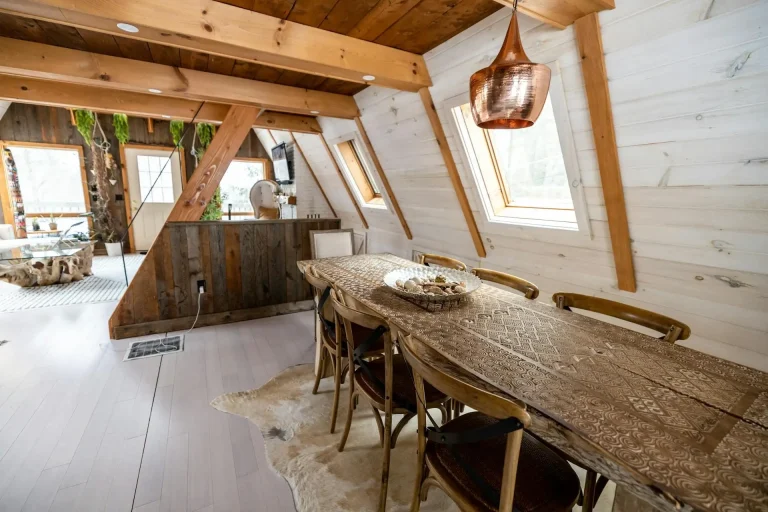
A great option is a dining room table solid wood for durability and style. It holds up well, and if the size is right, it doesn’t overpower everything else around it.
Wall-mounted or foldable tables are worth considering if space is really tight. They disappear when you don’t need them, which changes how the whole room feels.
Floating and Wall-Mounted Furniture
At some point, you run out of floor. That’s when walls start doing more of the work.
Mounting furniture changes how open a space feels almost immediately. It’s not just about saving space. It’s about how the room reads visually.
A simple example is floating nightstands with drawers to combine storage and a minimal footprint. You get storage, but the floor stays clear, and that alone makes a difference.
It also makes cleaning less annoying, which, in small spaces, matters more than expected.
Multi-Functional Furniture Pieces
Some furniture quietly does more than it looks like. Those are usually the pieces that stay the longest.
Nesting tables, for instance, stay out of the way until you need them. Then suddenly they’re useful.
Convertible desks work the same way. You don’t always need a workspace, but when you do, it’s there.
Choosing multi-functional wooden furniture means you’re not constantly negotiating space with your own belongings.
Choosing the Right Style for Small Spaces
Minimalist and Scandinavian Design
These styles don’t try too hard, which is exactly why they work.
Light wood tones reflect more light, so the room feels less closed in. Clean lines reduce visual noise. You’re not processing too many shapes at once.
It’s not about making the space look empty. It’s about making it easier to exist in.
Mid-Century Modern Furniture
Mid-century modern pieces feel lighter, even when they’re not. The legs are raised, the shapes are simpler, and you see more of the floor.
That visual gap matters.
A perfect example is a mid century modern dining table for both style and space efficiency. It fits in without feeling like it’s taking over.
That balance is what makes it work so well in smaller homes.
Best Wood Types for Small Space Furniture
Different woods behave differently, and in a small space, you feel those differences more.
Pine and rubberwood are easier to move. That matters when you rearrange or clean often. Oak and walnut are heavier, but they last. You don’t worry about wearing as much. Engineered wood sits somewhere in between. It’s practical, especially if you’re working within a budget.
When choosing the best wood for small furniture, think about your habits. Not just the look. The daily use.
Space-Saving Tips for Arranging Wooden Furniture
Arrangement changes everything. The same furniture can feel completely different depending on how it’s placed.
Using vertical space helps immediately. Shelves, wall units, anything that lifts storage off the floor. Keep pathways clear, even if it means having fewer pieces. Movement matters more than filling space.
Mirrors can shift the feel of a room, too. They reflect light and create depth, especially next to lighter wood tones.
These small space furniture ideas are simple, but once you apply them, the difference is obvious.
Common Mistakes to Avoid
One common mistake is overcrowding. It is tempting to add more furniture for comfort, but too many pieces make a room feel smaller and harder to use.
Another issue is ignoring storage. Without proper storage, clutter builds up quickly. Choose pieces that offer hidden storage whenever possible.
Focusing only on style can also backfire. A beautiful piece that does not fit your space or needs will quickly become frustrating.
And skipping measurements almost always leads to regret. Always measure your room and entryways before buying anything. It saves you from costly mistakes and unnecessary returns.
Conclusion
Small spaces force clarity. You start noticing what works and what doesn’t, sometimes sooner than you’d like.
When furniture fits your space and your habits, everything feels easier. You move better. You use things more naturally. The room stops feeling like a constraint.
And that’s really the goal. Not more space, just a space that works.