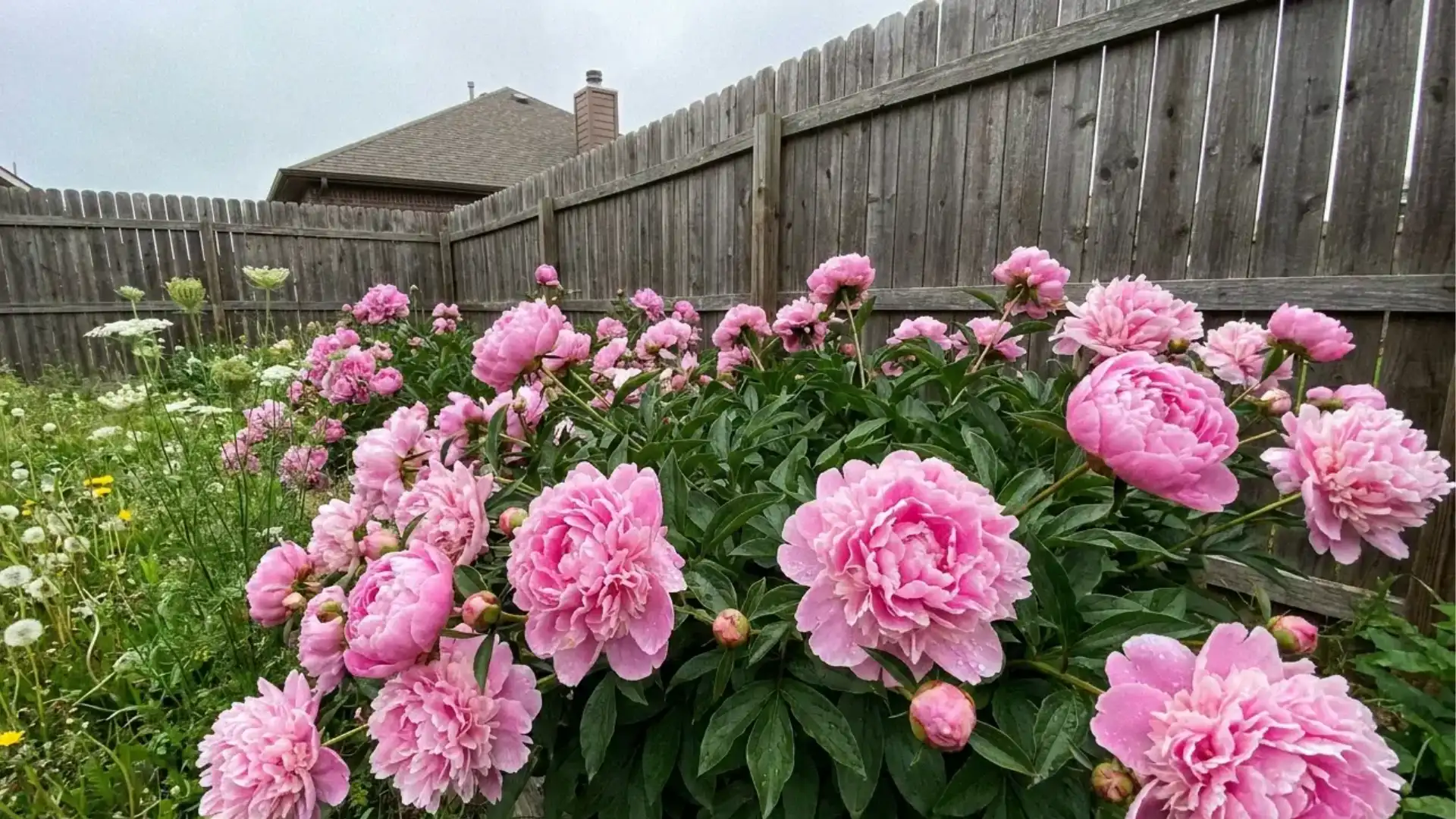
My first peony sat in the ground for two years without a single bloom, and I nearly gave up on it.
The seeds were buried too deep, but once I raised them closer to the surface, the plant rewarded me with blooms for a decade.
Learning how to care for peonies comes down to a handful of details and a little restraint with the fertilizer.
Get those right, and the plant handles the rest for years on end.
Below, we’ll cover planting depth, seasonal upkeep, and keeping cut stems fresh in a vase.
Peony Plant Care at a Glance
Peonies are long-lived perennial flowers known for full, ruffled blooms that return for decades from one planting.
Provide full sun and well-draining soil. Water sparingly once plants are established. Fertilize lightly, avoiding heavy feeds. Stake plants before blooms become too heavy. In the fall, cut back and tidy up.
Divide only if the clump becomes overcrowded.
Patience matters more than effort, since a settled peony keeps flowering for years with barely any hands-on care.
Know Your Peony Type Before You Start Caring for It
Beyond main categories, gardeners select peonies by specific variety because bloom, form, and fragrance vary.
Choose a variety based on preference, but understanding each type helps set correct care expectations.
| Type | Variety | Short Description |
|---|---|---|
|
Herbaceous |
Sarah Bernhardt | Soft pink, ruffled double blooms with light fragrance |
| Festiva Maxima | White double blooms with crimson flecks at the center | |
| Karl Rosenfield | Deep red, full double blooms | |
| Itoh | Bartzella | Bright yellow blooms with light fragrance |
| Julia Rose | Blooms shift from coral to peach to yellow with age | |
| Tree | Shima-nishiki | Pink and white streaked petals on the same bloom |
| Hanakisoi | Large, rose-pink semi-double blooms | |
| Renkaku | Pure white, semi-double blooms with a delicate look |
Choose the Right Location for Healthy Peonies
Location affects more than sunlight.
Give peonies space away from trees and shrubs to prevent root competition for water and nutrients.
Avoid low spots where water pools after rain; standing moisture invites root rot. Keep some distance from walls, fences, or dense plantings to allow airflow around the foliage, since poor circulation raises disease risk.
In hot southern climates, morning sun with light afternoon shade often works better than a full day of harsh heat.
Skip spots near downspouts or sprinkler heads that repeatedly soak the soil.
How to Plant Peonies at the Correct Depth?
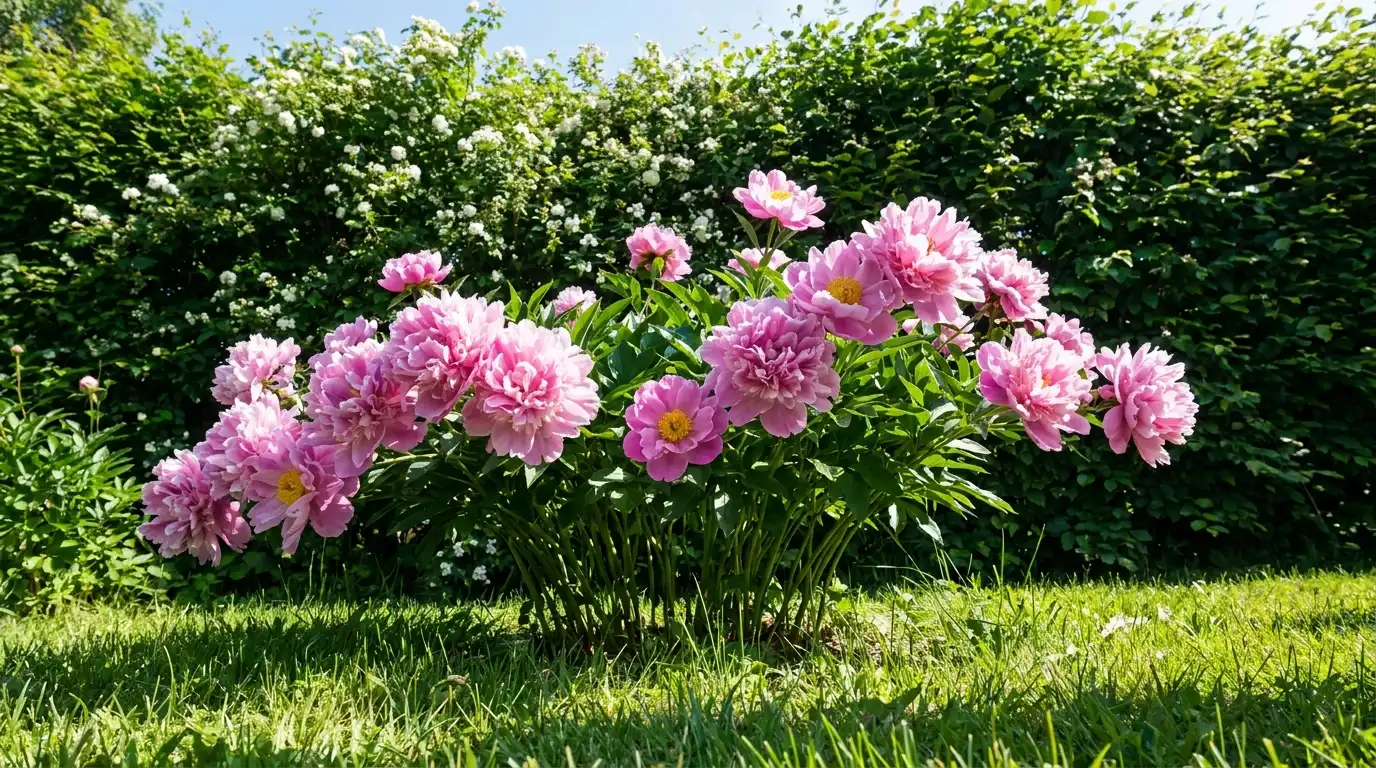
Getting the correct planting depth helps ensure a healthy, blooming plant rather than one that remains stagnant.
Step 1: Dig a Wide, Shallow Hole
Dig a hole about twice as wide as the root ball. Keep it shallow; peonies don’t need much depth.
A wide hole lets roots spread out naturally.
Avoid a narrow, straight-down hole. It restricts root growth and leaves the plant unstable later. Loosen the soil at the bottom of the hole too, so roots aren’t fighting compacted ground on day one.
Step 2: Position the Root Ball
Set the root ball in the hole with the eyes facing up.
Spread the roots outward, not bunched together. Angle the plant so the eyes sit near the top of the hole. This makes final depth easier to control once you backfill.
Take a moment here; repositioning gets messier once soil is already in the hole.
Step 3: Set the Eyes at the Right Height
The eyes should end up 1 to 2 inches below the final soil line.
Going deeper is the most common reason peonies won’t flower.
Check this before backfilling, not after. A ruler or stick laid across the hole makes this easy to eyeball accurately.
Step 4: Backfill Around the Root
Fill the hole in layers. Press soil firmly around the sides, not over the eyes.
Working in layers removes air pockets that dry out roots.
Keep the soil just above the eyes loose. This lets new shoots push through easily in spring. Firm the soil with your hands rather than stomping it down, since compacted ground near the crown holds too much moisture.
Step 5: Water and Settle the Soil
Water thoroughly right after planting. This helps soil settle around the roots. Check for any spots that sink lower than expected. Fix them now, before the plant goes dormant. A quick check now saves guesswork come spring.
Add a light layer of mulch once the soil settles, just to protect the crown through the first winter.
Ongoing Peony Care Essentials
Once your peonies are planted, simple habits keep them healthy and blooming annually.
From watering to feeding to supporting heavy flowers, here’s regular peony care throughout the season.
How Often to Water Peonies?
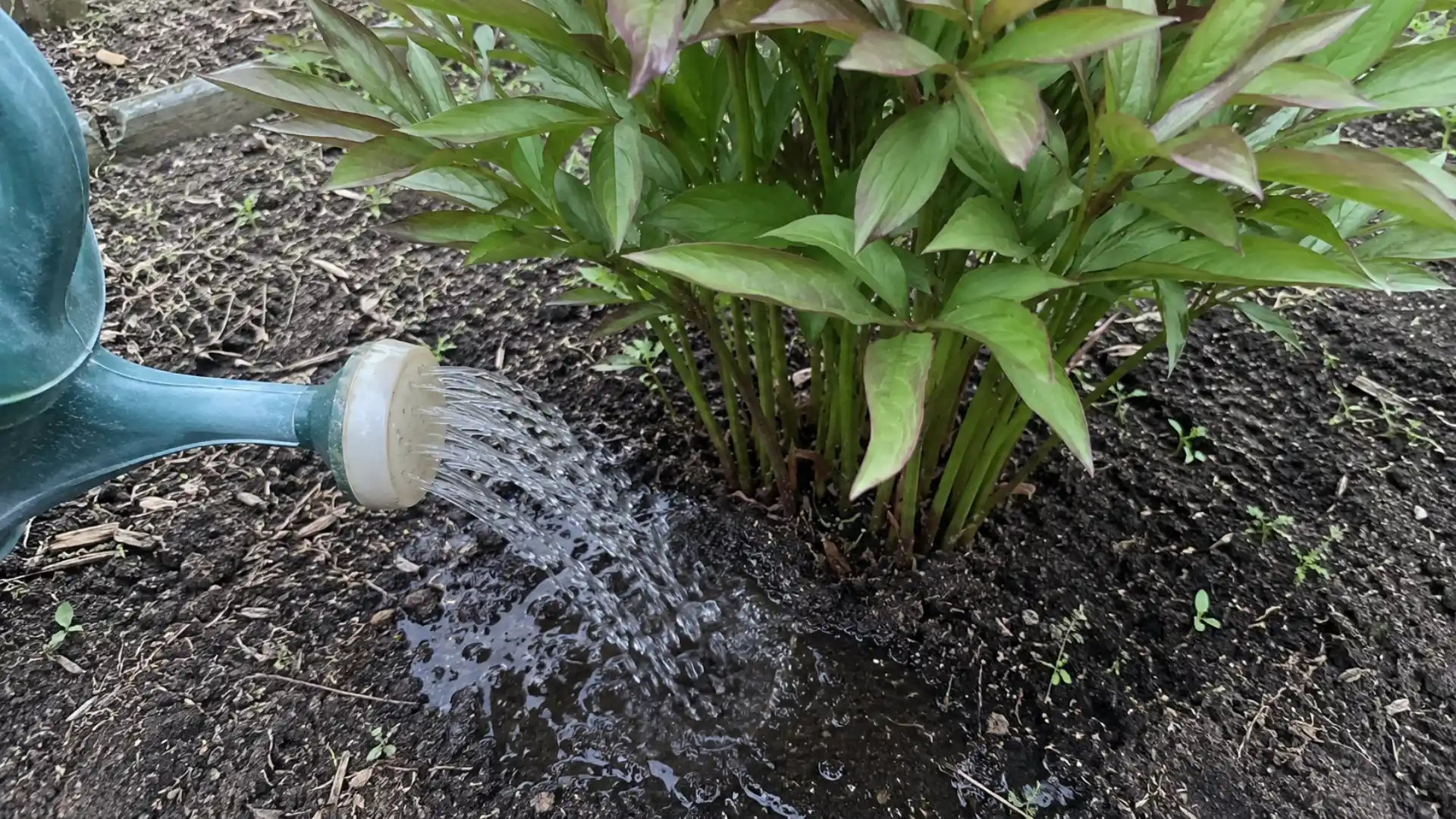
Peonies are fairly drought-tolerant once planted, so overwatering is a bigger risk than underwatering.
Check the soil rather than following a fixed schedule.
- Water weekly during hot, dry spells; every 1-2 weeks in normal weather.
- Water at the soil or drip line, never on the foliage.
- Overwatering can lead to root rot and fungal issues like botrytis blight.
Best Soil for Peonies and How to Improve It
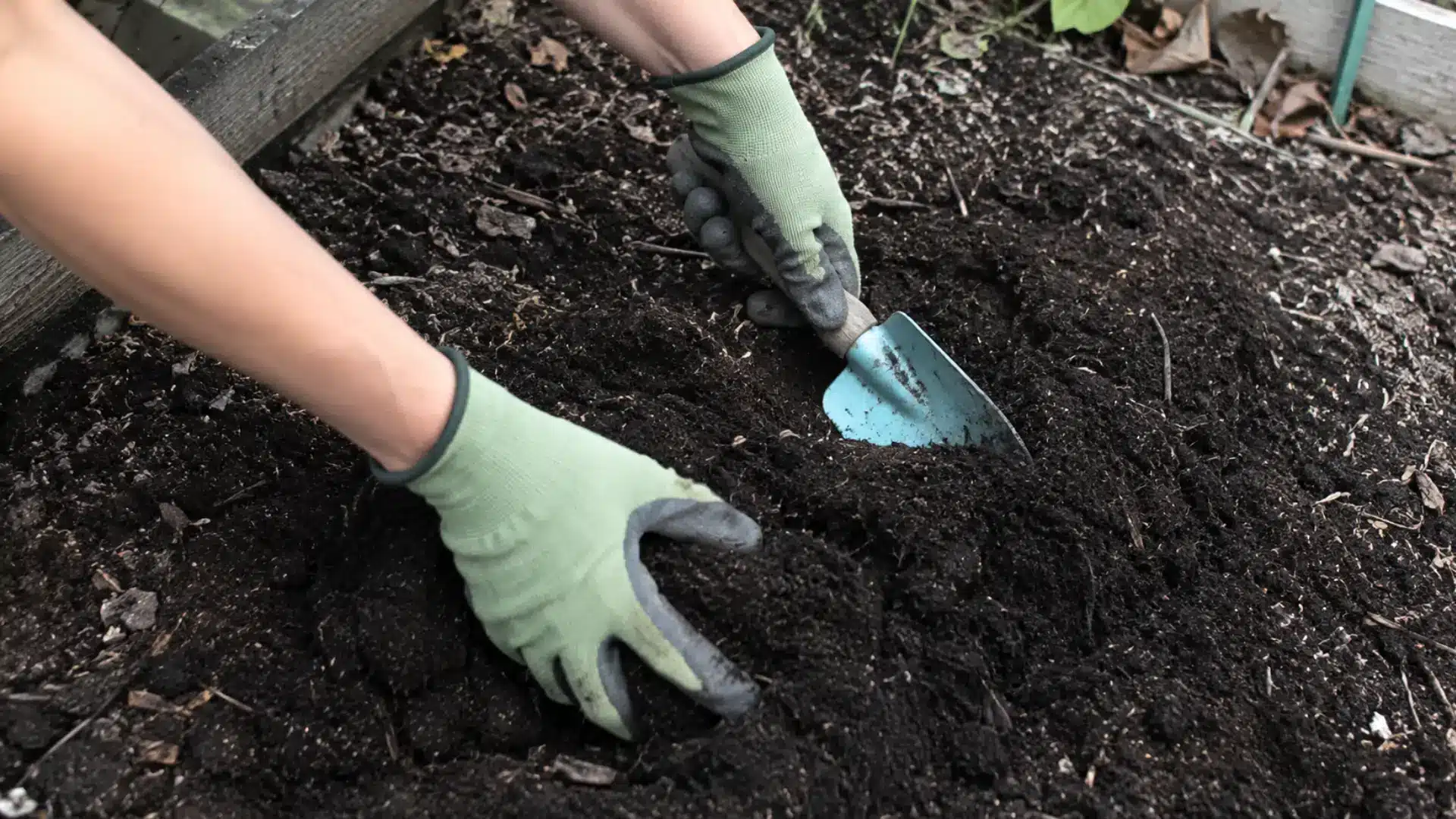
Peonies thrive in well-draining soil that retains sufficient nutrients.
A few simple amendments can turn average soil into a better long-term home for them.
- Mix in compost before planting to improve structure and nutrients.
- Break up heavy clay with sand or grit to prevent pooling.
- Test soil pH occasionally, since peonies prefer neutral to slightly alkaline.
How and When to Fertilize Peonies
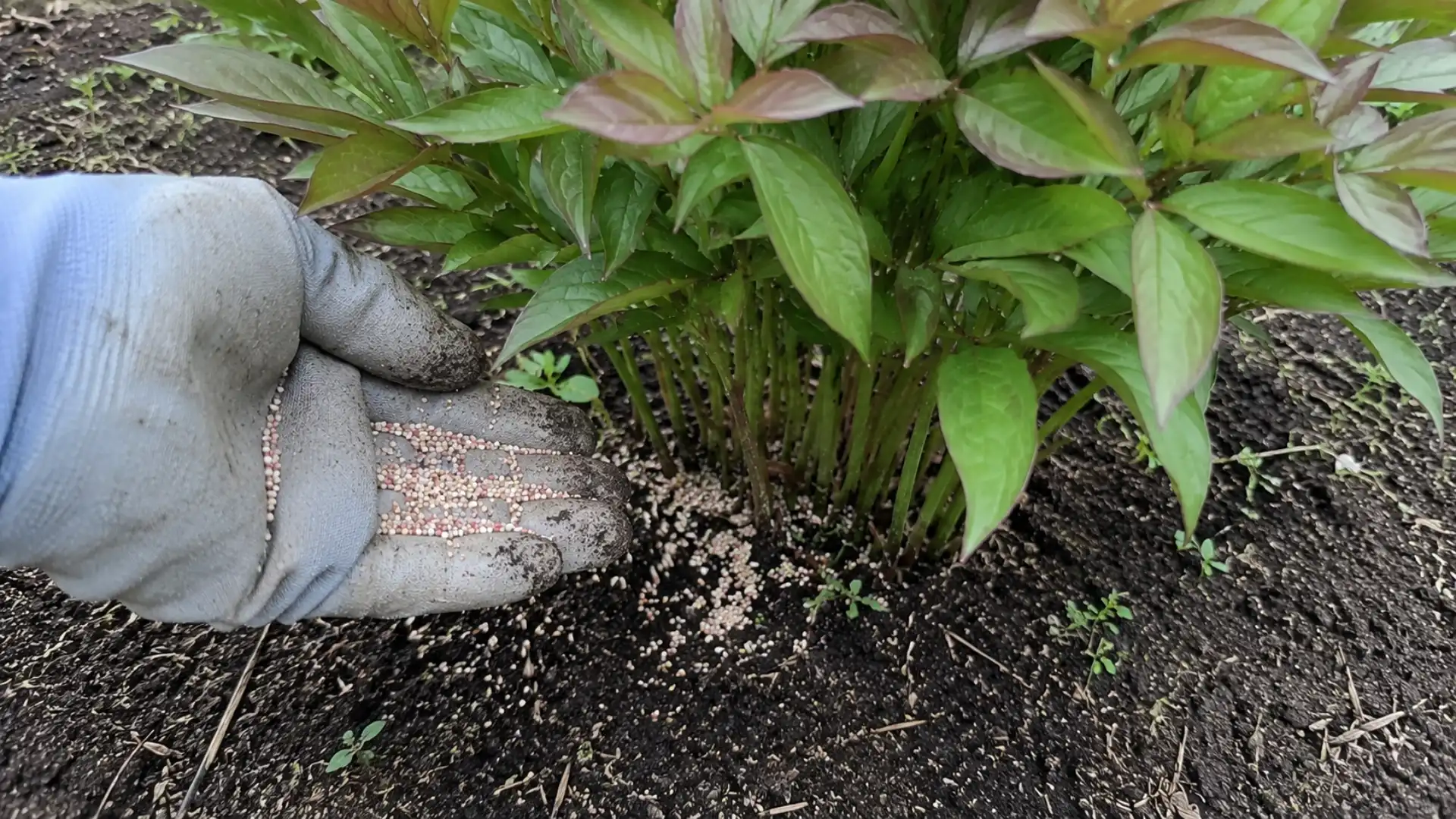
Peonies require only light fertilization to bloom effectively, with timing being more important than the amount.
Usually, a couple of feedings per year are sufficient for healthy growth.
- Apply a light feeding right after blooming ends.
- Feed again in late summer to support next year’s buds.
- Avoid high-nitrogen fertilizers, which encourage leaves over blooms.
How to Support Peonies Before the Stems Flop?
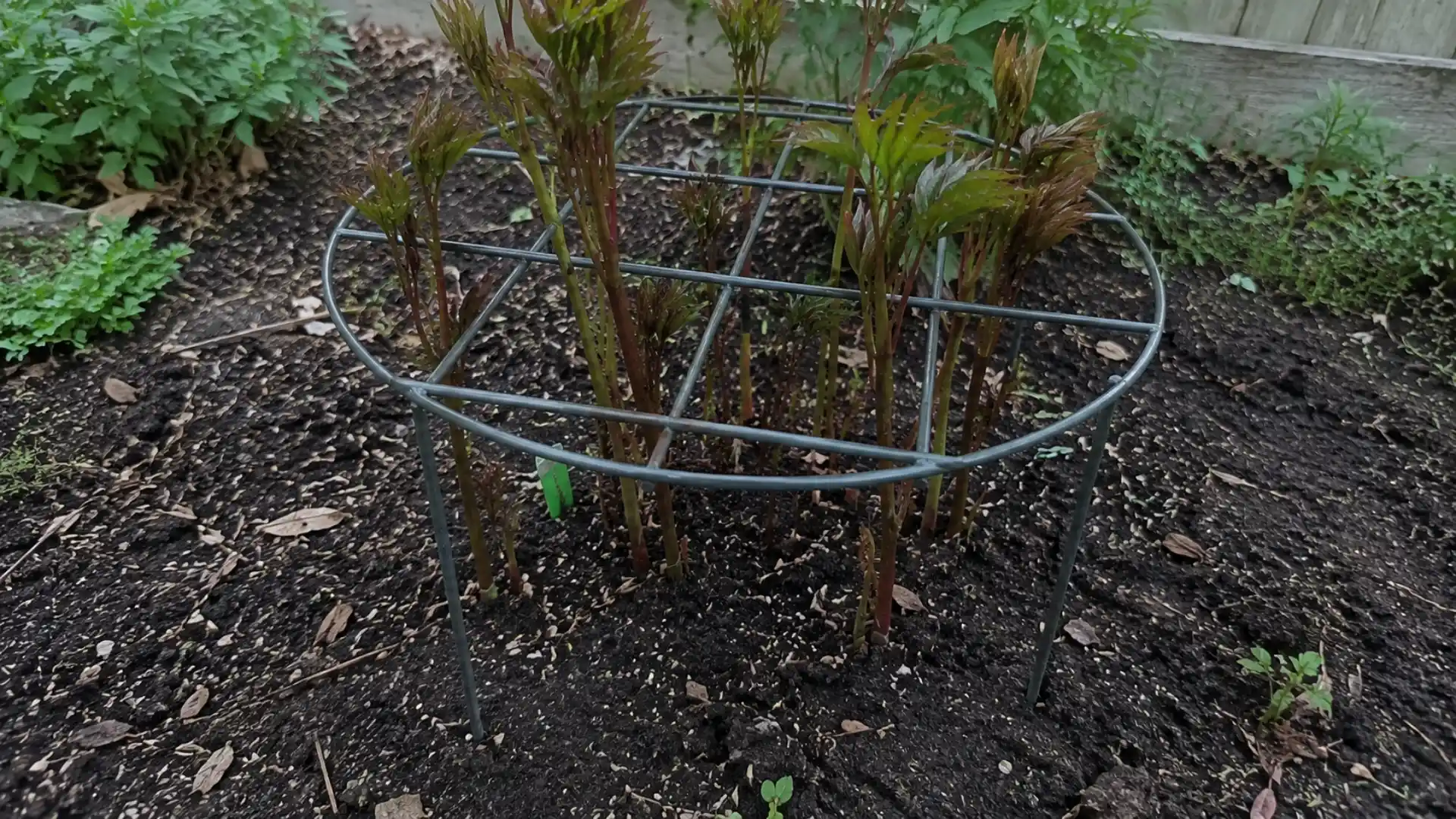
Peony flowers can become so full and heavy that their stems may bend or break.
- Support prevents stems from bending or snapping under the weight of blooms.
- Peony rings, or cages, work best since they hold stems upright without crowding them.
- Install supports in early spring before the plant reaches full growth.
Providing support early on helps make this much easier to handle.
How to Prune Peonies Correctly
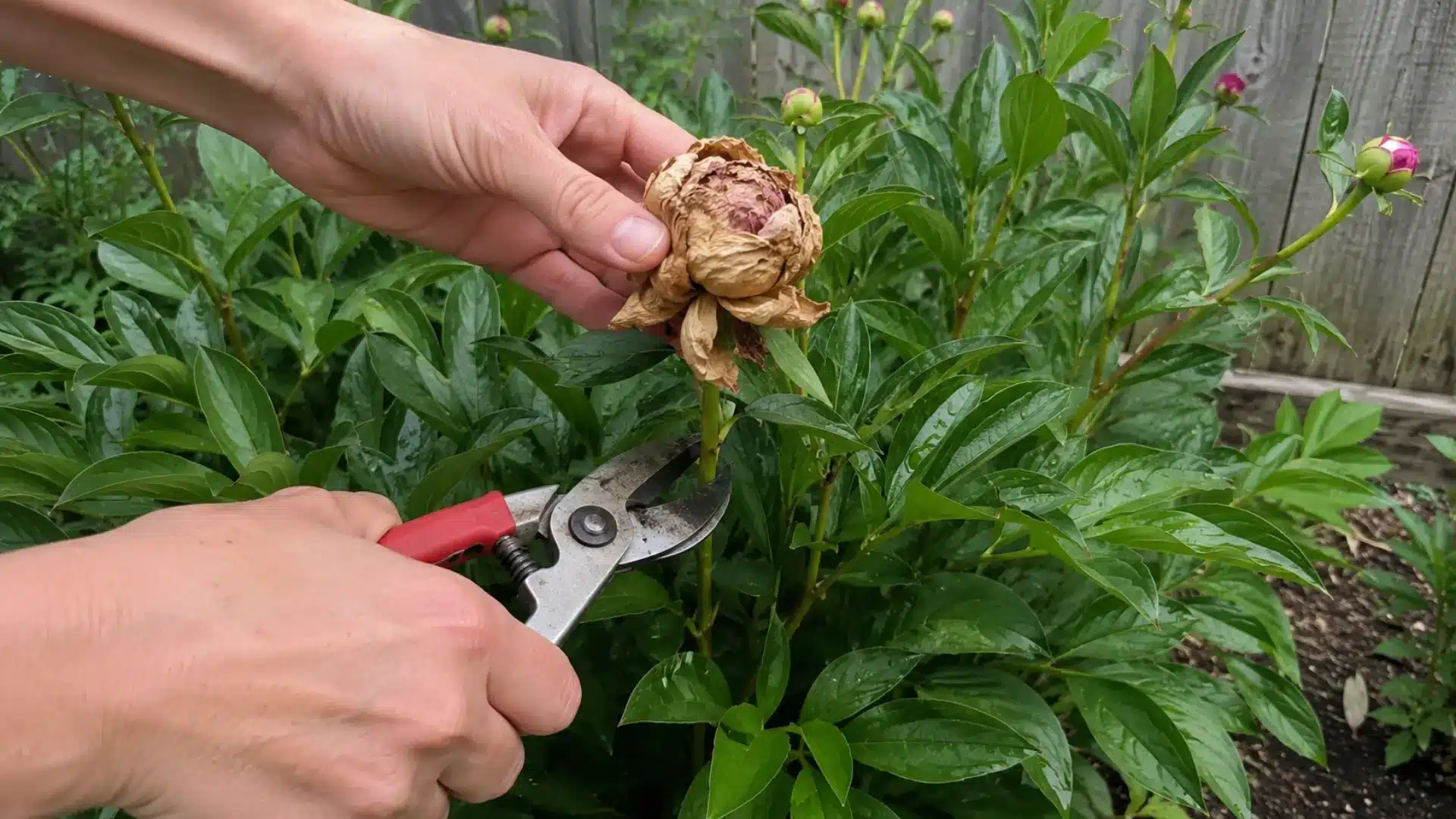
Deadheading and pruning serve different purposes. Deadheading redirects energy to the roots, while the fall cutback mainly prevents disease from carrying into next season.
- Deadhead spent blooms as soon as petals fade to redirect energy to the roots.
- Cut plants back in fall once foliage turns brown or black.
- Removing old foliage stops fungal spores from overwintering in the soil.
Mulching Peonies
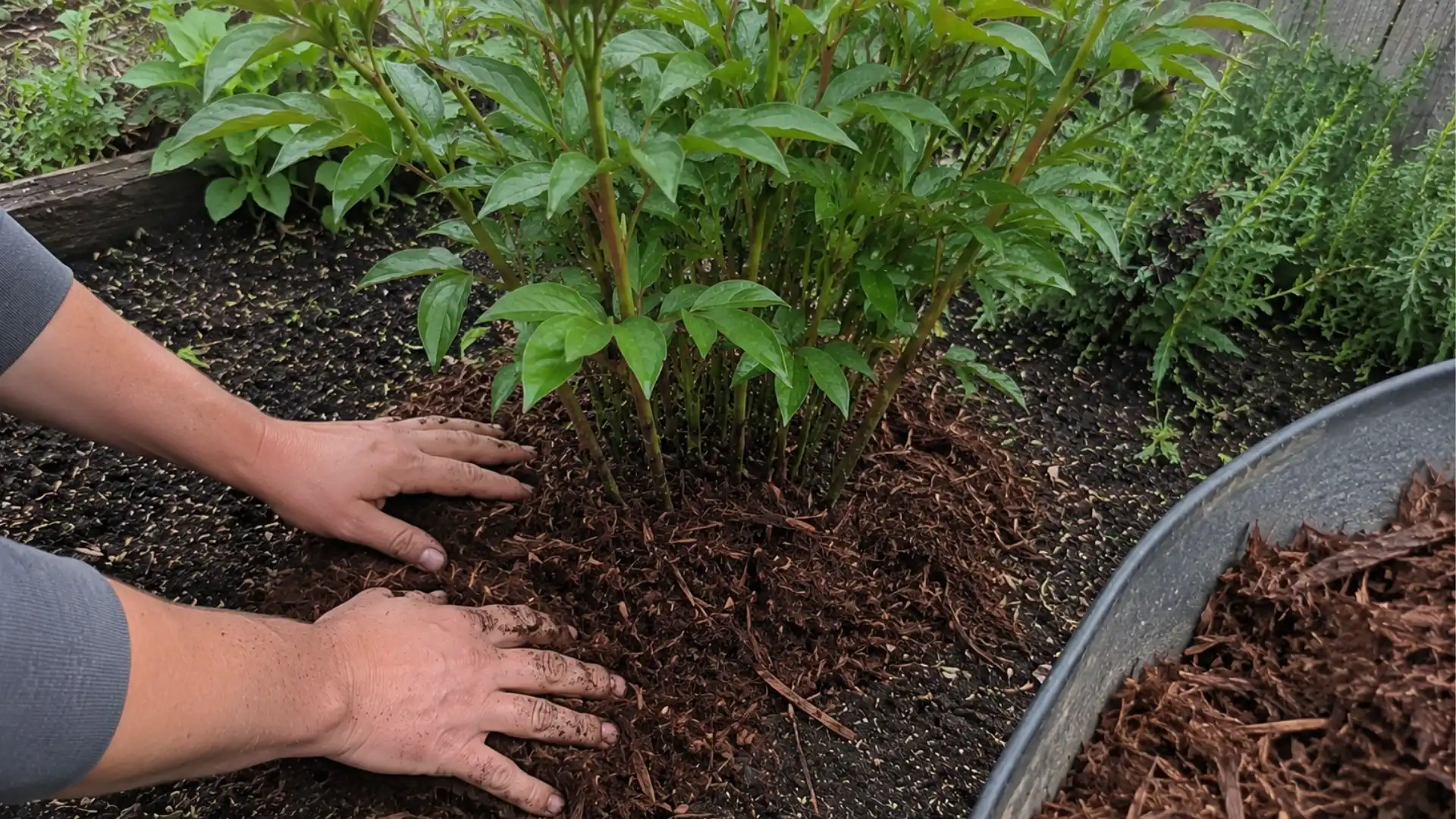
A thin layer of mulch helps control soil temperature and moisture levels.
Keep it away from the crown itself, as placing it too close can trap moisture and lead to rot.
- Apply a thin layer (1-2 inches) around the base, not directly over the crown.
- Mulch in late fall to protect roots through winter in colder climates.
- Remove excess mulch in spring so new shoots aren’t blocked from emerging.
How to Take Care of Peonies in a Vase?
Cut peonies can look stunning, but they’re also short-lived if handled the wrong way.
A few small adjustments in cutting, water, and placement help your blooms last longer.
- Snip stems in the cool morning or evening, while buds still feel soft, like a marshmallow.
- Cut stems at an angle and remove leaves that would sit below the waterline.
- Room temperature water keeps blooms fresh; slightly warm water helps slow-opening buds.
- Keep peonies away from direct sun, heat vents, or drafty windows.
- Change the water and slightly re-trim stems each day.
- Ice cubes, floral preservative, or an overnight fridge stay can stretch out bloom time.
What to Do After Peonies Finish Blooming?
Once flowers drop, resist cutting the plant back right away.
Leave the foliage standing, since it keeps feeding the roots for weeks.
Snip off any seed pods that form if blooms weren’t deadheaded, so energy goes back into the plant instead of seed production. Keep stakes or rings in place until the leaves start yellowing on their own.
Check leaves periodically for early mildew spots, since humid stretches after bloom season often bring it on.
Water on the usual schedule rather than cutting back suddenly.
How to Harvest Peonies?
Harvest peonies when buds feel soft and slightly squishy, similar to a marshmallow. Don’t wait for full bloom.
Buds cut too early, while still hard, often fail to open at all. Cut in the cool morning hours, before the day’s heat stresses the stem. Use clean, sharp shears to avoid damaging the plant.
Always leave at least two sets of leaves on the remaining stem, so it can keep storing energy for next year.
Avoid taking more than a third of a plant’s stems in season, mainly on younger plants still building root strength.
For later use, wrap stems dry and store them in the refrigerator for up to a few weeks.
Peonies hold well in cold storage before opening.
Common Peony Problems and How to Fix Them
Even with good care, peonies can run into a few common issues. Most are easy to spot and simple to manage once you know the cause. None of these problems mean you need to start over.
A little patience and the right fix usually get your peonies back on track for the next blooming season.
| Problem | Cause | Fix |
|---|---|---|
| Botrytis blight | Wet foliage, overcrowding, old debris | Remove affected parts, water at soil level |
| Ants on buds | Drawn to sugary nectar | Harmless, no action needed |
| No blooms | Too much shade or planted too deep | Ensure full sun, plant eyes 1-2 inches deep |
| Weak, floppy stems | Heavy blooms, lack of support | Add peony rings or stakes early in spring |
| Yellowing leaves | Poor drainage or overwatering | Improve soil drainage, reduce watering |
Common Mistakes to Avoid
A few small missteps are often behind peonies that fail to bloom or struggle to thrive.
- Planting Too Deep: Burying the eyes more than 2 inches below soil often prevents blooms entirely.
- Choosing a Shady Spot: Less than 6 hours of sun leads to weak stems and few flowers.
- Over-Fertilizing: Too much nitrogen encourages soft growth and disease instead of stronger blooms.
- Watering the Foliage: Wetting the leaves instead of the soil increases the risk of botrytis blight.
- Skipping the Fall Cutback: Leaving old foliage in place lets fungal spores overwinter in the soil.
- Expecting Blooms Too Soon: Newly planted peonies often need 2-3 years before they fully flower.
- Dividing Too Often: Splitting mature clumps more than necessary disrupts their long-term growth.
When and How to Divide or Move Peonies?
Only move a peony for a good reason, like poor drainage or too much new shade.
Wait until fall, after the first hard frost kills back the foliage. Lift the whole clump with a garden fork. Keep as much root as you can. Trim off the dead foliage. Replant at the same depth as before.
Planting too deep delays blooms. Water well and add a light mulch for winter.
Expect few or no flowers the next year. The plant needs time to settle in.
Peony Care Calendar
Following this simple routine through the year keeps your peonies healthy and ready to bloom each spring again.
| Season | Key Tasks | Why It Matters |
|---|---|---|
| Early Spring | Add stakes or rings; watch for botrytis | Supports blooms, catches disease early |
| Late Spring | Let buds develop | Peak bloom development |
| Summer | Water as needed; deadhead | Prevents drought stress, feeds the roots |
| Fall | Cut back foliage; feed lightly; divide if needed | Stops fungal spores, sets up next year’s blooms |
| Winter | Let the plant go dormant | Needed chill for spring blooms |
Final Words
Peonies are not demanding once you get the fundamentals down.
Full sun, good drainage, light fertilizer, and proper fall cleanup ensure a healthy plant with decades of blooms.
The real skill in caring for peonies is not constant attention but knowing when to step back and let the plant do its work.
Avoid deep-planting, stake before buds are heavy, and cut stems at the marshmallow stage for best vase life.
Do that, and a single peony can outlast the fence around it, the house beside it, and a few passing garden trends.
Frequenty Asked Questions (FAQs)
Why Do Peony Buds Feel Sticky Before They Open?
The buds secrete a sugary nectar that attracts ants, which is a normal part of their opening process.
How Far Apart Should You Plant Peonies If You Want a Hedge-Like Row?
Space them 2-3 feet apart, which allows fuller coverage while still giving each plant room to grow.
Are Peonies Toxic to Pets Like Cats and Dogs?
Yes, peonies are mildly toxic to both cats and dogs and can cause stomach upset if ingested.
How Long After Planting Do Peonies Typically Take to Bloom?
Most peonies take 2-3 years after planting to produce their first full round of blooms.