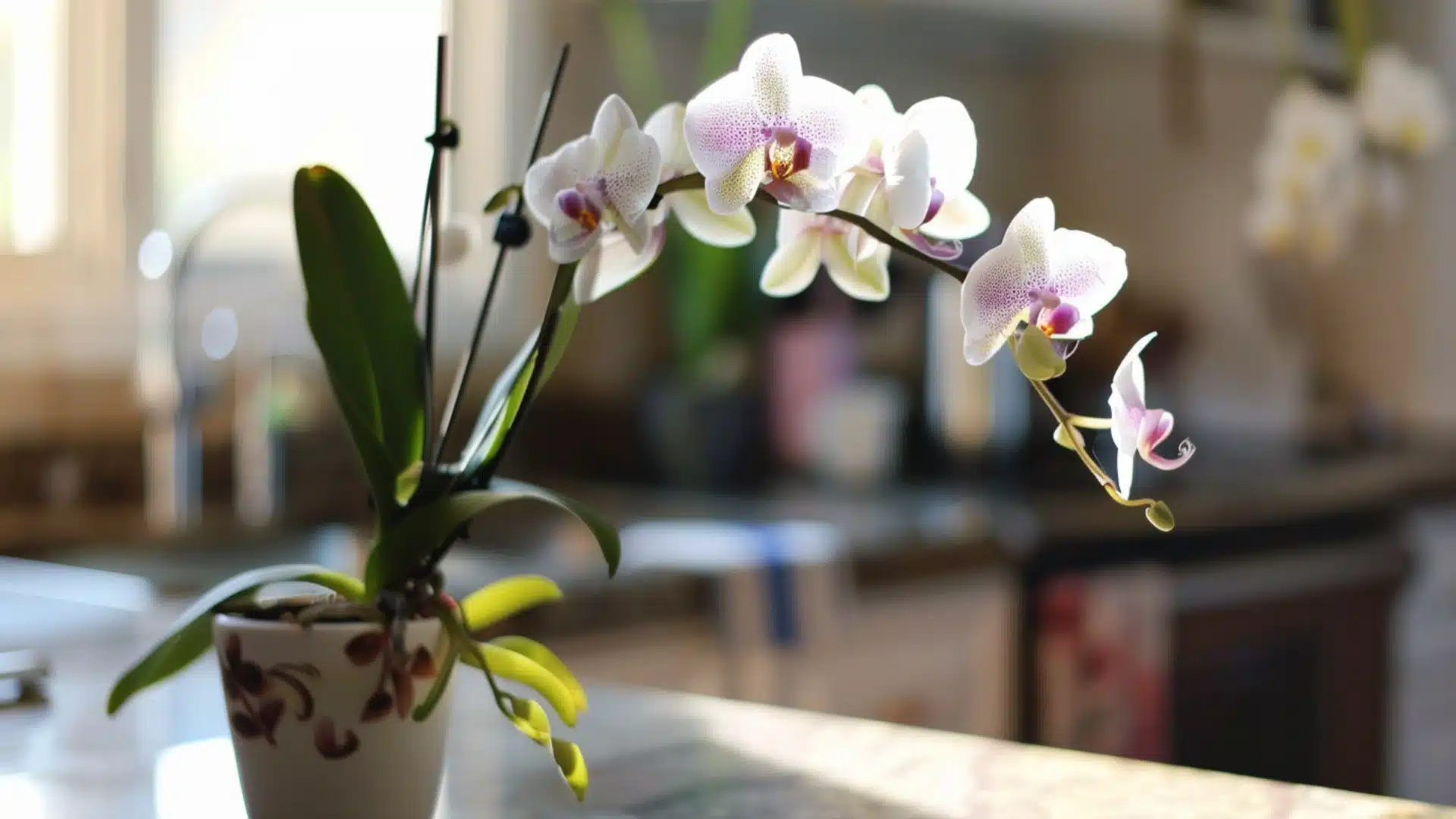
Orchids don’t bloom on a yearly schedule the way most flowering houseplants do. A single bloom cycle can run four to six months, followed by a bare, flowerless stretch that lasts just as long.
People assume that gap means the plant is dying.
It is not. The plant is storing energy for the next round, and forcing it to “perform” on a schedule is usually what kills it.
Caring for orchids means dropping the habits that work for other houseplants. Fixed watering schedules. Guesswork. Treating every plant the same way. Once the real patterns click, the plant stops feeling fragile.
This blog covers what actually keeps orchids alive and gets them to rebloom.
Orchid Care at a Glance
Orchids are prized for their delicate, long-lasting blooms and grow as epiphytes on tree bark in rainforests.
They come in pastels, purples, and yellows, with some blooming for months.
- Native Habitat: Rainforests, mountains, and tropical regions in over 100 countries.
- Growth Type: Mostly epiphytic; grows on trees, not in soil.
- Number of Species: Over 28,000 species, one of the largest plant families.
- Common Household Types: Phalaenopsis, Dendrobium, Cattleya, Cymbidium, Oncidium.
- Typical Lifespan: 10 to 15 years or more with proper care.
- Bloom Duration: 6 to 10 weeks per bloom cycle.
- Root Function: Absorbs moisture and air; often visible above the soil line.
Orchids prefer bright, indirect light and pots with drainage holes.
Water when the top inch feels dry, not on a schedule. Use humidity trays or dishes to mimic their habitat. Feed lightly biweekly during growth, easing off in winter. Keep roots snug; they bloom better when slightly potbound.
Choosing the Best Location for an Orchid Indoors
An east-facing window works best. Morning sun stays gentle, never harsh.
South or west windows need a sheer curtain to soften afternoon rays.
Keep the plant a few feet back from direct glass, since cold nights and hot glare both cause stress.
Avoid drafts near doors, vents, or air conditioners. Steady temperatures between 65 and 80°F keep growth on track. Bathrooms or kitchens often offer natural humidity, making them solid choices too.
Rotate the pot every couple of weeks. This keeps growth even and stops the plant from leaning toward one side.
How to Plant Orchids for a Healthy Bloom?
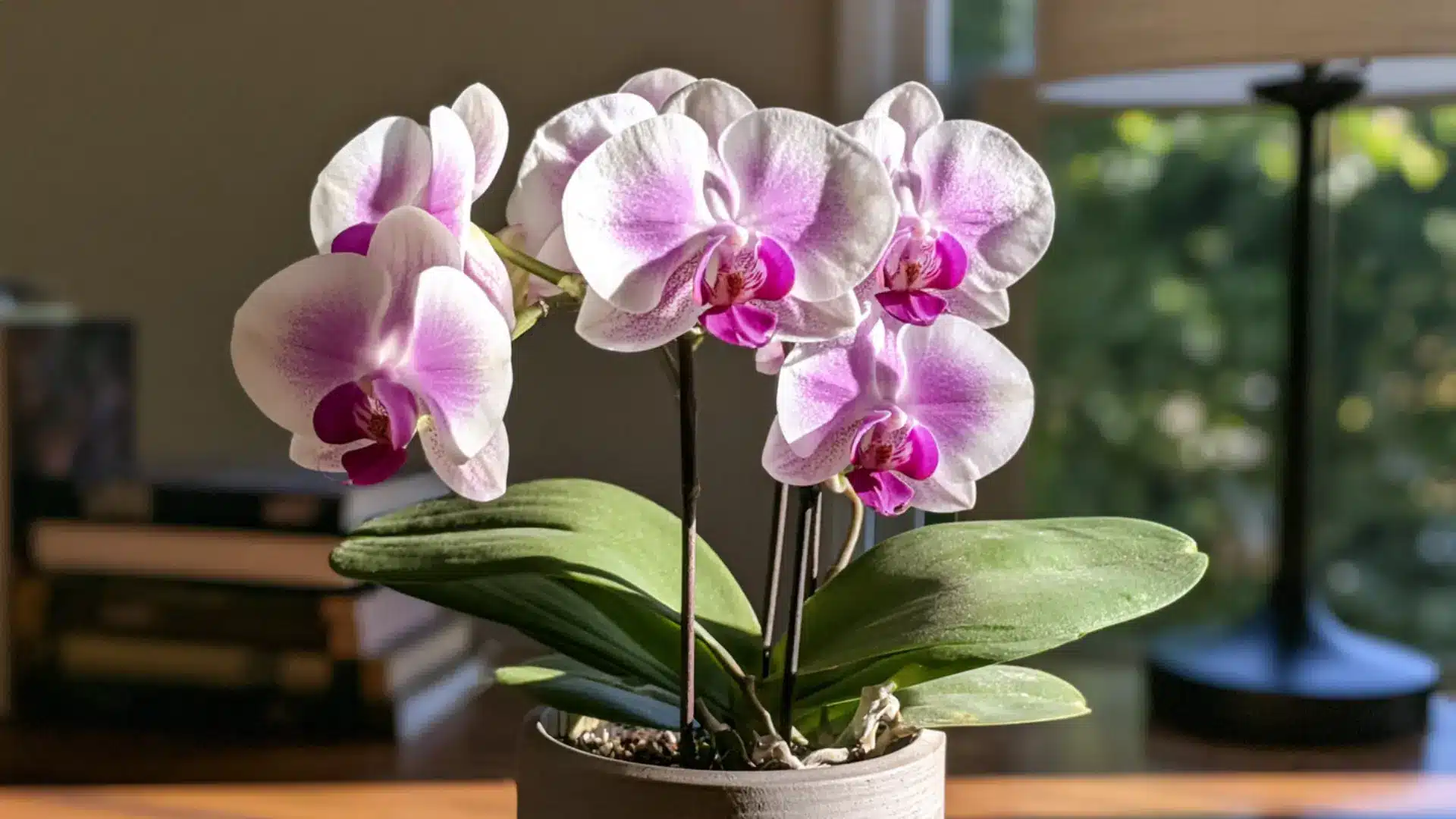
Planting the right way sets the stage for strong roots and steady blooms.
- Step 1: Select a transparent plastic pot that has drainage holes.
- Step 2: Carefully lift the orchid out of its previous container.
- Step 3: Remove the old bark and examine the roots for any signs of rot.
- Step 4: Use clean shears to remove any mushy or blackened roots.
- Step 5: Add fresh orchid bark or sphagnum moss when repotting.
- Step 6: Position the plant to ensure roots are evenly spread, then fill the surrounding mix.
- Step 7: Water the plant lightly and keep it in bright, indirect sunlight.
Watering Orchids the Right Way
Water needs shift with the seasons, not the calendar. Warmer months call for more frequent watering, while winter growth slows and thirst drops too. Pot material matters just as much.
Clay pots dry faster than plastic, so adjust the schedule accordingly.
Tap water works fine for most orchids, though rainwater or distilled water suits salt-sensitive types better.
Mineral buildup shows up as white crust on the bark or pot rim, a sign to flush the mix occasionally.
Morning watering gives leaves time to dry before nightfall, lowering the risk of fungal spots.
Consistency always outperforms guesswork.
Humidity, Airflow, and Temperature
Orchids thrive in humidity levels between 50-70 percent, far higher than most indoor homes naturally provide.
A humidity tray filled with pebbles and water raises moisture around the roots without soaking them directly.
Airflow matters just as much, since stagnant air around leaves invites fungal spots and bacterial rot.
A small fan set on low, running a few hours daily, keeps air moving without drying out the plant.
Temperature swings between day and night, ideally a ten-degree drop, actually encourage blooming in many species. Rooms that stay a constant seventy degrees year-round can leave orchids reluctant to flower.
The Best Potting Mix and Containers for Healthy Roots
Orchid roots need airflow far more than typical houseplants, which rules out standard potting soil entirely.
The right mix and container do most of the work in keeping roots healthy long-term:
| Mix or Container | Best for | Key Benefit |
|---|---|---|
| Fir Bark (medium grade) | Most Phalaenopsis | Fast drainage, sturdy anchor for roots |
| Sphagnum Moss | Smaller pots, drier homes | Holds moisture longer between waterings |
| Charcoal Chunks | Mixed into bark blends | Absorbs salts, keeps mix fresh |
| Perlite | Blended with bark or moss | Boosts aeration, prevents compaction |
| Terracotta Pots | Growers who overwater easily | Porous walls wick away excess moisture |
| Slotted Plastic Pots | Most home growers | Visible roots, easy moisture checks |
| Glass or Ceramic (no holes) | Decorative outer cover only | Never use as the actual growing pot |
Matching the container to a watering habit makes far more difference than most growers expect. Fresh mix on a steady schedule keeps roots strong enough to support healthy leaves and future blooms.
Feeding Orchids Without Overfertilizing Them
Orchids require less fertilizer than assumed, and overfeeding harms more than skipping it.
A balanced, orchid-specific fertilizer diluted to quarter strength once a week during active growth supports healthy leaves and roots. Feeding should slow down or stop entirely once the plant enters dormancy in fall and winter.
Salt buildup from fertilizer can burn roots, so flush the pot monthly with plain water to remove excess.
Signs of overfertilizing include blackened root tips and leaf edges that turn brown and crisp.
It is safer to skip a feeding than to double up on one.
Everyday Orchid Maintenance: How to Care for Orchids?
Developing small, consistent habits can stop most significant orchid issues before they occur.
A few simple weekly tasks keep plants healthy with minimal effort:
- Wipe leaves with a damp cloth weekly to remove dust that blocks light and invites pests.
- Trim spent flower spikes back to a healthy node to encourage reblooming on the same stem.
- Snip dead or yellowing leaves close to the base with clean scissors to prevent disease spread.
- Check roots through a clear pot to catch rot early, before leaves show stress.
- Rotate the pot a quarter turn weekly to keep growth even instead of leaning toward light.
How to Get an Orchid to Bloom Again?
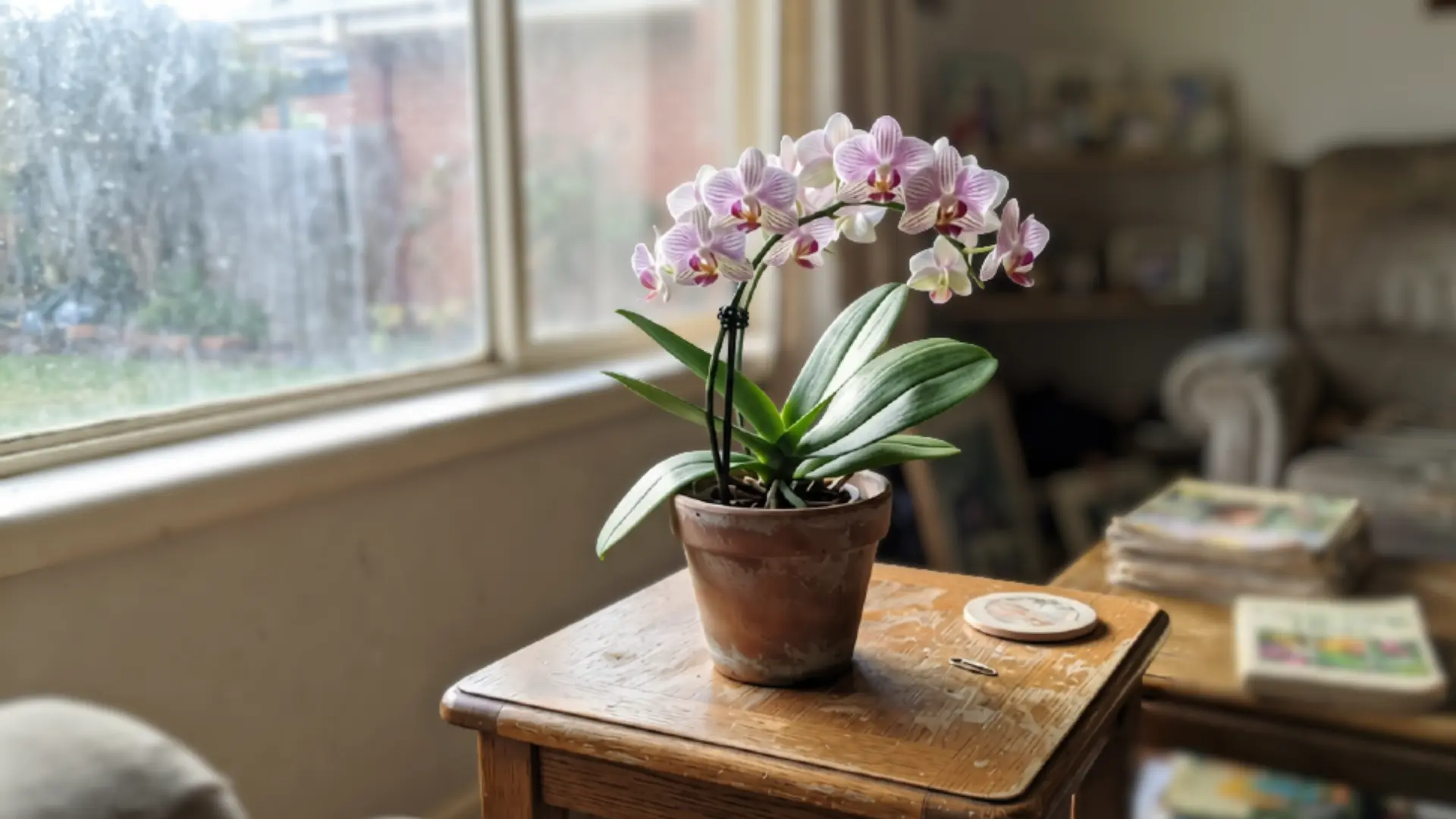
Once flowers fade, resist the urge to toss the plant.
Cut the spike just above a visible node, and a second bloom often follows within weeks.
If the spike turns brown, trim it back to the base instead. A temperature dip triggers reblooming for wide varieties. A 10-degree drop between day and night, especially in fall, signals the plant to set new buds.
Cooler rooms or covered patios work well for this.
Fertilizing also contributes to the process.
Switch to a blooming formula with more phosphorus once spikes appear, then taper off as flowers fully open.
How and When to Repot an Orchid?
Repotting keeps roots healthy and prevents overcrowding.
Most orchids need a fresh mix every one to two years, sooner if roots look cramped or the bark breaks down.
Indicators that suggest it is time to repot:
- Roots crawling over the pot’s rim or through drainage holes.
- Bark feels mushy, gray, or breaks apart when touched.
- Water drains through in seconds instead of soaking in.
Spring, immediately following blooming, is the perfect time window.
New root growth starts naturally then, helping the plant settle faster into its new mix. Choose a pot only one size larger. Too much extra space holds excess moisture, inviting the same root rot repotting aims to prevent.
Common Orchid Problems and Exactly How to Fix Them
Most problems give noticeable signs before actual damage occurs.
| Problem | Cause | Fix |
|---|---|---|
| Yellow Leaves | Aging, or too much sun | Remove leaf; move to filtered light |
| Wrinkled Leaves | Dehydration | Soak well; check roots |
| No Blooms | Low light, no cool nights | Brighten spot; add cool nights |
| Brown or Black Spots | Fungal infection | Trim spot; treat with fungicide |
| Sticky Leaves | Pests like aphids | Wipe with neem oil |
| Mushy Brown Roots | Root rot | Trim rot; repot in dry mix |
| Buds Dropping Early | Sudden temperature shift | Keep placement stable |
Common Orchid Pests and Diseases
Orchids are subject to several common threats, each exhibiting distinct warning indicators.
- Mealybugs: White, cottony clusters at leaf joints and stem bases.
- Scale Insects: Small brown bumps that cling to stems and leaf undersides.
- Spider Mites: Fine webbing and tiny speckled dots on leaf surfaces.
- Thrips: Silvery streaks and distorted new growth on buds.
- Crown Rot: Soft, blackened tissue at the base where leaves meet roots.
- Botrytis (petal blight): Small brown spots scattered across flower petals.
- Black Rot: Dark, water-soaked lesions spreading quickly through leaves and stems.
Orchid Care for Different Growing Environments
Homes vary, and orchid care shifts with the setting.
Apartments with limited natural light benefit from grow lights placed a foot above the plant and run 12 to 14 hours daily. Greenhouses offer steadier humidity but need shade cloth to cut intense midday sun.
Offices with fluorescent lighting alone often struggle to sustain blooms, so a supplemental lamp helps.
Outdoor growers in warm climates can put orchids on a shaded patio or indoors if temperatures fall below 55°F.
Air conditioning dries indoor air quickly, so a nearby humidity tray can offset that in centrally cooled homes.
Orchid Care Myths That Cause More Harm Than Good
Orchid roots need airflow to survive, yet most care advice pushes practices that cut that airflow off. A few myths in particular do more damage than the neglect they are meant to prevent.
Come, let’s debunk the myths together!
Myth 1: Misting Keeps Orchids Thriving
Fact:Wet leaves invite fungal spots more often than they prevent problems. Misting does more harm than good for most orchid varieties.
Myth 2: Orchids Bloom Only Once
Fact: Most varieties rebloom for years with the right care. A single bloom cycle is not the end of the plant’s life.
Myth 3: Low Light Suits Delicate Orchids
Fact: Low light starves the plant of the energy it needs to bloom. Orchids need bright, indirect light to stay healthy.
Myth 4: All Orchid Species Need Identical Care
Fact: Light, water, and temperature needs vary widely by species. Treating every orchid the same way often backfires.
Expert Tips That Make Orchid Care Easier
A few habits learned from experienced growers simplify daily care.
- Use clear pots to monitor root color and health at a glance.
- Group orchids together to naturally boost surrounding humidity.
- Label each plant with its bloom history to track patterns over time.
- Keep a small fan running nearby for gentle air circulation.
- Save spent bark for compost instead of reusing it in new pots.
Frequently Asked Questions (FAQ’s)
How Often Should I Water My Orchid?
Water every seven to ten days, adjusting for season, pot, and humidity levels.
Why Won’t My Orchid Rebloom?
Usually, insufficient light or no day-to-night temperature drop is needed to trigger new spikes.
Is It Normal for Orchid Roots to Grow Outside the Pot?
Yes, aerial roots absorb moisture and air; leave them undisturbed.
Can I Use Regular Potting Soil for Orchids?
No, standard soil suffocates roots; orchids need bark- or moss-based mixes.
How Long Do Orchid Blooms Typically Last?
Most blooms last six to ten weeks, depending on species and care.
End Note!
Orchid care runs on a few reliable patterns: bright light, patient watering, and roots that stay loose enough to breathe. Master those, and reblooming stops feeling like luck.
From potting mix to pest control, it all points back to the same idea: consistency beats perfection every time.
Mistakes happen, and a wilted leaf or a stalled spike is not the end of the road.
Adjust, watch closely, and the plant usually bounces back.
Treat each orchid as its own project rather than a copy of the last one, and the blooms will keep coming.