

Cracking open a pistachio is easy. Growing one? Not so much. These small green nuts have a story that starts long before they hit my snack bowl.
I was surprised to learn how much patience and the right environment it takes to grow them. Now you’re probably wondering the same thing I did: how do pistachios grow?
They come from trees that take years to start producing, and they only grow in hot, dry places with just the right conditions.
In this blog, you’ll learn how pistachios grow, where they come from, and why they take so long to reach your hands.
Quick Facts About Pistachios at a Glance
Pistachios come from unique flowering trees that need specific climates and growing conditions. These quick facts explain their origin, growth habits, and key characteristics.
| Fact | Details |
|---|---|
| Scientific name | Pistacia vera |
| Plant type | Small fruit-bearing tree |
| Native region | Central Asia and the Middle East |
| Edible part | Seed inside the pistachio fruit |
| Tree lifespan | Can live for over 100 years |
| First harvest | Usually after 5 to 7 years |
| Pollination method | Wind pollination |
| Growing climate | Hot summers and cool winters |
| Harvest season | Late summer to early fall |
| Tree type | Male and female trees grow separately |
| Common name | Pistachio nut or green almond |
What Do Pistachios Grow On?
Pistachios grow on trees, not underground or on bushes like some might think. A lot of people confuse them with peanuts, which grow below the soil.
But pistachios come from tall, sturdy trees that take years to mature.
A pistachio tree has a strong trunk and wide branches. Its leaves are thick and leathery, helping it survive in hot, dry places.
These trees do best in areas with long, hot summers and cool winters. They need that kind of weather to grow healthy nuts.
Most reach about 20 to 30 feet tall and just as wide at maturity, so a home orchard needs the kind of planning most people put into spacing out rows in a vegetable garden, just on a much bigger scale.
And they don’t just live for a short time. In fact, a well-cared-for pistachio tree can live and produce nuts for over 100 years.
How Do Pistachios Grow From Season to Season?
Pistachios don’t grow overnight. Their growth follows a clear cycle through the year, with each stage playing an important role.
From the early planting years to the moment the shells split open, here’s how pistachios grow season by season:
1. Planting and Early Tree Development
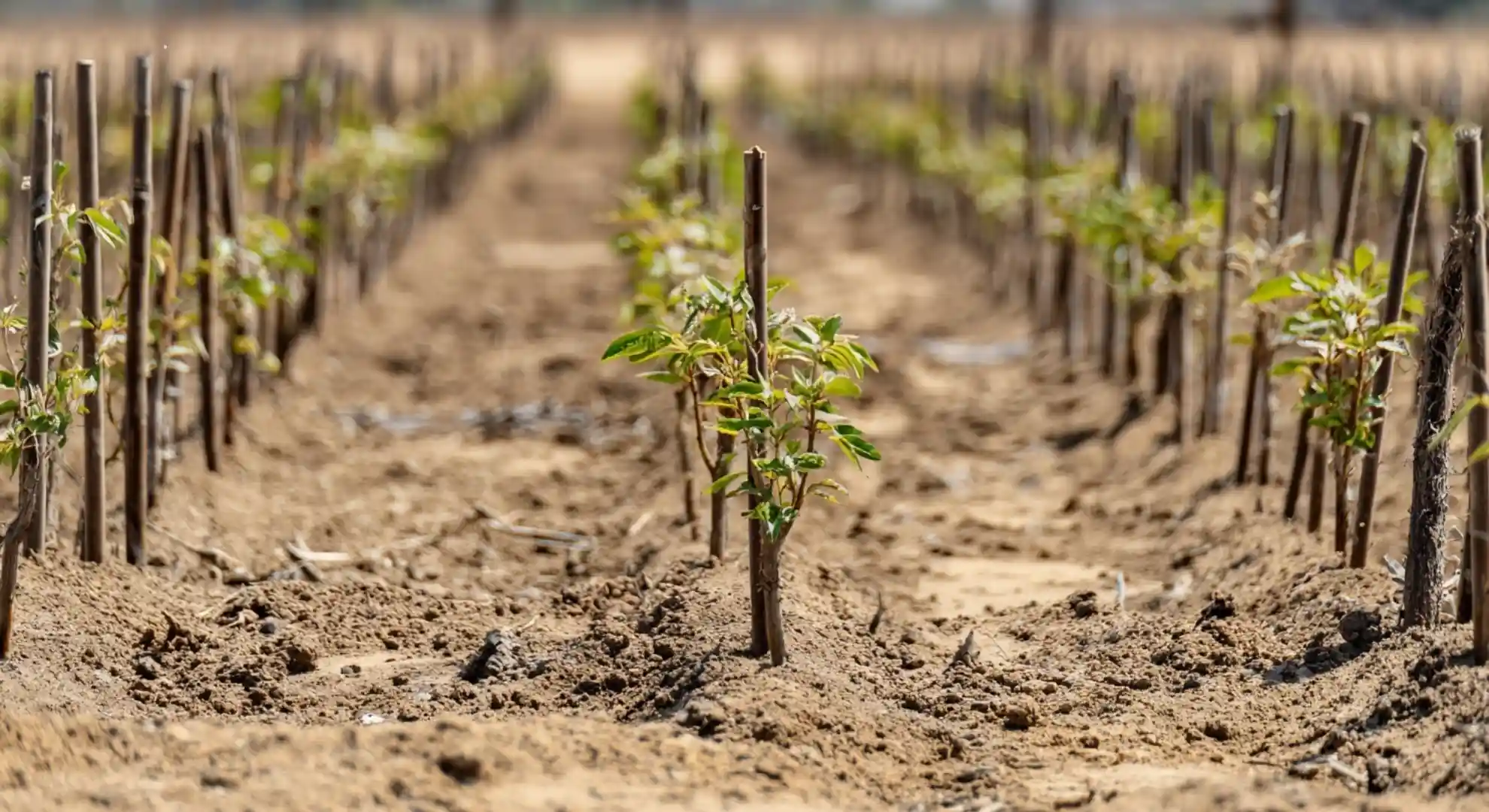
Most commercial pistachio trees are grown through grafting because it produces stronger and more reliable trees.
This process combines a healthy root system with a productive pistachio variety. During the early years, trees focus on developing strong roots, branches, and structure.
Farmers provide proper soil, water, and care before the trees become mature enough to produce nuts.
2. Flowering and Pollination
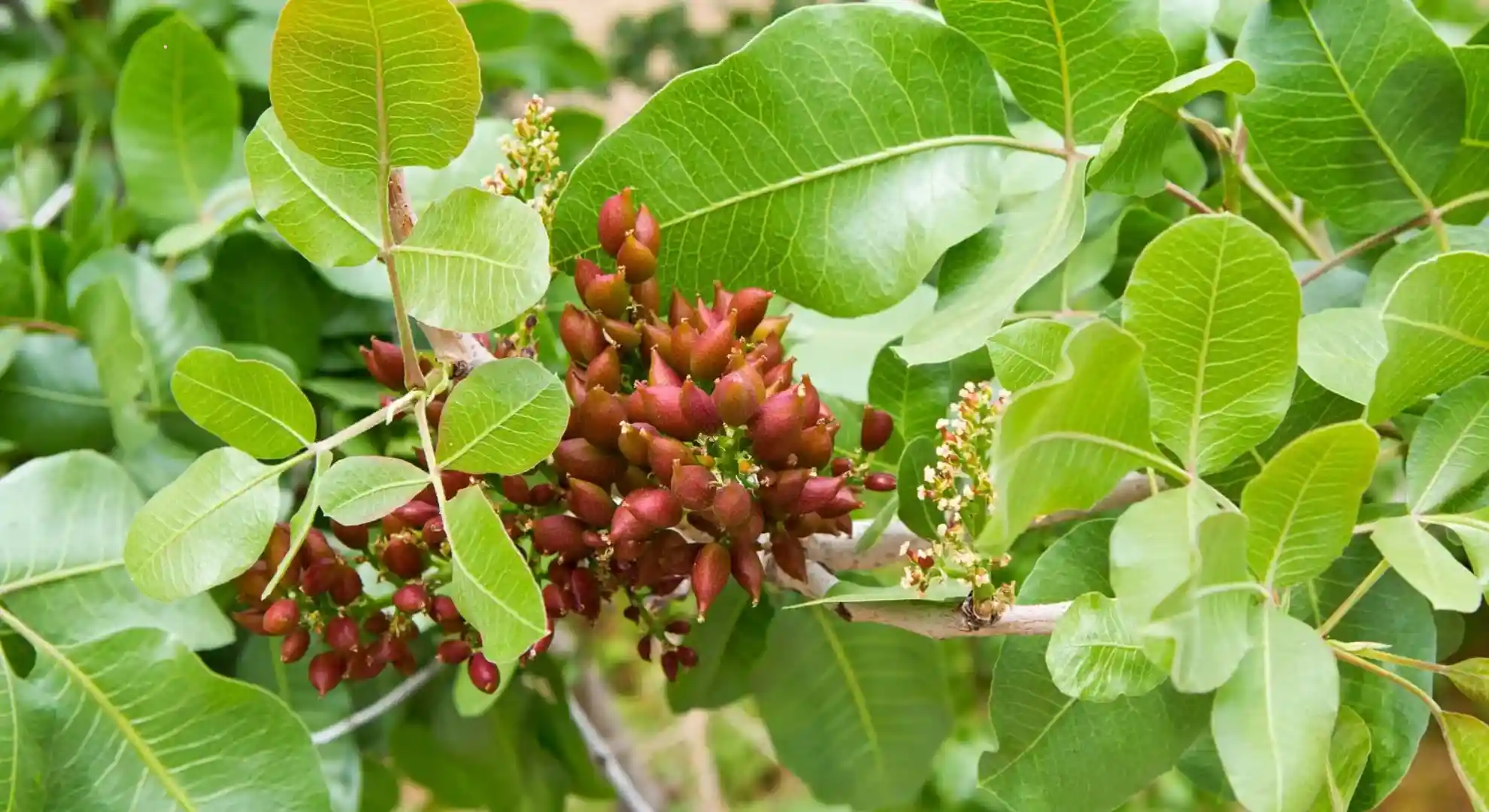
Pistachio trees are either male or female, and both are needed for successful nut production. Female trees produce the pistachios, while male trees provide pollen through their flowers.
Since pistachios rely on wind pollination, farmers plant male trees near female trees to improve fertilization.
3. Nut Formation and Summer Growth
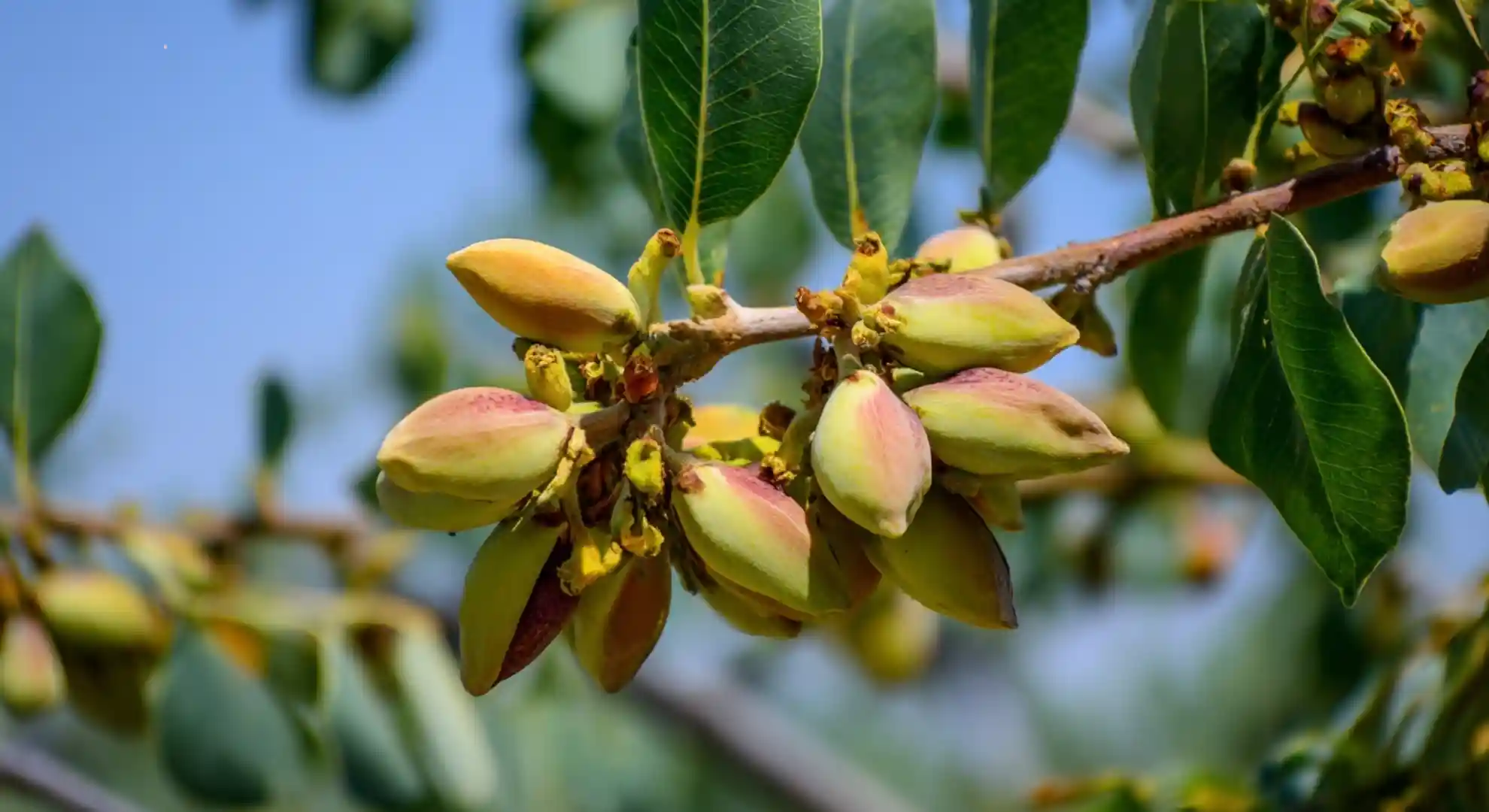
After successful pollination, small pistachio fruits begin developing in clusters on female trees.
The shells grow around the forming kernels as the nuts mature throughout the warm summer months. Hot, dry weather supports better growth and helps the kernels develop properly.
Poor conditions, such as excessive moisture or low temperatures, can reduce nut size and quality.
4. Shell Splitting and Ripening
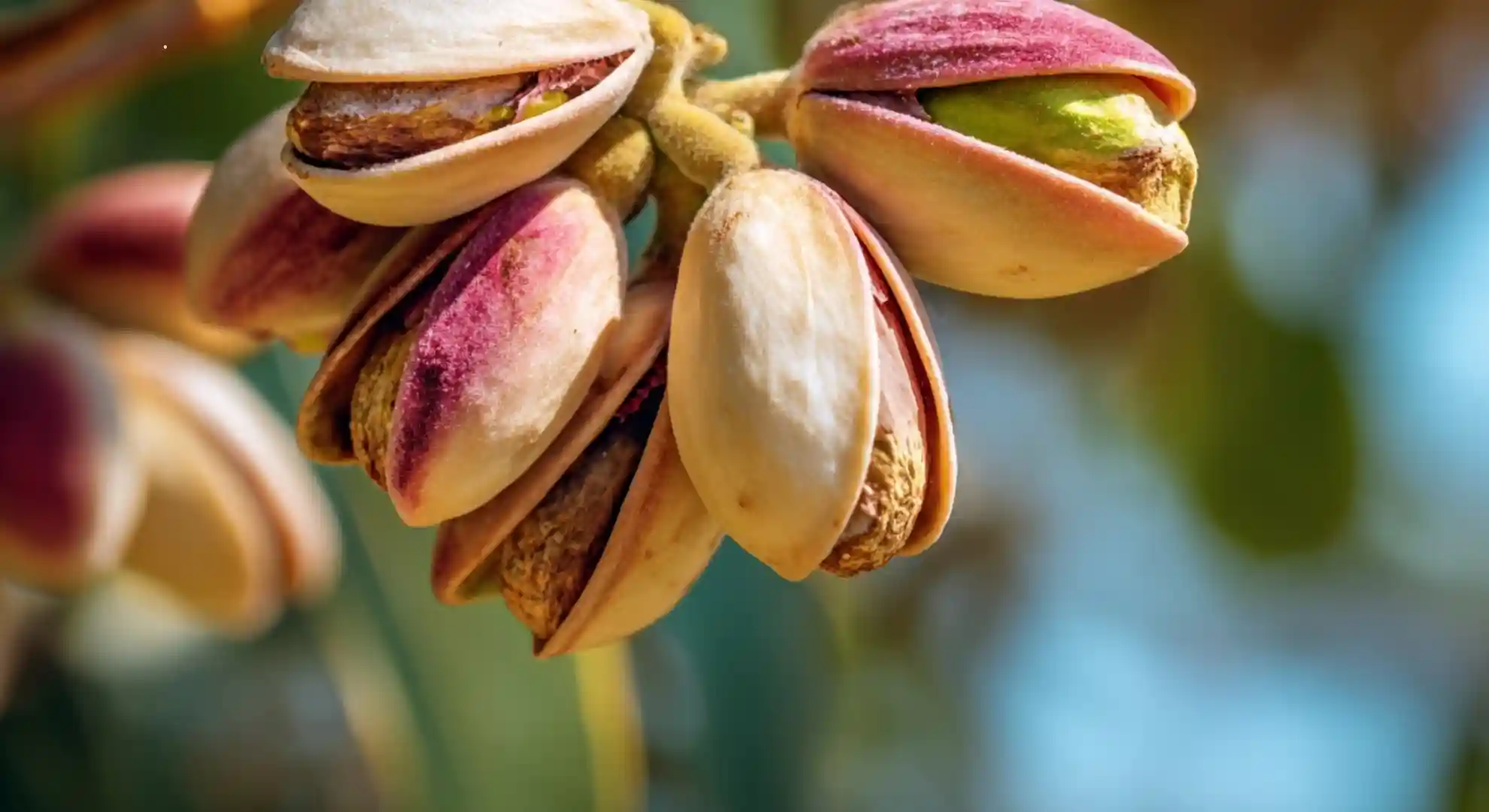
As pistachios reach maturity, their outer shells naturally begin to split open, showing they are ready for harvesting.
The protective outer covering changes color, while the edible kernel develops its familiar green shade.
Farmers closely monitor this stage because harvesting at the right time helps maintain freshness, flavor, and overall nut quality.
How Do Farmers Harvest Pistachios?
Pistachio harvest season usually takes place from late August to early October. The exact timing depends on the weather and how the nuts are ripening.
Farmers look for signs like the shell splitting open and the outer covering, called the hull, turning loose and easy to remove. These signs tell them the pistachios are ready to be picked.
Most pistachios are harvested using machines. Large shakers grab the trees and gently shake the nuts loose. The nuts fall onto big nets or machines that catch them quickly.
This method is fast and helps keep the nuts clean. In smaller orchards, farmers might pick some by hand, but that takes much longer.
After harvesting, pistachios must be processed right away. If they sit too long, they can spoil or grow mold. So, timing and speed are everything.
That’s why harvest time is one of the most important parts of the year.
What Makes a Good Place to Grow Pistachios?
Pistachios don’t grow just anywhere. They need a very specific type of weather to grow well. That’s why you only find large orchards in certain parts of the world.
These trees need hot, dry summers to ripen the nuts. But they also need cold winters so the trees can rest and start fresh each year.
Without both, the trees won’t grow right, and the nuts won’t form properly. Too much rain or humidity can even hurt the trees.
| Place | Why It Works for Pistachios |
|---|---|
| California (Central Valley) | Long, dry summers, cool winters, low humidity, and great soil |
| Arizona (southern regions) | Very hot and dry, but winter chill can be limited |
| New Mexico | Dry climate, sunny days, and well-drained soil |
| Texas (western areas) | Hot summers and dry air, but it needs careful water control |
| Nevada (southern part) | Hot and dry, but colder areas work better for winter chill |
| Iran | One of the top producers has ideal dry, sunny weather and cold winters |
| Turkey | Mild winters with good summer heat, long pistachio history |
| Syria | Warm and dry with enough chill in winter |
| Greece | Has warm summers and the right kind of dry climate for small farms |
| Italy (Sicily) | Famous for high-quality pistachios, hot summers, and mild but cool winters |
Pistachio trees need about 1,000 hours of cold weather in winter and very little rain in summer. Too much moisture can cause mold or damage the nuts.
That’s why pistachio farms are only found in places with the perfect weather mix.
So, location really matters. The climate controls how well the trees grow, how many nuts they make, and how good the harvest will be.
What Happens After Pistachios are Picked?
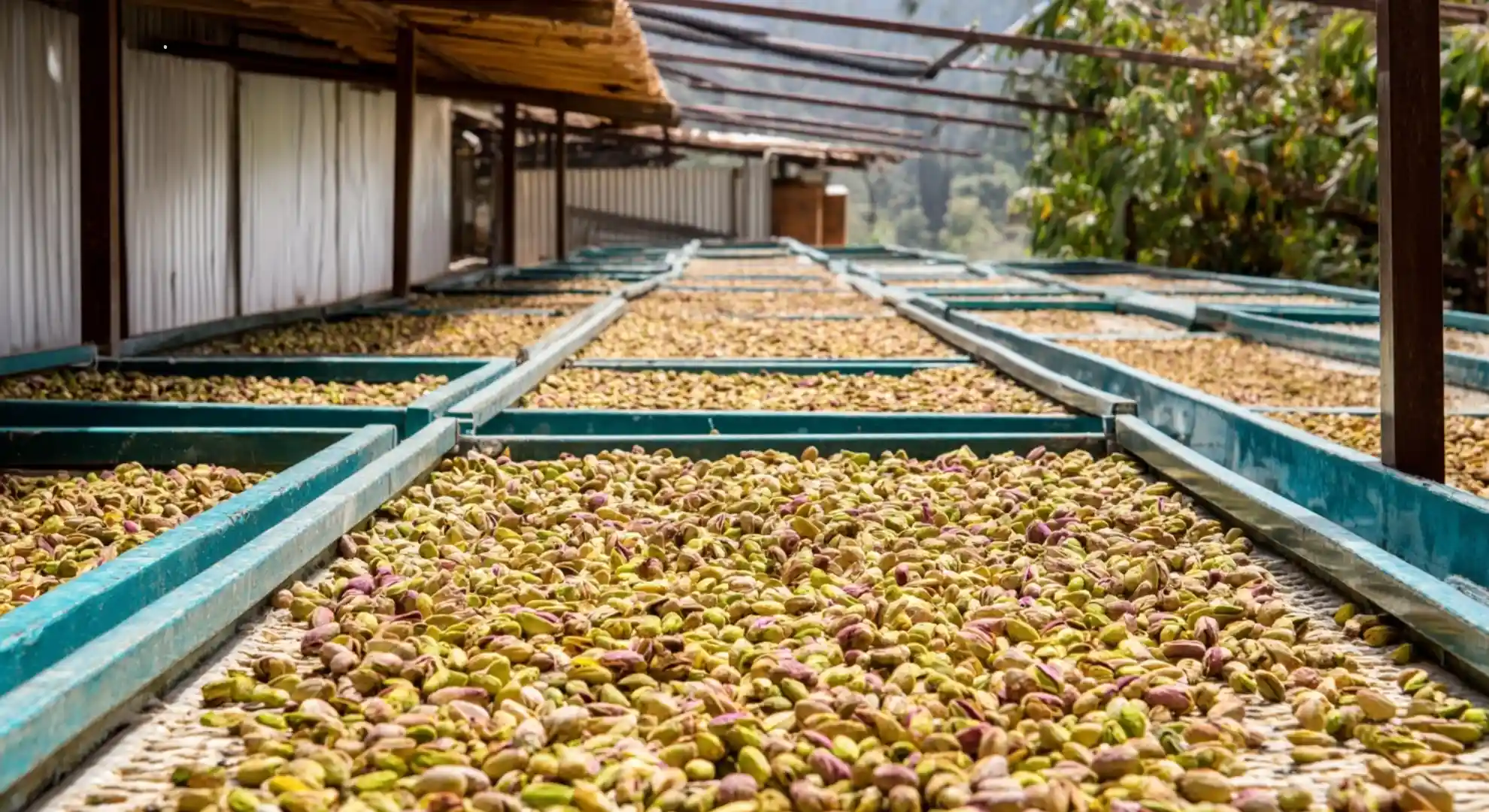
Once pistachios are picked, the work isn’t over. In fact, the next few hours are critical. Right after harvest, the outer hull is removed. This step is called hulling.
If the hull stays on too long, it can stain the shell or cause mold. That’s why hulling is done as soon as possible.
Next, the pistachios go through drying. They still hold a lot of moisture after being picked. If that moisture isn’t removed quickly, the nuts can spoil.
Drying brings the moisture level down to a safe range, which helps them last longer without going bad.
Once dry, the pistachios are sorted by size and quality. Some may be roasted and salted, while others are left plain. After that, they’re packed and stored until they’re ready to be sold.
These steps are key to making sure pistachios stay fresh, safe to eat, and ready for shelves.
The Growing Timeline of Pistachios
Pistachios take years to grow, but once the trees mature, they can keep producing for generations. Here’s what the process looks like over time:
Years 1–4:The Tree focuses on root and branch development
Years 5–7:First small crops may appear
Year 15 and beyond:Full production begins with large, steady harvests
Up to 100+ years:Trees can stay productive with proper care
Pistachios aren’t a quick crop, but they’re a lasting one. With the right weather and attention, a single tree can feed families for decades.
Why Pistachio Production isn’t Steady?
Pistachio trees do not give the same amount of nuts every year. This is normal and part of how these trees grow. Most pistachio trees follow a pattern called alternate bearing.
That means one year they produce a heavy crop, and the next year they produce less.
In a heavy year, the tree puts a lot of energy into growing and maturing the nuts. This can leave the tree low on energy the following season.
So in the following year, the tree focuses more on resting and building strength than making nuts. Then the cycle starts again.
The weather also plays a big part. Pistachios need cold winters and hot summers. If the weather is not right, such as warm winters or too much rain in summer, it can hurt the crop that year.
Farmers do their best by pruning, watering, and feeding the trees properly. But even with reasonable care, this pattern is part of how pistachio trees grow.
Can Pistachios Be Grown at Home?
Yes, pistachios can be grown at home, but it’s not easy. These trees need particular weather to grow well. They do best in places with long, hot summers and cold winters.
They also take a long time to grow. It can take 5 to 7 years before a tree starts making nuts, and about 15 years to reach full production.
On top of that, you need both male and female trees for pollination. This makes growing pistachios at home more of a long-term project than a quick hobby.
Things to keep in mind:
- You need a dry, sunny climate with cold winters
- Trees must be planted in well-drained soil
- Both male and female trees are needed for nuts to grow
- Expect a long wait before getting any nuts
Growing pistachios at home is possible, but it takes space, time, and patience. It’s best for serious gardeners who live in the right climate.
If you’re used to growing a fruit tree like figs, pistachios follow a similar logic, just with a much longer runway before the first harvest and a strict climate requirement that figs are more forgiving about.
Conclusion
Pistachios require the right combination of tree variety, climate, and farming practices to grow successfully.
Their development takes time, starting from flowering and pollination before the nuts are ready for harvest. Warm conditions and proper care play an important role in producing healthy pistachios each season.
So, factors like soil quality, seasonal changes, and orchard management may also influence the final harvest and overall nut quality.
Have you ever seen a pistachio tree or visited a nut farm? Share your experience and thoughts in the comments below.
Frequently Asked Questions
Can You Grow a Pistachio Tree from a Store-Bought Pistachio?
Technically yes, if the nut is raw and unsalted, but it’s a gamble. Commercial growers graft named varieties onto rootstock instead because germinated seedlings grow unpredictably and take even longer to bear fruit.
How Many Pistachios Does One Tree Produce?
A mature tree can yield around 20 pounds of pistachios in a good year, though alternate bearing means the next year’s harvest is usually smaller. Yield varies by variety, age, and growing conditions, so treat this as a general benchmark rather than a guarantee.
Why Do Some Pistachio Shells Stay Closed?
A portion of any harvest won’t split, usually because of uneven pollination or stress during the growing season. Growers typically sort these out and sell them separately from the split, ready-to-eat nuts, since a closed shell is much harder to open and usually signals a less developed kernel inside.


2 Responses
can pistacho grow in the Philippines?
where to buy seeds if possible to grow in the Philipines?