

Those golden, honey-sweet dates you love actually dangle in massive clusters high up on date palm trees, swaying beneath soft, feathered fronds.
These ancient fruits have been thriving in scorching desert landscapes for millennia, turning intense sunlight into pure, natural sweetness.
The trees themselves are absolute showstoppers: tall, graceful, and surprisingly resilient in conditions that would wilt most plants. What’s really lovely is watching them ripen over months, slowly developing that rich, caramel-like flavor.
We’ll walk through how these palms grow, what conditions they adore, the stages dates go through before harvest, and yes, even how you might grow one at home.
How Do Dates Grow?
Dates begin their life as delicate blossoms on date palm trees, which take about four to eight years to reach maturity and start producing fruit.
Once the tree flowers in spring, pollination happens naturally or through human assistance.
The tiny green fruits then spend five to seven months ripening under intense desert sun, passing through distinct stages as they soften and sweeten.
These palms are incredibly patient growers, needing hot, dry climates with minimal humidity to thrive.
A single mature tree can produce over 100 pounds of dates annually, with clusters hanging heavy beneath those iconic feathery fronds until they’re perfectly ripe and ready for harvest.
Do Dates Grow on Trees?
Yes, dates grow on trees, specifically the date palm tree known scientifically as Phoenix dactylifera.
These towering palms flourish in hot, arid regions like the Middle East, North Africa, and parts of the southwestern United States, including California and Arizona.
The fruits themselves don’t grow randomly scattered across the tree. Instead, dates hang in large, heavy clusters tucked beneath the palm’s sweeping fronds, looking surprisingly similar to oversized banana bunches.
Each cluster can hold dozens of individual dates, all ripening together in the relentless desert heat.
The way they dangle creates a natural canopy effect, with the fronds providing just enough shade during their long maturation process.
Stages of Date Growth
Dates don’t just appear overnight. They pass through beautiful, distinct stages over several months, each one marking a specific shift in texture, color, and sweetness.
Stage 1: Flowering

Time Period: Early spring, typically March through May
Signs: Creamy white or yellow blossoms emerge in large clusters
Date palms are either male or female, and pollination is absolutely essential for fruit development. In wild settings, wind does the work, but commercial growers often hand-pollinate to ensure better yields and consistent fruit quality.
Male trees produce pollen-heavy flowers, while female trees bear the blossoms that will become dates. Without proper pollination, you’ll get beautiful blooms but zero fruit, making this stage critical for the entire harvest.
Stage 2: Fruit Set

Time Period: Late spring, immediately following pollination
Signs: Tiny green, hard dates begin forming where flowers once bloomed
After successful pollination, small green fruits start appearing in tight clusters. These baby dates are incredibly vulnerable at this stage, sensitive to extreme temperature swings, frost, or excessive moisture.
Growers watch the weather closely because even a brief cold snap can damage the developing fruit. The dates remain hard and inedible, slowly beginning their long ripening process under the desert sun.
Stage 3: Maturation (Kimri → Khalal → Rutab → Tamar)

Time Period: Summer through early fall, spanning five to seven months total
Signs: Progressive color changes and softening textures
This is where the magic happens. Dates pass through four distinct ripening stages:
- Kimri (unripe): Bright green, hard, and bitter with rapid growth.
- Khalal (mature but firm): Yellow or red, depending on variety, crunchy with mild sweetness.
- Rutab (semi-ripe): Soft, amber to brown, moisture decreases as sugars concentrate.
- Tamar (fully ripe): Deep brown, wrinkled, chewy with intense sweetness and lowest moisture content.
Stage 4: Harvesting
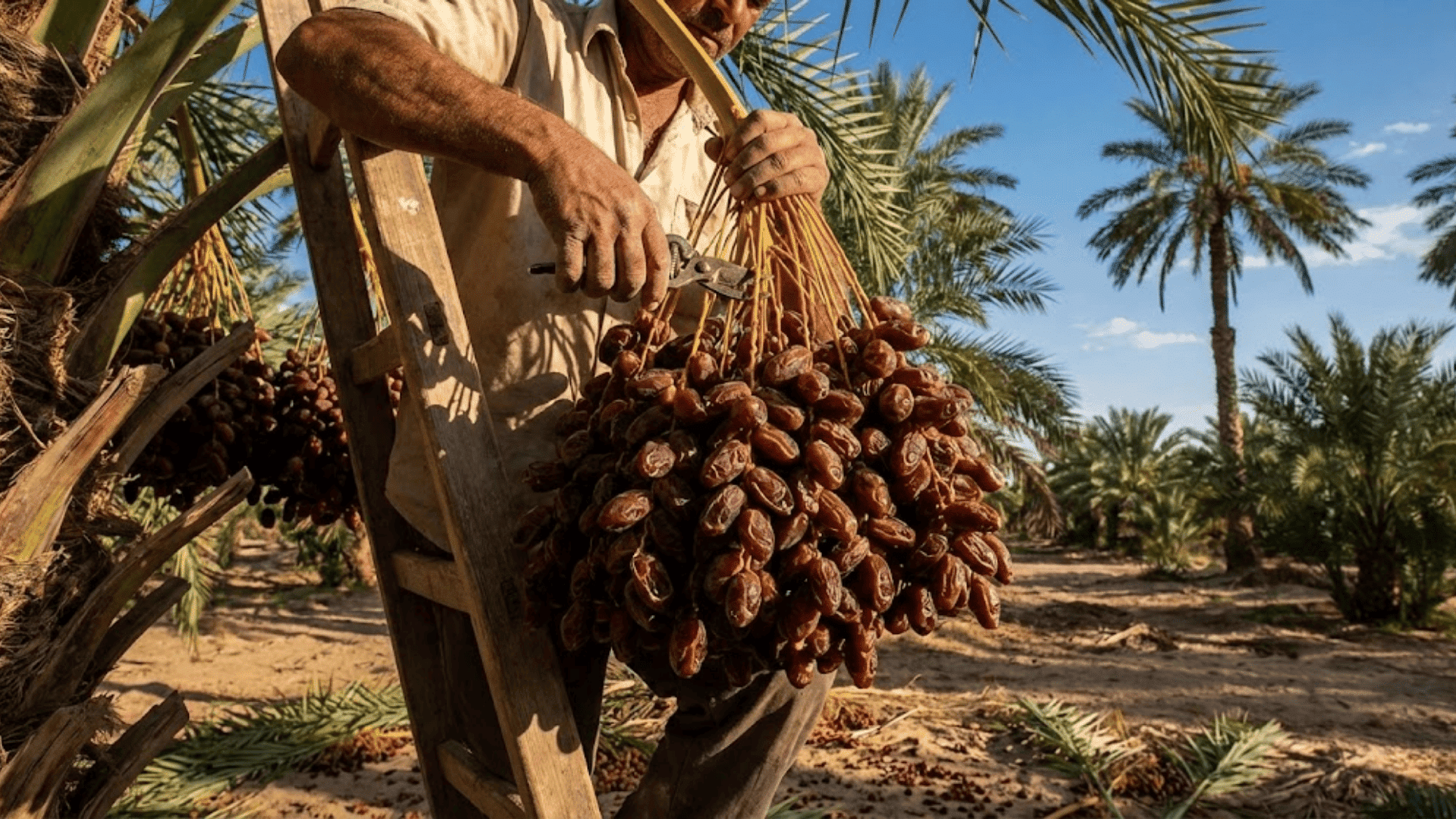
Time Period: Late summer through fall, depending on desired ripeness
Signs: Color deepens to rich brown, texture becomes soft and wrinkled
Dates can be harvested at khalal for fresh, crunchy dates or left until tamar for the classic dried variety most people recognize.
Fresh dates have higher moisture and require refrigeration, while fully ripened tamar dates naturally preserve themselves through low moisture content.
Harvesters climb trees or use mechanical lifts, carefully cutting down entire clusters to avoid bruising the delicate fruit.
Where Do Dates Grow Best?
Dates absolutely thrive in hot, arid climates with long, scorching summers and minimal rainfall. They need intense heat (ideally above 95°F) and low humidity to develop their signature sweetness without spoiling.
Desert regions are perfect because dates can’t tolerate moisture during ripening, which causes mold and fermentation.
These palms prefer well-draining sandy or loamy soil and can surprisingly handle somewhat salty conditions that would damage other crops.
Their deep roots find underground water, making them highly drought-tolerant once established. This is exactly why date palms dominate landscapes across the Middle East, North Africa, and California’s Coachella Valley.
Can You Grow Date Palm Trees at Home?
You can absolutely grow date palms at home, though fruiting success depends heavily on your climate. Outdoors, they thrive in:
- USDA Zones 9-11 (parts of California, Arizona, Texas, Florida)
- Need full sun and plenty of space (mature trees reach 50+ feet)
- Take five to eight years before producing fruit
Indoor date palms work better as ornamental plants rather than fruit producers, since they rarely get enough heat and light to ripen dates inside.
Choose a large container (at least 15 gallons) with drainage holes, place it near the brightest window possible, and maintain warm temperatures year-round. They’ll add that gorgeous tropical vibe even without the harvest.
How to Grow Dates From Seeds?
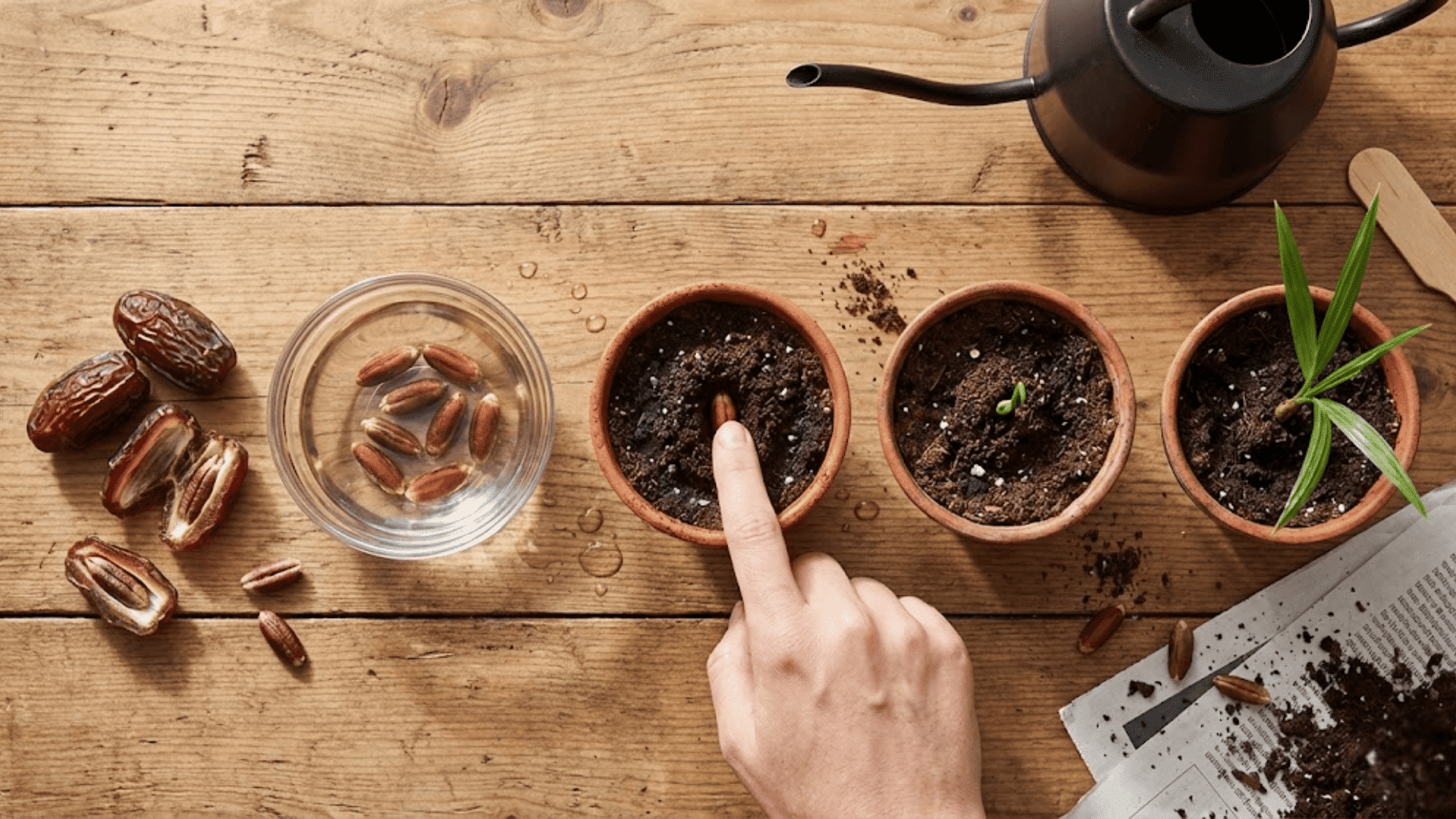
Growing dates from seeds is surprisingly simple and makes for a rewarding indoor gardening project. While your homegrown palm likely won’t produce fruit for years, watching that little seed sprout is genuinely satisfying.
1. Step-by-Step Instructions
Here’s how to get your date seed sprouting:
- Step 1: Remove the seed from a fresh date and rinse off any sticky fruit residue
- Step 2: Soak the clean seed in room-temperature water for 24-48 hours to soften the outer shell
- Step 3: Plant the seed about an inch deep in well-draining potting mix or sandy soil
- Step 4: Keep the soil consistently moist but never waterlogged, and place it in a warm spot (75-85°F)
- Step 5: Wait patiently for 4-8 weeks, maintaining warmth and moisture throughout germination
2. Germination Timeline
Here’s what you can expect as your date seed wakes up:
| Timeframe | What’s Happening | What You’ll See | Care Tips |
|---|---|---|---|
| Week 1-2 | Seed absorbs moisture, and the outer shell softens | No visible changes above the soil | Keep soil consistently moist, maintain warmth |
| Week 3-4 | Root begins developing beneath the soil | Still nothing visible above ground | Don’t disturb the soil, continue watering |
| Week 4-6 | First green shoot forms | Small spear may poke through the soil | Increase light exposure once the shoot appears |
| Week 6-8 | Primary leaf emerges | Thin, grass-like green leaf visible | Ensure bright indirect light, avoid overwatering |
| Week 8+ | Active growth phase begins | Multiple leaves forming, stronger growth | Maintain warmth and humidity for best results |
3. Common Mistakes
Even experienced gardeners slip up with date seeds. Here are the pitfalls to avoid:
- Overwatering: Soggy soil leads to rot; keep moist but not drenched.
- Insufficient Light: Seedlings need bright, indirect light to grow strong.
- Cold Temperatures: Date seeds won’t germinate consistently below 70°F.
- Impatience: Some seeds take 12+ weeks; don’t give up too early.
- Expecting Quick Fruit: Homegrown palms take 5-8 years minimum and may never fruit indoors.
Real Experiences From Home Growers
Home growers on PalmTalk forums and plant communities consistently mention one thing: patience is everything.
Beginners often underestimate how slow date palms grow, expecting visible progress within weeks when reality means months of waiting. Many also struggle with inadequate light indoors, leading to weak, leggy seedlings.
Success stories usually come from growers in warm climates who plant outdoors with realistic expectations.
The biggest challenge? Accepting that homegrown palms rarely fruit, especially indoors. Those who treat their date palms as beautiful ornamental plants rather than future fruit producers tend to be happiest with the results.
It’s about enjoying the process, not just the harvest.
How Long Does It Take for Dates to Grow?
Date palms require serious commitment before they reward you with fruit. From seed, a tree takes four to eight years to reach maturity and produce its first harvest, though some varieties need even longer.
Once the tree flowers in spring, the dates need five to seven months to ripen through all their stages fully.
Indoor date palms grow significantly slower than outdoor trees and rarely fruit at all due to insufficient heat and light.
Outdoor palms in ideal desert climates can produce over 100 pounds of dates annually once established, while indoor specimens remain ornamental.
The timeline demands patience, but thriving outdoor palms can produce fruit for decades.
Wrapping Up
So there you have it: the complete story of how dates grow, right from tiny palm blossoms to those sweet, chewy fruits we can’t get enough of.
Watching these resilient palms turn desert heat into natural candy is genuinely special, and understanding their growth process makes every date taste even sweeter.
Maybe you’ll try sprouting a seed yourself and witness that first green shoot pushing through the soil. Growing date palms takes patience, but the experience itself is rewarding.
Have you grown date palms before, or are you thinking about starting? Drop a comment below and share your experience. We’d love to hear how your palm adventure is unfolding.



2 Responses
I was wondering how to identify male and female seeds
Thanks for the information , I have already soaked the seeds patiently waiting for the results.