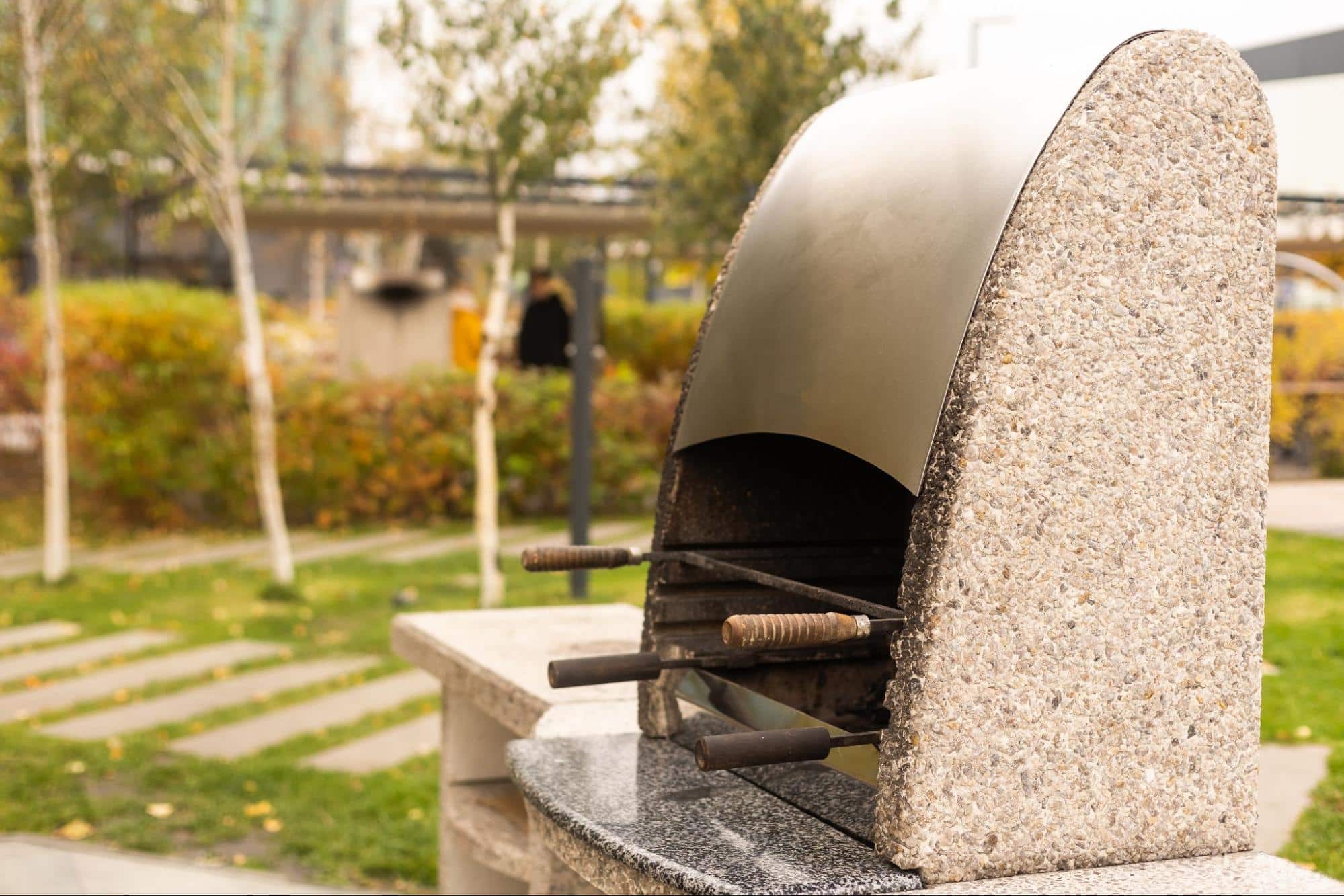
Building BBQs, ovens and outdoor kitchens is not just about creating a stylish garden feature. The materials must cope with heat, sun, rain, frost, moisture and changing weather conditions year round. A surface that works indoors may fail quickly in outdoor environments, especially when exposed to grills, hot pans, UV rays and heavy rain.
Good material selection improves safety, performance, durability, and maintenance. The right materials can help prevent cracking, staining, water damage and heat-related failure. For any heat-resistant materials outdoor kitchen project, the aim is to combine practical heat resistance with weather resistance and a finish that suits the outdoor space.
Choosing well from the start is a long-term investment.
What Makes a Material Suitable for BBQs, Ovens and Outdoor Kitchens?
The best materials for outdoor kitchens are not judged by appearance alone. They need to perform in demanding outdoor use, especially around grills, ovens, and worktops.
A suitable material should offer strong heat resistance, especially near cooking zones. It should also be weather resistant, so it can handle rain, frost, high humidity and direct sun without rapid deterioration. For outdoor kitchen worktops, stain resistant surfaces are useful because food, oil, smoke, and sauces can leave marks if the material is too porous.
Low maintenance materials are usually the best bet for busy garden kitchens. Stainless steel, porcelain and sealed granite are popular because they are practical as well as attractive. Porous materials, including some natural stone and concrete worktops, often require sealing or a protective coating.
Proper installation matters just as much as the material itself. Even the best materials can fail if they are not sealed properly, supported correctly or installed without allowing for outdoor movement.
What Is Fire Cement Used for in BBQs and Ovens?
Fire cement is one of the most essential materials for high-heat areas. It is a specialist cement designed to withstand intense heat, making it suitable for BBQs, brick ovens, pizza ovens, fireplaces, and repairs around firebricks.
In outdoor cooking projects, fire cement is commonly used for joints, gaps, cracks, and areas close to direct heat. It helps create a secure bond between refractory materials and can improve the performance and safety of the structure when properly installed. Standard cement is not a suitable replacement in high-temperature zones because it may crack, crumble or fail under repeated heat exposure.
Fire cement is not normally chosen as a decorative finish for outdoor worktops or visible surfaces. Its role is more technical and functional. It is best used where heat resistance is essential, especially inside ovens and around grills.
For specialist products such as fire cement, fire bricks, heat-resistant boards and other refractory materials, Vitcas Shop is a useful supplier of high-quality heat-resistant and fire-resistant materials for domestic and professional outdoor projects.
Is Stainless Steel Good for Outdoor Kitchen Worktops?

Stainless steel is a strong choice for modern outdoor kitchens. It has a sleek appearance, excellent durability and a non-porous nature, which makes it easy to clean and resistant to stains. This is why it is often used for outdoor worktops, cabinets, splashbacks and areas close to grills.
For outdoor environments, stainless steel should be suitable for exterior use. Lower-grade metal can mark or corrode more easily, especially in coastal areas or places with high humidity. A good-quality, weather resistant grade is a better long-term option.
Stainless steel is also a low maintenance option. It does not require sealing, and everyday upkeep is usually simple. The main drawback is that it can become hot in direct sun and may show fingerprints, water marks or scratches. For a practical, professional and hygienic cooking space, it remains one of the best materials available.
Is Natural Stone Suitable for Outdoor Kitchens?
Natural stone is popular because it brings texture, style, and durability to an outdoor space. Granite, slate, and marble are common choices, but they do not all perform in the same way.
Granite is often the best bet for outdoor kitchen worktops. It offers good heat resistance, excellent durability and strong weather resistance when sealed properly. It can cope well with sun, rain and everyday use, although sealing is still important to reduce stains and moisture absorption.
Slate can also work well outdoors. It has a distinctive appearance and can be practical when properly installed on a stable base. Some slate surfaces can be slip resistant, which is useful for flooring or surrounding areas.
Marble is more delicate. It looks polished and elegant, but it is more porous and can stain, mark or weather over time. It may require sealing more often and usually needs more upkeep.
With any stone, proper installation, frost protection and regular maintenance matter. Poor sealing or weak support can lead to cracking, especially in cold or wet weather.
Are Concrete Worktops Practical Outdoors?
Concrete worktops are a versatile option for outdoor kitchens because they can be shaped to suit the garden layout. They work well in modern, industrial or rustic designs and can be cast to fit unusual spaces, built-in grills or large preparation areas.
Concrete has good heat resistance when it is made, cured and installed correctly. However, it is not naturally stain resistant or waterproof. It needs sealing to protect it from moisture, food stains, oil and weather conditions. Without proper protection, concrete can absorb water, discolour or crack during freeze-thaw cycles.
A protective coating can help improve performance, but it must be suitable for outdoor use and maintained over time. Concrete is practical and functional, but it is not completely maintenance free. It suits homeowners who want a strong, custom-made worktop and are prepared for some upkeep.
Are Porcelain and Engineered Composite Surfaces Good Outdoors?
Porcelain is one of the strongest low maintenance materials for outdoor kitchen worktops. It is usually heat-resistant, stain resistant, UV resistant and suitable for outdoor environments. Its surface is often non-porous, which helps protect it from moisture, stains and heavy rain.
Porcelain also handles UV rays well, so it is less likely to fade in direct sun. It is a good choice for sleek, modern outdoor kitchens where performance and appearance both matter.
Engineered composite materials can also be useful, but material selection is essential. Not every composite surface is designed for outdoor use. Some may fade, warp or crack when exposed to heat, frost, rain or high humidity.
For any engineered surface, check that it is rated for outdoor use, UV resistant and suitable for the expected weather conditions. A waterproof or highly water-resistant finish is a major advantage.
Which Materials Should Be Avoided or Used With Caution?
Some materials look attractive, but are not the best materials for high-heat outdoor use. Untreated wood should be kept away from grills, BBQs, and ovens. It can dry, warp, burn or rot when exposed to heat, rain, and moisture.
Soft or porous stone can also be risky if it is not sealed properly. It may absorb stains, suffer frost damage or need frequent maintenance. Indoor-only composite surfaces should be avoided because they may not cope with UV rays, heavy rain or outdoor temperature changes.
Standard cement should not be used instead of fire cement in high-heat joints. Decorative paints and coatings also need care, as many are not designed for heat. For flooring, avoid surfaces that become slippery when wet unless they have a slip resistant finish.
In outdoor kitchens, every material must suit both the heat and the elements.
How Should Outdoor Kitchen Materials Be Installed and Maintained?
Proper installation is essential for long-term performance. Outdoor kitchens move slightly with changes in temperature, moisture and frost, so materials need stable support and suitable joints. Worktops should be level, secure and properly installed to reduce the risk of cracking.
Porous surfaces such as natural stone and concrete usually require sealing. They should be sealed properly before heavy use, then resealed as recommended. This helps protect against stains, moisture and weather damage.
Clean spills quickly, especially oil, wine, sauces and acidic foods. Check surfaces, joints, coatings, and fire cement repairs at least once a year. Small cracks or worn sealing should be fixed before water gets in.
For year round use, plan for sun, rain, frost and high humidity. Covers, drainage, and ventilation can all help. The more exposed the garden kitchen is, the more important weather resistant materials become.
What Are the Best Heat-Resistant Materials for Your Project?
There is no single best bet for every outdoor kitchen. The right materials depend on heat, weather, budget, style, maintenance and how the space will be used.
Stainless steel is ideal for a sleek, low maintenance and professional finish. Granite and porcelain are excellent choices for outdoor kitchen worktops because they offer durability, heat resistance and strong outdoor performance. Concrete is practical and customisable, but it needs sealing and upkeep. Fire cement is essential for high-heat joints, ovens, BBQs and repairs.
For a functional outdoor kitchen, choose materials that can handle heat, weather and daily use. That is what turns a garden cooking area into a reliable long-term investment.