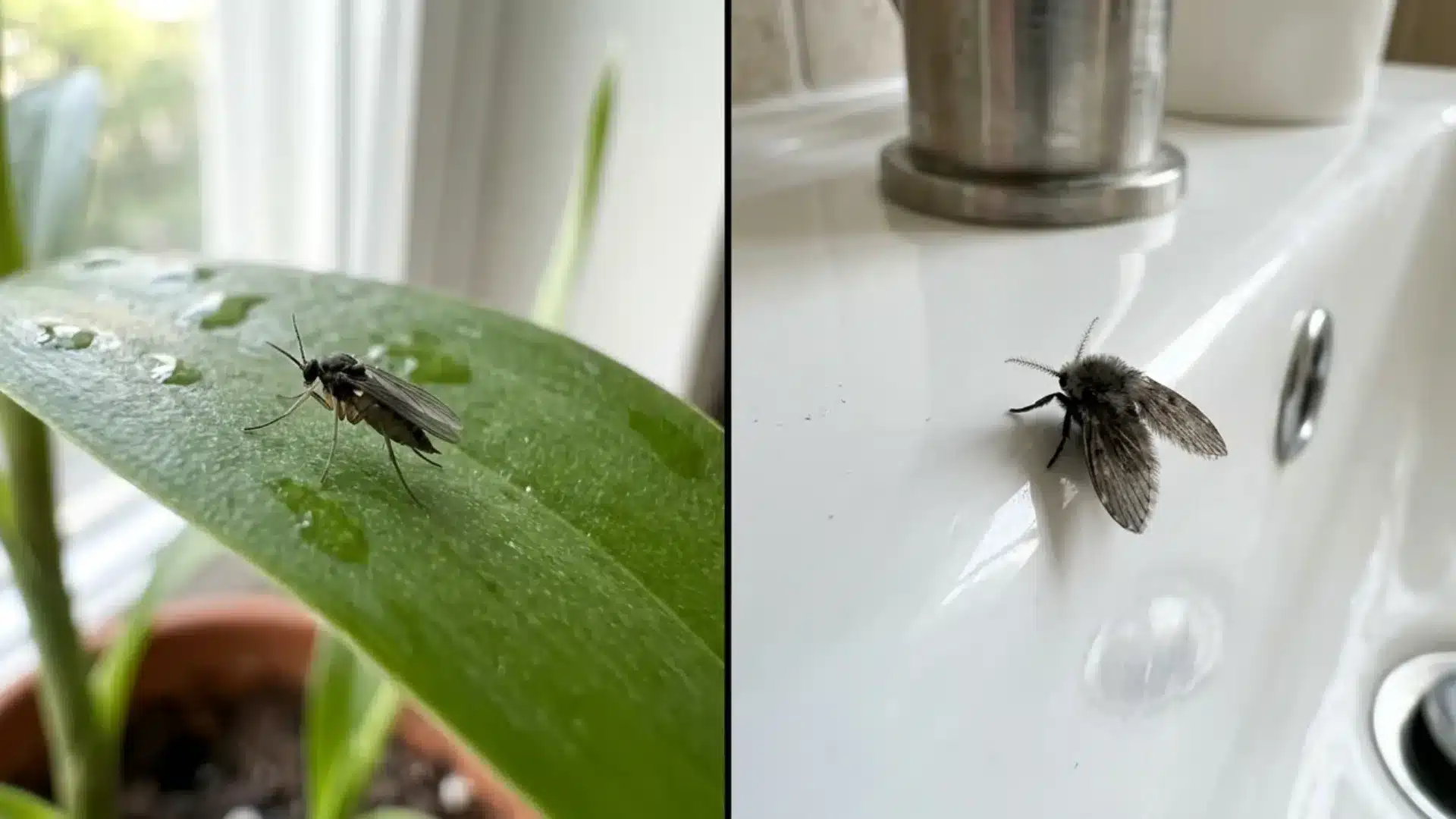
Tiny flying insects hovering around your kitchen sink or circling your houseplants can send anyone into a spiral of frustration.
You’ve hit the classic gnat vs. drain fly mix-up, and honestly, it’s more common than you’d think. They’re close in size. They show up in the same damp corners.
But that’s where the similarities end- their bodies, habits, and breeding grounds don’t match at all. Treating the wrong one means the problem just keeps coming back.
Below, you’ll find exactly what separates them, so you know which pest you’ve got and how to clear it out for the long term.
Why These Two Bugs Get Confused So Often
Most people use “gnat” as a general label for any small flying insect indoors, which is exactly where the confusion starts.
Gnats and drain flies are similar in size and appear in the same damp areas of a home, so it’s easy to assume they’re the same pest. In reality, they come from different breeding sources and require entirely different removal methods.
Treating one like the other usually means the real problem stays untouched. Learning the actual differences first makes every step after this far more effective.
Gnat vs. Drain Fly at a Glance
Gnats and drain flies differ in body shape, wing texture, flight behavior, and the areas of a home they prefer, and these differences are consistent enough to rely on.
Once you know what separates them, spotting one over the other takes just a few seconds.
The table below outlines the core differences, followed by the single trait most people find easiest to check.
|
Feature |
Gnat |
Drain Fly |
|
Body Shape |
Slim, mosquito-like |
Stocky, rounded |
|
Wings |
Clear, narrow, and smooth |
Broad, fuzzy, leaf-shaped |
|
Size |
1/16–1/8 inch |
2–4 mm |
|
Flight Style |
Hovers near the soil or light |
Weak, short hops near drains |
|
Common Location |
Potted plants and damp soil |
Sinks, floor drains, and pipes |
|
Resting Posture |
Flat, low profile |
Triangular, moth-like |
The One Feature That Gives Them Away Instantly
Wing texture is the fastest way to tell them apart. Gnats have smooth, clear wings that are easy to see through, while drain flies have broad, fuzzy wings covered in fine hairs, giving them a moth-like look.
If the wings appear hairy and the bug looks fuzzy overall, it’s a drain fly, not a gnat.
What Gnats Look Like
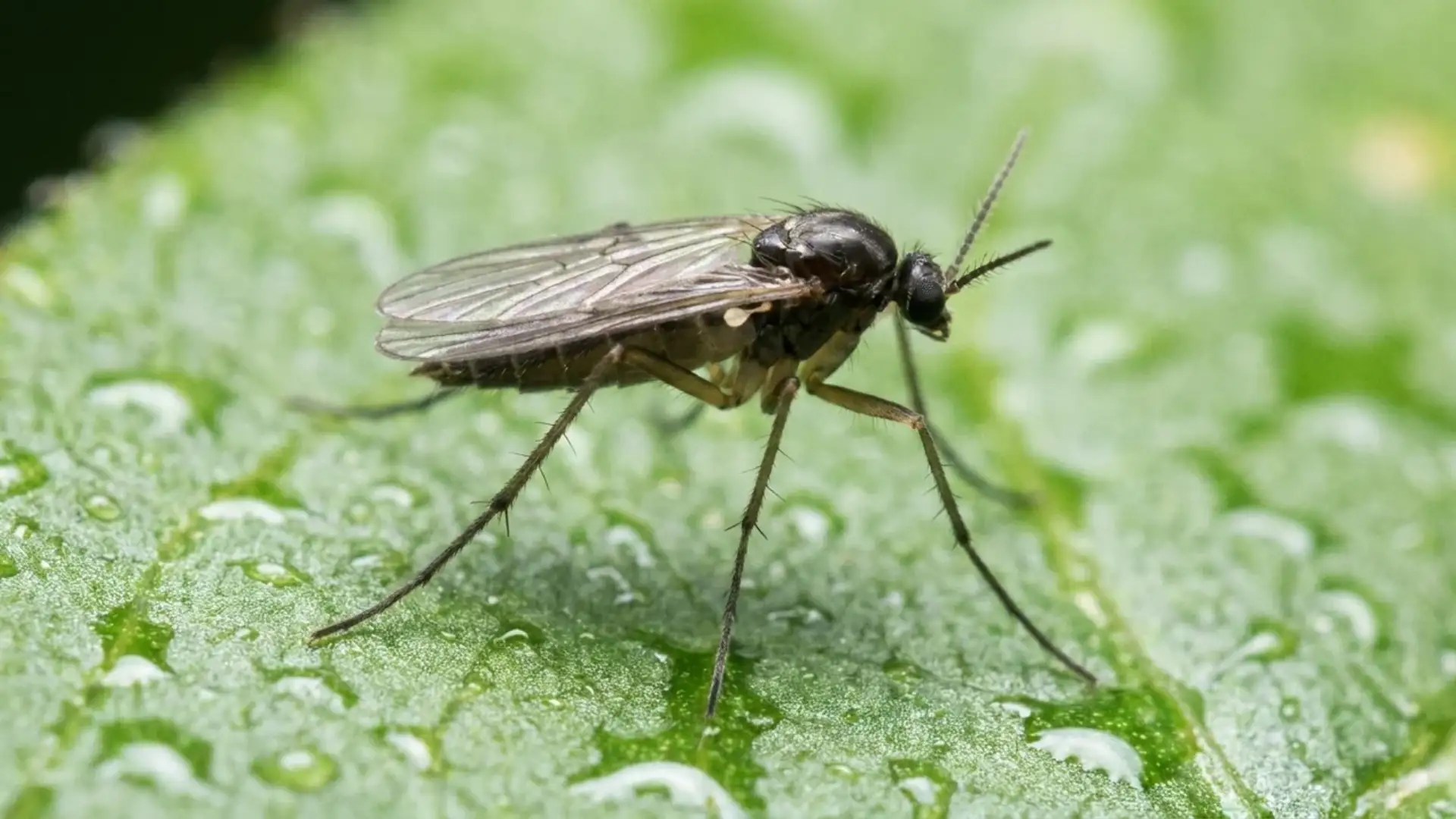
Gnats have a distinct build that sets them apart from other small flying insects in the home. Their slender frame, wing type, and coloring all point to the same species once you know what to check.
Here’s what to look for across each of these traits.
- Body Shape and Size: Gnats have a slim, elongated body that resembles a tiny mosquito. They typically measure between 1/16 and 1/8 inch long, making them one of the smaller flying pests found indoors.
- Wing Type and Flight Pattern: Their wings are clear, narrow, and smooth, often hard to notice unless the gnat is resting still. In flight, gnats hover in short bursts near soil, plants, or light sources rather than moving in straight lines.
Once these three traits line up, a gnat becomes easy to recognize at a glance, even among other small bugs sharing the same space.
What Drain Flies Look Like
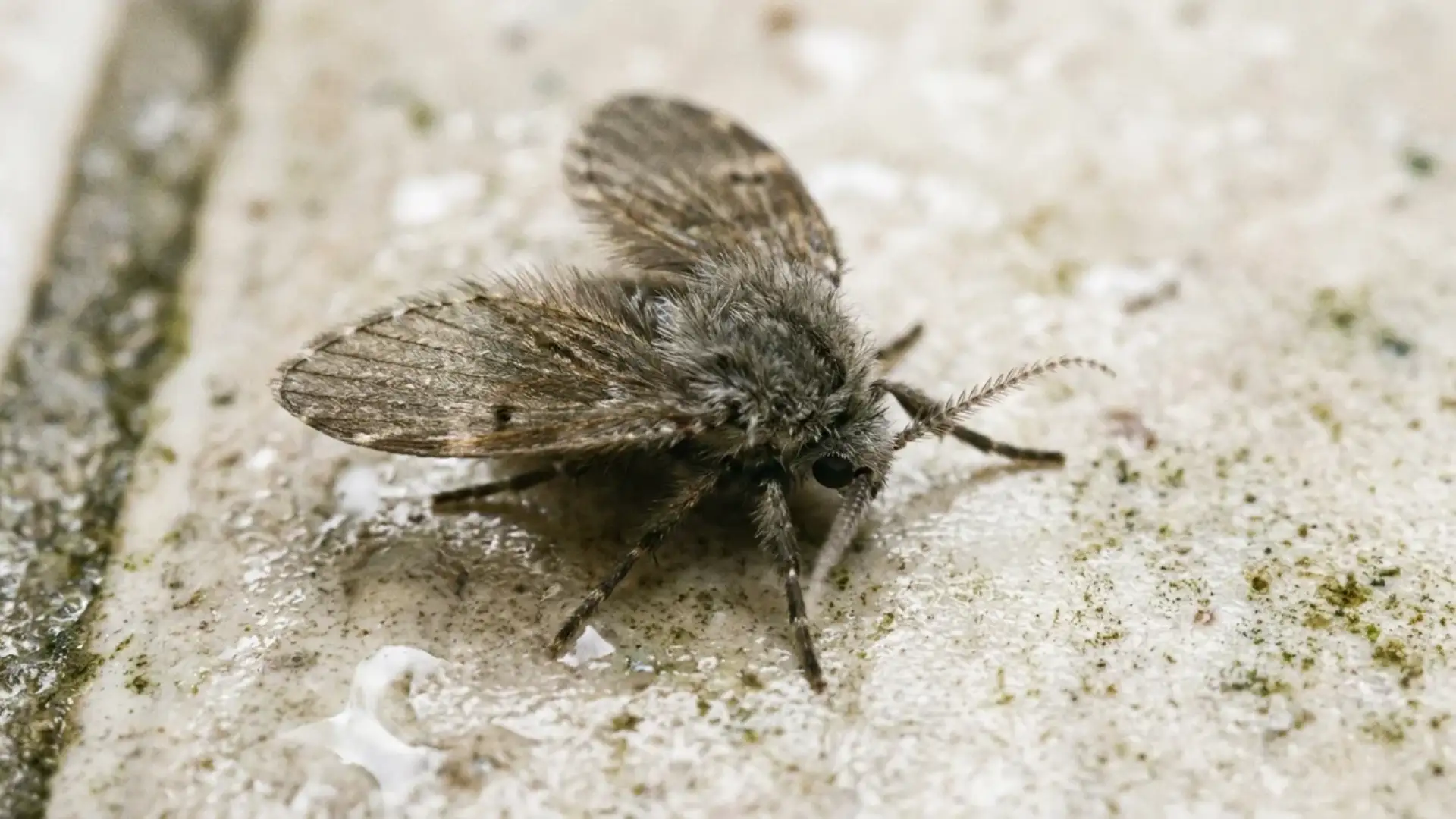
Drain flies have a noticeably different build compared to gnats, mostly due to their fuzzy texture and broader wings. These traits make them one of the easier pests to confirm once you know what stands out.
Here’s what to check for.
- Body Shape and Size: Drain flies have a stocky, rounded body covered in fine hair, giving them a fuller look than gnats. They measure roughly 2 to 4 mm long, close in size to most gnats despite the bulkier frame.
- Wing Type and Resting Posture: Their wings are broad, opaque, and covered in tiny hairs, often described as leaf-shaped. When resting, drain flies hold their wings out to form a triangular silhouette, unlike the flat posture gnats take.
Recognizing this fuzzy, triangular shape makes drain flies simple to identify, even in low light near sinks or drains.
Gnat Larvae vs. Drain Fly Larvae: The Overlooked Difference
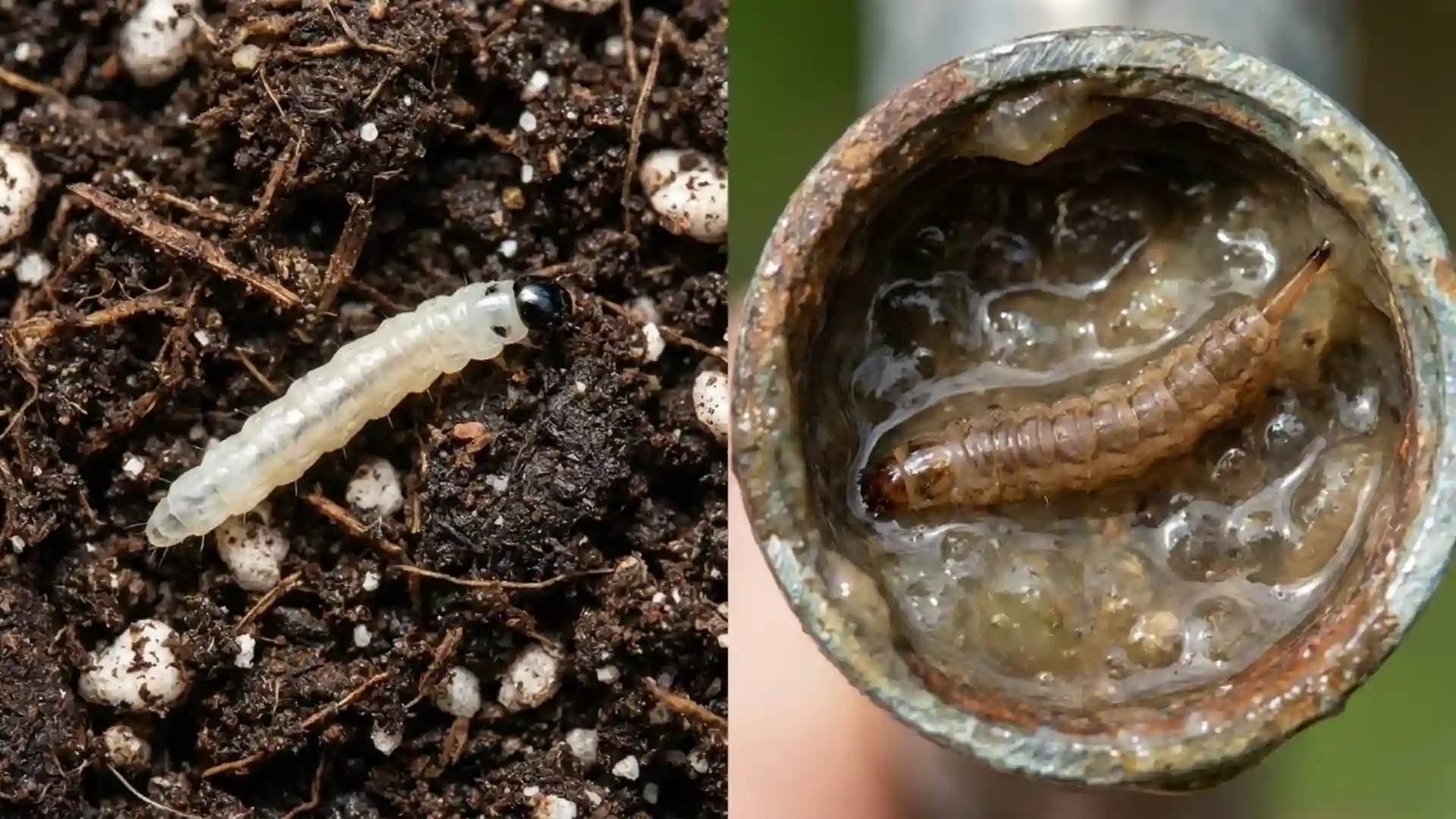
Adult bugs get most of the attention, but their larvae are just as telling, if not more, since they never leave their breeding site.
Gnat Larvae
Gnat larvae are thin, worm-like, and mostly translucent or white, with a small black head visible at one end.
They live just below the soil surface in potted plants, feeding on organic matter, fungi, and plant roots.
Drain Fly Larvae
Drain fly larvae are small, brownish, and worm-like, but they live inside the slime layer coating drain pipes rather than in soil.
They breathe through a short, tail-like tube that pokes above the water’s surface while the rest of the body stays submerged in sludge.
Why Checking Larvae Confirms ID Faster Than Adults
Adults can be tricky to judge at a glance, but larvae remove most of the guesswork. Here’s why they’re the faster route to a confirmed ID.
- Adult gnats and drain flies often look alike in poor lighting.
- Fast movement makes visual identification even harder.
- Larvae stay fixed in one breeding site, unlike adults.
- Their color, shape, and habitat differ clearly and consistently.
- Checking soil or drain sludge directly confirms the presence of the pest.
With larvae, there’s no need to guess. The breeding site tells you exactly which pest you’re dealing with before any treatment begins.
Common Breeding Ground
Location is one of the clearest clues for telling these pests apart, since each one sticks close to its breeding source. Gnats stay near soil and plants, while drain flies stay near moisture and pipes.
The table below breaks down exactly where to check for each.
|
Pest |
Common Hotspots |
|
Gnats |
Potted plant soil, damp mulch, and areas near windows or light sources |
|
Drain Flies |
Sink and floor drains, pipes, garbage disposals, and damp bathroom areas |
Checking these specific spots first, rather than just watching the bugs fly around a room, makes identification far more reliable and points straight to the source that needs treating.
If soil is the culprit, it helps to know exactly where gnats lay their eggs so you’re not just guessing at the source.
Why You’re Seeing Them Now
Spotting either pest rarely happens by chance. Something in the home is drawing them in, and identifying that trigger makes prevention far easier than repeated cleanups.
Gnats and drain flies are each drawn to specific conditions, though warmer, humid environments accelerate both.
What Attracts Gnats and Drain Flies
Gnats show up when conditions favor fungus and moisture in soil:
- Overwatered potted plants
- Damp soil that stays wet too long
- Decaying organic matter in topsoil
Drain flies appear when pipes and drains go unmaintained:
- Organic buildup and sludge inside pipes
- Standing or stagnant water near sinks
- Infrequently used or poorly cleaned drains
Both pests breed faster in warm, humid conditions, which is why infestations often spike during summer months or in poorly ventilated bathrooms and plant areas.
If you’re seeing similar bugs near fruit bowls too, it’s worth learning how to identify fungus gnats and fruit flies, since they’re another common look-alike.
Do They Bite or Cause Harm?
Neither gnats nor drain flies bite or feed on blood, so they’re not a direct threat the way mosquitoes or bed bugs are.
That doesn’t mean they’re harmless to ignore.
Fungus gnat larvae can damage plant roots over time, and drain flies carry bacteria from pipes that can affect indoor air quality in homes with heavy infestations.
Health and Allergy Considerations
- Neither pest bites nor stings transmit disease directly to humans.
- Drain flies can pick up bacteria and organic residue from pipe sludge and spread it to nearby surfaces.
- Large drain fly populations have been linked to mild allergic reactions or respiratory irritation in sensitive individuals.
- Gnats pose little to no direct health risk but can be a nuisance around food and light fixtures.
Property or Plant Damage Risk
Fungus gnat larvae feed on plant roots and organic matter in soil, which can weaken seedlings or young plants if the infestation goes unchecked for too long.
Established, healthy plants usually tolerate light gnat activity without lasting damage.
Drain flies don’t damage property directly, but they often signal organic sludge buildup inside drains or pipes, sometimes indicating a larger plumbing issue if ignored.
Confirm It Yourself: A Simple At-Home Test
No need to guess based on appearance alone. Two quick, no-equipment methods can confirm which pest is in the home within a day.
- Sticky Trap Method: Place a yellow sticky card near the suspected area (soil or drain) overnight. Gnats stick easily to bright yellow traps, while drain flies are less attracted and may only land occasionally.
- Behavior Test: Watch how the bug moves when disturbed. Gnats fly upward quickly toward light. Drain flies flutter weakly, staying close to the drain instead of scattering.
Together, these two checks confirm the presence of the pest without needing a magnifying glass or a professional inspection.
How to Get Rid of Each One?
Once the pest is confirmed, treatment becomes far more straightforward, since gnats and drain flies respond to different methods.
Gnats need dry soil and food-source removal, while drain flies need pipe cleaning to clear out breeding sludge.
The table below covers the basics for each.
|
Pest |
Remedy |
Why It Works |
|
Gnats |
Sprinkle cinnamon on the topsoil |
Acts as a natural antifungal, making the soil less suitable for larvae. |
|
Apply a diluted neem oil soil drench |
Disrupts larval development before they become adults. |
|
|
Let the soil dry between waterings |
Reduces moisture and speeds up population control. |
|
|
Drain Flies |
Use an enzymatic drain cleaner |
Breaks down the organic buildup that larvae feed on. |
|
Scrub drains with a drain brush |
Removes residue that cleaners alone may leave behind. |
|
|
Repeat cleaning weekly |
Helps clear out established infestations over time |
When to Call a Professional
Some infestations go beyond basic home fixes and need expert attention.
Look for these situations before calling an expert:
- The infestation persists after several rounds of cleaning and treatment.
- Bugs keep returning from an unclear or hidden breeding site.
- Multiple drains, pipes, or plants are affected at once.
- There are signs of a larger plumbing issue behind the wall or floor.
A professional inspection can pinpoint hidden breeding sites and apply treatment that DIY methods often can’t reach.
Final Thoughts!
Once you know the difference between a gnat vs. drain fly, handling them stops feeling like guesswork. Wing texture, body shape, breeding site, and behavior each leave behind enough clues that identifying the culprit gets easier every time you check.
Skip the trial-and-error treatments and go straight to what actually works for the pest in front of you. A few mindful habits, such as watching how often you water your plants or giving your drains a little more attention, go a long way in keeping both away for good.
Which one turned out to be your problem, gnats or drain flies? Let us know in the comments; it might help the next person scrolling through with the same question.
Frequently Asked Questions(FAQ’s)
Do Drain Flies Turn into Gnats?
No. Each breeds separately: drain flies in pipe sludge and gnats in soil, and neither transforms into the other.
What Kills Both Gnats and Drain Flies?
No single product treats both effectively. Gnats need soil treatment; drain flies need enzyme cleaners and pipe scrubbing.
Are Drain Flies and Gnats the Same Thing?
No. They’re different species with different bodies, breeding sites, and treatment methods, despite often being confused for one another.