Cold plunges. Red light therapy. $400 weighted blankets. The wellness industry keeps inventing new things to sell us, and most of them work for about three weeks before the novelty wears off and they end up in the garage.
Meanwhile, my grandmother spent every evening from May through October in her vegetable patch and never had a panic attack in her life.
Coincidence? Maybe. But the research keeps catching up to what gardeners have known forever – and the combination of dirt, daylight, and a quiet evening might be the most underrated mental health intervention available.
The Dirt Part Is Real Science
There’s a soil bacterium called Mycobacterium vaccae. When you handle soil, you’re inhaling and absorbing it through small cuts on your hands. Studies suggest it triggers serotonin release in the brain, the same neurotransmitter most antidepressants target.
Translation: digging in dirt may literally make you happier at a chemical level. Not metaphorically. Measurably.
This is part of why so many people walk inside after an hour of weeding feeling oddly settled. It’s not just the satisfaction of a tidier bed. Your brain chemistry shifted.
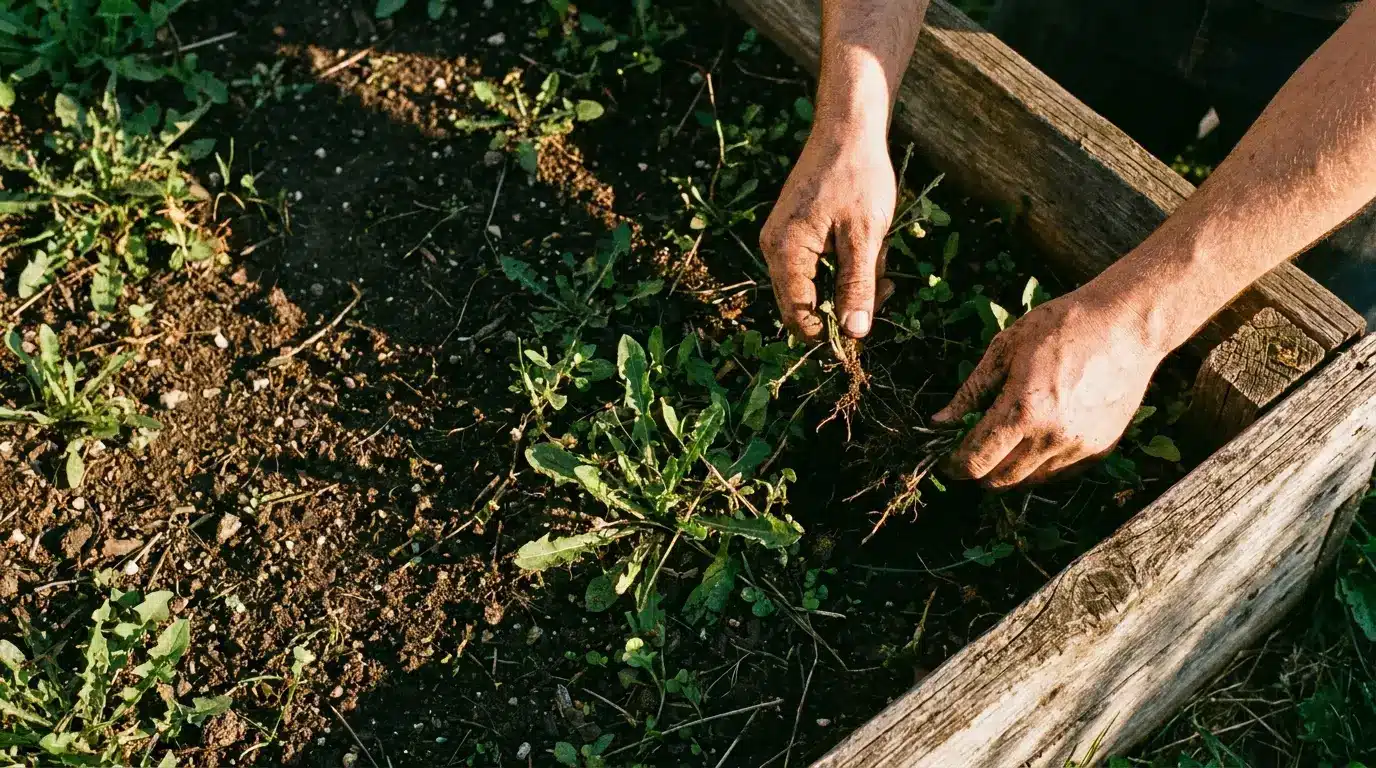
Quick tip: Skip the gloves for the easy stuff. Light weeding, transplanting seedlings, mixing compost into a bed – let your hands actually contact the soil. Save the gloves for thorny pruning and heavy work.
Daylight Does What Your Phone Can’t
Most adults get a fraction of the bright light their circadian rhythms need. Office lighting tops out around 500 lux. Cloudy outdoor light? 10,000 lux. Direct sun? 100,000.
Even 20 minutes of morning garden time recalibrates your sleep-wake cycle better than any supplement on the market. The cortisol curve sharpens, melatonin releases on time at night, and the 3am wake-ups start fading.
You don’t need to garden athletically for this to work. Watering, pruning, just walking through the beds counts. The light is doing the work.
If you’ve been chasing better sleep through pills and apps and tracking devices and getting nowhere, try going outside in the first hour after waking for two weeks. Most people see a measurable shift.
The Slow Evening Pairing
Here’s where most self-care plans fall apart: people do the “good” thing in the morning and then absolutely demolish it with their evening. Three glasses of wine, doomscrolling until 1am, a phone alarm waking them at 6.
The garden-as-therapy approach extends into the wind-down. The same patience you bring to watching tomatoes ripen translates to evenings, if you let it.
This is where intentional choices matter. Some gardeners genuinely like a beer after pulling weeds for two hours – fine. Others have found that a delta 9 gummy does the wind-down job better without the next-morning grogginess that wrecks their sunrise garden time. Hemp-derived, federally legal under the 2018 Farm Bill, predictable dosing in a way wine never offers. Take a low dose around 7pm, watch the light fade over the beds, and the day actually closes properly.
The mechanism doesn’t matter as much as the principle: the evening has to support what the morning started.
Why This Beats the Trendy Stuff
Cold plunges shock your system into alertness. Useful, occasionally. But your nervous system needs the opposite most of the time – it needs downregulation. Slow, repeated, gentle stimuli. That’s what gardening is.
Pulling weeds is rhythmic. Watering is rhythmic. The same simple movements over and over, with your hands engaged and your mind allowed to wander. This is the exact pattern meditation researchers describe as “open monitoring” – when the brain processes whatever’s been stuck in the background.
Half of what bothers you on Tuesday morning works itself out on Tuesday evening in the garden. You weren’t trying to think about it. The bed needed weeding. The thinking happened anyway.
Warning: Don’t bring your phone to the garden. Even silent, even face-down, it interrupts the exact mental drift that makes the practice work. Leave it inside.
Start Smaller Than You Think
The mistake new gardeners make is starting with too much. Twelve raised beds, a greenhouse plan, a complete landscaping overhaul. Then April hits, the first heat wave fries the seedlings, and the whole thing feels like another thing they failed at.
A 4×4 raised bed. Five plants. Twenty minutes a day, three or four evenings a week. That’s a therapeutic gardening practice. Anything more, in the first season, is ambition cosplaying as wellness.
The Bottom Line
Wellness trends keep selling us more equipment, more apps, more optimization. The actual research keeps pointing the other direction – toward dirt, daylight, slowness, and giving your brain the conditions it evolved for.
A garden does all of this in one place, for the cost of a few seed packets. The evening wind-down on top of it is the easy part. Most of the work is just the willingness to step outside and stay there longer than feels productive.