There’s something magnetic about farmhouse interior design that keeps drawing us back.
Maybe it’s the way weathered wood tells stories, or how a vintage pitcher on an open shelf feels like coming home.
This style wraps you in layers of texture and warmth, where imperfection becomes beauty, and every corner invites you to slow down and stay awhile.
Ready to bring that cozy, lived-in sanctuary you’ve been pinning to life?
We’ll walk through weaving rustic charm, natural elements, and timeless comfort into rooms that feel authentically, beautifully yours.
What is Farmhouse Interior Design?
Farmhouse interior design celebrates simplicity, functionality, and comfort through a blend of vintage charm and practical living.
Think shiplap walls, reclaimed wood beams, apron-front sinks, and open shelving displaying everyday dishes. This style features neutral color palettes, natural textures, and pieces that seem lovingly collected over generations.
While rustic leans heavily into rough-hewn, cabin-like elements and cottage favors quaint florals and coziness, farmhouse strikes a balance between relaxed refinement and working simplicity.
Country style tends toward more decorative folk art and busy patterns, whereas farmhouse keeps things clean-lined yet lived-in, creating spaces that feel both classic and utterly welcoming.
Popular Types of Farmhouse Interior Design
Farmhouse interior design isn’t a single look. It branches into beautiful variations, each with its own personality, while keeping that signature warmth and charm we all crave.
1. Modern Farmhouse

Sleek meets rustic in this contemporary take on tradition. Clean lines pair with weathered wood, while black metal fixtures contrast against white shiplap and neutral palettes.
This style loves open floor plans, industrial lighting, and minimal clutter. It’s a farmhouse for those who appreciate simplicity with a polished edge, where every vintage piece feels intentional rather than collected by chance.
2. Traditional Farmhouse
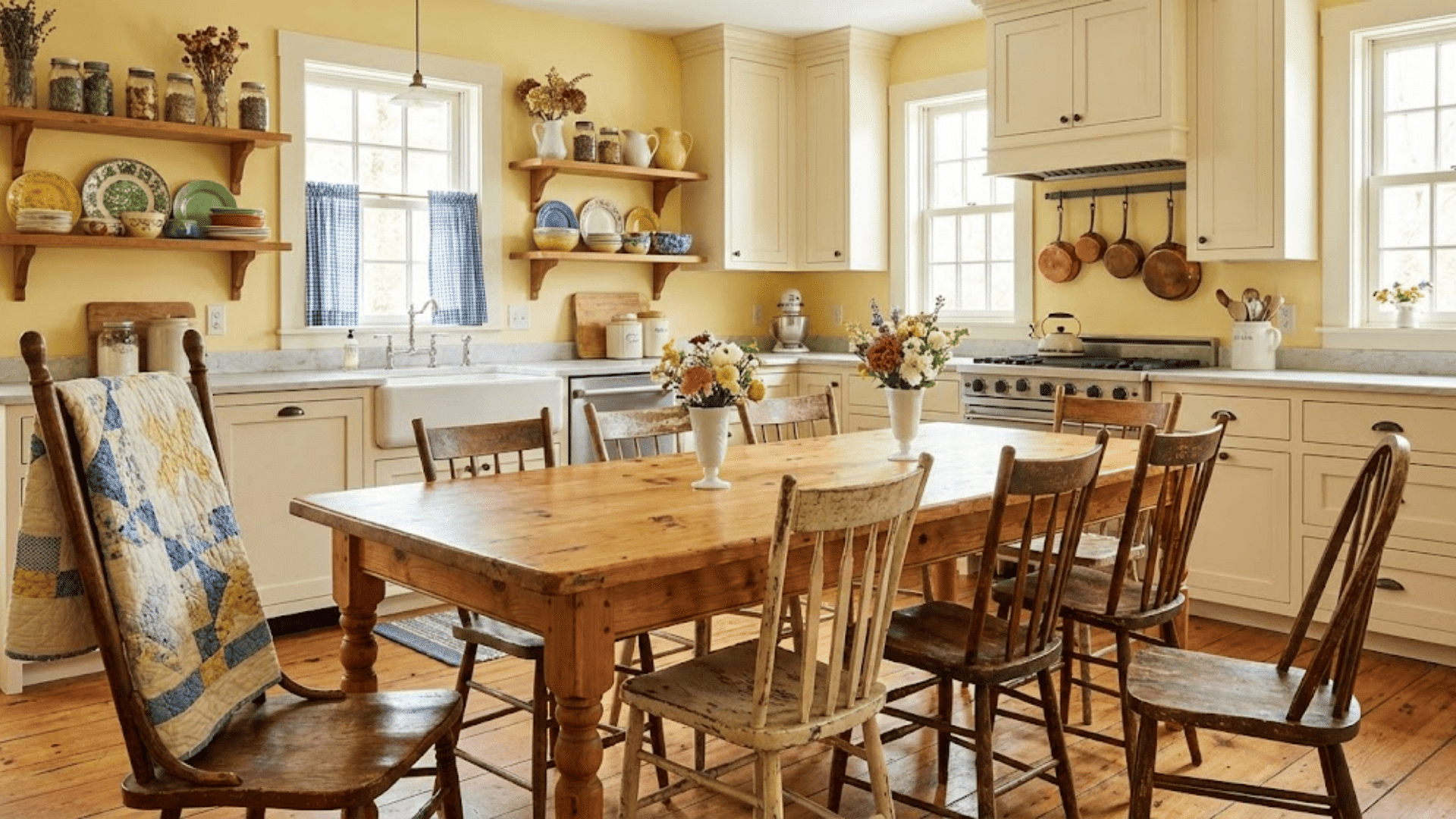
This is a farmhouse in its purest, most nostalgic form. Think heirloom furniture, well-worn wood tables, and floral accents that remind you of grandma’s kitchen.
Colors stay warm and inviting, with creams, soft blues, and buttery yellows. Quilts, mason jars, and ceramic pitchers create that lived-in feeling, where every corner tells a story and comfort always comes first.
3. Rustic Farmhouse
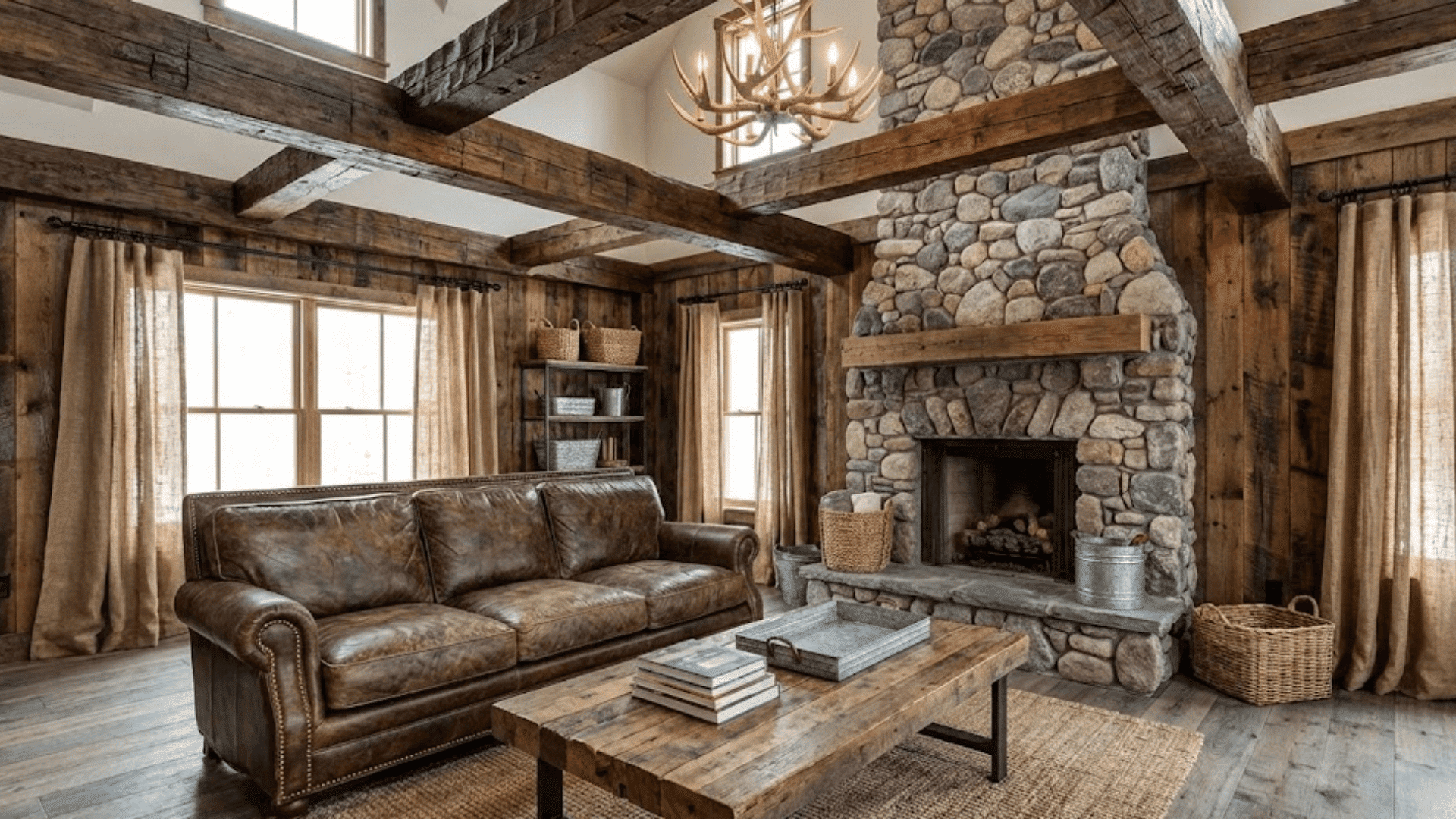
Raw and unpolished by design, this style celebrates imperfection. Exposed ceiling beams, rough-hewn wood planks, and stone accent walls take center stage.
Textures run deep with burlap, jute, and distressed finishes. It leans into that barn-inspired aesthetic, where materials look like they came straight from nature and everything feels substantial, grounded, and authentically aged.
4. French Farmhouse
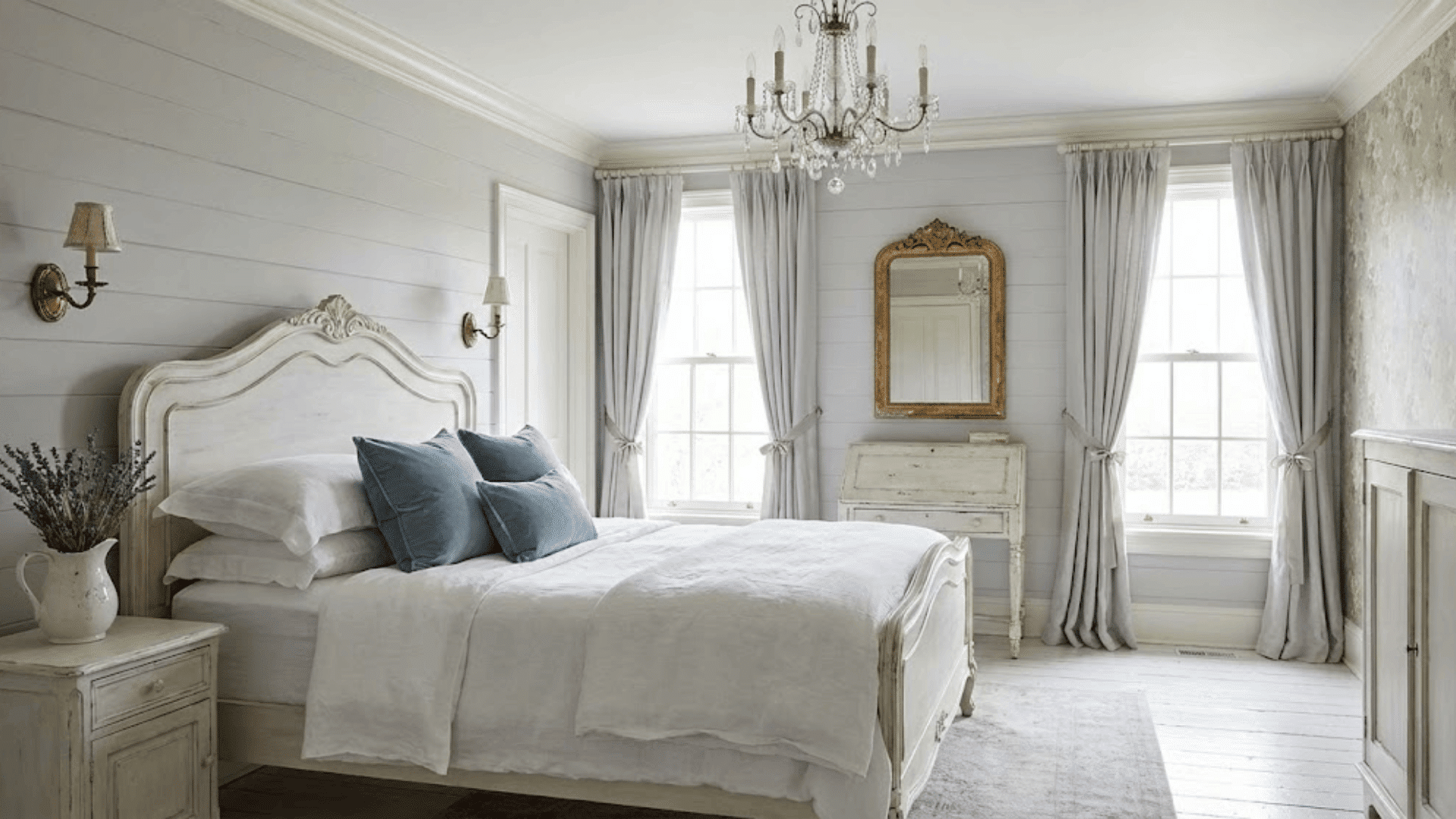
Soft, romantic, and gently refined, this European-inspired take adds gentle curves and muted pastels to farmhouse foundations. Think linen slipcovers, ornate mirrors, and antique finds with delicate details.
Colors whisper rather than shout, with grays, whites, and dusty blues creating an airy, graceful atmosphere that feels both polished and naturally charming.
Key Elements of Farmhouse Interior Design
The beauty of farmhouse interior design lives in its carefully chosen details.
Here’s what brings this style to life, from the colors that set the mood to the textures that make you want to reach out and touch.
| Element | Details | Why It Works |
|---|---|---|
| Whites & Creams | Soft ivory, warm white, cream, off-white | Creates an airy, open backdrop that makes spaces feel larger and brighter |
| Soft Grays | Greige, dove gray, weathered gray | Adds depth without heaviness, perfect for balancing warmer wood tones |
| Muted Pastels | Dusty blue, sage green, blush pink | Brings gentle color while maintaining that calm, soothing farmhouse vibe |
| Natural Wood Tones | Honey, walnut, weathered oak | Grounds the space with warmth and authentic character |
| Reclaimed Wood | Barn wood, salvaged beams, vintage planks | Tells a story through age marks, knots, and unique patina |
| Shiplap & Beadboard | Horizontal planking, vertical grooves | Adds architectural interest and that signature farmhouse texture |
| Natural Fabrics | Linen, cotton, chunky wool, burlap | Layers of softness and touchable comfort throughout the room |
| Metal Accents | Matte black, oil-rubbed bronze, galvanized steel | Provides contrast and that perfect touch of industrial edge |
Farmhouse Interior Design Furniture Essentials
The right furniture pieces anchor your farmhouse interior design, bringing both beauty and purpose to every room. These essentials create that inviting, collected-over-time feeling we love.
- Large farmhouse dining tables in reclaimed wood or distressed finishes become the heart of your home, perfect for family meals and gathering friends.
- Slipcovered sofas and chairs in linen or cotton offer cozy comfort while keeping the look soft, washable, and beautifully casual.
- Vintage cabinets and hutches provide open storage for displaying dishes, pottery, and treasured finds while adding architectural character.
- Distressed wood furniture with natural patina and wear marks brings instant age and authenticity to any space.
- Oversized farmhouse sinks paired with sturdy wood islands create functional focal points that blend practicality with classic style.
Choose pieces that feel substantial and lived-in rather than perfectly polished. The best farmhouse furniture looks like it has stories to tell and years of love already built in.
Farmhouse Interior Design by Room
Bringing farmhouse interior design to life looks different in every room.
Here’s how to style each space with that warm, welcoming charm.
1. Farmhouse Living Room Ideas
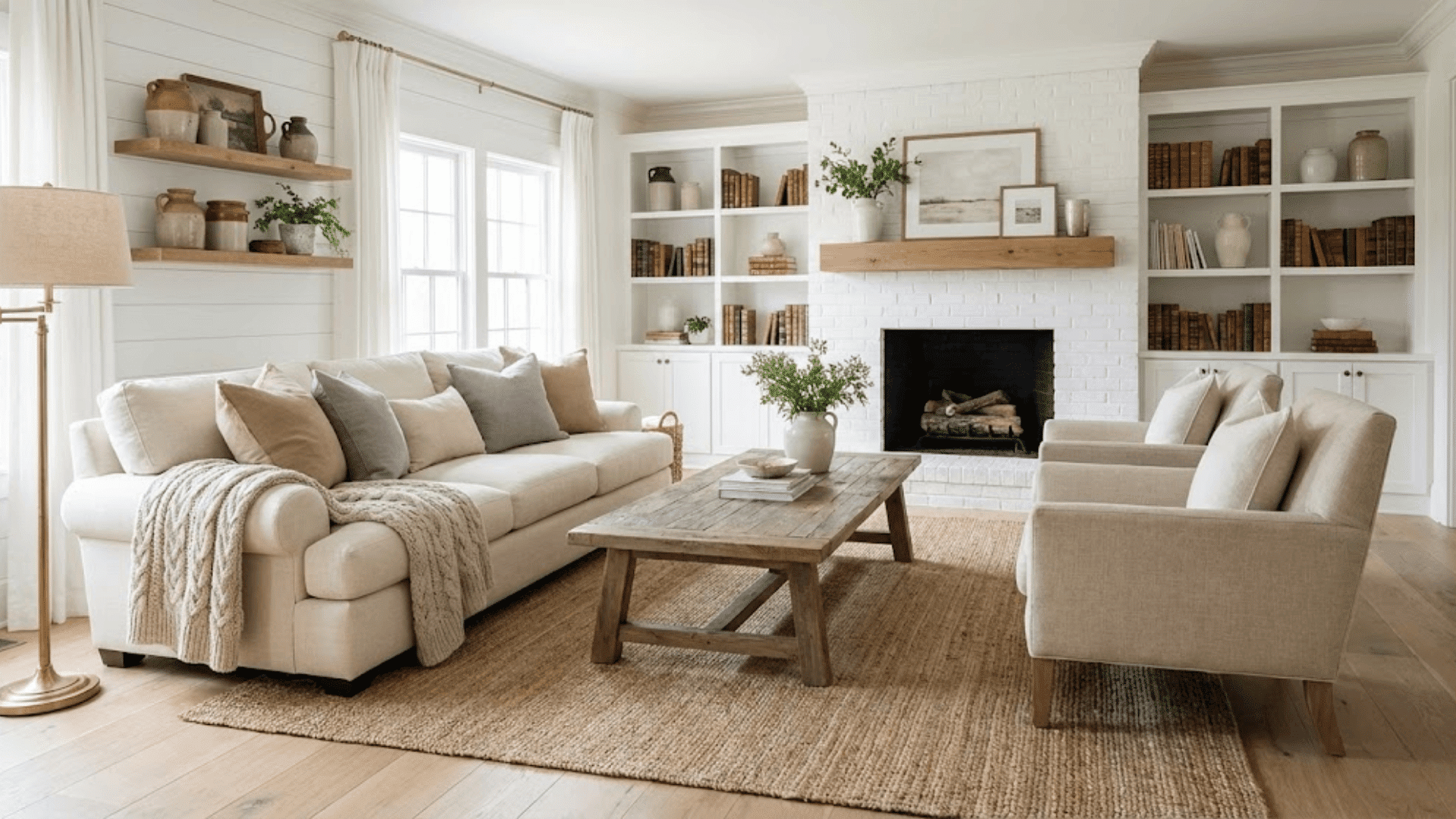
Create a gathering space that invites everyone to relax and linger. The living room is where farmhouse comfort truly shines.
- Arrange plush seating around a statement coffee table, whether it’s reclaimed wood, a vintage trunk, or a distressed farmhouse piece.
- Center your layout around the fireplace, flanking it with built-in shelving or floating shelves for books and décor.
- Layer textures with linen pillows, chunky knit throws, and jute rugs over hardwood or wide-plank floors for cozy depth.
2. Farmhouse Kitchen Design
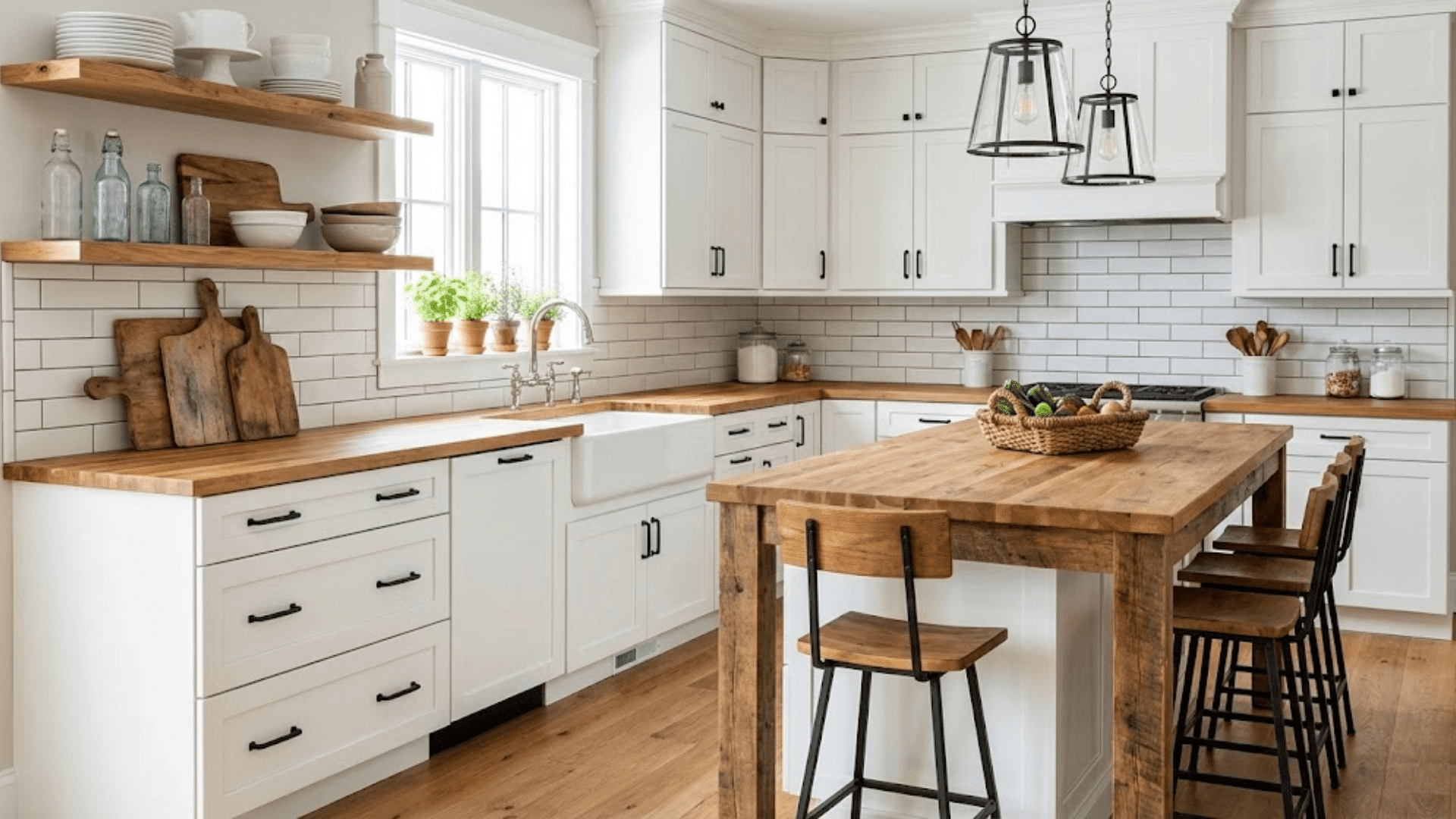
The kitchen is the true heart of farmhouse living, where function meets timeless style in the most beautiful way.
- Apron-front farmhouse sinks in white porcelain or fireclay become the hardworking centerpiece of your kitchen.
- Open shelving displays everyday dishes, vintage glassware, and rustic cutting boards while keeping things accessible.
- Butcher block countertops or reclaimed wood islands add warmth and a practical workspace that ages beautifully with use.
3. Farmhouse Bedroom Design
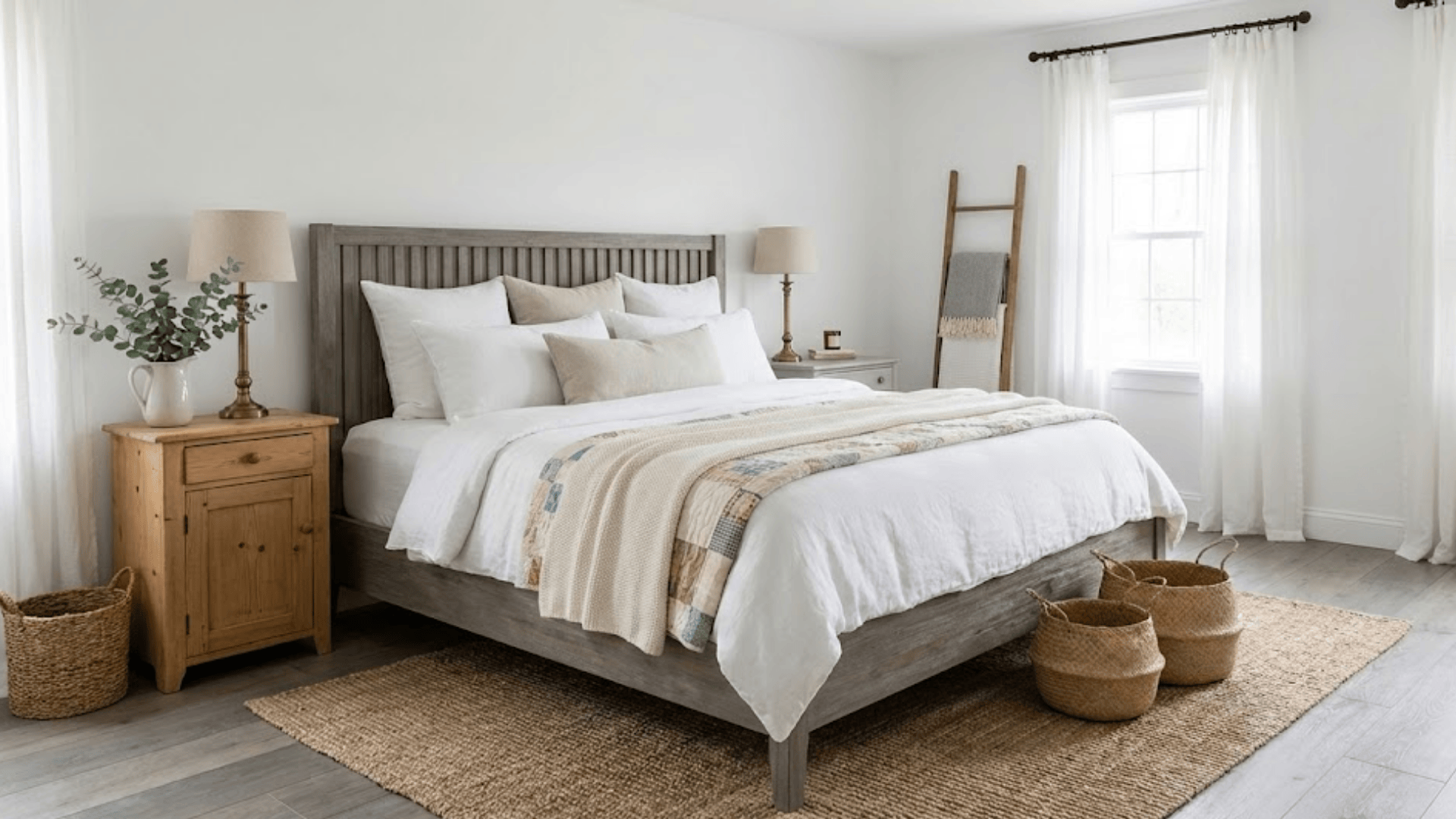
Your bedroom should feel like a peaceful retreat where comfort wraps around you the moment you walk in.
- Crisp white or neutral bedding layered with quilts and textured throws creates that inviting, sink-right-in appeal.
- Solid wood bed frames in weathered or natural finishes anchor the space with a substantial, lasting presence.
- Vintage nightstands and woven baskets provide storage while adding character and that collected-over-time charm.
4. Farmhouse Bathroom Ideas
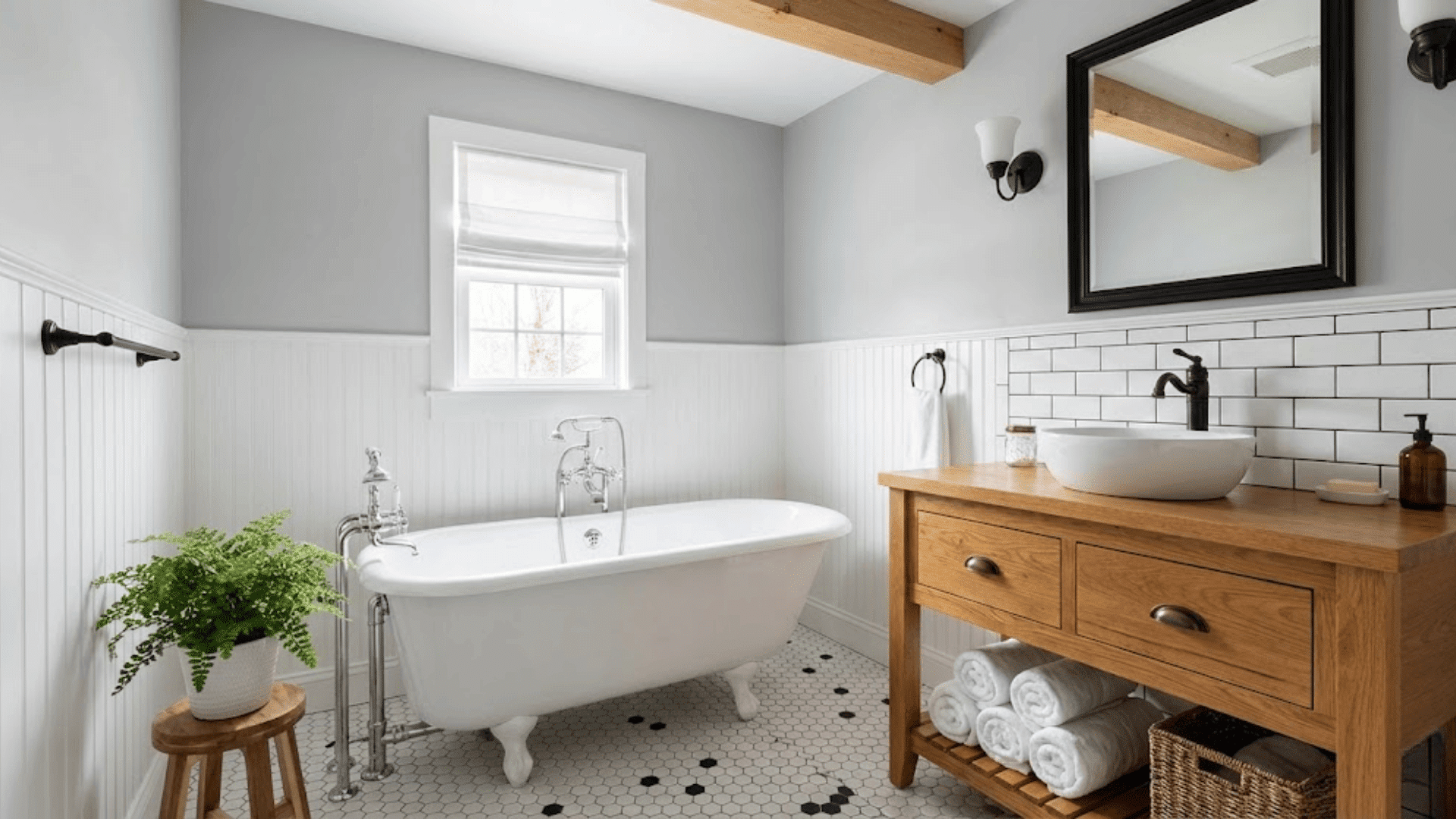
Turn your bathroom into a serene escape with fixtures and finishes that blend beauty with everyday practicality.
- Freestanding soaking tubs with vintage-inspired faucets create a spa-like focal point that feels classic.
- Wood vanities with vessel sinks bring natural warmth while providing storage in a beautifully functional way.
- Oil-rubbed bronze or matte black fixtures paired with subway tile and beadboard complete the classic farmhouse look.
Farmhouse Wall Decor and Architectural Details
Shiplap walls remain the signature farmhouse feature, adding horizontal texture that makes rooms feel larger and more cohesive.
Board and batten offers a similar effect with vertical lines, especially beautiful in dining rooms and entryways.
These architectural details create the perfect backdrop for vintage-inspired signs, botanical prints, and oversized clocks that add personality without overwhelming the space.
Looking up, exposed ceiling beams in natural or whitewashed finishes bring architectural drama, while wood plank ceilings wrap rooms in warmth.
Round out the look with wainscoting along lower walls, arched doorways, and black-framed windows that frame views beautifully while anchoring your farmhouse aesthetic from floor to ceiling.
Lighting in Farmhouse Interior Design
Lighting shapes the entire mood of your farmhouse interior design, blending function with that warm, inviting glow.
The right fixtures become statement pieces while illuminating your space beautifully.
- Pendant lights with metal or glass shades hang over kitchen islands and dining tables, creating focal points that draw the eye upward.
- Lantern-style fixtures in entryways and hallways add vintage charm while casting a soft, welcoming glow throughout your home.
- Wrought iron chandeliers and matte black sconces provide contrast against light walls while bringing industrial farmhouse character to any room.
- Large windows with minimal treatments maximize natural light, keeping spaces bright and airy while connecting indoor living to the outdoors.
Layer your lighting at different heights and let natural light flood in during the day. The interplay of ambient, task, and accent lighting creates depth and warmth that makes every room feel truly lived-in.
Farmhouse Interior Design Decor and Accessories
The finishing touches bring farmhouse interior design from pretty to personal. These décor pieces and accessories add layers of texture, warmth, and that curated charm that makes a house feel like home.
| Decor Element | Where to Use | Why It Works |
|---|---|---|
| Antique Finds | Shelves, mantels, and tabletops | Adds history and one-of-a-kind character |
| Woven Baskets | Storage in every room | Natural texture meets practical function |
| Greenery & Plants | Counters, tables, windowsills | Brings life and freshness indoors |
| Handmade Ceramics | Open shelving, kitchen displays | Artisan quality with organic imperfection |
| Linen Textiles | Tables, sofas, beds | Soft, lived-in fabric that ages beautifully |
| Galvanized Metal | Vases, trays, storage | Industrial edge with farmhouse roots |
Common Farmhouse Interior Design Mistakes to Avoid
Even the most beautiful farmhouse interior design can miss the mark with a few common missteps.
Here’s what to watch for so your space feels authentic and inviting rather than overdone.
- Overloading on rustic pieces like too much distressed wood or burlap creates visual clutter instead of the calm, curated look you’re after.
- Filling walls with farmhouse signs and slogans turns charming into kitschy fast, so choose one or two meaningful pieces at most.
- Skipping contrast by using only whites and light woods makes rooms feel flat and washed out instead of layered and interesting.
- Staging instead of living with too many perfectly placed accessories makes your home feel like a showroom rather than a real, lived-in space.
- Forgetting functionality by prioritizing looks over livability leaves you with beautiful spaces that don’t actually work for everyday life.
The best farmhouse interiors feel genuine and relaxed, not forced. Edit ruthlessly, live in your space, and let it evolve naturally over time.
Mixing Farmhouse with Other Design Styles
Farmhouse interior design plays beautifully with other styles, creating unique spaces that feel personal and layered.
Here’s how to blend farmhouse charm with different aesthetics for a look that’s entirely your own.
| Style Mix | What to Combine | Balance Tips |
|---|---|---|
| Farmhouse + Industrial | Metal pipes, Edison bulbs, exposed brick | Add industrial edge, keep farmhouse warmth |
| Farmhouse + Coastal | White furniture, driftwood, soft blues | Stay light and airy with beachy textures |
| Farmhouse + Scandinavian | Minimal lines, light woods, clean textiles | Pare down clutter, embrace simplicity |
| Farmhouse + Bohemian | Macramé, layered rugs, global patterns | Mix freely, anchor with neutrals |
Blending Tips: Use farmhouse as your foundation, and introduce other styles through smaller accents. Keep colors cohesive and let textures create interest without overwhelming the space.
Trends Shaping Farmhouse Interior Design Today
Farmhouse interior design shifts to softer, modern styles with cleaner lines and lighter finishes, replacing rustic elements. This complements warm minimalism, using fewer, high-quality pieces to create cozy, intentional spaces.
Sustainable materials are driving choices too, from reclaimed wood to organic textiles and vintage finds that reduce environmental impact.
The biggest shift? Moving away from overly themed farmhouse toward personalized interiors that weave farmhouse charm into your unique style.
Today’s farmhouse feels less like following a formula and more like creating authentic, lived-in spaces that reflect who you actually are.
The Closing Note
Farmhouse interior design gives you permission to slow down and create spaces that truly feel like home.
You might lean into modern clean lines, traditional vintage charm, or something beautifully in between. This style adapts to your life rather than demanding perfection.
Start with one room, layer in natural textures, and let your space evolve as you live in it.
The beauty is in the imperfection, the collected pieces, and the warmth that welcomes everyone in.
What’s your favorite farmhouse element? Share your thoughts in the comments below.