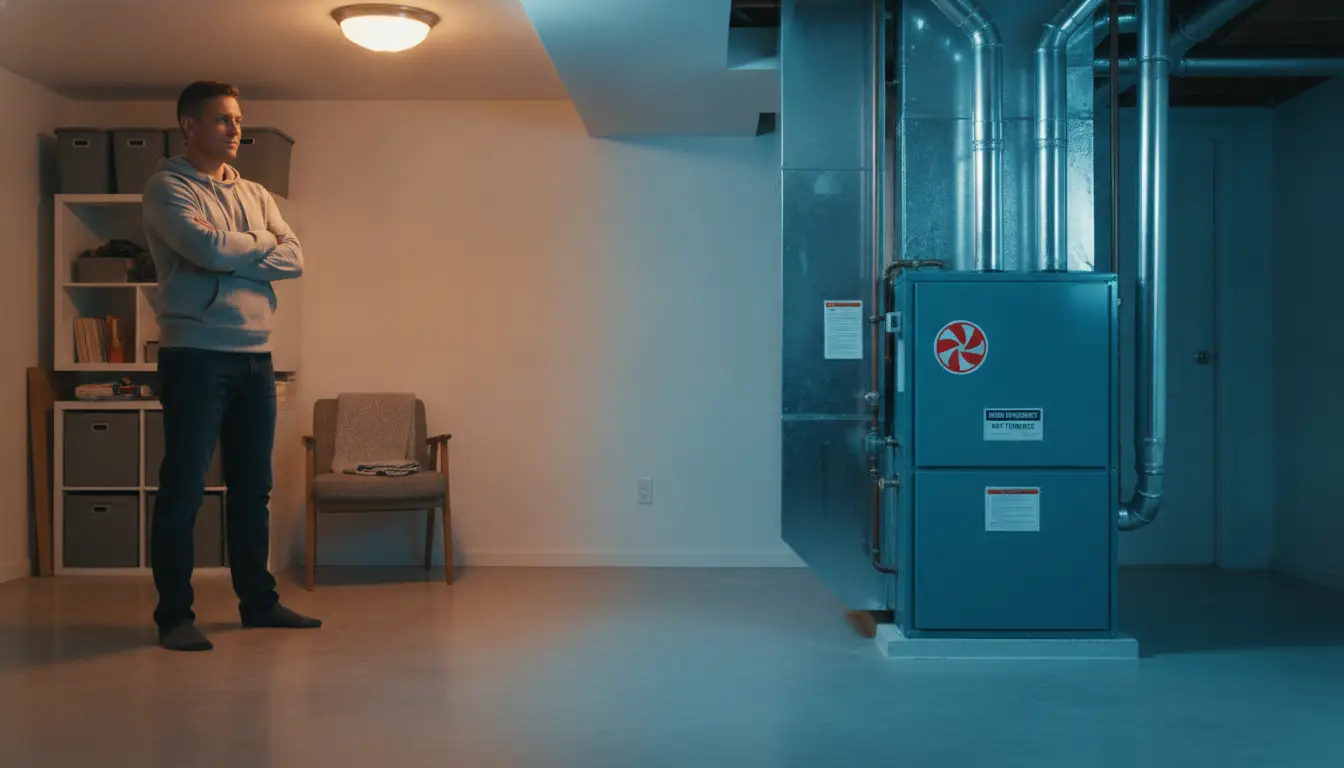
A furnace isn’t a friendly appliance; it’s an industrial combustion chamber sitting in a basement. Keeping it running doesn’t require standing over it with a wrench. It requires ruthless discipline about where basic house care stops and lethal mechanical risk begins. Technicalities touching gas lines, high-voltage circuitry, or internal fire chambers belongs strictly to experts.
Treat Water Leaks as System Warnings
High-efficiency units sweat acid-laced condensation. Finding water pooling on the floor isn’t an invitation to yank on plastic tubing with pliers. Modern drainage systems are tied into critical safety switches. The DIY job here is purely observational:
- Look for Moisture Signs: Spot molds and standing water early before it rots the floorboards.
- Track System Behaviors: Note if short-cycling coincides with water pooling.
- Escalate Fast: Let a technician clear the line; blind DIY poking easily snaps fragile internal drain pans.
And when observational signs point to a drainage issue, professional intervention shifts the focus from symptom management to root-cause diagnosis. Furnace Repair Calgary experts step in to handle the delicate, high-risk components of modern high-efficiency systems through specialized actions like safely neutralizing acidic runoff from your furnace, and diagnosing internal system triggers.
Clear the Furnace Sanctuary
Leave a clear zone of about 3 feet or 1 meter all-round the furnace. Clutter around your furnace prevents good airflow, feeds potential fires, and can create obstacles when access is critical. However, more risky substances like thinner, cleaning chemicals, and paints, should be placed even at a greater distance away.
Also, regularly remove vacuum up lint, dust, and spider webs before they become ignition material. Remember to keep exit routes open: Ensure an expert can reach emergency shutoffs without scaling a wall of plastic totes.
Stop Choking the Airflow
Most “furnace failures” are just extreme airflow starvation caused by reckless interior decorating. Walk through the house and confront the floor registers and return grilles. Rugs, heavy drapery, and misplaced sofas quietly strangle the system. Before jumping to apocalyptic conclusions about a dead furnace, verify that air can actually move. If registers are wide open and a room still freezes, the machine is signaling a deeper mechanical failure.
Keep Out of the Burner Chamber
Inspecting burner flames via DIY internet advice is a fast track to carbon monoxide poisoning or explosion. Removing panels to eyeball gas combustion is absurdly reckless. Leave the flame diagnostics to technicians equipped with actual combustion analyzers. Limit internal checks to zero: watch for physical symptoms from a safe distance; weird noises, burning smells, or sudden shutdowns—and call in a licensed professional immediately.
Stop Abusing the Thermostat
A thermostat is a sensitive sensor, not a button to smash repeatedly when the room feels chilly. Old batteries cause bad signals and weird heating issues. Swap batteries strictly on a schedule. If the reading seems radically disconnected from reality, consider drafting doors or sun exposure before declaring the unit dead. Most importantly, if the furnace system doesn’t respond to command inputs, don’t be tempted to try endless manual resets. It will only flood the ignition module or lock out the system entirely.
Treat CO Detectors as Non-Negotiable Survival Gear
Carbon monoxide is part of the system by-products, but dangerous if it leaks indoors. As such, a CO alarm is not a furnace accessory, it is a critical life-support system.
- Absolute Maintenance: Test alarms monthly. No excuses, no delays.
- Respect the Expiration Date: Sensors decay. Replace units every five to seven years without exception.
- Respect Alarm Responses: Never assume a blaring detector is a “false alarm.” Evacuate instantly and call emergency services.
It’s about setting a complete system that serves your heating needs while keeping watch of silent dangers.
In essence, real responsibility in furnace home care isn’t about fixing anything, it’s about following expert guidance in the best way possible to keep your system functional and contacting experts when the system need one. It’s about recognizing the boundary between basic upkeep and professional intervention to keep the house warm and the occupants alive.