The wrong egress window size in Calgary can delay your project and lead to costly fixes. In Calgary, missing code requirements or using the wrong measurements often result in failed inspections.
Getting it right means better safety, smooth approvals, and no rework later. The right size and setup also make your basement usable and compliant.
Clear rules, proper measurements, and smart planning can save time and money. Simple steps can help avoid common mistakes and ensure that everything meets code requirements.
Learn the exact size requirements, how to measure correctly, and what to avoid before installing.
Calgary Egress Window Size Requirements
Calgary follows the National Building Code — Alberta Edition (NBC AE), also referred to as the Alberta Building Code (ABC). These rules apply to all bedrooms, including basement bedrooms, in homes without a fire sprinkler system. The requirements below reflect current code standards.
These rules make sure a window can be used as a safe exit during an emergency. It must open wide enough, be easy to reach, and allow a person to climb out without trouble.
Minimum Opening Area: The clear opening must be at least 0.35 square meters (3.8 sq ft). This is the usable space when the window is fully open, not the frame size. A 20 × 28-inch opening qualifies, while an 18 × 24-inch opening does not.
Minimum Width and Height: Both width and height must be at least 380 mm (15 inches). Each side must meet the minimum, even if the total area is enough. A 15 × 30-inch opening qualifies, while a 14 × 40-inch opening does not due to insufficient width.
Maximum Sill Height: The bottom of the window opening must not be higher than 1,118 mm (44 inches) from the floor. This keeps the window within reach for anyone trying to escape quickly. A 40-inch sill height is acceptable, while a 50-inch sill height does not comply. In basement bedrooms where a lower sill is difficult to achieve, built-in furniture below the window can be used to improve access, but the sill height limit still applies.
Operability: The window must open fully from the inside without the use of keys, tools, or special knowledge. Security bars or grilles are only permitted if they can also be released from the inside without tools. A window that requires a key to unlock does not comply, even if it meets all size requirements.
The window must meet all these limits together to work as a proper emergency exit.
3. How to Measure an Egress Window
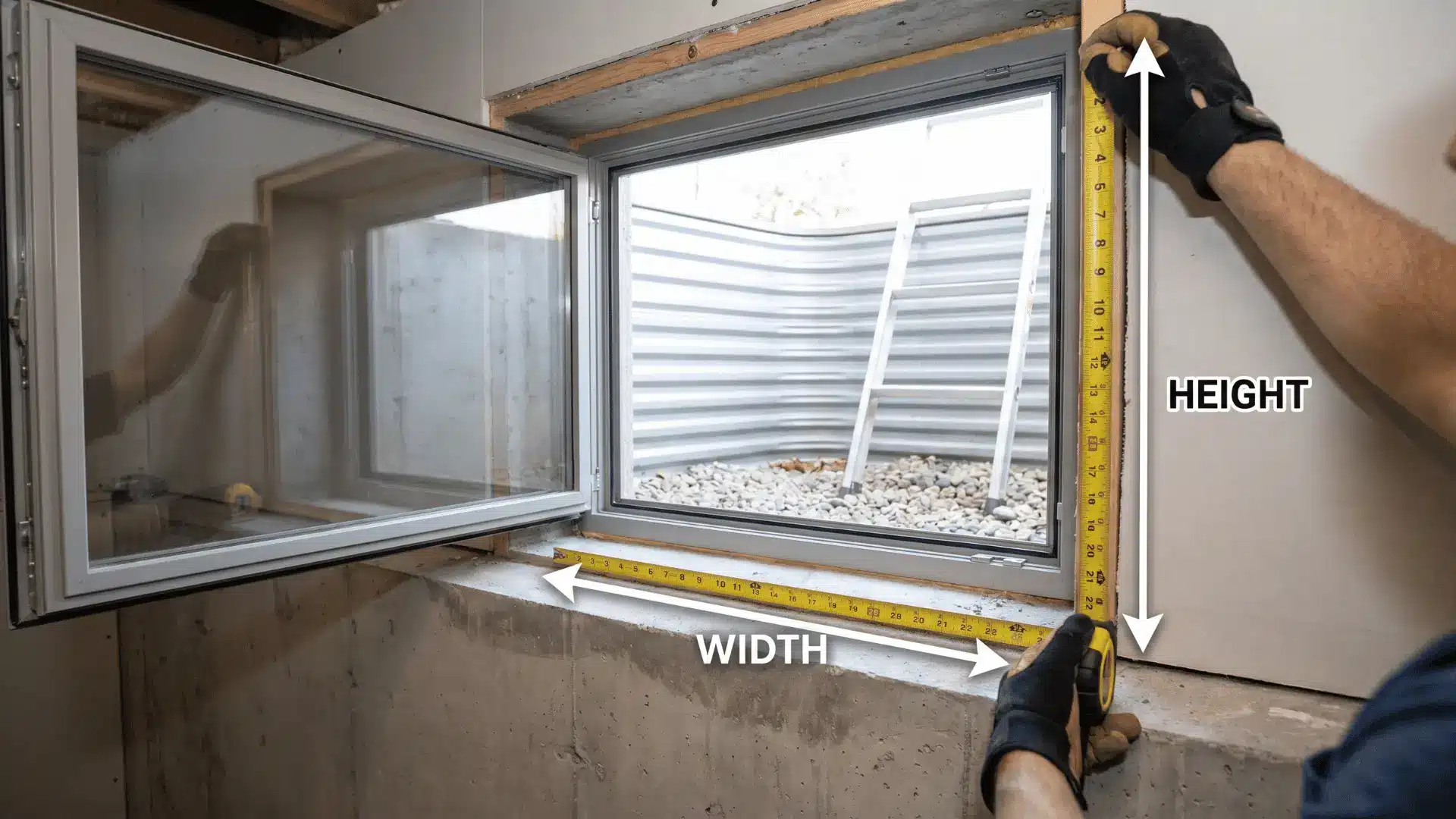
Accurate measurement is key to making sure the window meets code requirements. Focus on the usable opening space, not just the overall window size.
- Open the window fully: Make sure the window is completely open before measuring.
- Measure the clear opening width: Measure the narrowest part of the space you can pass through.
- Measure the clear opening height: Measure from the bottom to the top of the open space.
- Calculate the opening area: Multiply width × height to get total square inches or square feet. A 20 × 28 inch opening = 560 sq inches (~3.9 sq ft), which meets the requirement.
- Check minimum size rules: Confirm both width and height meet the minimum limits, not just the total area.
- Consider practical factors: Larger rooms may need larger windows, and the placement should allow for quick, easy escape.
Measure carefully to ensure compliance and safe exit use. Avoid measuring the frame or a partially open window, and always double-check your numbers.
4. Window Well Requirements in Calgary
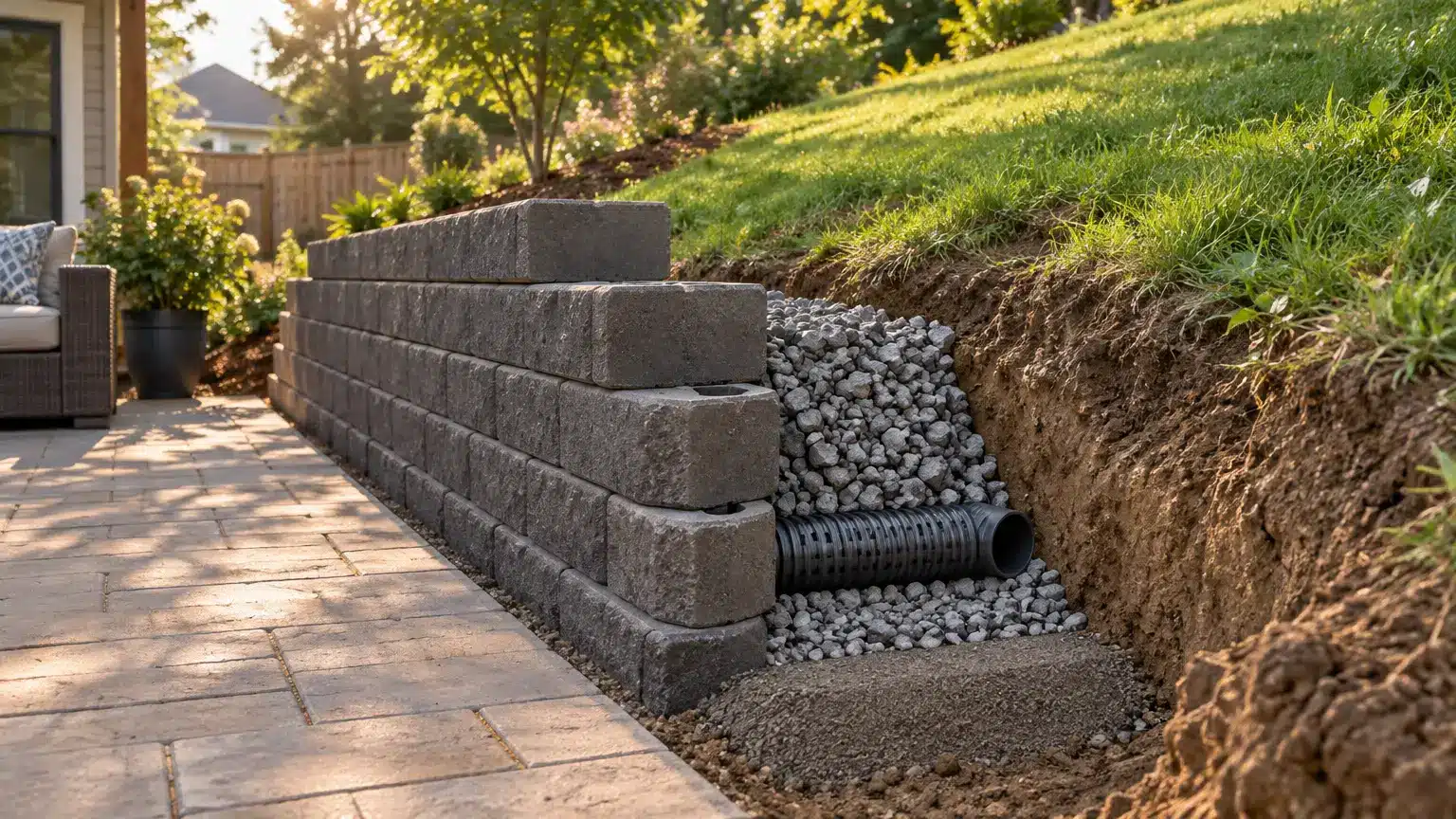
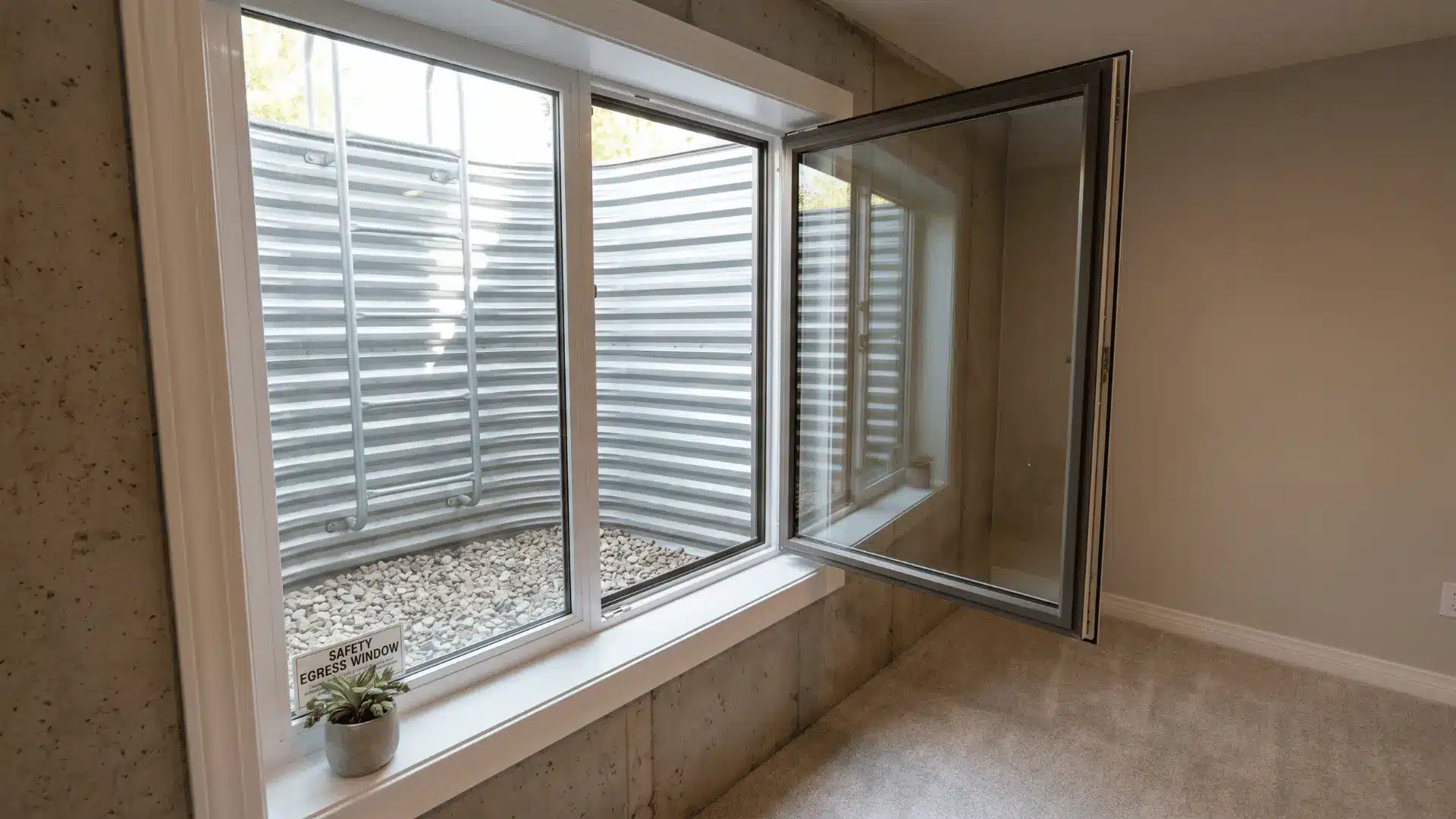
Window wells must provide enough space for safe exit and proper drainage. They should not block the window and must allow it to open fully.
The well should have at least 30 inches of clearance in front of the window to give enough room to climb out. If the well is deeper than 44 inches, a permanently attached ladder is required and must not block the opening.
Good drainage is also important, so the well should include gravel or a drain system to prevent water buildup and protect the basement.
5. Best Window Types for Egress
Choosing the right egress window size calgary is important because not all styles meet egress requirements easily. Some open wider and provide better escape space than others.
Casement Windows
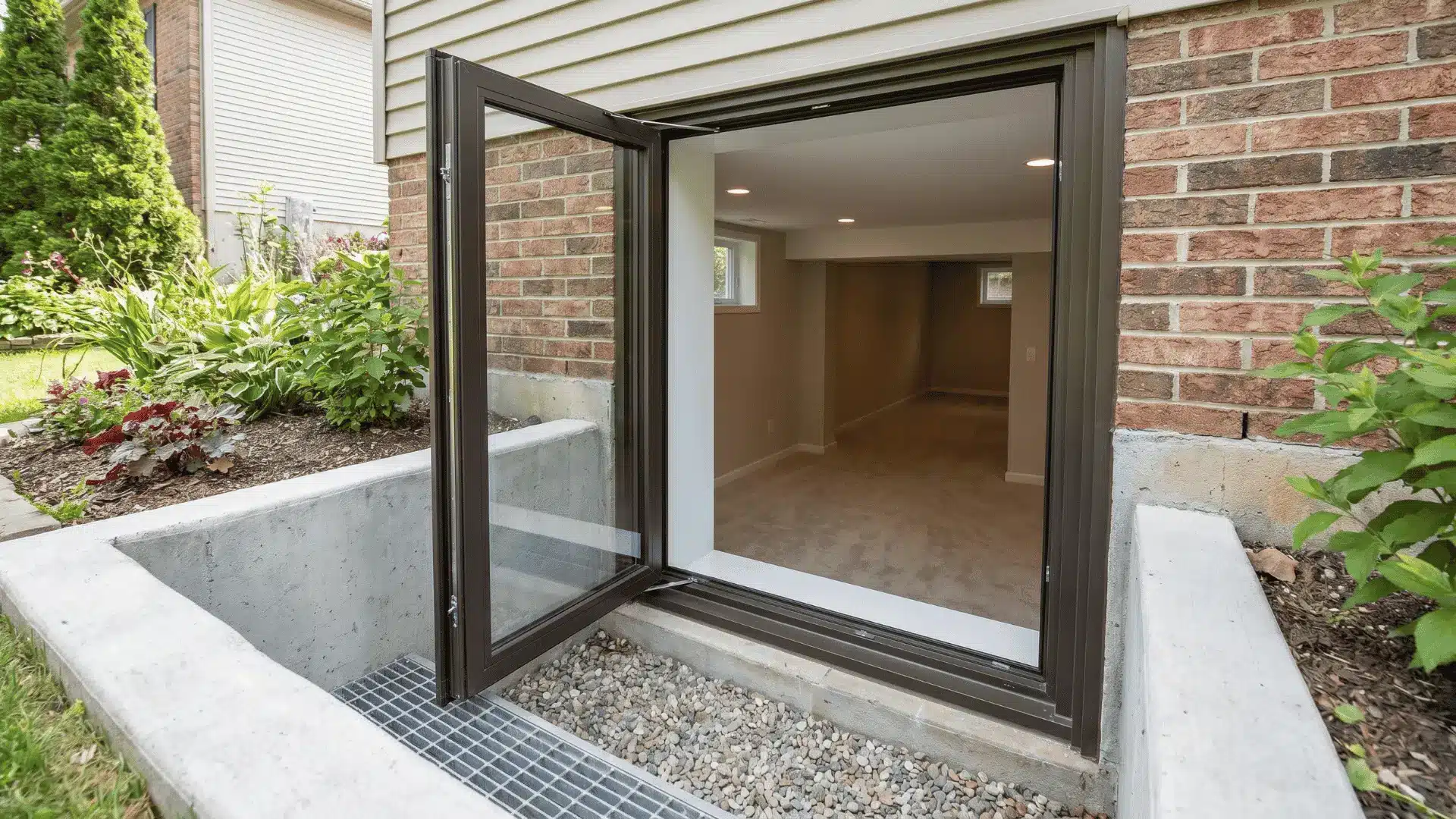
Casement windows open outward like a door and provide the full opening space, making them the most reliable option for egress compliance. They allow easy exit and airflow but need space outside to open.
The full sash opens, so there are no center bars blocking the exit. This makes it easier for adults and children to climb out quickly in an emergency.
Slider Windows
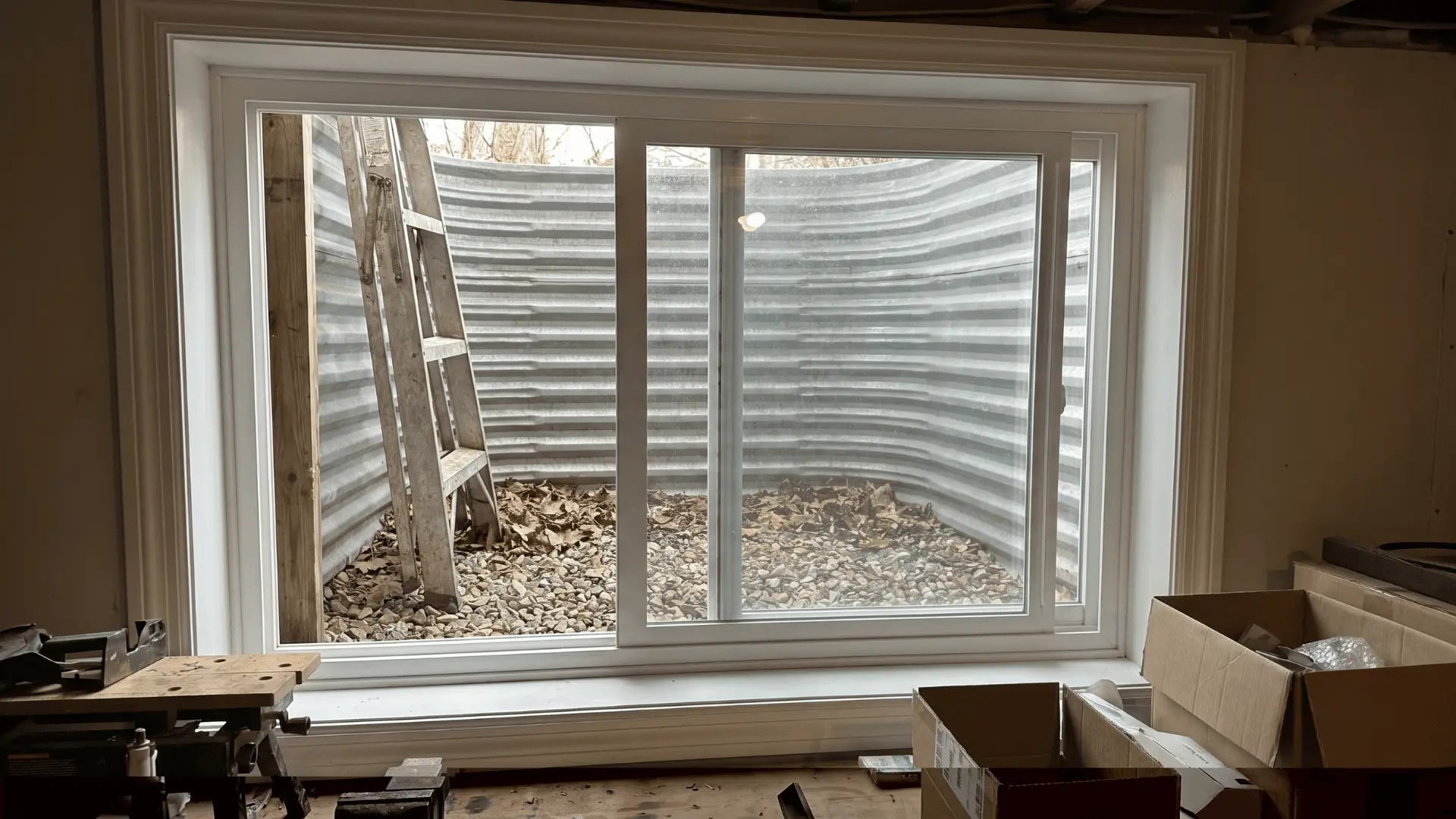
Slider windows move side to side and are simple in design, but only one side opens at a time.
This limits the usable opening, so they often fail to meet egress requirements unless enlarged.
For example, a slider with a 44 × 24-inch frame only opens half its width, giving a usable opening of 22 × 24 inches — well under the required 3.77 sq ft. To meet code with a slider, the frame typically needs to be at least 44 × 33 inches or 48 × 30 inches so the open half clears the minimum.
They are common in basements due to their compact design and lower cost. However, homeowners often need to install larger units to meet code requirements, which can increase project costs.
Awning Windows
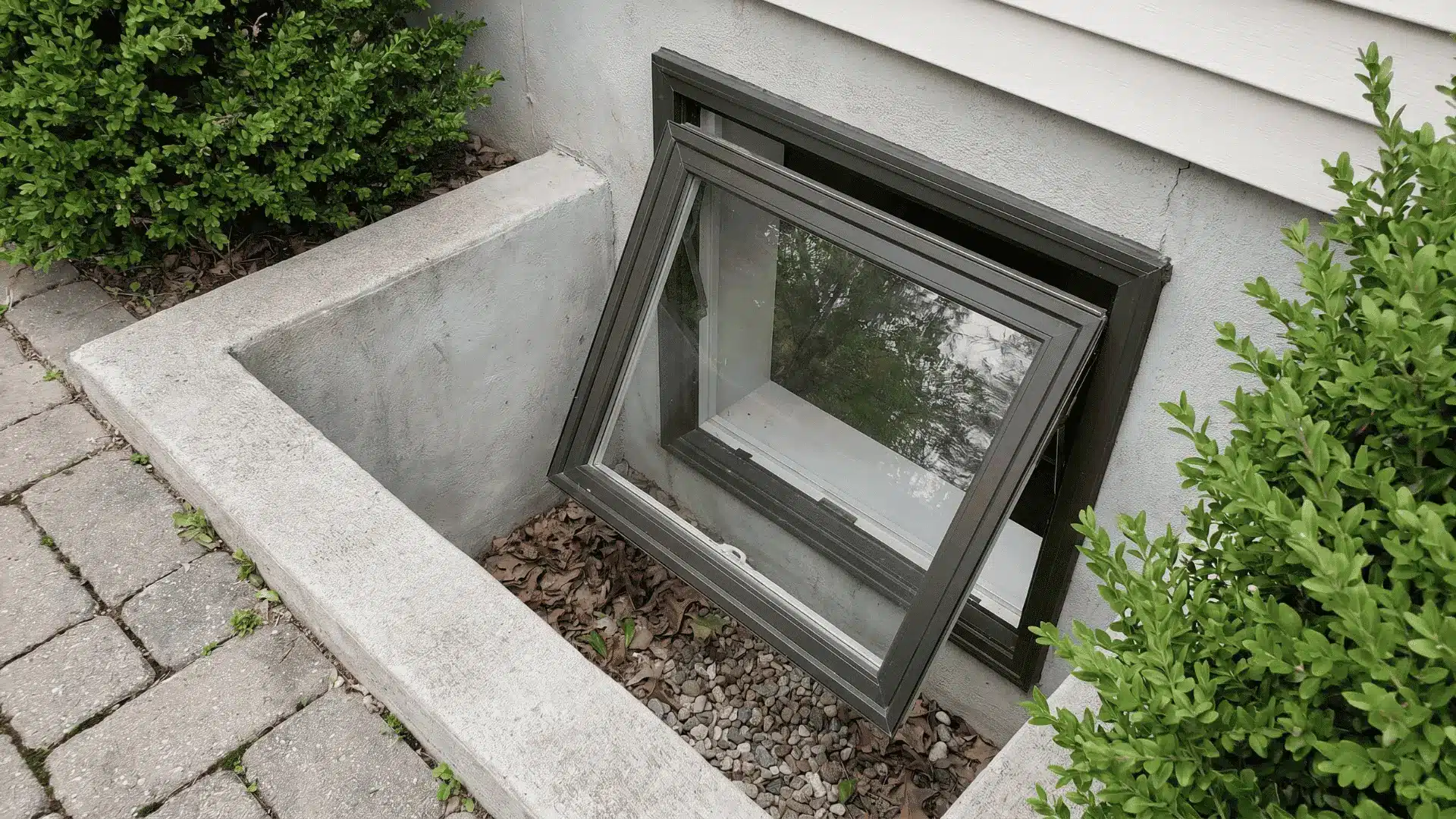
Awning windows open outward from the bottom and are useful for ventilation, even during rain.
However, the opening space is limited, so they may only meet egress requirements if carefully sized.
The outward panel can also block part of the escape path when fully open. This makes them less practical for emergency exits compared to other window types.
6. Basement Egress Windows (Special Rules)
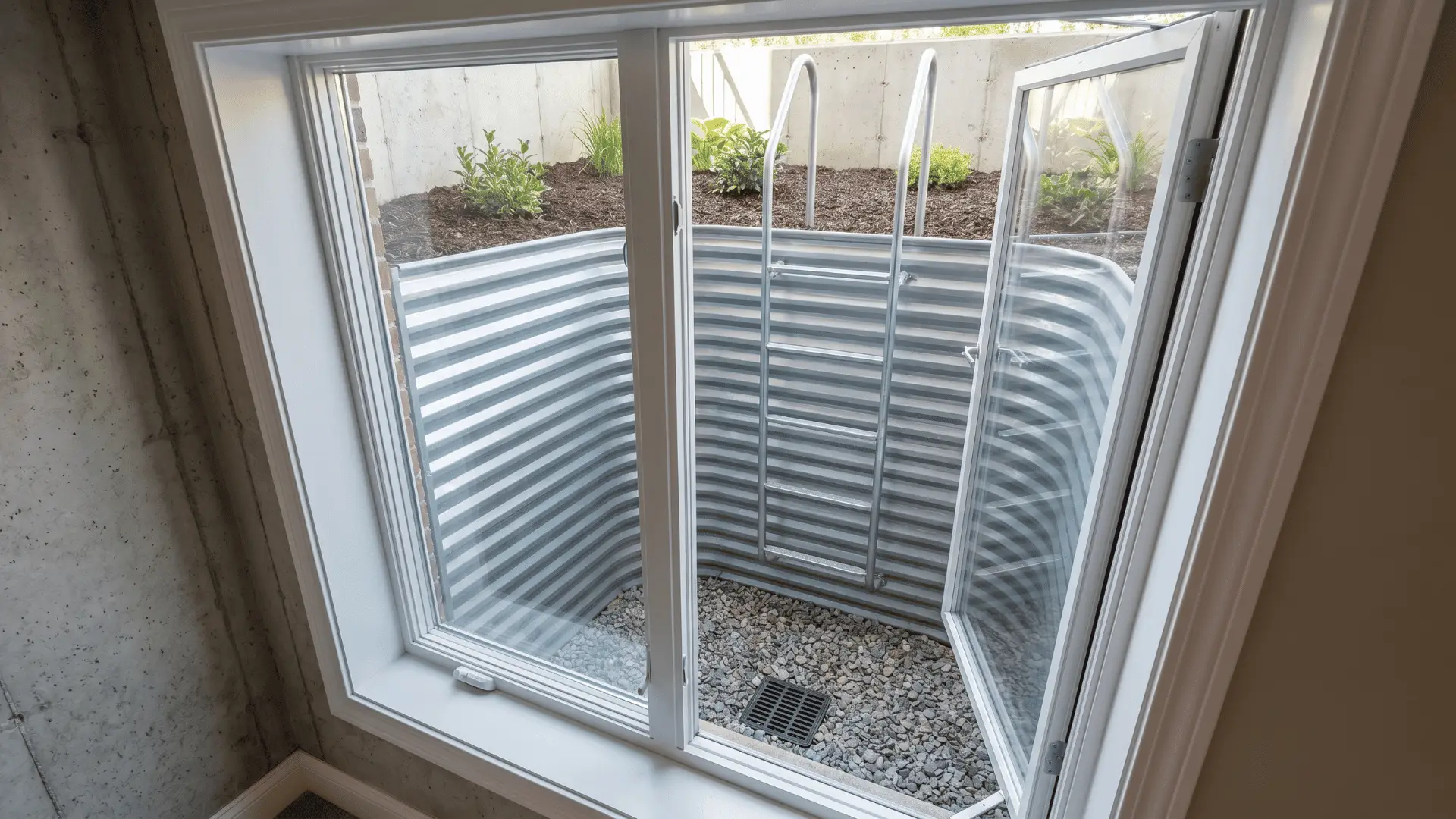
Basement egress windows are subject to stricter rules due to limited exit options and below-ground conditions.
- Basements carry a higher risk, so windows must provide a clear, unobstructed escape path that is easy to access
- Any legal bedroom in a basement must have at least one egress window that meets size and opening requirements
- The window must open fully without tools or force and remain free from any blockage at all times
- Window wells must offer enough space to move freely, and if they are deep, a permanently fixed ladder is required for safe exit
Following these points helps ensure safe escape during emergencies and keeps the basement compliant with building codes.
7. Common Mistakes to Avoid
Small mistakes can lead to failed inspections or unsafe conditions, so it’s important to get the details right.
- Wrong dimensions: Measuring the frame instead of the clear opening or not meeting the minimum width and height can make the window non-compliant.
- Obstructions: Items like grilles, bars, or furniture can block the window and prevent it from opening fully during an emergency.
- Ignoring well clearance: Not leaving enough space in the window well can restrict movement and make it difficult to climb out.
Avoiding these mistakes helps ensure the window is safe and meets code requirements.
8. Cost of Egress Windows in Calgary
Egress window costs can vary widely depending on the scope of work and installation complexity.
A simple above-grade replacement may cost around $2,000, while a full basement egress installation typically ranges from $4,000 to $8,000+ due to excavation and foundation cutting.
Foundation cutting alone — renting a concrete saw, disposing of debris, and reframing the rough opening — typically accounts for $1,500 to $2,500 of that total before the window or well is purchased.
The final price depends on factors such as window size and type, window well depth, drainage setup, and foundation condition.
Basic vinyl windows are more affordable, while larger custom units and premium materials increase the cost. Planning for these variables helps set a realistic budget and avoid unexpected expenses during the project.
9. Permits & Regulations in Calgary
Following proper permits and codes is important to ensure safety and avoid legal issues.
- Permits are needed for new egress window installations, especially if the foundation is being cut or structural changes are involved. Simple replacements may not always require one, but it is best to confirm with local authorities
- After installation, an inspection is conducted to verify that the window meets code requirements. This includes size, clear opening, accessibility, and proper window well setup before approval is given.
- The IRC requires at least one egress window in every basement bedroom, with minimum size and opening rules. Local Calgary codes may be stricter, so always verify requirements before starting the project.
Following these steps helps ensure the installation is approved and meets all safety standards.
10. Step-by-Step Installation Overview
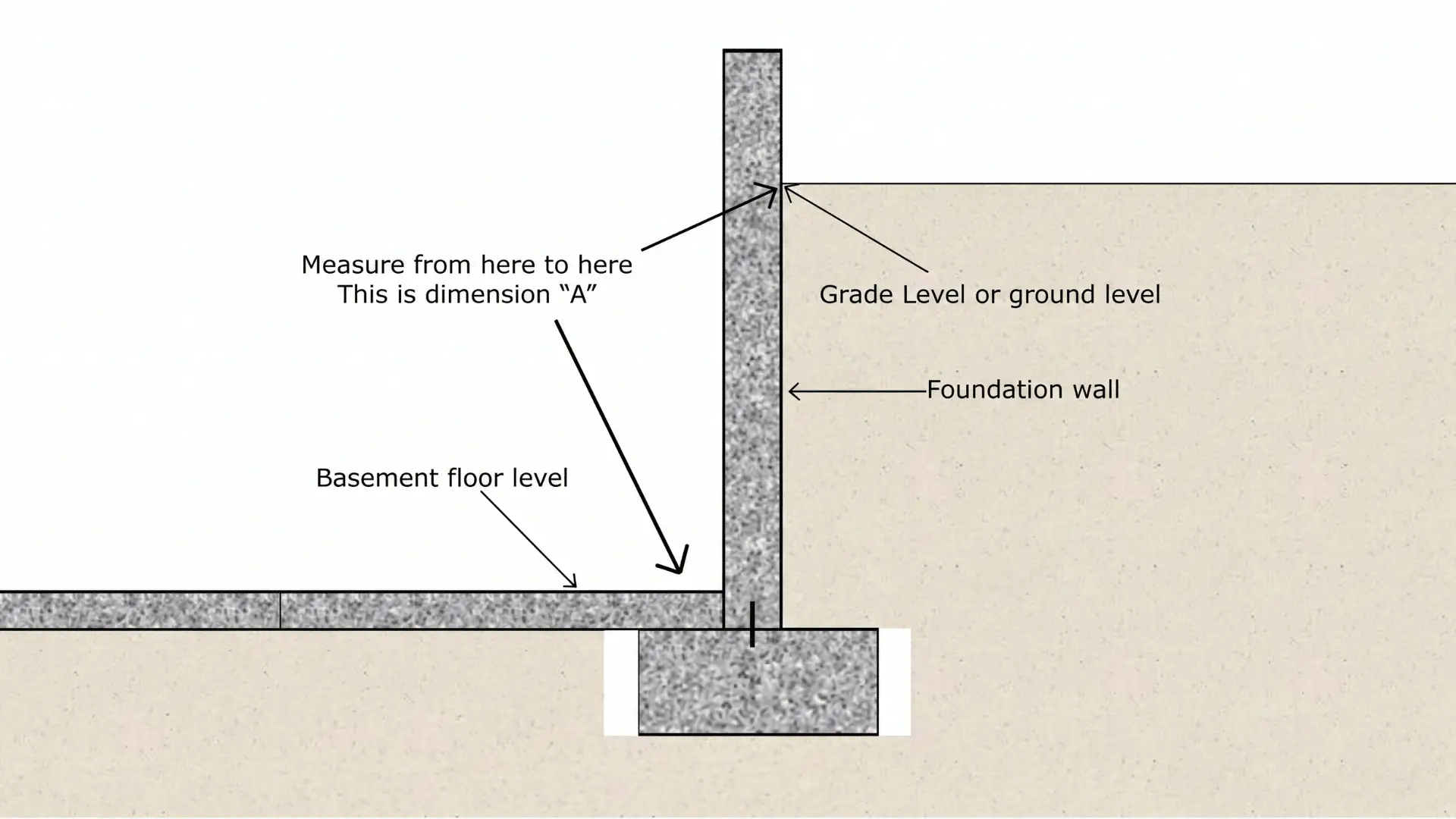
Proper installation is important to ensure the window is safe, secure, and in compliance with code requirements.
Start by choosing the right window size and location, and check all code and permit requirements before beginning work.
- Measure total height (Dimension A): Measure from ground level down to the basement floor. This gives you the full height needed for planning the window well.
- Calculate the required well height: Subtract 28 inches from the total height to find the minimum window well height. This accounts for window placement, drainage space below, and height above ground level.
- Determine well width: The window well must be wider than the window so it can fully open and allow easy exit.
- Prepare and install the well: Dig the area, add a gravel base for drainage, place the well, and secure it to the wall.
- Check drainage and clearance: Ensure the slope is properly away from the house, and confirm the window opens fully without obstruction.
Once installed, review everything to ensure it meets code and provides a safe, usable exit.
11. Conclusion
Getting the details right is key to safety, code approval, and long-term usability. The correct information ensures smooth inspections and a functional exit.
Accurate measurements, proper placement, and the right window type help avoid delays and extra costs. A well-installed egress window improves access and keeps your space compliant.
Plan carefully, follow the requirements, and double-check every step before installation. Taking the time to get measurements right and confirm permit requirements upfront is the most reliable way to avoid delays and extra costs.
12. Frequently Asked Questions
What is the minimum egress window size in Calgary?
The window must have at least 3.8 sq ft of clear opening, with a minimum width and height of 15 inches. It must also be easy to open and accessible without obstruction.
Do all basement bedrooms need an egress window?
Yes, each basement bedroom must have at least one egress window that meets code requirements. This ensures a safe exit in case of an emergency.
Do I need a permit to install an egress window in Calgary?
Yes, permits are usually required if the installation involves cutting the foundation or structural changes. Always check with local authorities before starting the project.