Light is the lifeblood of orchids. Without it, these beautiful plants simply won’t bloom, no matter how perfectly you water them or how ideal the humidity.
But here’s where things get interesting: not all light is created equal, and different orchids have wildly different preferences.
So do your orchids actually need sunlight, or will any bright spot do? And what about that tricky distinction between direct and indirect exposure?
We’re covering everything you need to know about orchid lighting, from species-specific requirements to foolproof placement strategies, plus how to spot when your plants are getting too much or too little of what they crave.
Why Light Matters for Orchids?
Light is the engine that powers everything your orchid does. Through photosynthesis, it fuels the production of energy that supports strong leaves, robust roots, and those gorgeous blooms you’re after.
But balance is critical here. Skimp on light and your orchid will refuse to flower, no matter how long you wait. Overdo it, and you’ll end up with scorched, damaged leaves that can’t recover.
Many orchids are incredibly tuned into light cues, responding to both intensity and day length when deciding whether to bloom.
Getting the light right isn’t just helpful, it’s absolutely essential for triggering that spectacular flowering cycle you’re hoping for.
Do Orchids Need Sunlight?
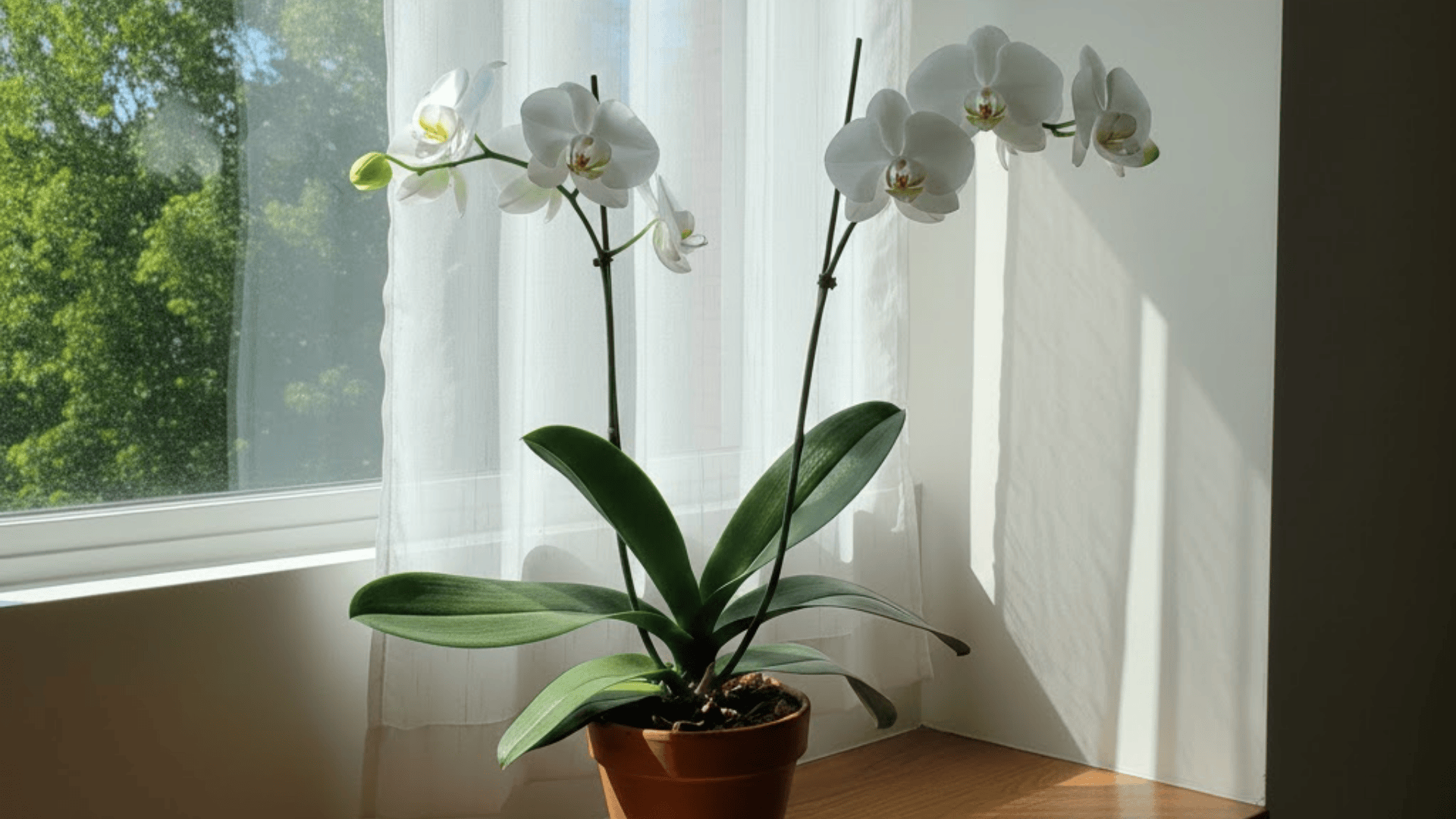
Most orchids absolutely need sunlight to thrive, but there’s a catch. The kind of light they crave isn’t the blazing, unfiltered rays you might imagine.
Understanding the difference between what helps and what harms is crucial for keeping your orchids healthy and blooming.
Orchids Need Light, But With Limits
Orchids need sunlight for growth and flowering, but can’t handle direct, intense sun exposure. These plants evolved in environments where they received filtered light through tree canopies or dappled shade.
While they’re hungry for brightness, that harsh midday sun will do far more harm than good.
The answer is yes, orchids need sunlight, but with critical boundaries. They want the energy without the burn, craving luminosity that’s been softened and diffused.
The Critical Distinction Between Bright Indirect and Direct Light
Bright, indirect light is the sweet spot for most orchids. This means plenty of luminosity without those harsh afternoon rays hitting the leaves directly.
Direct sunlight, especially during peak hours, will scorch foliage and cause permanent damage that stunts growth.
A spot near a window with sheer curtains or a few feet back from unobstructed glass works perfectly. That filtered, diffused brightness gives orchids exactly what they need without crossing into dangerous territory.
Understanding the difference between direct and indirect sunlight is fundamental to orchid care.
These two types of light exposure create vastly different growing conditions, and knowing which your orchid needs can make or break its health.
| Light Type | Characteristics | Intensity | Common Sources | Suitable Orchids |
|---|---|---|---|---|
| Direct Sunlight | Unfiltered rays with no obstruction | High, cause leaf scorch | South-facing windows, unshaded outdoor areas | Cattleya, Dendrobium (morning/late afternoon only) |
| Indirect Sunlight | Diffused or reflected before reaching the plant | Moderate, safe for growth | Sheer curtains, east-facing windows, bounced light | Phalaenopsis, most houseplant varieties |
Note: While most orchids prefer indirect light, a handful of species can handle brief periods of direct sun during cooler parts of the day. Always research your specific orchid variety before experimenting with direct exposure.
How Much Light Do Orchids Need?
Getting the right amount of light isn’t just about location; it’s about duration and intensity, too.
Your orchid needs consistent, adequate light exposure to produce energy and trigger blooming, but the exact requirements vary based on the species and your growing conditions.
1. Daily Light Duration Requirements
Most orchids need six to eight hours of bright, indirect light each day to stay healthy and bloom reliably. This duration mimics their natural habitat, where they receive consistent but filtered sunlight throughout the day.
Less than this and your orchid will struggle to produce flowers, potentially going dormant instead. More won’t necessarily help either, especially if the intensity crosses into harmful territory during peak sun hours.
2. Reading Your Orchid’s Leaves for Light Clues
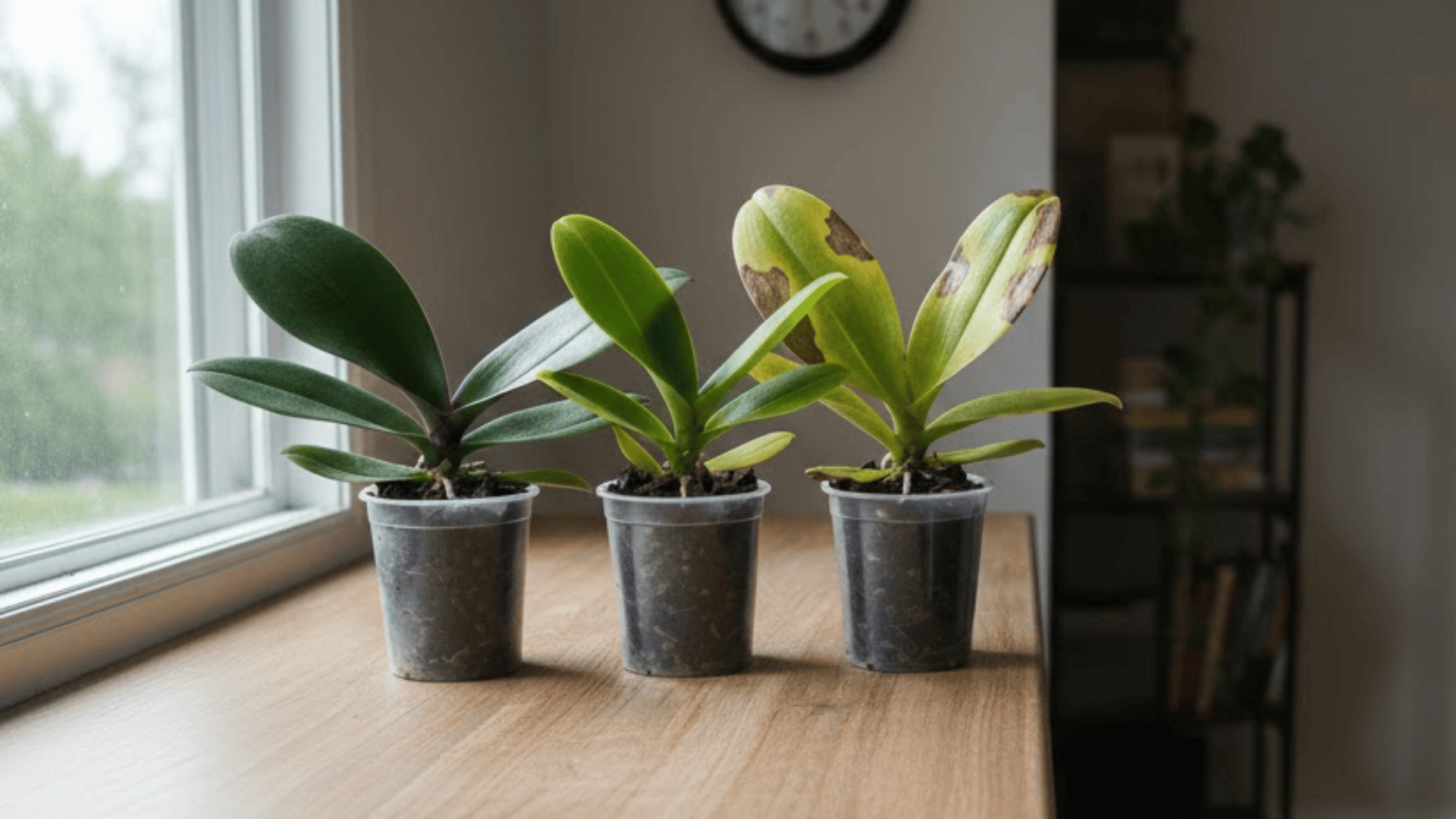
Your orchid’s foliage tells you everything about its light situation. Light to medium green leaves indicate ideal light levels, showing your plant is getting exactly what it needs.
Dark green leaves mean insufficient light, and your orchid is compensating by producing more chlorophyll. Yellowing or burned patches signal too much exposure and immediate damage. Check leaf color regularly to adjust placement.
3. Supplementing With Artificial Grow Lights
When natural light falls short, LED or fluorescent grow lights provide effective supplementation for orchids. This solution works perfectly for windowless spaces, darker homes, or winter months when daylight dwindles.
Position lights close enough to deliver adequate intensity but far enough to prevent heat damage. Artificial lighting offers full control over duration and consistency, removing the guesswork of relying on variable natural light.
Best Window Placement for Orchids
Choosing the right window can make all the difference in your orchid’s health and blooming success.
Each direction offers distinct light conditions throughout the day, and matching your orchid to the proper exposure sets you up for long-term thriving.
| Window Direction | Light Quality | Intensity Level | Best For | Considerations |
|---|---|---|---|---|
| East-Facing | Gentle morning sun | Low to moderate | Most orchid varieties | Ideal for beginners |
| South-Facing | Strong midday sun | High, potentially excessive | Light-hungry species only | Needs sheer curtains |
| West-Facing | Intense afternoon sun | High, potentially excessive | Light-hungry species only | Requires filtering |
| North-Facing | Soft, consistent light | Low, gentle | Shade-loving varieties | May need winter supplementation |
Signs Your Orchid isn’t Getting the Right Light
Your orchid communicates its light needs through visible signs on its leaves and growth patterns. Learning to read these signals helps you make quick adjustments before severe damage occurs.
- Dark green leaves with weak growth and no blooms indicate insufficient light exposure.
- Yellow, bleached, or scorched leaf patches signal too much direct sun damage.
- Move your orchid closer to the window if the leaves are dark green and flowering has stopped.
- Shift it further back or add sheer curtains if you notice yellowing or burn marks developing.
- Make placement changes gradually over several days to avoid shocking the plant with sudden adjustments.
Catching light issues early prevents permanent damage and gets your orchid back on track quickly. Monitor leaf color weekly and adjust placement as seasons change and light intensity shifts throughout the year.
Light Needs by Orchid Type
Different orchid species evolved in vastly different environments, which means their light requirements vary significantly.
Knowing your specific orchid type helps you provide the precise conditions it needs to thrive and bloom consistently.
| Orchid Type | Light Requirements | Tolerance Level | Ideal Placement |
|---|---|---|---|
| Phalaenopsis (Moth Orchids) |
Bright indirect light | Highly sensitive to direct sun | East or north-facing windows with filtered light |
| Cattleya | Higher light intensity | Tolerates some morning sun | East or lightly shaded south/west windows |
| Paphiopedilum (Lady Slipper) |
Low to moderate light | Avoid strong direct sunlight | North-facing windows or shaded spots |
Practical Tips for Providing Perfect Light
Once you understand your orchid’s light needs, implementing a few simple strategies ensures consistent, optimal conditions year-round.
These practical adjustments prevent common lighting problems and keep your plants thriving through every season.
- Install sheer curtains or adjustable blinds on south and west-facing windows to diffuse harsh afternoon rays.
- Rotate your orchid a quarter turn weekly to ensure all sides receive equal light exposure and balanced growth.
- Monitor seasonal changes in light intensity and adjust placement accordingly as the sun’s angle shifts.
- Use supplemental grow lights during the winter months when natural daylight decreases significantly.
- Check leaf color monthly as your most reliable indicator for fine-tuning light conditions.
Small, consistent adjustments to your orchid’s light exposure pay off with healthier foliage and more reliable blooming cycles. Stay observant and responsive to your plant’s signals rather than sticking rigidly to one placement year-round.
The Closing Note
So do orchids need sunlight? Absolutely, but it’s all about finding that perfect balance between brightness and protection.
Most varieties thrive with filtered, indirect light that mimics their natural rainforest homes, while a few tougher species can handle gentle direct exposure.
Pay attention to what your orchid’s leaves are telling you, adjust placement as needed, and don’t hesitate to supplement with grow lights when natural conditions fall short.
With these insights in your toolkit, you’re ready to create ideal lighting conditions that reward you with vigorous growth and vibrant blooms. Have questions or tips to share? Drop a comment below!