Planning a patio or driveway is one of those decisions that feels simple until you’re deep in contractor quotes and suddenly questioning everything.
Concrete or pavers?
Both have their charm, both have their price tag, and both will completely change the way your outdoor space looks and feels.
If you’ve been going back and forth comparing concrete vs pavers, weighing the patio cost concrete route against a paver patio cost installed, you’re in the right place.
Everything from upfront costs to long-term value is covered here, so you can move forward with confidence.
Quick Cost Overview
A 20×20 area covers 400 square feet, and your material choice plays a big role in what you’ll spend.
A concrete slab typically runs cheaper upfront, making it a go-to for budget-conscious projects.
Basic pavers sit in the mid-range, offering more visual variety without going overboard. Premium pavers, think natural stone or intricate patterns, sit at the higher end of the budget spectrum.
It’s also worth knowing that labor, base preparation, and site conditions can shift these numbers quite a bit, depending on where you live and the complexity of your project.
| Option | Installed Cost Range | Best For | Labor Intensity |
|---|---|---|---|
| Concrete Slab | $800 – $3,200 | Budget builds, driveways | Low to moderate |
| Basic Pavers | $2,400 – $6,000 | Patios, walkways | Moderate |
| Premium Pavers | $6,000 – $12,000+ | High-end outdoor spaces | High |
Concrete Patio Cost for a 20×20 Area
Concrete is where simplicity meets durability, and for a lot of homeowners, that’s exactly the sweet spot. It’s dependable, widely available, and comes with more design flexibility than most people expect.
Average Installation Cost
Concrete pricing shifts quite a bit based on the finish you choose.
A basic poured slab is cheapest, stamped concrete adds texture and pattern for a mid-range cost, and stained or colored concrete offers color and character at a moderate price.
| Finish Type | Cost per Sq Ft | Total (400 sq ft) |
|---|---|---|
| Basic Poured Concrete | $2 – $8 | $800 – $3,200 |
| Stamped Concrete | $8 – $18 | $3,200 – $7,200 |
| Stained/Colored Concrete | $6 – $15 | $2,400 – $6,000 |
Cost Breakdown
Knowing where your money goes makes the estimate feel a lot less overwhelming. Materials typically take up the largest share, followed by labor, which varies by region and crew experience.
Site prep and grading are often overlooked but necessary, especially on uneven ground.
If your soil is soft or expansive, rebar or wire mesh reinforcement gets added to the mix, bumping up the total slightly but adding meaningful structural support.
Lifespan & Maintenance
A well-installed concrete slab can last 25 to 50 years, which makes it one of the longer-lasting options on the market.
The catch is cracking; concrete is prone to it over time, especially in freeze-thaw climates. Small cracks are manageable with patching compounds, but larger ones may need professional attention.
Sealing every two to three years helps protect the surface from staining, moisture, and general wear.
Paver Patio Cost for a 20×20 Area
Pavers bring a certain personality to outdoor spaces that’s hard to replicate, and that visual payoff is a big part of why homeowners are willing to invest a little more upfront.
The variety alone, from rustic brick to sleek natural stone, makes every project feel intentional.
Average Installation Cost
Paver pricing depends heavily on the material you go with. Concrete pavers are the most budget-friendly, offering durability and a clean look without the premium price.
Brick pavers sit comfortably in the mid-range, bringing that timeless, classic feel. Natural stone pavers are the luxury pick, each piece unique in texture and tone, which is reflected in the cost.
| Paver Type | Cost per Sq Ft | Total (400 sq ft) |
|---|---|---|
| Concrete Pavers | $6 – $15 | $2,400 – $6,000 |
| Brick Pavers | $10 – $20 | $4,000 – $8,000 |
| Natural Stone Pavers | $15 – $30 | $6,000 – $12,000+ |
Cost Breakdown
Pavers have more moving parts than concrete slabs, affecting labor costs. The base layer, usually gravel and sand, provides stability, so rushing or skipping it isn’t advisable.
Edge restraints secure pavers, preventing shifting and spreading over time. Installing each paver individually is more labor-intensive than pouring concrete, leading to higher costs.
Lifespan & Maintenance
Pavers can last 50 years or more with proper care, and one of their biggest advantages is repairability. If a paver cracks or stains, you replace just that one piece rather than patching an entire slab.
Weed growth between joints is a common concern, though polymeric sand helps keep it in check. Re-sanding joints every few years keeps the surface stable and looking well-maintained without a major time or cost commitment.
Long-Term Cost Analysis
The upfront price is only part of the story. What you spend over the years on repairs, maintenance, and upkeep is what really determines which option gives you the most value for your money.
If you’re also budgeting for overhead coverage, a patio cover cost guide can help you plan the full scope of your outdoor project without any surprise expenses.
| Cost Factor | Concrete | Pavers |
|---|---|---|
| Crack Repair | $300 – $1,500 per incident | Not applicable (individual replacement) |
| Single Unit Replacement | Not applicable | $5 – $15 per paver |
| Sealing | Every 2 – 3 years (~$100 – $300) | Every 3 – 5 years (~$150 – $400) |
| Joint Maintenance | Minimal | Re-sanding every 2 – 4 years (~$100 – $250) |
| Weed Control | Low risk | Moderate, manageable with polymeric sand |
| Major Resurfacing | Every 10 – 15 years | Rarely needed |
| 10-Year Maintenance Estimate | $500 – $2,500 | $400 – $1,800 |
| 20-Year Maintenance Estimate | $1,200 – $5,000 | $800 – $3,500 |
Installation Factors That Impact Pricing
The material itself is only one piece of the pricing puzzle. Where you live, what’s under your yard, and what your weather looks like year-round all quietly shape what you’ll end up paying.
- Urban projects typically cost more due to higher contractor demand, permit requirements, and limited site accessibility.
- Concrete is more vulnerable in freeze-thaw climates, where repeated expansion and contraction accelerate cracking over time.
- Pavers handle temperature shifts better and allow natural water drainage between joints, reducing pooling and ice buildup.
- Clay-heavy soil expands and contracts with moisture, making thorough base preparation non-negotiable for both materials.
Getting a local contractor’s eye on your site before committing to a material can save you from unexpected costs down the line.
Aesthetic & Design Differences
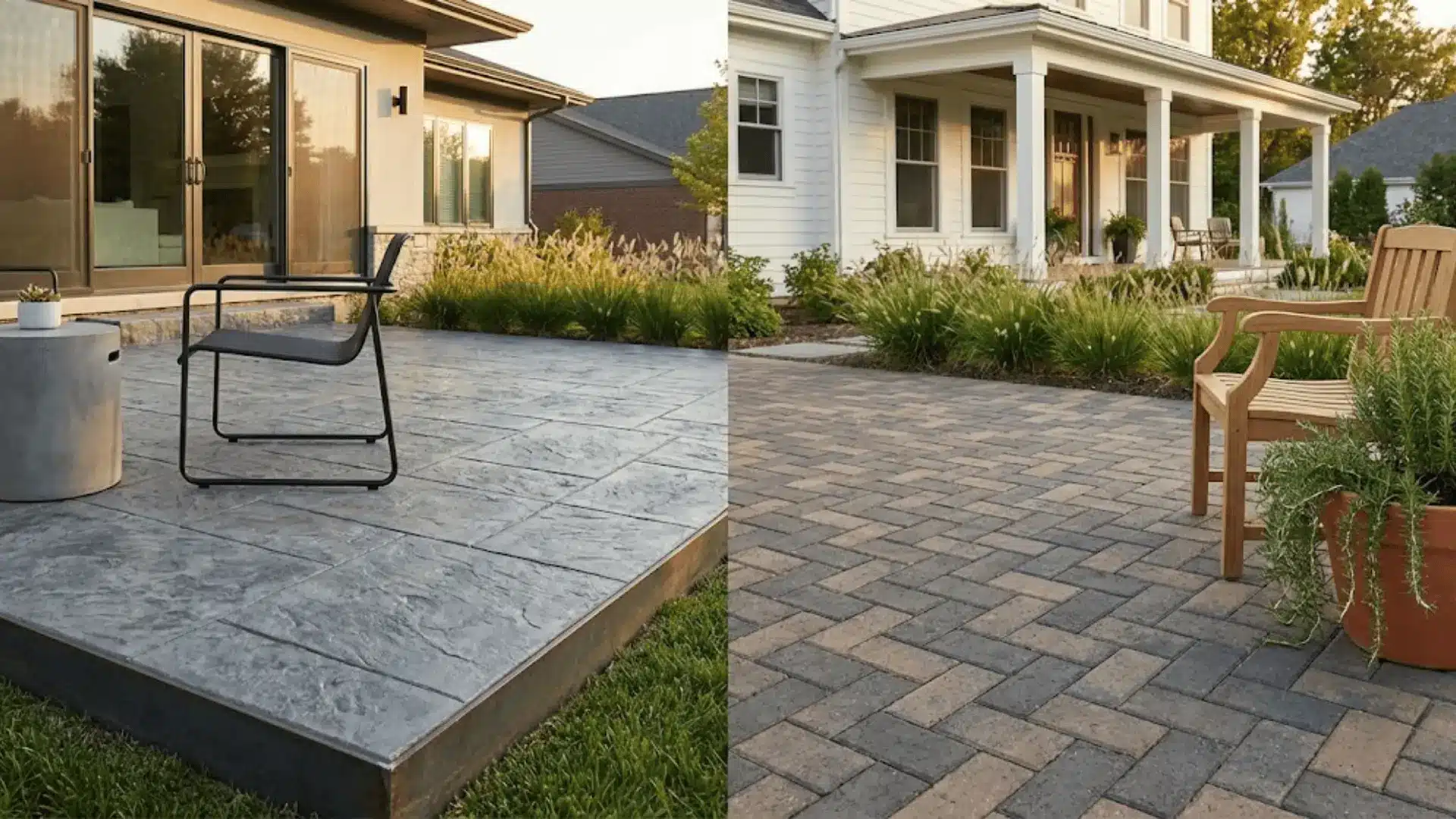
When it comes to looks, both options have genuinely strong cases. Stamped concrete mimics stone or tile beautifully and works well for modern, seamless outdoor aesthetics.
Pavers, on the other hand, bring natural texture, pattern variety, and that classic layered look that photographs really well.
Color options exist for both, though pavers offer more customization without the risk of fading unevenly over time.
For curb appeal, pavers tend to feel more intentional and high-end at first glance, while stamped concrete reads as sleek and contemporary.
Pairing either with a covered porch design can pull the whole outdoor space together in a way that feels cohesive and lived-in.
Final Verdict
Choosing between concrete vs pavers really comes down to what matters most to you, your budget, your lifestyle, and how you want your outdoor space to feel for years to come.
Both materials have genuine strengths, and neither is a wrong choice when matched to the right project.
Weigh the upfront costs against long-term maintenance, factor in your climate and soil, and let your home’s personality guide the final call.
The right surface is out there, and it’s closer than you think.
Which way are you leaning, concrete or pavers? Drop your thoughts in the comments below!