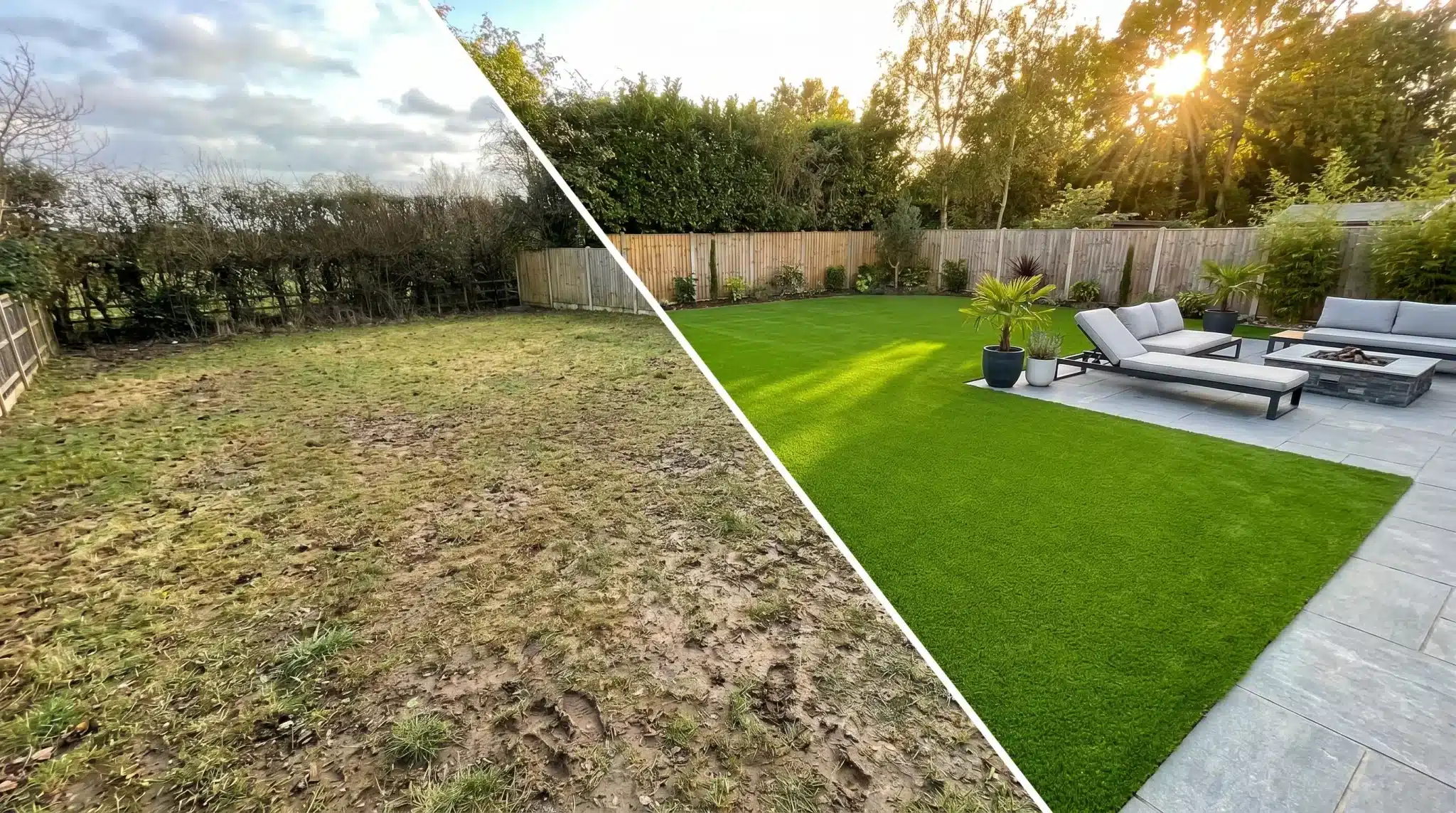
I learned this the hard way when my once-lush lawn turned patchy and brown after I got a bit too enthusiastic with the fertilizer spreader. Yes, you can over fertilize your lawn, and it’s more common than you’d think.
Too much fertilizer burns grass roots, creates weak growth that pests love, and can even damage the soil for months.
I’ve seen neighbors make the same mistake, thinking more nutrients equal better results. But grass is surprisingly picky about what it needs.
You’ll want to know the warning signs before your lawn starts showing damage.
Understanding how much is too much, what happens when you cross that line, and how to fix it can save your yard from turning into a patchy disaster.
My Lawn Care Mistake (And What I Learned From It)
I’ll never forget the weekend I decided to “boost” my lawn before a family barbecue. The grass looked a bit tired, so I figured extra fertilizer would green it up fast. I doubled the recommended amount, thinking I was being clever.
Within days, my lawn looked worse than before.
Brown patches appeared where the grass had been healthiest.
The edges of my driveway had yellow streaks. I panicked, thinking I’d killed my entire yard. My neighbor, who’s been gardening for decades, came over and immediately knew what happened. “Fertilizer burn,” he said, shaking his head.
I felt like an idiot.
But he walked me through the recovery process. We watered the lawn heavily to flush out excess salts. I had to rake up the dead patches and reseed those areas. It took nearly six weeks before my lawn looked normal again.
The whole experience taught me that more isn’t always better. Grass needs specific amounts of nutrients at specific times. Too much creates chemical imbalances in the soil that actually harm growth.
I’ve since learned to follow label instructions exactly. I test my soil before fertilizing. And I keep detailed notes about when and how much I apply.
That mistake cost me time, money, and a lot of weekend stress. But it made me a smarter lawn owner. Now I help friends avoid the same costly error.
What Does It Mean to Overfertilize a Lawn?
Over fertilizing happens when you give your grass more nutrients than it can actually use. Think of it like overfeeding a plant in a pot.
The excess doesn’t just sit there harmlessly. It builds up in the soil and creates problems.
Nitrogen is usually the biggest culprit. It’s the first number in the NPK ratio you see on fertilizer bags. Grass needs nitrogen to grow green and healthy, but too much forces rapid, weak growth that can’t sustain itself.
The NPK ratio tells you the percentage of nitrogen, phosphorus, and potassium in the mix. A bag labeled 20-5-10 means 20% nitrogen, 5% phosphorus, and 10% potassium. Higher numbers mean stronger concentrations, which is why you need less product per application.
Most people over fertilize by accident. I’ve done it myself by misreading the label or setting my spreader wrong.
Sometimes you think you’re on setting 3 but you’re actually on 5. That small mistake doubles your application rate.
You’ll know you’ve crossed the line when your lawn starts showing stress instead of improvement. The damage happens fast, sometimes within just a few days of application.
Can You Overfertilize Your Lawn?
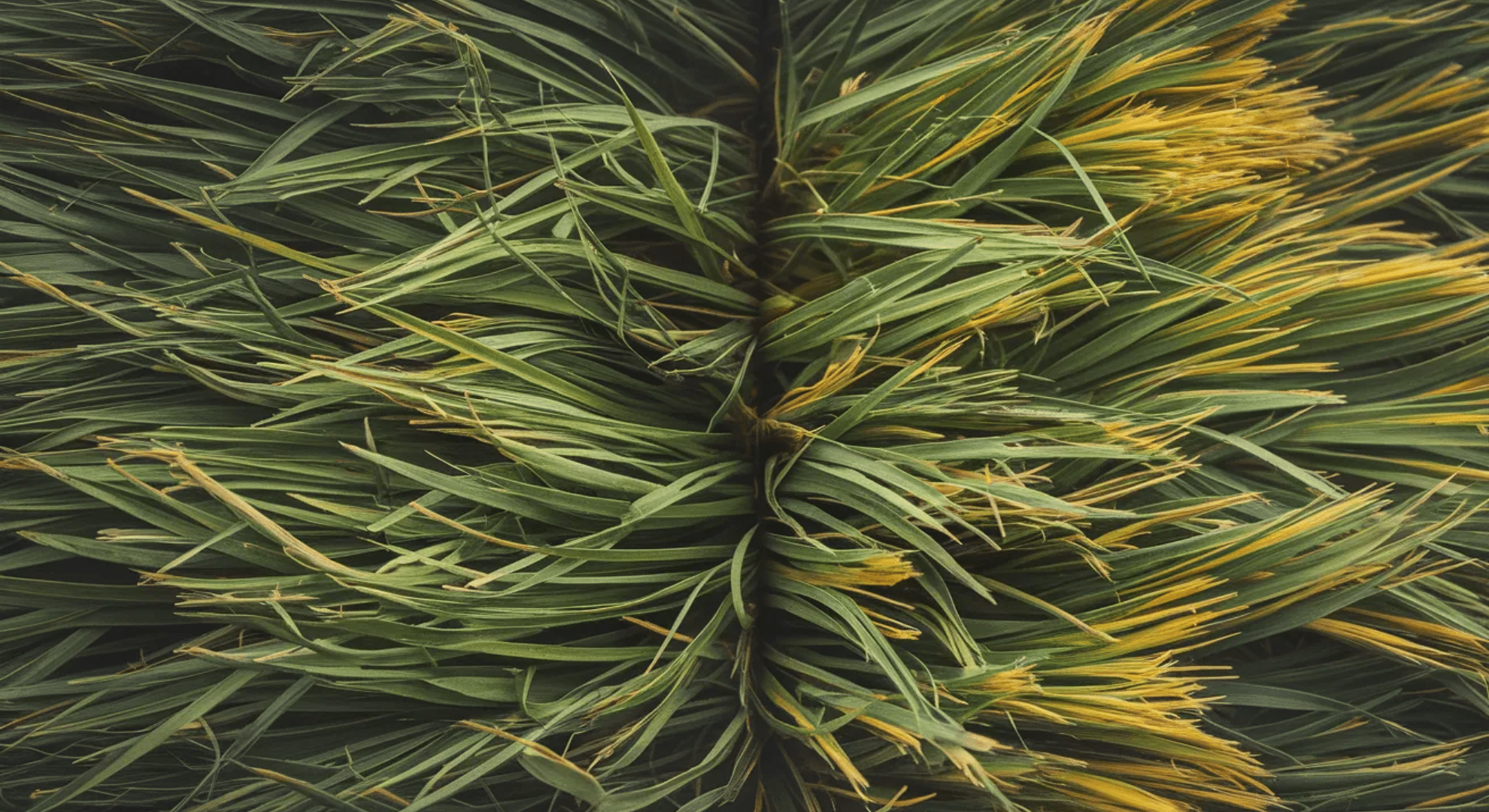
Yes, you can definitely over fertilize your lawn, and it’s easier to do than most people realize.
When you apply too much fertilizer, the excess nutrients don’t just disappear. They accumulate in the soil and create a chemical imbalance that burns grass roots. Nitrogen is usually the main problem since it’s the most concentrated nutrient in most lawn fertilizers.
You might think extra fertilizer means extra growth, but grass can only absorb what it needs. The rest sits in the soil as salts that pull moisture away from roots. This causes the brown, patchy look that screams “fertilizer burn.”
Common mistakes include using the wrong spreader settings, applying during hot weather, or fertilizing too frequently. Even high-quality products cause damage when you use too much.
Your lawn will tell you when you’ve gone overboard. The key is recognizing those signs early.
How to Know If You’ve Over-Fertilized Your Lawn
Your lawn will show clear warning signs when you’ve applied too much fertilizer. Catching these symptoms early helps you act fast and minimize damage:
Yellow or Brown Patches Appearing Fast
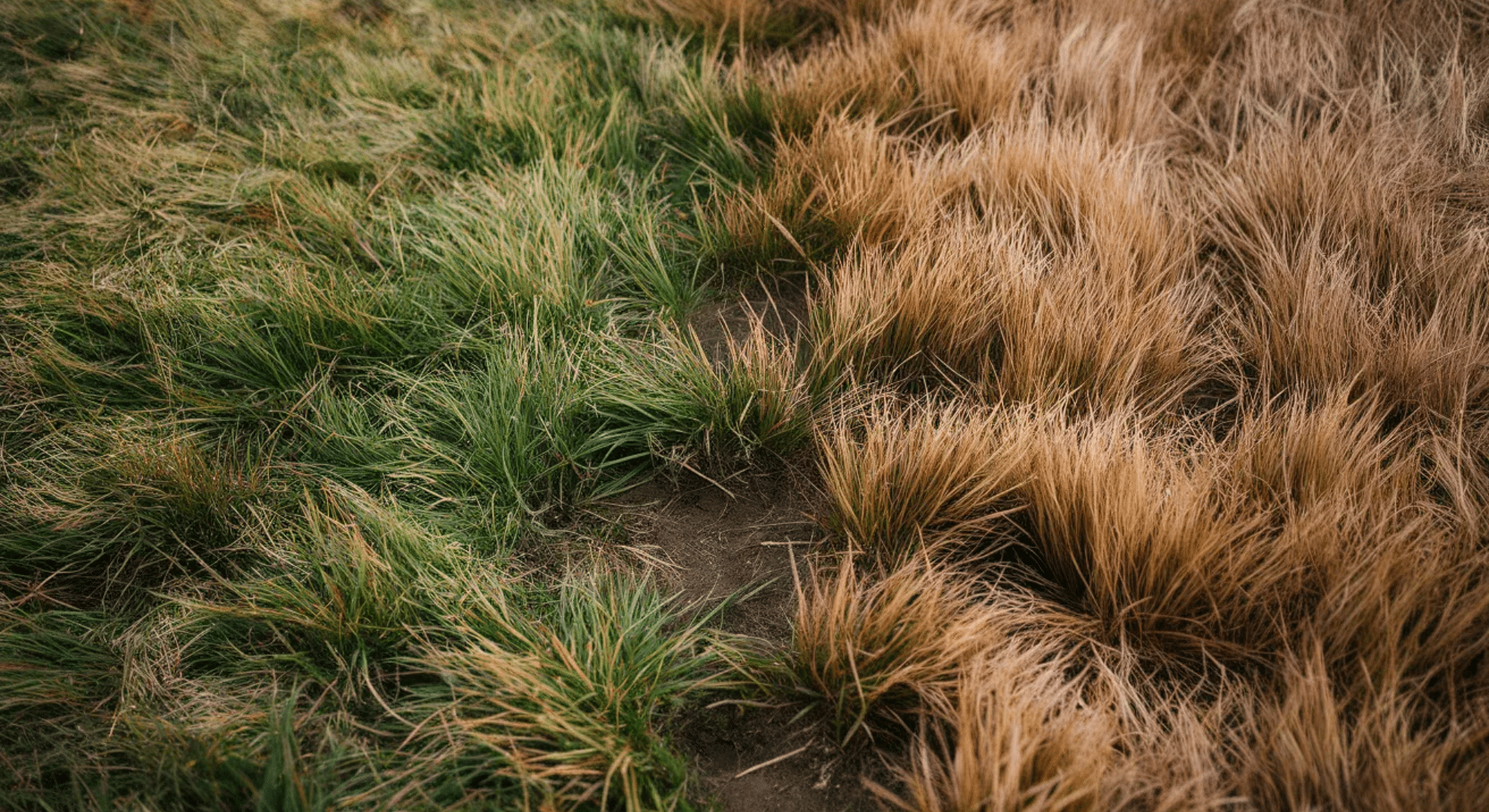
This is usually the first sign something’s wrong. The discoloration shows up within days of fertilizing, not weeks. You’ll notice it starts in areas where you slowed down with the spreader or overlapped passes.
The patches look burned because that’s exactly what happened. Excess fertilizer creates salt concentrations in the soil that pull moisture out of grass blades. The leaves dry out from the inside, turning yellow first, then brown as the damage worsens.
White or Crusty Salt Layer on Soil
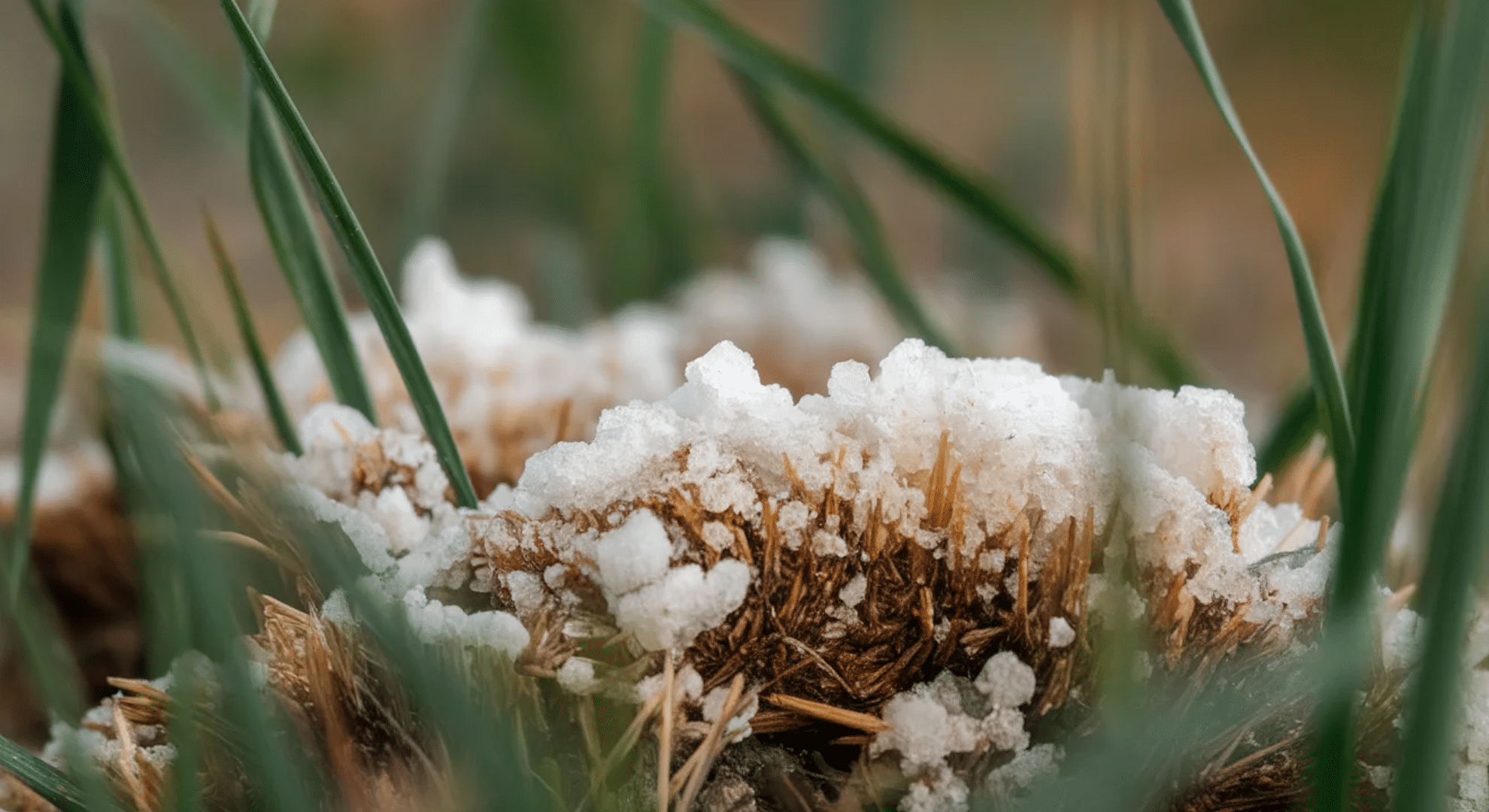
If you see a white, crusty layer forming on your soil surface, that’s fertilizer salt buildup. It looks almost like frost or a thin layer of powder sitting on top of the grass.
This happens when there’s way too much product in one spot. The salts can’t dissolve or wash away fast enough, so they crystallize on the surface. It’s a clear visual that you’ve overdone it.
Grass Stops Growing or Grows Too Fast
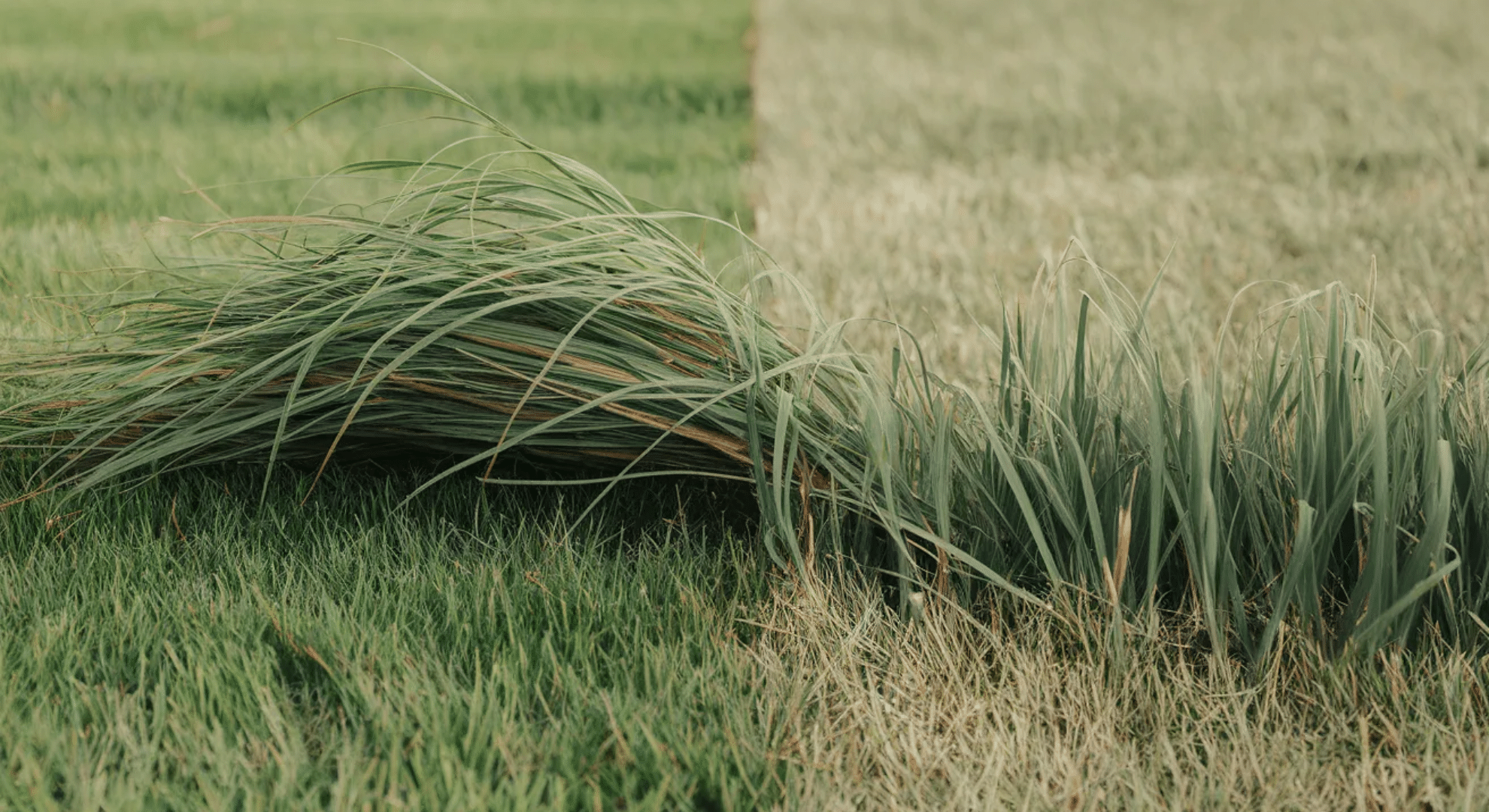
Over-fertilized lawns show two opposite problems. Sometimes grass shoots up crazy fast with weak, pale green blades that flop over. This happens when nitrogen forces rapid growth the roots can’t support.
Other times, growth stops completely. The roots get damaged by salt burn and can’t absorb water or nutrients anymore. The grass just sits there, stressed and struggling.
Thick Thatch Buildup
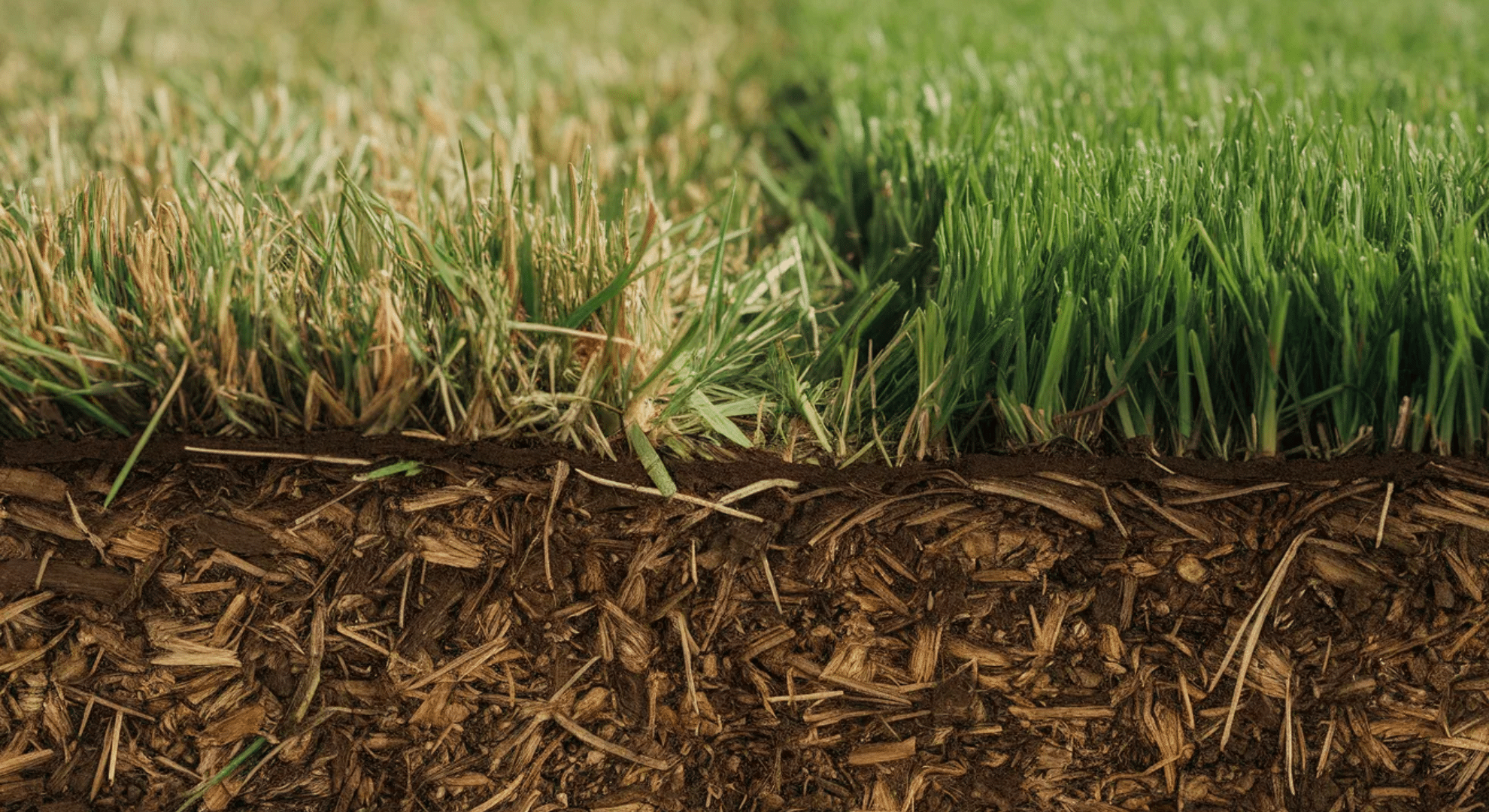
Thatch is that layer of dead grass stems and roots between the soil and green blades. A thin layer is normal, but too much fertilizer speeds up thatch accumulation.
Excess nitrogen creates fast, weak growth that dies off quickly and doesn’t decompose properly. The thatch layer gets thick and spongy, blocking water and air from reaching roots.
Increased Disease and Fungal Issues
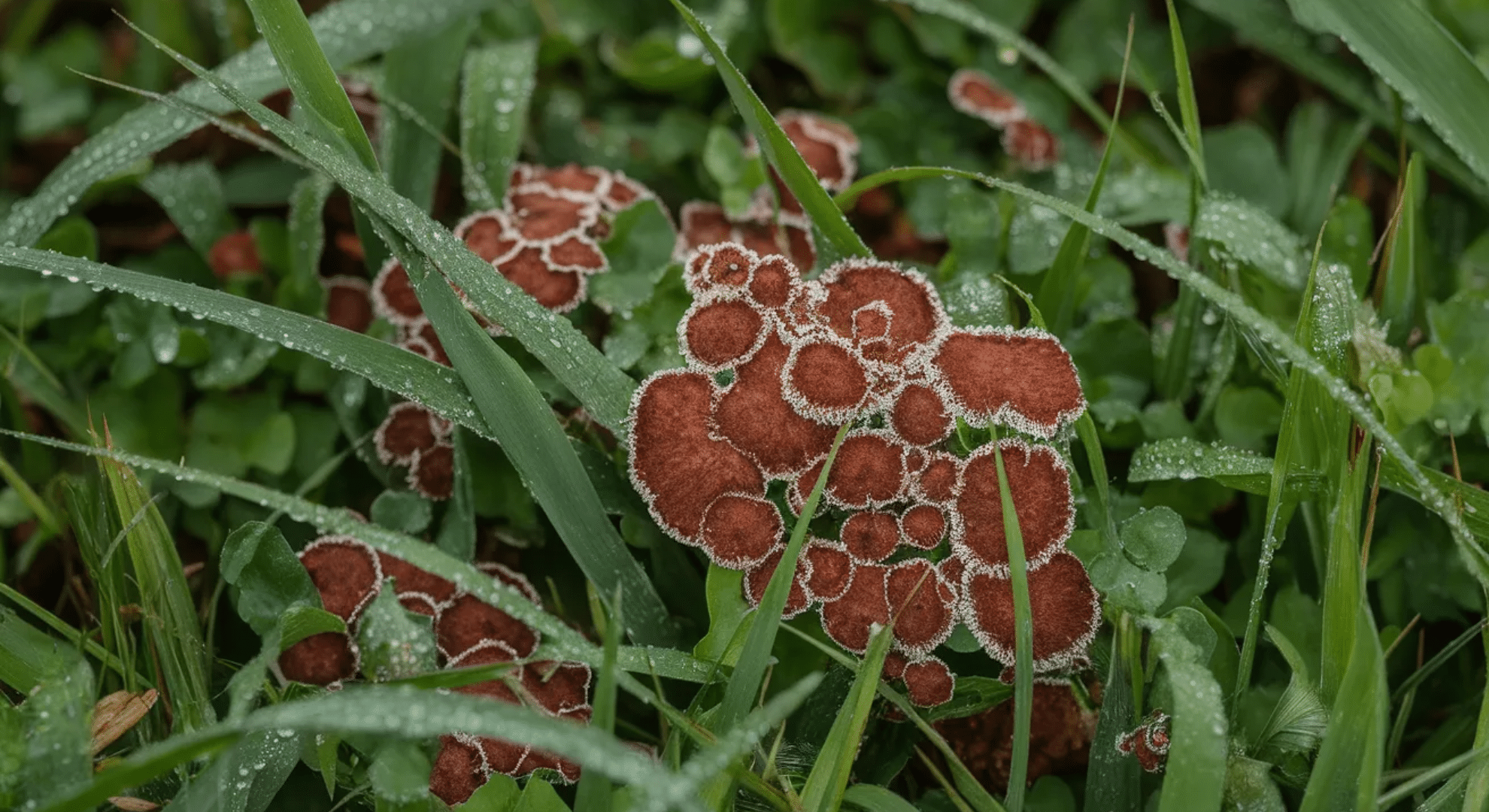
Stressed grass can’t fight off diseases like healthy grass can. You’ll notice more brown patch, dollar spot, or powdery mildew showing up after over-fertilizing.
The weak, rapid growth creates the perfect environment for fungal problems to take hold.
If you’re seeing any combination of these signs, your lawn is telling you it got too much fertilizer.
Regional Differences: Does Your Location Matter?
Where you live absolutely affects how easily you can over-fertilize your lawn. Climate, soil type, and grass varieties all play a role in how much fertilizer is too much.
| Region | Common Grass Types | Fertilizer Sensitivity | Key Consideration |
|---|---|---|---|
| Northeast | Cool-season (Kentucky bluegrass, fescue) | Moderate | Heavy spring rains can wash away excess, but summer applications are risky |
| Southeast | Warm-season (Bermuda, St. Augustine, Zoysia) | High in summer | Heat amplifies fertilizer burn; timing is critical |
| Midwest | Cool-season (perennial ryegrass, bluegrass) | Moderate | Clay soils hold nutrients longer, increasing burn risk |
| Southwest | Warm-season (Bermuda, Buffalo grass) | Very high | Low rainfall and heat make over-fertilization extremely damaging |
| Pacific Northwest | Cool-season (fescue, ryegrass) | Lower | High rainfall helps flush excess, but still possible to overdo it |
| South-Central | Warm-season (Bermuda, St. Augustine) | High | Extreme heat and humidity stress grass quickly with too much nitrogen |
Southern lawns face the biggest challenge during summer.
Warm-season grasses already deal with heat stress, so excess fertilizer hits them twice as hard. I’ve seen St. Augustine grass in Florida turn brown in just two days from over-application during July.
Northern cool-season grasses handle spring fertilizing better because of natural rainfall and moderate temperatures. But they’re vulnerable in late summer when heat arrives.
Desert regions have almost no margin for error. Without regular rain to dilute and wash away excess nutrients, the salts concentrate fast.
You’re better off under-fertilizing than risking burn in these areas.
Your soil type matters too. Sandy soils drain quickly and need more frequent, lighter applications.
Clay soils hold nutrients longer, so you need less fertilizer overall but face higher burn risk if you apply too much at once.
How to Fix an Overfertilized Lawn
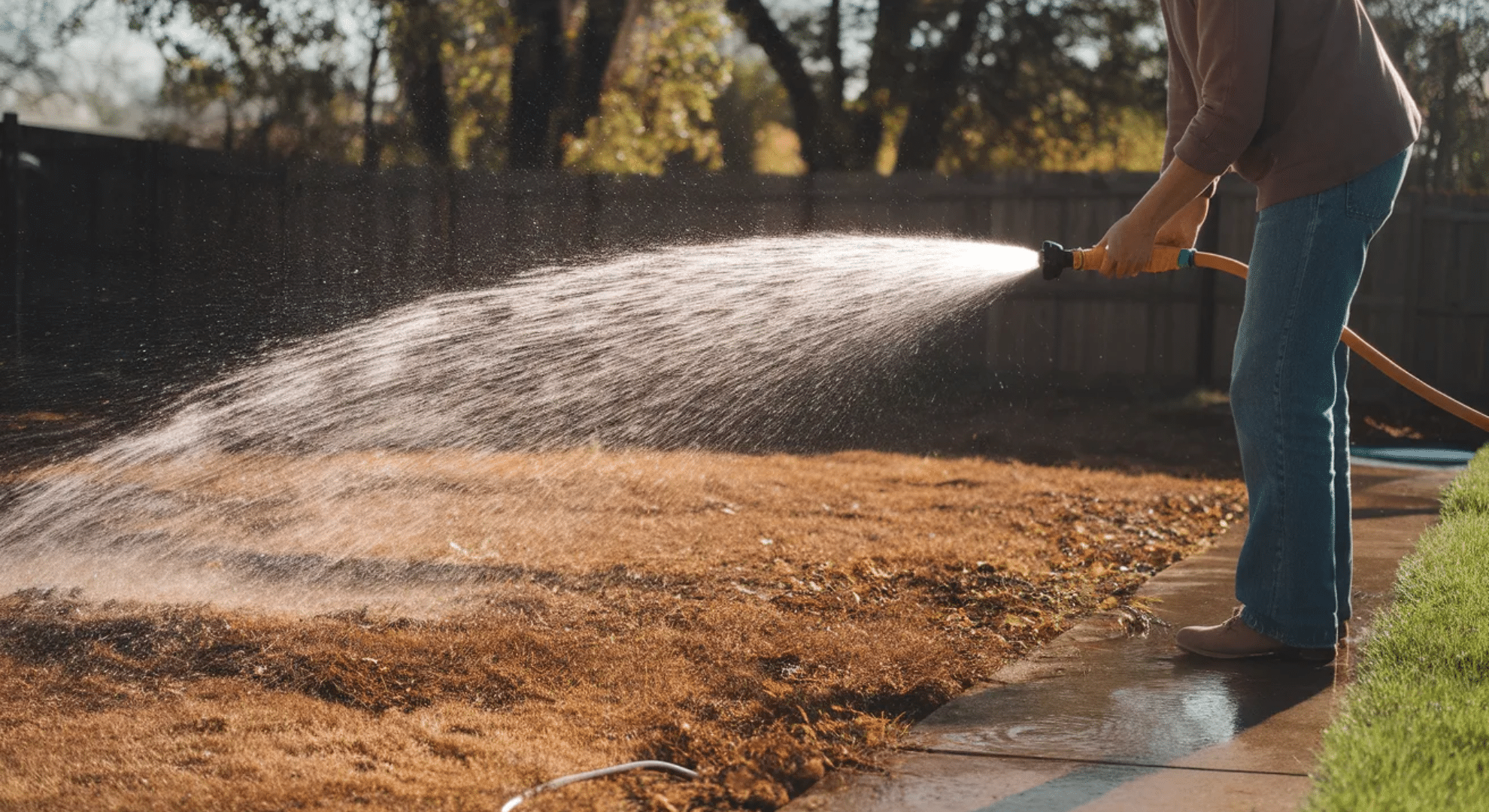
The moment you realize you’ve over-fertilized, you need to act fast. Quick action minimizes damage and helps your lawn recover before the burn spreads.
Stop Fertilizing Immediately: Don’t add any more product to your lawn, even if you think it needs it. More fertilizer will compound the damage and kill more grass. Wait at least 6-8 weeks before your next application, and only after your lawn shows clear signs of recovery.
Water Deeply and Thoroughly: Apply 1-2 inches of water to your lawn as soon as possible. This flushes excess salts down through the soil and away from roots. Water deeply every day for the first week, then switch to every other day for another week. Check soil moisture before each watering.
Remove Visible Fertilizer Granules: If you see fertilizer pellets still sitting on your lawn, sweep or vacuum them up immediately. Use a lawn sweeper or shop vacuum for larger areas. Concentrated piles of granules create severe burn spots if left to dissolve, so getting them off the grass prevents additional damage.
Raise Your Mowing Height: Set your mower to its highest setting for the next several cuts. Taller grass produces more energy through photosynthesis, which helps damaged roots recover faster. Keep blades at 3-4 inches until you see consistent green growth returning. Don’t scalp stressed grass.
Apply Gypsum for Salt Buildup: Gypsum helps break down salt deposits without adding more nutrients. Apply 40 pounds per 1,000 square feet using a spreader. Water it in thoroughly after application. This works best within the first week of discovering over-fertilization. It helps restore soil structure damaged by salt accumulation.
Watch for Fungal Problems: Check for brown patches, white powdery spots, or slimy areas on grass blades. Stressed lawns attract fungal diseases quickly. Apply a broad-spectrum fungicide if you spot problems developing. Keep your lawn dry by watering early morning only, and avoid evening irrigation during recovery.
How Long Until Your Lawn Recovers?
Recovery time depends entirely on how bad the damage is. I’ve seen mild cases bounce back in just a few weeks, while severe burns took an entire growing season to fully recover.
For light damage where you catch it early, expect 2-3 weeks of recovery. You’ll see new green growth starting at the base of grass blades. The yellow tint fades gradually as roots heal and start absorbing nutrients properly again.
Moderate damage takes 4-6 weeks. Brown patches need time to regrow from the edges inward.
You might need to reseed some spots that died completely. The grass that survives will look weak at first but strengthens over time.
Severe cases where large sections died can take 2-3 months or longer. You’re basically starting over in those areas. Reseeding, consistent watering, and patience are essential. Don’t expect overnight miracles.
Several factors affect how fast your lawn heals.
Grass type matters since some varieties recover faster than others. Weather plays a huge role too. Cool, moist conditions speed recovery while heat and drought slow it down.
Watch for these improvement signs: new green shoots appearing, existing grass standing upright instead of lying flat, and uniform color returning across your lawn.
Once you see consistent growth for two weeks straight, your lawn is on the mend.
Common Mistakes That Lead to Over-Fertilization
Even experienced lawn owners make fertilizer mistakes. Knowing what causes over-fertilization helps you avoid these common pitfalls.
- Eyeballing measurements instead of calculating: Guessing how much fertilizer you need almost always leads to over-application. Measure your lawn’s square footage accurately and follow the math on the bag.
- Not calibrating your spreader: Using last season’s settings or assuming all spreaders work the same creates uneven distribution. Test your spreader on a driveway first to see the actual coverage pattern.
- Overlapping passes without marking: Walking back over areas you’ve already covered doubles the fertilizer in those spots. Use stakes or visual markers to track where you’ve been.
- Applying during stress periods: Fertilizing during drought, extreme heat, or right before a cold snap forces grass to process nutrients when it’s already struggling to survive.
- Using the wrong product strength: Grabbing a 30-0-4 when you need a 10-10-10 triples your nitrogen application. Check the NPK numbers before buying and applying.
- Fertilizing too frequently: Applying every few weeks because your lawn still looks pale just compounds the problem. Grass needs time between applications to actually use what you gave it.
- Mixing products without understanding them: Combining different fertilizers or adding extra because one seems weaker creates unpredictable chemical concentrations in your soil.
These mistakes are easy to make when you’re in a hurry or trying to save time. Slow down and follow the process correctly every single time.
Prevention Tips From Lawn Care Pros
I’ve learned these prevention strategies from years of trial and error, plus advice from professionals who’ve seen every fertilizer mistake imaginable.
Always read the fertilizer label before applying. It tells you exactly how much to use per square foot. Measure your lawn accurately so you know the coverage area.
Calibrate your spreader every season. Settings drift over time, and an incorrect setting doubles your application rate without you realizing it.
Test your soil pH and nutrient levels before fertilizing. You might not need as much as you think. Some lawns already have adequate nutrients.
Split applications into smaller amounts. Instead of one heavy feeding, apply half in early spring and half in fall. This gives grass time to absorb nutrients without overwhelming the roots.
Never fertilize during drought or extreme heat. Wait for cooler weather and adequate moisture. Stressed grass can’t process nutrients properly.
Use a slow-release fertilizer when possible. It feeds grass gradually over weeks instead of dumping everything at once.
Keep detailed records of when and what you applied.
Real Lawn Recovery Experiences
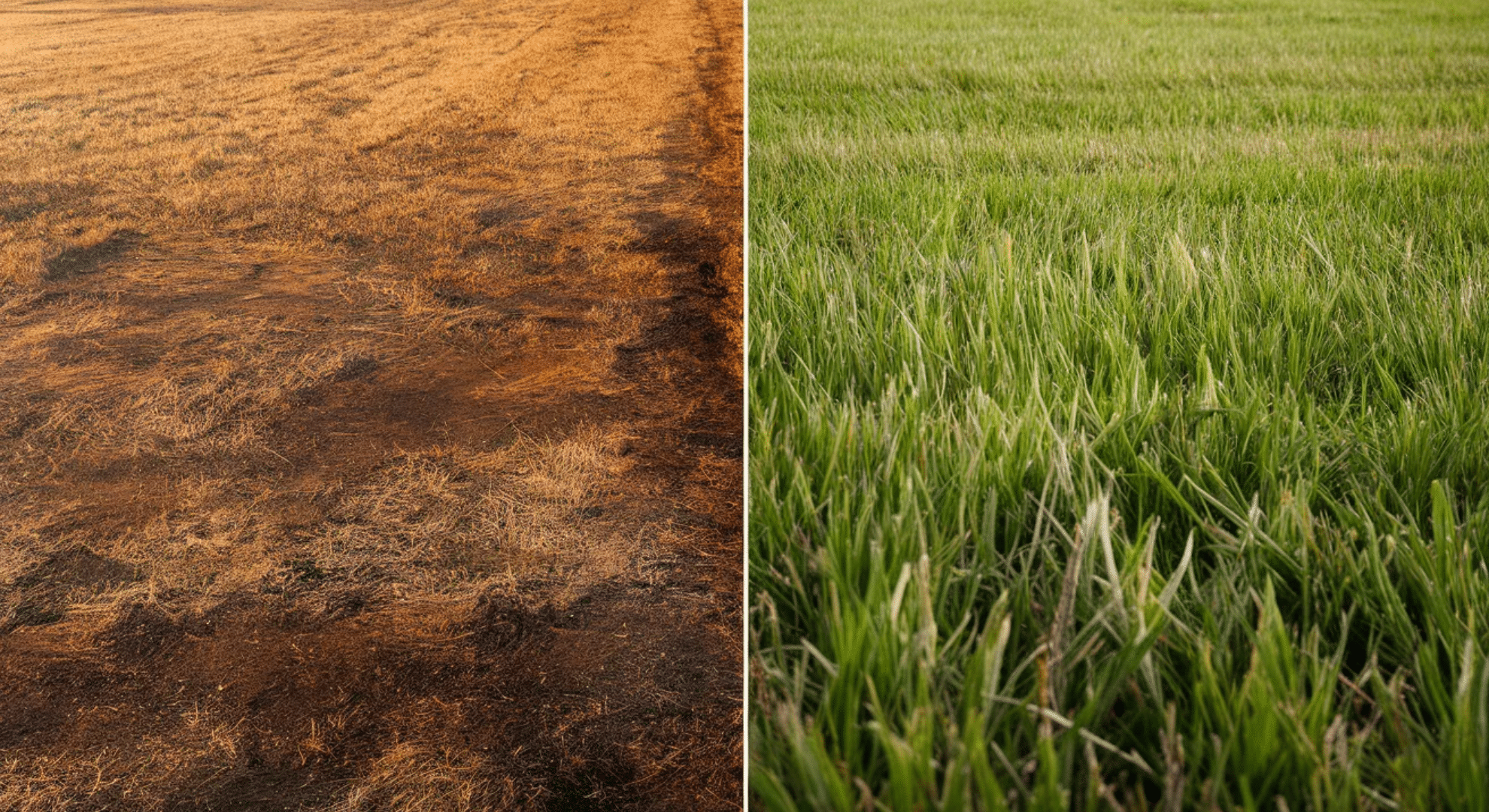
Real homeowners have shared their fertilizer burn recovery experiences on lawn care forums, and their stories show both the challenges and hope for recovery.
The Liquid Fertilizer Mistake
One homeowner applied liquid 20-0-0 fertilizer to dry St. Augustine grass without watering it in first. He noticed brown patches the very next day, and the damage worsened over four days.
The problem was applying to dehydrated turf and not watering afterward. Forum members confirmed that liquid fertilizers need well-hydrated grass before application, then several hours for nutrient uptake, followed by thorough watering.
After correcting his technique and heavy watering, the grass showed improvement within a few weeks. His lesson: always water the day before liquid applications and water again afterward.
The Professional Service Disaster
A Michigan homeowner hired a well-known lawn service to care for his new Zeon Zoysia sod. In June, techs blasted the delicate first-year sod with 30-0-0 fertilizer plus growth retardant like it was a Bermuda baseball field.
A clogged spray nozzle created crispy brown stripes across the lawn. The company’s solution was to paint it green, which he wisely declined. Following advice from lawn care forums, he doubled irrigation to flush excess fertilizer, applied fungicide to counter moisture issues, and avoided mowing damaged areas.
Recovery took two full months, leaving his lawn patchy all summer. His takeaway: first-year sod needs gentle care, not aggressive commercial treatments.
The Summer Fertilizing Error
A homeowner in Michigan fertilized his Kentucky Bluegrass during hot, dry weather while replacing sprinklers. Areas with full sun exposure burned within days. He watered heavily for weeks, and some spots improved while others stayed brown.
Forum experts told him the real issue wasn’t just over-fertilization but timing. Cool-season grass shouldn’t be fertilized in summer when it’s already heat-stressed. By September, he planned to rake out dead material and let the KBG naturally fill in, possibly reseeding bare spots in late August.
His mistake cost him an entire summer of patchiness, all because he pushed fertilizer when the grass was trying to survive, not grow.
Tools and Resources for Healthy Lawn Care
Having the right tools and resources makes fertilizer application safer and more accurate. These recommendations help you avoid over-fertilization mistakes.
1. Soil Testing Kits
The Yard Mastery Soil Test Kit offers professional-grade testing designed for DIY lawn care. For university-backed testing, check your local Extension office soil testing services which typically cost $10-25 per sample and provide detailed fertilizer recommendations based on your specific soil chemistry.
2. Spreader Options and Brands
Scotts Whirl Hand-Powered Spreader works great for small yards under 5,000 square feet. For larger properties, broadcast spreaders like the Scotts EdgeGuard or Agri-Fab models provide even coverage with adjustable flow settings. Always calibrate your spreader before each season.
3. Mobile Apps for Tracking Fertilization
The Yard Mastery app provides custom fertilization programs based on your soil test results. LawnStarter and Sunday Lawn Care apps offer fertilization schedules and reminders tailored to your grass type and location.
4. Local Extension Office Resources
Your local Extension office provides free or low-cost soil testing, region-specific fertilization guides, and expert advice for your area’s grass types and climate conditions.
5. Online Calculators for Fertilizer Amounts
Use the Waypoint Analytical fertilizer calculator to determine exact application rates based on your lawn size and fertilizer NPK ratio. This eliminates guesswork and prevents over-application.
These tools take the uncertainty out of lawn fertilization and help you make informed decisions based on actual data rather than estimates.
Conclusion
I’ve been where you are, staring at brown patches and wondering if I ruined my lawn forever.
Yes, you can over fertilize your lawn, but catching it early and acting fast makes all the difference. I’ve learned that proper measurement, timing, and patience prevent most problems before they start.
You now know the warning signs, recovery steps, and prevention strategies that took me years to figure out.
Water deeply if you spot burn, skip the next fertilization cycle, and keep detailed records of what you apply and when. Your lawn wants to recover just as much as you want it healthy again.
Small changes in how you fertilize create massive improvements over time. Test your soil, calibrate your spreader, and trust the process.
Ready to solve more lawn challenges? Check out other blogs on the website for expert tips on keeping your yard looking its best all season long!