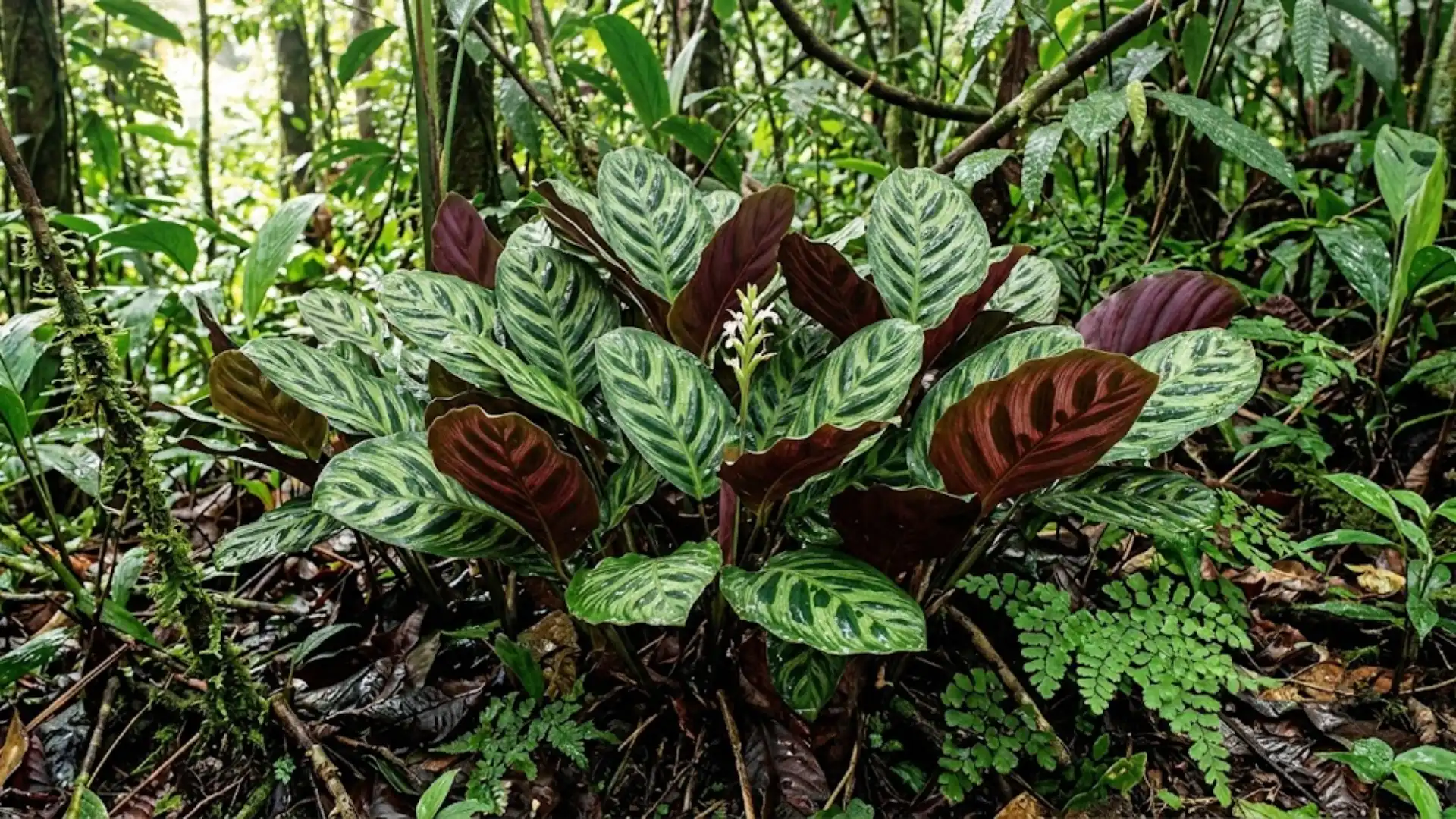
I remember falling for calathea leaves before I knew a single name.
Those hand-painted patterns, the plum undersides, blooms that feel like an afterthought. Then that slow evening fold, turning every prayer plant into a tiny nightly show.
When I sat down to sort real calathea types with pictures, I hit a snag. Plenty of plants sold under that label are no longer true calathea.
So I am sticking to what Kew currently accepts as genuine calathea.
Familiar names like orbifolia, makoyana, and lancifolia now belong to Goeppertia. Each one appears with its botanical name, common name, foliage traits, and growing notes.
Calathea vs. Goeppertia: Sorting Out the Real Species
Calathea belongs to the Marantaceae family and is native to southern Mexico through tropical America.
The name still dominates the houseplant trade out of habit, even though many familiar faces have moved to a different genus.
Kew currently recognizes 59 accepted Calathea species, separate from cultivars, trade names, and species now placed under Goeppertia.
| Familiar Name | Current Genus | Known in Nurseries as |
|---|---|---|
| Goeppertia orbifolia | Goeppertia | Calathea orbifolia |
| Goeppertia makoyana | Goeppertia | Peacock Plant |
| Goeppertia insignis | Goeppertia | Rattlesnake Plant |
| Goeppertia zebrina | Goeppertia | Calathea zebrina |
| Goeppertia warszewiczii | Goeppertia | Calathea warscewiczii |
| Goeppertia crocata | Goeppertia | Calathea crocata |
Older lists citing 300+ species reflect outdated classification, not current counts.
True Calathea Types With Pictures
This list moves from the least documented species toward the more familiar ones, rather than starting with recognizable names first.
It shows just how much of true Calathea sits outside the houseplant spotlight, well before reaching the handful with real horticultural or field presence, like Calathea lutea and Calathea crotalifera.
59. Calathea yawankama
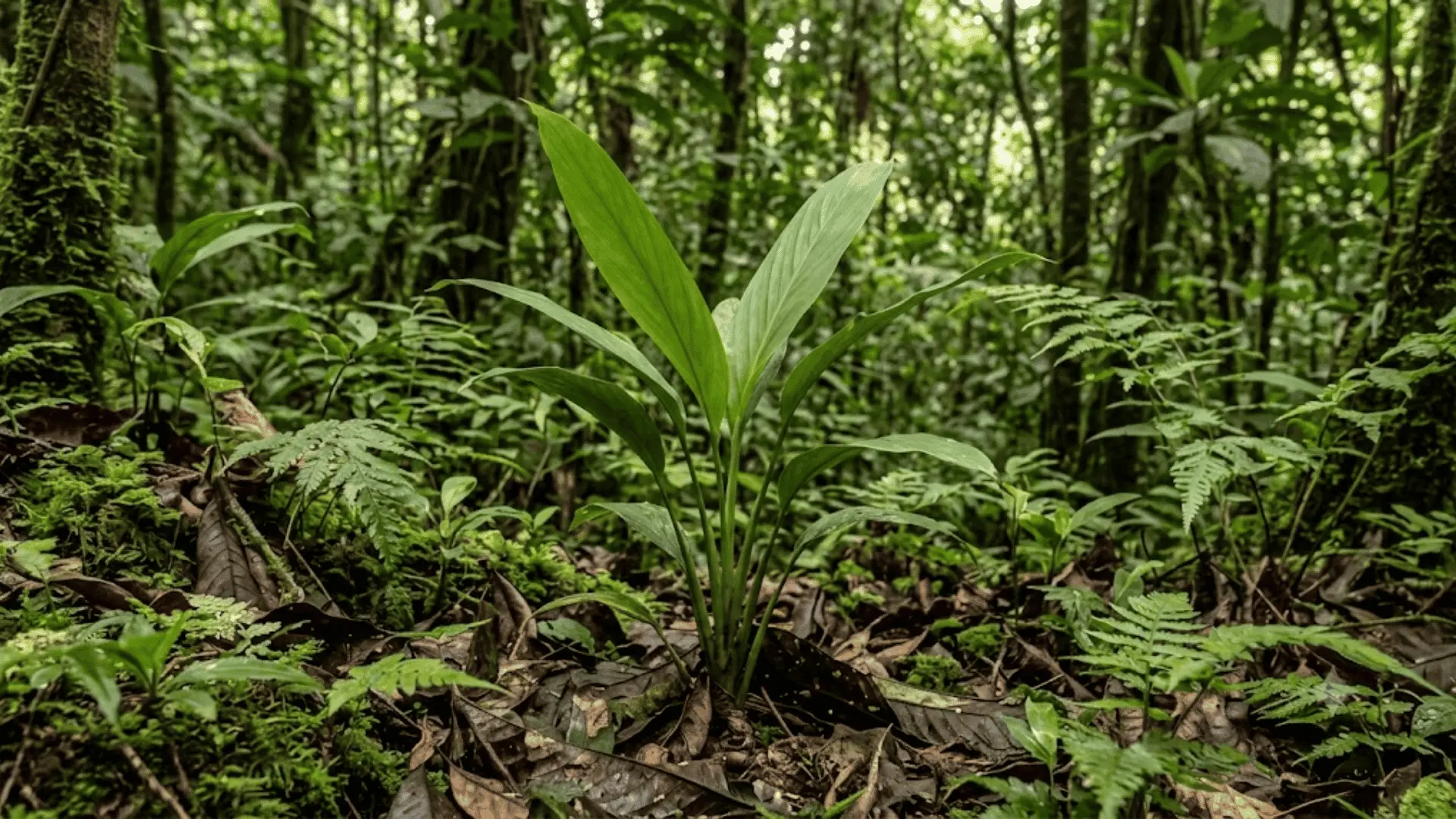
- Mature Size: Small to medium clumping herb, roughly 1 to 2 feet
- Foliage/Flower Characteristics: Lance-shaped leaves typical of forest-floor Marantaceae, with a modest inflorescence bearing overlapping bracts
- Native Range or Habitat: Colombia, in humid lowland forest
- Houseplant Relevance: Primarily botanical
One of the least documented names on Kew’s list, Calathea yawankama exists mostly in herbarium records rather than nursery catalogs.
It grows as an understory herb in humid Colombian forest, producing the lance-shaped leaves and bract-covered flower spikes common across the genus.
Its obscurity stems from limited collection history rather than any lack of visual interest. Readers are very unlikely to encounter it outside a botanical garden or specialist collection, since it has never entered general cultivation.
58. Calathea verruculosa
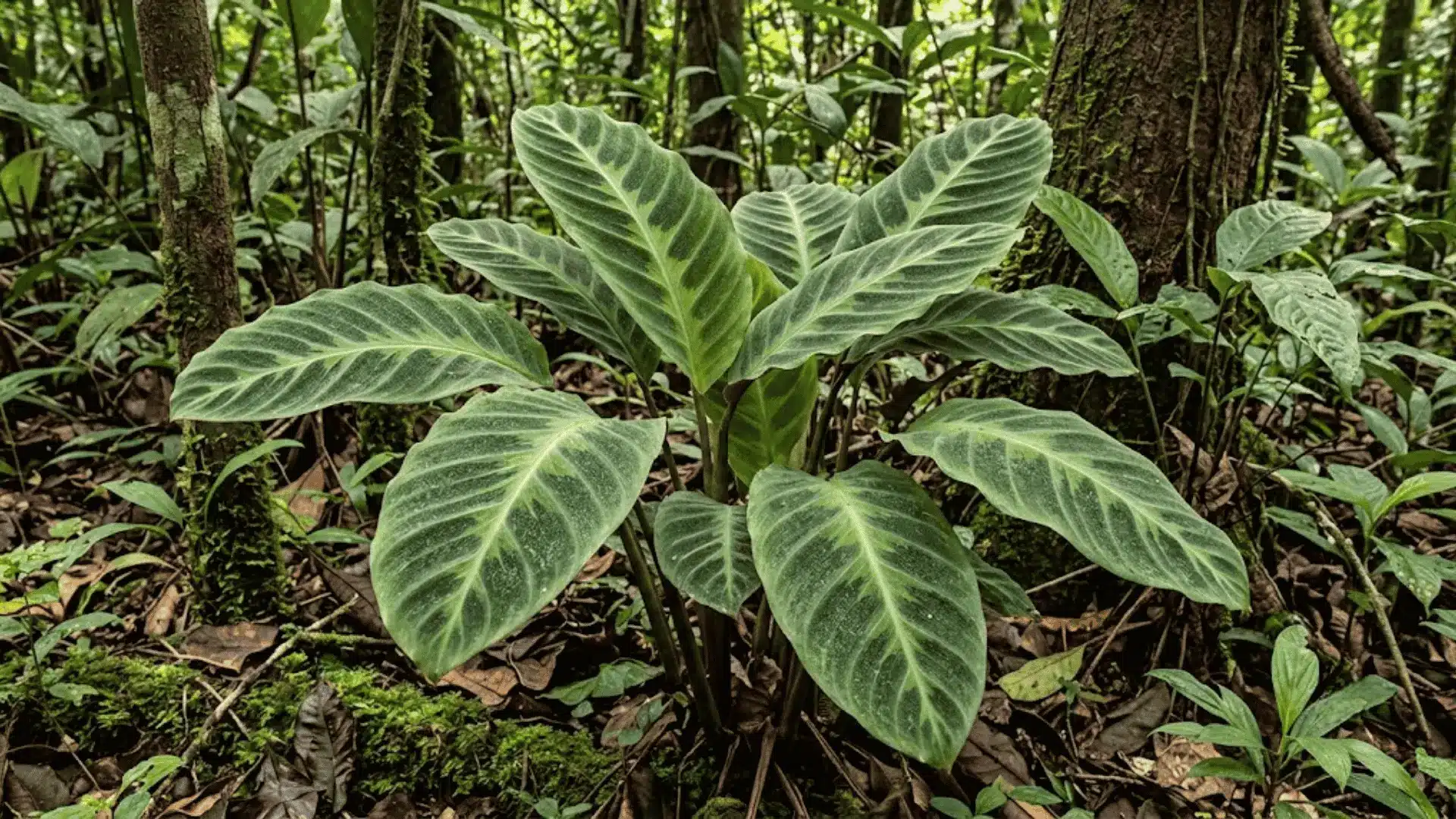
- Mature Size: Medium herb, generally 1.5 to 3 feet
- Foliage/Flower Characteristics: Foliage with a slightly roughened or warty texture on the blade, giving the species its epithet
- Native Range or Habitat: Tropical South America, humid forest habitat
- Houseplant Relevance: Primarily botanical
Calathea verruculosa takes its name from the fine, warty texture on its leaf surface, a detail botanists use to separate it from smoother-leaved relatives.
It grows as a terrestrial herb within humid tropical forest, favoring the shaded, moisture-rich conditions typical of the genus. Very little horticultural information exists for this species, and it has not made the jump into cultivation.
It remains a name known mainly through taxonomic literature and regional plant surveys rather than home collections.
57. Calathea velutinifolia
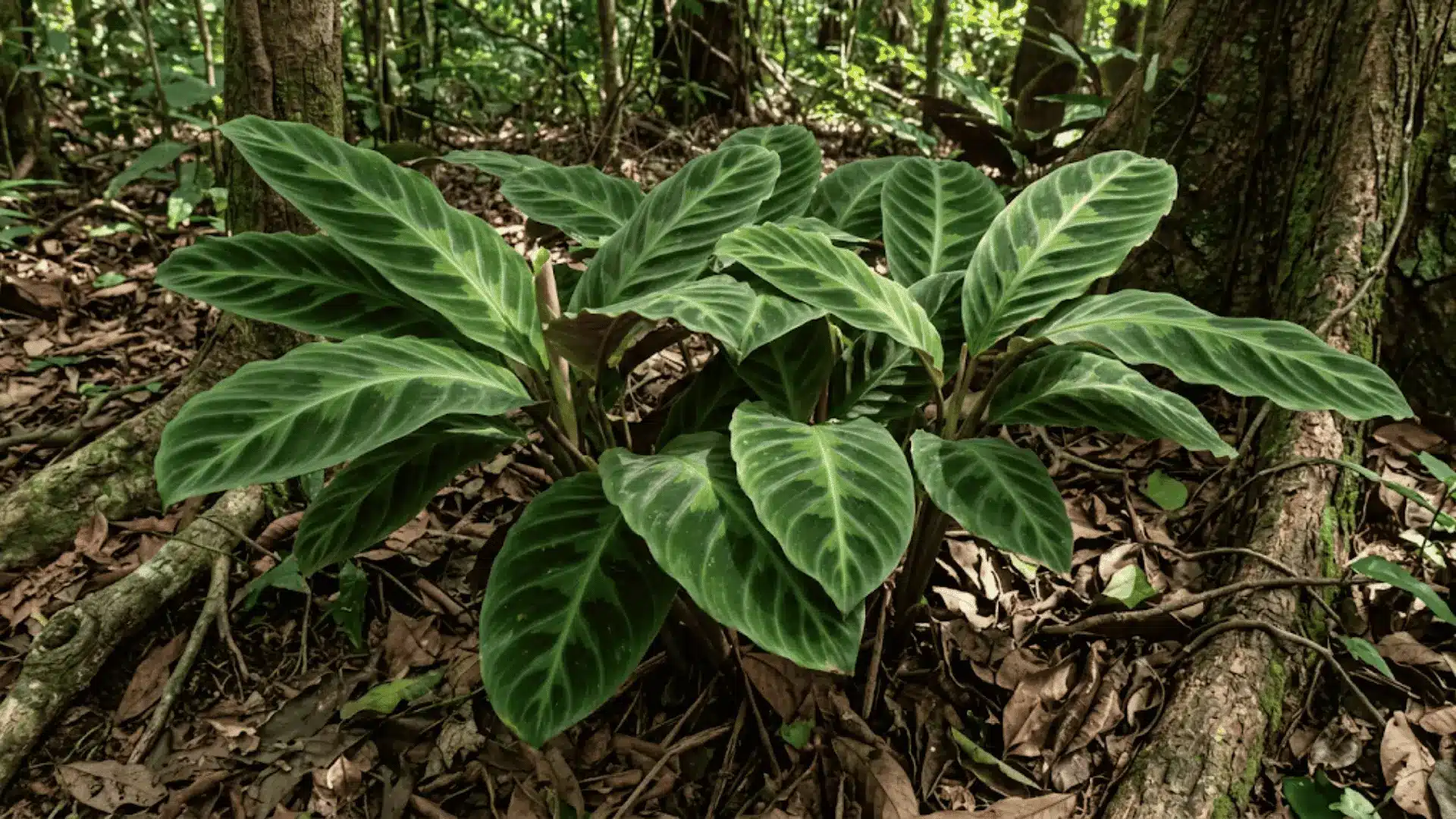
- Mature Size: Small to medium herb, roughly 1 to 2.5 feet
- Foliage/Flower Characteristics: Leaves with a soft, velvet-like surface texture
- Native Range or Habitat: Tropical Central or South America
- Houseplant Relevance: Primarily botanical
The epithet velutinifolia refers directly to the leaf’s velvety texture, a trait shared with a handful of Marantaceae relatives grown for their tactile foliage. This species keeps a low, clumping growth habit suited to shaded forest floors.
Distribution records are sparse, which keeps it out of most regional field guides and entirely out of the nursery trade.
It offers a good example of how texture, not just pattern, plays into Calathea identification for botanists working with obscure specimens.
56. Calathea utilis
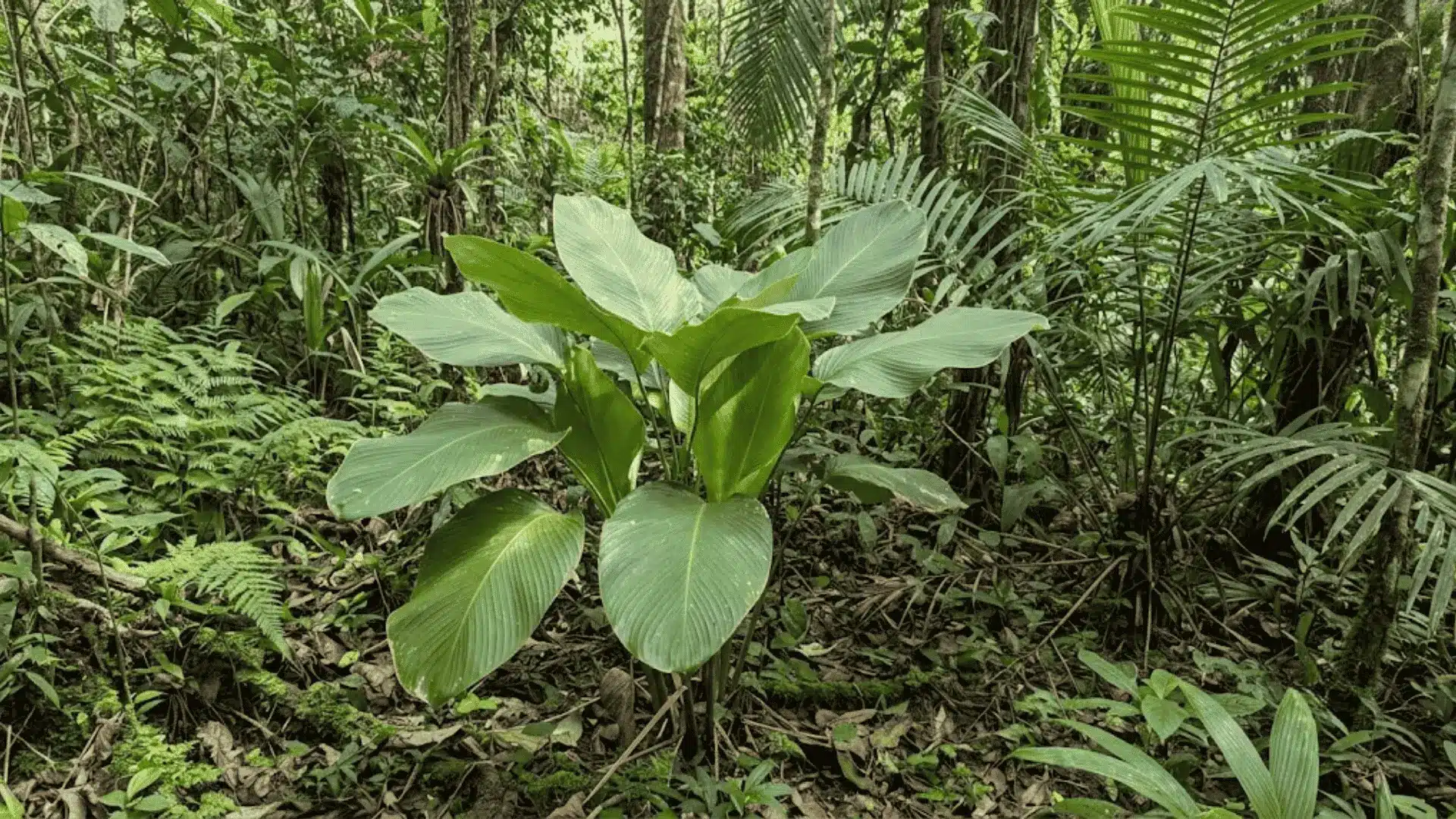
- Mature Size: Medium herb, around 2 to 3 feet
- Foliage/Flower Characteristics: Broad, typical Marantaceae foliage with a compact flowering head
- Native Range or Habitat: Colombia
- Houseplant Relevance: Primarily botanical
Documented in Colombian floristic catalogs, Calathea utilis carries a species name that hints at some local practical use, a pattern common in Marantaceae where broad leaves are used for wrapping food or crafting containers.
Beyond that etymology, detailed botanical accounts remain limited.
It grows in humid forest settings alongside other regional Calathea species and has not been introduced to cultivation outside its native range, so most readers will meet it here for the first time.
55. Calathea trianae
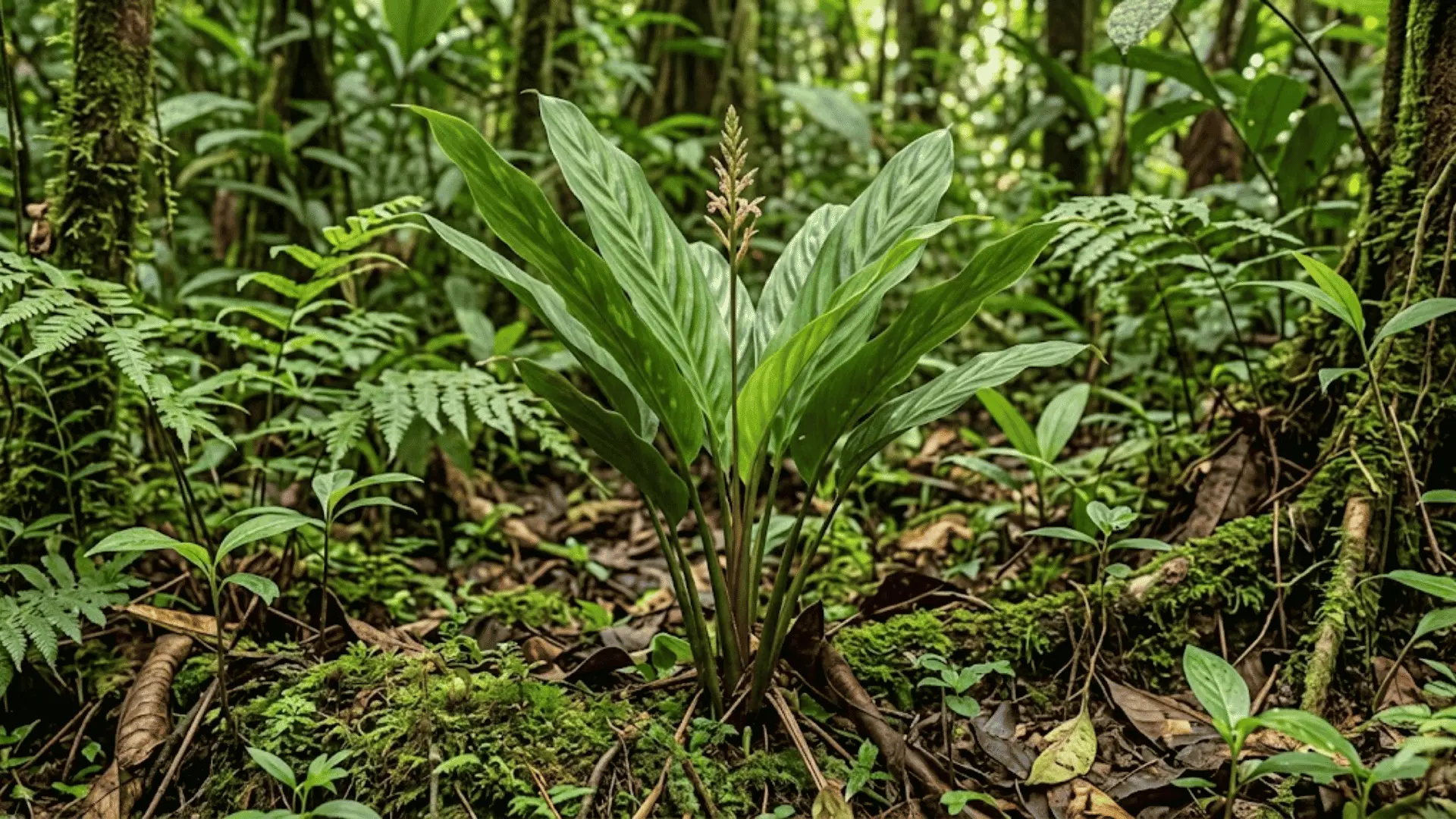
- Mature Size: Medium herb, roughly 1.5 to 3 feet
- Foliage/Flower Characteristics: Standard lance to oval foliage with a slender flowering spike
- Native Range or Habitat: Colombia
- Houseplant Relevance: Primarily botanical
Named in honor of a historical botanical collector, Calathea trianae reflects the long tradition of Colombian plant exploration that shaped much of the genus’s taxonomy.
Its foliage and inflorescence follow the general Marantaceae pattern, without the strong variegation that drives houseplant demand. It grows in forest habitat where collection records remain thin.
As with many species on this list, its main value today is scientific rather than ornamental, filling in the picture of how diverse true Calathea actually is.
54. Calathea toroi
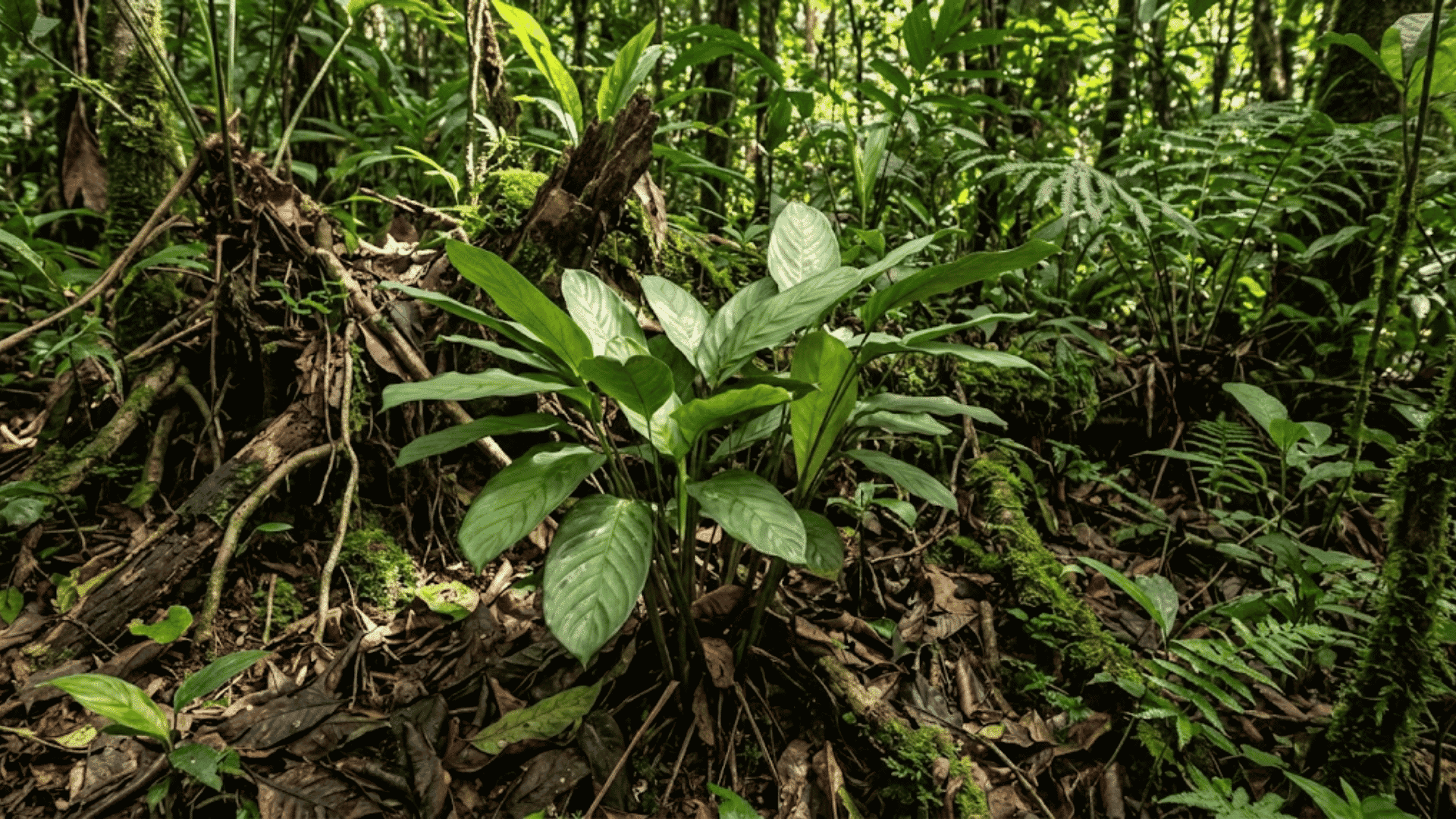
- Mature Size: Small to medium herb, around 1 to 2 feet
- Foliage/Flower Characteristics: Modest foliage typical of understory Marantaceae, unremarkable bract coloring
- Native Range or Habitat: Central America, humid forest
- Houseplant Relevance: Primarily botanical
Calathea toroi is one of several Central American species named for individual collectors or field botanists rather than for a distinguishing physical trait.
It grows quietly in humid forest understory, contributing to local plant diversity without drawing horticultural attention.
Rarity in cultivation here is less about difficulty growing it and more about the simple fact that it has never been widely collected or propagated for sale, leaving it almost entirely within scientific reference material.
53. Calathea timothei
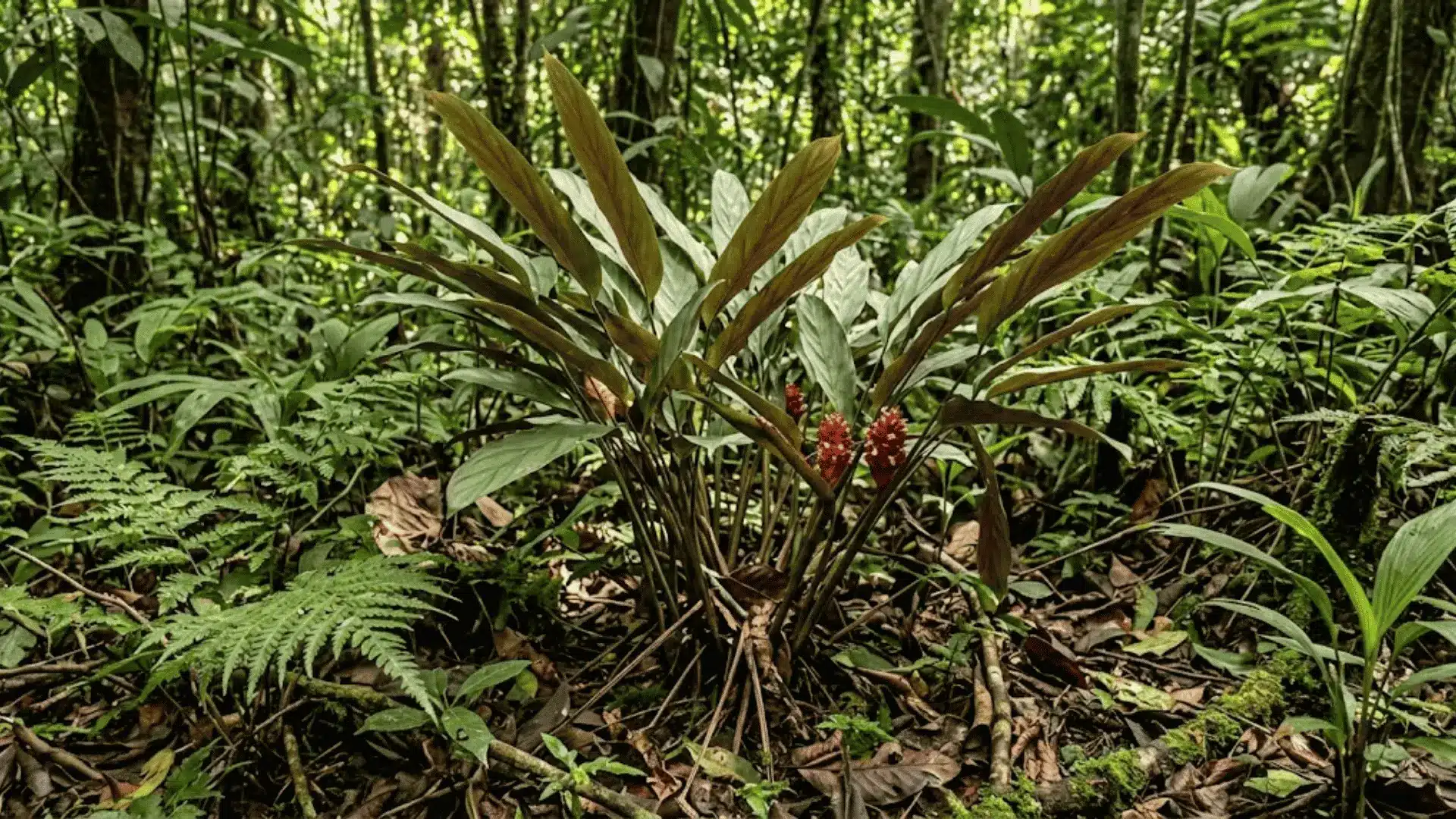
- Mature Size: Small to medium herb, roughly 1 to 2 feet
- Foliage/Flower Characteristics: Typical genus foliage with a slender inflorescence
- Native Range or Habitat: Tropical Central America
- Houseplant Relevance: Primarily botanical
Like many of the lesser-known true Calathea, timothei carries a personal name honoring a field botanist involved in its discovery. It shares the humid, shaded forest preference common to the genus, growing as a modest understory herb.
Cultivation notes are essentially nonexistent, since the species has never been part of the ornamental trade.
It reminds us that the accepted Calathea list includes far more scientific curiosities than showy houseplants.
52. Calathea tarrazuensis
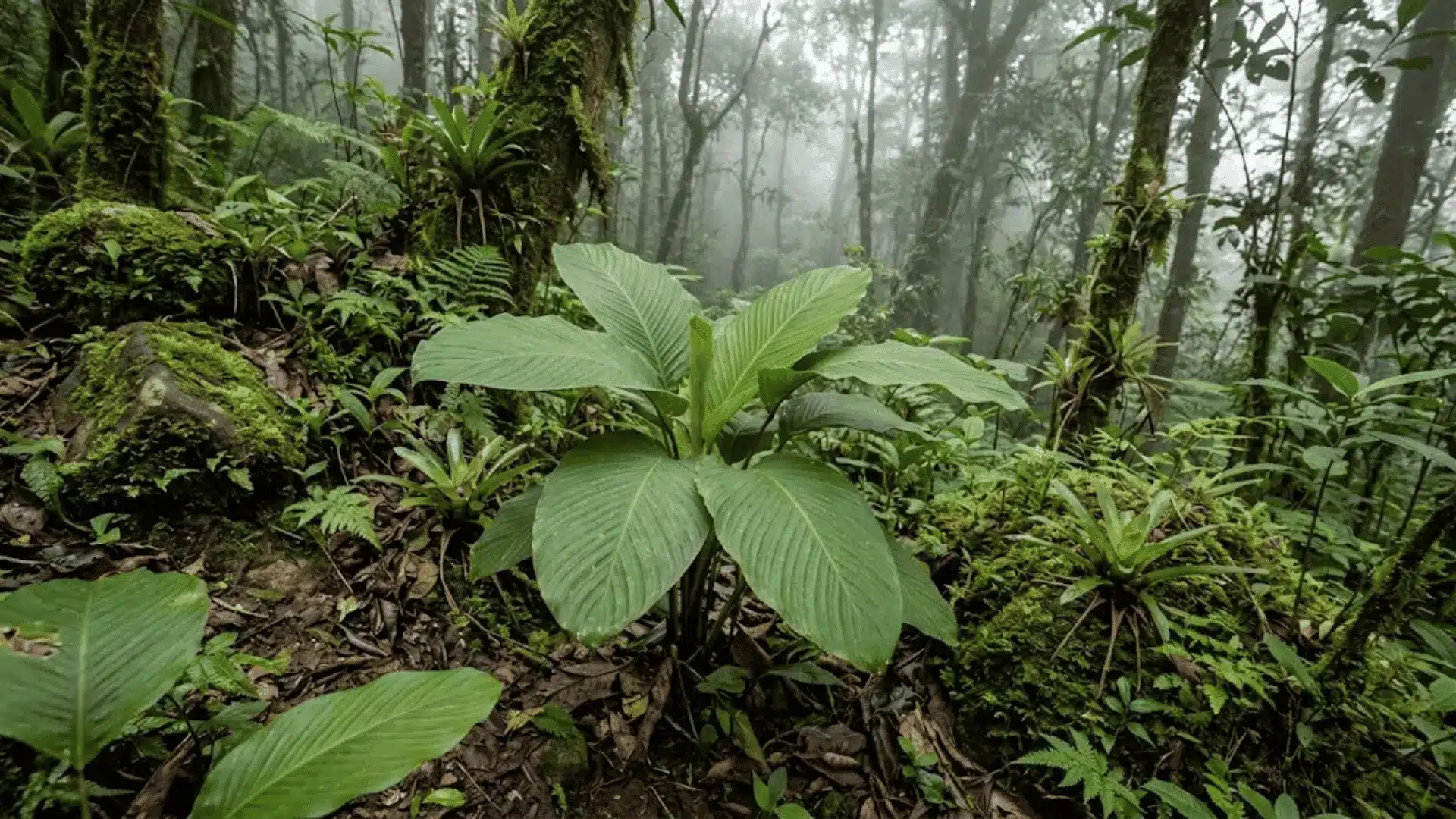
- Mature Size: Small to medium herb, around 1 to 2 feet
- Foliage/Flower Characteristics: Standard genus foliage, named for its region of origin
- Native Range or Habitat: Tarrazú region, Costa Rica
- Houseplant Relevance: Primarily botanical
The species name points directly to Tarrazú, a mountainous region of Costa Rica better known for coffee than for rare aroid relatives.
Calathea tarrazuensis grows in humid forest habitat typical of the area, with foliage that follows the genus’s usual form rather than standing out for pattern or color.
It is rarely seen as a houseplant simply because it has such a narrow known range and no history of commercial propagation outside it.
51. Calathea striata
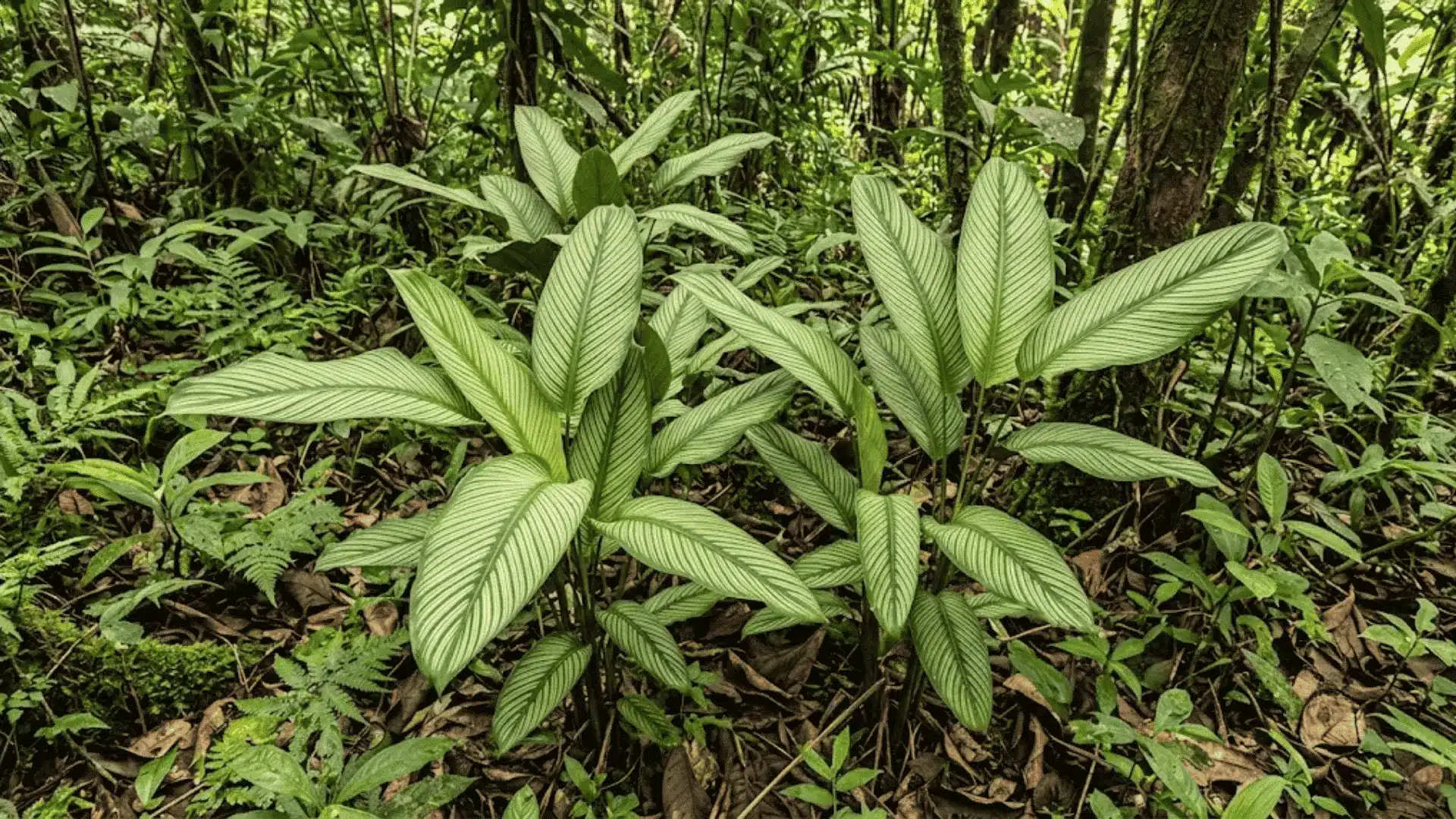
- Mature Size: Medium herb, roughly 1.5 to 3 feet
- Foliage/Flower Characteristics: Leaves marked with fine striping along the veins, slender flower spike
- Native Range or Habitat: Tropical South America
- Houseplant Relevance: Primarily botanical
The striped venation referenced in its name gives Calathea striata slightly more visual interest than some neighboring obscure species, though it still falls short of the bold patterning seen in popular Goeppertia varieties.
Its inflorescence follows the typical bracted spike form of the family.
Native to humid South American forest, it has not entered cultivation and remains documented mainly through herbarium specimens and regional botanical surveys rather than garden literature.
50. Calathea spiralis
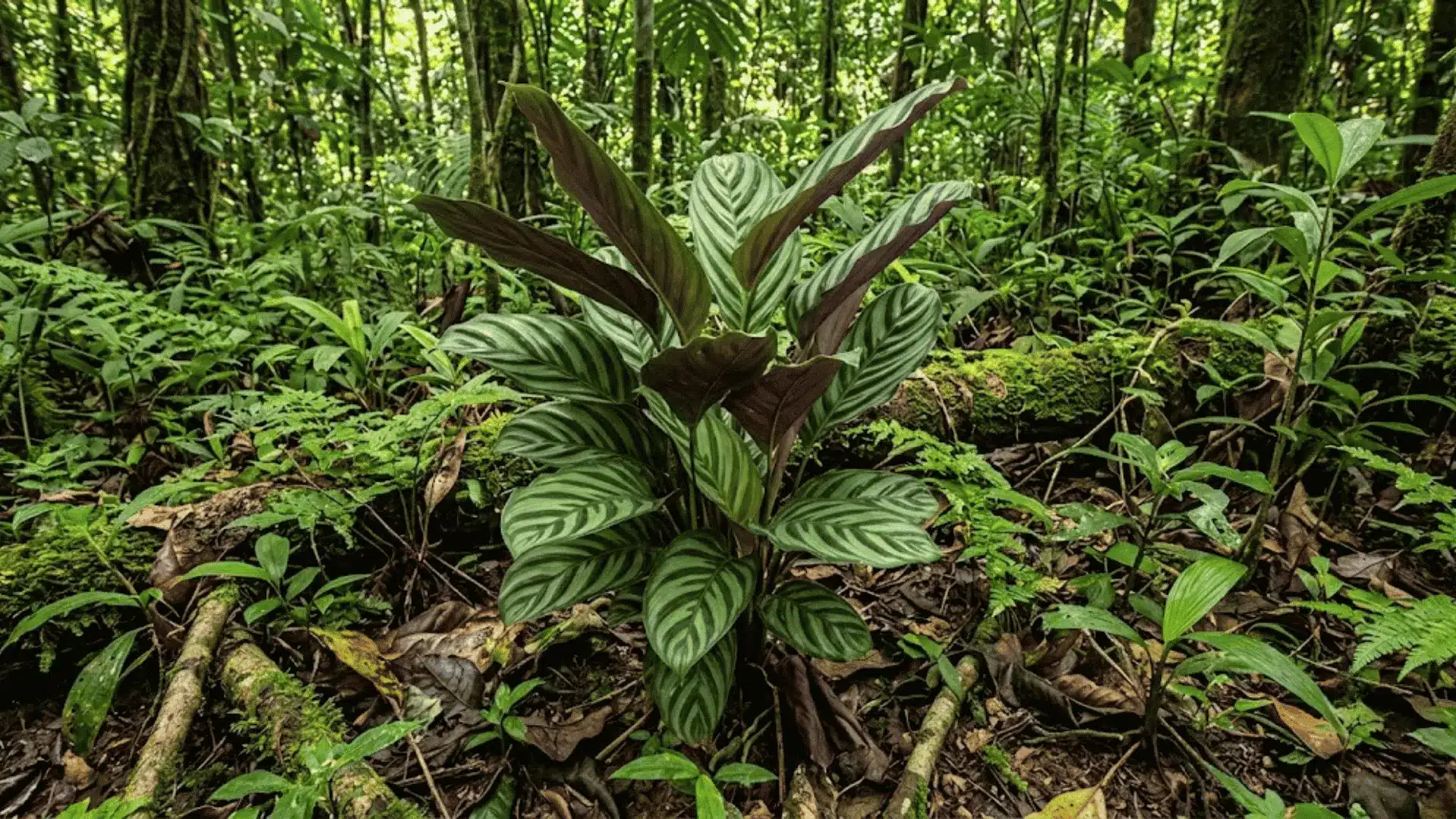
- Mature Size: Small to medium herb, around 1 to 2 feet
- Foliage/Flower Characteristics: Growth habit noted for a spiraling or twisting arrangement of leaves or bracts
- Native Range or Habitat: Tropical Central or South America
- Houseplant Relevance: Primarily botanical
Calathea spiralis earns its name from a distinctive spiraling growth pattern, likely in how its leaves or floral bracts are arranged along the stem.
This kind of structural detail matters more to taxonomists sorting closely related species than to home growers browsing for foliage plants.
It thrives in the same humid, shaded forest conditions preferred across the genus, and remains undocumented in any horticultural care guide, existing purely within scientific literature.
49. Calathea similis
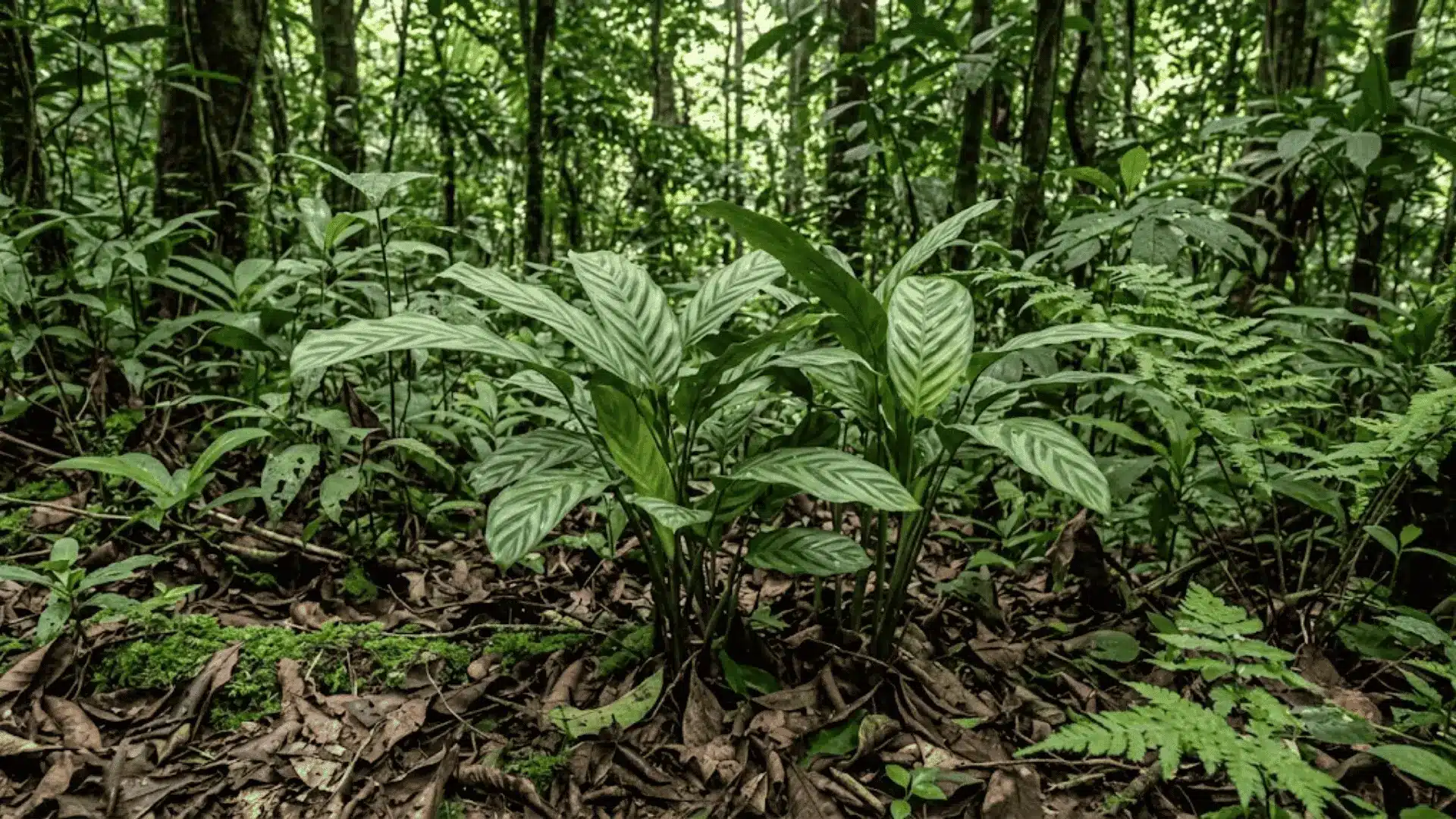
- Mature Size: Small to medium herb, roughly 1 to 2 feet
- Foliage/Flower Characteristics: Foliage closely resembling a related species, hence the name
- Native Range or Habitat: Tropical Central or South America
- Houseplant Relevance: Primarily botanical
The epithet similis, meaning similar, signals that this species was originally distinguished from a close relative by subtle rather than dramatic differences.
That kind of fine distinction is common across the more obscure end of Calathea taxonomy. It occupies the same humid forest niche as its relatives and has no meaningful presence in cultivation.
Distribution data is limited, and it is best understood as a taxonomic footnote rather than a garden candidate.
48. Calathea shishicoensis
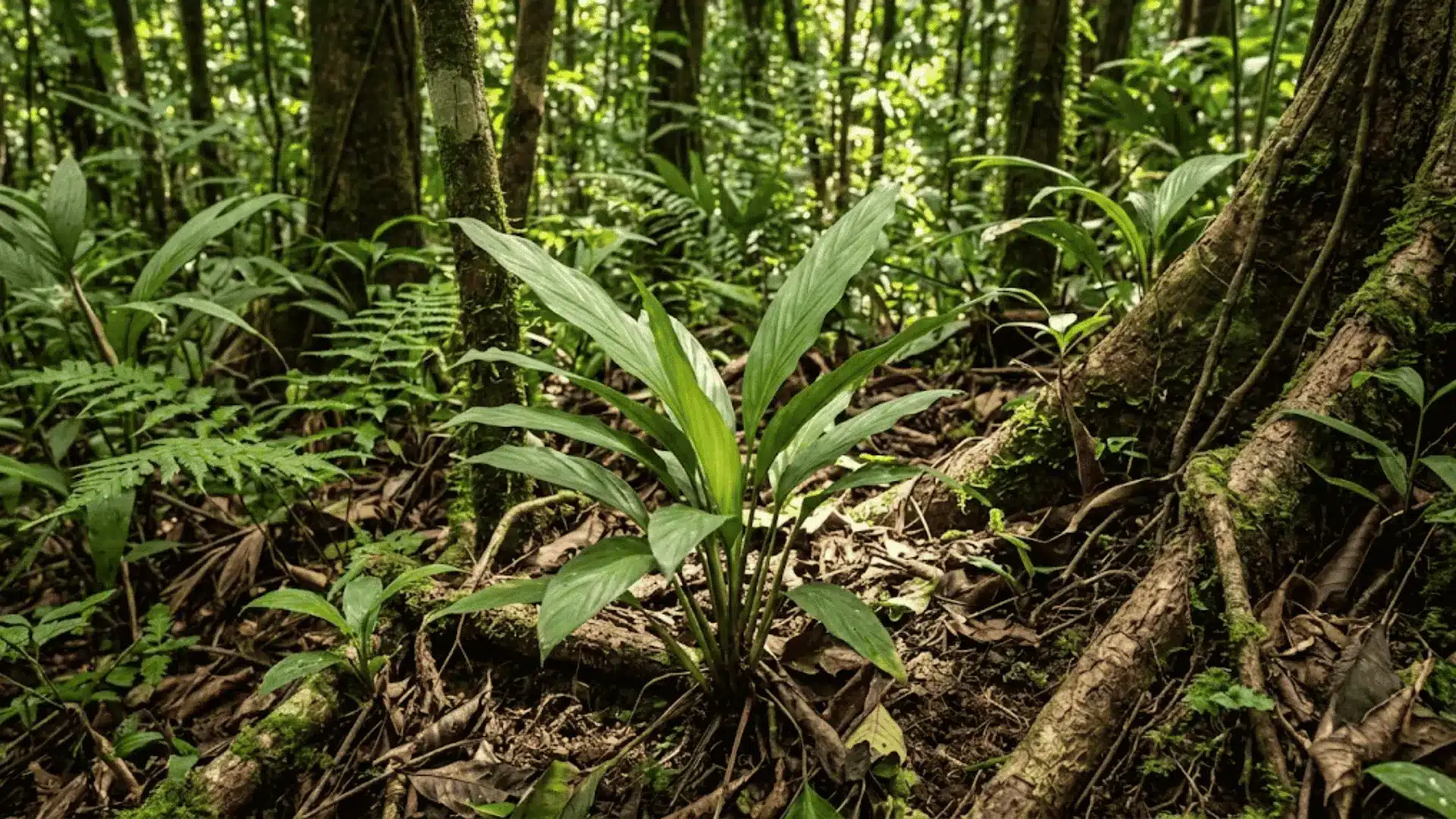
- Mature Size: Small to medium herb, around 1 to 2 feet
- Foliage/Flower Characteristics: Typical genus foliage, named for its type locality
- Native Range or Habitat: Central America, named after a specific locality
- Houseplant Relevance: Primarily botanical
The locality-based name marks Calathea shishicoensis as a regionally restricted species, first identified from a specific site rather than a broad range.
Its native environment follows the humid, shaded forest pattern typical of the genus. Rarity here reflects both a narrow natural distribution and a complete absence from cultivation.
Species like this fill out Kew’s accepted list without ever appearing in a plant shop or home collection.
47. Calathea rubribracteata
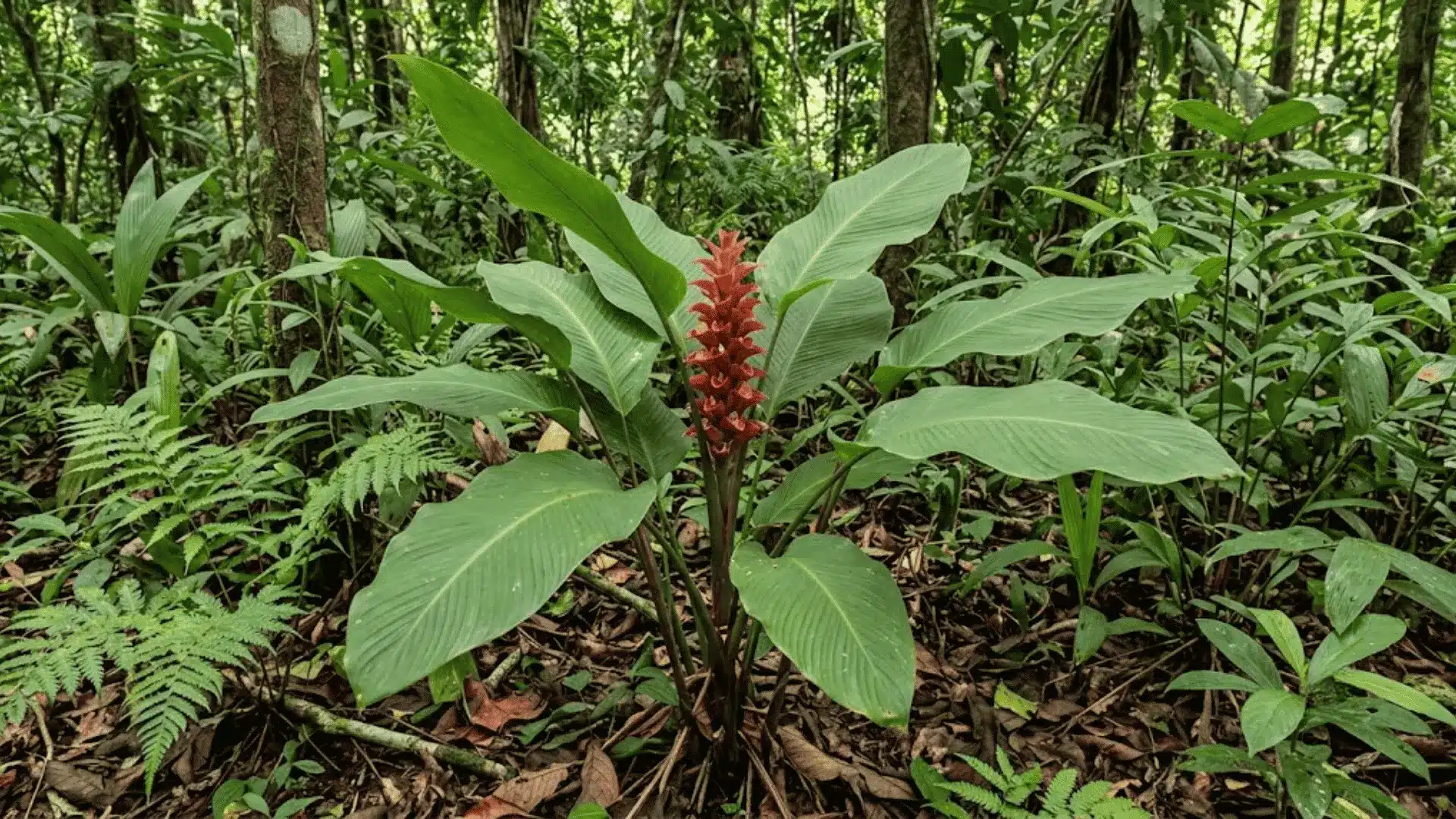
- Mature Size: Medium herb, roughly 2 to 3 feet
- Foliage/Flower Characteristics: Foliage typical of the genus, with reddish-toned bracts on the inflorescence
- Native Range or Habitat: Tropical South America
- Houseplant Relevance: Primarily botanical
True to its name, Calathea rubribracteata produces flower bracts with a reddish cast, setting its inflorescence apart from the greener or yellow-toned spikes seen in many relatives.
The foliage itself stays close to the standard lance-shaped form found across the genus.
Native to humid South American forests, it has not been brought into cultivation, and most existing knowledge of it comes from herbarium collections rather than living garden specimens.
46. Calathea retroflexa
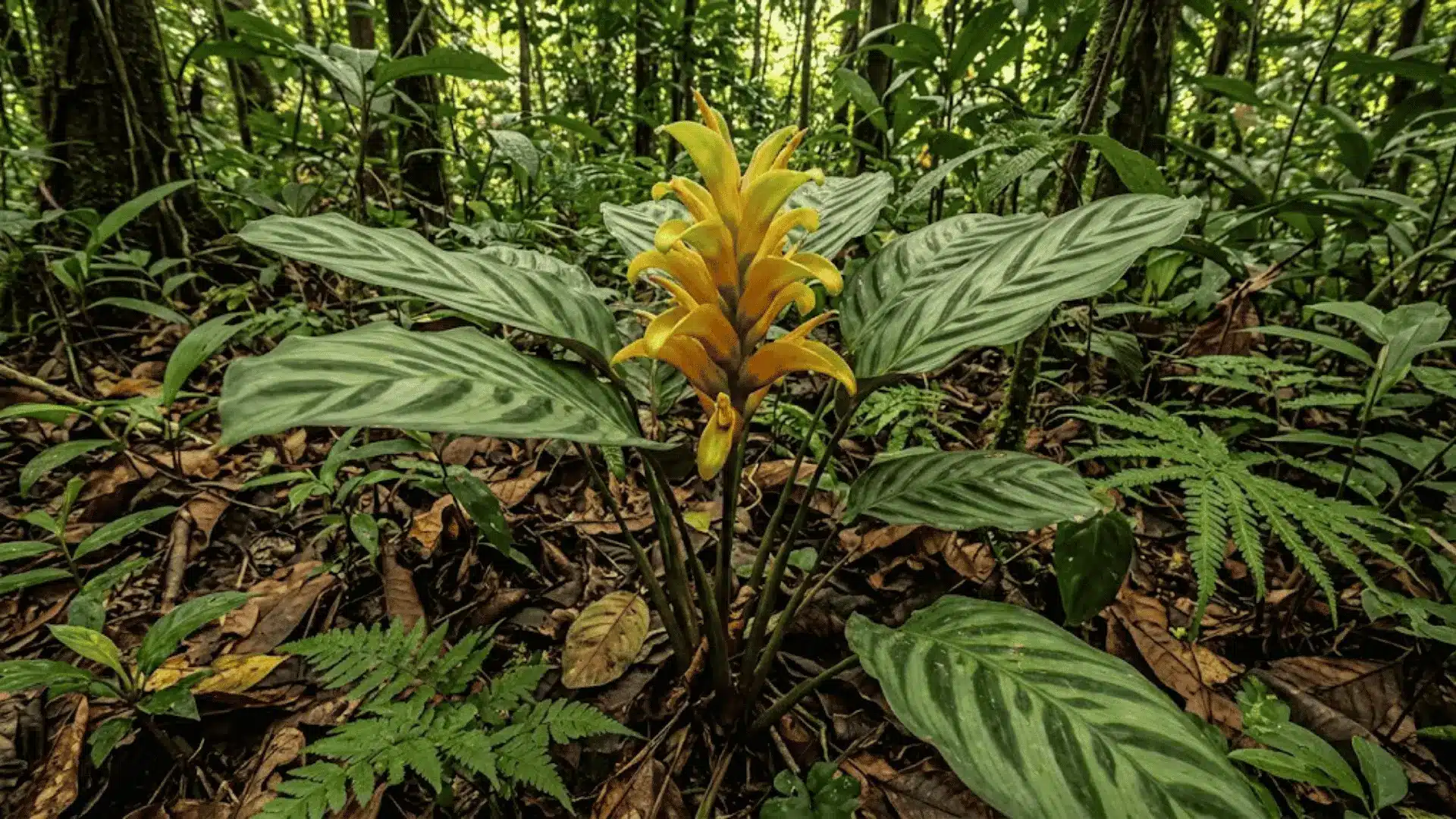
- Mature Size: Small to medium herb, around 1 to 2 feet
- Foliage/Flower Characteristics: Named for a backward-bending feature in its floral bracts or leaves
- Native Range or Habitat: Tropical Central or South America
- Houseplant Relevance: Primarily botanical
The name retroflexa points to a bent or reflexed structure, likely in the bracts of the inflorescence, which taxonomists use to separate it from straighter-flowered relatives.
It grows as a modest understory herb in humid tropical forest.
Cultivation notes are essentially absent, and the species remains known chiefly through botanical description rather than horticultural experience, another example of the quiet diversity hiding behind the Calathea name.
45. Calathea recurvata
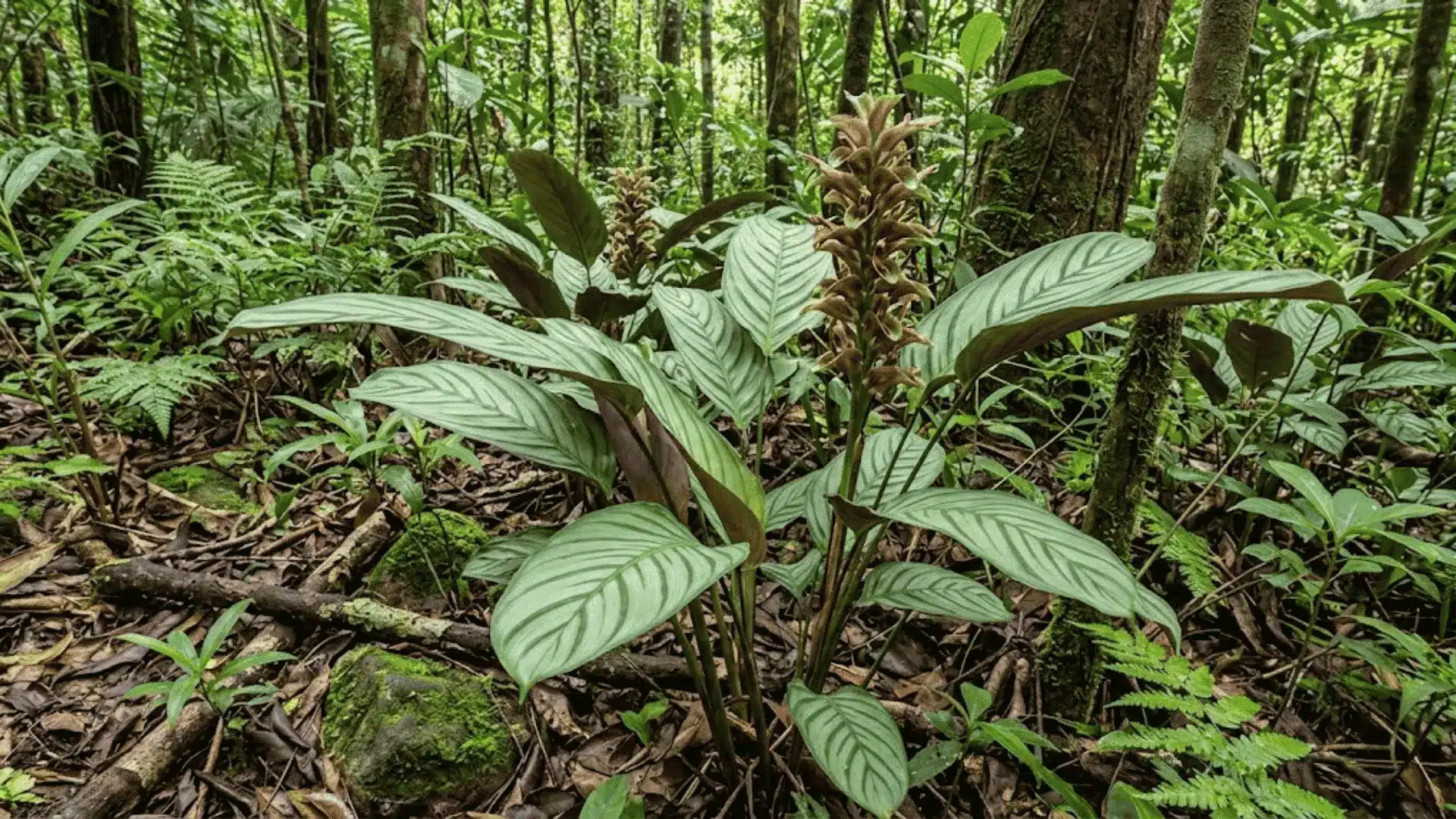
- Mature Size: Small to medium herb, roughly 1 to 2 feet
- Foliage/Flower Characteristics: Leaves or bracts curving backward, a key identification trait
- Native Range or Habitat: Tropical Central or South America
- Houseplant Relevance: Primarily botanical
Calathea recurvata shares its naming logic with several close relatives, describing a curving or recurving structural feature that helps separate it from similar species.
It grows within humid forest habitat typical of the genus, favoring shade and consistent moisture.
Identification of species at this level of obscurity relies almost entirely on close inspection of bract and leaf shape, work generally left to botanists rather than casual plant identification.
44. Calathea ravenii
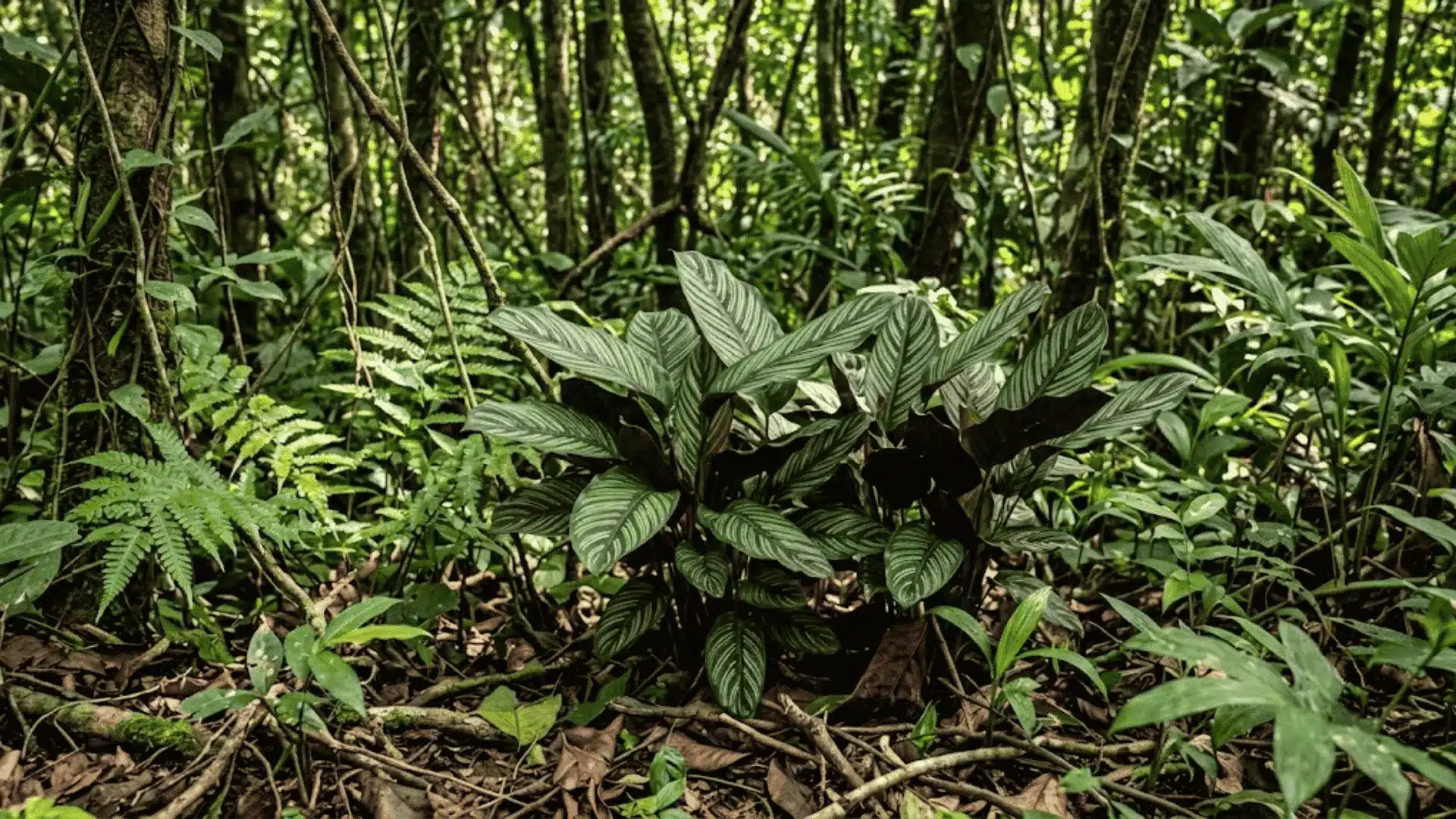
- Mature Size: Small to medium herb, around 1 to 2 feet
- Foliage/Flower Characteristics: Typical genus foliage, named for a botanical collector
- Native Range or Habitat: Tropical Central or South America
- Houseplant Relevance: Primarily botanical
Named to honor a botanist involved in its documentation, Calathea ravenii follows the familiar pattern of scientific naming across this section of the genus.
Its physical characteristics fall within the general range expected of understory Marantaceae, without a single standout trait driving wider recognition.
Availability is nonexistent outside botanical institutions, and the species is unlikely to appear in any commercial plant listing now or in the near future.
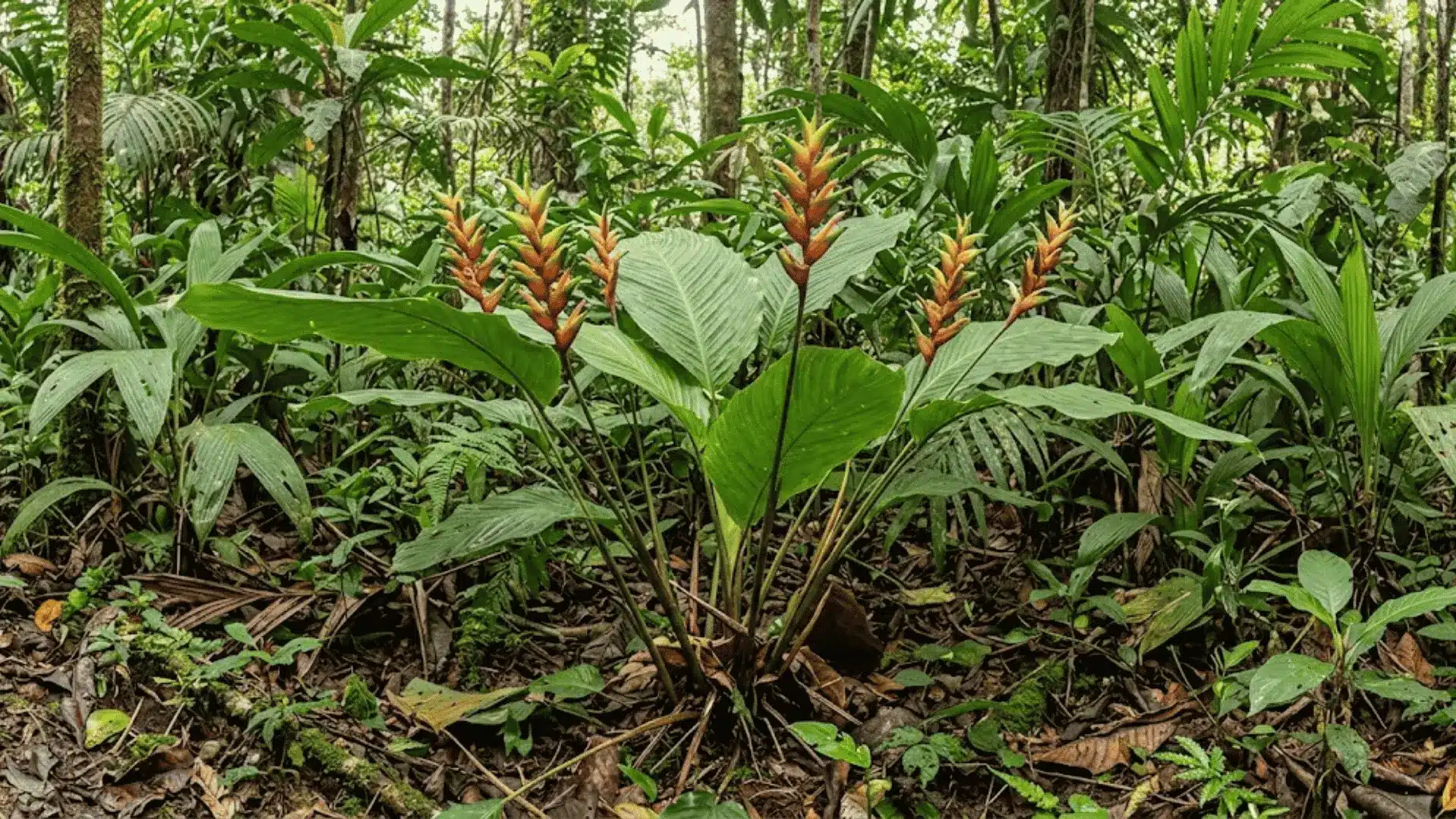
43. Calathea plurispicata
- Mature Size: Medium herb, roughly 2 to 3 feet
- Foliage/Flower Characteristics: Multiple flower spikes per inflorescence, standard broad foliage
- Native Range or Habitat: Colombia
- Houseplant Relevance: Primarily botanical
The name plurispicata refers to multiple spikes within its inflorescence structure, a detail documented in Colombian botanical catalogs. Its foliage keeps to the broad, typical Marantaceae shape seen throughout the genus.
Distribution appears limited to specific forest habitats within Colombia, and the species has not entered cultivation.
It represents the kind of technical, multi-spiked flowering structure that helps botanists distinguish closely related species in the field.
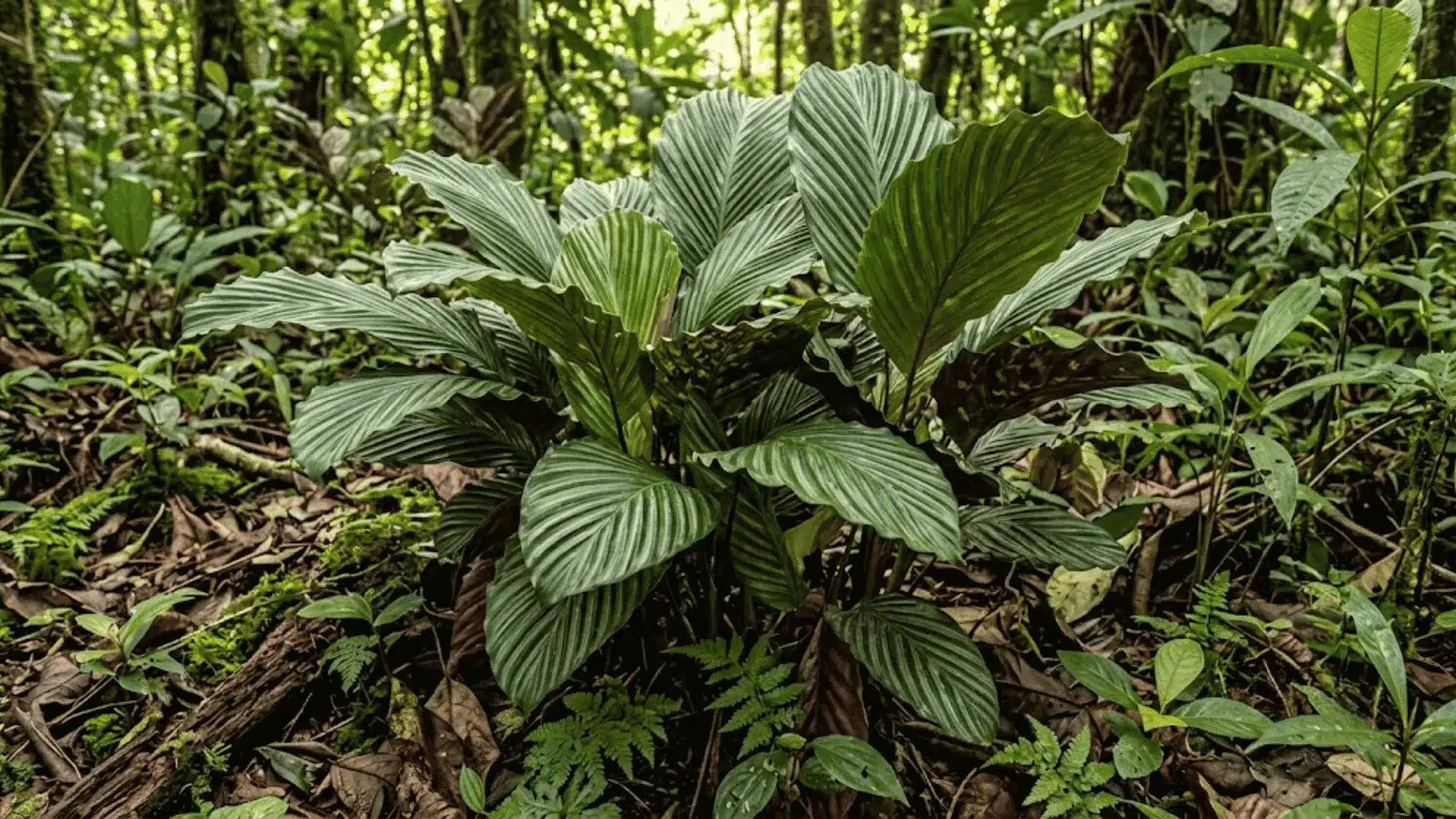
42. Calathea pluriplicata
- Mature Size: Medium herb, around 2 to 3 feet
- Foliage/Flower Characteristics: Leaf structure with multiple pleats or folds, standard growth habit
- Native Range or Habitat: Colombia
- Houseplant Relevance: Primarily botanical
Closely named alongside Calathea plurispicata, this species instead references a pleated or folded leaf structure rather than its flower spikes.
It shares a similar Colombian forest habitat and growth habit with several regional relatives.
As with most species in this range of the list, detailed horticultural information simply does not exist, since collection has stayed within scientific rather than commercial channels throughout its known history.
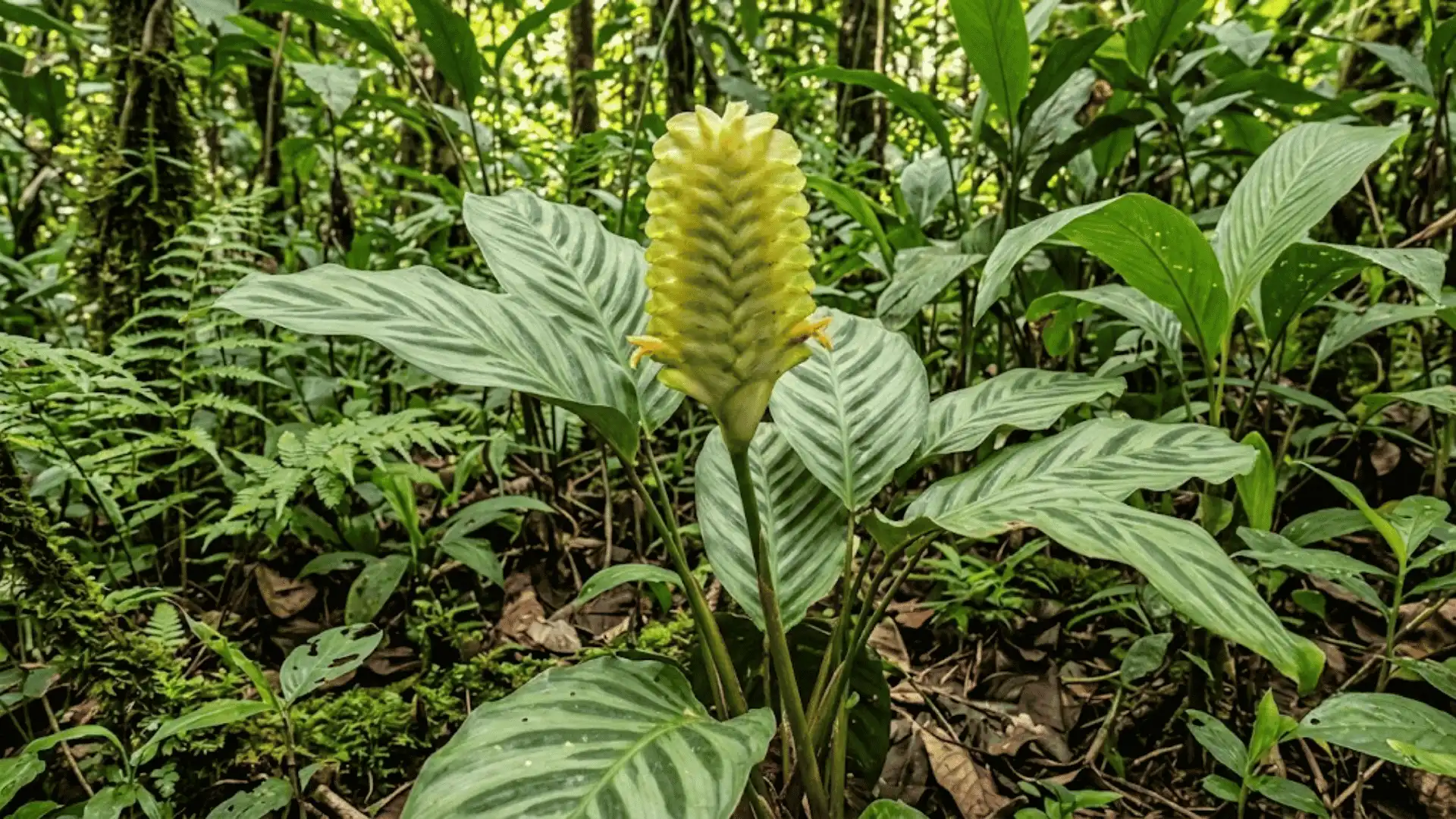
41. Calathea platystachya
- Mature Size: Medium herb, roughly 2 to 3 feet
- Foliage/Flower Characteristics: Broad, flattened flower spike alongside typical genus foliage
- Native Range or Habitat: Central America
- Houseplant Relevance: Primarily botanical
The epithet platystachya describes a broad or flattened inflorescence spike, a structural detail used to separate this species from narrower-flowered relatives.
It grows in humid Central American forest habitat consistent with the genus’s general preferences.
Its native habitat has been documented through regional botanical surveys, but the species has never entered general cultivation, keeping it firmly in the category of scientifically interesting rather than garden-ready.
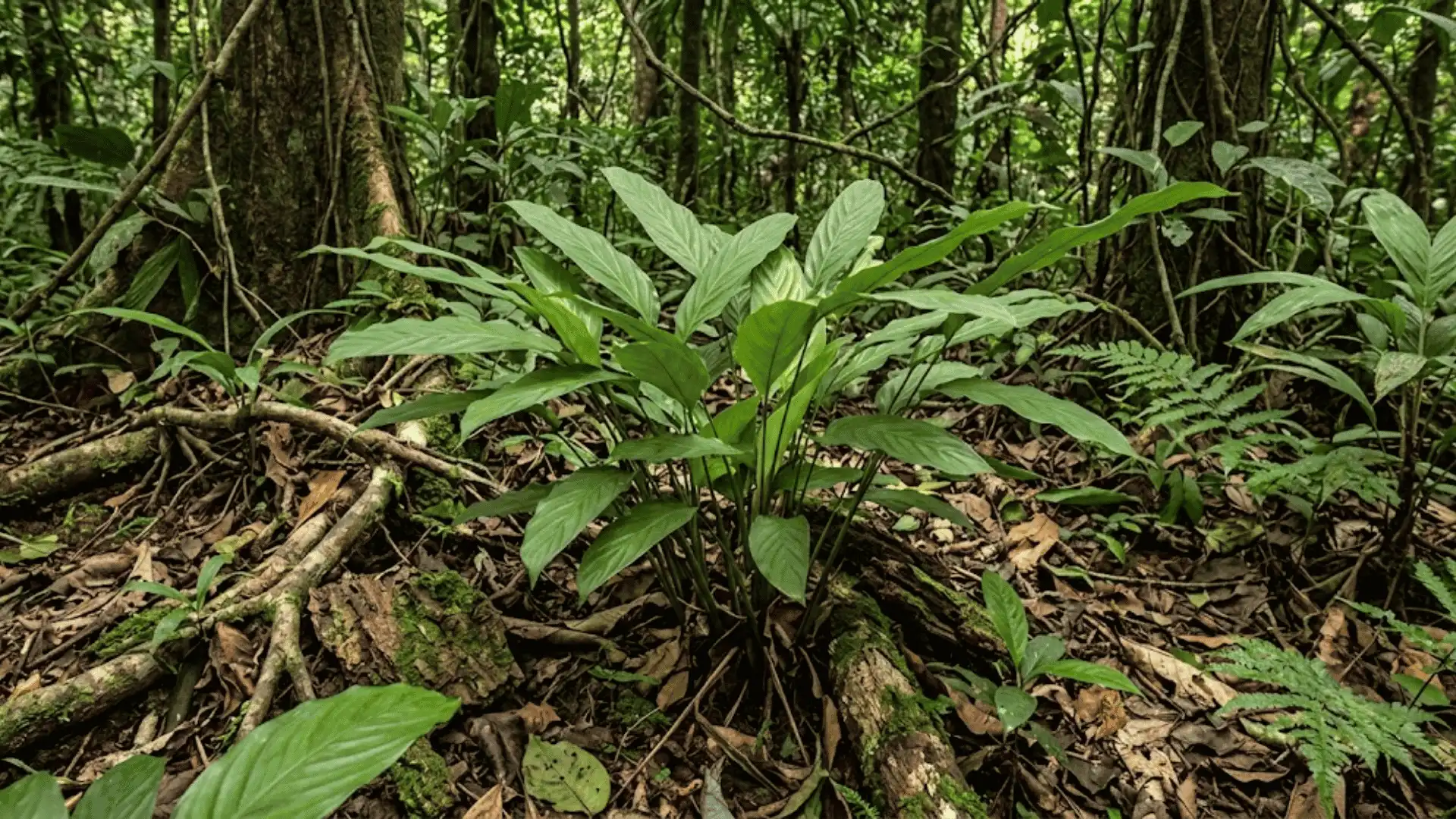
40. Calathea oscariana
- Mature Size: Small to medium herb, around 1 to 2 feet
- Foliage/Flower Characteristics: Typical genus leaf shape, named for an individual collector
- Native Range or Habitat: Tropical Central or South America
- Houseplant Relevance: Primarily botanical
Calathea oscariana continues the pattern of species named after the botanists and collectors who first documented them across Central and South America.
Its leaf characteristics sit comfortably within the expected range for the genus, without a defining trait that separates it visually from many neighbors on this list.
Distribution records remain sparse, and the species has no meaningful cultivation history outside scientific collection efforts.
39. Calathea nitens
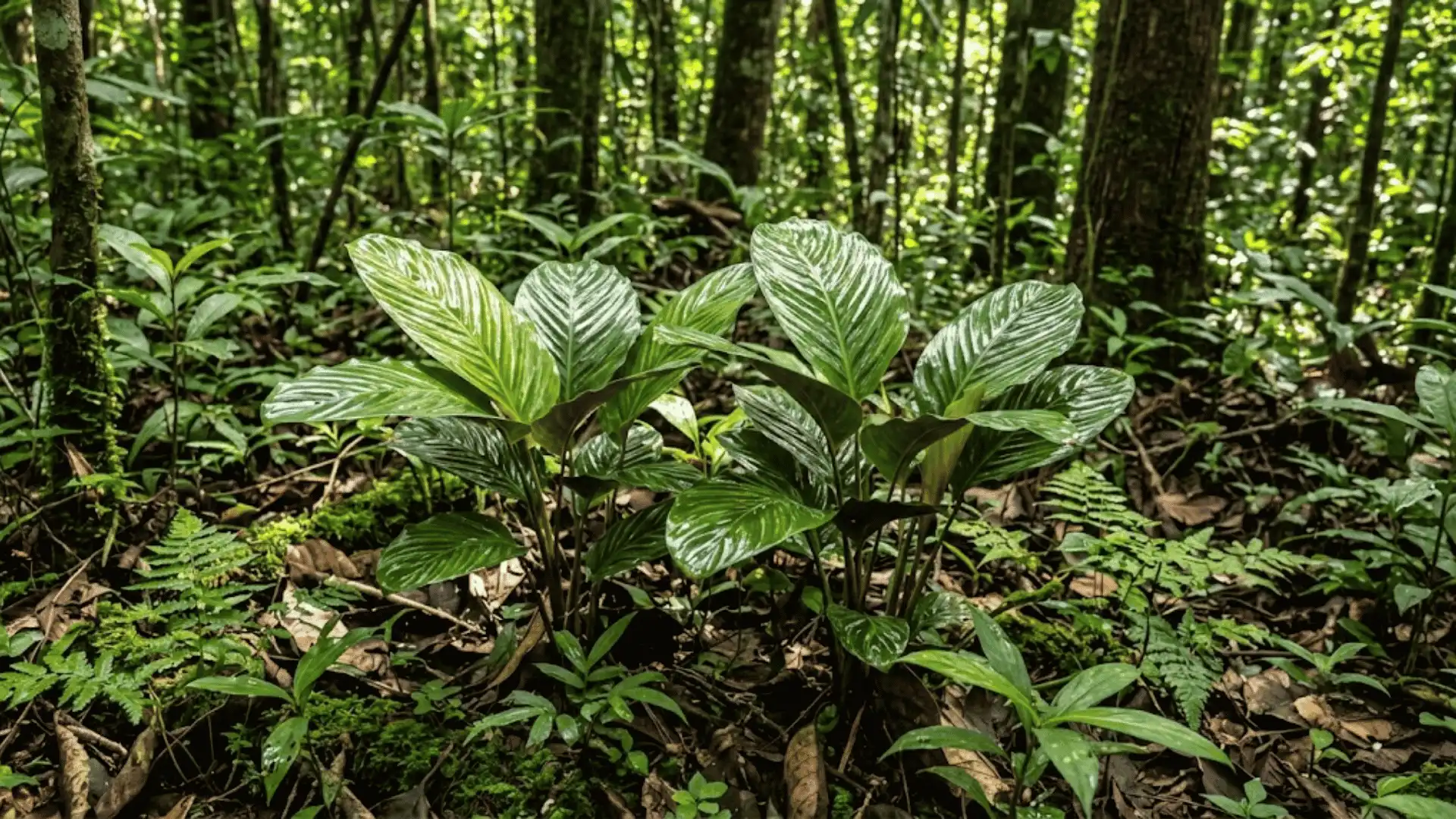
- Mature Size: Medium herb, roughly 1.5 to 3 feet
- Foliage/Flower Characteristics: Glossy, shining leaf surface, referenced directly in the species name
- Native Range or Habitat: Tropical Central or South America
- Houseplant Relevance: Primarily botanical
The name nitens, meaning shining, describes a glossy quality to the foliage that sets this species slightly apart in texture even without bold patterning. It maintains the clumping growth habit typical of understory Marantaceae.
Cultivation status remains undeveloped, with the species known mostly through botanical description.
Its glossy leaf surface is a small but genuine point of visual interest among an otherwise understated group of relatives.
38. Calathea neurophylla
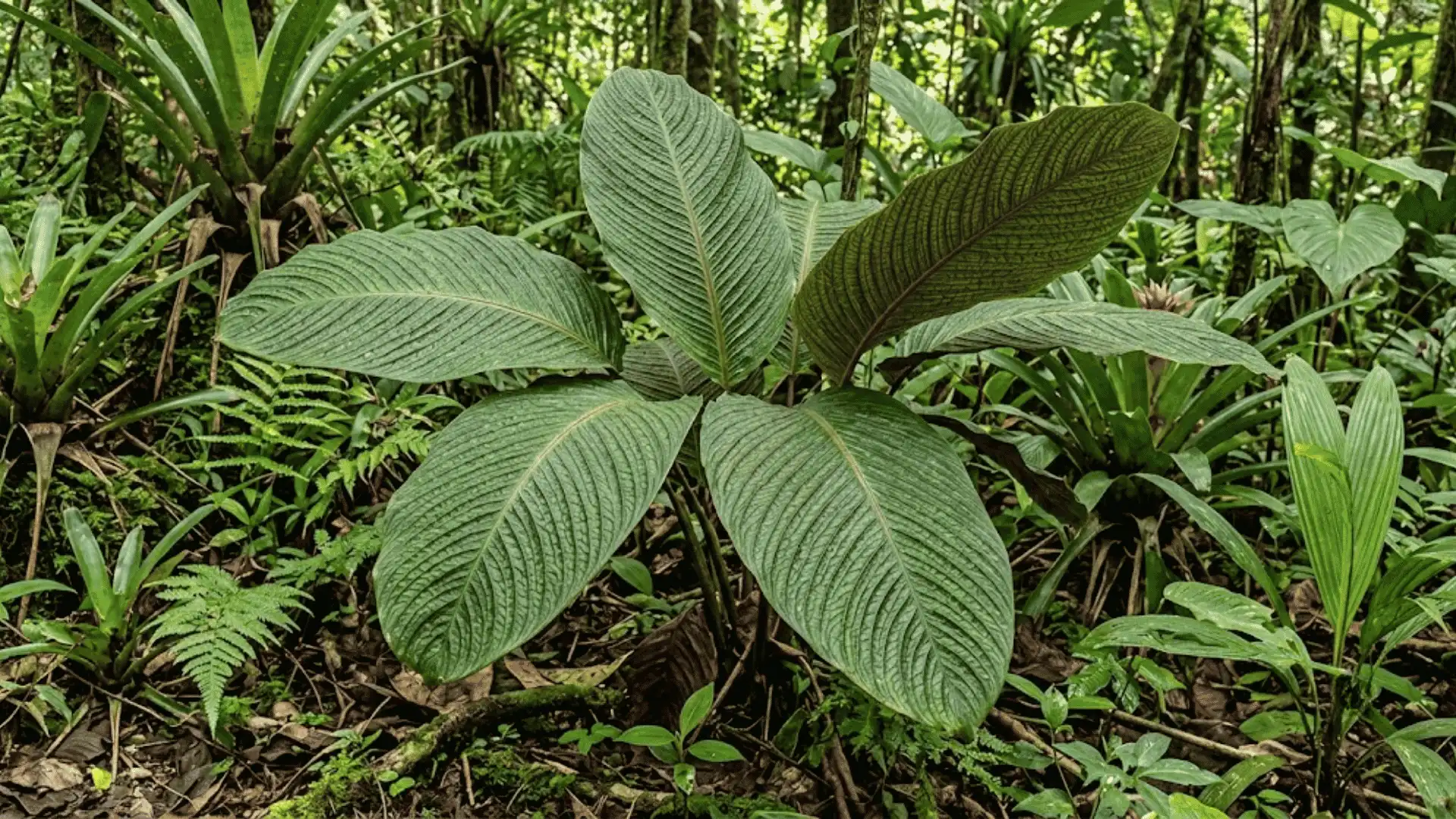
- Mature Size: Small to medium herb, around 1 to 2 feet
- Foliage/Flower Characteristics: Prominent leaf veining, referenced in the species name
- Native Range or Habitat: Tropical South America
- Houseplant Relevance: Primarily botanical
Neurophylla translates roughly to nerved leaf, pointing to distinct or prominent venation as this species’ key identifying trait.
It occupies a similar geographic range to several other rarely seen South American Calathea, favoring humid forest conditions.
Its rarity is tied to a narrow known distribution rather than any particular difficulty in cultivation, though no meaningful cultivation attempts appear on record for this species at all.
37. Calathea neillii
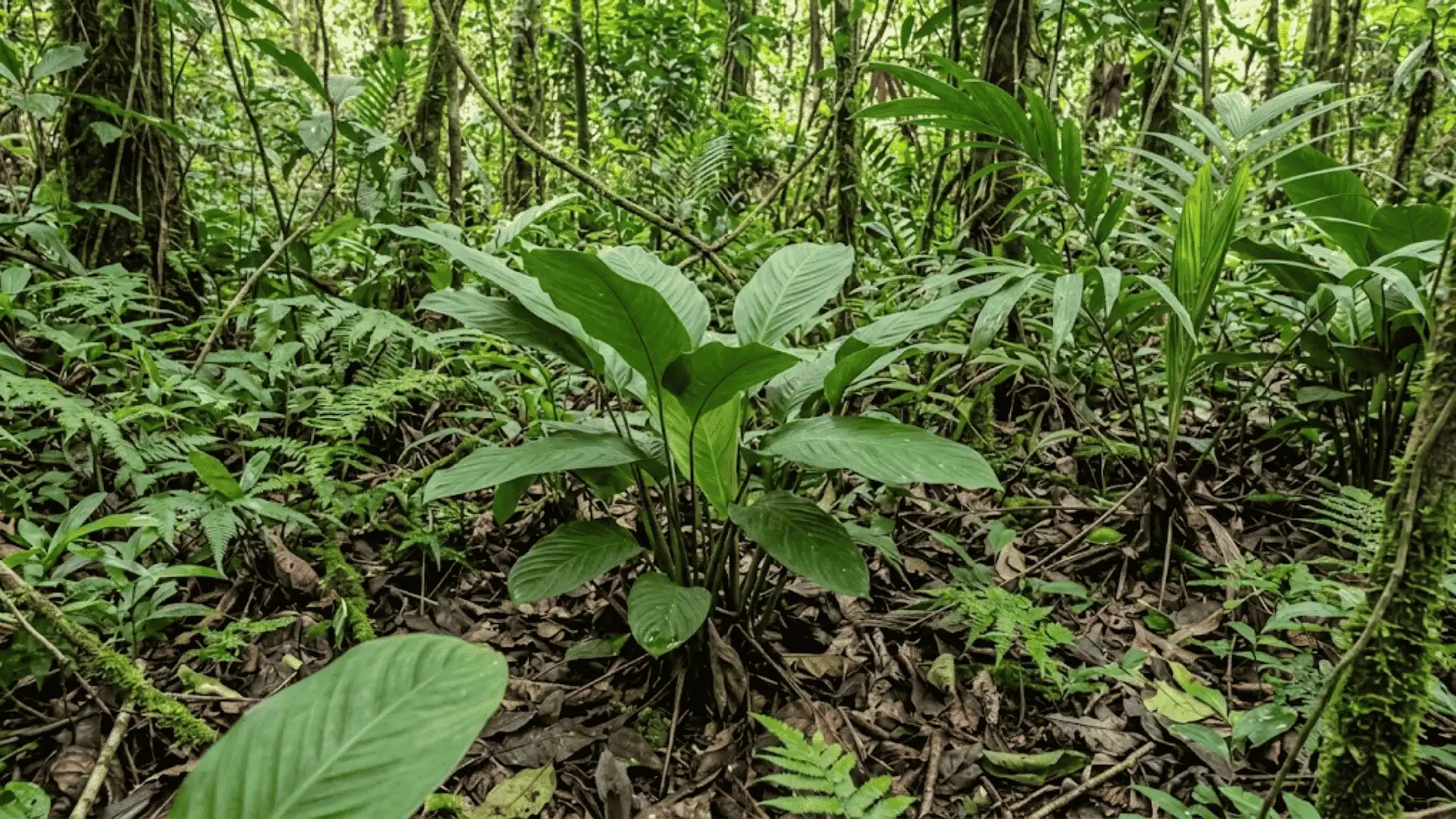
- Mature Size: Small to medium herb, roughly 1 to 2 feet
- Foliage/Flower Characteristics: Standard genus foliage, named for a botanical collector
- Native Range or Habitat: Tropical South America
- Houseplant Relevance: Primarily botanical
Another species named after a field botanist, Calathea neillii fits the broader pattern seen across this stretch of Kew’s accepted list, where personal names outnumber descriptive ones.
It grows within humid forest habitat typical of South American Calathea diversity.
Availability outside of herbarium collections is effectively zero, and the species has not been part of any documented cultivation effort in the time since its original description.
36. Calathea multispicata
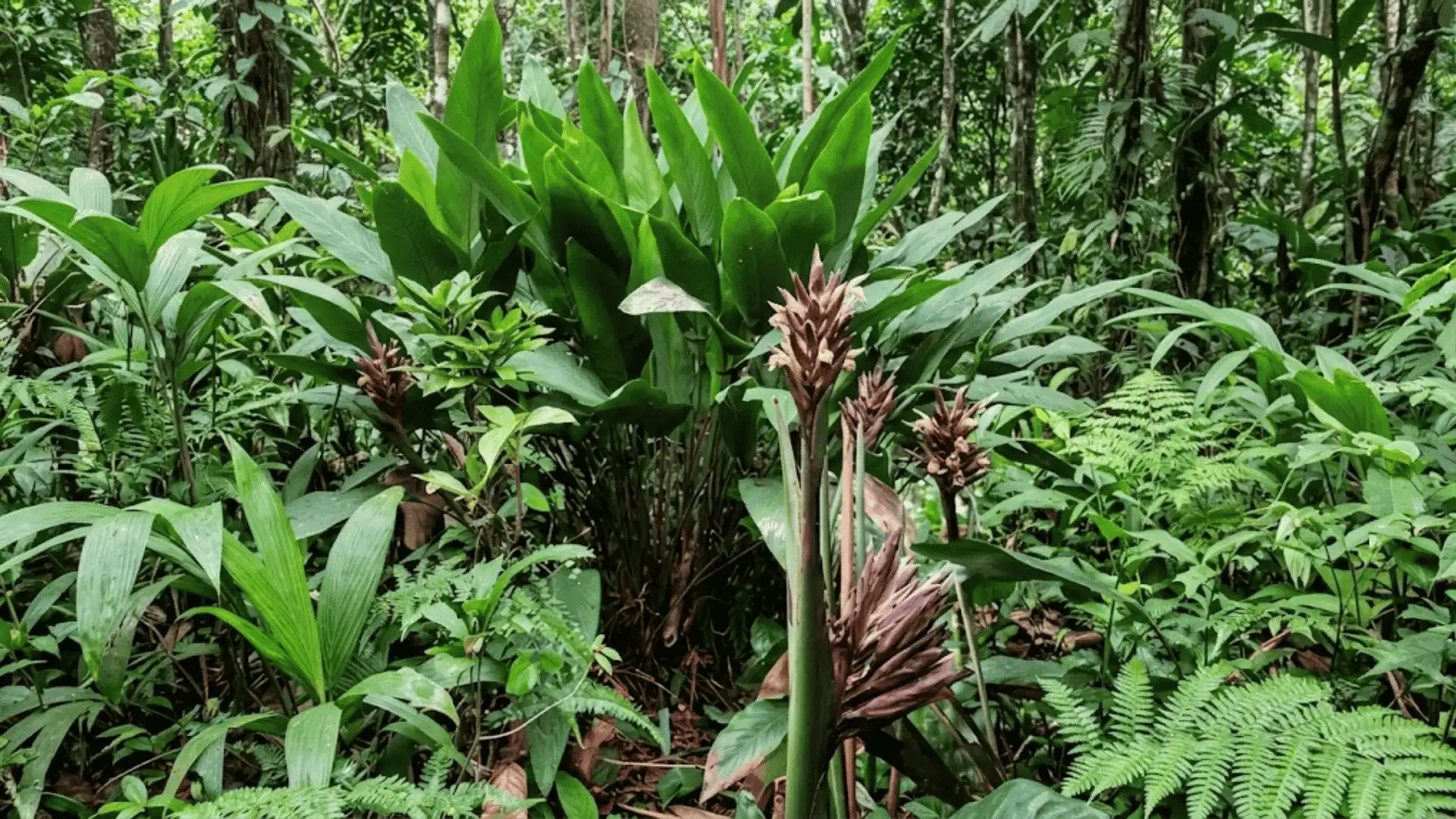
- Mature Size: Medium herb, around 2 to 3 feet
- Foliage/Flower Characteristics: Inflorescence bearing multiple spikes, broad standard foliage
- Native Range or Habitat: Tropical South America
- Houseplant Relevance: Primarily botanical
As the name suggests, Calathea multispicata produces an inflorescence with several spikes rather than a single dominant one, a trait shared with a small cluster of related species on this list.
Its foliage follows the broad, typical Marantaceae form. Its habitat preference leans toward humid, shaded forest-floor conditions.
It has no documented history in cultivation and is known chiefly through taxonomic and regional botanical records.
35. Calathea monstera
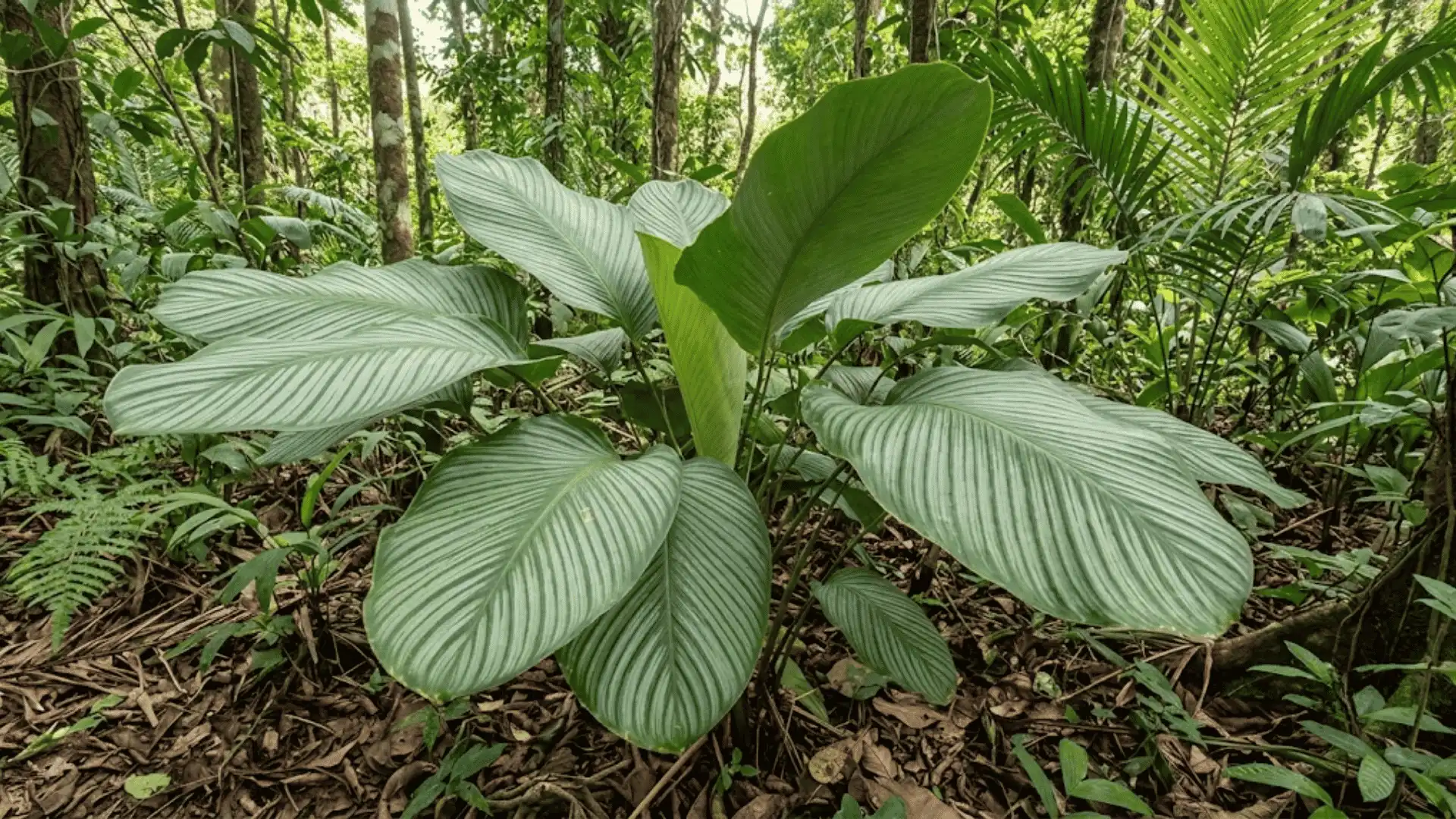
- Mature Size: Medium to large herb, roughly 2 to 4 feet
- Foliage/Flower Characteristics: Noticeably large foliage for the genus, standard growth habit
- Native Range or Habitat: Tropical Central or South America
- Houseplant Relevance: Primarily botanical
Despite the eye-catching name, Calathea monstera has no relation to the well-known Monstera genus beyond a shared reference to unusually large leaves.
It grows larger than many of the smaller understory species on this list, giving it a slightly more architectural presence in its native forest habitat.
Even so, it has not been introduced to cultivation, and its native range remains its only real home to this day.
34. Calathea marantina
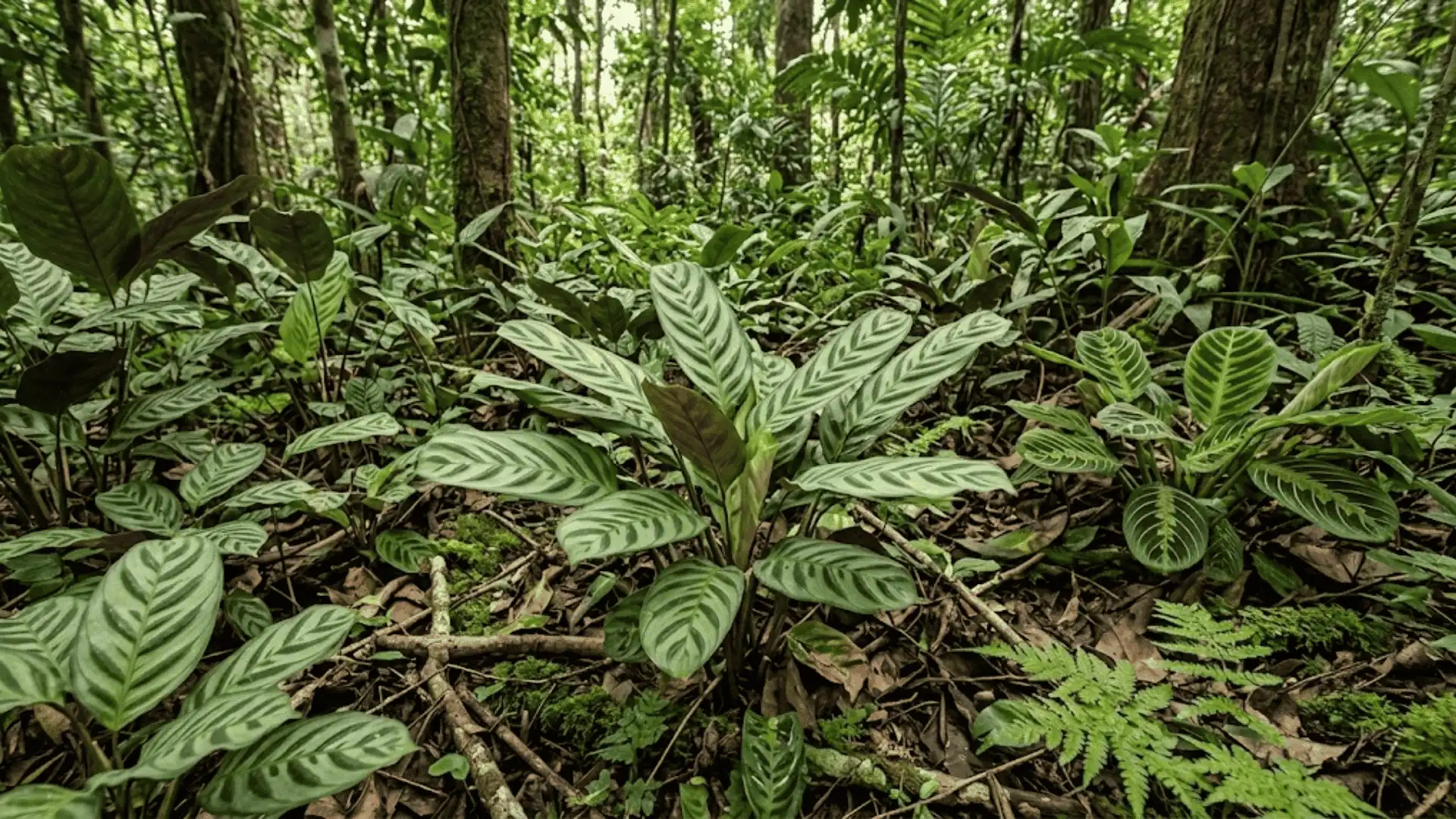
- Mature Size: Small to medium herb, around 1 to 2 feet
- Foliage/Flower Characteristics: Foliage and inflorescence closely resembling related Marantaceae genera
- Native Range or Habitat: Tropical Central or South America
- Houseplant Relevance: Primarily botanical
The species name marantina nods to its close resemblance to other members of the wider Marantaceae family, including the closely related Maranta.
Its flower and leaf characteristics sit well within the expected genus range, without a single dramatic feature separating it from its neighbors.
Its native habitat mirrors the humid, shaded forest-floor conditions found throughout this section of the list, and cultivation records remain nonexistent.
33. Calathea lutea
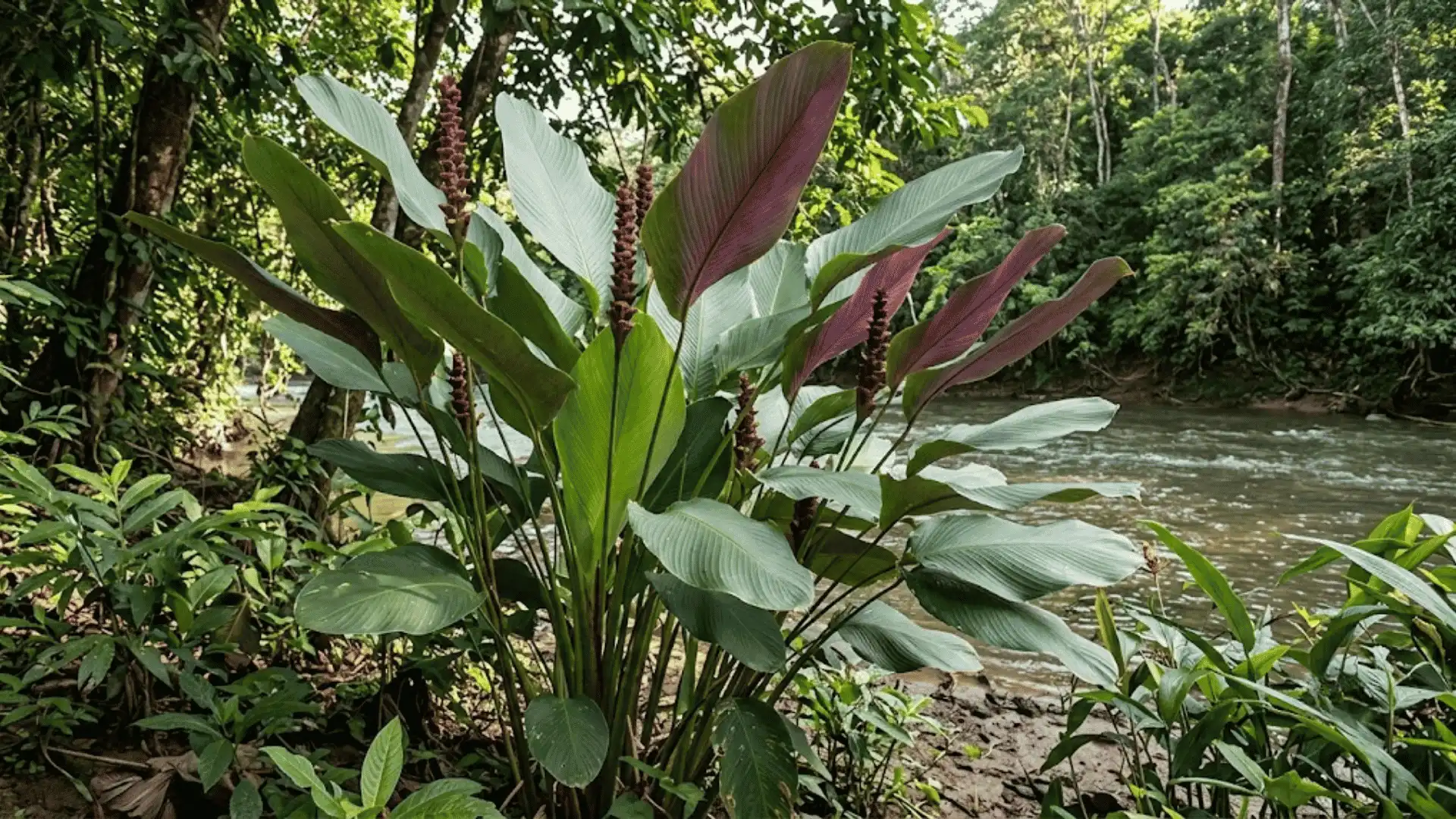
Calathea lutea, sometimes called cigar plant or cigar calathea, is one of the most recognizable true Calathea species left standing after the Goeppertia split.
- Mature Size: Large, upright herb, often 6 to 10 feet tall in outdoor tropical conditions
- Foliage/Flower Characteristics: Huge, paddle-shaped leaves resembling banana foliage, silvery green above and purple to burgundy underneath, with cigar-shaped inflorescences of overlapping brown bracts
- Native Range or Habitat: Southern Mexico through Central America and into tropical South America, in humid forests, riverbanks, and swampy lowland zones
- Houseplant Relevance: Uncommon indoors, valued outdoors in tropical landscapes
Calathea lutea is a perennial, rhizomatous herb that forms dense clumps and stands out for its large, tropical-looking leaves and elegant movement.
Its huge, paddle-shaped leaves resemble those of banana plants, silvery green to olive above and strikingly purple or burgundy underneath.
Its floral spike is composed of leathery, overlapping bracts in shades of brown to reddish brown, which give the plant its cigar reference. It is used outdoors as a bold, architectural tropical landscape plant.
32. Calathea latrinotecta
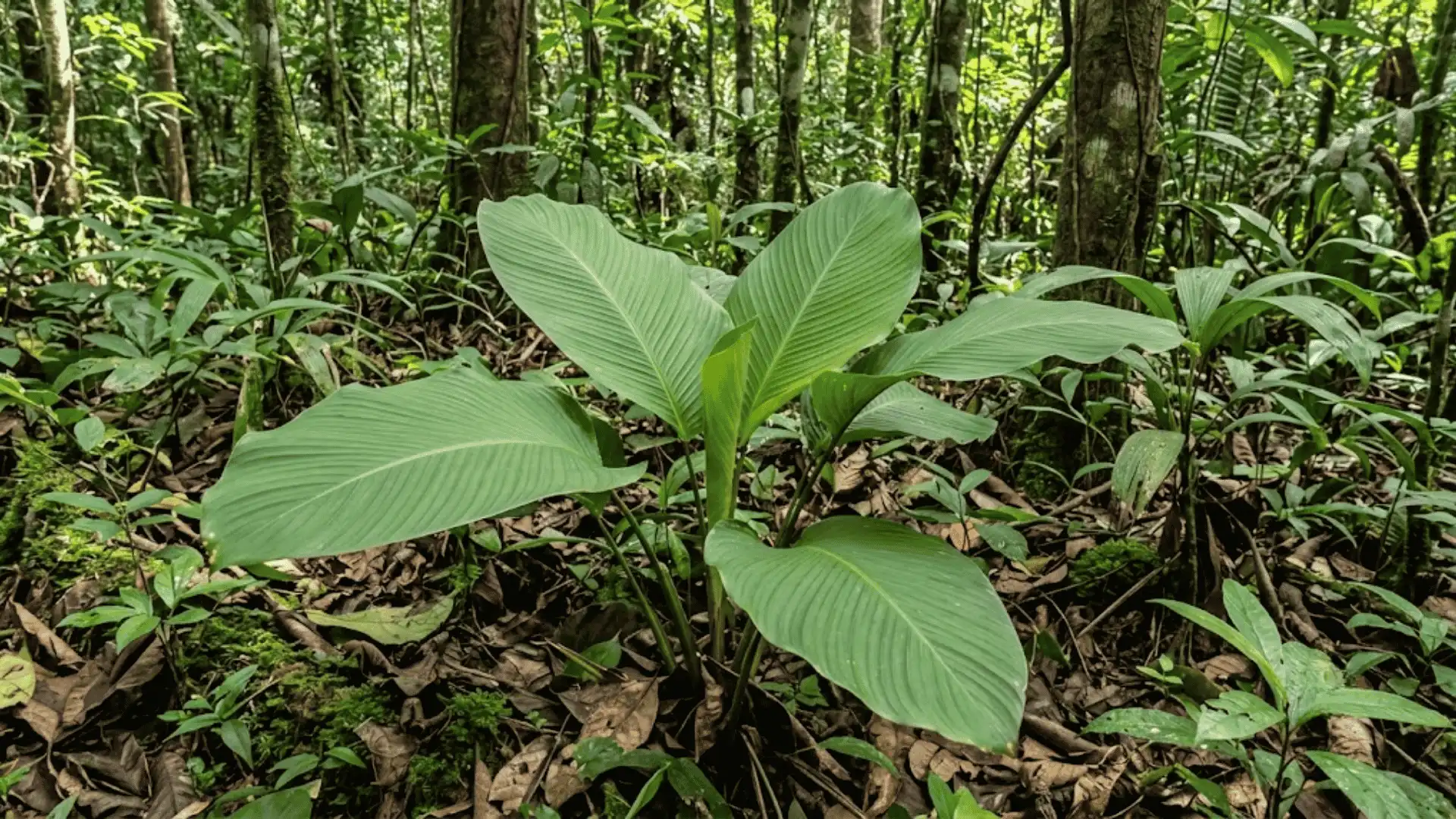
- Mature Size: Small to medium herb, roughly 1 to 2 feet
- Foliage/Flower Characteristics: Standard genus foliage, distinguished by fine botanical detail rather than visible pattern
- Native Range or Habitat: Tropical South America
- Houseplant Relevance: Primarily botanical
Calathea latrinotecta belongs firmly to the quieter end of the genus, identified through detailed botanical characteristics rather than any striking foliage pattern.
It occupies humid forest habitat typical of the region and grows as a low, clumping herb.
No commercial or horticultural presence exists for this species, and identification in the field relies on close comparison with closely related plants rather than obvious visual cues.
31. Calathea lateralis
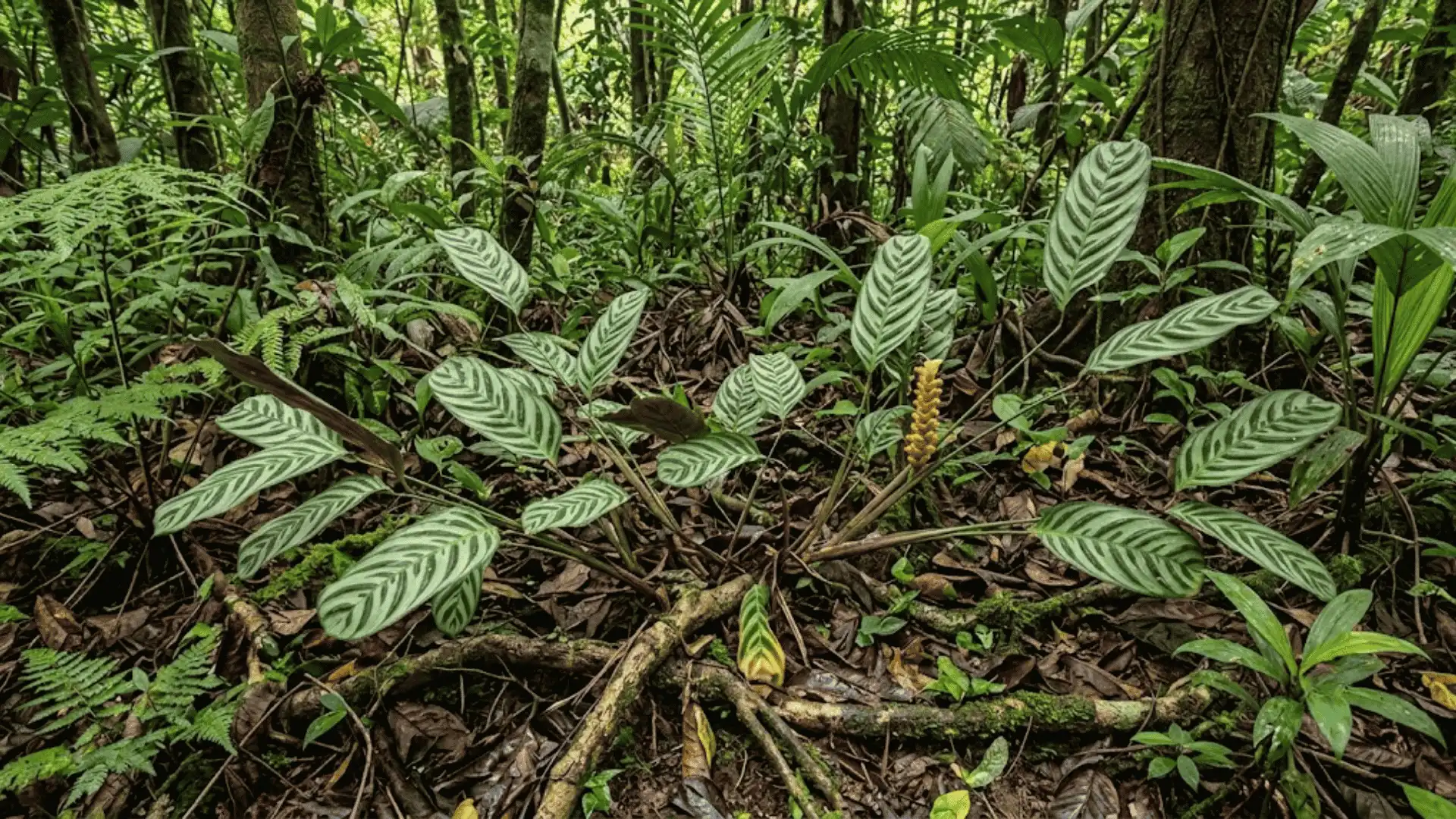
- Mature Size: Small to medium herb, around 1 to 2 feet
- Foliage/Flower Characteristics: Leaf characteristics referencing a lateral or sideways growth structure
- Native Range or Habitat: Tropical Central or South America
- Houseplant Relevance: Primarily botanical
The name lateralis points to a sideways-oriented growth feature, likely in how leaves or flowering stems emerge from the plant’s base.
It maintains the same low, clumping growth habit as most of its close relatives.
Geographic distribution appears limited, and the species has no history of cultivation. It remains one of many true Calathea documented almost entirely through scientific rather than horticultural sources.
30. Calathea lasiostachya
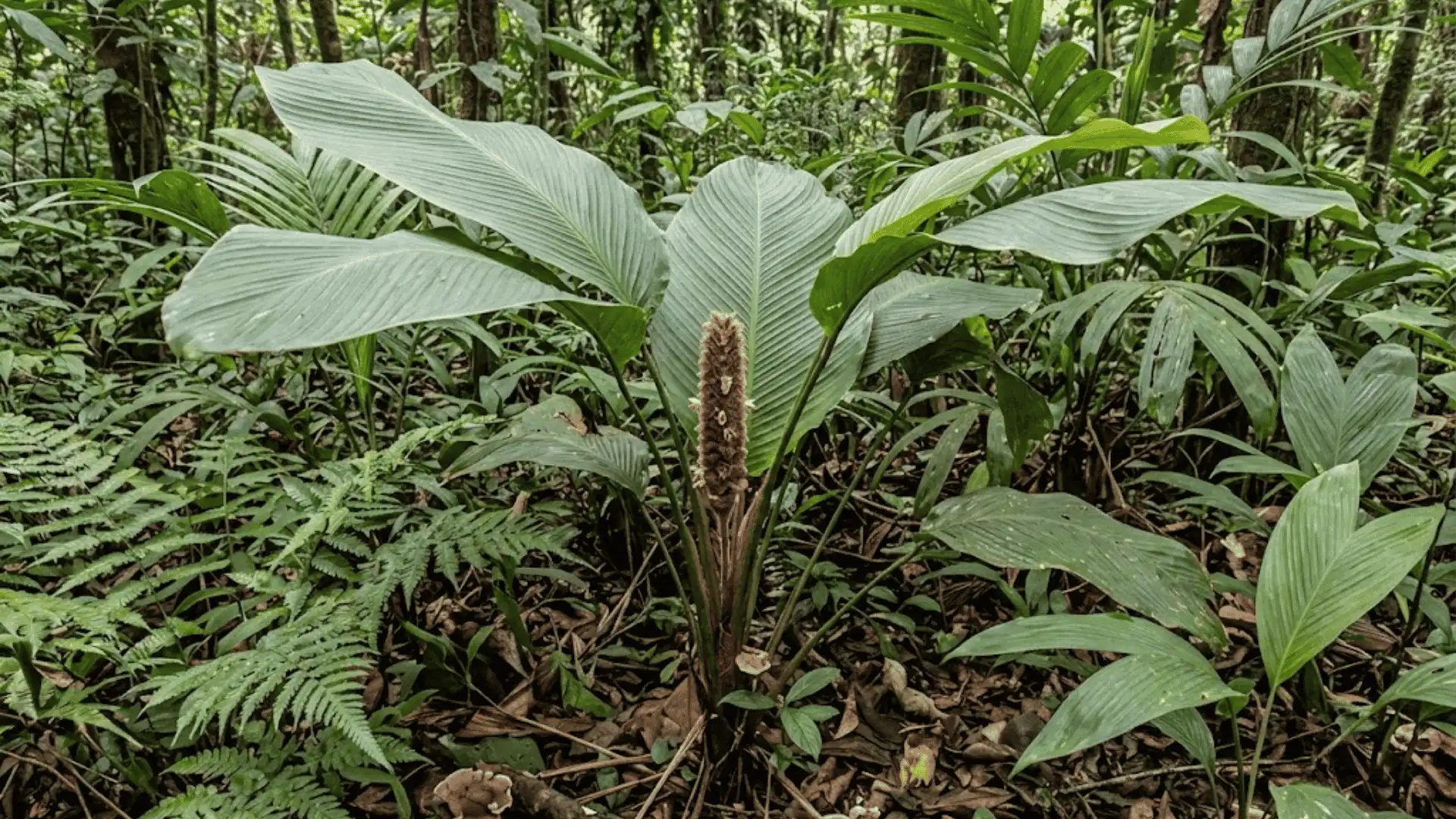
- Mature Size: Medium herb, roughly 2 to 3 feet
- Foliage/Flower Characteristics: Hairy or woolly textured flower spike, standard broad foliage
- Native Range or Habitat: Tropical Central or South America
- Houseplant Relevance: Primarily botanical
Lasiostachya translates to woolly spike, describing the fine hairs covering its inflorescence, a detail that sets it apart from the smoother-flowered species elsewhere on this list.
Its foliage stays close to the standard Marantaceae shape.
It grows in humid forest conditions typical of the genus and has no documented presence in cultivation, remaining known mainly through the botanical literature that first described it.
29. Calathea lanicaulis
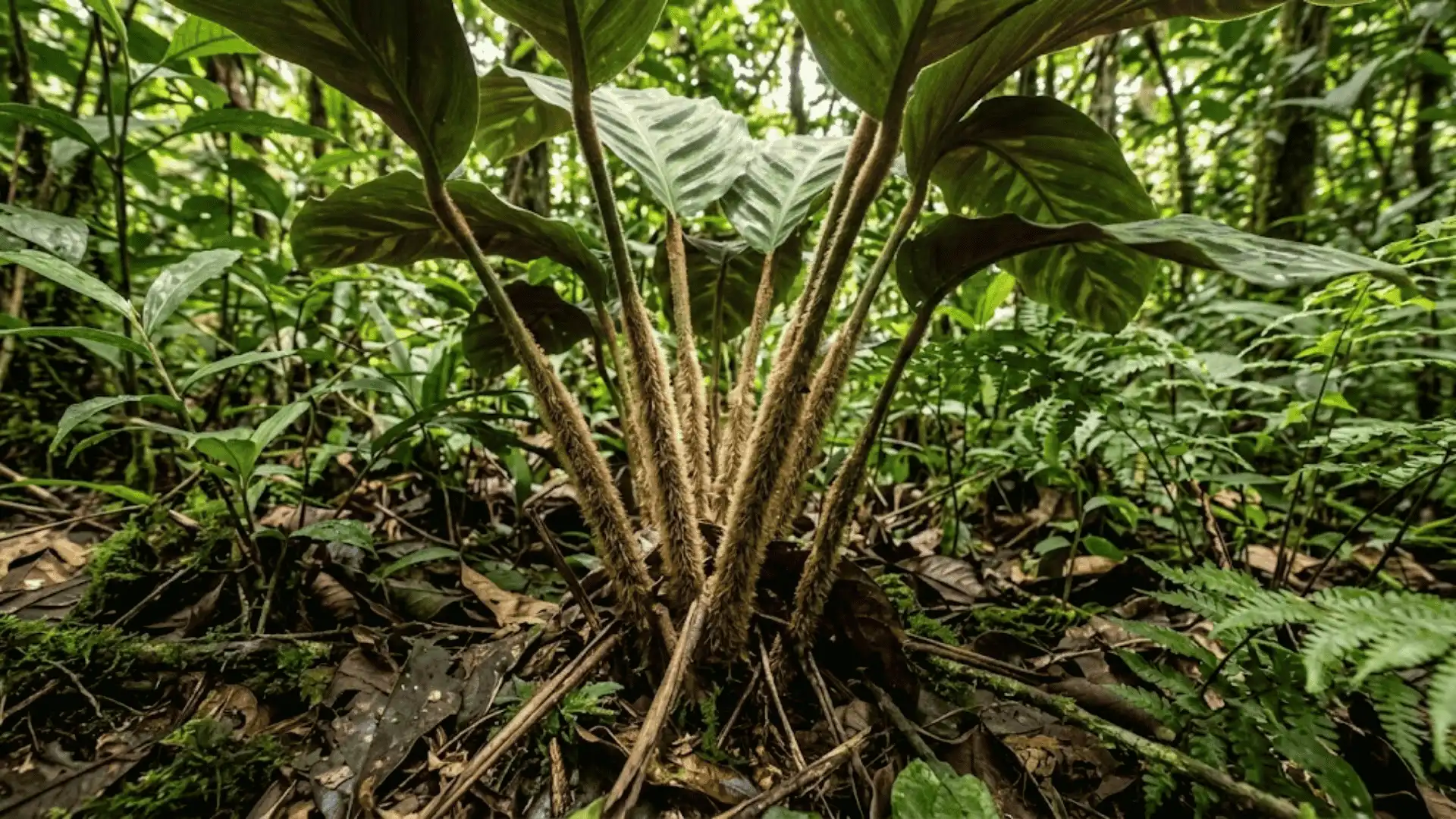
- Mature Size: Medium herb, around 2 to 3 feet
- Foliage/Flower Characteristics: Woolly textured stem, referenced in the species name, with typical genus foliage
- Native Range or Habitat: Colombia
- Houseplant Relevance: Primarily botanical
Documented within Colombian botanical catalogs, Calathea lanicaulis takes its name from a woolly or hairy stem texture rather than a leaf trait.
It grows in the same humid forest habitat shared by several regional relatives.
Availability outside scientific collections is non-existent, and the species has not been the subject of any cultivation trials, leaving its stem texture known mostly to specialists working directly with herbarium material.
28. Calathea lanibracteata
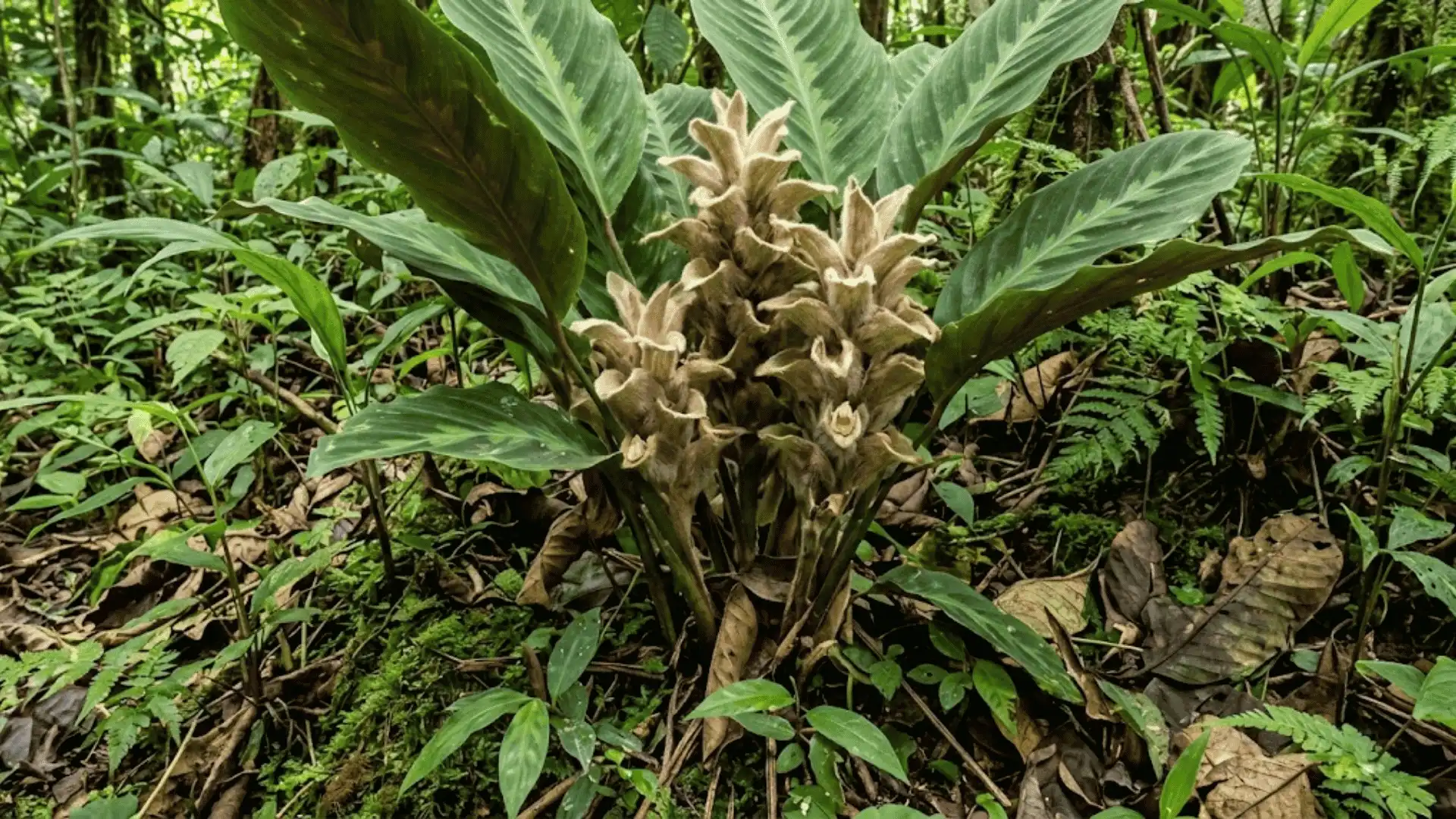
- Mature Size: Medium herb, roughly 2 to 3 feet
- Foliage/Flower Characteristics: Woolly textured floral bracts, standard genus foliage
- Native Range or Habitat: Tropical Central or South America
- Houseplant Relevance: Primarily botanical
Similar in naming logic to Calathea lanicaulis, this species instead carries its woolly texture on the floral bracts rather than the stem.
Identification relies on close inspection of these bract and flower characteristics rather than obvious leaf markings.
Its native habitat follows the humid, shaded forest pattern typical of the genus, and it has no documented cultivation history, remaining a name known primarily through taxonomic reference material.
27. Calathea jondule
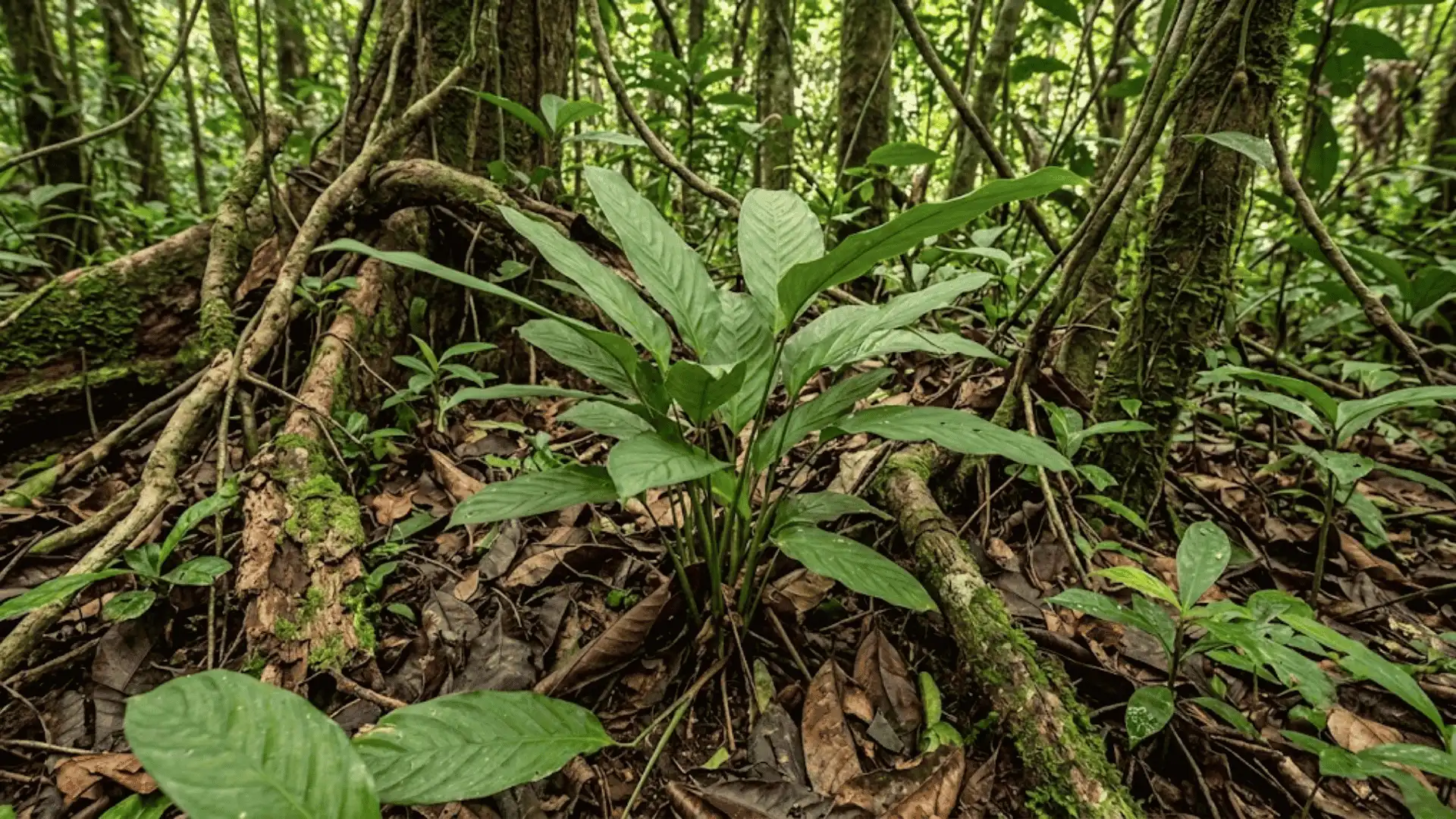
- Mature Size: Small to medium herb, around 1 to 2 feet
- Foliage/Flower Characteristics: Standard genus foliage, no distinguishing common feature widely documented
- Native Range or Habitat: Tropical South America
- Houseplant Relevance: Primarily botanical
Calathea jondule sits among the more obscure names on Kew’s accepted list, with limited published detail beyond its basic taxonomic placement. Its foliage and growth habit fall within the general range expected of the genus.
Native range extends across humid South American forest, though specific distribution data remains thin.
Cultivation status is effectively nonexistent, and the species has not appeared in any horticultural reference material found for this article.
26. Calathea ischnosiphonoides
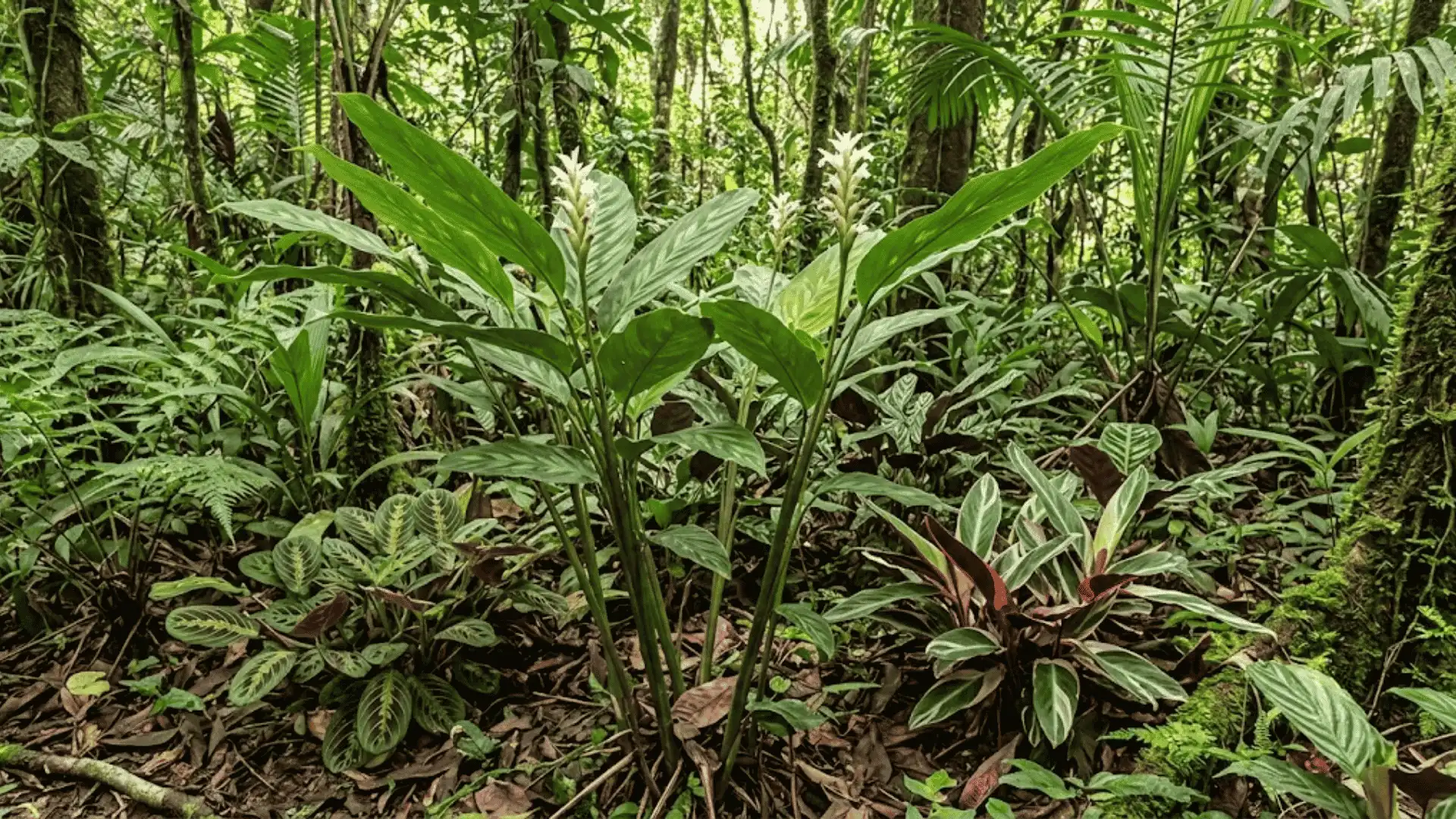
- Mature Size: Medium herb, roughly 2 to 3 feet
- Foliage/Flower Characteristics: Growth form resembling the related genus Ischnosiphon, referenced in the species name
- Native Range or Habitat: Tropical South America
- Houseplant Relevance: Primarily botanical
The lengthy species name references Ischnosiphon, another Marantaceae relative, pointing to a similar growth form or structural resemblance between the two.
This kind of cross-genus comparison is common in Marantaceae taxonomy, where many species share overlapping physical traits.
It grows in humid forest habitat and has no documented presence in cultivation, remaining identifiable mainly through close comparison with its named genus counterpart.
25. Calathea inscripta
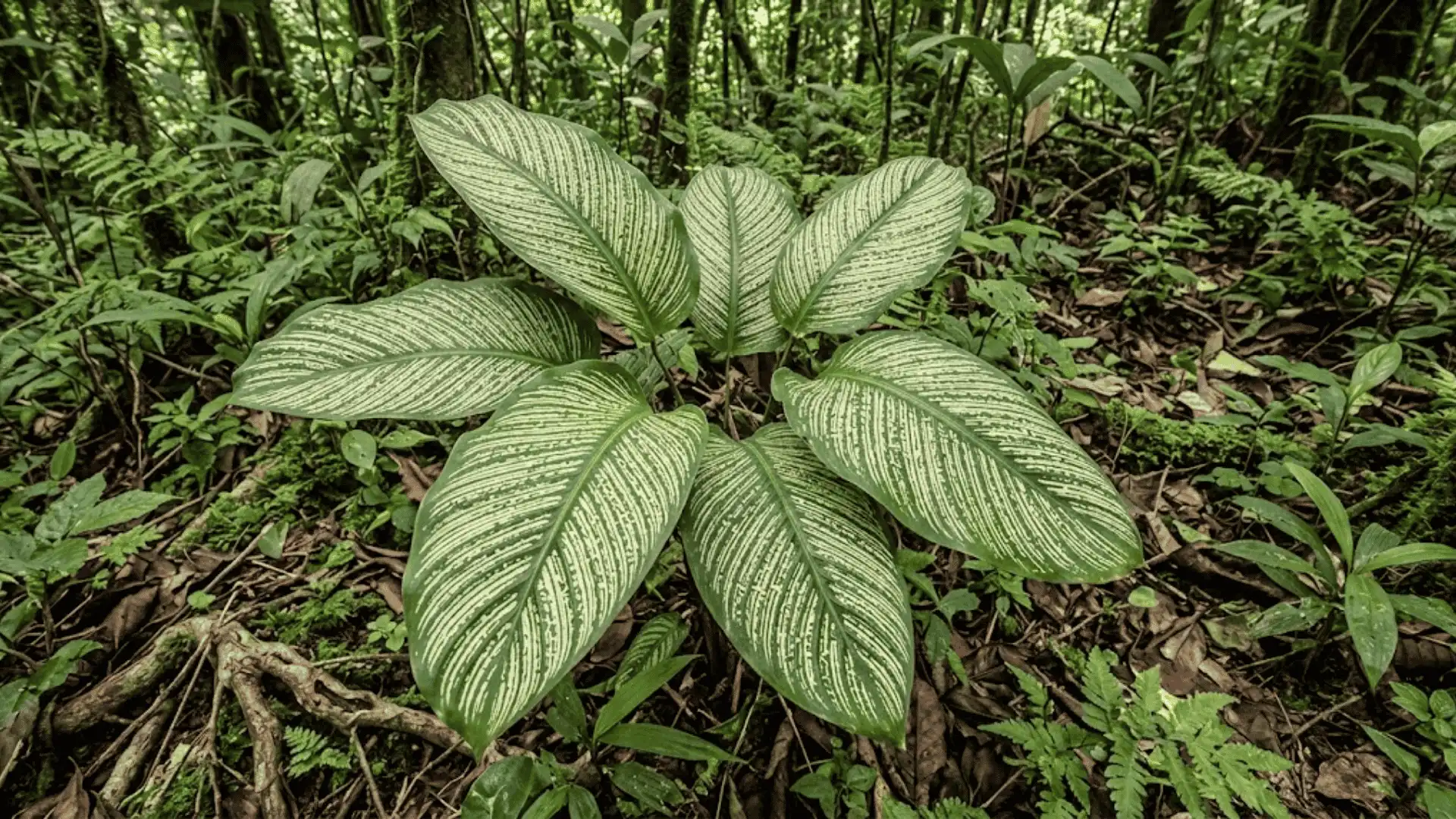
- Mature Size: Small to medium herb, around 1 to 2 feet
- Foliage/Flower Characteristics: Leaf markings resembling fine writing or inscription patterns
- Native Range or Habitat: Tropical Central or South America
- Houseplant Relevance: Primarily botanical
The name inscripta suggests leaf markings reminiscent of writing or inscription, a poetic touch among an otherwise plainly named group of species.
Botanical characteristics otherwise follow the standard genus form, with typical lance-shaped foliage and a modest flowering spike.
It grows in humid tropical forest and has not entered cultivation, leaving its inscribed leaf pattern a detail documented mainly in original botanical descriptions.
24. Calathea harlingii
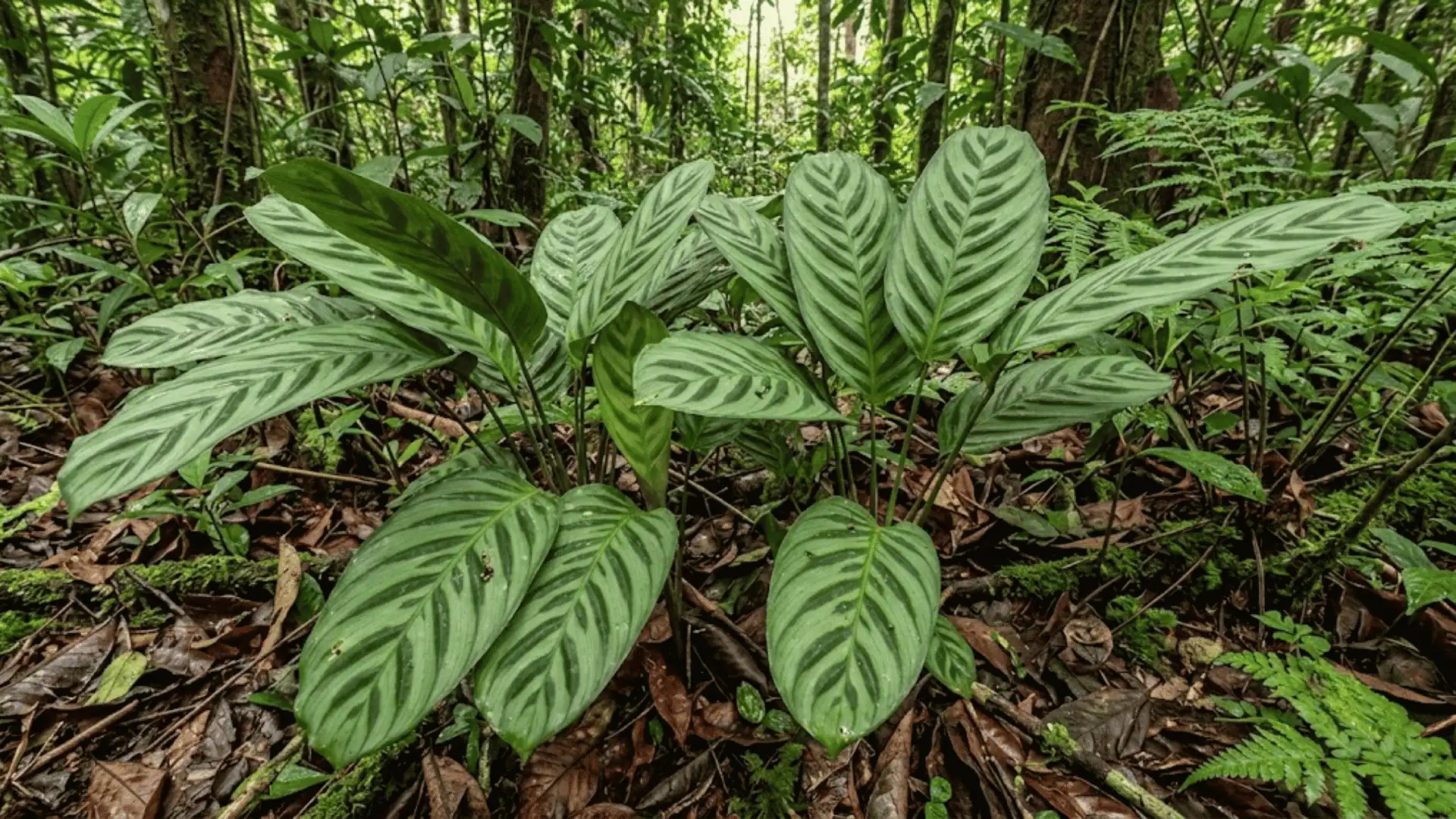
- Mature Size: Small to medium herb, roughly 1 to 2 feet
- Foliage/Flower Characteristics: Standard genus foliage, named for a botanical collector
- Native Range or Habitat: Tropical South America, likely Ecuador based on naming convention
- Houseplant Relevance: Primarily botanical
Named after a botanist associated with South American plant collection, Calathea harlingii follows the familiar naming pattern seen throughout this section of the list.
Its identification relies on close botanical comparison rather than a standout physical trait.
Habitat preference aligns with the humid, shaded forest conditions typical of the genus. No cultivation record exists for this species, keeping it firmly within scientific rather than horticultural circles.
23. Calathea hagbergii
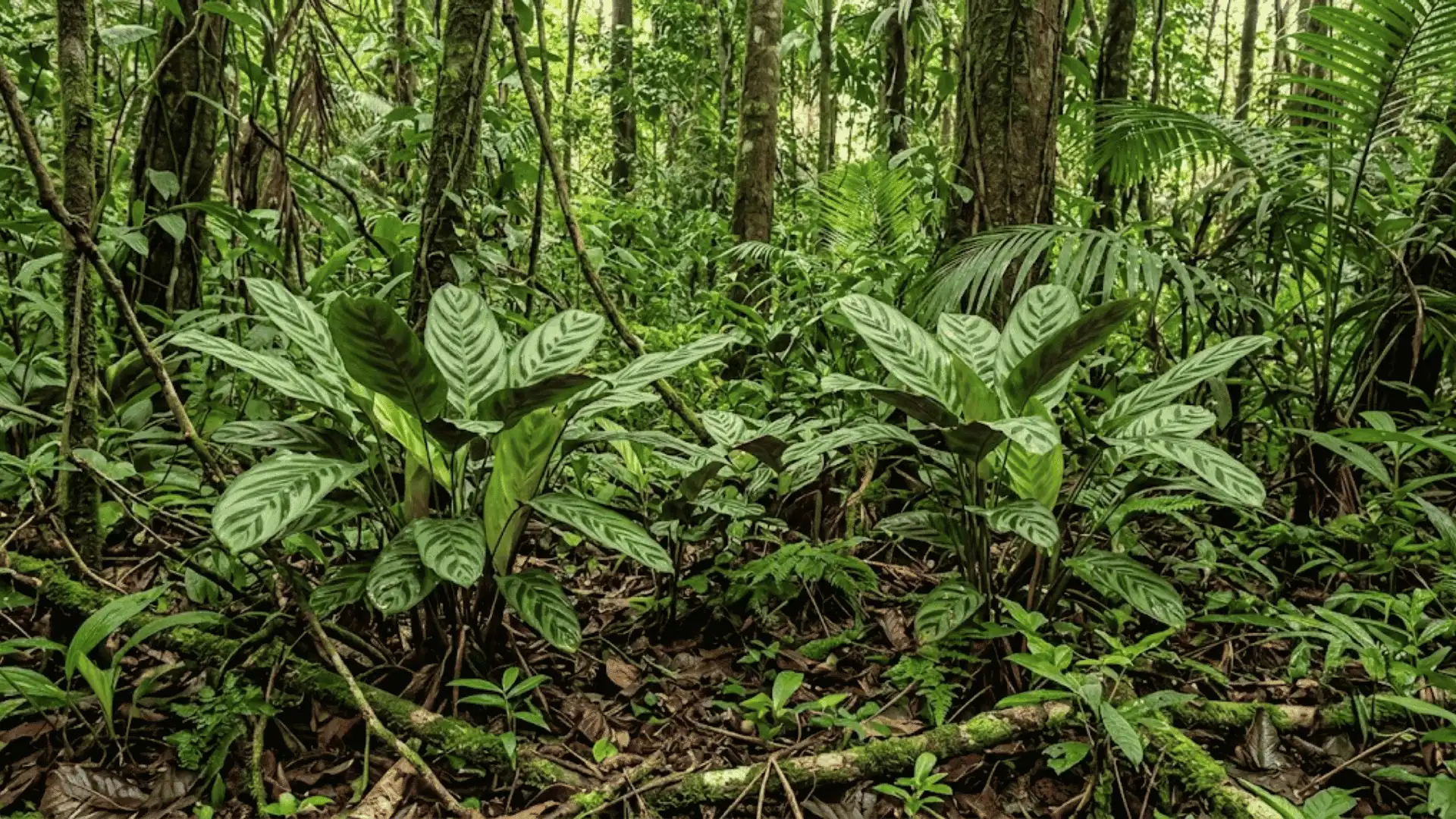
- Mature Size: Medium herb, around 2 to 3 feet
- Foliage/Flower Characteristics: Standard broad foliage typical of the genus
- Native Range or Habitat: Colombia
- Houseplant Relevance: Primarily botanical
Documented within Colombian flora catalogs, Calathea hagbergii shares its regional habitat with several other rarely known species on this list.
Its physical characteristics fall well within the general expectations for the genus, without a defining trait that separates it visually from its neighbors.
Cultivation has never taken hold outside its native range, and it remains a species known mostly through regional botanical survey work.
22. Calathea guzmanioides
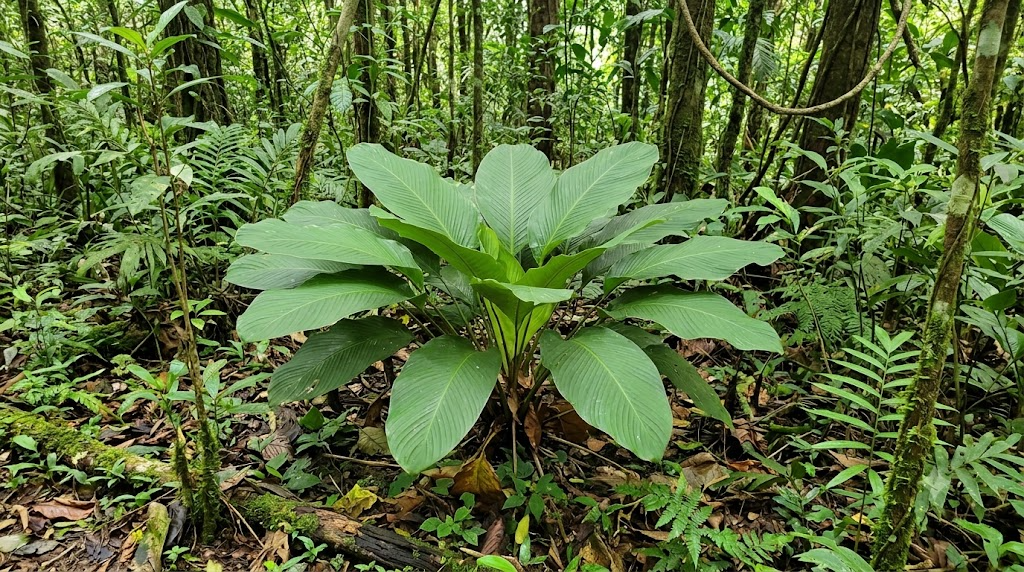
- Mature Size: Small to medium herb, roughly 1 to 2 feet
- Foliage/Flower Characteristics: Foliage and floral form resembling the bromeliad genus Guzmania, referenced in the name
- Native Range or Habitat: Tropical Central or South America
- Houseplant Relevance: Primarily botanical
The species name guzmanioides suggests a visual resemblance to Guzmania, a well-known bromeliad genus, likely in its rosette shape or flowering structure.
This kind of cross-family comparison is unusual among Calathea names and hints at an interesting growth form worth further study.
Rarity here reflects limited collection history rather than any documented cultivation difficulty, since the species has simply never been grown outside its native habitat.
21. Calathea grandifolia
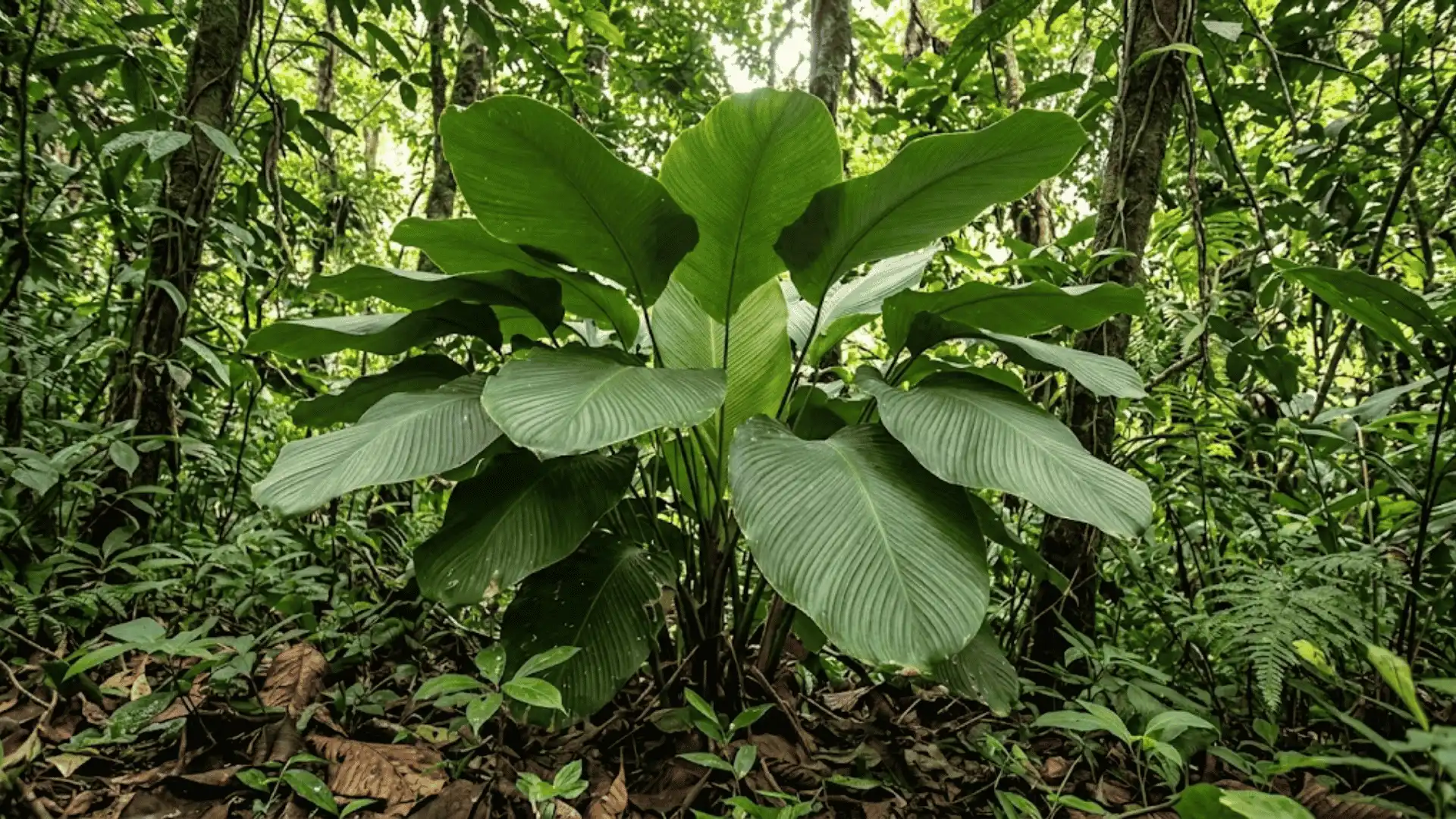
- Mature Size: Large herb, often 3 to 5 feet with correspondingly large leaves
- Foliage/Flower Characteristics: Notably large, broad leaves relative to other Calathea species
- Native Range or Habitat: Tropical Central and South America
- Houseplant Relevance: Primarily botanical
As its name suggests, Calathea grandifolia stands out for the sheer size of its leaves compared to smaller understory relatives, giving it a more imposing presence in native forest habitat.
This scale is its main distinguishing feature, since its overall growth habit and inflorescence remain typical of the genus.
Despite the visual impact of its foliage, it has not entered cultivation, and detailed care information is limited to botanical description.
20. Calathea gentryi
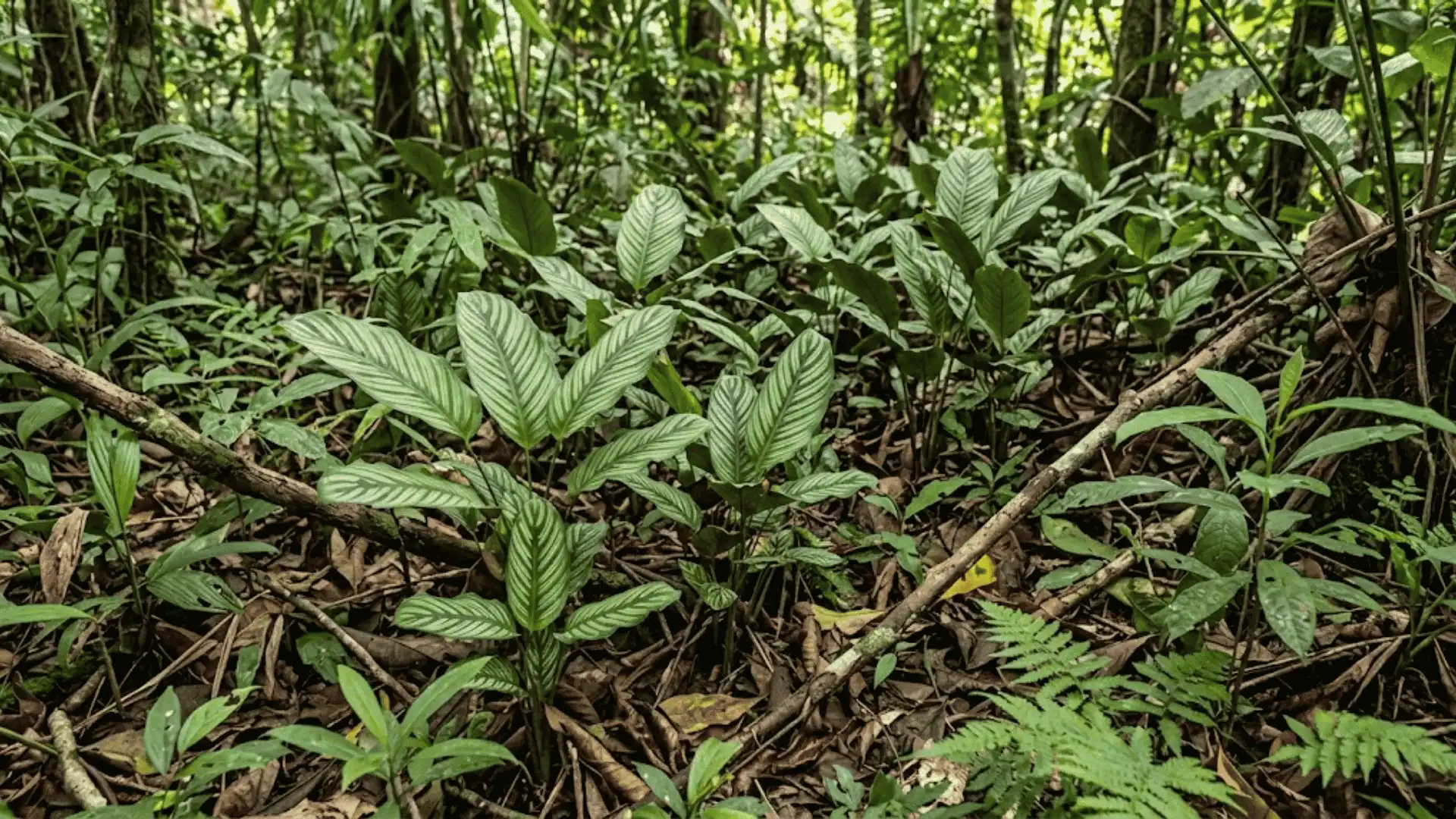
- Mature Size: Small to medium herb, around 1 to 2 feet
- Foliage/Flower Characteristics: Standard genus foliage, named for a well-known botanical collector
- Native Range or Habitat: Tropical South America
- Houseplant Relevance: Primarily botanical
Calathea gentryi honors a botanist whose name appears across numerous South American plant species, reflecting extensive historical fieldwork in the region.
Its physical form follows the general Marantaceae pattern without a single defining ornamental trait. Habitat preference leans toward humid, shaded forest floor conditions.
Availability remains limited entirely to herbarium and scientific collections, with no documented attempt at cultivation on record.
19. Calathea galdamesiana
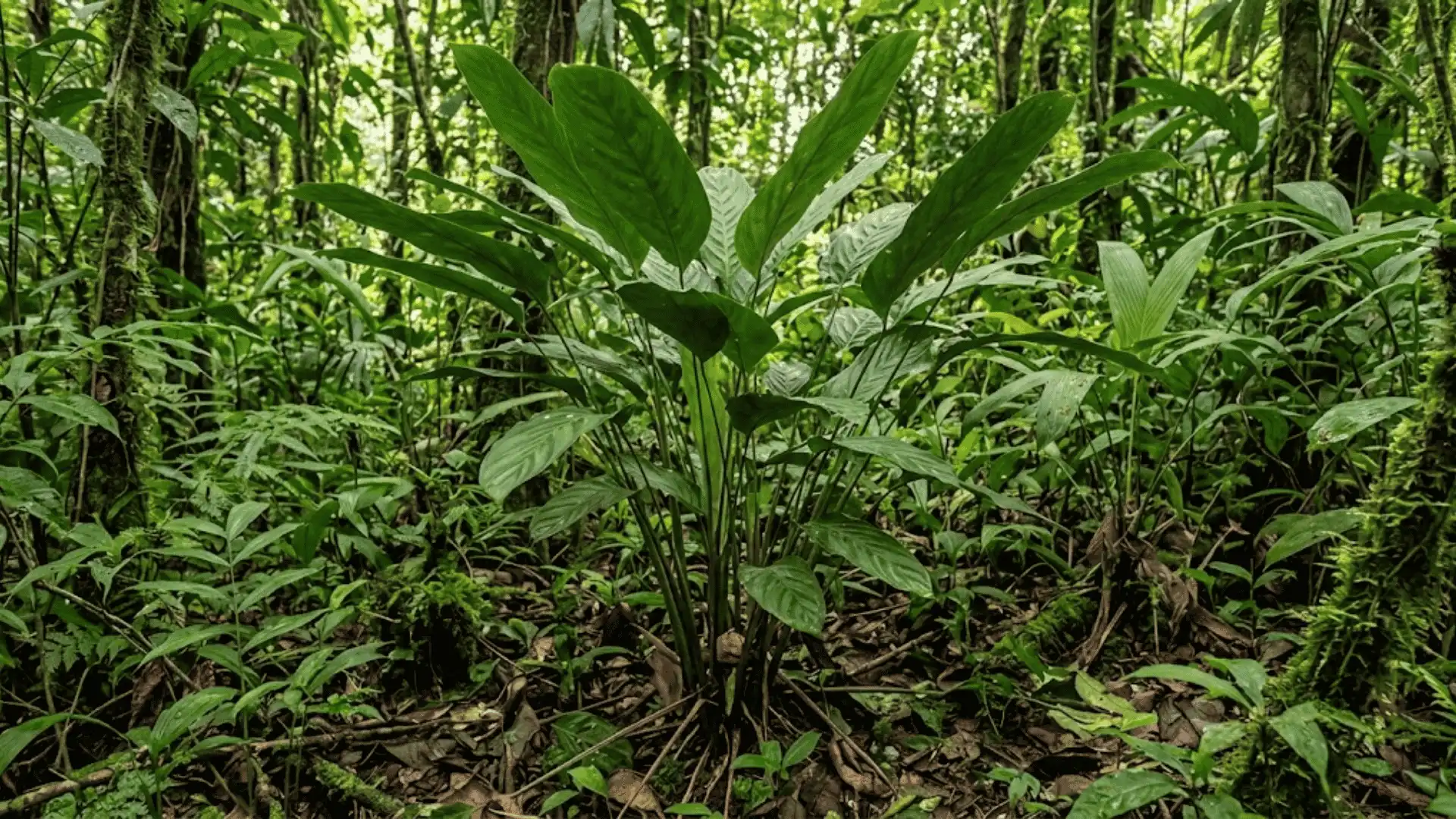
- Mature Size: Small to medium herb, roughly 1 to 2 feet
- Foliage/Flower Characteristics: Standard genus foliage, no widely documented distinguishing pattern
- Native Range or Habitat: Tropical Central America
- Houseplant Relevance: Primarily botanical
Calathea galdamesiana carries a personal name honoring an individual connected to its botanical documentation, in keeping with the naming pattern found throughout much of this list.
Leaf characteristics stay within the expected range for the genus. Native range is documented within Central American forest habitat, though detailed distribution maps are limited.
Cultivation status remains entirely undeveloped, with the species existing only in scientific reference material.
18. Calathea fredii
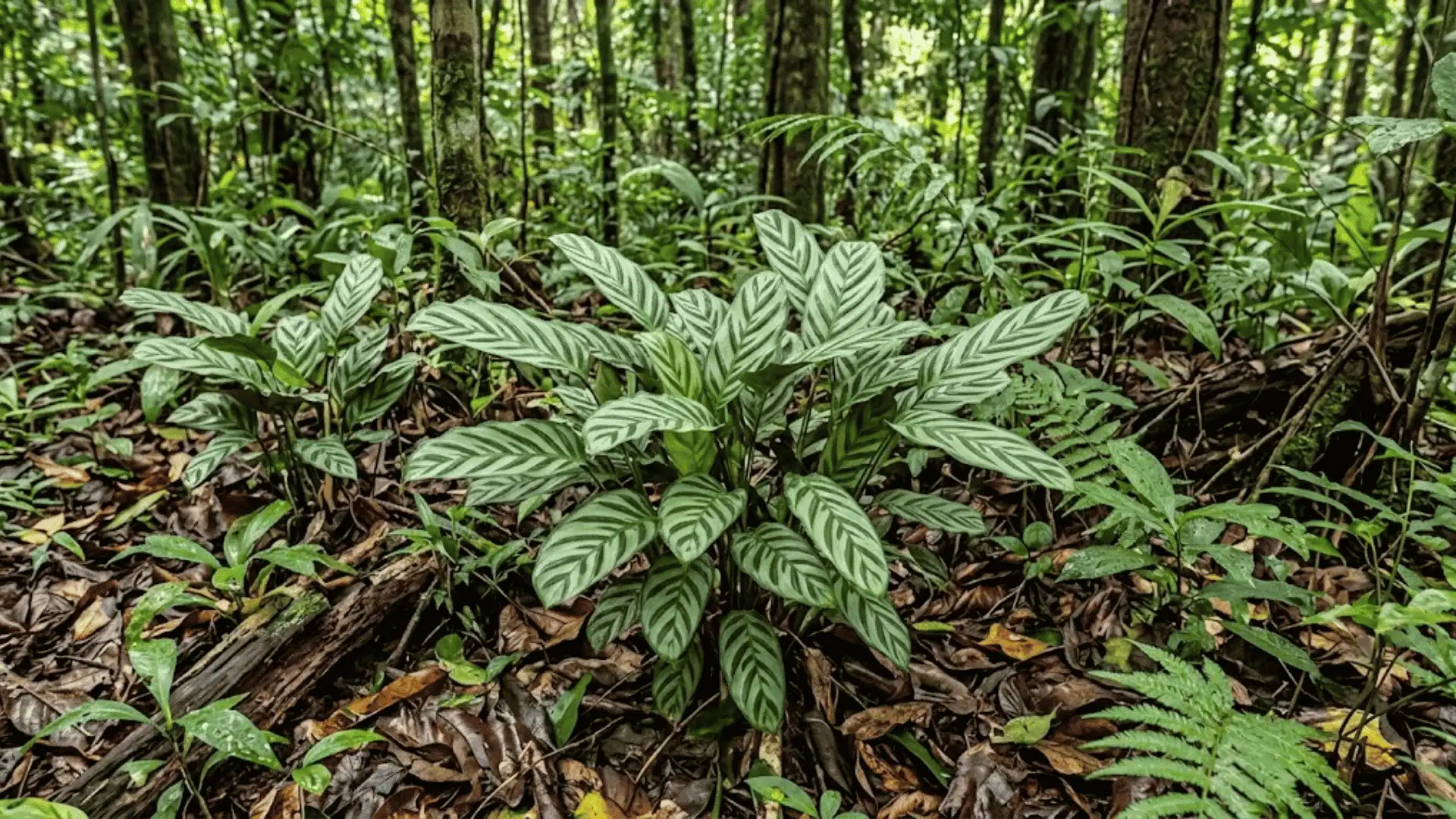
- Mature Size: Small to medium herb, around 1 to 2 feet
- Foliage/Flower Characteristics: Standard genus foliage, named for an individual collector
- Native Range or Habitat: Tropical Central or South America
- Houseplant Relevance: Primarily botanical
Another personally named species, Calathea fredii follows the identification pattern typical of the genus’s more obscure members, relying on close botanical comparison rather than a striking visual trait.
Its habitat mirrors the humid, shaded forest floor conditions found across this section of the list.
No distinguishing characteristics have driven it toward wider recognition, and it has no documented cultivation history.
17. Calathea fredgandersii
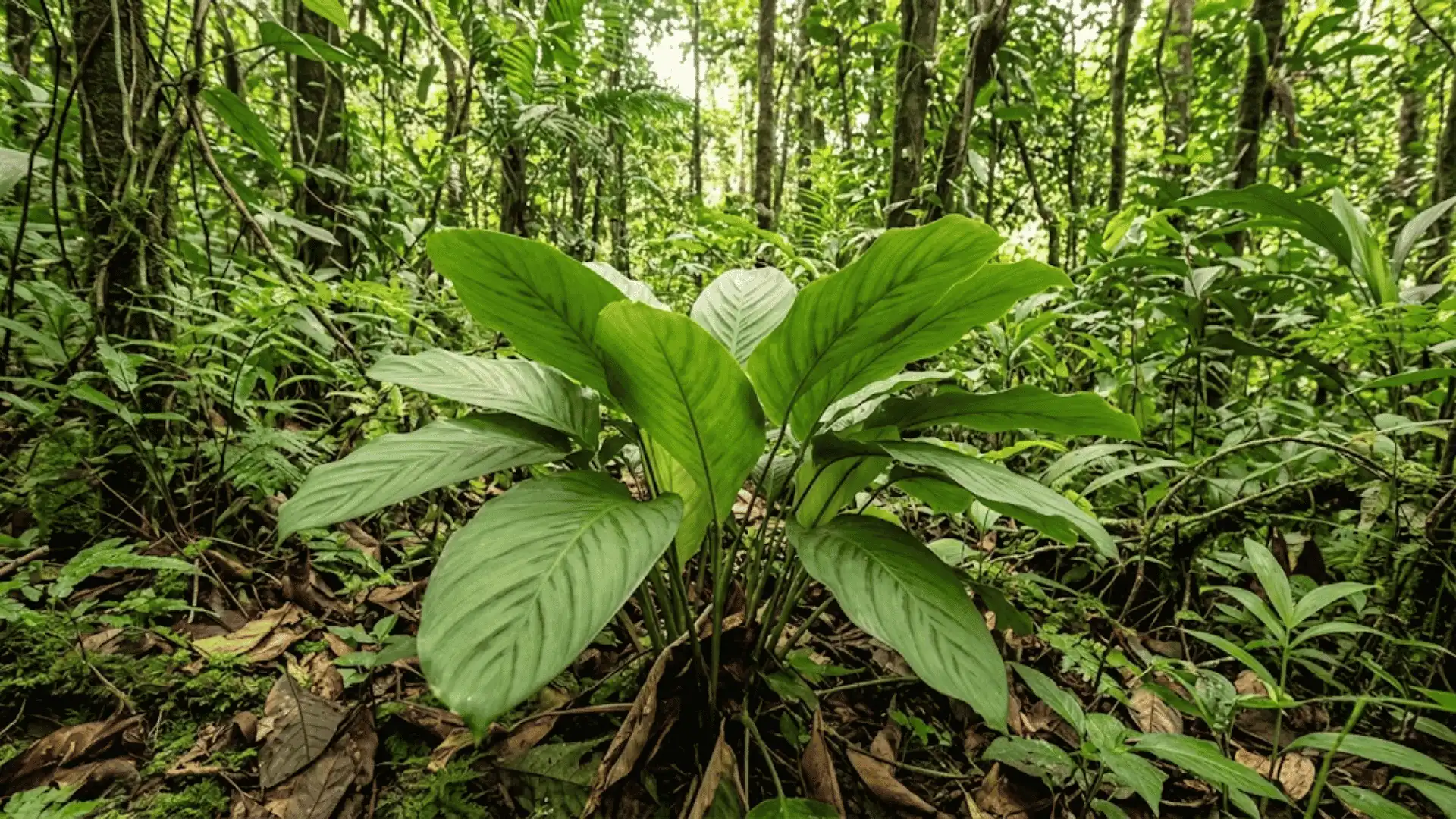
- Mature Size: Small to medium herb, roughly 1 to 2 feet
- Foliage/Flower Characteristics: Standard genus foliage
- Native Range or Habitat: Tropical Central or South America
- Houseplant Relevance: Primarily botanical
Calathea fredgandersii shares a naming root with Calathea fredii, both honoring individuals connected to botanical fieldwork in the region.
Botanical characteristics fall within the typical range for the genus, without a defining ornamental feature.
Rarity reflects a narrow known distribution rather than any specific growing difficulty, since the species has never been collected for cultivation purposes outside limited scientific expeditions.
16. Calathea erythrolepis
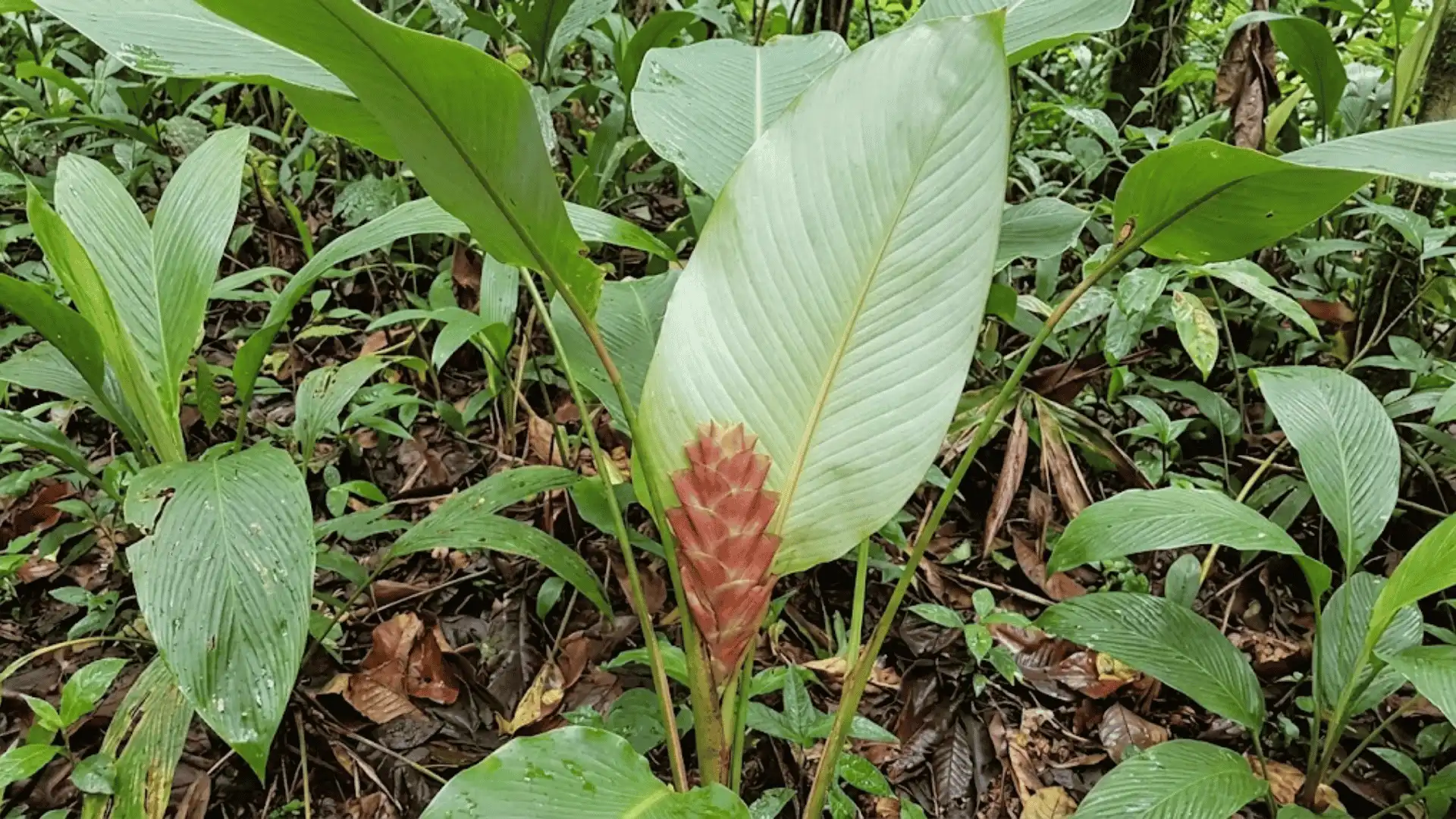
- Mature Size: Medium herb, roughly 2 to 3 feet
- Foliage/Flower Characteristics: Reddish-toned scales or leaf underside coloring, referenced in the species name
- Native Range or Habitat: Tropical South America
- Houseplant Relevance: Primarily botanical
The name erythrolepis translates to red scale, pointing to reddish coloring on the leaf underside or bract scales, a trait shared conceptually with more popular red-backed Marantaceae relatives (now classified under Goeppertia).
Its inflorescence follows the standard bracted spike form of the family.
It grows in humid South American forest habitat and has not been introduced to cultivation, so its reddish coloring is known mainly from herbarium specimens.
15. Calathea crotalifera
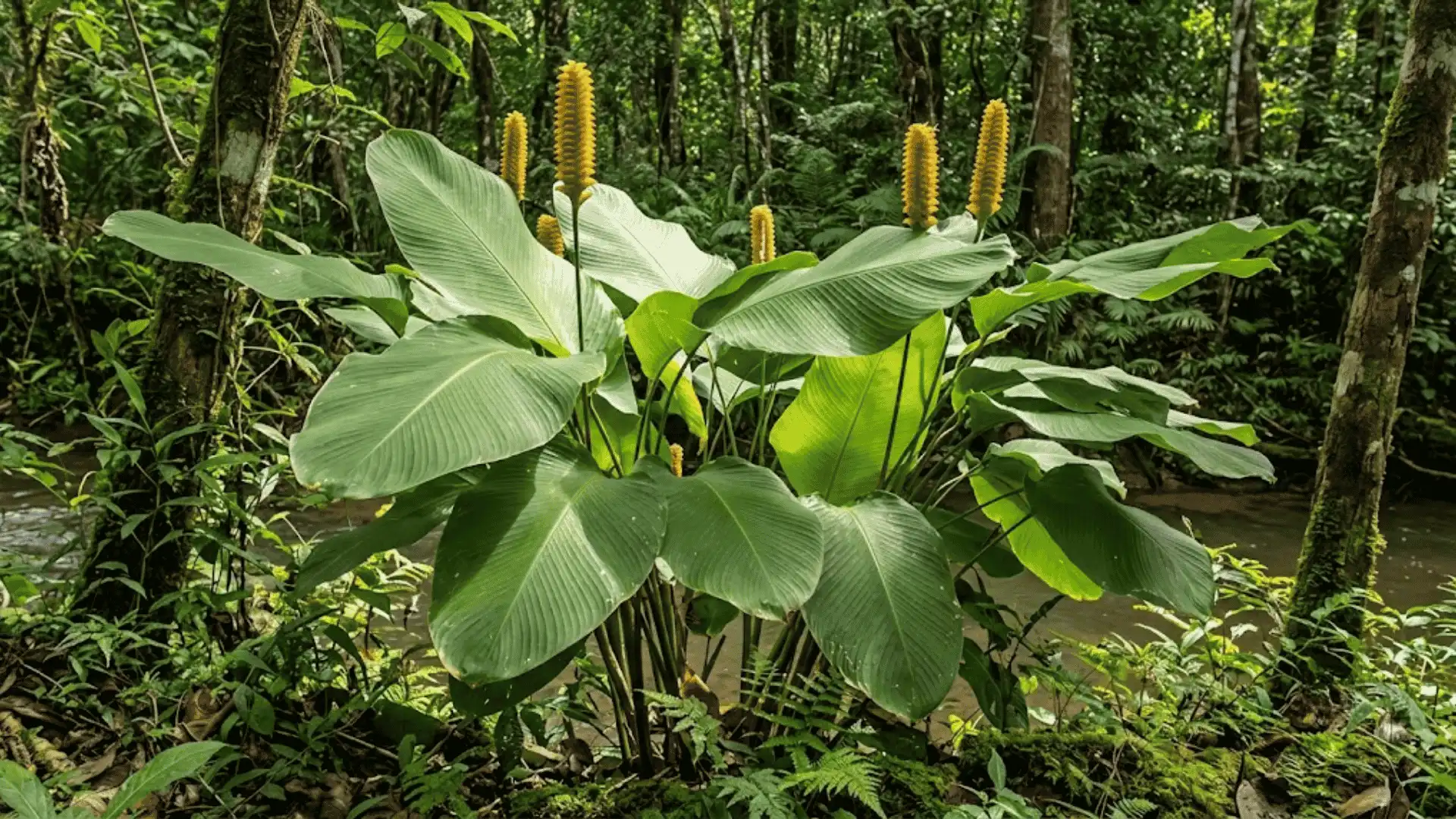
- Mature Size: Large, upright herb, reaching up to 10 feet in ideal tropical conditions
- Foliage/Flower Characteristics: Broad, banana-like leaves with a tall, rattlesnake-tail-shaped inflorescence of stacked yellow bracts
- Native Range or Habitat: Central Mexico through Central America and into tropical South America, in humid forest along waterways
- Houseplant Relevance: Uncommon indoors, popular as a tropical landscape and cut-flower plant
Calathea crotalifera is native to central and southern Mexico, Central America, and tropical South America, typically found in wet tropical areas.
It is a rhizomatous perennial with banana-like leaves reaching up to 3 meters, and its yellow, sometimes pink, flowers grow in spikes up to 40 centimeters high, each subtended by a saucer-like yellow bract.
The unusual inflorescence stands upright and is shaped like a rattlesnake’s rattle, consisting of stacked leathery bracts with small yellow or orange flowers peeking out at the edges.
Despite sharing the rattlesnake plant nickname with a far more famous Goeppertia relative, Calathea crotalifera stays a true Calathea and stands out among the accepted species for its dramatic, long-lasting flower spikes.
14. Calathea croatii
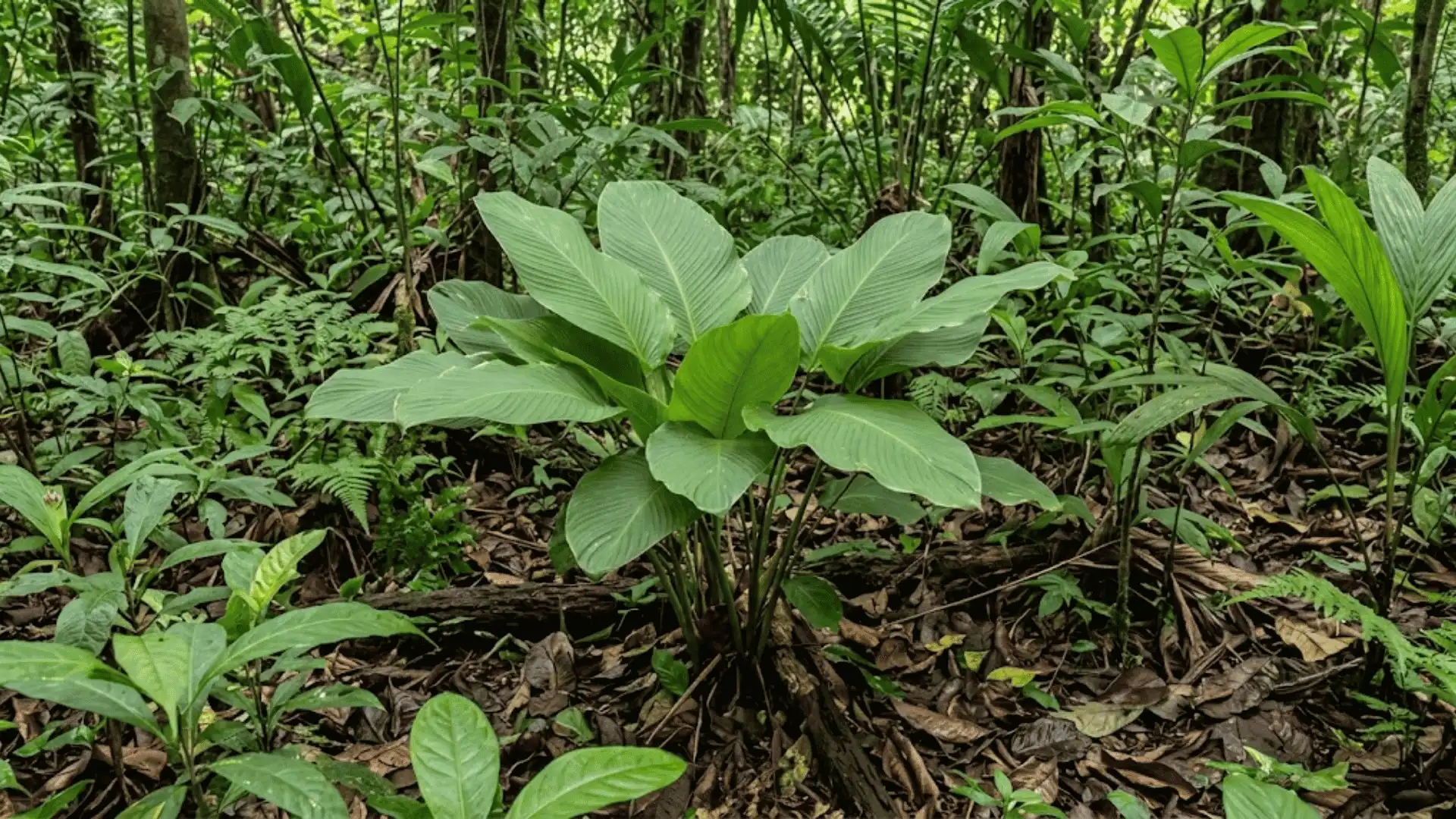
- Mature Size: Small to medium herb, around 1 to 2 feet
- Foliage/Flower Characteristics: Standard genus foliage, named for a botanical collector
- Native Range or Habitat: Tropical Central or South America
- Houseplant Relevance: Primarily botanical
Calathea croatii honors a botanist who documented Central and South American flora, continuing a naming tradition common throughout the genus’s less familiar species.
Its physical form follows the typical Marantaceae pattern, without a defining trait that would make it stand out visually.
Availability remains entirely restricted to scientific collections, and no cultivation record exists for this species outside its native forest habitat.
13. Calathea congesta
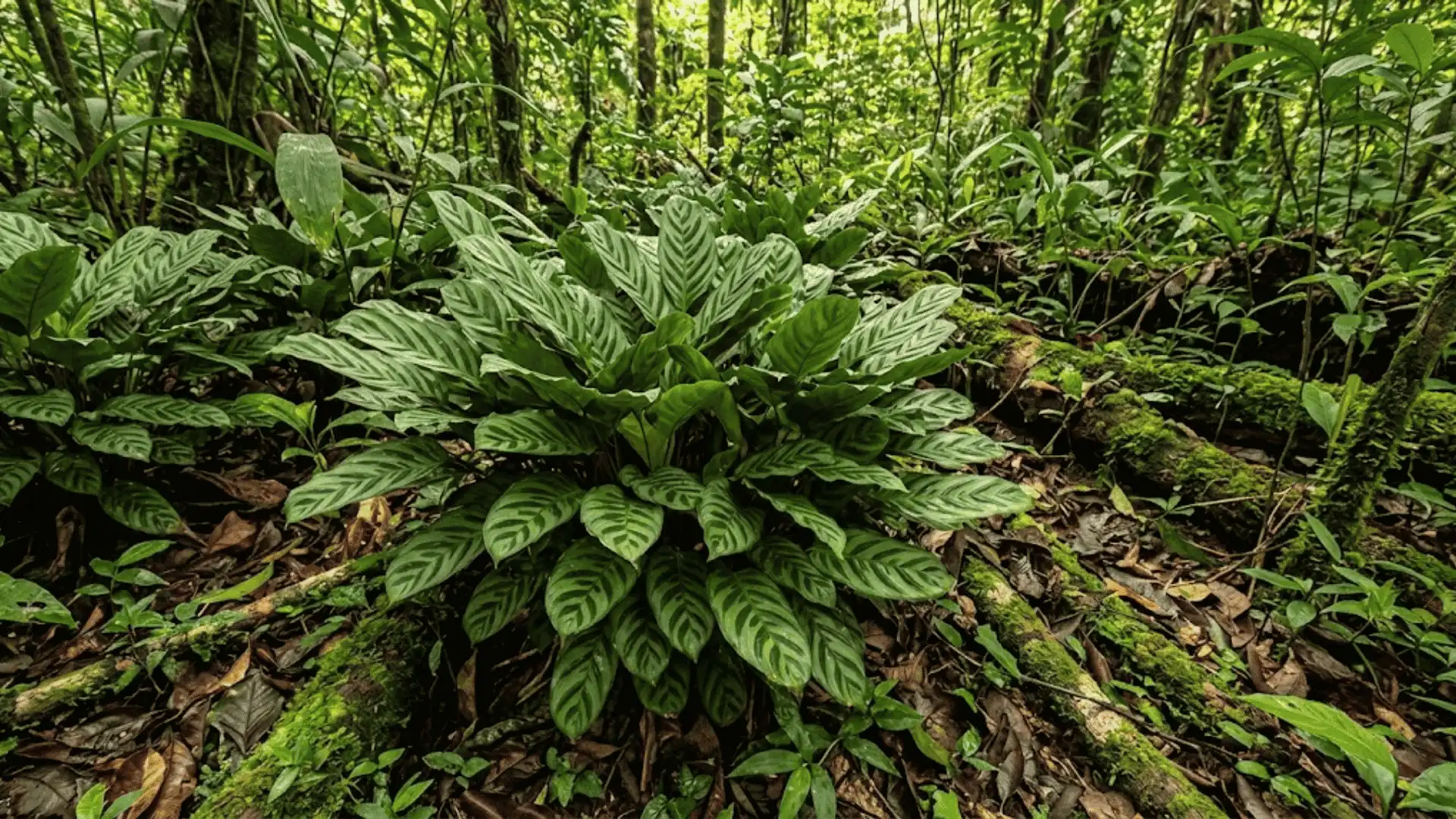
- Mature Size: Small to medium herb, roughly 1 to 2 feet
- Foliage/Flower Characteristics: Compact, densely clustered growth habit referenced in the species name
- Native Range or Habitat: Tropical Central or South America
- Houseplant Relevance: Primarily botanical
The name congesta refers to a dense, tightly clustered growth habit, distinguishing this species structurally from more loosely spreading relatives. Its foliage otherwise stays within the standard genus range.
Its native distribution spans humid tropical forest habitats typical of the group.
No cultivation history exists for the species, and it remains best known through its compact growth pattern documented in original botanical descriptions rather than through any horticultural presence.
12. Calathea confusa
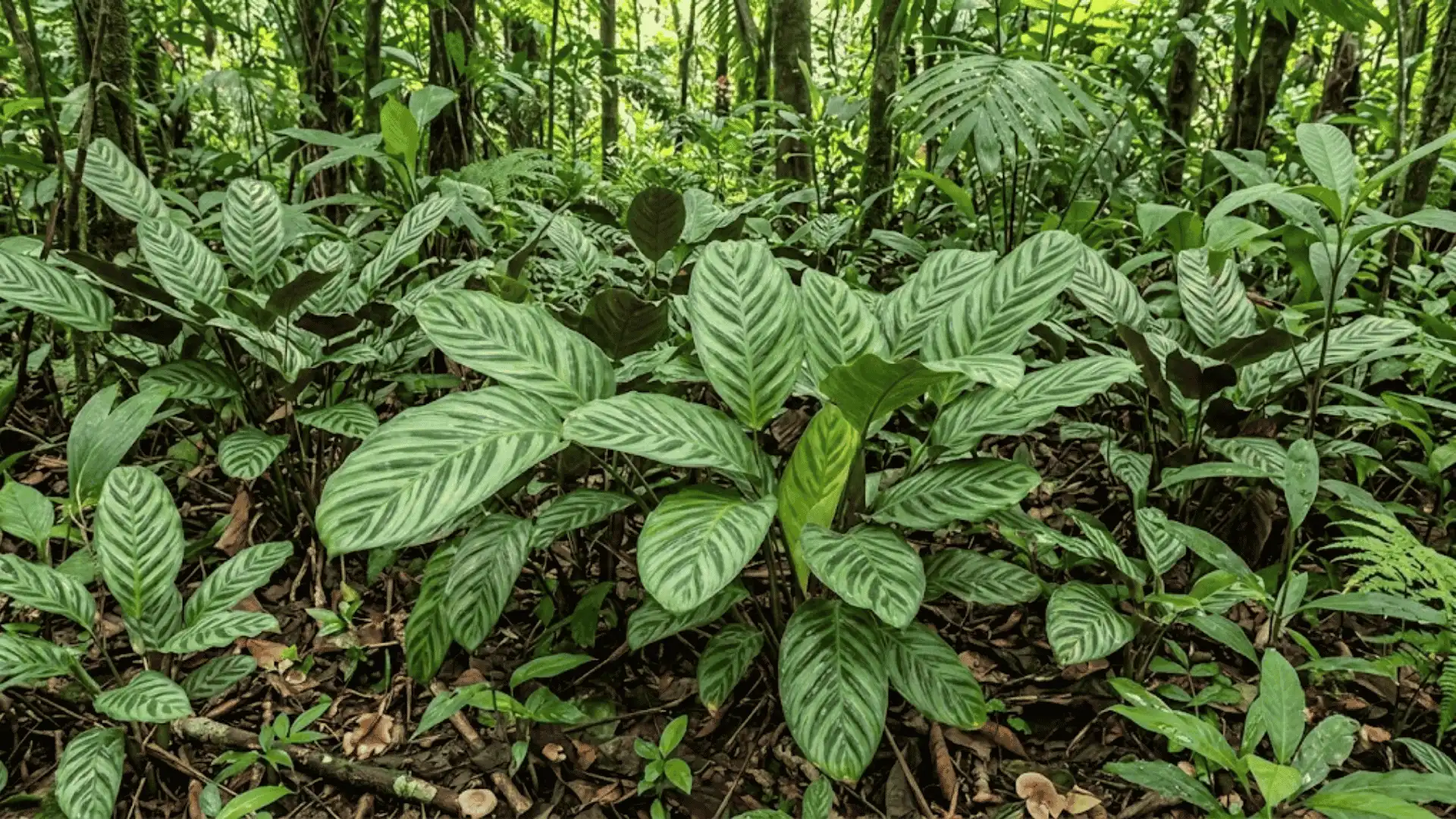
- Mature Size: Small to medium herb, around 1 to 2 feet
- Foliage/Flower Characteristics: Foliage closely resembling other species, leading to historical taxonomic confusion
- Native Range or Habitat: Tropical Central or South America
- Houseplant Relevance: Primarily botanical
True to its name, Calathea confusa has a history of being mistaken for closely related species, a common occurrence among Marantaceae with overlapping leaf shapes and growth habits.
Its native range covers humid tropical forest similar to many neighboring species on this list.
It has no documented presence in cultivation, and identifying it correctly still requires the kind of close botanical comparison that gave rise to its name in the first place.
11. Calathea cofaniorum
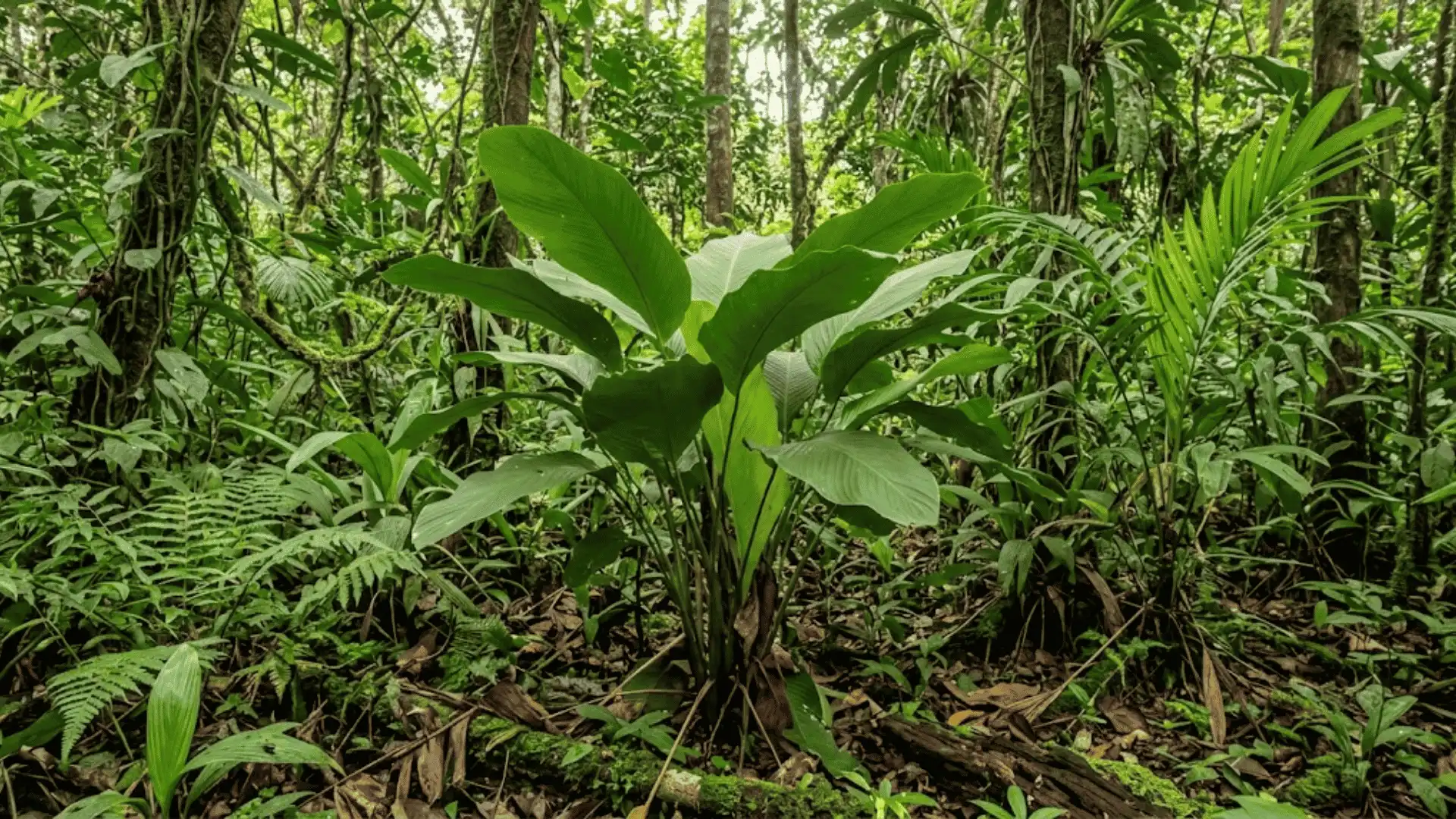
- Mature Size: Small to medium herb, roughly 1 to 2 feet
- Foliage/Flower Characteristics: Standard genus foliage, name likely referencing a regional or indigenous connection
- Native Range or Habitat: Tropical South America, likely Ecuador or Colombia
- Houseplant Relevance: Primarily botanical
Calathea cofaniorum carries a name that appears to reference a regional or cultural connection within its native range in tropical South America.
Its foliage and growth habit remain consistent with the broader genus pattern. Cultivation status is undeveloped, with no evidence the species has ever been grown outside its natural habitat.
It stands as another example of a true Calathea documented almost entirely through regional botanical fieldwork.
10. Calathea chiriquensis
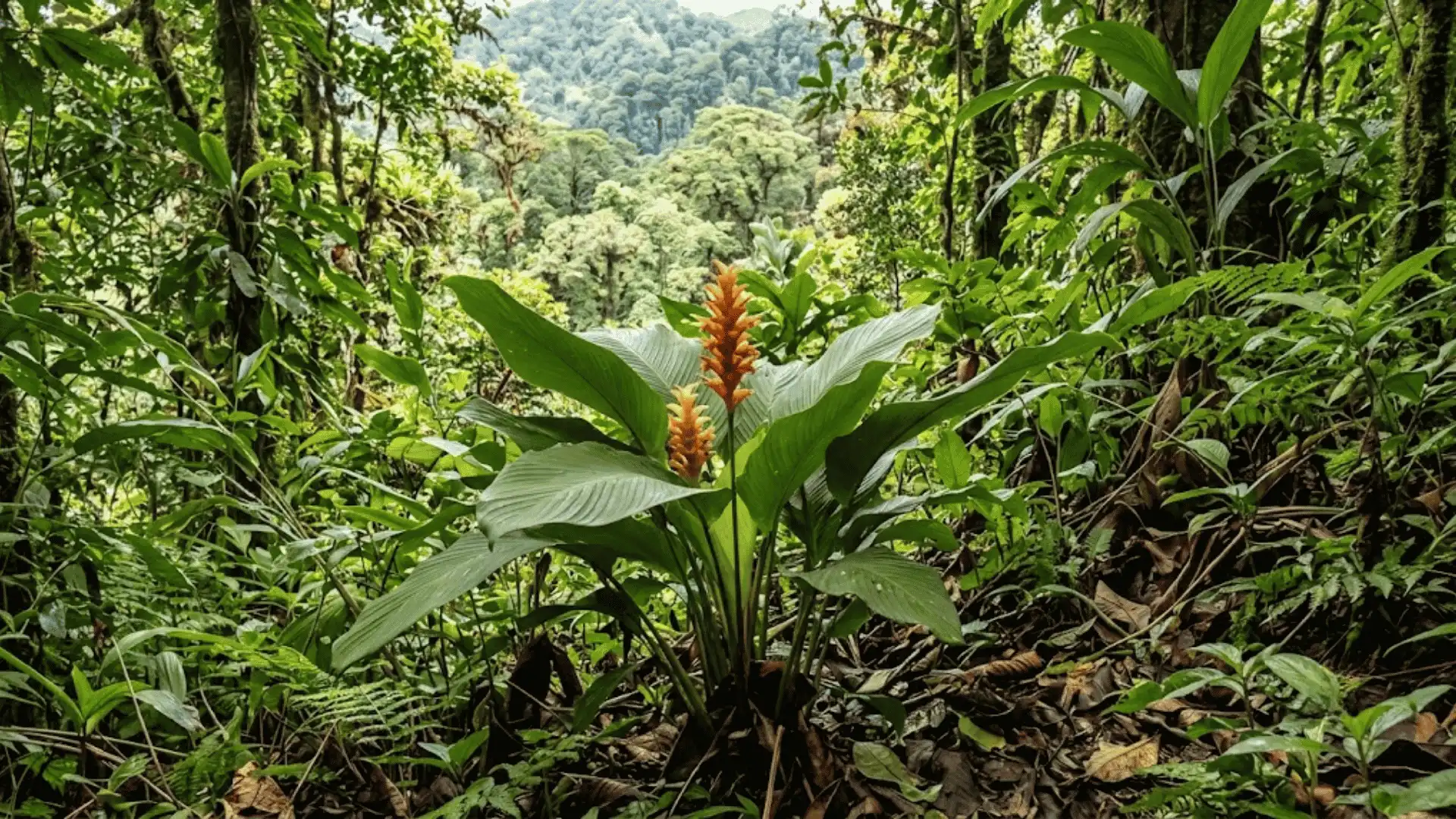
- Mature Size: Medium herb, roughly 2 to 3 feet
- Foliage/Flower Characteristics: Standard genus foliage, named for the Chiriquí region
- Native Range or Habitat: Chiriquí province, Panama
- Houseplant Relevance: Primarily botanical
The species name ties Calathea chiriquensis directly to Chiriquí, a mountainous province in western Panama known for its biodiversity.
Foliage and flowering characteristics follow the standard Marantaceae form typical of Central American species on this list.
It grows in humid forest habitat within its namesake region, and identification relies on regional botanical records rather than any widely published field guide, since it has no cultivation history.
9. Calathea casupito
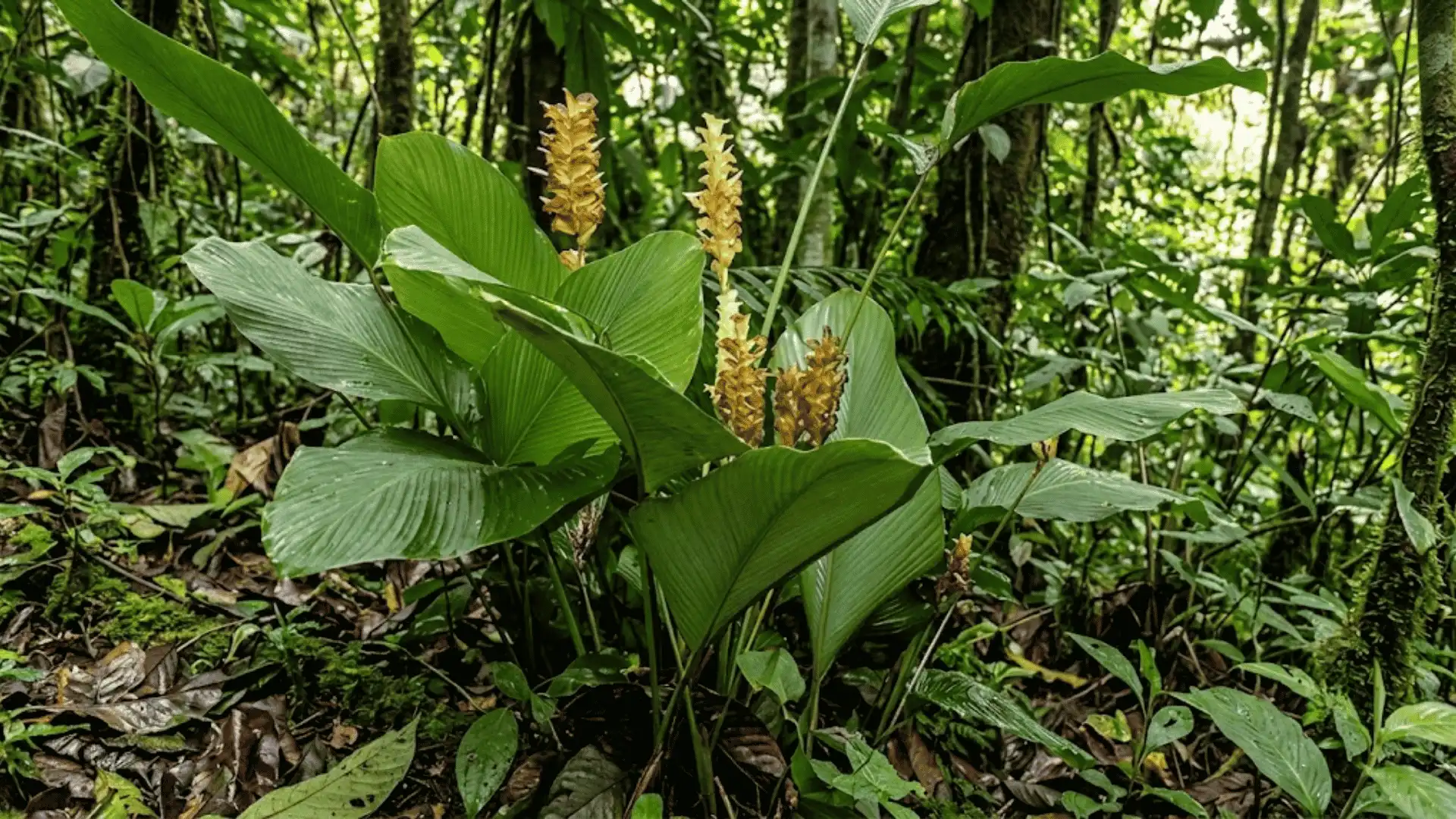
- Mature Size: Medium herb, roughly 2 to 3 feet
- Foliage/Flower Characteristics: Broad foliage typical of larger Calathea species, with a compact flowering spike
- Native Range or Habitat: Tropical Central and South America
- Houseplant Relevance: Primarily botanical, historically linked to related species
Calathea casupito carries a complicated taxonomic history, with older names and closely related plants once grouped together or confused with it under various historical classifications.
Its foliage and inflorescence follow the broader growth pattern common to larger Calathea species also found on this list, such as Calathea lutea, with which it shares some historical naming overlap.
Kew currently maintains it as its own accepted species, though it has no documented presence in cultivation today.
8. Calathea carlae
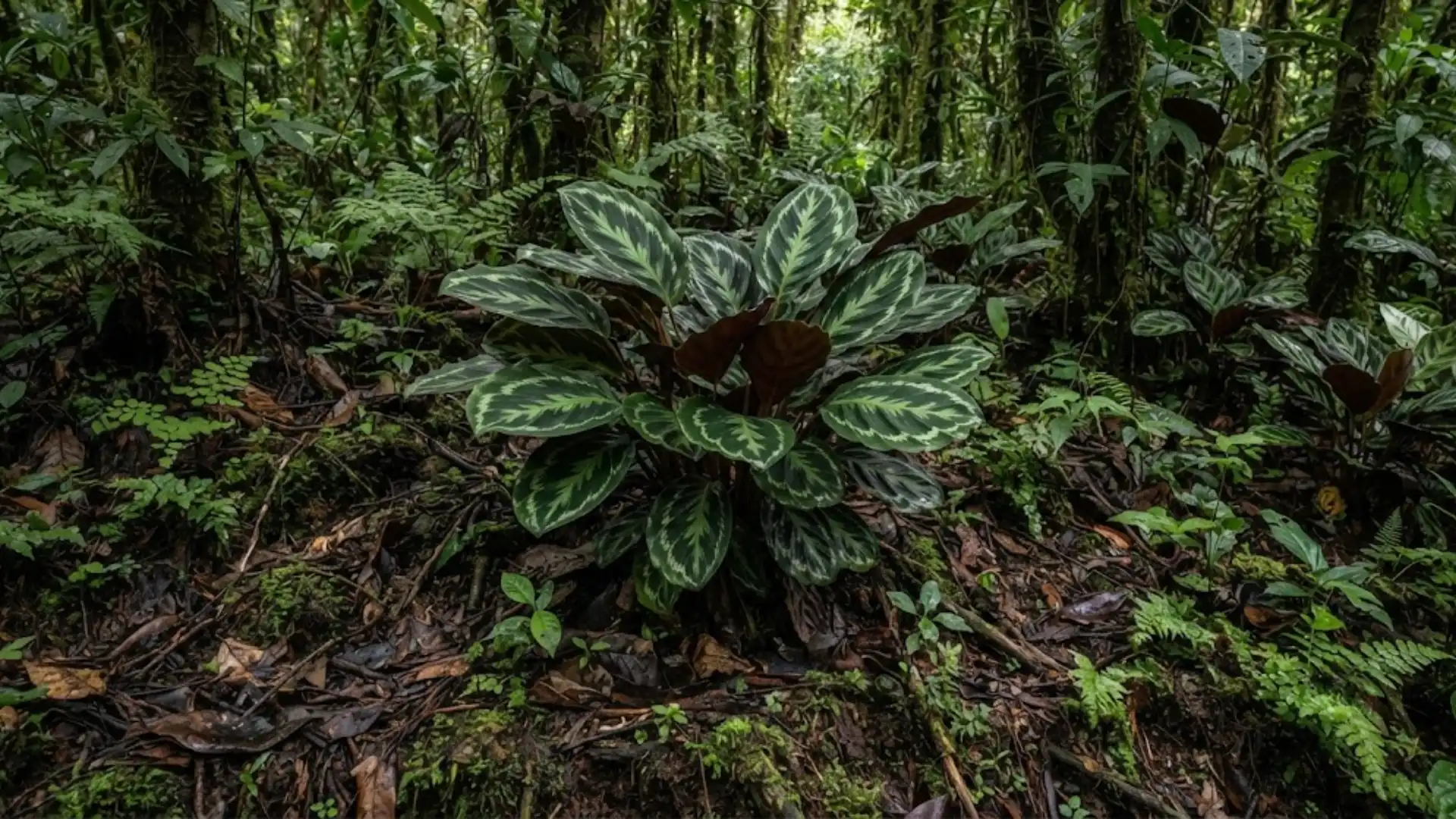
- Mature Size: Small to medium herb, around 1 to 2 feet
- Foliage/Flower Characteristics: Standard genus foliage, named for an individual collector
- Native Range or Habitat: Tropical Central or South America
- Houseplant Relevance: Primarily botanical
Calathea carlae follows the pattern of personally named species scattered throughout the more obscure end of Kew’s accepted list, honoring someone connected to its original botanical documentation.
Its native habitat aligns with the humid forest conditions typical of the genus.
Cultivation relevance is essentially nonexistent, since the species has never been the subject of commercial propagation or general horticultural interest beyond its initial scientific description.
7. Calathea calderon-saenzii
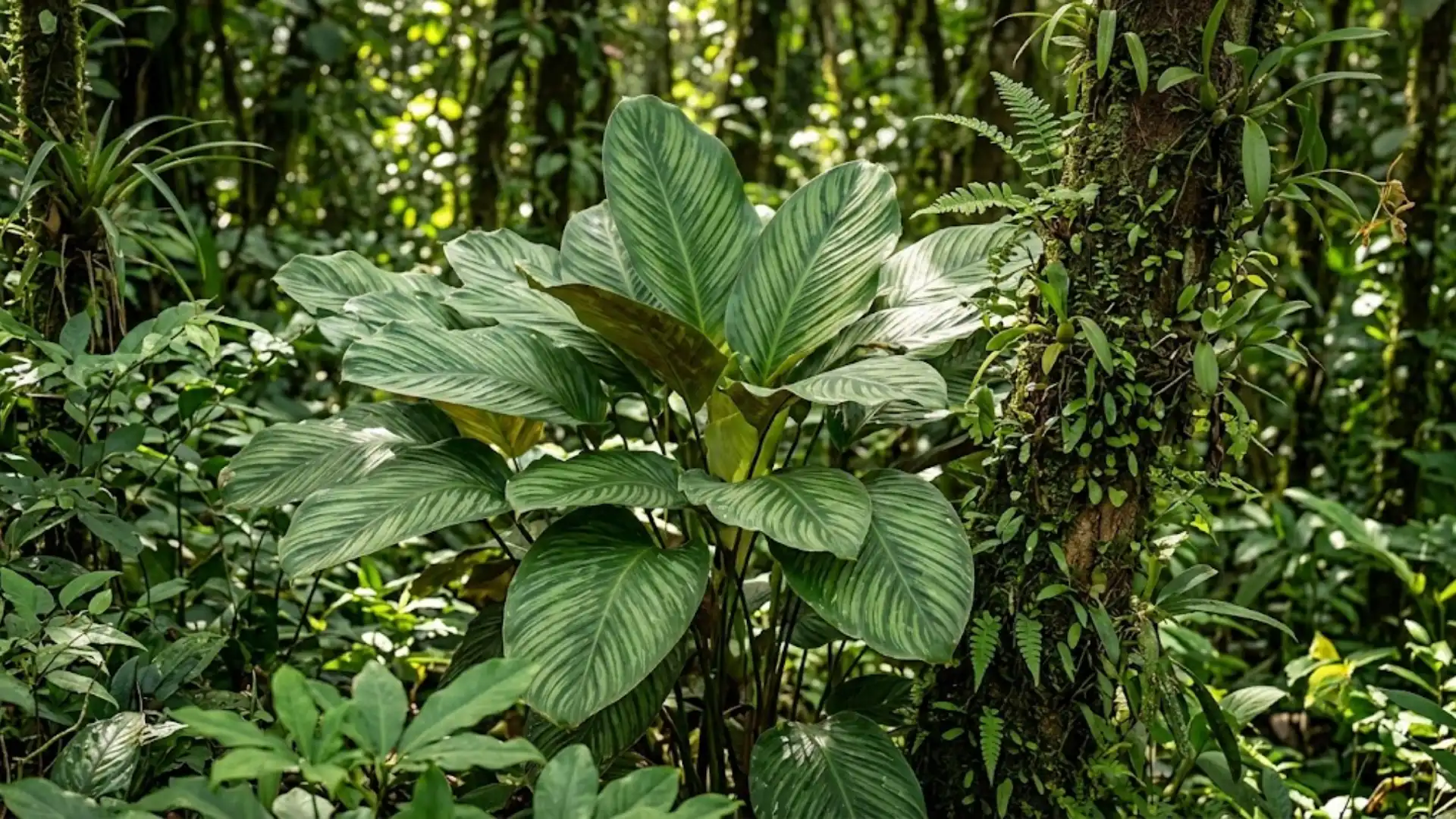
- Mature Size: Small to medium herb, roughly 1 to 2 feet
- Foliage/Flower Characteristics: Standard genus foliage, named for two botanical collectors
- Native Range or Habitat: Colombia
- Houseplant Relevance: Primarily botanical
Documented within Colombian botanical work, Calathea calderon-saenzii carries a compound name honoring two individuals involved in its discovery or classification.
Its physical characteristics fall within the general range expected of the genus.
What makes it noteworthy is less its appearance and more its place in ongoing Colombian botanical research, an area that continues to reveal new details about the true extent of Calathea diversity in the region.
6. Calathea caesariata
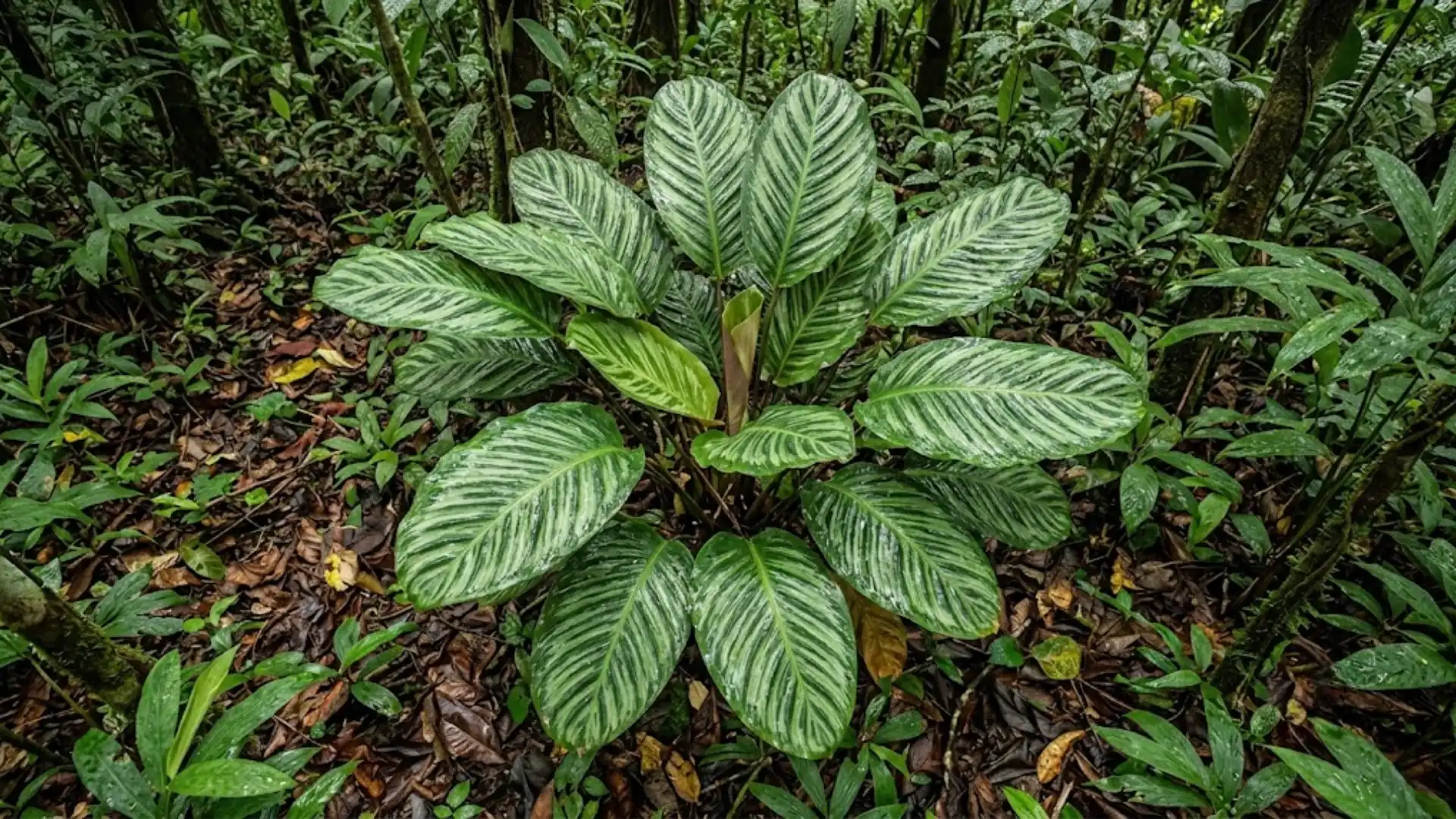
- Mature Size: Small to medium herb, around 1 to 2 feet
- Foliage/Flower Characteristics: Foliage or bracts described as having a hair-like or fringed texture
- Native Range or Habitat: Tropical Central or South America
- Houseplant Relevance: Primarily botanical
The name caesariata suggests a hair-like or fringed texture, likely on the bracts or leaf margins, giving this species a subtle textural distinction from smoother relatives.
It occupies the same humid forest niche common throughout the genus.
Native range data remain limited, and the species has no documented cultivation history, keeping identification and study largely confined to specialists working with original botanical descriptions.
5. Calathea brenesii
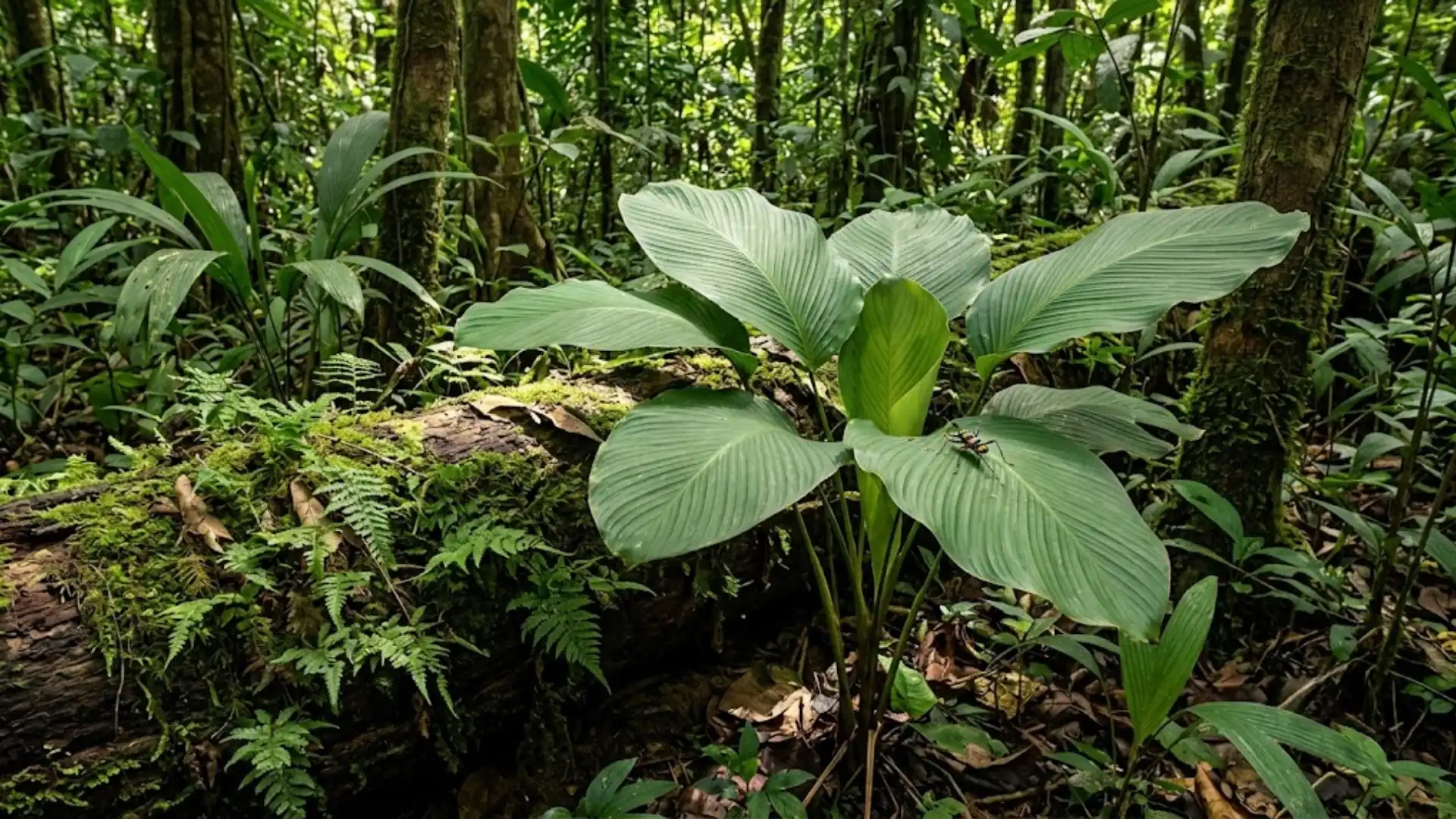
- Mature Size: Small to medium herb, roughly 1 to 2 feet
- Foliage/Flower Characteristics: Standard genus foliage, named for a Costa Rican botanist
- Native Range or Habitat: Costa Rica
- Houseplant Relevance: Primarily botanical
Calathea brenesii honors a Costa Rican botanist whose name appears across several regional plant species, reflecting the country’s long history of botanical documentation.
Its growth habit and foliage remain consistent with the broader genus pattern found across Central America.
It grows in humid forest habitat typical of Costa Rican lowland and mid-elevation zones, with no documented history of cultivation beyond its role in regional botanical collections.
4. Calathea barryi
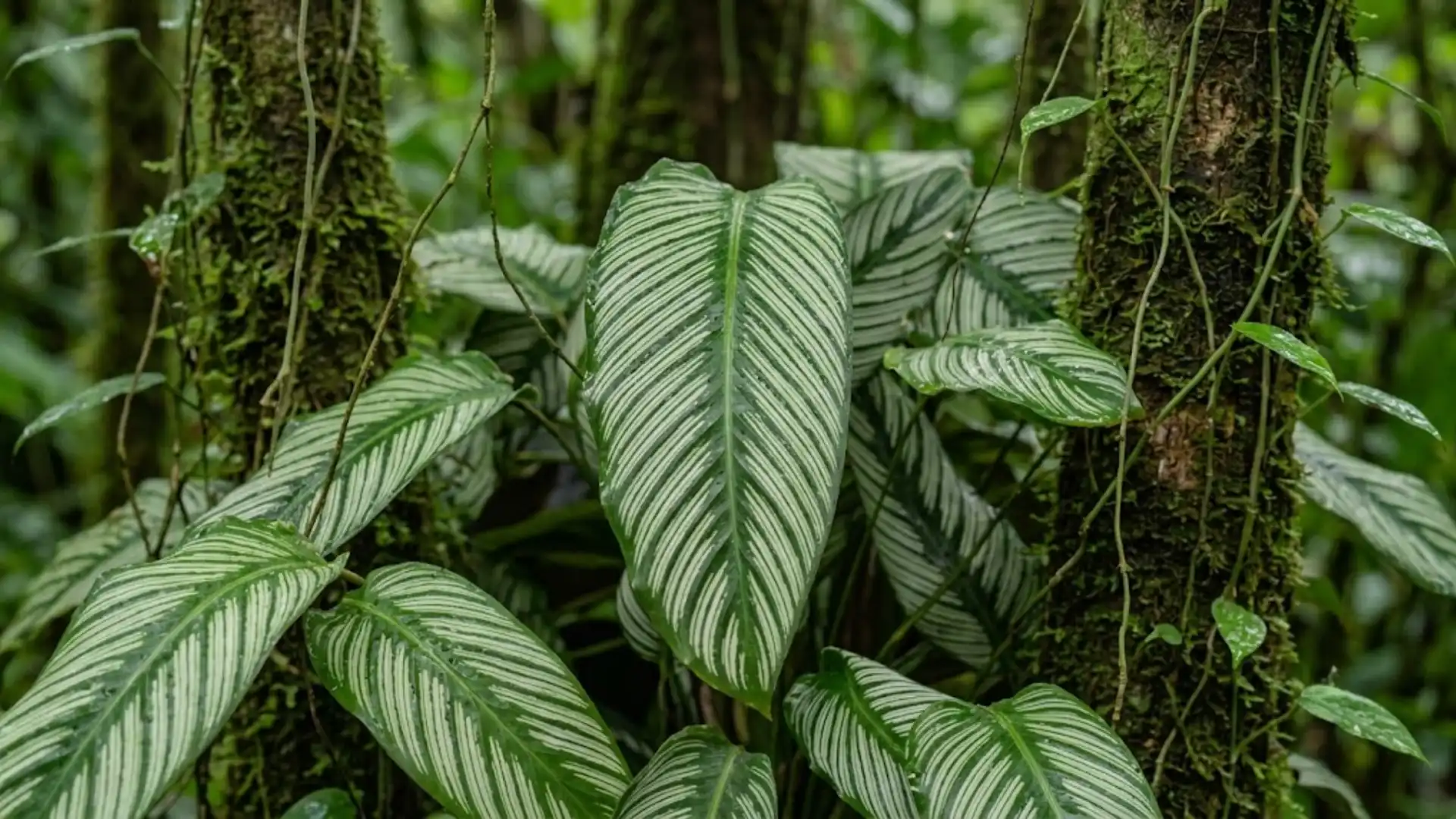
- Mature Size: Small to medium herb, around 1 to 2 feet
- Foliage/Flower Characteristics: Standard genus foliage, named for an individual collector
- Native Range or Habitat: Tropical Central or South America
- Houseplant Relevance: Primarily botanical
Calathea barryi follows the naming convention seen throughout much of this list, honoring a collector connected to its documentation rather than describing a physical trait.
Its identifying characteristics require close comparison with related species, since no single feature sets it dramatically apart.
Its native habitat mirrors the humid, shaded forest conditions preferred across the genus, and it has no recorded presence in cultivation.
3. Calathea asplundii
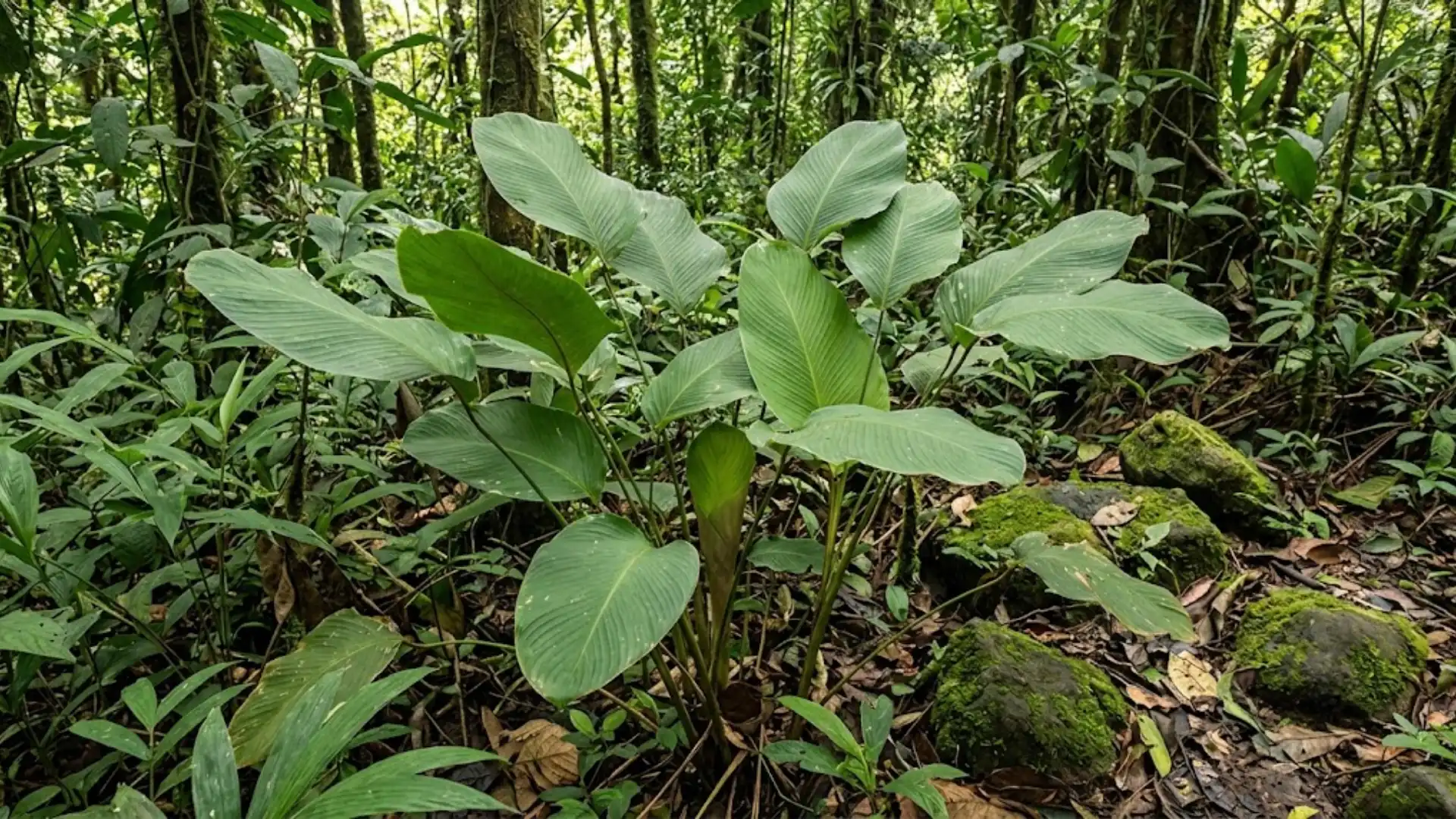
- Mature Size: Medium herb, roughly 2 to 3 feet
- Foliage/Flower Characteristics: Broader, more developed foliage than many of the smaller obscure species on this list
- Native Range or Habitat: Tropical South America, particularly Ecuador and Colombia
- Houseplant Relevance: Primarily botanical
Calathea asplundii is one of the more recognizable species within the true Calathea group by botanical standards, appearing more frequently in South American plant surveys than many of its neighbors on this list.
Its foliage is somewhat more developed and consistently documented than in the rarer species above.
Despite this relative visibility in scientific literature, it has never entered cultivation and remains unknown outside botanical and academic circles.
2. Calathea anulque
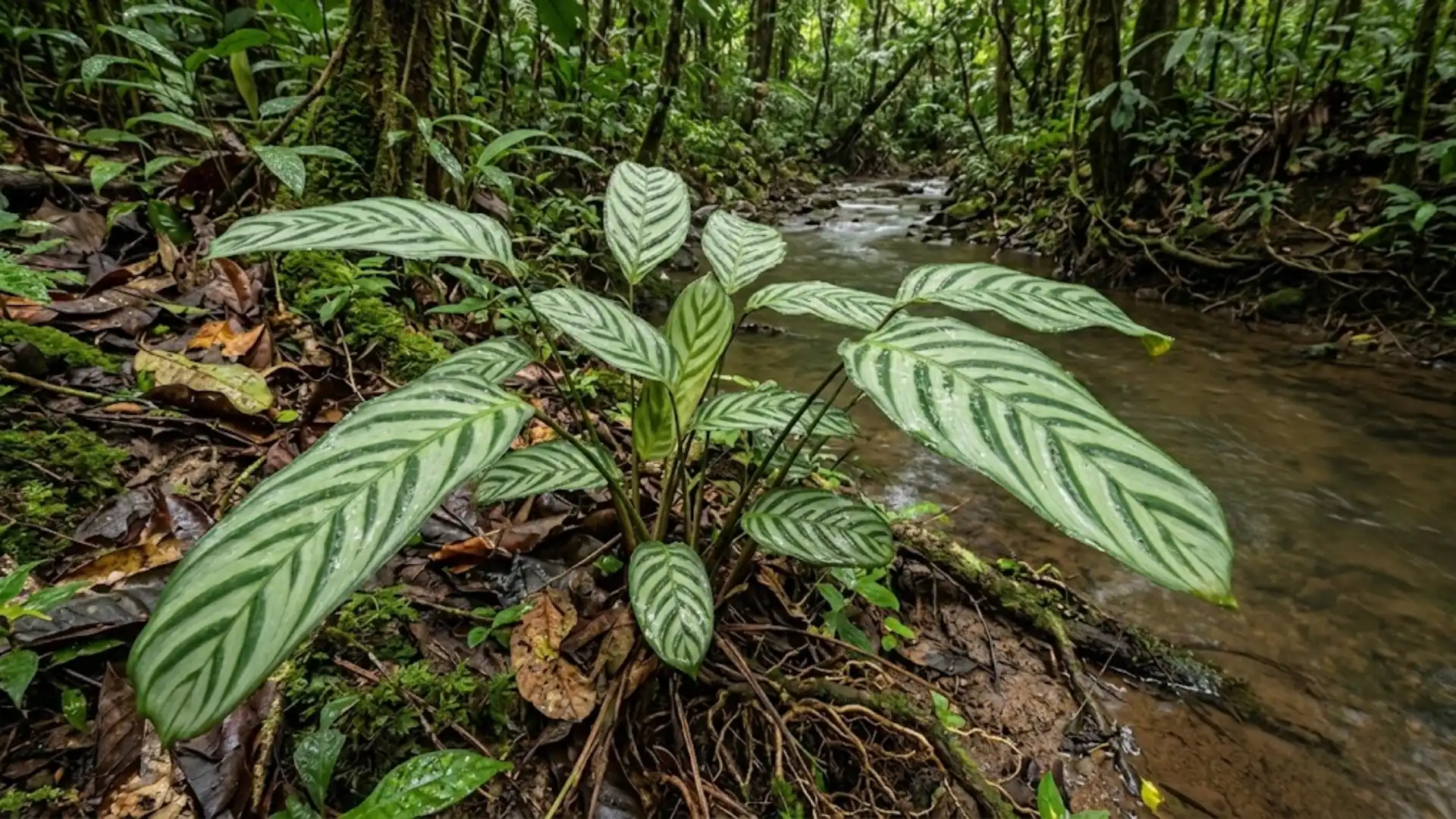
- Mature Size: Small to medium herb, around 1 to 2 feet
- Foliage/Flower Characteristics: Standard genus foliage with a distinctive inflorescence structure
- Native Range or Habitat: Tropical Central or South America
- Houseplant Relevance: Primarily botanical
Calathea anulque rounds out the list’s lower-numbered, more foundational entries with a fairly typical Marantaceae profile, including standard lance-shaped leaves and a bracted flowering spike.
Its native range sits within the broader Central to South American belt shared by most true Calathea.
As with the great majority of species covered here, it has no documented cultivation history and exists almost entirely within scientific and taxonomic reference material.
1. Calathea anderssonii
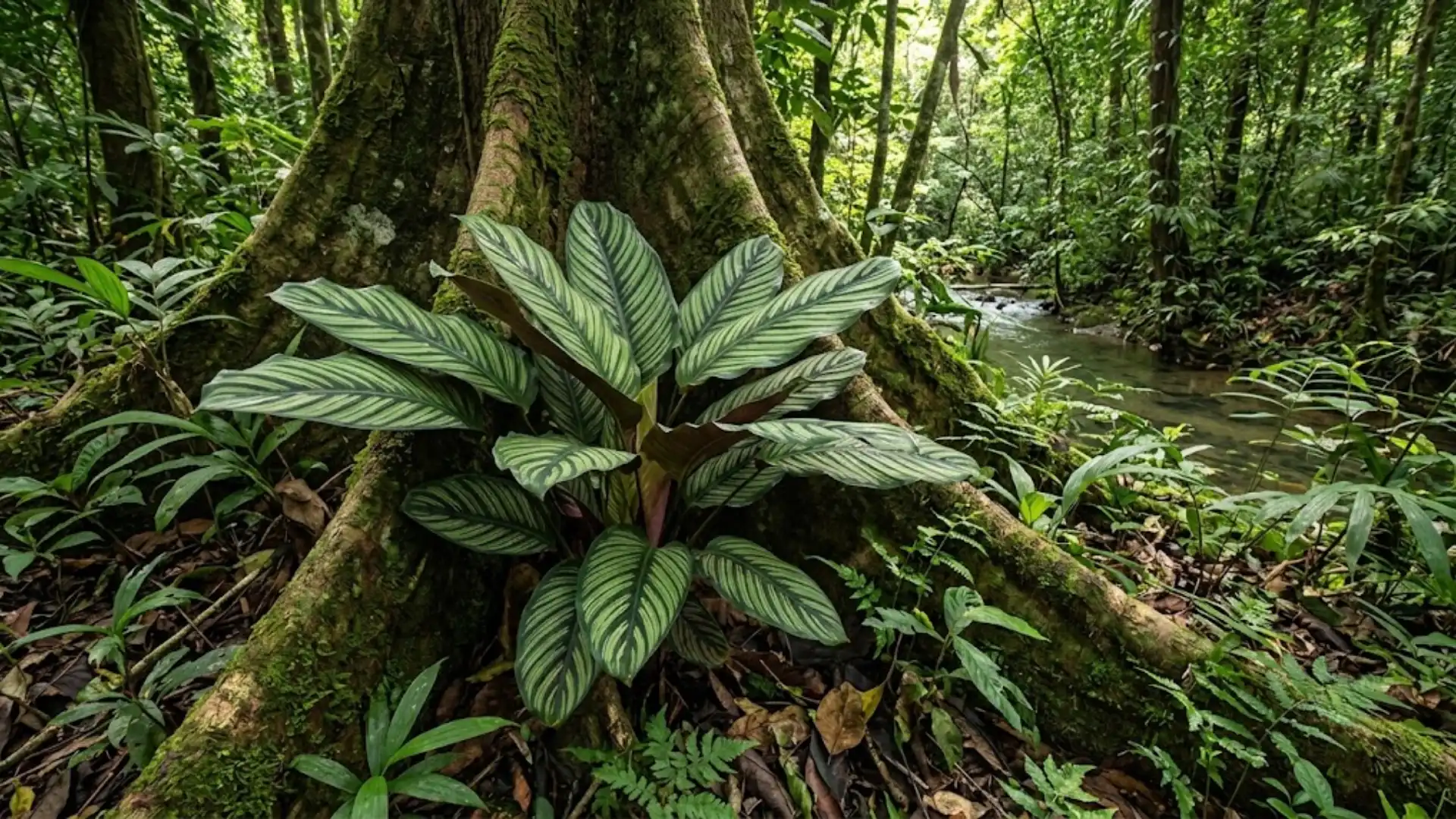
- Mature Size: Small to medium herb, roughly 1 to 2 feet
- Foliage/Flower Characteristics: Standard genus foliage, named for a botanical collector
- Native Range or Habitat: Tropical South America
- Houseplant Relevance: Primarily botanical
Calathea anderssonii sits first alphabetically among Kew’s 59 accepted species, honoring a botanist connected to South American plant collection.
Its foliage and flowering structure follow the typical form expected across the genus, without a defining trait that separates it visually from its many relatives.
Cultivation status remains undeveloped, and like most of the names on this list, it exists almost entirely as a scientific record rather than a plant anyone will find for sale.
How to Identify Different Calathea Types?
Foliage alone will only get identification so far, since so many species share the same green and purple color scheme. Together, these five checkpoints give a far more reliable read on what you are actually looking at.
- Leaf Shape: Narrow and lance-shaped, broad and oval, large paddle-shaped, elongated, or heavily folded and textured.
- Leaf Pattern: Bold stripes, spots, prominent veining, solid green, or painted-looking variegation.
- Leaf Underside: Deep purple or maroon, plain green, pale or silvery, or sharply contrasting with the top.
- Flowers and Inflorescences: Bract shape and color hold steady across a plant’s life while foliage shifts with light and age, which is why botanists lean on flowers for real classification rather than leaf photos alone.
- Growth Habit: Clumping and compact, upright, spreading along the ground, or large and architectural for outdoor planting.
Flowers rarely show up on plants raised indoors, so treat this as a field method for outdoor or botanical settings rather than a quick fix for a windowsill mystery plant.
Calathea Types by Leaf Appearance
Sorting true Calathea by leaf trait works better than another species list.
It also makes the Goeppertia split easier to keep straight, since most of the boldly patterned “Calatheas” people picture actually belong to that other genus now.
| Leaf Trait | True Calathea Examples | Why It Matters |
|---|---|---|
| Large, broad leaves | Calathea lutea, Calathea crotalifera, Calathea grandifolia | Reads more architectural than a typical houseplant leaf, often grown outdoors |
| Narrow, elongated leaves | Calathea trianae, Calathea timothei, Calathea lateralis | Closer to the classic lance-shaped Marantaceae form |
| Striped leaves | Calathea striata | True striping is rare here; the pinstripe look most people know is Goeppertia ornata |
| Strongly contrasting undersides | Calathea lutea, Calathea erythrolepis | Purple to reddish tones appear, but less dramatically than in ex-Calathea species |
| Known more for flowers than foliage | Calathea crotalifera, Calathea lutea, Calathea multispicata | Showy bracts, unusual since most Calathea marketing leans on leaf pattern alone |
Leaf appearance narrows things down fast, but it also shows how much of the “iconic Calathea look” sits outside the genus entirely.
Sharp pinstripes, painted variegation, or peacock-style spotting almost always point to Goeppertia; none of these are among these 59.
Are Calathea and Prayer Plants the Same?
Not quite. “Prayer plant” is a broad nickname for the Marantaceae family, not a single genus.
It covers Calathea, Goeppertia, Maranta, Stromanthe, and Ctenanthe alike, so every Calathea is a prayer plant, but not every prayer plant is a Calathea.
Most houseplants sold under the old name now belong to Goeppertia.
The shared trait behind the nickname is nyctinasty, the daily folding and lowering of leaves in response to light.
This movement runs across the whole family, not just Calathea, which is part of why the naming confusion sticks around.
The Closing Note
True Calathea might be a smaller, quieter group than the houseplant aisle suggests, but that is what makes it worth knowing well.
Each species holds its own patch of Central and South American forest, and together they tell a fuller story than any single peacock leaf ever could.
Next time a calathea type shows up online, that background will help sort the real thing from a Goeppertia wearing an old name.
Which species on this list surprised you most? Drop a comment below; I would genuinely love to hear which one you are now hoping to spot in person.
Frequently Asked Questions (FAQs)
What is the Rarest Calathea Species?
No single species holds an official “rarest” title, since rarity in cultivation is not tracked the same way conservation status is. Many of the 59 accepted species are simply absent from the trade, known only through botanical collections.
What is the Easiest Calathea to Grow?
This depends on what you mean by Calathea. Among true, currently accepted species, none are common houseplants, while the easier-care plants, like Calathea makoyana or Calathea orbifolia, are botanically Goeppertia now.
Are Calathea and Goeppertia the Same Plant?
No, they are separate genera within the Marantaceae family. Many species once classified as Calathea were moved to Goeppertia after DNA-based research clarified their evolutionary relationships.
Are All Calatheas Prayer Plants?
Yes, every Calathea qualifies as a prayer plant, since that nickname refers to the wider Marantaceae family rather than one genus. The reverse is not true, since Maranta, Stromanthe, Ctenanthe, and Goeppertia are prayer plants, too.