I didn’t set out looking for blue-eyed grass. It just showed up, growing low in a dry patch near the edge of a trail. It didn’t stand out much, but something about its small blue flowers caught my eye.
I looked it up later and was surprised to find out it’s not a grass at all. Since then, I’ve seen it in a different way, not as background, but as something that quietly holds its place without needing attention.
If you’ve come across the name blue-eyed grass and want to know what it really is, this blog will help you do that.
You’ll learn what it looks like, where it grows, how to plant it, and why it might be a good fit for your yard or garden, even if you’re keeping things simple.
Why Blue-Eyed Grass Gets So Much Attention
Blue-eyed grass gets noticed for reasons that aren’t always obvious at first. The name itself can be confusing. It sounds like a type of turf grass, but it’s actually a flowering plant in the iris family.
Its thin, grass-like leaves make the mix-up easy, especially when it’s not in bloom.
Gardeners who enjoy low-care plants or want to support local ecosystems often like blue-eyed grass because it fits into natural-style gardens.
It grows well without much help, and its small blue flowers bring color without feeling out of place. Native plant fans also appreciate how it blends into wild landscapes without becoming invasive.
You’ll usually spot it along walking trails, in open fields, near ditches, or mixed into native gardens. It starts off green and narrow in spring, then shows its flowers in late spring to early summer.
By late summer it fades quietly, but its seed heads stick around into fall.
What is Blue Eyed Grass?
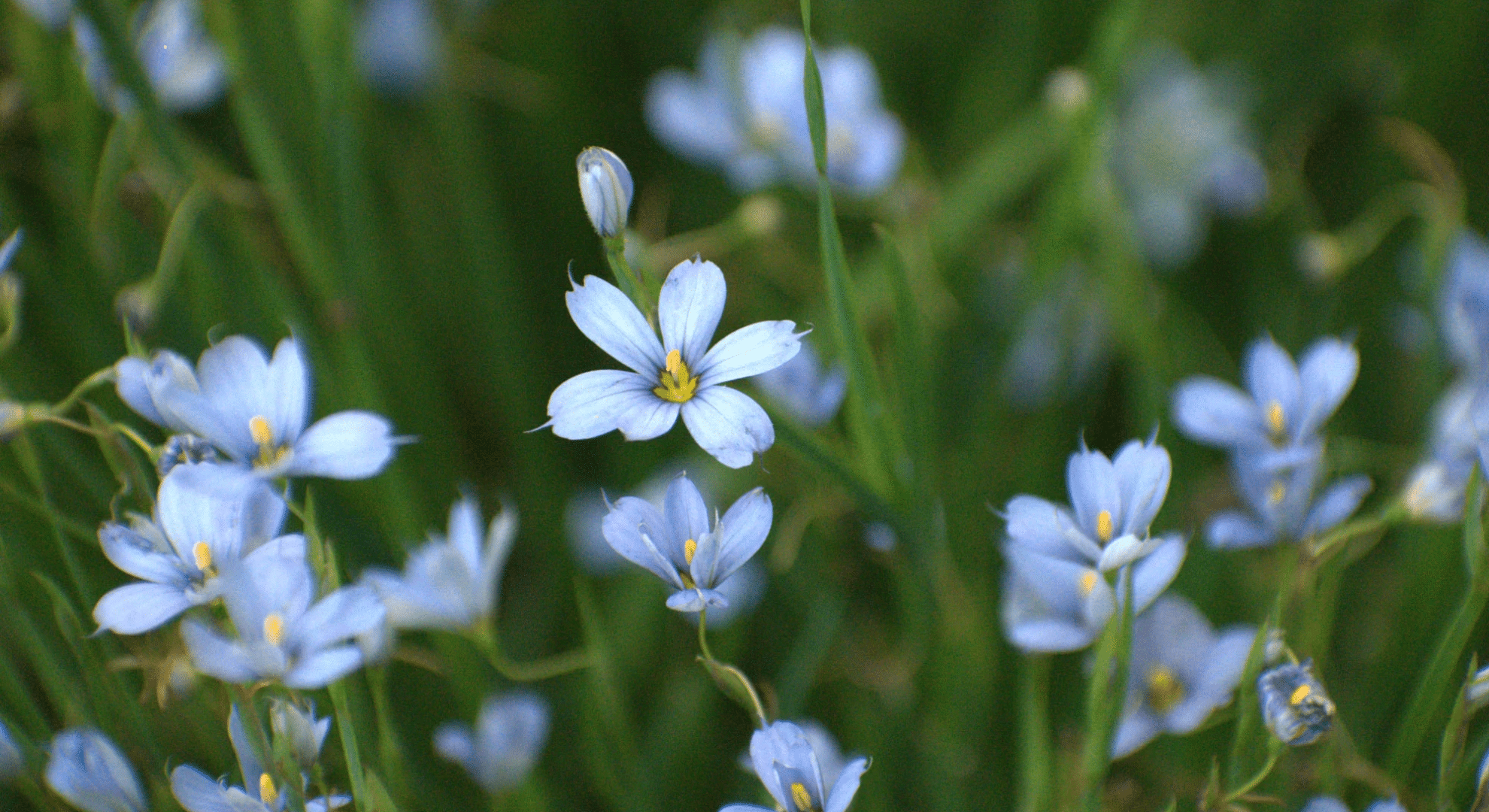
Blue-eyed grass is a small, flowering plant that belongs to the iris family. Its name might make you think it’s a type of turf or lawn grass, but it isn’t.
What gives it that name is the way it looks. It has long, narrow leaves that grow upright like grass blades, but once it blooms, the difference becomes clear.
This plant grows in small clumps and usually reaches about 6 to 20 inches tall. It starts growing in early spring and spreads slowly, forming small patches over time.
Most types of blue-eyed grass live for more than one year. Some are short-lived perennials, while others may behave more like annuals depending on the climate.
The main reason people notice blue-eyed grass is its flower. Each flower is small, usually less than an inch wide, with six blue or violet petals and a bright yellow center.
Botanical Classification and Plant Family
Blue-eyed grass belongs to the iris family, known as Iridaceae. While it may look like grass at first glance, its flower structure and growth habits place it clearly within this group of flowering plants.
Here’s a simple breakdown of its scientific classification:
- Kingdom: Plantae
- Family: Iridaceae
- Genus:Sisyrinchium
The iris family includes a wide range of plants that usually have narrow leaves and flowers with three petals and three petal-like sepals, often arranged in a star shape.
Members of this family also tend to have underground parts like rhizomes, corms, or bulbs, though not all do.
Blue-eyed grass shares many of these traits. It has thin, upright leaves that grow from the base.
Its flower follows the iris pattern, with six petal-like parts that are often blue to violet, and a bright yellow spot in the center. These features are a strong sign that it belongs in the iris family and not with true grasses.
Even though blue-eyed grass doesn’t have the large, showy blooms of garden irises, it still carries the same structure in a smaller, simpler form. That’s what connects it to its plant family.
Native Range and Natural Habitat
Blue-eyed grass grows naturally across much of North America. You can find it in open fields, prairies, meadows, woodland edges, and even roadsides.
It often grows in places with full or partial sun and little competition from taller plants.
In the wild, it grows best in soils that are well-drained but can still hold some moisture. Sandy, loamy, or rocky soils are common in its natural areas. It doesn’t like soggy spots or heavy clay that stays wet for long.
Understanding where blue-eyed grass comes from helps gardeners match it to the right conditions.
When planted in a space that feels close to its native habitat, the plant is more likely to thrive with less care and water.
Common Species of Blue-Eyed Grass
There are several types of blue-eyed grass, each with small differences in size, color, and growing needs.
Knowing which species you’re looking at can help you choose the right one for your yard or native plant space:
Sisyrinchium Angustifolium
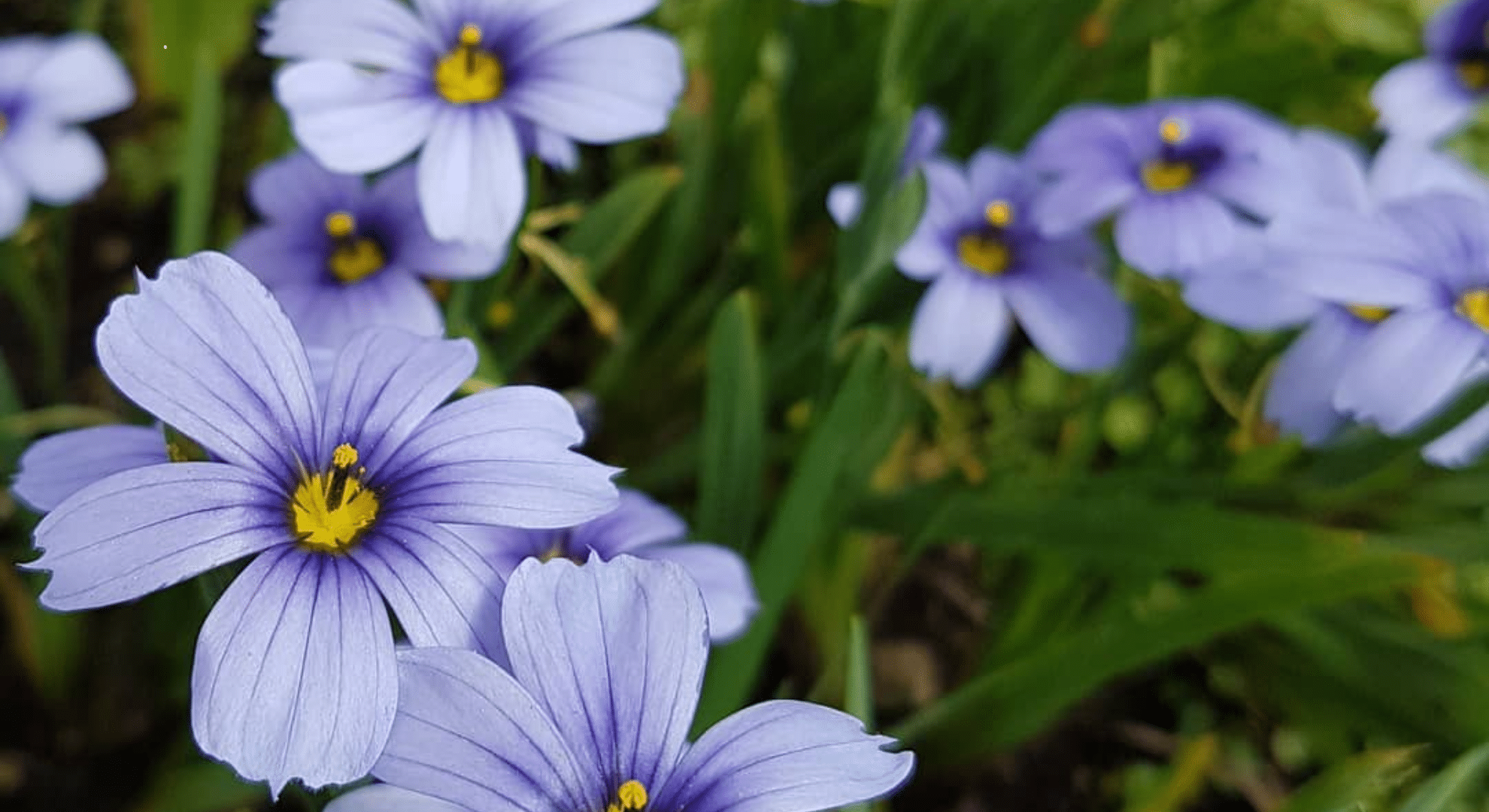
This species grows in tight clumps and reaches about 12 to 18 inches tall. It has violet-blue flowers that bloom in late spring. It works well in borders, native gardens, and along walkways where low plants are needed.
Sisyrinchium Bellum
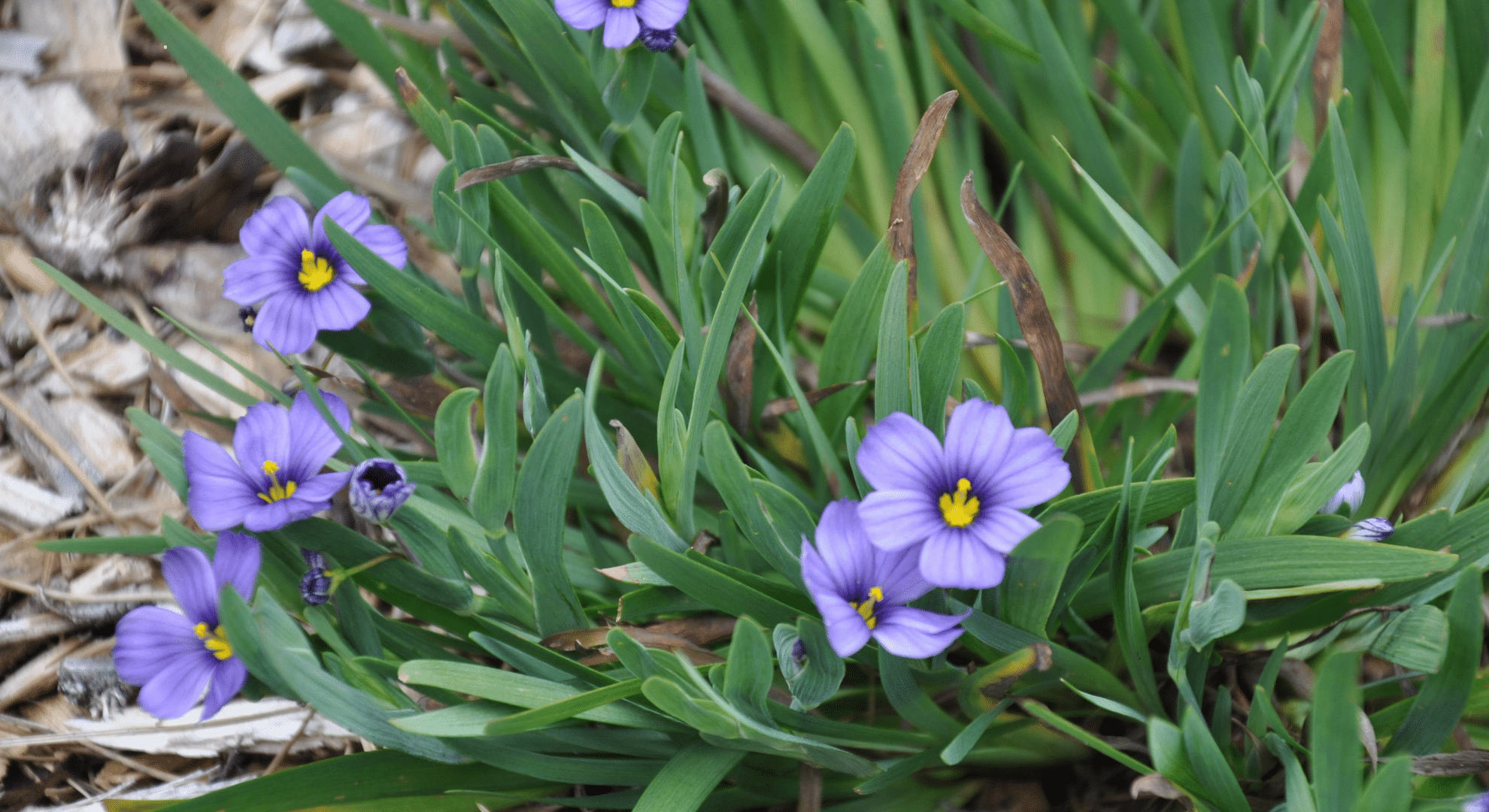
Native to the western U.S., this type prefers mild coastal climates. It has wider leaves and darker blue flowers compared to others. It fits well into meadow-style gardens or open spaces with light moisture and partial sun.
Sisyrinchium Campestre
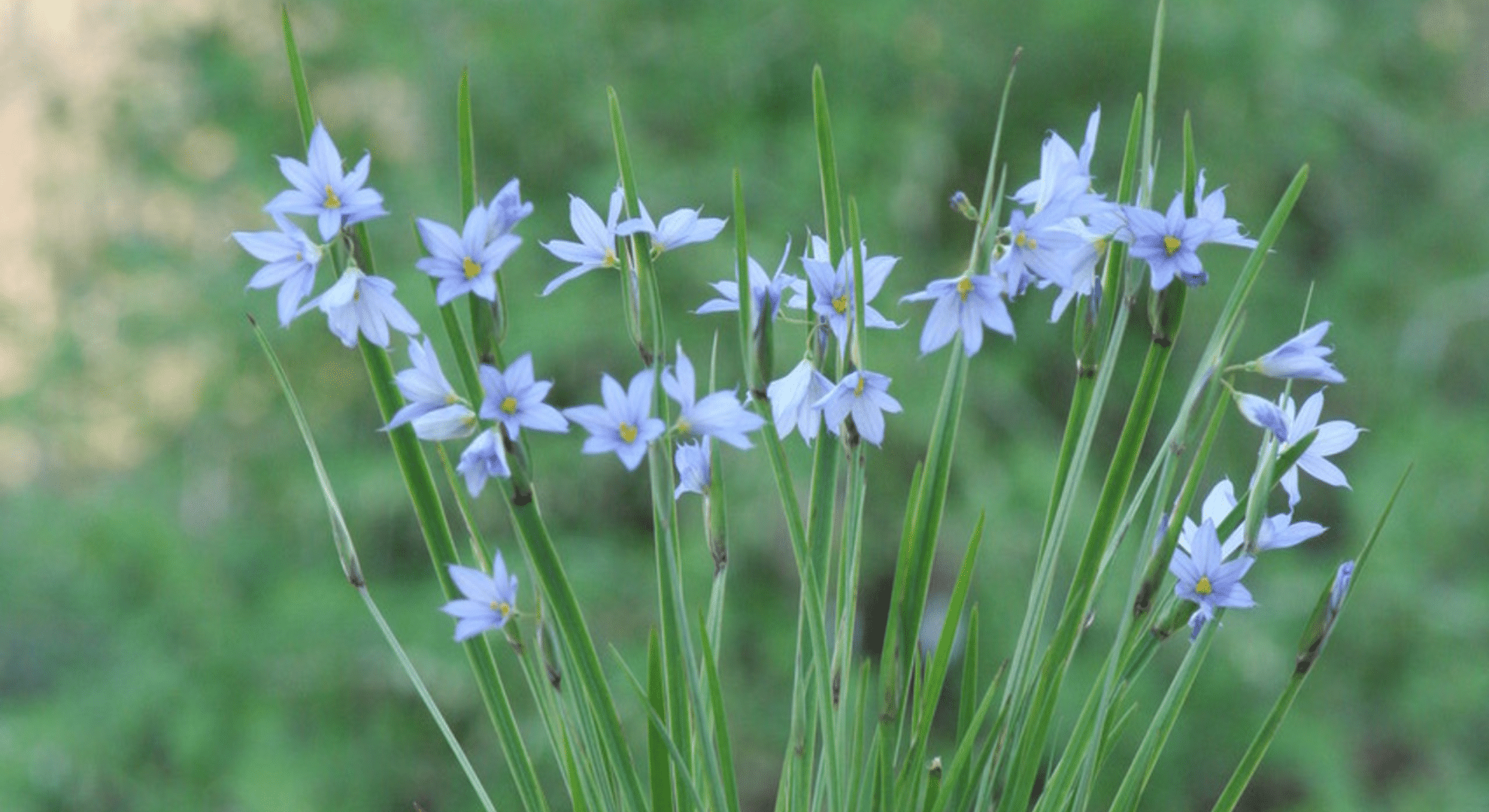
Often found in prairies, this species handles dry, rocky soil well. It has paler blue or nearly white flowers and shorter leaves. Its tough nature makes it a good pick for dry zones or low-water native garden spaces.
Physical Characteristics and Plant Structure
Blue-eyed grass has narrow, flat leaves that look like blades of grass. The leaves are smooth, usually a bit shiny, and grow from the base in small clumps.
This clumping pattern helps the plant stay low and tidy, often forming small bunches that slowly spread over time.
The stems are thin, upright, and slightly flattened. They hold the flowers above the leaves but stay fairly short, usually under 20 inches.
Each stem may hold one or more flowers, which open during the day and close by evening.
The Blue-eyed grass flowers are small, with six petal-like parts that are blue, violet, or sometimes white, and a bright yellow center. They bloom in late spring and early summer.
After flowering, the plant forms small, dry seed pods. These pods break open when mature, releasing tiny seeds that can start new plants nearby. It’s a simple, self-sustaining way the plant keeps going.
Sun, Soil, and Water Requirements
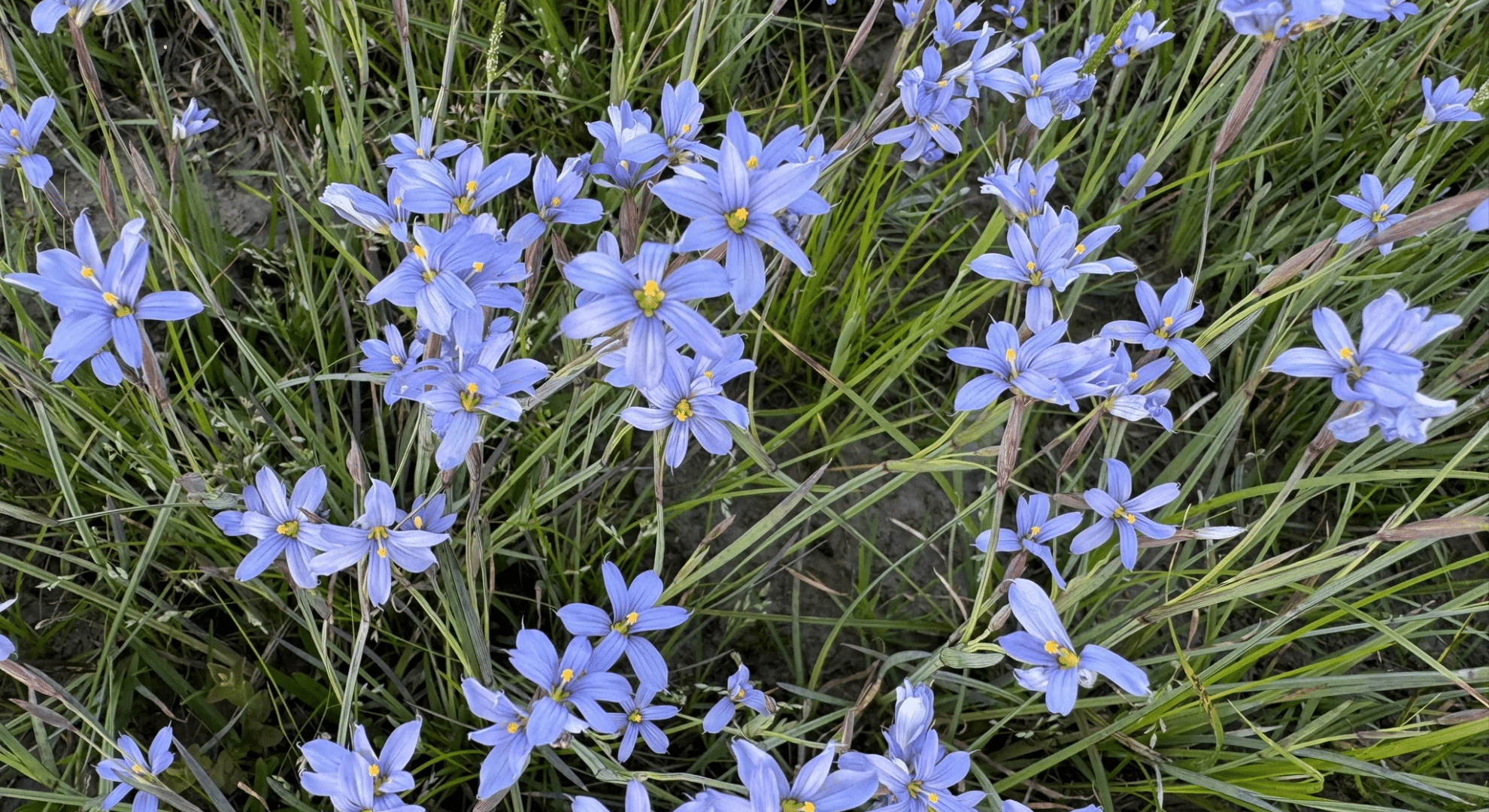
Blue-eyed grass grows best in full sun but can handle light shade, especially in hot areas. For the most blooms, choose a spot that gets at least six hours of sun each day.
Too much shade can cause the plant to produce fewer flowers and grow thinner. It prefers soil that is loose and drains well, like sandy or loamy soil.
A neutral to slightly acidic pH works well, though it’s not too picky.
Keep in mind:
- Avoid planting in heavy clay that stays wet
- Add sand or compost to improve drainage if needed
- Let the soil dry out slightly between watering
Too much water is a common mistake. While blue-eyed grass can grow in moist areas, it does not like soggy soil. Make sure water doesn’t pool around the roots.
Once established, the plant is fairly drought-tolerant and only needs occasional watering during dry spells.
How Blue-Eyed Grass Grows and Spreads
Blue-eyed grass grows in small clumps, with new shoots coming up from the base each year. Over time, these clumps slowly grow wider.
It also spreads by dropping seeds after flowering. The dry seed pods open and let the seeds fall to the ground, where they may sprout the next season.
Some species also spread lightly through underground stems called rhizomes, but this is usually slow and easy to manage.
In native or wild-style gardens, this spreading is helpful. It fills space naturally and blends well with other low plants. In more formal beds, though, it may start to crowd nearby plants if left alone.
You can thin or divide it to keep things in balance.
Is Blue-Eyed Grass Invasive?
Blue-eyed grass spreads, but it is not considered invasive. Invasive plants take over quickly and harm native ecosystems.
Blue-eyed grass does not behave that way. It grows in clumps and spreads slowly by seed or short underground stems. It stays where it’s planted and blends well with other native plants.
However, in garden beds with tight spacing or delicate plants, it might grow into nearby areas if not watched. This isn’t harmful, but it may not be what you want.
To manage its growth naturally, you can pull unwanted clumps by hand or trim back seed heads before they drop.
Dividing every few years also helps keep it in check without using chemicals or harsh methods.
Blue-Eyed Grass in Garden and Landscape Design
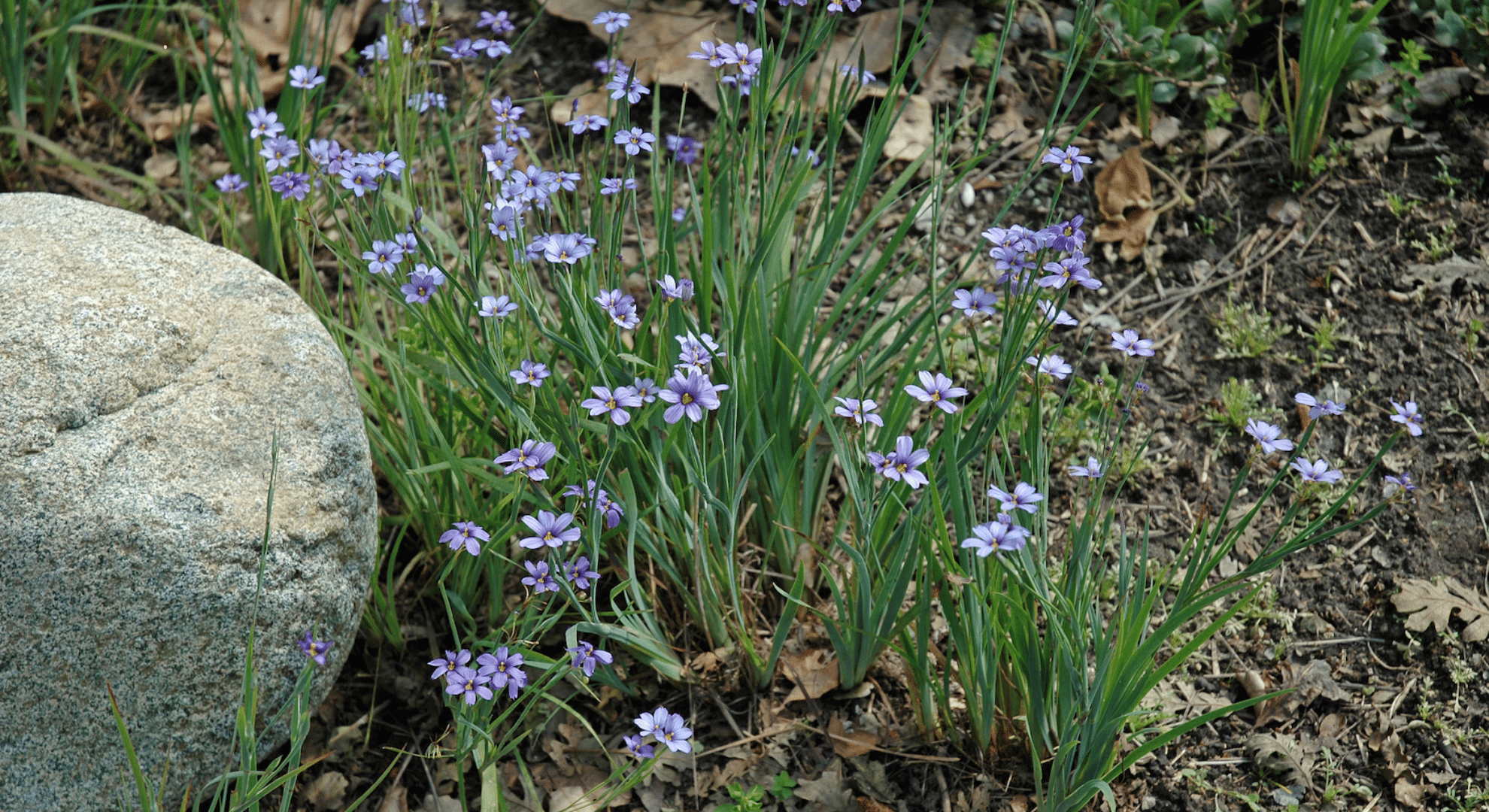
Blue-eyed grass can be used in many garden styles, but it fits best where low-growing, low-care plants are needed.
| Setting | Why It Works |
|---|---|
| Garden beds and borders | Neat clumps stay low and fill in space without crowding |
| Meadow and native gardens | Blends well with wildflowers and supports local wildlife |
| Rain gardens and wet spots | Tolerates moist soil if it drains well |
| Walkway edges | Adds color without spilling over paths |
| Rock or dry gardens | Some types handle drier soil and tough spots |
Blue-eyed grass does better in natural-style or relaxed garden settings. It may not be the best choice for tightly trimmed or high-maintenance beds.
It likes room to spread a little and does best with other plants that enjoy similar light and soil.
Wildlife and Ecological Benefits
Blue-eyed grass may be small, but it plays a helpful role in local ecosystems. Its flowers attract bees, small butterflies, and other native pollinators looking for nectar in spring and early summer.
These visits help support pollinator health and encourage a healthy garden cycle.
The plant also provides light cover and habitat for small insects and ground animals. Its clumping habit makes it a good fit in natural areas where it can blend with other native species and help hold soil in place.
Because it is native to many parts of North America, blue-eyed grass fits into local food webs without pushing out other plants. It supports balance rather than causing harm, making it a smart choice for eco-friendly gardens.
Issues You Might Face and Simple Fixes
Blue-eyed grass is easy to grow, but a few small problems can pop up. Knowing what to look for makes it easier to keep the plant healthy:
- Poor blooming: Too much shade or not enough sunlight
- Yellowing leaves: Often a sign of overly wet soil
- Crowding: Clumps may need to be divided every few years
- Weeds taking over: Add mulch or ground cover to reduce competition
- Wilting in heat: May need extra water during long dry spells
- Seed spread too far: Trim back seed heads before they drop
With a little attention, most of these issues are easy to fix. Regular care and the right growing spot will keep blue-eyed grass looking its best.
Conclusion
Blue-eyed grass showed me that some of the best plants don’t need a spotlight. It’s steady, simple, and fits into the landscape without asking much.
Over time, I saw how it supported pollinators, held its place through the seasons, and added something real without needing constant care.
Now you’ve got the basics; what it is, how it grows, where it belongs, and how to manage it.
You don’t need a perfect garden for it to thrive. Just give it a bit of space and the right conditions, and it’ll take care of itself.
If you found this helpful, there’s more to explore. Check out the other blogs for down-to-earth guides that keep gardening simple, useful, and easy to follow!