
Your flower beds deserve more than just pretty blooms. They need the right foundation to truly thrive.
Mulch isn’t just about aesthetics, though it certainly adds that polished, magazine-worthy finish to your garden.
It’s working behind the scenes to lock in moisture during hot summer days, suppress weeds before they even think about sprouting, and slowly enrich your soil with every passing season.
Here’s what makes this choice so important: the right mulch can mean the difference between a garden that merely survives and one that absolutely flourishes.
We’ll walk through what makes certain mulches stand out and how to find your perfect match.
What is Mulch and Why Use It in Flower Beds?
Mulch is simply a protective layer spread over your soil, and it’s one of the easiest ways to give your flower beds a major boost.
Think of it as a multitasking superhero for your garden. It keeps moisture locked in so you’re not watering constantly, blocks out weeds that compete with your flowers, and acts like insulation to protect roots from extreme temperatures.
Organic mulches break down over time, feeding your soil with nutrients as they decompose.
Beyond all these practical perks, mulch gives your beds that clean, finished look that pulls everything together beautifully.
It’s a function meeting form in the best possible way.
Organic vs. Inorganic Mulches
Choosing between organic and inorganic mulch comes down to what you want for your flower beds long-term.
Organic options feed your soil as they decompose, while inorganic types offer permanence without the nutritional benefits.
Organic Mulch
Organic mulches are living materials that work with your soil instead of just sitting on top of it. They gradually break down, enriching the earth beneath and creating a healthier environment for your flowers to grow.
- Decomposes naturally and adds valuable nutrients back into the soil
- Improves soil structure and encourages beneficial microorganisms
- Includes wood chips, shredded bark, compost, leaves, and straw
- Needs replenishing every year or two, as it breaks down
Inorganic Mulch
Inorganic mulches stay put for years without breaking down or needing replacement. They’re practical for certain landscaping needs but won’t contribute to soil health the way organic options do.
- Lasts indefinitely without decomposing or adding nutrients
- Excellent for weed suppression and preventing soil erosion
- Includes gravel, decorative stone, and rubber mulch
- Works best in low-maintenance or decorative areas rather than active growing beds
Top Types of Mulch for Flower Beds
The best mulch for your flower beds depends on your garden’s needs, your aesthetic preferences, and how much maintenance you’re willing to handle.
Here’s a closer look at the most popular options and what makes each one shine.
1. Shredded Hardwood & Bark Mulch
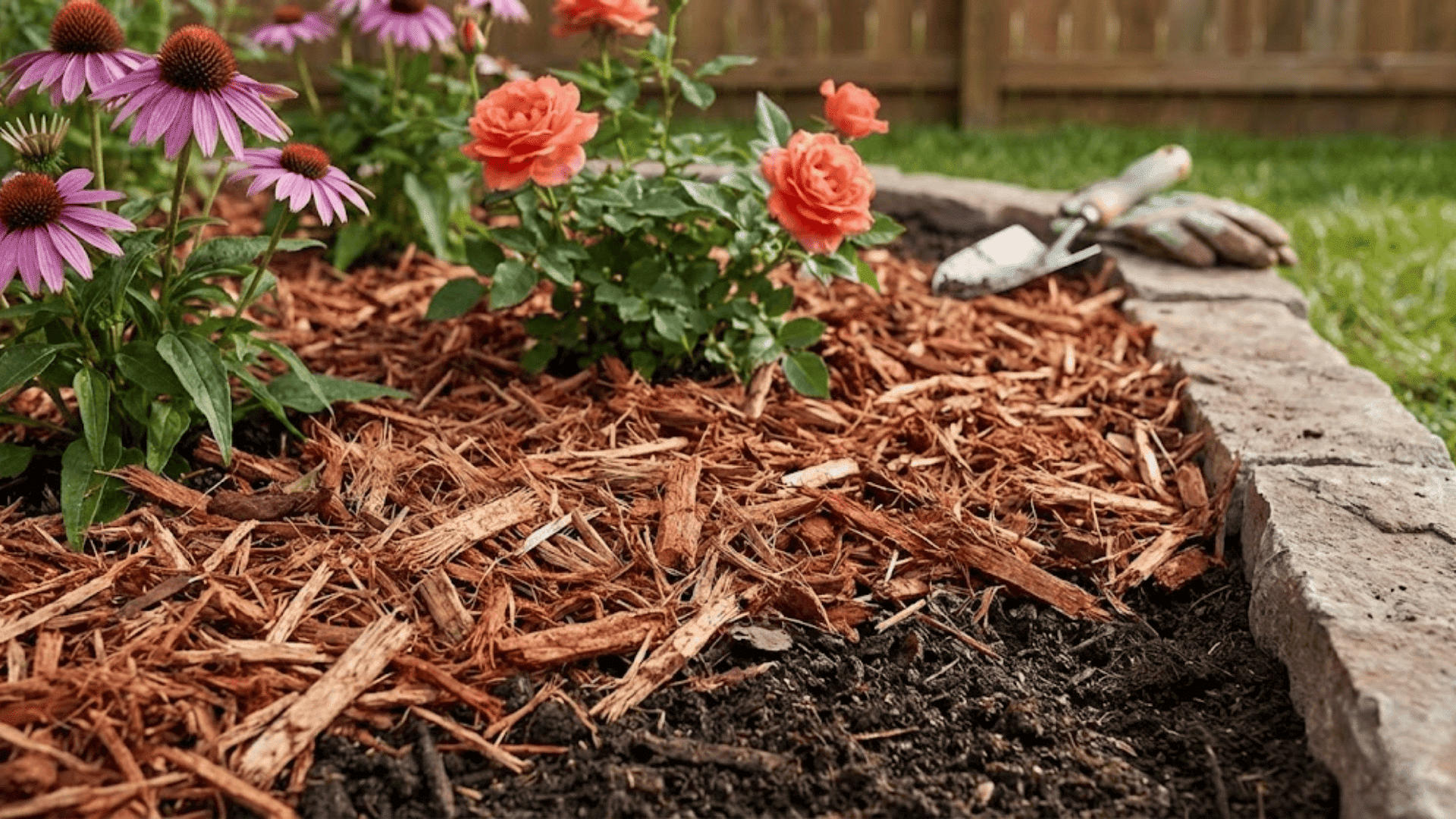
Main Components: Shredded hardwood and bark pieces from various tree species
This is the go-to choice for most ornamental flower beds, and for good reason. It strikes the perfect balance between function and beauty, with a natural look that complements nearly any garden style.
Shredded hardwood breaks down at a moderate pace, gradually enriching your soil while staying put through wind and rain. It holds moisture beautifully and creates a dense mat that keeps weeds from getting a foothold.
2. Pine Bark & Pine Straw
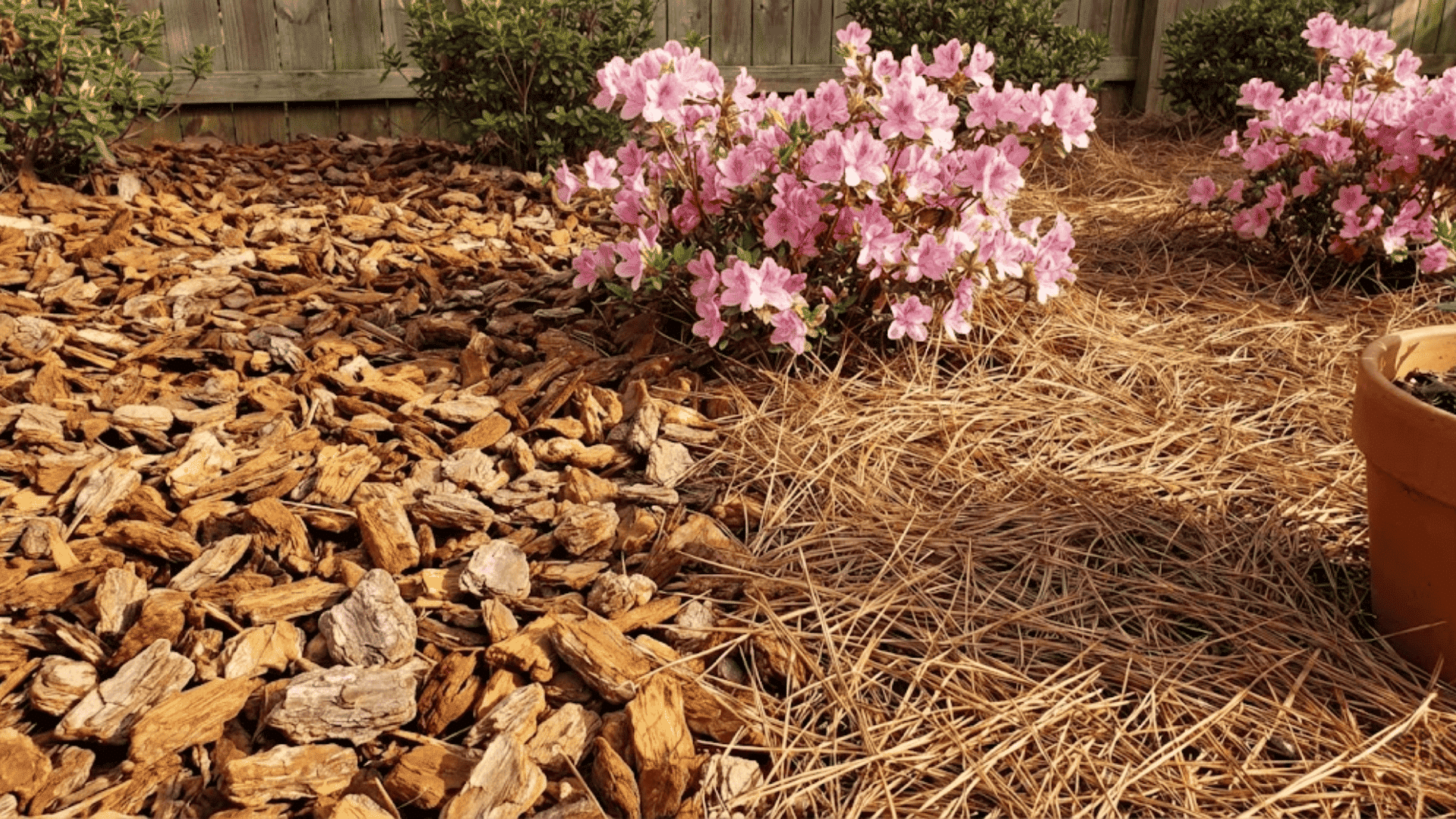
Main Components: Pine bark nuggets or shredded pine bark, pine needles
Pine products bring that rustic, woodland charm to your beds. Pine bark nuggets are chunky and long-lasting, breaking down more slowly than hardwood options.
Pine straw, made from fallen pine needles, is lightweight and ideal for sloped beds where heavier mulches could wash away. Both options are slightly acidic, making them ideal for azaleas, hydrangeas, and other acid-loving blooms.
3. Compost
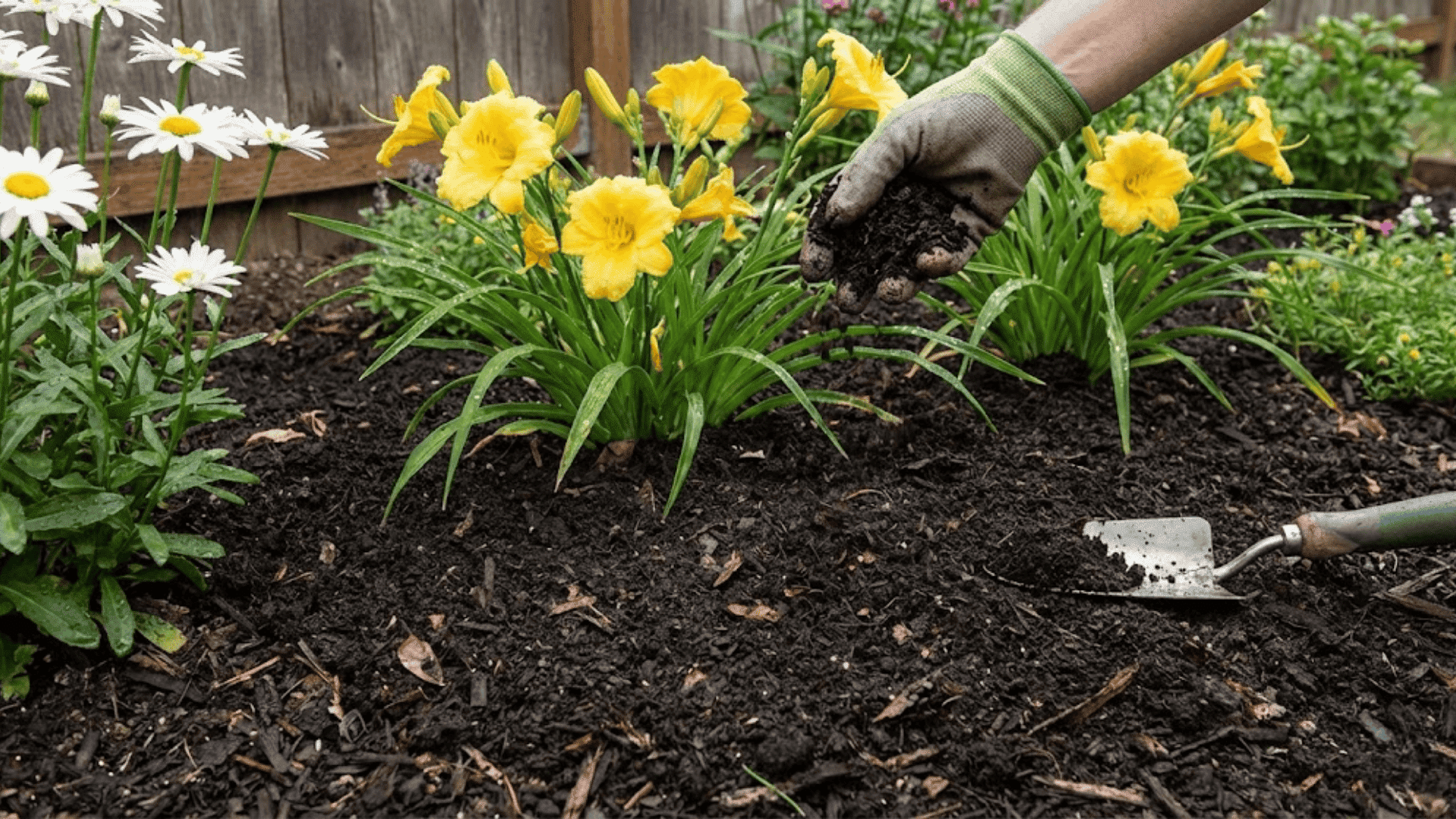
Main Components: Decomposed organic matter, including plant material, food scraps, and yard waste
Compost is less of a traditional mulch and more of a soil superfood. It’s packed with nutrients that feed your flowers directly, improving soil structure and encouraging beneficial microbial activity.
The texture is finer than wood-based mulches, so it works best when spread in thinner layers or gently worked into the top inch of soil. It breaks down quickly, which means more frequent applications but also faster soil improvement.
4. Straw & Leaf Mulch
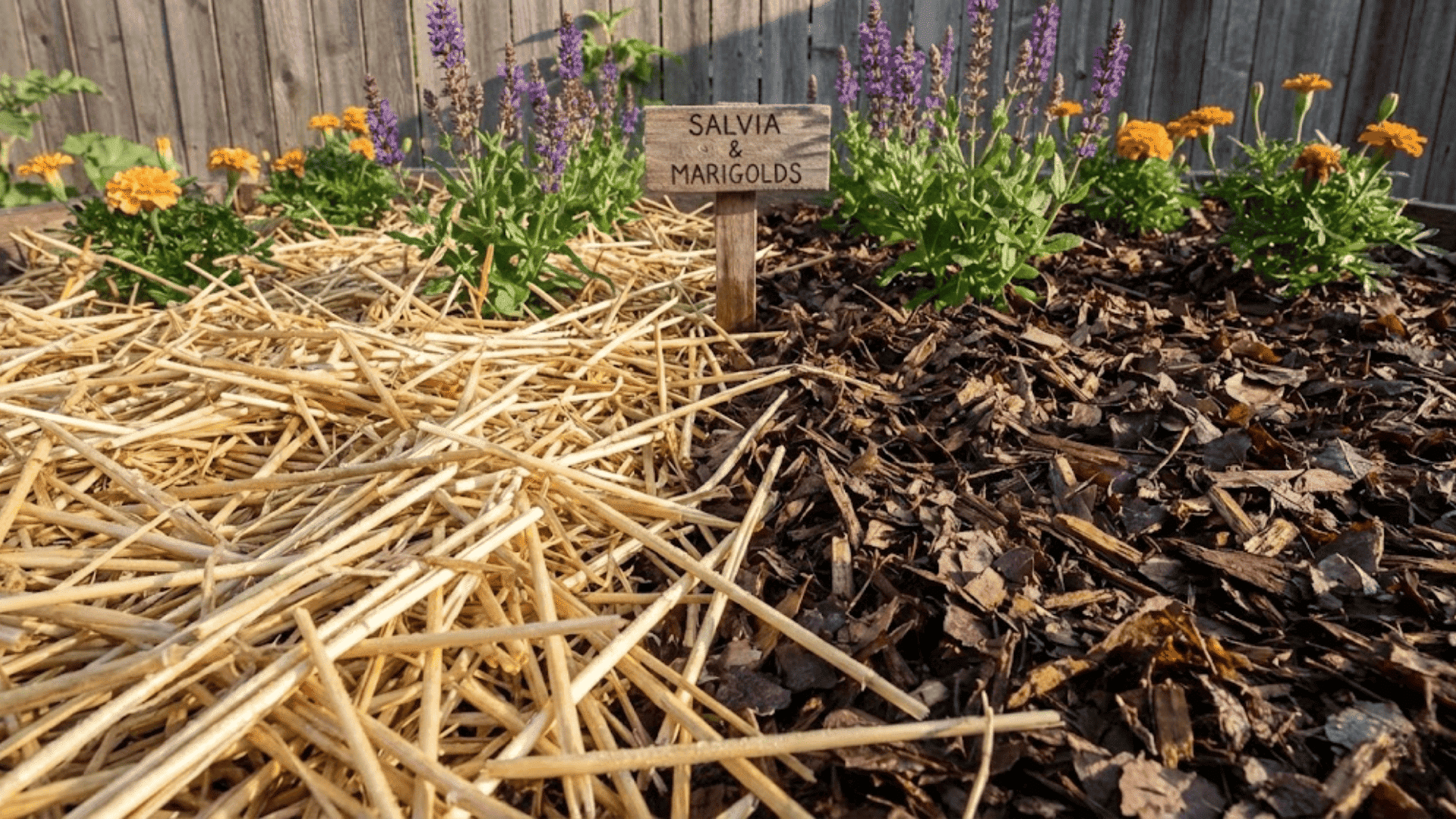
Main Components: Dried straw or shredded fallen leaves
These are budget-friendly options that work surprisingly well, especially if you have access to them on your property. Shredded leaves create a softer look and break down faster, feeding your soil with organic matter.
Straw is lighter and fluffier, ideal for temporary protection or vegetable gardens. Just make sure your straw is seed-free, and your leaves are properly shredded to avoid matting.
5. Cocoa Bean Hulls
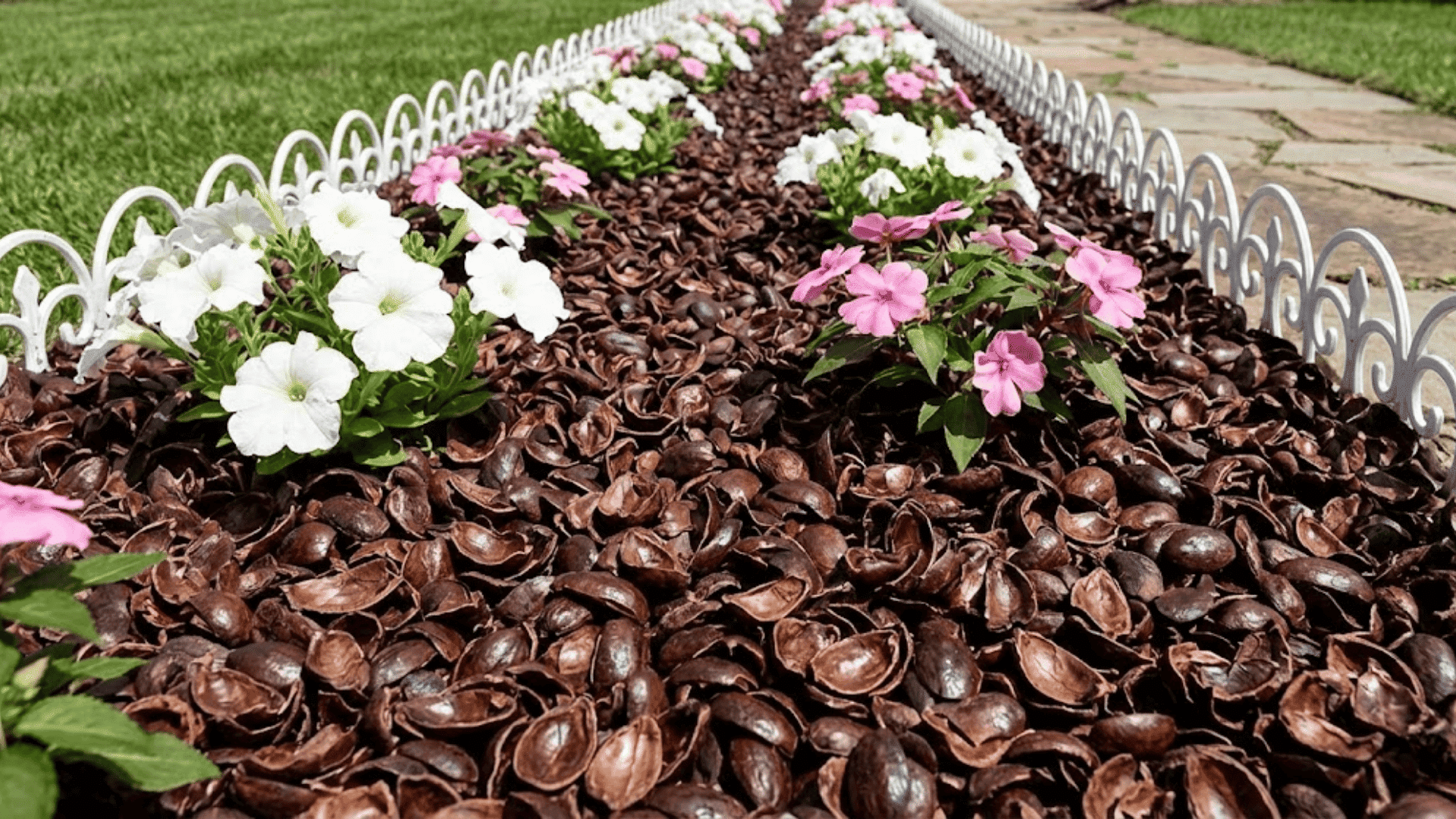
Main Components: Shells from processed cocoa beans
Cocoa hulls offer something unique with their rich, chocolate-brown color and subtle sweet aroma that fades over time. They’re lightweight and hold water well, creating a tidy appearance in formal flower beds.
However, they can develop mold in consistently wet conditions and tend to compact. The biggest consideration is safety: these hulls contain theobromine, which is toxic to dogs and cats, so skip this option if pets roam your garden.
6. Gravel, Stone & Rubber Mulch
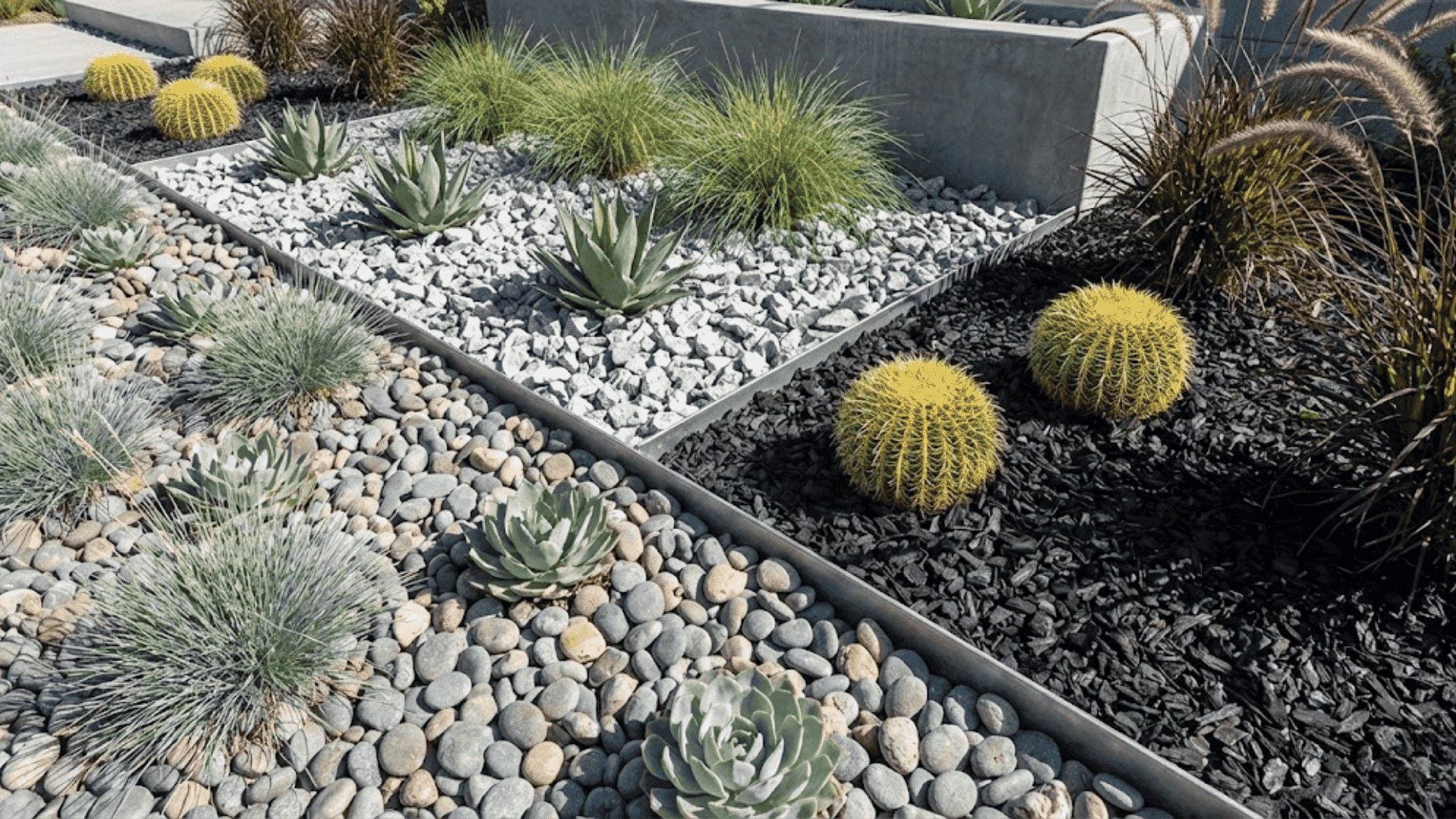
Main Components: Crushed stone, river rock, pea gravel, or recycled rubber pieces
Inorganic mulches last for years without needing replacement, making them appealing for low-maintenance landscapes. They’re fantastic for pathways, rock gardens, or modern minimalist designs.
However, they don’t feed your soil or improve its structure. Stone absorbs and radiates heat, which can stress plants in hot climates. Rubber mulch can leach chemicals and shouldn’t be near edibles or sensitive plants.
For thriving flower beds, organic options typically perform better.
How to Choose the Right Mulch for Your Flower Beds?
Picking the right mulch isn’t just about grabbing what looks pretty at the garden center. It’s about matching your choice to your garden’s unique conditions and your own gardening style.
- Consider What You’re Growing: Perennials benefit from long-lasting mulches, while annuals give you flexibility to change things up each season.
- Factor in Your Climate: Dry regions need moisture-retaining organic mulches, while wet areas do better with options that promote drainage.
- Decide What Matters Most: Prioritize aesthetics for visible beds or focus on soil enrichment for healthier, more vigorous blooms.
- Think About Your Soil’s Current Condition: Acidic mulches like pine work well for specific plants, while neutral options suit most flowers.
- Balance Your Budget and Time: Organic mulches cost less upfront but need annual replenishing, while inorganic options are a one-time investment.
Taking a few minutes to assess these factors now will save you from frustration later and help your flower beds reach their full potential.
Mulch for Flower Beds: Color, Texture & Aesthetics
The visual impact of mulch shouldn’t be underestimated. It sets the tone for your entire garden and can either complement your flowers or compete with them for attention.
| Mulch Type | Aesthetic Appeal | Considerations |
|---|---|---|
| Natural Mulches | Earthy tones that blend with most garden styles | Eco-friendly, safer for plants, color fades naturally |
| Dyed Mulches | Vibrant, uniform color that stays bold longer | May contain chemicals, can look artificial |
| Light-Colored Mulches | Brightens shaded areas, makes flowers pop | Shows dirt easily, can create harsh contrast |
| Dark-Colored Mulches | Rich backdrop that highlights vibrant blooms | Absorbs heat, may overwhelm delicate gardens |
Choose colors that boost rather than overshadow your flowers. Natural browns and tans work universally, while bolder colors should match your garden’s overall personality and planting palette.
Proper Mulch Application
Applying mulch correctly is just as important as choosing the right type. A few simple techniques will help you get the most benefit without harming your plants.
- Mulch in spring after the soil has warmed up, giving your beds protection through the growing season
- Spread mulch two to four inches deep for optimal moisture retention and weed suppression without suffocating roots
- Keep mulch pulled back a few inches from plant stems and crowns to prevent rot, pests, and fungal issues
- Refresh your mulch layer annually or as needed when it thins out or breaks down
Getting these basics right means healthier plants, less weeding, and a garden that looks polished from spring through fall.
The Closing Note
Finding the best mulch for flower beds really comes down to understanding what your garden needs and how you want it to look.
Organic options like shredded bark and compost feed your soil while protecting your plants, making them ideal for most flower beds. Inorganic choices have their place too, especially in decorative spaces.
Once you’ve made your choice and applied it properly, you’ll notice the difference in how your flowers respond.
What’s your favorite mulch to use? Share your experience in the comments, and let’s swap gardening stories.