Some gardens look peaceful until you actually try to get something done in them. The plants are fine. The problem is usually everything around them: a path that pinches in right where the wheelbarrow needs to turn, a hose that catches on every pot, a shed door blocked by half-forgotten bins, or a muddy patch that somehow becomes part of every job.
Those little annoyances add up. They make quick tasks feel drawn out and turn simple weekend plans into a series of stops, starts, and mild frustration. The good news is that most backyard bottlenecks don’t need a major redesign. A few smart fixes can make the same garden feel easier to use almost right away.
1. The Main Path Is Too Narrow for Real Garden Work
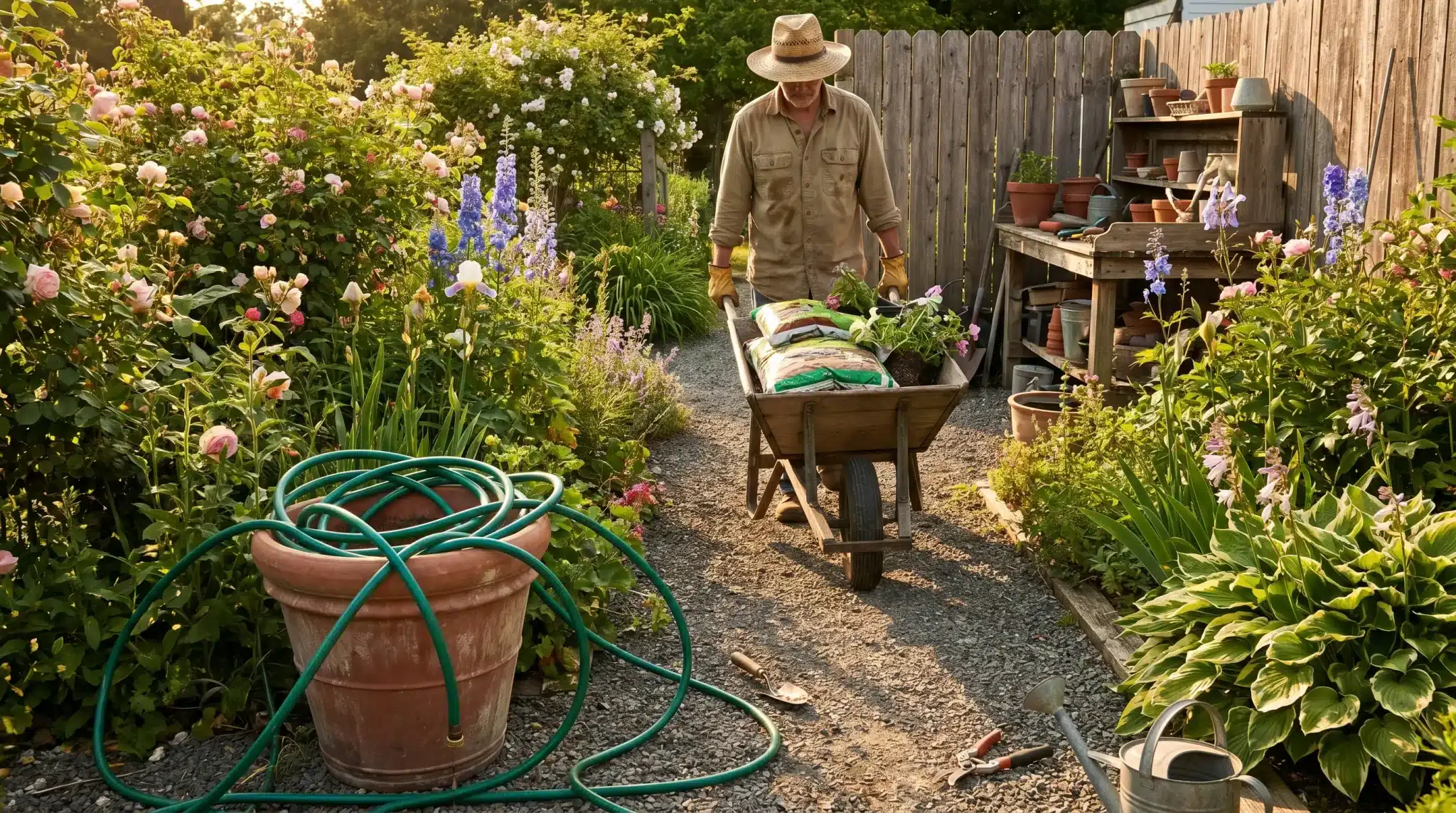
A narrow path can look sweet in a quiet garden photo. It’s less charming when you’re trying to move compost, pruning debris, seed trays, or a full watering can without brushing against every plant on the way.
The main route through the garden should match the work that happens there. Look at the path between the back door, storage area, water source, and the beds you visit most. If you have to turn sideways, lift the wheelbarrow over an edge, or step into the soil to let someone pass, the path is doing more decorating than helping.
Start with the busiest stretch. Trim back plants that spill into the walkway, reset loose edging, and choose a surface that stays steady after rain. Gravel, compacted stone, pavers, and mulch can all work in the right yard. The point is to make movement feel simple. A garden path should let you carry, roll, kneel, and work without thinking about every step.
2. Tools Live Too Far From Where They’re Used
Few things kill momentum faster than walking back and forth for the same small tools. Pruners, gloves, twine, plant tags, scissors, a trowel, and a weeder have a way of ending up everywhere except where you need them.
A small tool-drop zone fixes a lot of that. It doesn’t need to be elaborate. A weather-safe box, a covered wall rack, a narrow bench with storage underneath, or a sturdy bucket system can handle the basics. Keep it close to the beds you use most, and keep it limited to the tools you reach for every week.
This is the kind of simple setup that supports less work in the garden without changing the whole yard. When the everyday tools already live near the everyday tasks, quick jobs stay quick.
3. The Hose Area Turns Into a Daily Tangle
A bad hose setup can make watering feel oddly dramatic. The hose catches on chair legs, drags across mulch, clips the edge of a planter, then folds into a kink just when you’ve reached the last bed.
Watch the hose the next time you water. Where does it pull? Where does it snag? Which plants get brushed or flattened along the way? Those trouble spots usually show you what needs to change.
A wall-mounted reel, hose pot, guide stakes, or shorter hose can make a surprising difference. It also helps to clear the area around the spigot. Add a small patch of gravel, pavers, or stepping stones so you’re not standing in a puddle every time you turn the water on. Watering should feel like part of the garden’s rhythm, not a small fight before breakfast.
4. Soil, Mulch, and Compost Have Nowhere Sensible to Land
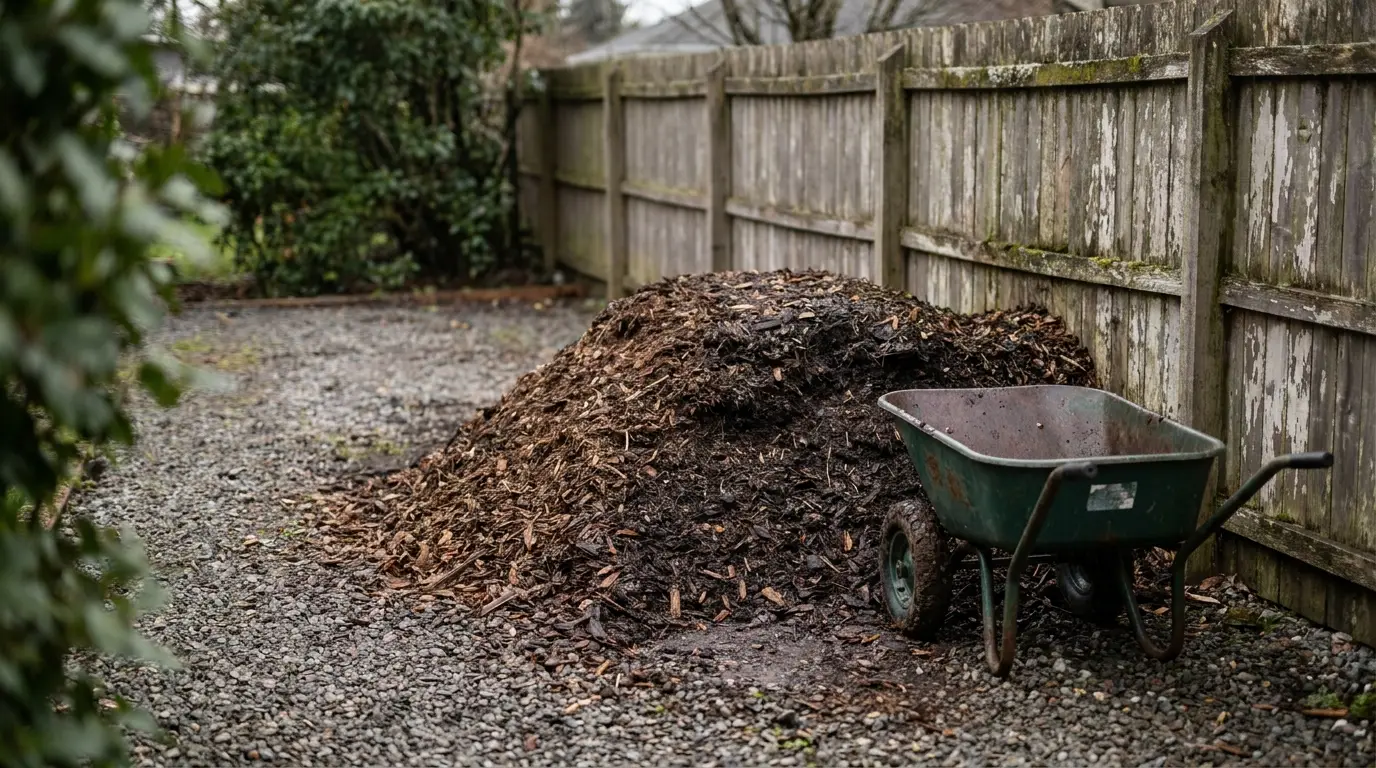
Garden materials arrive in awkward amounts. A few bags of compost become a pile by the door. Mulch takes over the driveway. Soil amendments sit right where the trash bins need to go. Then every trip to the garden starts with lifting, dragging, or stepping around something.
Pick a landing spot before the next delivery or garden-center run. The best place is close enough to the beds to reduce hauling, but far enough away that it doesn’t block paths or bury plants. A flat patch near a side gate, shed, or back corner often works better than the middle of the driveway.
The route matters as much as the spot. If a cart or wheelbarrow can roll from the drop zone to the garden without sharp turns, loose steps, or soft ground, the whole job feels lighter. Materials move faster when the yard gives them a clear way through.
5. Storage Protects the Tools but Blocks the Workflow
A shed or garage can hold everything and still be annoying to use. If the rake is behind the folding chairs, the gloves are in a mystery bin, and the potting mix is buried under holiday decorations, storage has turned into another chore.
Arrange the space around how you actually use it. Keep the tools you grab most often near the front, where you can reach them without moving half the shed first. Hang rakes, shovels, and other long-handled tools so they stay upright instead of sliding into a messy pile. Store heavy bags and bins low, where they’re safer to lift, and give small things like clips, labels, gloves, and seed packets their own shallow drawer or clear container. It’s much easier than digging through one crowded tub every time you need something.
Good storage also helps tools last longer. Cleaning, drying, and putting items away in dry, organized garden tool storage can prevent rust, damage, and the familiar hunt for the one tool you need. A storage area should make tomorrow’s work easier, not hide it behind yesterday’s clutter.
6. Bigger Spaces Need Bigger Access Than People Expect
Some gardens eventually grow beyond a few beds and a hook by the back door. A larger yard, hobby farm, shared growing space, or small nursery may need room for carts, mowers, shelving, trays, tarps, soil bags, and seasonal equipment that moves in and out all year.
At that point, the entrance to the storage or work building starts to matter. A narrow doorway can turn every task into a careful shuffle, especially when equipment has wheels, handles, sharp corners, or loose materials stacked on top. It also makes organizing harder because the space has to work around the opening.
Before a storage building becomes a long-term work area, it’s worth thinking through the access itself. That might mean comparing roll-up openings, wider framed entrances, or commercial garage doors for sale before shelves, carts, and seasonal equipment start filling the building. The right opening lets bulky garden gear move cleanly instead of creating one more place where the work gets stuck.
7. The Cleanup Zone Is an Afterthought
Most garden mess happens when the job is technically over. Muddy boots land by the door. Wet gloves get dropped on a bench. Pruners disappear under empty pots. Half-used soil bags stay open because nobody wants one more task at the end of the day.
A small reset area keeps that mess from spreading. Think of it as the place where garden work ends. A boot tray, brush, hook rail, shallow bin, and a spot for tools to dry can do more than a big storage overhaul if they’re placed where you naturally come in from the yard.
Keep it simple enough to use when you’re tired. The best cleanup setup makes putting things away easier than leaving them scattered. When every garden session has a clear ending point, the space is much nicer to return to the next day.
Make the Garden Easier Before Making It Bigger
When a garden starts feeling frustrating, it’s easy to think the answer is more: more tools, more beds, more storage, more weekend projects. Often, the better fix is smaller and more practical. Clear the route you use most. Move daily tools closer. Give heavy materials a landing spot. Make cleanup easy to repeat.
Backyard bottlenecks hide inside ordinary routines, which is why they’re so easy to ignore. Once they’re fixed, the whole garden feels calmer. The work moves better, the mess stays contained, and a few simple chores stop taking over the day.