I used to spend Saturdays mowing, weeding, scrubbing moss off the paving, and treating the decking before it rotted again. By Sunday afternoon I had a garden that looked fine and a back that did not. I had also, somewhere along the way, stopped enjoying the garden itself.
So I changed how I thought about it.
Not the planting first. Not new tools. The structure. What was actually creating all that work, and which of it I could simply design out.
What follows is what I learned. It is not a list of clever shortcuts for people who love gardening but want a slightly easier time. It is for people who want the garden to be a place they sit in, not a project they manage.
The Work Is Built in Before You Plant Anything
The first thing to understand is that most of the maintenance your garden demands has nothing to do with your plants.
It comes from the bones of the space. The lawn. The paving. The timber. The drainage. The edges. Decisions that were made when the garden was built, often by someone who is no longer responsible for keeping it tidy.
A lawn will need mowing every week of the growing season regardless of which grass mix you sowed. Softwood decking will rot if you do not oil or stain it every couple of years. A patio laid without proper falls will hold water, grow algae, and need pressure-washing twice as often as one that was set up correctly.
You can swap a few thirsty plants for drought-tolerant ones and save yourself a watering can a week. Fine. But the structural choices are where the real hours live.
This is the bit that most low-maintenance advice skips, and it is exactly where the savings sit. If you are serious about making a garden easier to maintain, the materials and the layout matter more than the plant list.
Audit What Is Actually Eating Your Time
Before you change anything, work out where the hours go.
Sit down on a Sunday evening and write out what you did in the garden that week. Be honest. Mowing, twenty minutes. Edging, ten. Pulling weeds from the gravel path, fifteen. Pressure-washing the patio, an hour. Treating the fence, half a Saturday once a year.
Then divide it into two categories. Work that the garden creates because of how it was built. Work that the garden creates because of what is growing in it.
Most people are surprised by the split. The fiddly little jobs, weeds in paving joints, moss on slabs, rotting timber, are usually doing more damage to the weekend than the planting beds are. Beds are visible, so people blame them. Joints in paving are not, so they get a pass.
Once you can see what is taking the time, you can decide what to fix.
Lose the Lawn, or Shrink It
Lawns are the single biggest source of weekend work in most gardens.
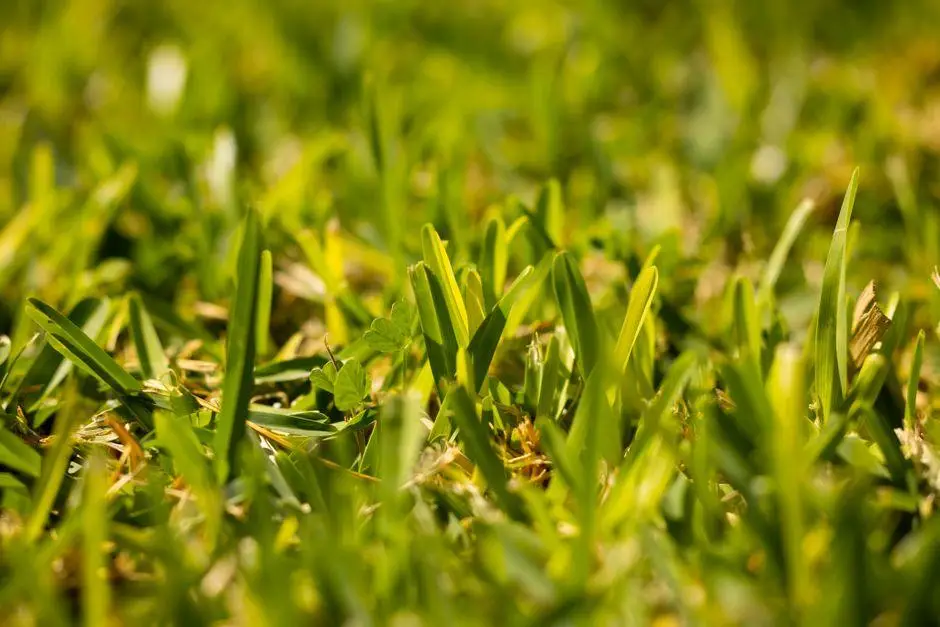
They need mowing weekly through summer, edging, feeding, scarifying, treating for moss, and managing in the shaded patches where the grass struggles no matter what you do. The grass in your shadiest corner has probably been a problem for years, and no amount of expensive seed will fix the underlying issue: there is not enough light there for grass.
You have three sensible options.
Cut the lawn smaller. Convert the difficult bits, the shaded edges, the awkward corners by the fence, into planted beds or paved seating. A smaller, regular-shaped lawn cuts faster, edges easier, and looks better than a bigger one that has bare patches.
Replace it with ground cover. Pachysandra, vinca, ajuga, and hardy geraniums all spread to fill space, suppress weeds, and need almost nothing once established. They tolerate shade better than grass does. The Royal Horticultural Society has a good guide on choosing ground cover plants for different conditions.
Go to artificial grass. Modern products look convincing if installed properly, drain well, and need no mowing, feeding, or watering. They are particularly worth considering for families with dogs and small children where a real lawn becomes a churned-up mud bath by November.
None of these is right for every garden. But for most gardens, the lawn is doing more work than it is worth, and shrinking it is the single highest-impact change you can make.
Choose Materials That Do Not Fight You
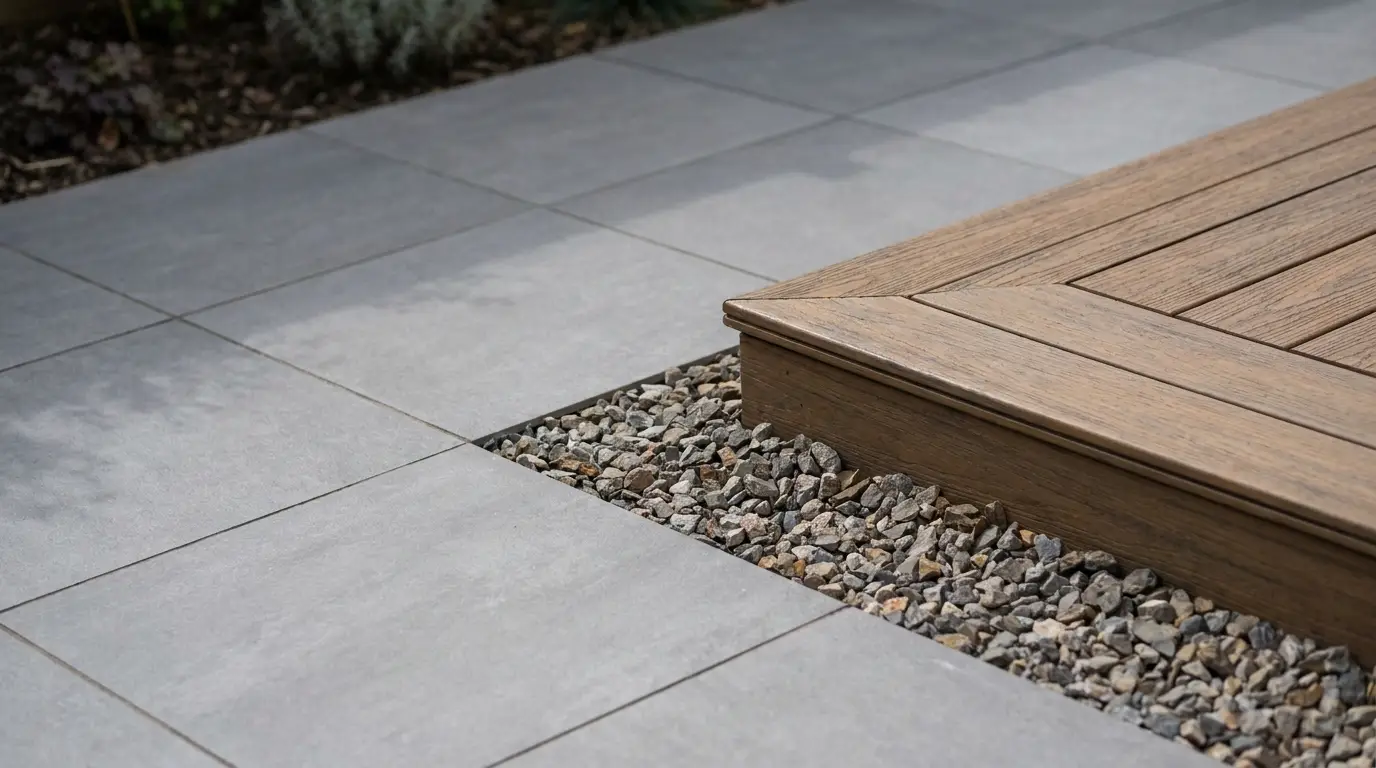
The materials you put in the ground decide how much time you will spend looking after them for the next twenty years.
Porcelain paving is effectively non-porous. It does not absorb water, does not stain, and resists moss and algae far better than sandstone or limestone. A pressure wash once a year keeps it presentable. It costs more than concrete or sandstone up front, and it saves that cost back in time and replacement over a decade.
Composite decking sits in the same category. Traditional softwood decking demands an oil or stain treatment every year or two, and if you skip a year it splinters, greys, and grows algae. Composite does not rot, does not need treating, and stays gripped underfoot when wet. Higher upfront cost. Lower lifetime cost.
Angular gravel laid over proper weed membrane is the cheap, low-effort surface most people get wrong. Two mistakes are common: rounded pebbles, which migrate underfoot and end up in the flower bed, and skimping on the membrane, which means the gravel becomes a weed bed within two summers. Get those two right and a gravel area needs raking once or twice a year.
The pattern is consistent. The garden that costs the least to build costs the most to maintain. The garden that is built properly costs more on day one and frees you on every weekend after.
Drainage Is the Boring Fix That Solves Everything
If your patio holds puddles, your paving grows moss faster than it should. If your soil sits saturated through winter, plants die and need replacing. If water from the lawn runs onto the path, the path needs cleaning more often.
Drainage is invisible when it works. People only notice it when it has failed. But it sits behind a startling proportion of the maintenance work an established garden generates.
Two things matter. Hard surfaces need a fall of roughly 1 in 80 directing water to a drainage point. Heavy clay soil may need land drains or French drains in problem areas. Both are unglamorous and both pay back quickly in reduced weekly work. The Society of Garden Designers has useful background on drainage in residential schemes if you want to read further before commissioning anything.
If you are designing or rebuilding a garden, this is the single thing not to compromise on. If you are inheriting an existing garden, walk it on the day after heavy rain and note where the water sits. Those are the spots that will keep demanding your time until they are fixed.
Plant for the Conditions, Not the Photo
People go to the garden centre, see something pretty, buy it, plant it, and then spend three years trying to keep it alive in a spot it was never going to thrive in.
A plant in the wrong conditions is a maintenance commitment. A plant in the right conditions largely looks after itself.
The principle is dull but it is what separates a garden that grows from a garden that gets watered constantly. Match the plant to the soil, the aspect, and the drainage. A shade-tolerant plant in shade gets on with it. The same plant in full sun struggles, wilts, and needs you.
For low-effort planting, the strongest choices are evergreen shrubs that hold their shape, ornamental grasses that need one cut a year in late winter, and ground cover that fills space and suppresses weeds. Pittosporum, viburnum tinus, miscanthus, hardy geraniums, alchemilla. None of them ask much. All of them give a long display for the work they take.
Avoid plants that need staking, deadheading, frequent dividing, or twice-yearly pruning unless you genuinely enjoy doing those things. Some people do, and that is fine. If you are reading this article, you probably do not.
Design out the Fiddly Bits
The shapes you give your garden matter as much as the materials you fill it with.
A rectangular lawn mows fast in straight lines. A lawn with three curves, a narrow strip down the side of the house, and a fiddly bit behind the shed takes twice as long and needs a strimmer for the corners.
A mowing edge, a brick or stone border laid flush with the lawn, lets the mower cut right to the boundary and removes the need to strim at all. It costs an afternoon to install. It saves you that afternoon back every summer.
Built-in storage means the cushions, the BBQ cover, the kids’ toys, all have a place to go. Tidying takes five minutes instead of twenty.
Irrigation on a timer handles the containers and any establishing plants during dry spells. You set it once. It runs. You stop carrying watering cans in August.
None of these are exotic. All of them sit in plain sight on most show gardens. They are not used at home because nobody designed them at the start.
Spend More Once, Not Less Every Year
If there is one principle behind all of this, it is the long view.
Cheap timber edging rots in five years and needs replacing. Stone edging laid properly lasts thirty. Block paving laid without a proper sub-base sinks and shifts and needs lifting and relaying inside a decade. The same paving laid correctly stays flat for twenty-five years.
The garden you build cheaply costs you in time every weekend for as long as you own the house. The garden you build properly leaves you alone.
I am not saying spend more than you can afford. I am saying that when you are choosing between two options and one costs 30% more, work out what the cheaper version will demand from you in maintenance over ten years. The expensive option is often the cheaper one in disguise.
Start With the Weekend You Want
The reason people end up with high-maintenance gardens is that nobody asks the question at the start.
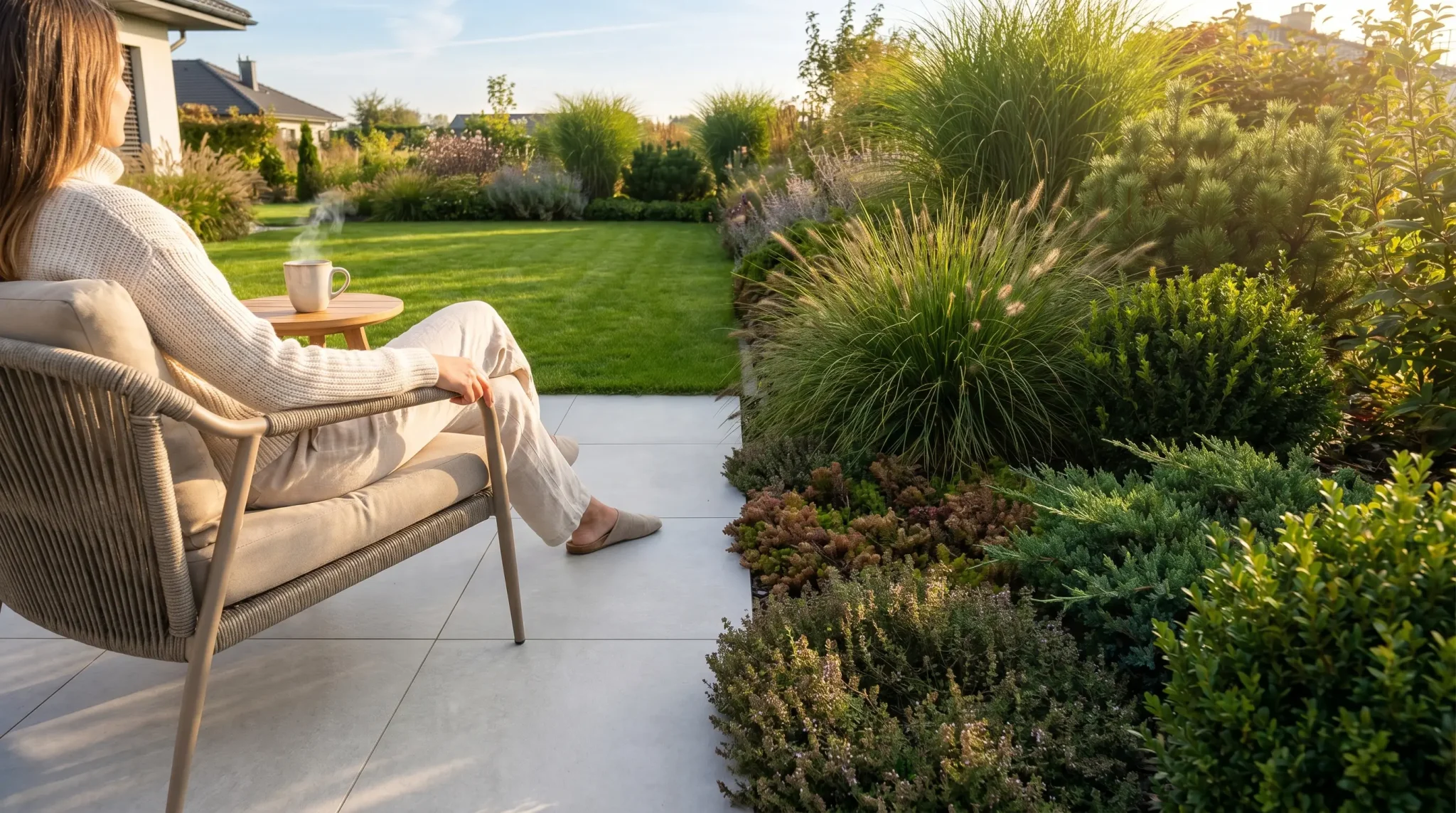
What do you want your Saturday morning to look like in five years? Coffee on the patio with a book? Lunch with friends? A run, a shower, and time with the family that does not involve a strimmer?
Decide that first. Then design the garden backwards from it.
Most of us inherit gardens, or build them in pieces over years, without ever sitting down to ask what we actually want from the space. The result is a compromise that demands constant attention because nobody chose what it should be. The fix is not more tips. It is fewer decisions delegated to whoever happened to lay the patio twelve years ago.
Watch your garden for a month. Write down where the hours go. Pick one structural change that will buy you a weekend back. Then pick another. You do not need to rebuild the whole space at once.
You just need to stop letting it run you.