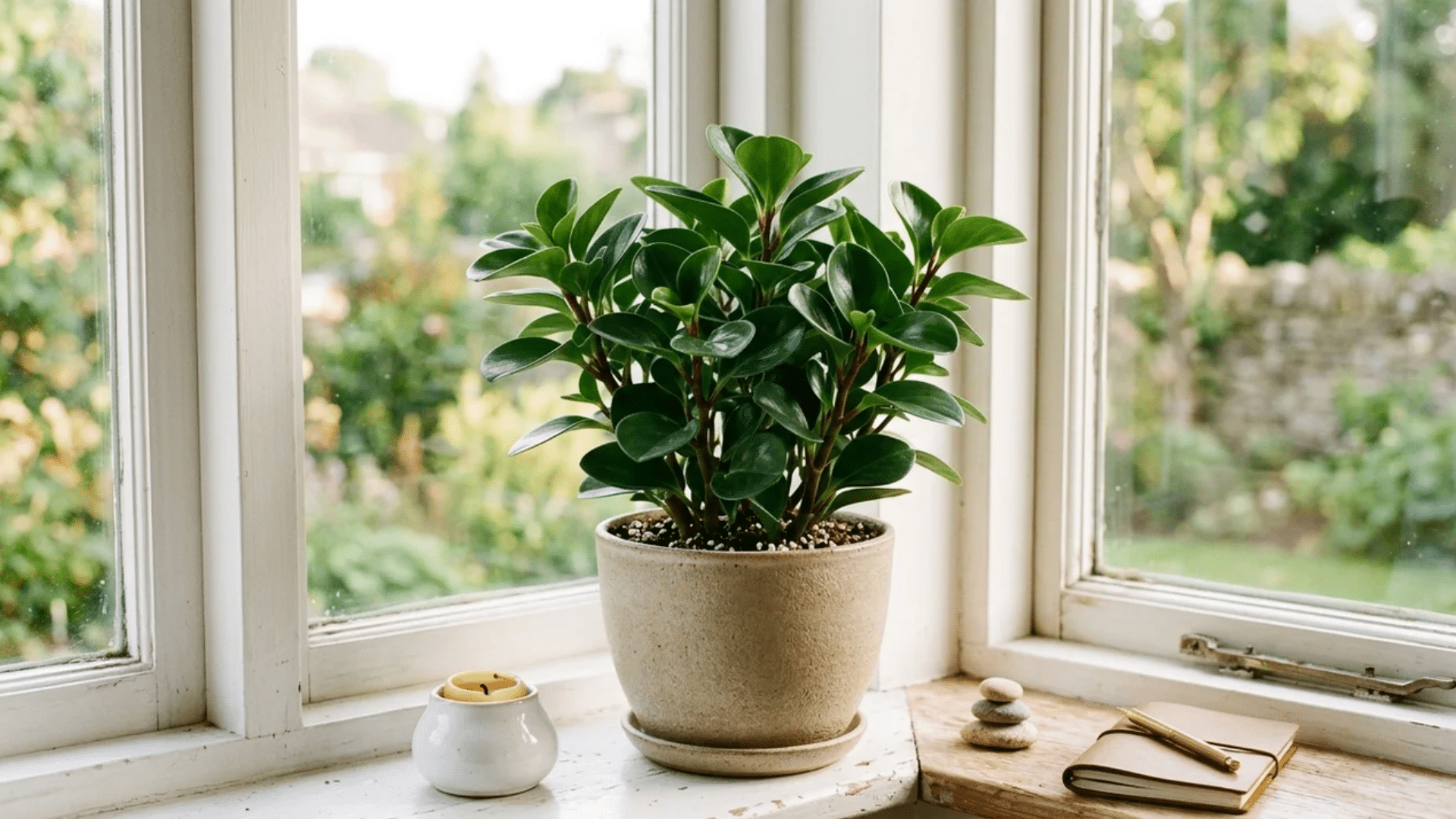
If you want a houseplant that looks sharp, asks for little, and still feels rewarding to grow, the baby rubber plant is a solid pick.
Its glossy, thick leaves and compact size have earned it a spot on windowsills, desks, and shelves everywhere.
Baby rubber plant care comes down to a handful of basics: light, water, and soil, and getting those right is what separates a plant that merely survives from one that fills out fast.
New to peperomias, or trying to rescue one that’s already struggling? The sections below cover what it actually needs indoors.
What Is a Baby Rubber Plant?
Despite the name, the baby rubber plant isn’t related to Ficus elastica, the tree usually called the true rubber plant.
It’s actually Peperomia obtusifolia, a compact tropical species native to southern Florida, the Caribbean, and parts of Mexico, Central America, and South America.
The nickname comes from its thick, glossy, rubbery-textured leaves, which store water the way a succulent does. That trait makes it forgiving of a missed watering here and there, which is exactly why it’s become a go-to for beginners, offices, and small apartments.
In the wild, the species has actually grown rare enough in Florida that it’s listed as endangered there, though every plant sold at a nursery is propagated stock, not wild-collected.
If you already keep other easygoing houseplants, you’ll find this one fits right in with other low-maintenance houseplant picks for small spaces.
Baby Rubber Plant Quick Care Summary
Here’s a fast reference for keeping your plant healthy, covering light, water, soil, temperature, humidity, and toxicity at a glance.
Use it as a checklist whenever you’re unsure about a specific requirement.
|
Factor |
Requirement |
|
Light |
Bright, indirect light |
|
Water |
Allow soil to dry between waterings |
|
Soil |
Well-draining, aerated potting mix |
|
Temperature |
65–75°F (18–24°C) |
|
Humidity |
Moderate to high |
|
Toxicity |
Non-toxic to cats and dogs |
Light Requirements for Baby Rubber Plant Care
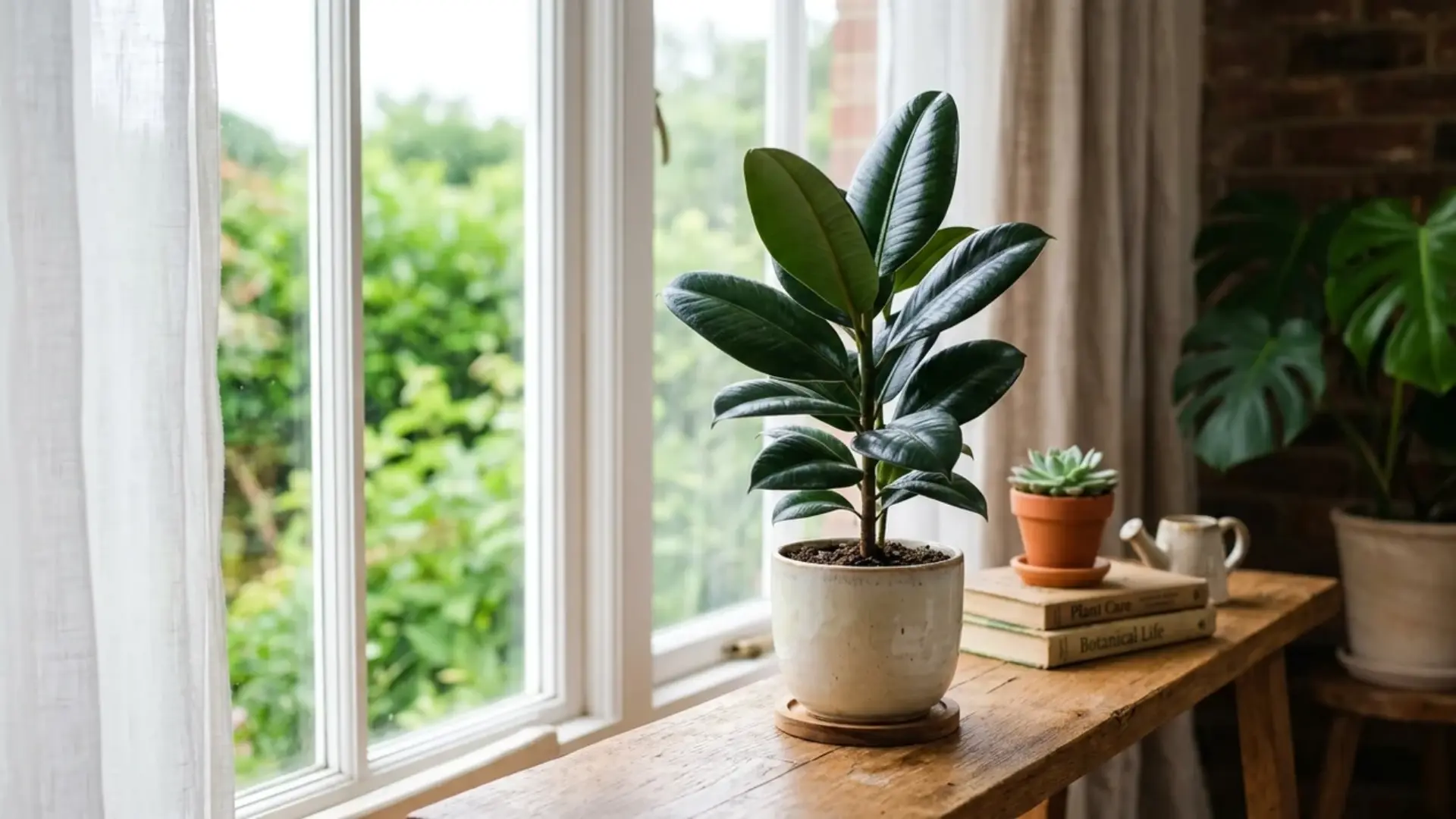
Light is one of the biggest factors in keeping this plant full and healthy.
Get it right, and you’ll see steady growth and strong leaf color; get it wrong, and the leaves will show it fast.
Ideal Light Conditions Indoors
This plant does best in bright, indirect light throughout the day. In its natural habitat, taller trees filter out harsh sun, so it hasn’t evolved to handle intense direct exposure.
Place it a few feet from a bright window, and keep it out of direct midday sun that could scorch the leaves. If you’re growing a variegated type, give it slightly brighter light than usual to help it hold its pattern.
Signs of Too Much or Too Little Light
The leaves tell you fairly clearly when light isn’t right:
- Dull, faded, or scorched leaves signal too much direct sun
- Slow growth or leggy stems point to insufficient light
- Variegated leaves reverting to solid green often mean low light
How to Water a Baby Rubber Plant
Watering is where most people go wrong with this plant. Water only when the top inch of soil feels dry, and cut back on frequency in winter.
Watch for these signs:
- Yellowing leaves and mushy stems mean overwatering
- Wrinkled or wilting leaves signal underwatering
- Swollen, corky bumps on leaf undersides point to edema, caused by excess moisture combined with low light
To prevent edema, water less often, keep the plant in bright indirect light, and use a pot with proper drainage so the roots never sit in soggy soil.
Soil, Potting, and Repotting
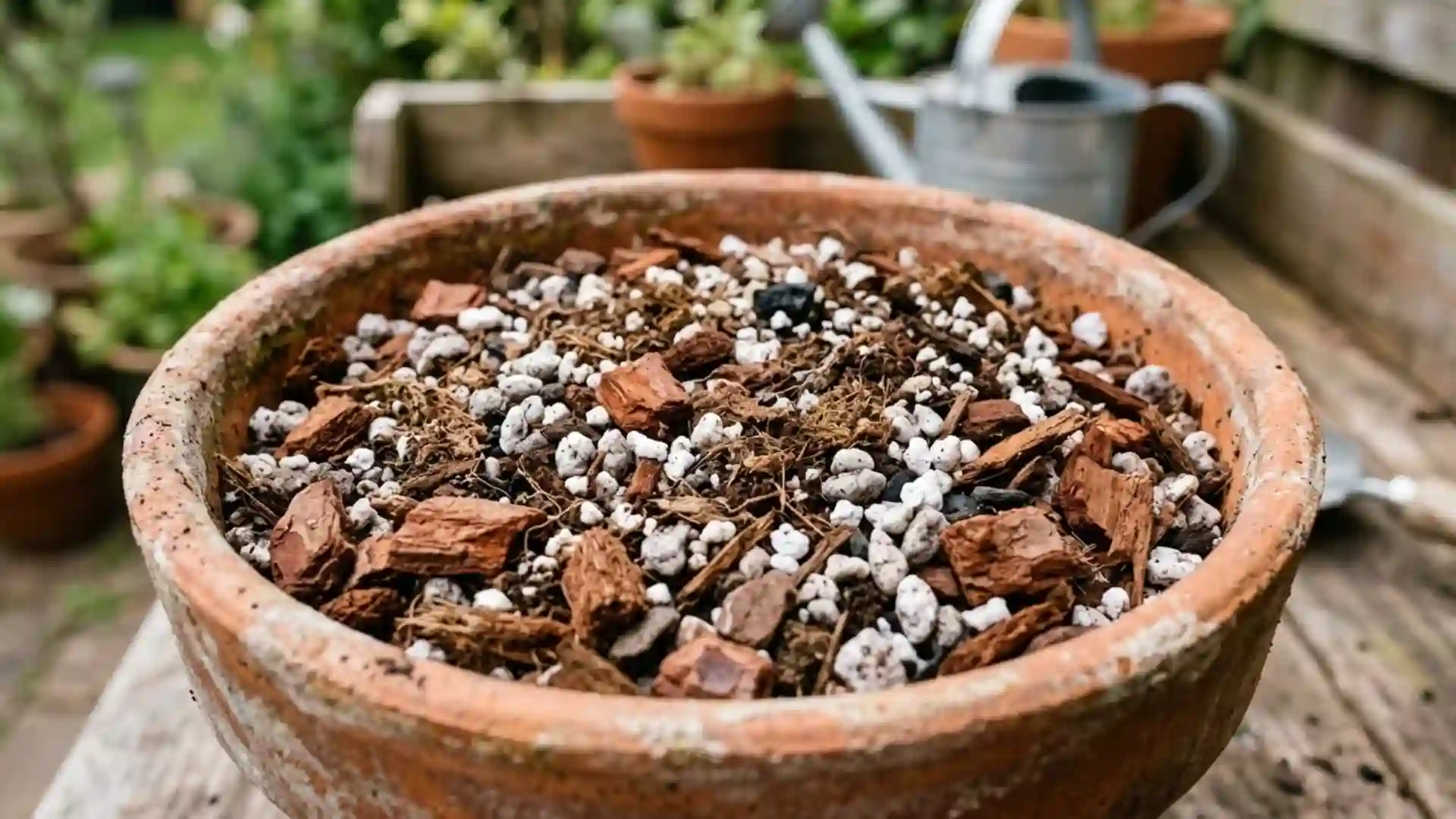
The right soil and pot size directly affect root health and how often you’ll need to repot. Getting these basics right prevents overwatering issues and gives roots room to grow without excess moisture buildup.
Best Soil Mix for Baby Rubber Plant
A well-draining mix is essential since this plant stores water in its leaves and doesn’t tolerate soggy soil.
Combine regular potting mix with perlite and a bit of orchid bark to improve aeration and drainage.
Choosing the Right Pot Size
Picking the correct pot size prevents excess moisture retention and supports healthy root growth.
|
Plant Size |
Recommended Pot Diameter |
Notes |
|
Small/Young Plant |
3–4 inches |
Avoid oversized pots that retain excess moisture. |
|
Medium Plant |
5–6 inches |
Ideal size for most mature plants. |
|
Large/Mature Plant |
7–8 inches |
Repot only if the roots are crowded. |
When and How to Repot
This plant is a slow grower with a fairly small root system, so it doesn’t need repotting every year.
I’m not fully certain of an exact universal timeline since it depends on pot size and growth rate, but roughly every one to two years, or whenever roots start circling the pot or poking through the drainage holes, is a reasonable rule of thumb.
- Choose a pot just one size larger
- Refresh the topsoil even if you skip a size change
- Repot in spring when the plant is actively growing
- Water lightly a day or two after repotting to ease transplant stress
Temperature and Humidity Needs
Baby rubber plants prefer indoor temperatures between 65-75°F (18-24°C) and don’t tolerate cold drafts or sudden temperature swings well, which can cause browning leaf tips.
Moderate humidity works fine for most homes, though slightly higher humidity encourages fuller, glossier growth. Avoid placing it near air conditioning vents, heaters, or drafty windows.
Keeping conditions steady, rather than perfect, is what really matters for long-term health.
Fertilizing Your Baby Rubber Plant
This plant is a low feeder, so it doesn’t need much fertilizer, and overdoing it can cause more harm than skipping it altogether.
Keep this in mind:
- Fertilize 3 times a year, during spring, summer, and fall
- Skip fertilizing in winter when growth slows down
- Dilute fertilizer to half strength to avoid overfeeding
- Always water first to prevent root burn
Best fertilizer types:
|
Fertilizer type |
Notes |
|
Balanced liquid fertilizer (e.g., 10-10-10) |
Easy to dilute and suitable for regular feeding. |
|
Slow-release granules |
Gradually release nutrients over several months. |
|
Organic options (fish emulsion, worm castings) |
Gentle on roots with a lower risk of overfeeding. |
Pruning for a Bushier Plant
A little pruning goes a long way with this plant. Pinch or snip leggy stems back to just above a leaf node in spring or summer, and it will branch out fuller instead of growing tall and sparse.
Save the healthy cuttings you remove, since they root easily and give you a free new plant instead of waste. Wipe the glossy leaves down with a damp cloth every so often too; dust buildup dulls their shine and can attract pests.
Common Varieties of Baby Rubber Plant
Baby rubber plants come in a few distinct varieties, each with slightly different foliage patterns and care needs.
Knowing the differences helps you choose the right one and avoid common buying mistakes.
Variegated vs Non-Variegated Types
Non-variegated baby rubber plants have solid, deep green leaves and tend to be the hardiest of the group.
Variegated types, like the Marble or Lemon Lime, feature streaks of cream, white, or light green mixed into the foliage.
Variegated varieties generally need brighter light to maintain their pattern, since lower light causes the leaves to slowly revert to plain green over time.
Peperomia Obtusifolia vs Peperomia Clusiifolia Ginny
Plants labeled ‘Tricolor’ or ‘Ginny’ with pink-edged leaves are often mistaken for baby rubber plant but are actually Peperomia clusiifolia, a closely related species.
The confusion happens frequently at nurseries due to similar leaf shape and inconsistent labeling.
Fortunately, care requirements for both plants are nearly identical, so this mislabeling rarely causes any real problems for the person growing it.
How to Propagate a Baby Rubber Plant
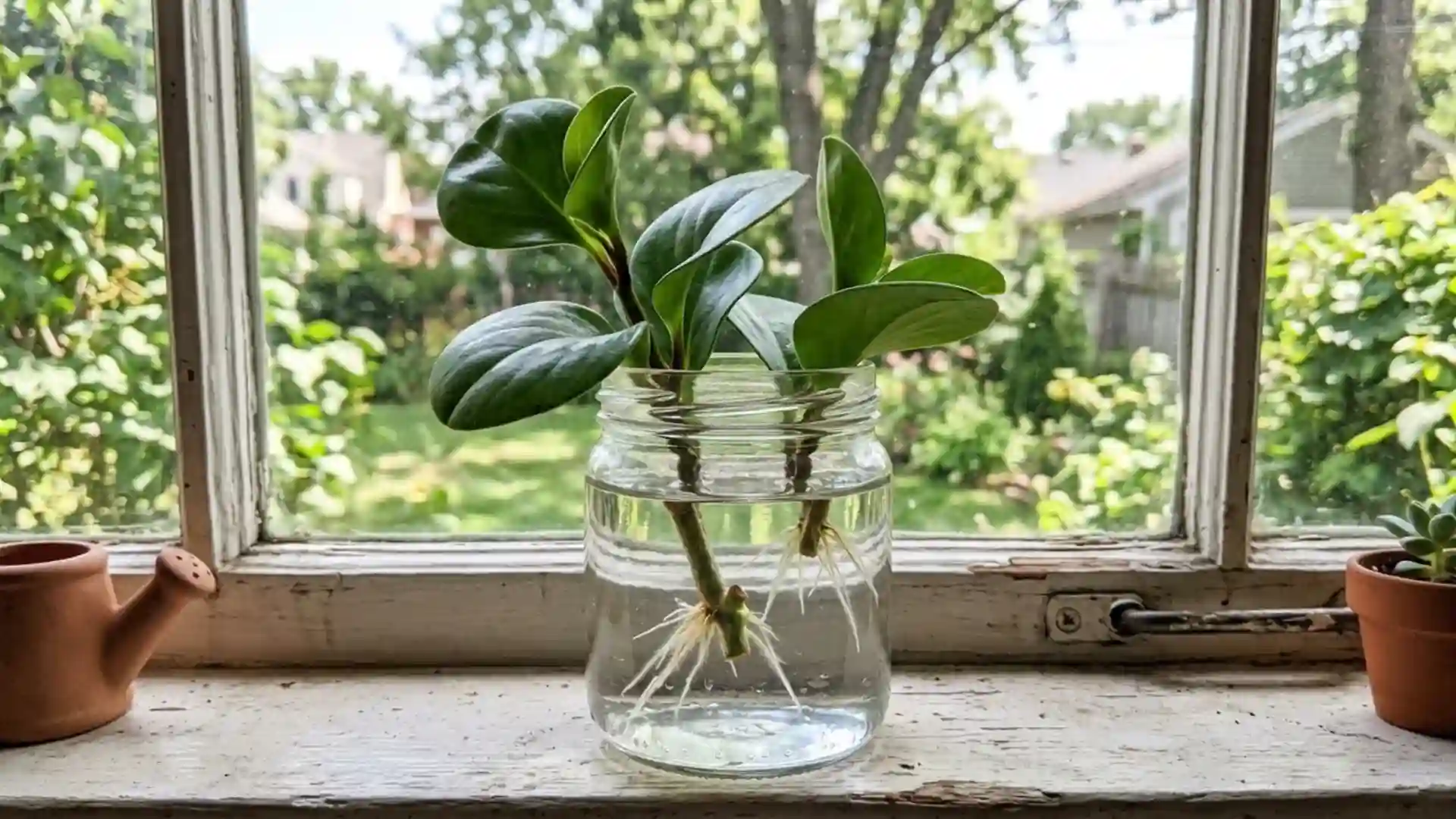
Propagating a baby rubber plant is simple and rewarding, letting you grow new plants from cuttings. Here are the main methods, each suited to different preferences and setups.
- Stem Cutting Method: Cut a healthy stem below a leaf node, let it callous briefly, then place it in soil or water to root.
- Leaf Cutting Method: Snip a healthy leaf with a bit of stem attached, then plant it in moist soil to develop new roots.
- Water vs Soil: Water rooting lets you monitor root growth visually, while soil rooting skips transplant shock and builds stronger roots faster. It’s the same basic trade-off you’d weigh when choosing between soil and water for a Monstera cutting.
Common Problems and How to Fix Them
Even with proper care, a few issues can crop up now and then. Here’s a quick reference to identify the problem and fix it before it spreads.
- Mealybugs: White, cottony clusters appear in leaf axils. Wipe them off with an alcohol-dipped cotton swab and follow up with neem oil.
- Spider mites: Fine webbing and speckled leaves signal an infestation. Raise humidity and rinse leaves with a strong stream of water.
- Yellowing leaves: Usually caused by overwatering. Cut back watering frequency and check that the pot drains properly.
- Drooping leaves: Often linked to root rot. Inspect the roots, trim any mushy sections, and repot into fresh, well-draining soil.
Catching these signs early makes recovery quick and straightforward, keeping your baby rubber plant full and healthy without lasting damage.
Baby Rubber Plant vs Rubber Plant (Ficus Elastica): Key Differences
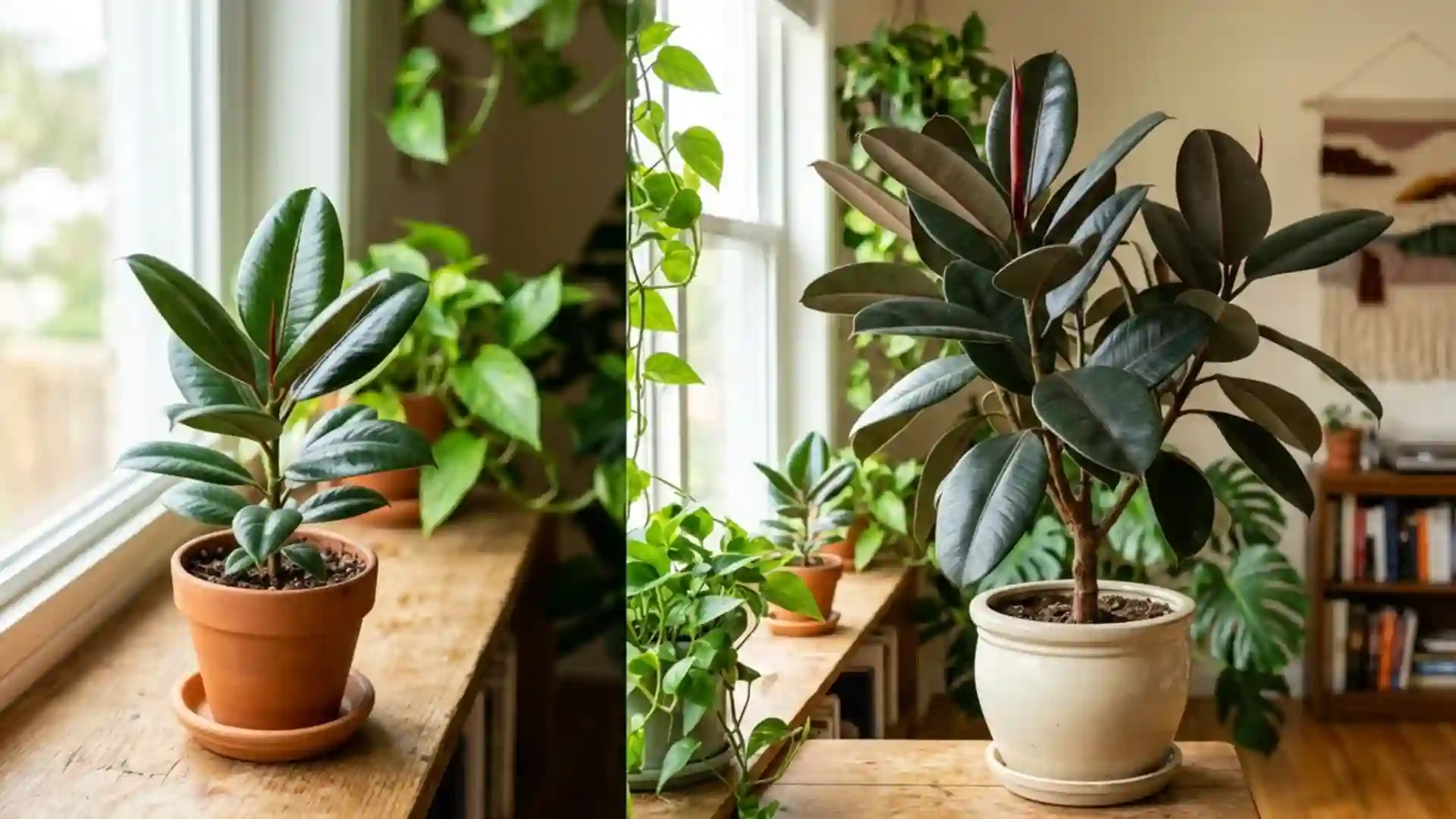
Despite sharing part of a name, these two plants belong to entirely different families and have distinct care needs. Here’s how they compare:
|
Feature |
Baby Rubber Plant (Peperomia obtusifolia) |
Rubber Plant (Ficus elastica) |
|
Plant Family |
Piperaceae |
Moraceae |
|
Mature Size |
Compact, usually under 1 ft tall |
Can grow several feet indoors |
|
Leaf Texture |
Thick, succulent-like leaves |
Large, leathery leaves |
|
Light Needs |
Bright, indirect light |
Bright light; tolerates some direct sun |
|
Toxicity |
Non-toxic to pets and humans |
Mildly toxic if ingested |
|
Growth Habit |
Slow-growing, bushy, compact |
Tall, upright, tree-like |
Knowing these differences helps set the right expectations, especially if you picked this plant expecting the larger, tree-like Rubber Plant instead.
Final Thoughts!
Caring for a baby rubber plant comes down to a few consistent habits: bright indirect light, watering only once the soil dries out, and light feeding during the growing season.
Once those basics are in place, this plant asks for very little else, which is why it’s become one of the easier additions to any indoor space.
I’ve kept mine going for years with almost no drama, and most of the trouble I’ve seen with this species traces back to overwatering rather than anything more complicated.
Have you grown a baby rubber plant, or run into an issue that isn’t covered here? Drop a comment below and let us know what’s worked for you.
Frequently Asked Questions(FAQ’s)
Does a Baby Rubber Plant Flower?
Yes, occasionally. It sends up small, greenish-white flower spikes that aren’t showy or fragrant, so most growers barely notice them.
How Long Does a Baby Rubber Plant Live?
With consistent care, it can live for many years, often over a decade indoors.
How Fast Does a Baby Rubber Plant Grow?
Growth is moderate, especially in bright light. Expect gradual bushing out rather than rapid height gain.
Is a Baby Rubber Plant Safe Around Pets?
The ASPCA lists Peperomia obtusifolia as non-toxic to cats and dogs, including variegated cultivars of the same species.
That said, it’s still smart to discourage pets from chewing on any houseplant, since large amounts of any greenery can upset a pet’s stomach.