It’s frustrating to see your houseplant struggle when you have given it so much effort.
All the credit goes to those notorious tiny bugs that appear around the stems, which make the new growth start curling.
Aphids on houseplants multiply quickly, and nearby plants give them somewhere else to feed. Thankfully, an infestation does not mean you have to start over.
What surprises me most is how easily these pests can show up, even when a plant seems perfectly healthy. And once you spot them, it makes you worry about the rest of your indoor plants.
The good news is that with the right approach, you can get rid of aphids and protect your other houseplants.
What are Aphids on Houseplants?
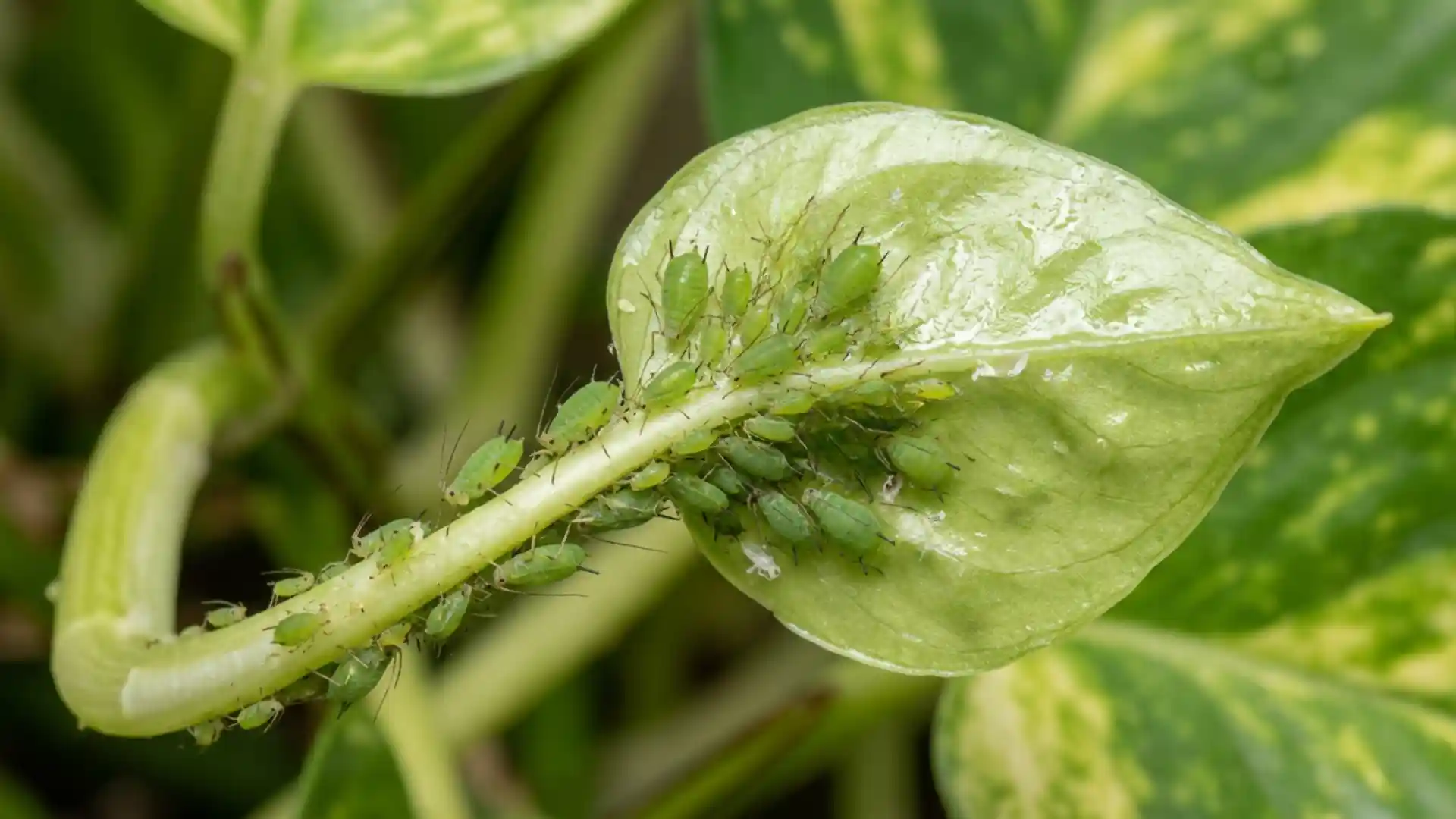
Aphids are small, soft-bodied insects that feed on plant sap, often gathering where growth is tender. You’ll find them along stems, beneath leaves, and around fresh shoots.
Lush pothos, philodendrons, and ferns can host them, along with flowering hibiscus and orchids.
If you grow basil or mint indoors, check those too. Tender growth provides accessible feeding sites.
What Aphids Look Like?
These tiny invaders might be small, but once you know their telltale features, they are easy to spot among your foliage, whichever common type of aphid you are dealing with.
|
Feature |
Description |
What to Notice |
|---|---|---|
|
Size |
Up to 1/8 inch long |
Single aphids can look like specks of dirt, but clusters on new growth and leaf undersides are easy to see |
|
Shape |
Soft, pear-shaped bodies with long antennae |
Two tube-like projections (cornicles) at the rear end |
|
Color |
Green, yellow, orange, red, pink, brown, or black, but some look white and waxy |
Color varies by species and by the plant they feed on |
|
Texture |
Soft-bodied, easily squished |
No hard shell or protective covering |
|
Wings |
Most are wingless, and winged aphids appear when overcrowded |
Winged versions signal a mature, spreading colony |
Common Signs of Aphid Infestations
Beyond spotting the bugs themselves, aphids leave behind clear evidence of their presence that your plants will display.
-
Sticky honeydew residue coating leaves and pooling on surfaces below your plant, sometimes with ants trailing up to feed on it.
-
Tight clusters of aphids congregating on new growth, stems, and leaf undersides.
-
Curled, yellowing, or distorted leaves that look weakened and misshapen.
-
Stunted growth with new shoots appearing smaller or failing to develop properly.
-
Shed white skins stuck to leaves and stems, which stay behind even after the live aphids are gone.
Why Do Aphids Appear on Houseplants?
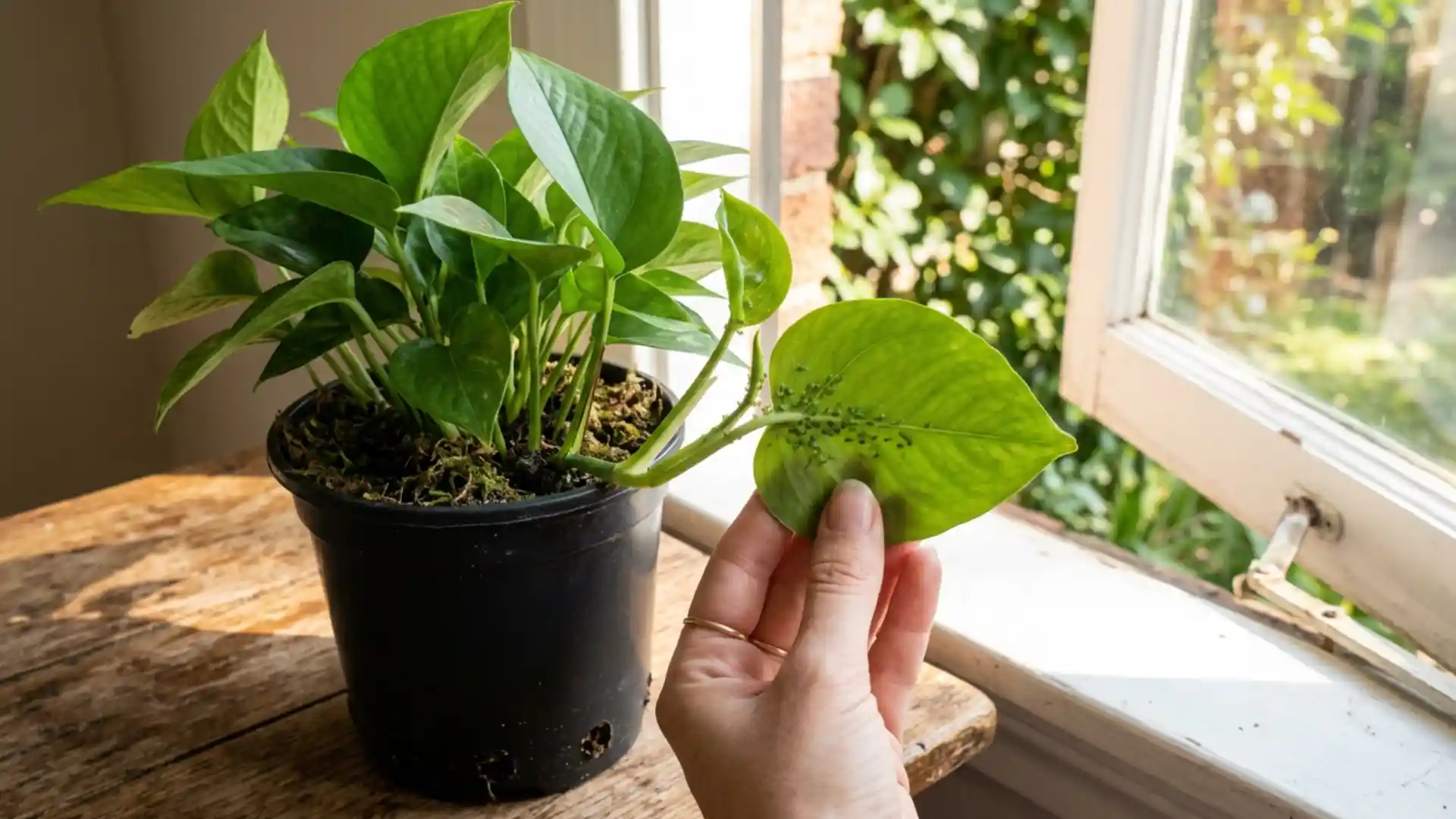
Indoor aphid outbreaks often start with a newly bought plant, too much nitrogen fertilizer, or warm, crowded rooms, and a stressed plant may be an easier target too.
1. Bringing Infested Plants Home
New plants from nurseries or garden centers can harbor hidden aphid colonies, especially on leaf undersides or tucked into growing tips.
Aphids also hitch a ride on plants that spent the summer outdoors, on clothing, and through open windows. Even a few can quickly establish themselves in your collection.
Always quarantine new additions and any plant coming back in from outside for 2 to 3 weeks, and inspect them thoroughly before introducing them to your other plants.
Carefully check stems, leaf joints, and the soil surface, as aphids often hitchhike unnoticed.
2. Overfertilizing with Nitrogen
While fertilizer aids plant growth, too much nitrogen creates soft, sappy leaves that attract aphids. This makes your houseplants irresistible targets.
Stick to balanced fertilizers and follow recommended dosing schedules rather than assuming more is better.
3. Weak or Stressed Plants
Aphids may settle more easily on plants that are already struggling, although studies don’t agree on how much stress matters.
Poor lighting, root issues, incorrect humidity, or a watering routine that swings between too much and too little can all leave a plant weaker and an easier target.
4. Seasonal Factors and Indoor Environments
Indoor heating in winter creates warm, dry conditions that aphids love and stresses moisture-loving houseplants.
Indoors, aphids also have no ladybugs or lacewings to keep them in check, so a few can build into a colony quickly.
Spring often brings population spikes as aphids reproduce rapidly in favorable conditions. Your cozy indoor environment can become an aphid paradise if temperatures stay consistently warm and plants are clustered together.
Aphids on Houseplants vs Other Common Pests
Where the bugs sit on the plant, and one standout feature of them, usually tells you which pest you’re looking at.
Here’s how aphids on houseplants compare to other common indoor invaders.
| Pest | Appearance | Location | Key Feature |
|---|---|---|---|
| Aphids | Pear-shaped, soft-bodied, various colors | New growth, stems, leaf undersides | Clustered groups, sticky honeydew residue |
| Spider Mites | Tiny dots, red/brown/yellow | Leaf undersides | Fine webbing, stippled leaf damage |
| Whiteflies | Tiny, white, moth-like | Leaf undersides | Flutter when disturbed, powdery appearance |
| Mealybugs | White, cottony, oval | Leaf joints, stems | Fuzzy white coating like cotton balls |
A quick tap test helps with identification: whiteflies will scatter into the air, while aphids stay put in their clusters. If you see webbing, you are dealing with spider mites rather than aphids, which require different treatment strategies.
Are Aphids Harmful to Houseplants?
Small colonies are usually manageable, but continued feeding can weaken your plant. Aphids puncture tissue and remove nutrient-rich sap.
Over time, leaves may curl, turn yellow, or drop, while new growth slows. Their honeydew also supports sooty mold, leaving a black coating that interferes with photosynthesis.
Some aphids transmit plant viruses between hosts, adding risk to a crowded collection.
A few insects needn’t mean the plant is lost, but unchecked colonies can cause severe damage and may kill seedlings or plants already struggling with other problems.
How Do Aphids Multiply So Fast?
Aphids on indoor plants reproduce without mating, and most of them give birth to live young instead of laying eggs.
A single female can produce 3 to 6 young a day for weeks, and each nymph starts feeding right after birth.
Nymphs shed their skins about 4 times before they mature, which explains the white flakes stuck to leaves. It is also why one spray never ends an infestation, as survivors and newborns restart the colony.
How to Get Rid of Aphids on Houseplants?
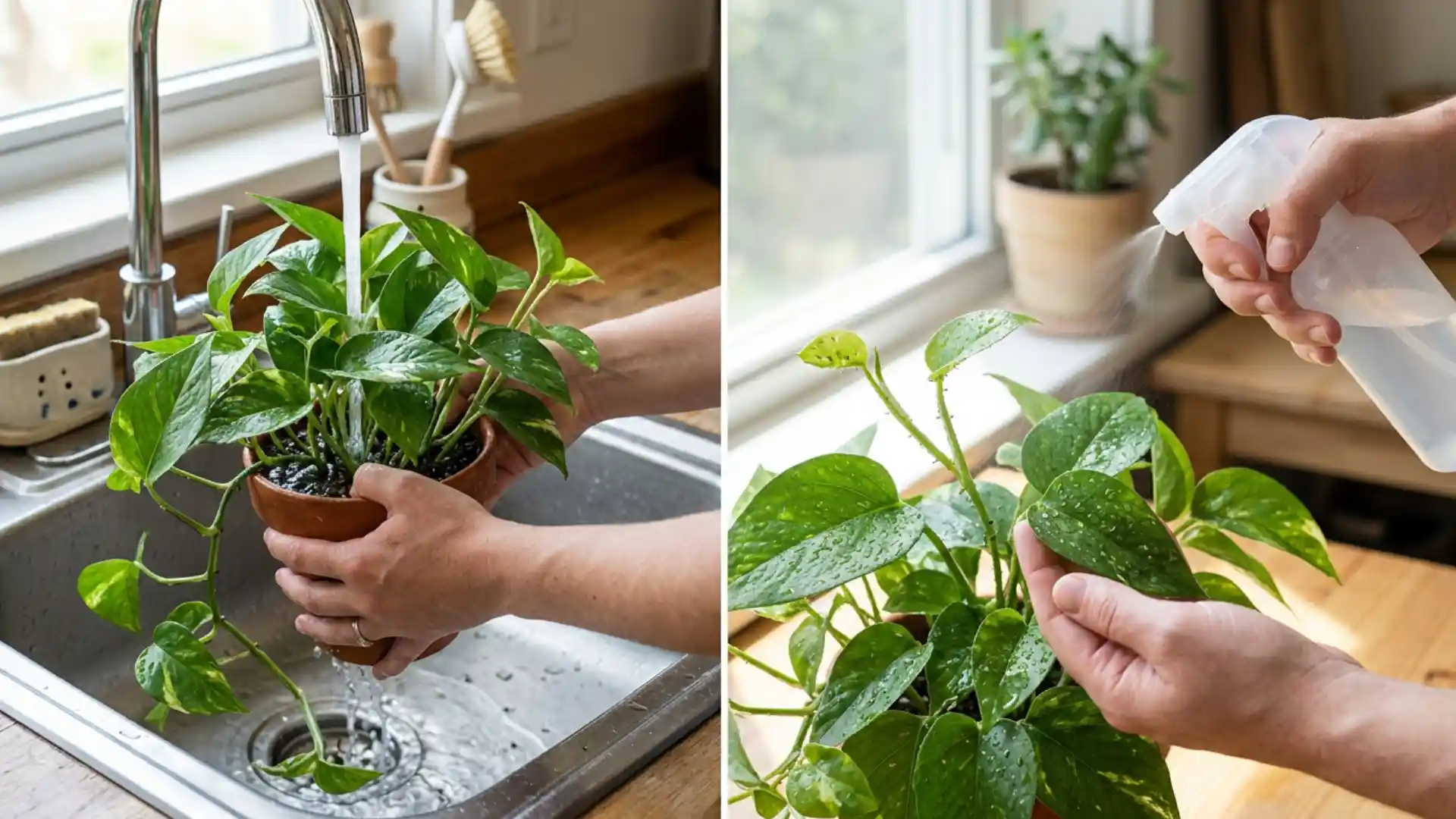
Work through these steps in order, starting with the gentlest, and keep the rest of your collection away from the infested plant while you treat.
Step 1: Isolate the Affected Plant
As soon as you spot aphids, move the infested plant away from your other houseplants immediately.
Aphids reproduce rapidly and can crawl or fly to nearby plants, turning a small problem into a widespread crisis.
Keep the isolated plant in a separate room or area until you’ve completely eliminated the infestation and monitored it for a few weeks afterward with no signs of returning pests.
Step 2: Physical Removal
Start with the simplest approach: rinse your plant at the sink or shower with lukewarm water, focusing on leaf undersides and stems where aphids gather.
The water pressure knocks many aphids off and washes them down the drain.
For stubborn colonies, gently wipe leaves with a soft, damp cloth or use a cotton swab dipped in rubbing alcohol to remove individual aphids.
Snip off and discard any tips or leaves that are thickly coated with aphids. This manual removal significantly reduces the population before applying any treatments.
Step 3: Treatment Options
Once you’ve physically removed as many aphids as possible, follow up with targeted treatments to eliminate remaining pests and prevent reinfestation.
As the EPA advises, you should test any spray on a single leaf first, and then use only the amount the label gives, because more isn’t better and can harm the plant.
If you prefer gentler, chemical-free approaches, natural remedies can be surprisingly effective against aphids on houseplants.
|
Remedy |
How to Use |
Pros |
Cons |
|---|---|---|---|
|
Insecticidal Soap Spray |
Mix insecticidal soap according to the label directions, then spray the plant. |
Inexpensive, safe, kills on contact |
Needs multiple applications, may damage sensitive plants |
|
Neem Oil Solution |
Dilute as the label directs and reapply on the label’s schedule. |
Disrupts feeding and reproduction |
Strong odor, slower acting, can burn in sunlight |
|
Horticultural Oil |
Use a product labeled for houseplants and mix it as the label says |
Smothers aphids at every stage |
Can harm some plants, so test one leaf first |
|
Alcohol Spot Treatment |
Dab rubbing alcohol on aphids with a cotton swab |
Kills instantly, precise targeting |
Labor-intensive, can damage delicate leaves |
|
Garlic or Chili Spray |
Steep in water overnight; strain and spray |
Natural repellent, deters pests |
Mild effectiveness, strong smell, frequent reapplication |
What Plant Owners Say: How to Get Rid of Aphids on Indoor Plants?
A Reddit user shared their struggle with aphids after moving their maidenhair vine (Muehlenbeckia complexa) outdoors for a week.
The tiny green pests quickly became a concern, prompting the plant owner to seek effective treatment options.
They recommended several simple ways to control aphids without immediately resorting to harsh chemicals. One suggestion was to gently rinse the plant with water to dislodge the insects.
Manually removing visible aphids and using insecticidal soap were also recommended. Some users suggested neem oil sprays as another treatment option.
Instead, regularly washing the plant and inspecting leaves, stems, and hidden crevices can help prevent reinfestation.
How Long Does It Take to Get Rid of Aphids?
Getting rid of aphids usually takes 2 to 4 weeks of consistent treatment.
A single application rarely eliminates an entire infestation because aphids reproduce rapidly, and a few survivors, or a colony on the roots, can restart the problem.
The spider plant I have at home took about 19 days to clear after I rinsed the leaves and applied neem oil.
I noticed that results depended on the infestation’s severity and how consistently I repeated the treatment. That’s one experience, not a deadline for every plant.
So, you will need to repeat your chosen method every few days to catch newborn nymphs before they mature and reproduce.
You will know the aphids are truly gone when you see no live insects, sticky residue disappears, new growth emerges healthy and uncurled, and a few weeks pass without any signs of their return.
Preventing Aphids on Houseplants
The best way to deal with aphids is to stop them before they ever become a problem. A few simple habits can keep your indoor garden aphid-free and thriving.
-
Quarantine every new plant and inspect it thoroughly before introducing it to your collection.
-
Avoid overfeeding with nitrogen-rich fertilizers that create soft, sappy growth aphids find irresistible.
-
Check your plants weekly by examining new growth, leaf undersides, and stems for early signs of infestation.
-
Hang yellow sticky traps near your plants to spot winged aphids before they reach the rest of your collection.
-
Maintain consistent care routines with proper watering, lighting, and humidity to keep plants naturally resistant to pests.
When to Consider Stronger Treatments?
If infestations persist after weeks of consistent treatment, colonies keep multiplying despite your efforts, or multiple plants get infected at once, it’s time to consider a commercial insecticide.
Systemic products are absorbed through the plant’s roots, so check the label before using one on edible herbs like basil or mint, and keep pets and children away.
When a plant is severely damaged with most leaves curled, yellowing, and covered in sticky residue, replacement might be more practical than treatment.
If aphids keep returning despite isolation and repeated treatments, they may be living on roots.
Final Thoughts
Healthy houseplants need consistent care, and while aphids can be unsettling, most colonies respond to a good rinse and steady follow-up treatments.
Remember, the key is catching them early and staying persistent with whichever method works best for your space.
What is your go-to strategy for keeping your indoor plants healthy? Share it in the comments.
Frequently Asked Questions (FAQs)
Are Aphids Harmful to People or Pets?
No. Aphids feed only on plant sap and don’t bite people or pets. The bigger concern is the treatment, so keep pets away from freshly sprayed leaves and follow the product label.
Do Aphids Live in Houseplant Soil?
Most aphids feed on stems and leaves, but root aphids live on roots in the soil. If a plant keeps wilting with no aphids in sight, check the roots when you repot it.
Can Plants Recover From Aphid Infestation?
Yes, plants can recover from aphid infestations with prompt treatment. Remove aphids, use natural remedies, and provide good care.