Amsterdam had a small but devoted cannabis culture in the early 1980s, built more on word of mouth than marketing. Coffeeshops worked as meeting points where growers traded cuttings, stories, and opinions on which genetics were worth keeping. Nobody called it a seed bank yet, and the idea of a global catalog was still decades off.
A young traveler named Derry left the city in 1982 and spent years in the mountains of northern India, studying cannabis with village growers who had worked with the plant for generations. What he carried home eventually became the foundation of Barney’s Farm and its catalog of Cannabis Seeds, though the brand itself was still years away.
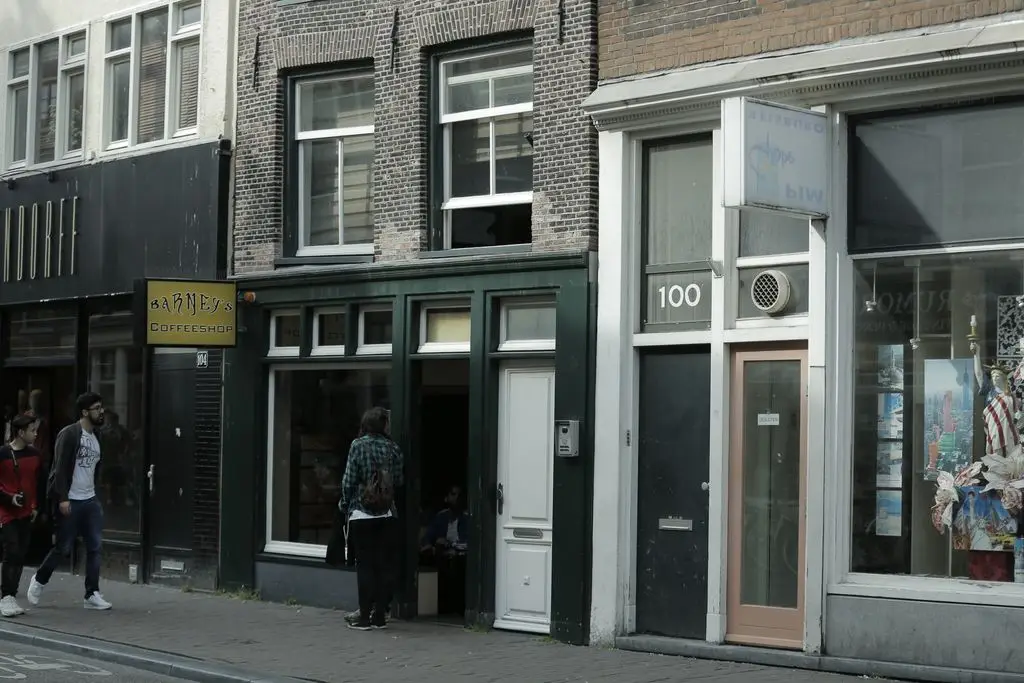
He opened Barney’s Coffeeshop on Haarlemmerstraat in 1986, and a small circle of growers began showing up to trade notes and sample whatever he had brought back. It was a modest start. But in 2026, Barney’s Farm celebrates its 40th anniversary, and here’s what stands behind that.
A Coffeeshop Grows a Seed Bank
The real work happened over the following decade, mostly out of sight. Derry returned to Asia in 1988, traveling through the Hindu Kush, Pakistan, Afghanistan, Nepal, Thailand, Laos, and Cambodia to widen the genetic base he had started collecting two years earlier.
By 1992, Derry was back in Amsterdam full-time, running the coffeeshop and slowly releasing strains built from everything he had brought home. Word spread quickly enough that decades later, growers across Europe, including those in Germany searching for cannabis samen, still trace their seeds back to that same foundation.
Through the mid-1990s, the collection kept growing. By 1996, Barney’s Farm had quietly built one of Europe’s most diverse cannabis genetic libraries, with crosses tested, refined, and released to a small but devoted following that kept coming back for more.
Cannabis Cup Wins Start to Add Up
The competitions came next. Sunburst won the High Times People’s Cup in 1999, then Sweet Tooth took second place in 2000 and first the following year. Morning Glory made it three wins in three years by 2002, and breeders from California, Spain, and Israel started flying to Amsterdam to see the operation for themselves.
That same pull toward the source sent the team back on the road in 2003, hunting landrace genetics through Iran, Turkmenistan, and Uzbekistan. The lines they brought home strengthened what would later become Pineapple Chunk and Barney’s Farm’s Hindu Kush.
Amnesia Haze changed the scale of things entirely. It won the Cup in 2004 and was growing across legal markets worldwide within a year, becoming one of the most cultivated Barney’s Farm strains in the catalog’s history.
Willie Nelson opened a twelve-year streak in 2005 that saw Barney’s Farm win roughly seven of every ten competitions it entered. G13 Haze won back-to-back Cups in 2006 and 2007, and Tangerine Dream took the title in 2010 with a citrus profile growers still ask for by name.
Science, Expeditions, and New Ground
Growth on that scale needed more than a back room in Amsterdam. In 2011, the company opened dedicated cannabis laboratories in San Sebastian, Spain, bringing climate control and proper lab work into a breeding process that had long relied on instinct and patience alone.
A two-year genetic hunting expedition followed, taking the team through Africa, Indonesia, and Hawaii in search of rare landrace material. By 2013, selective breeding was also underway on twelve hectares of hired ground in South Africa, run across two growing seasons a year.
The team returned from that expedition in 2014 and won the Cup with Cookies Kush, a strain with a dessert-like aroma reportedly convincing enough to make one ask if there was actual baking going on nearby. Critical Kush followed in 2015, crossing Critical Mass with OG Kush into a global bestseller within months.
A Library Rebuilt From Scratch
Not every chapter went smoothly. Grow facilities across Europe were raided in 2017, forcing the team to rebuild the operation almost from the ground up. The genetic library itself was reconstructed over the following two years, pieced together from copies held by trusted growers on three continents.
That setback did not slow things down for long. In 2020, while much of the world slowed to a halt, the breeding program kept moving, with the team developing super stable F1 hybrids aimed at the commercial market. By 2021, the seed library had passed two hundred named strains, with autoflowering genetics pushing into territory nobody expected from that category a decade earlier.
A Global Catalog Today
Breeding operations moved to California in 2022, putting the team near one of the largest pools of legal cannabis genetics anywhere. Barney’s Farm genetics reached US dispensary shelves in 2024, and a purpose-built US fulfillment center followed in 2025, supplying growers in the United States, Israel, and Morocco from one shared library.
A German fulfillment center opened in 2026, alongside the release of the brand’s first F1 precision triploid hybrids, carrying four decades of breeding into new formats and new markets.
The original coffeeshop still stands on Haarlemmerstraat, and the search for the next great strain continues today.