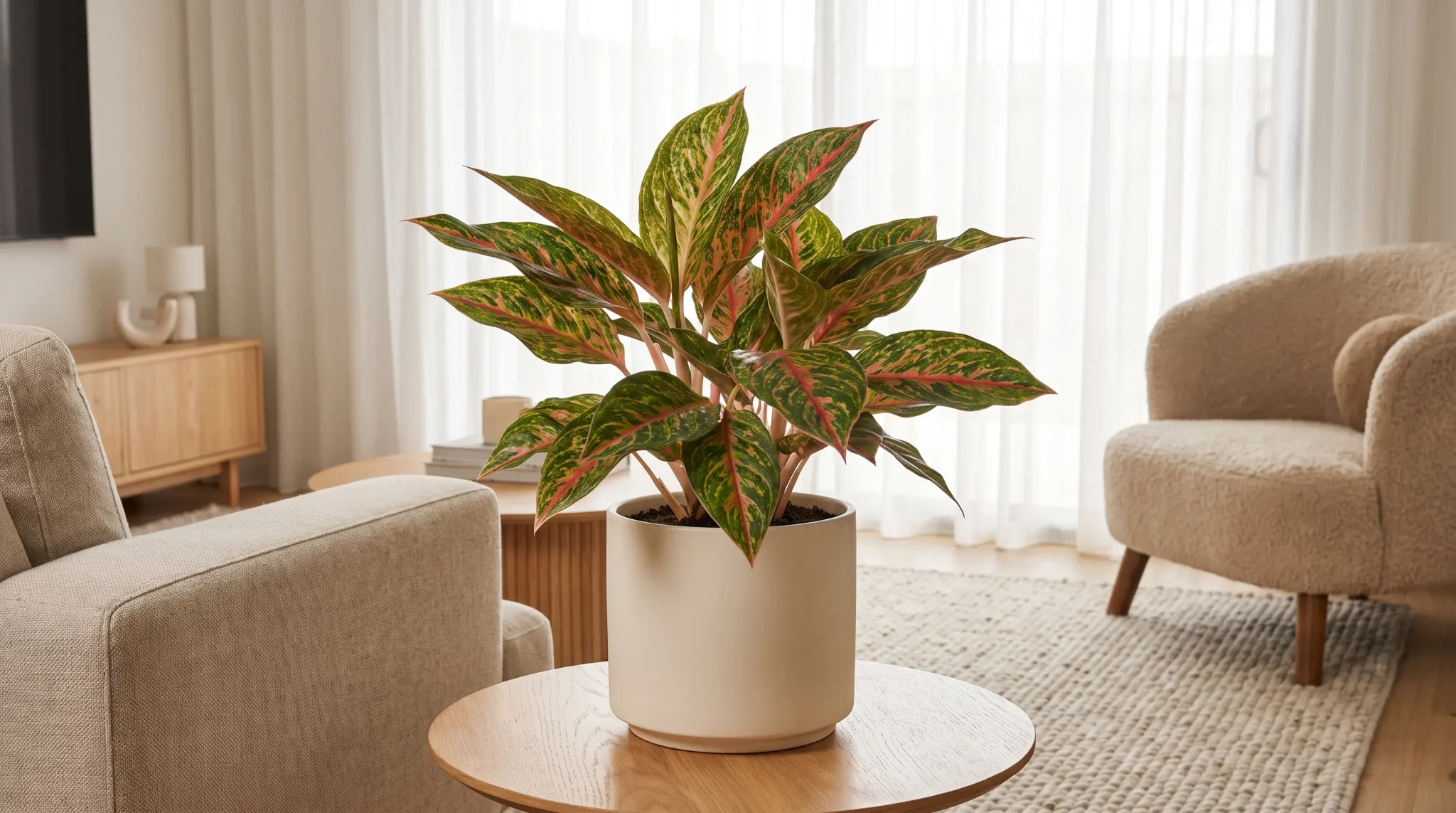
Bringing an aglaonema home is easy, but keeping it happy takes a little routine. Good aglaonema care simply means paying attention to small daily signals.
I have seen this plant grow steadily and full with the right routine. This plant fits well into a busy, everyday routine at home. It does not demand constant attention or a strict daily checklist.
A few honest minutes each week make a real difference. Aglaonema care rewards patience more than heavy effort. It grows slowly, so small mistakes rarely turn serious right away.
Learn what your plant wants and give it steady attention. Simple habits keep this plant thriving for years to come.
What to Expect From an Aglaonema Indoors?
Aglaonema grows at a steady pace indoors, so do not expect fast changes from week to week. Most plants add new leaves slowly as conditions stay warm and bright.
Indoors, wide varieties reach one to three feet tall over time. New leaves usually appear rolled or folded before opening into their shape.
Growth may slow during cooler months or when daylight becomes shorter. That is normal for many indoor plants. Your Aglaonema will often become fuller as more stems and leaves develop.
It usually fills out before it seems much taller. I look for healthy new leaves, firm stems, and steady growth. Those signs mean the plant is doing well.
How to Give Your Aglaonema the Best Indoor Care?

Aglaonema comes from warm, shaded tropical environments, making it well suited to indoor life. However, “low-light tolerant” does not mean the plant can thrive in a dark room.
1. Give It Gentle, Indirect Light
Aglaonema grows best in bright, indirect light, while solid green varieties can tolerate lower-light conditions better. Place it near an east- or north-facing window or a few feet back from a brighter window.
Harsh direct sunlight can bleach the foliage and create dry, tan, or crispy patches. Move the plant gradually if you need to adjust its position or increase its light exposure.
2. Water Only After Checking the Soil
Aglaonema prefers slightly moist soil, never soggy for long. Water when the top 1-2 inches of potting mix feels dry, soaking evenly until water drains from the bottom, then empty the saucer to avoid root rot.
A droopy leaf can mean either too much or too little water, which is where the watering finger test for tropical plants like Aglaonema comes in handy.
3. Use Loose, Well-Draining Soil
Aglaonema needs an airy potting mix that holds some moisture without becoming waterlogged. Indoor potting soil mixed with perlite and fine orchid bark works well for most plants.
Always use a container with at least one open drainage hole. Avoid heavy garden soil because it can compact around the roots and hold too much moisture.
4. Maintain Comfortable Indoor Conditions
Aglaonema grows best in warm indoor temperatures of about 65°F to 80°F. Keep it away from cold windows, exterior doors, air-conditioning vents, and heating sources.
Average household humidity is usually enough for healthy growth. If the air becomes very dry, a nearby humidifier can help prevent dry or crispy leaf edges.
5. Feed Lightly During Active Growth
Feed Aglaonema lightly during spring and summer when the plant is actively producing new growth. Use a balanced houseplant fertilizer according to the label directions and avoid feeding completely dry soil.
Reduce or pause fertilizer during fall and winter when growth naturally slows. Too much fertilizer can cause salt buildup, root damage, and brown leaf tips.
6. Clean and Prune the Plant
Wipe the leaves with a soft, damp cloth whenever dust begins to collect. Clean foliage looks healthier and also makes pests or early damage easier to notice.
Remove yellow or badly damaged leaves with clean scissors near the base of the stem. Avoid pulling leaves by hand because this can damage healthy tissue or disturb the roots.
7. Follow a Quick Weekly Check
Check the soil, new growth, and overall condition of your Aglaonema once each week. Look beneath the leaves and around stem joints for pests, webbing, discoloration, or sticky residue.
Also make sure the plant is still receiving suitable indirect light and stable temperatures. Catching small changes early makes most Aglaonema problems easier to correct.
When and How to Repot Aglaonema?

Aglaonema prefers to stay slightly snug in its pot, so repotting is only needed when the roots or soil show clear signs of crowding or decline.
Signs Your Plant Needs Repotting
Repotting is usually needed when the roots become crowded or the potting mix no longer drains and supports healthy growth properly.
- Roots are circling tightly or growing through drainage holes: This usually means the root system has filled most of the available space and needs a slightly larger container.
- The soil has become compacted or drains poorly: Old potting mix can hold too much water and reduce airflow around the roots, increasing the risk of root problems.
- Growth stays weak despite proper care: If light, watering, and feeding are suitable but new growth remains limited, crowded roots may be restricting development.
Repot It Without Shocking the Roots
A gentle repotting process helps reduce stress and gives the roots a better chance to settle into their new container.
- Choose a pot only 1 to 2 inches wider: A slightly larger container gives roots more space without surrounding them with excessive wet soil.
- Inspect and clean the roots before replanting: Gently loosen tightly circling roots and trim any black, mushy, or damaged sections with sanitized scissors.
- Use fresh, airy soil and water thoroughly: Replant at the same depth, allow excess water to drain, and keep the plant in bright indirect light while it settles.
Most Aglaonema plants need repotting about every two to three years, although the timing depends on growth rate, pot size, and soil condition.
What Gardeners Say About Caring for an Aglaonema Plant?

In a Reddit discussion, one grower shared that their Aglaonema improved after repotting but later started declining again. They watered it about weekly and kept it several feet from a west-facing window.
Other growers described very different experiences. Some said their plants did well in bright light with soil drying between waterings. Others mentioned success near windows or under grow lights.
The discussion also covered drainage, repotting stress, and root health. One grower even reported an Aglaonema doing well in constantly damp soil, showing how growing conditions can vary.
Common Aglaonema Problems and Fixes
Aglaonema plants can show clear signs when something is wrong. Use these common symptoms to narrow down the cause:
|
Problem |
Likely Cause |
Quick Fix |
|---|---|---|
|
Yellow leaves |
Too much water |
Let soil dry |
|
Brown tips |
Dry air or salts |
Flush soil |
|
Brown patches |
Direct sun |
Move to indirect light |
|
Drooping |
Dry soil or root stress |
Check soil and roots |
|
Curling leaves |
Thirst, drafts, pests |
Inspect plant |
|
Faded color |
Low light |
Add brighter light |
|
Sticky leaves |
Sap-sucking pests |
Isolate and treat |
|
Fine webbing |
Spider mites |
Rinse and treat |
|
Mushy stems |
Rot |
Trim and repot |
I usually check the whole plant before making any major changes. I make one small adjustment at a time so I can see what actually helps.
How Aglaonema Care Changes by Season?
I notice indoor conditions change even when my plant stays put. I watch these seasonal shifts closely:
- Spring: Check the soil more often as growth picks up, keep the plant in bright indirect light, and resume light feeding if needed.
- Summer: Water only when the upper soil dries, protect the leaves from harsh afternoon sun, and watch for pests during active growth.
- Fall: Allow slightly longer drying between waterings, move the plant closer to gentle light if needed, and reduce fertilizer as growth slows.
- Winter: Water less often, keep the plant away from cold drafts and heating vents, and pause feeding until active growth returns.
A moisture check matters more than the season printed on the calendar. A plant beside a warm, sunny window may dry faster in winter than one kept in a cool, shaded summer room.
Year-round tip: Always check the soil before watering because indoor temperature, light, and humidity can matter more than the season itself.
Frequently Asked Questions (FAQs)
Can aglaonema grow in water without soil?
Yes, wide varieties root and grow well in water alone without any soil at all. Change the water every week or two, and it will keep producing healthy new roots steadily.
Does aglaonema help purify indoor air?
Yes, studies suggest it filters common household toxins like formaldehyde from the surrounding air. It works best when placed alongside other air-friendly houseplants around your living space.
How long does an aglaonema typically live?
With steady care, watering, and enough indirect light, aglaonema can live for many years indoors without much trouble. Some healthy plants thrive well past a decade of age.
Should you rotate your aglaonema regularly?
Yes, turn the pot every few weeks so all sides receive even light exposure throughout the year. This simple habit keeps growth balanced instead of leaning toward one direction.
Final Words
Aglaonema care mostly comes down to noticing small changes early. You just need to watch, water, and adjust as seasons shift. Aglaonema care becomes easier once you notice its quiet signals.
Yellow leaves, dry tips, or dull color all tell a story. I have learned to catch these signs before they turn serious. Listen to those signs instead of guessing blindly.
Keep the soil balanced, the light gentle, and the roots free. Your plant will reward that care with fresh, glossy leaves. You already have everything needed to keep this plant thriving.
Trust your eyes and trust your instincts along the way. Tell me your biggest aglaonema struggle in the comments below!