Gnats have a sneaky way of making themselves at home, and once they’re in, they’re really hard to ignore.
The frustrating part isn’t just seeing them hover around. It’s not knowing where they’re coming from, and that’s exactly where most people get stuck.
Knowing where gnats actually lay their eggs inside your home changes everything about how you deal with them.
So if you’ve been swatting at the same tiny flying specks for weeks, this blog is going to walk you through all the hiding spots you’d probably never think to check.
First, Identify Which “Gnat” is in Your Home
I often find the word “gnat” is used for several types of tiny flying insects. Identifying the insect correctly helps you understand its appearance, behavior, and the reason it keeps showing up indoors.
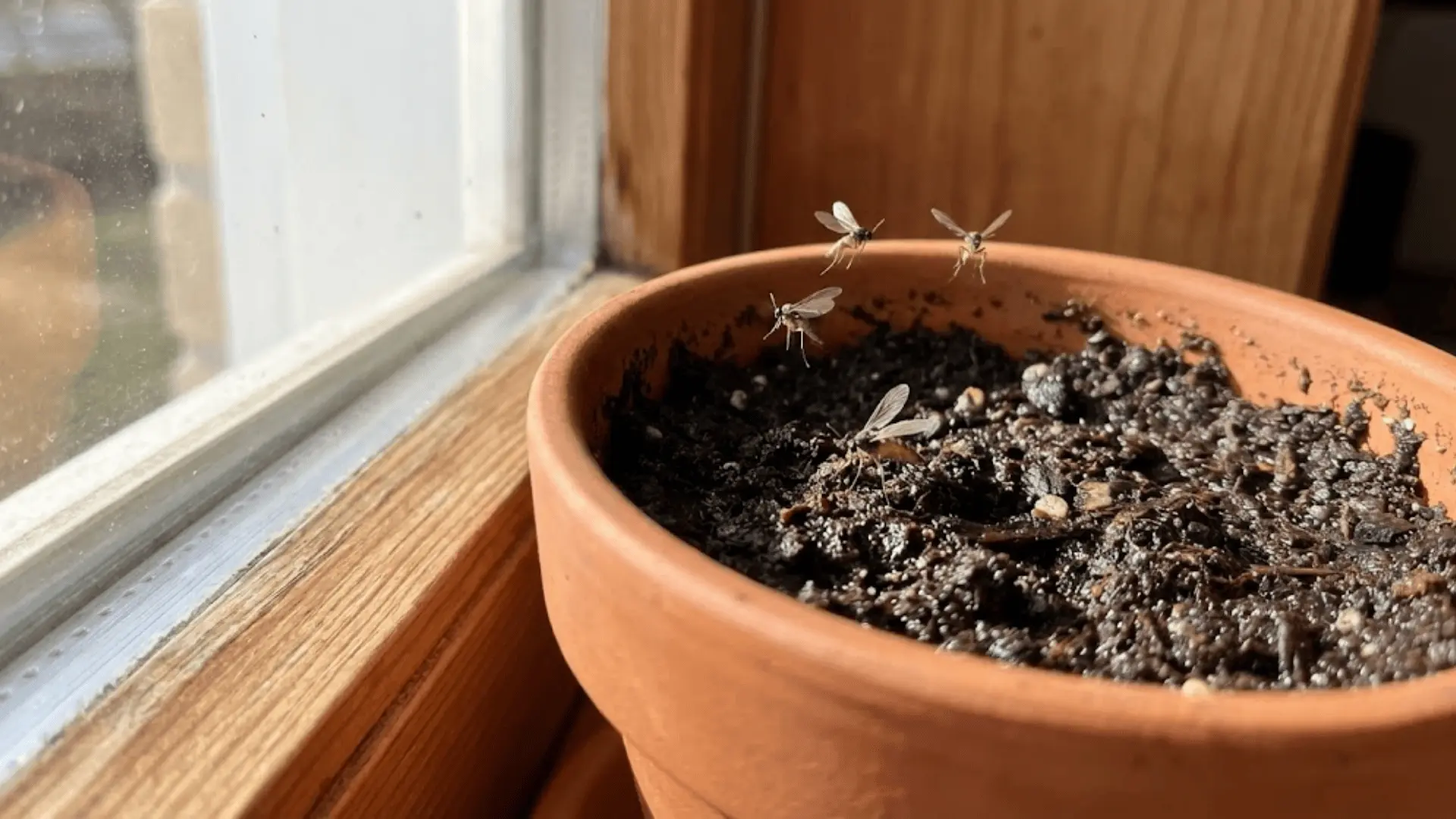
- Fungus Gnats: Small, dark flies with slender bodies, long legs, and delicate wings. They often resemble tiny mosquitoes and usually move in short, weak flights.
- Drain Flies: Tiny, fuzzy insects with broad wings and a moth-like appearance. They often rest on walls and surfaces and tend to fly slowly.
- Fruit Flies: Small tan or light brown flies with rounded bodies and noticeable red or dark eyes. They move quickly and often gather in groups.
- Phorid Flies: Small, dark flies with a hump-backed shape. They are known for running rapidly across surfaces instead of flying immediately.
- Biting Gnats: Very small, slender insects that may be difficult to see clearly. Unlike common indoor gnats, some species can bite people or pets.
Where Do Gnats Lay Eggs in Homes and Bathrooms: At a Glance
Gnats lay eggs in damp areas containing soil, food residue, fungi, or decaying organic material. The exact breeding location depends on the type of gnat or small household fly.
| Type of Gnat | Common Egg-Laying Area |
|---|---|
| Fungus Gnats | Moist houseplant soil, drainage holes, plant saucers, and damp potting mix |
| Drain Flies | Organic slime inside sink, shower, bathtub, and floor drains |
| Fruit Flies | Overripe fruit, fermenting food, garbage disposals, trash cans, and recycling bins |
| Phorid Flies |
Decaying organic matter, leaking pipes, damaged drains, sewage residue, and damp wall spaces |
Different gnats pick different spots, so where you spot them usually points to what’s drawing them in. A few quick checks around your plants, drains, and trash cans will tell you where to start.
Where Gnats Lay Eggs in Bathrooms?
Moisture, organic buildup, and warm corners give them everything they need to quietly lay eggs and multiply without you even noticing.
1. Drains and Pipes
Bathroom drains are one of the most common gnat egg-laying spots in the entire home.
That dark, slimy buildup inside your sink, shower, and bathtub drains is actually a mix of hair, soap residue, and stagnant water, and females lay their eggs right into it.
What looks like a gnat or drain fly situation can sometimes be both happening at once.
2. Leaks and Standing Water Areas
Anywhere water quietly pools without being noticed is a potential egg-laying site.
The area under a leaking pipe or around the base of your toilet stays persistently damp, and that’s all gnats really need.
Even a slow, barely-there drip creates enough consistent moisture to make these hidden corners attractive spots for females looking to deposit their eggs.
3. Organic Debris Traps
Damp towels left bunched on the floor, soggy shower mats, clumps of hair near the drain, and soap scum buildup all hold moisture and organic matter longer than you’d think.
Gnats don’t need much to lay eggs; just a warm, wet surface with something organic nearby.
These everyday bathroom items can quietly become breeding grounds when they’re not dried out or cleaned regularly.
Where Gnats Lay Eggs in Other Parts of the Home?
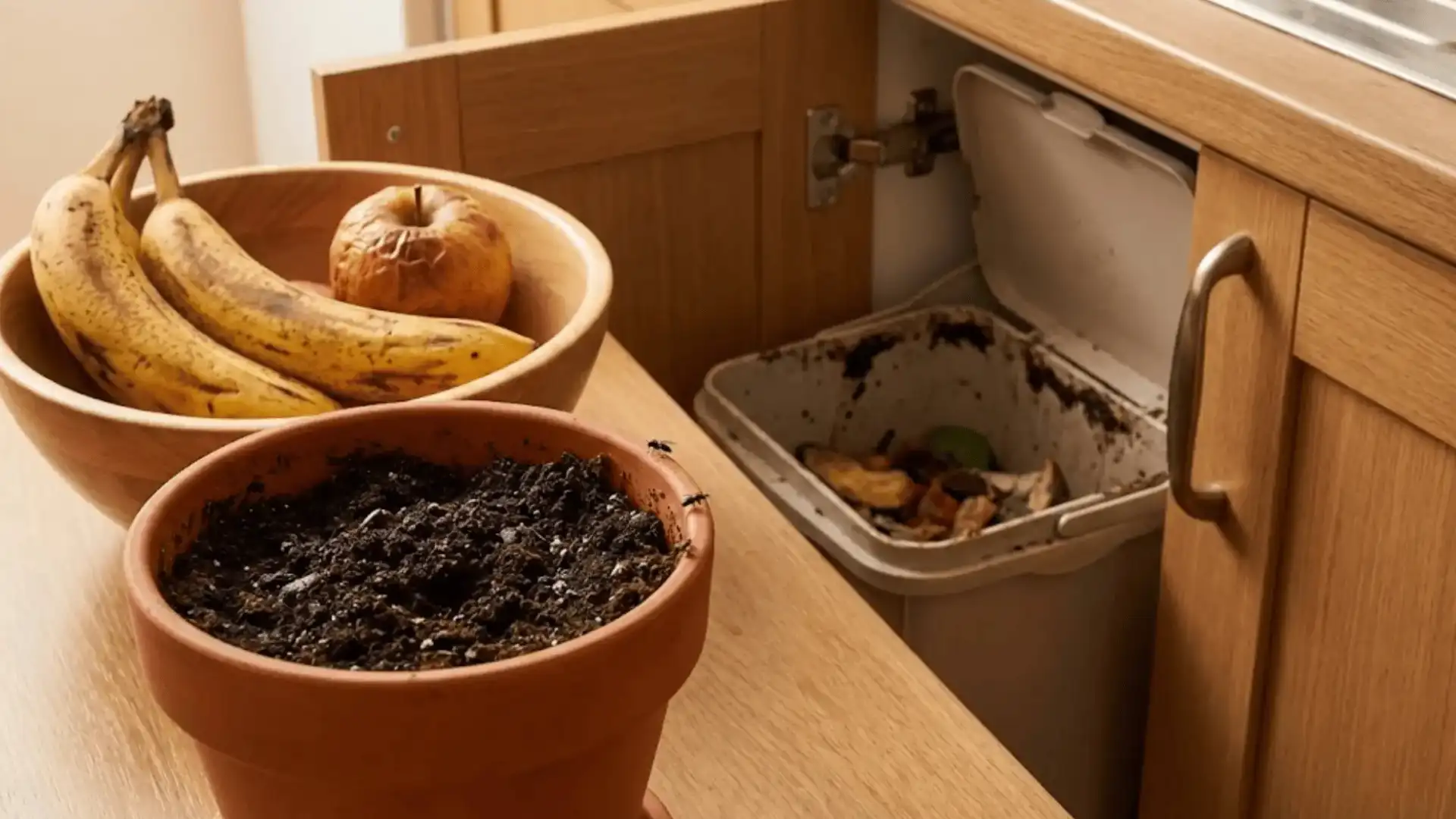
Bathrooms aren’t the only problem area. They’ll settle into any corner of your home that offers moisture, organic matter, and just enough warmth to keep their eggs safe.
4. Houseplant Soil
If you have houseplants and a gnat problem, your soil is likely where it all started.
Fungus gnats are drawn to moist potting mix and lay their eggs right at or just below the soil surface. Overwatering makes things significantly worse because consistently damp soil doesn’t just attract females.
It actively helps the eggs survive and hatch faster than you’d expect.
5. Decaying Produce and Organic Waste
Fruit gnats zero in on anything that’s ripening a little too fast or already starting to turn.
They lay their eggs on or just beneath the skin of overripe fruit and vegetables, where the fermentation process gives larvae an instant food source.
Garbage and recycling bins are just as bad, especially when organic slime builds up along the bottom and sides between washes.
How Long Do Gnats Live?
Most gnats live for about 1 to 4 weeks, depending on the species, temperature, moisture, and food supply.
Adult fungus gnats often survive for seven to ten days, while fruit flies may live for several weeks under favorable conditions.
During this short time, females can lay many eggs, which allows the infestation to continue quickly.
Eggs may hatch within a few days, and the larvae then feed and grow before becoming adults. Warm, damp indoor areas can speed up this life cycle.
Preventing Gnats from Laying Eggs
Prevention really comes down to taking away the conditions gnats depend on. What I find helpful is that once you cut off their access to moisture and organic buildup, they have very little reason to stick around.
In the bathroom:
- Scrub drains regularly and wipe down the surrounding grime that tends to build up around fixtures.
- Fix any slow leaks under sinks or around toilet bases and improve ventilation to reduce overall humidity.
- Clear out organic debris like hair clumps, damp mats, and soap scum before they become breeding grounds.
Around the home:
- Let the houseplant soil dry out completely between waterings instead of keeping it consistently moist.
- Remove overripe produce promptly, clean garbage bins often, and seal any cracks or damp crevices along baseboards and walls.
Gnats are persistent, but they’re also predictable, and once you understand what draws them in, keeping them out becomes a whole lot more manageable.
Conclusion
Once you know where gnats lay eggs in homes and bathrooms, the whole problem starts to feel a lot less overwhelming. It stops being a mystery and turns into something you can actually get ahead of.
A damp drain, an overwatered plant, a forgotten corner behind the faucet are all small things, but meaningful ones when you know what to look for.
Stay consistent with moisture control and cleaning, and you’ll notice the difference over time.
Found a sneaky gnat hiding spot in your home that surprised you? Drop it in the comments below.
Frequently Asked Questions
How Many Eggs Does a Single Gnat Lay?
A female fungus gnat can lay 100 to 300 eggs over her lifetime, usually in small clusters rather than all at once.
Can Gnats Keep Breeding Indoors All Year, Even in Winter?
Yes, as long as indoor conditions stay warm and damp. Fungus gnat generations overlap and don’t need outdoor seasons to trigger breeding, so a heated home with overwatered plants can host gnats through the winter.
Will Spraying Insecticide Kill Gnat Eggs?
Most surface sprays kill adult gnats on contact but do very little to eggs or larvae buried in soil or drain buildup.