
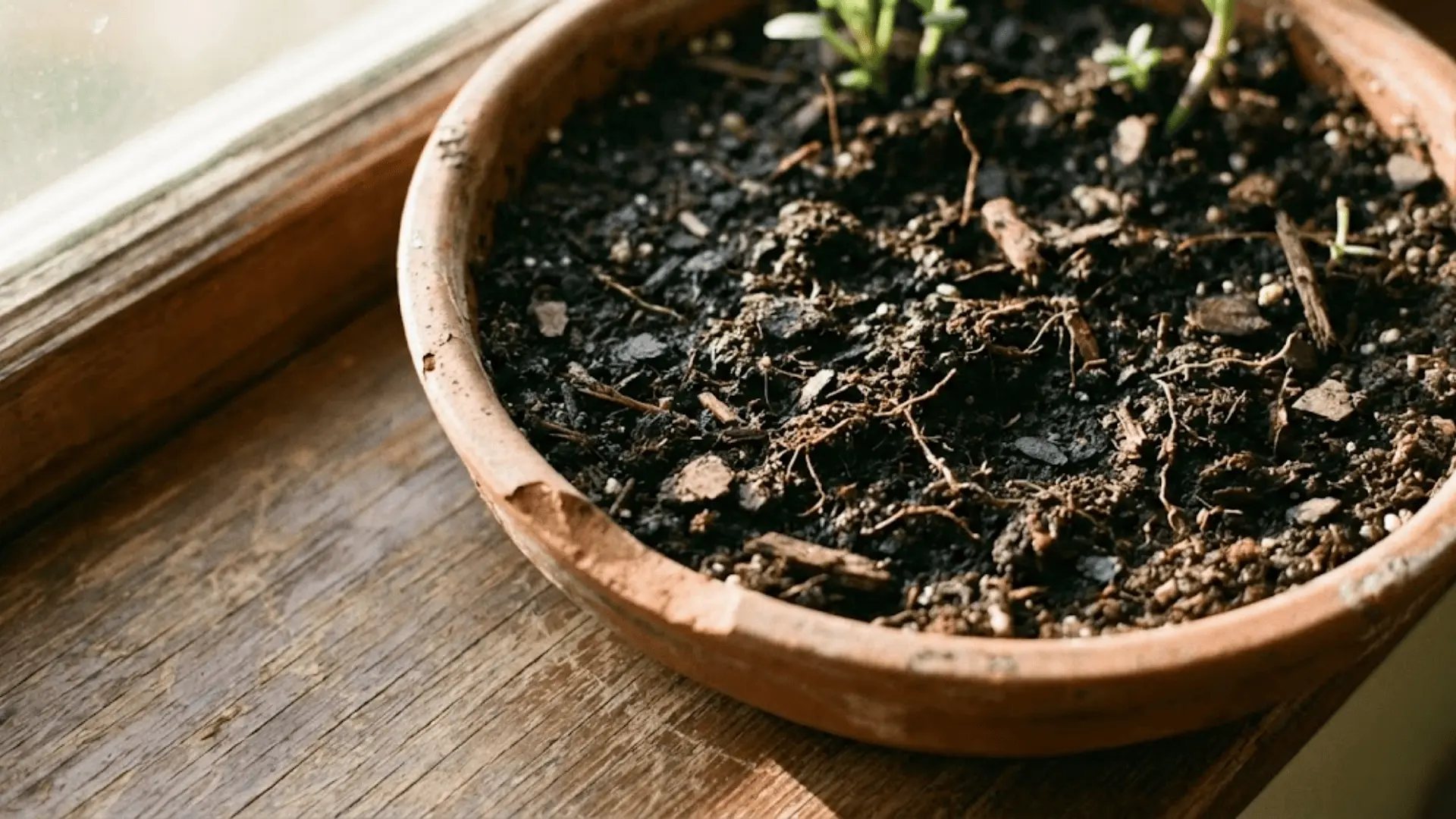
I have seen countless gardeners mistake harmless soil organisms for destructive pests.
Tiny bugs moving across potting soil often cause uneasiness, leading many people to replace soil or spray treatments they never needed.
In many cases, the real problem is not the mites but the conditions attracting them.
Before you panic and reach for the pesticide, here’s what most plant parents don’t realize: those little creatures quietly moving through the dirt are likely doing your plant a quiet favor.
Therefore, careful identification always comes before control.
Knowing what they are and what they are not helps you make better decisions and avoid unnecessary worry.
What are Soil Mites & How to Identify Them in Houseplant Soil?
Soil mites are tiny arachnids that live in potting soil, compost, and other damp organic material.
Most are white, cream, tan, or brown and look like moving dots on the soil surface.
Adult mites have eight legs, but they are so small that a magnifying glass may be needed to see their shape clearly.
They often gather around decaying leaves, bark pieces, drainage holes, or areas that stay moist. Springtails and fungus gnat larvae also differ from soil mites.
They get mistaken for spider mites, which usually live on leaves and may leave webbing or pale spots behind.
What Soil Mites Actually Do to Humans?
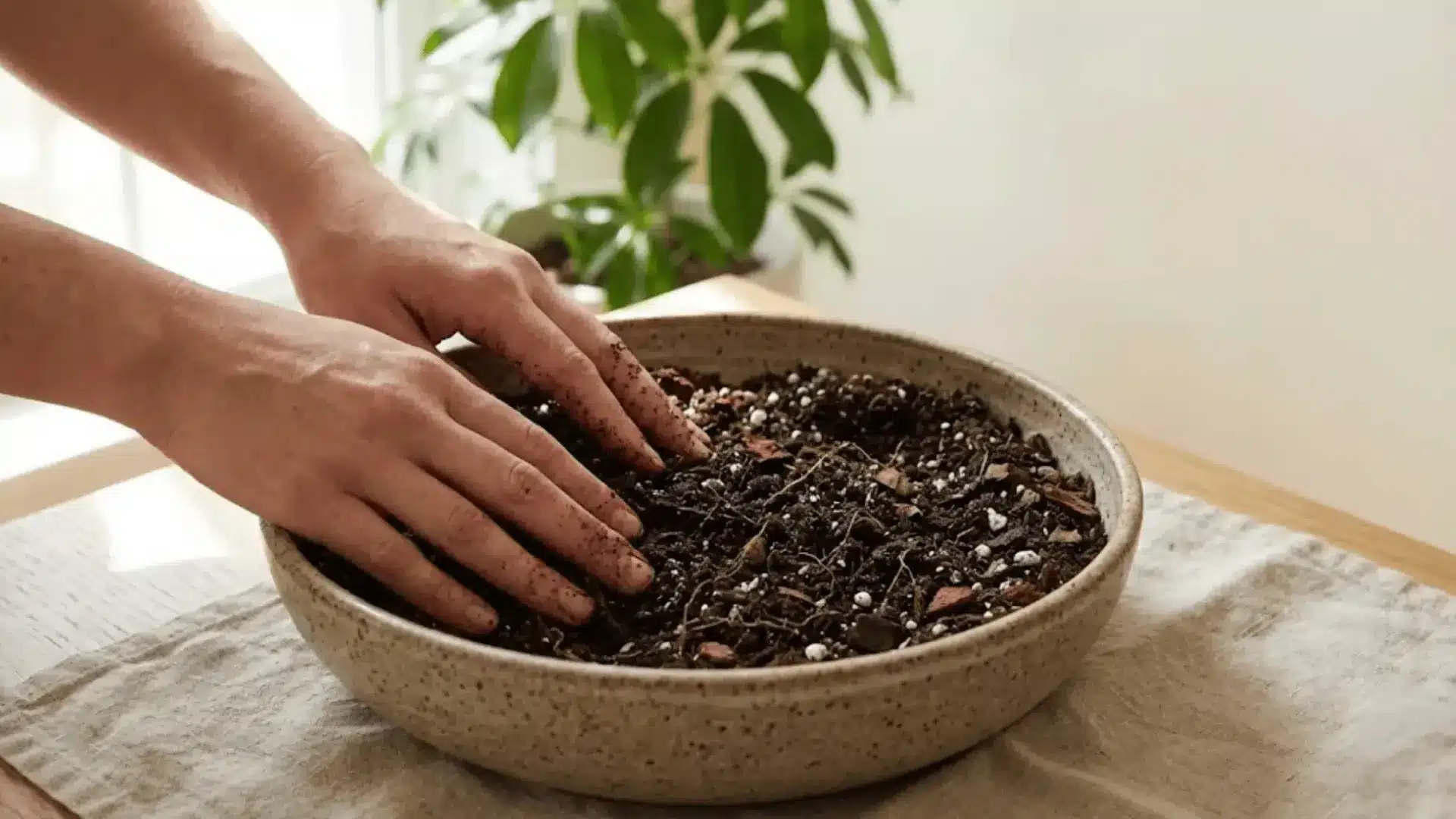
Seeing bugs in your soil naturally raises questions about safety, and that concern is completely valid. The good news is that soil mites are far less threatening than they appear.
Do Soil Mites Bite?
They don’t bite, sting, or cause any direct physical harm. Common soil mites are not known for feeding on people.
Their mouthparts are designed for fungi, decaying material, microorganisms, or smaller soil creatures.
I, too, feel the confusion comes from mixing them up with parasitic mites like scabies or chiggers, which are an entirely different category.
Soil mites live to decompose organic matter, not interact with people.
Can They Live on Skin or in Beds?
Soil mites are deeply tied to their environment and genuinely cannot survive outside of it.
They need moisture, organic matter, and soil structure to live, none of which your skin or bedding provides.
So while the idea sounds unsettling, they have no reason and no ability to migrate onto you or into your living space beyond the pot itself.
Should You Worry About Allergies?
For most people, soil mites are a complete non-issue health-wise. Reactions are rare, but here’s what to watch for if you’re particularly sensitive:
- Mild skin irritation after handling heavily infested soil
- Sneezing or irritation when repotting, similar to general dust sensitivity
- Watery eyes or a scratchy throat during prolonged soil exposure
- Slight respiratory discomfort in poorly ventilated spaces while gardening
Worth knowing: These reactions are not the same as dust mite allergies, which are far more common and clinically significant. Soil mites rarely trigger the same immune response.
Are Soil Mites Good or Bad for Plants?
Soil mites are usually good for plants because they help break down dead leaves, fungi, and other organic matter in the soil.
Their role sits alongside a handful of other beneficial soil creatures that support plant health, most of which go unnoticed until someone starts really looking at the pot.
This process supports nutrient recycling and keeps the soil ecosystem active. Some species also feed on tiny pests, including fungus gnat eggs and larvae.
However, a large number of soil mites can signal that the potting mix is staying too wet or contains too much decaying material.
They rarely damage healthy roots or leaves directly. If the plant looks healthy, leave them alone.
If numbers increase, reduce watering, remove debris, and improve drainage before considering stronger control methods.
Soil Mites vs Other Common Soil Pests
Not every tiny creature in your soil deserves the same reaction.
Soil mites are just one piece of a much larger picture, and knowing how they fit within four types of pests helps you tell them apart at a glance.
| Feature | Soil Mites | Spider Mites | Fungus Gnat Larvae | Root Aphids |
|---|---|---|---|---|
| Size | Pinhead-sized | Tiny, dot-like | Small, thread-like | Small, pear-shaped |
| Movement | Slow, soil-bound | Fast, on leaves | Wriggle in soil | Slow, near roots |
| Plant Damage | Rare | High, leaf damage | Moderate root damage | High root damage |
| Human Risk | None | None | None | None |
When Should You Kill or Control Soil Mites?
Instead of removing them immediately, assess the plant’s condition and the size of the mite population to decide whether simple control measures or stronger action is necessary.
When to Kill Soil Mites:
- Plant roots are rotting due to constantly wet soil, and large numbers of mites are present.
- The mites continue multiplying even after improving watering habits and removing decaying organic matter.
- They repeatedly crawl onto nearby furniture, windowsills, or surrounding surfaces, becoming a household nuisance.
When to Control Soil Mites:
- Only a small number of mites are visible, and the plant is healthy with normal growth.
- The soil stays damp for long periods, so reducing watering can naturally lower their population.
- Dead leaves, mold, or organic debris have collected on the soil surface and need to be cleaned away.
The goal is not to remove every soil organism. Focus on correcting excess moisture, rotting material, and poor drainage first. If the plant remains healthy and the mites stay in the pot, simple population control is usually enough.
Getting Rid of Soil Mites Without Harming Your Plant
If control is necessary, the approach matters just as much as the outcome. The goal is managing the mites without stripping your soil of everything that keeps it alive.
| Method | What It Does | Safe for Plants |
|---|---|---|
| Let Soil Dry Out | Eliminates the damp environment mites thrive in | Yes |
| Repot with Fresh Soil | Resets the environment, removes debris | Yes |
| Neem Oil Soil Drench | Disrupts mite activity naturally | Yes |
| Diatomaceous Earth | Physically deters mites on the topsoil layer | Yes |
| Beneficial Nematodes | Introduces natural predators into the soil | Yes |
Harsh pesticides rarely stop at mites. They disrupt the beneficial microbes and organisms your soil depends on, often creating a bigger imbalance than the mites themselves ever caused.
Do Soil Mites Spread Around the House?
Soil mites are genuinely not built for life outside their environment.
They’re entirely dependent on moisture and organic matter to survive, which means your floors, furniture, and bedding hold no appeal for them.
If a pot tips over, any mites that spill out will struggle to survive for long without the conditions the soil provides.
They don’t migrate, they don’t seek out new environments, and they certainly don’t spread through a home the way a pest infestation would. What stays in the soil, very much stays in the soil.
Conclusion
Most plant parents never give their soil a second thought until something moves.
Now that you know what’s actually living in there and why, soil mites feel a lot less like a threat and a lot more like context.
A healthy plant, balanced soil, and a little informed observation go a long way.
Have you ever spotted soil mites in your plants? Drop your experience in the comments below, whether it’s a question, a story, or something you’ve tried that actually worked.
Frequently Asked Questions
Will Cinnamon, Vinegar, or Dish Soap Kill Soil Mites?
These remedies may reduce some mites, but they can also damage roots or upset soil balance. Improving drainage and replacing affected soil is safer.
What Kills Soil Mites Naturally?
Letting the soil dry slightly, removing decaying material, improving airflow, and repotting with fresh mix can naturally reduce soil mite populations.
What Animals Eat Soil Mites?
Small predatory insects, springtails, beetles, spiders, centipedes, and other soil-dwelling arthropods may feed on soil mites as part of the natural food web.




One Response
Nice write up