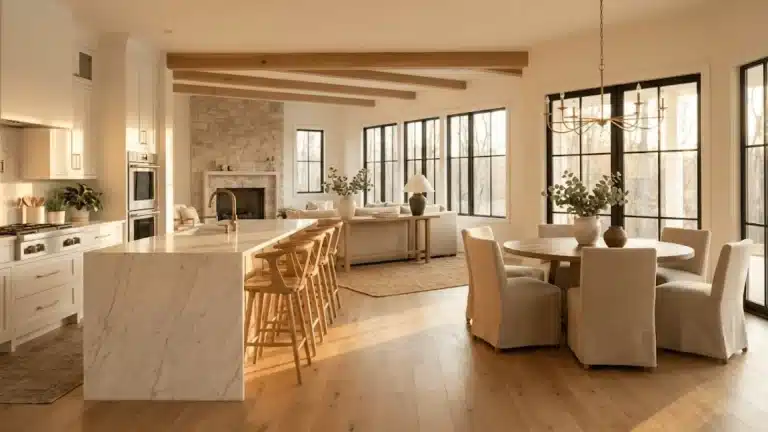
Open floor plans have this effortless way of making homes feel both spacious and intimate at the same time.
There’s a reason they’ve become the heart of modern living: all that gorgeous natural light pouring through, rooms that flow seamlessly together, and the freedom to arrange your space exactly how you live.
Of course, keeping everything feeling cohesive without walls to guide you takes some thoughtful planning.
Sound traveling across rooms and finding the right balance between openness and definition can be tricky.
But with the right approach to layout and decorating, you can create distinct zones that still feel wonderfully connected, turning those wide-open spaces into a home that’s both functional and beautifully pulled together.
What is an Open Floor Plan?
An open floor plan removes traditional walls between main living areas, creating one large, continuous space instead of separate rooms.
Most often, you’ll find the kitchen, dining area, and living room flowing together without barriers, though some designs might also incorporate home offices or playrooms into the mix.
This layout brings uninterrupted sightlines and abundant natural light that can make even modest homes feel expansive.
The trade-offs include noise transfer between zones, less privacy for different activities happening simultaneously, and the challenge of keeping everything visually organized since there’s nowhere to hide everyday clutter from view.
How to Design an Open Floor Plan That Feels Cohesive?
Designing an open floor plan that feels intentional rather than scattered comes down to creating subtle boundaries while maintaining that airy, connected vibe.
Here’s how to bring it all together:
- Define Zones With Area Rugs: Anchor each space with rugs that visually separate the living room from the dining area without interrupting the flow.
- Stick to a Cohesive Color Story: Carry the same palette throughout so different areas feel like they belong to one another.
- Position Furniture Strategically: Use sofas, console tables, or open shelving as gentle dividers that guide the eye and create natural boundaries.
- Layer Your Lighting: Mix overhead fixtures, table lamps, and floor lamps to give each zone its own atmosphere while keeping the overall space balanced.
- Map Out Clear Pathways: Arrange furniture so there’s an obvious flow from one area to the next, avoiding awkward zigzags or blocked routes.
When these elements work together, your open space becomes a collection of purposeful areas that still feel beautifully connected.
Layout & Zoning Ideas
The foundation of any successful open floor plan starts with how you divide the space. These layout strategies help you create clear zones without sacrificing that airy, connected feeling.
1. Define Spaces with Area Rugs
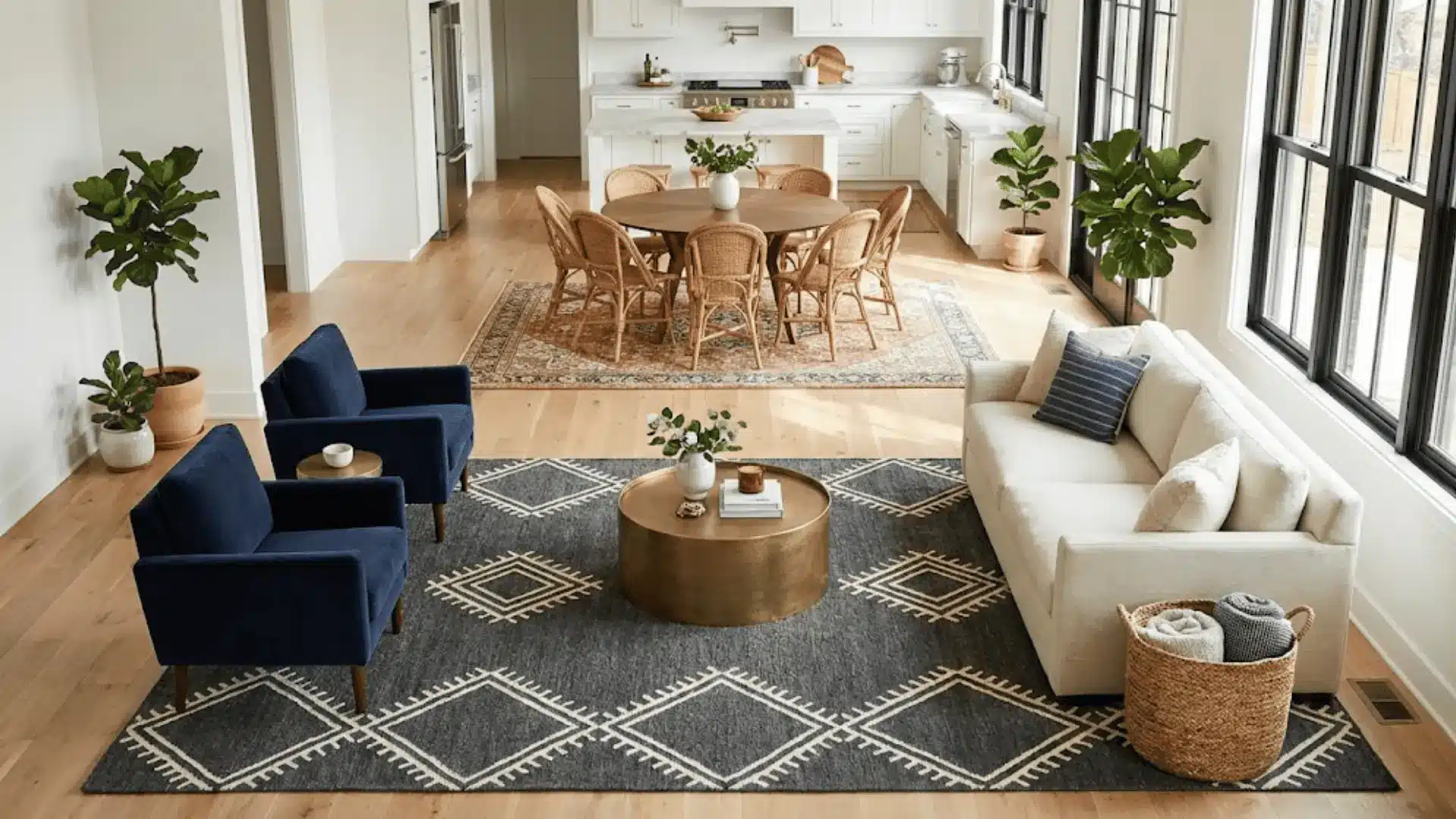
Area rugs are one of the simplest ways to anchor different zones in an open layout. Place a large rug under your living room seating to visually separate it from the dining area, and choose another for the kitchen table.
Make sure each rug is large enough that furniture legs sit on it. This grounds each space while maintaining flow, and you can play with complementary patterns or textures that tie your color scheme together.
2. Use Sectional Sofas to Anchor the Living Area
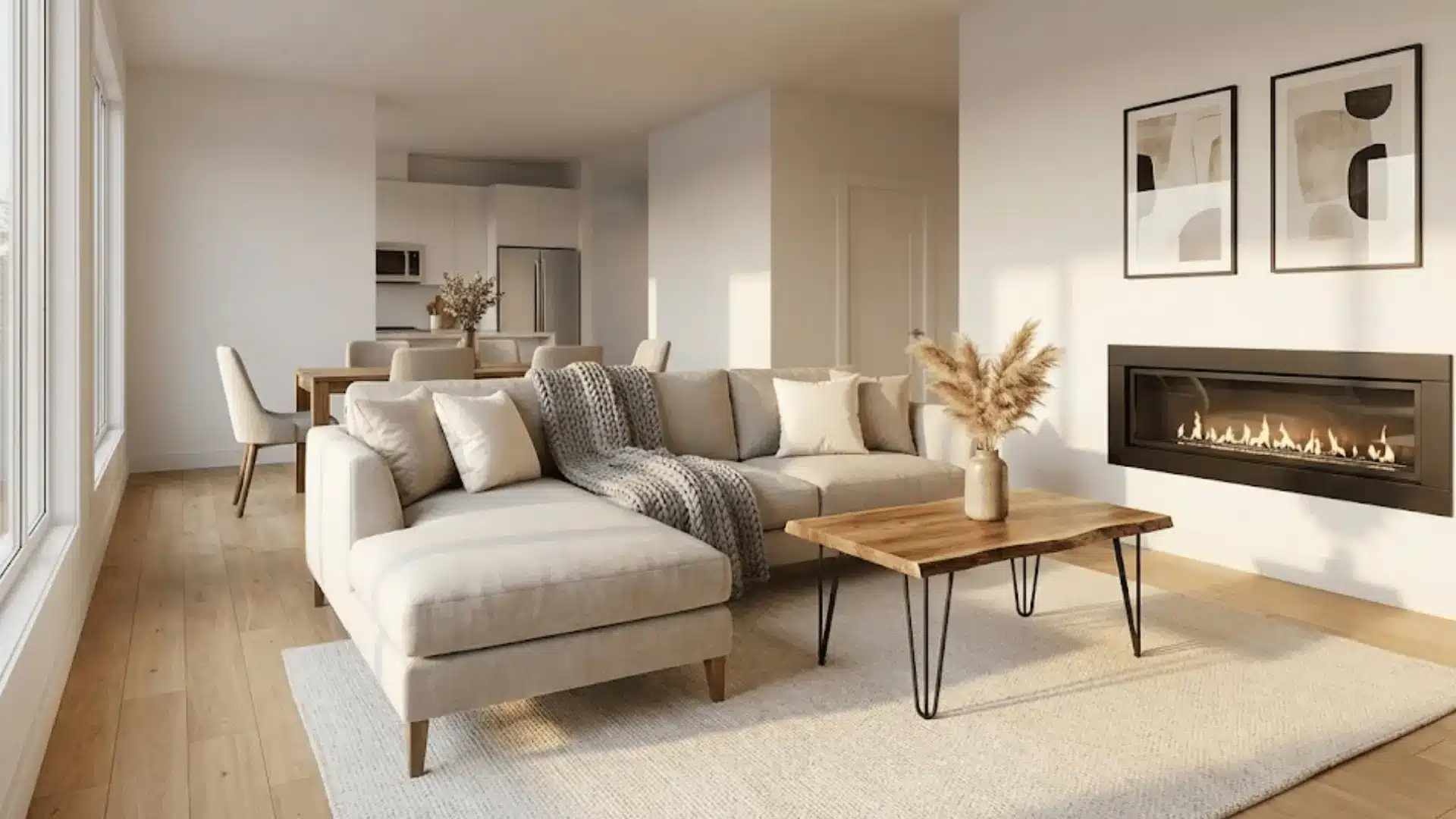
A sectional naturally creates a boundary in an open floor plan by wrapping around a specific zone. Position it to face your focal point, like a fireplace or TV, with its back subtly separating living and dining areas.
The L-shape or U-shape configuration defines the space without blocking sightlines, and the substantial size gives the room weight and purpose while keeping everything visually connected.
3. Add a Kitchen Island as a Natural Divider
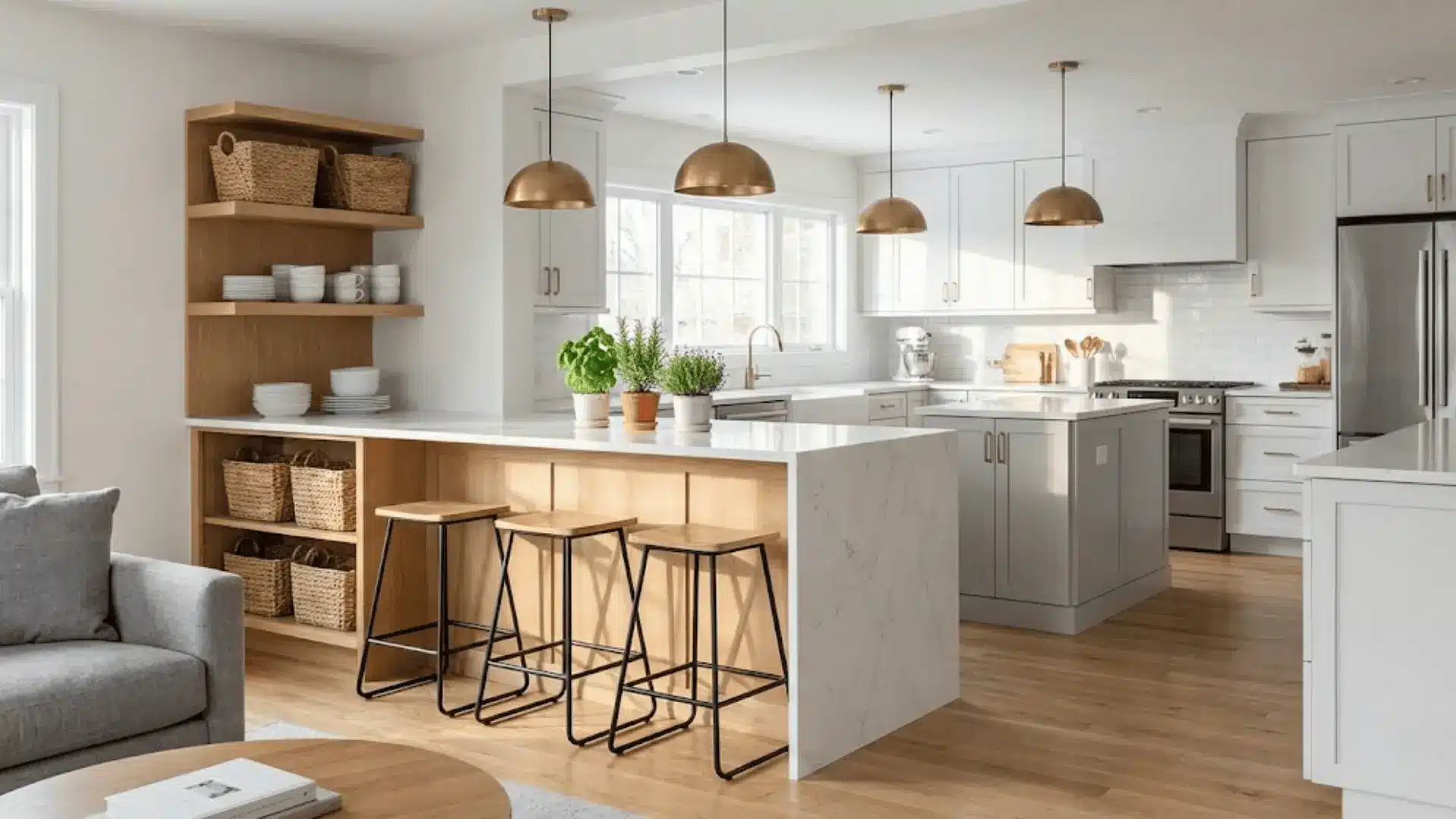
Kitchen islands work double duty as prep space and room dividers. An island with seating on one side creates a casual dining spot while marking where the kitchen ends and the living area begins.
Choose a design with open shelving or cabinet storage facing the living room to avoid a blocky appearance. The countertop height offers separation without closing off space, and pendant lights above reinforce the boundary.
4. Create a Dining Zone with Statement Lighting
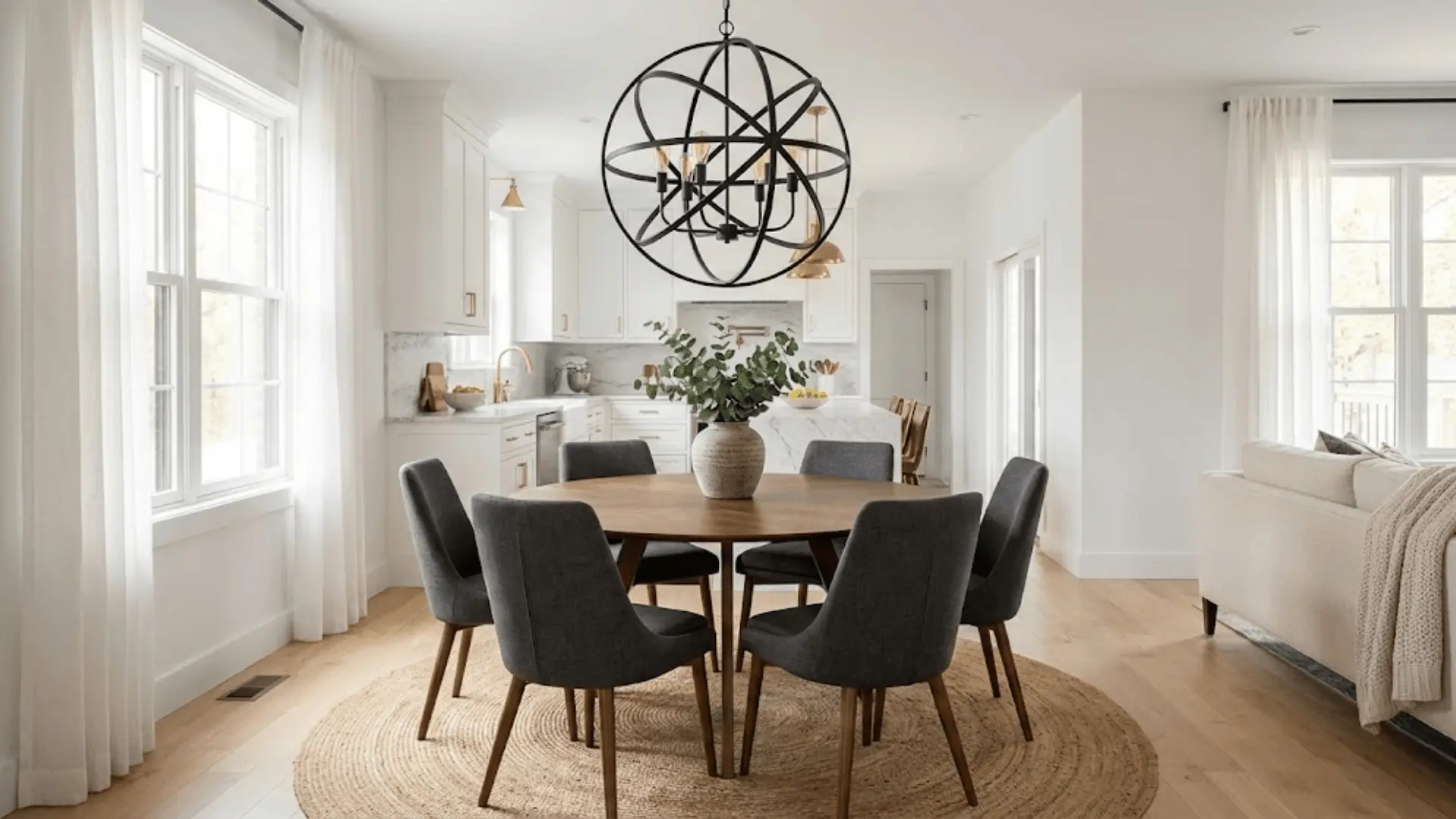
A striking chandelier or cluster of pendant lights instantly defines your dining area in an open layout. Hang it centered over the table at the right height so it becomes a focal point that draws the eye and establishes the zone.
The lighting creates an invisible boundary that signals this is a dedicated eating space. Choose a fixture that complements your overall style while being bold enough to anchor the area.
5. Use Open Shelving as a Subtle Partition
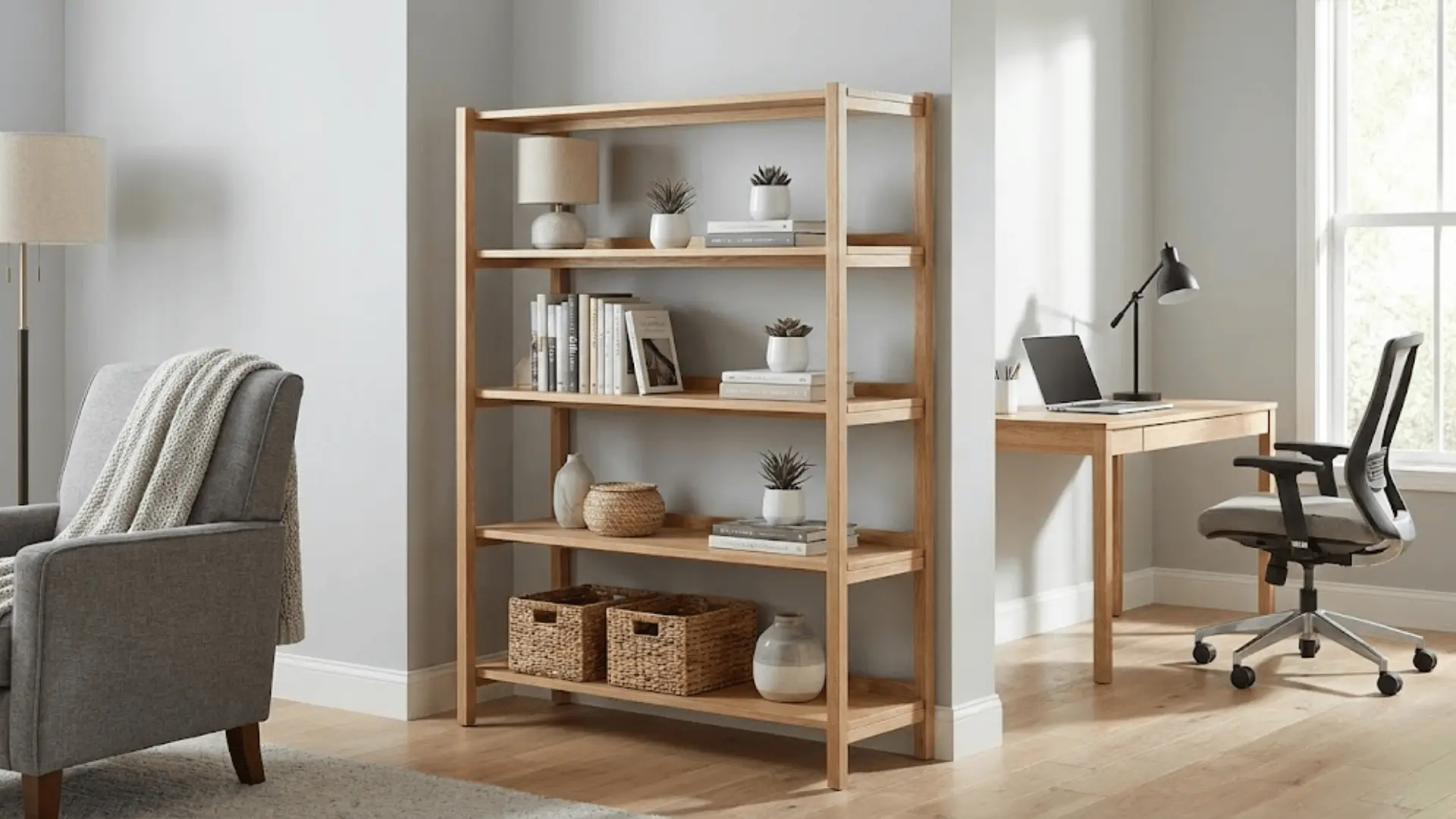
Open shelving units placed perpendicular to a wall can separate spaces while keeping things light and airy. Style them with books, plants, and decorative objects that look good from both sides.
This approach works beautifully between a living room and home office or dining area, offering storage and display space without the heaviness of a solid wall. Keep the shelving at waist or chest height to maintain visual connection.
6. Install Half Walls for Partial Separation
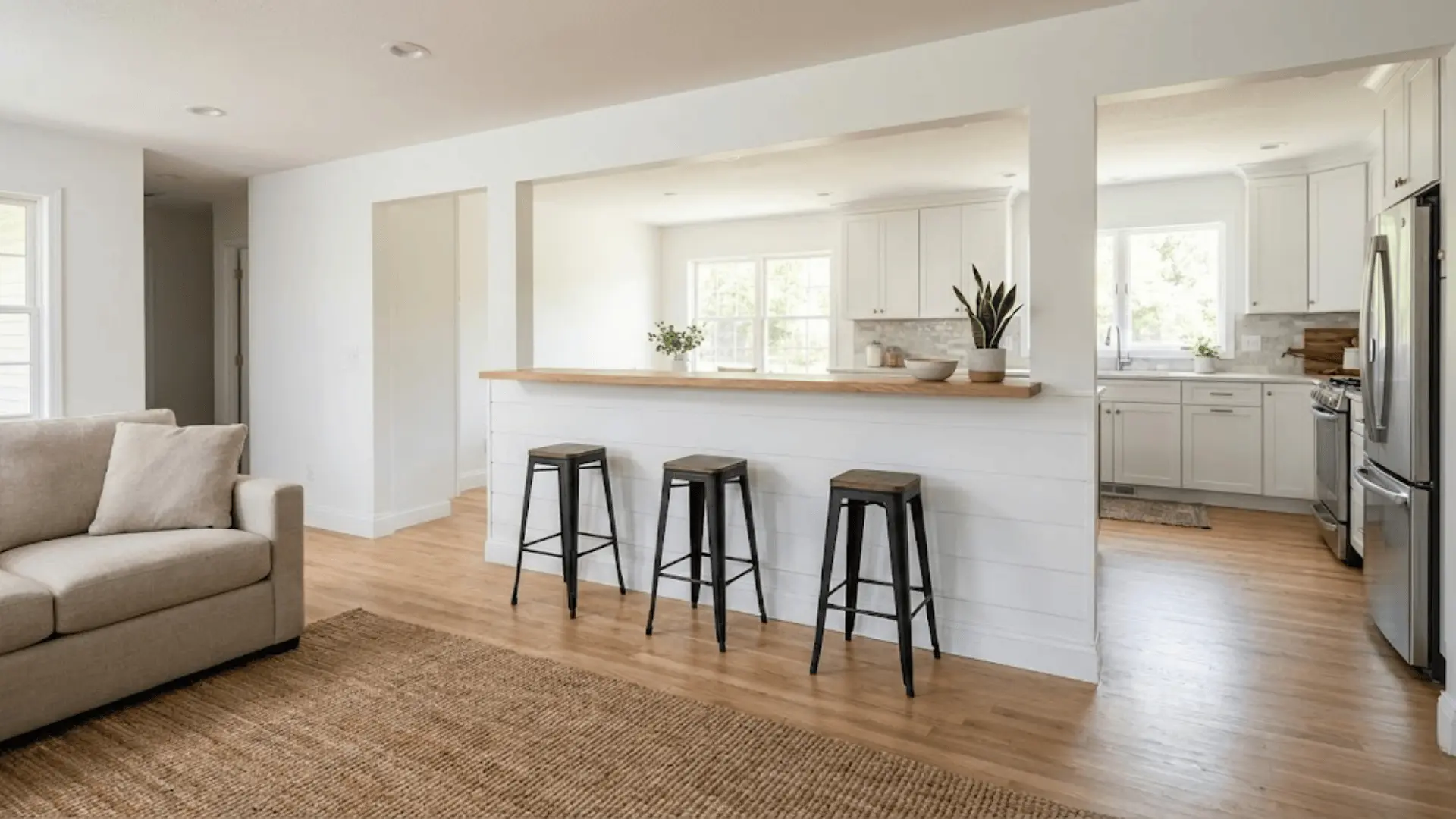
Half walls or pony walls create just enough division without fully closing off spaces. Top them with a shelf or counter for added functionality, or use the surface for displaying plants and decor.
They’re particularly effective between kitchens and living areas, offering a spot for bar seating while maintaining openness above. Paint them the same color as your walls for seamless integration or make them an accent feature.
7. Incorporate Sliding Glass or Pocket Doors
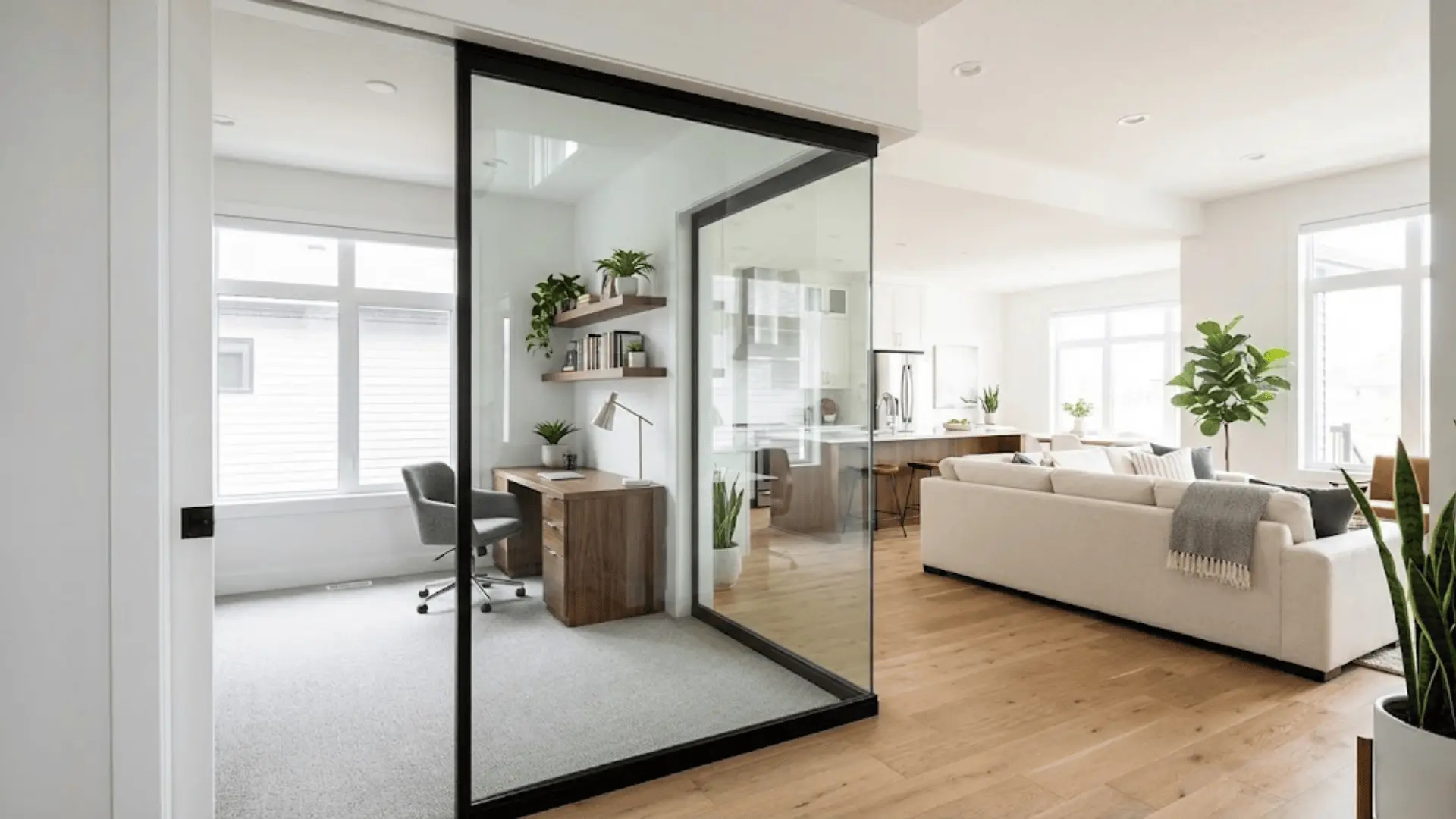
Sliding doors give you the flexibility to close off spaces when needed without sacrificing square footage. Glass panels keep the open, light-filled feeling when closed, and pocket doors fully retract into the wall when opened.
This works wonderfully for home offices or playrooms within open plans, letting you enjoy openness most of the time while having the option for privacy or noise control.
8. Create a Conversation Pit Layout
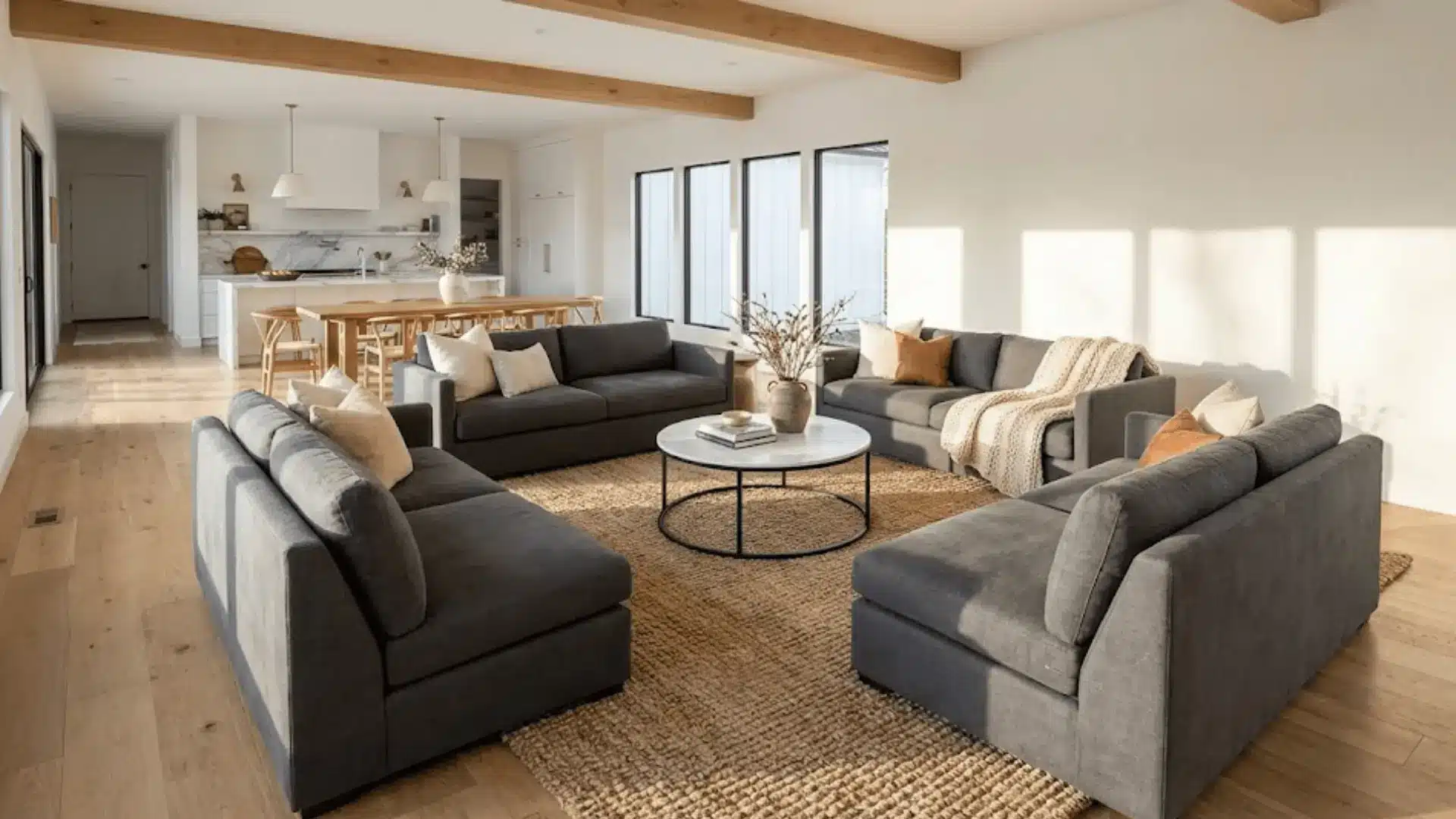
Sunken seating areas might sound retro, but modern versions create intimate gathering spots within larger open spaces. The lowered floor level naturally defines the zone while keeping sightlines open.
If a structural change isn’t possible, achieve a similar effect by arranging seating in a tight, inward-facing configuration with a large area rug underneath. The cozy, enclosed feeling contrasts beautifully with the openness around it.
9. Design Around a Central Fireplace
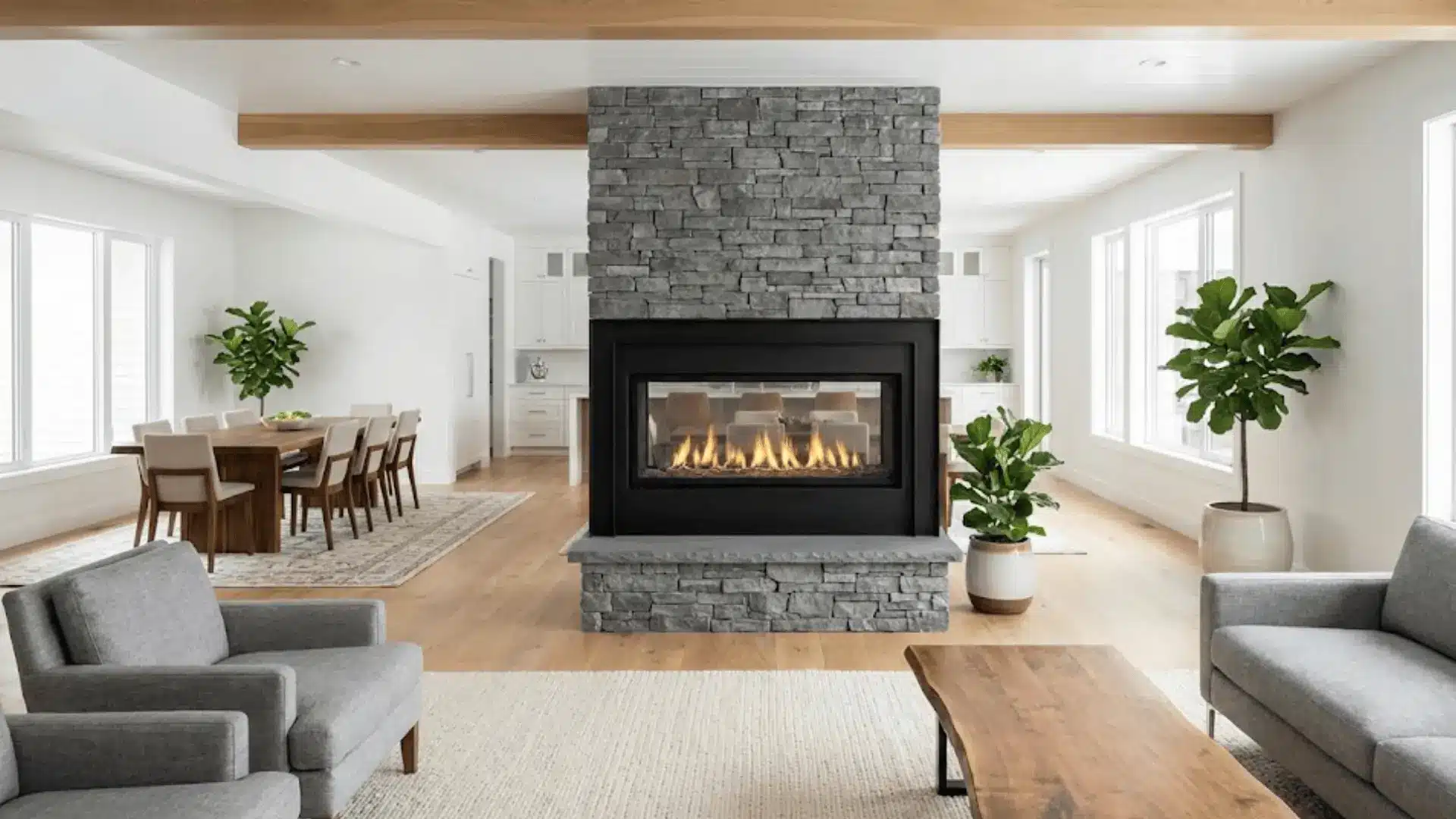
A fireplace naturally becomes the heart of an open floor plan when positioned centrally. Arrange your living area to face it, using the hearth as your anchor point.
A double-sided fireplace between the living and dining areas provides warmth and subtly separates them. A modern linear fireplace on a feature wall anchors your layout and acts as a focal point for furniture placement.
10. Use Built-In Cabinets to Frame Spaces
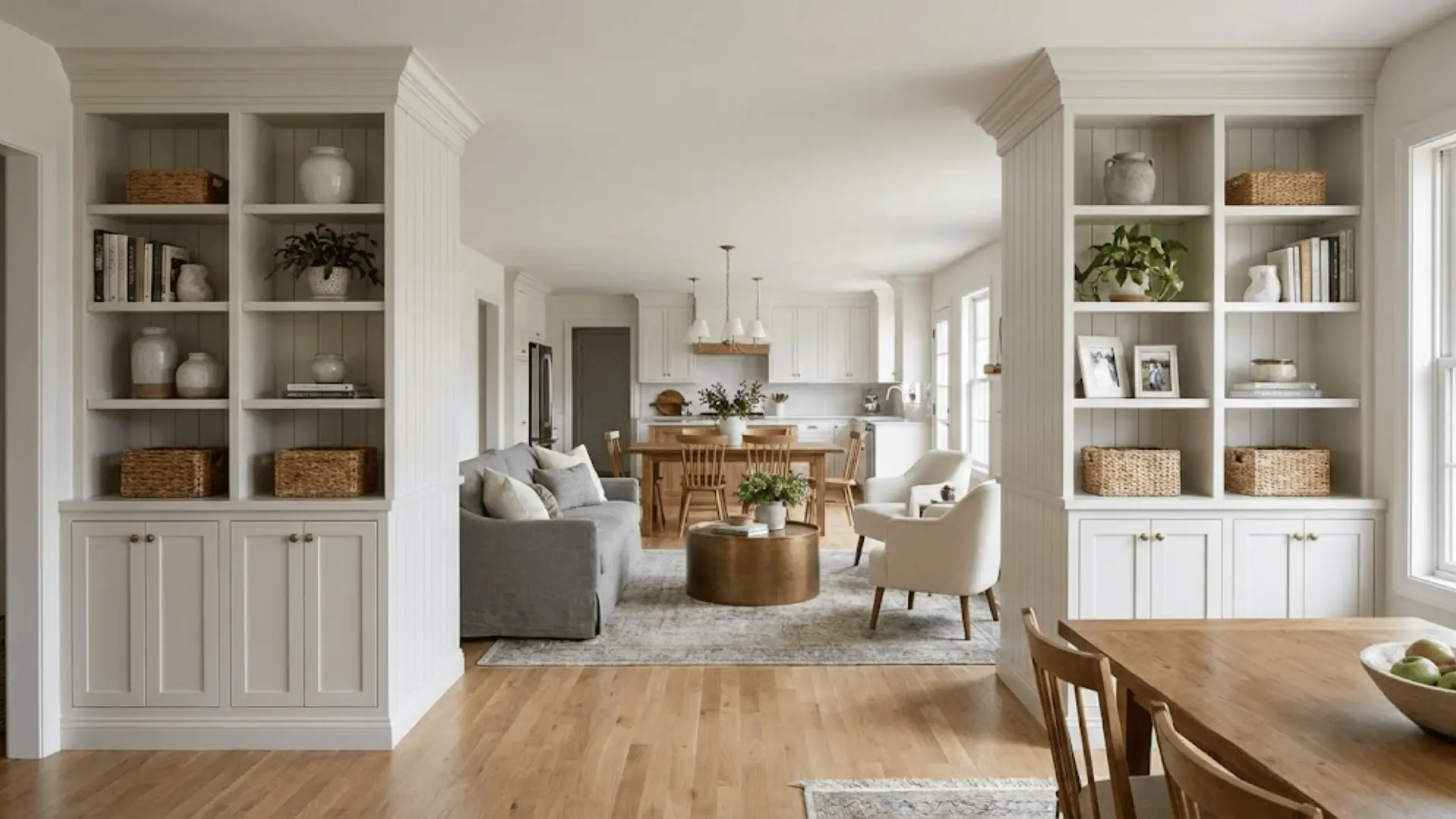
Floor-to-ceiling built-ins create architectural definition in open layouts. Position them to frame a living area or create a library wall that establishes a cozy reading nook.
The vertical lines draw the eye up and add structure to wide-open spaces. Include a mix of open and closed storage to keep things visually interesting, and paint them the same color as the walls for a seamless look.
Furniture Placement Ideas
Where you put your furniture matters just as much as what you choose. These placement strategies help create flow and definition without building walls.
11. Float Furniture Away from Walls
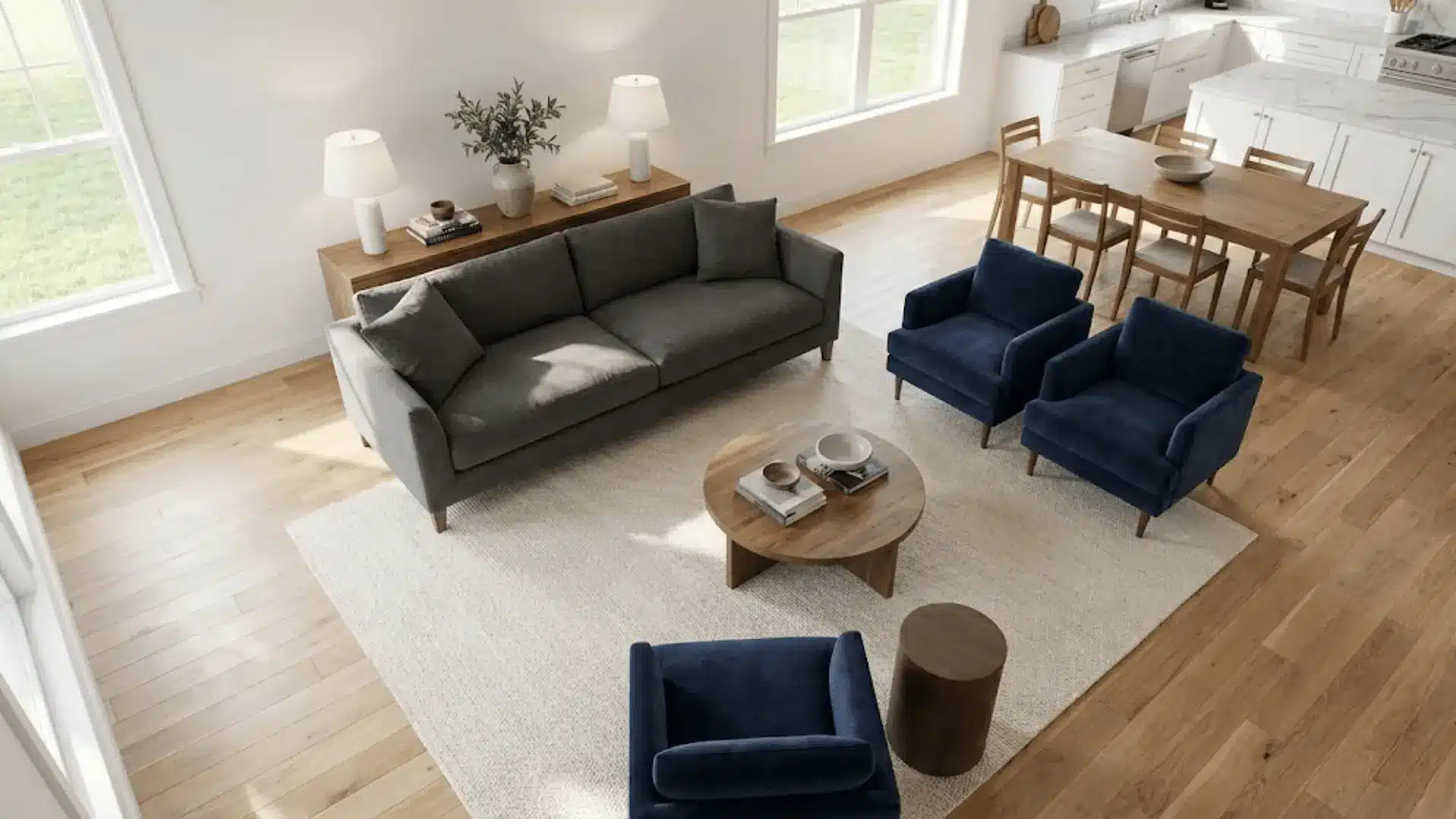
Pulling furniture away from walls creates intimate groupings within larger spaces. Position your sofa several feet from the wall to establish the living zone, with a console table behind it for added definition.
This arrangement makes rooms feel purposeful rather than cavernous, and it naturally creates pathways around the perimeter. The negative space behind furniture becomes functional, giving you room to move and breathe.
12. Back-to-Back Sofa Arrangement
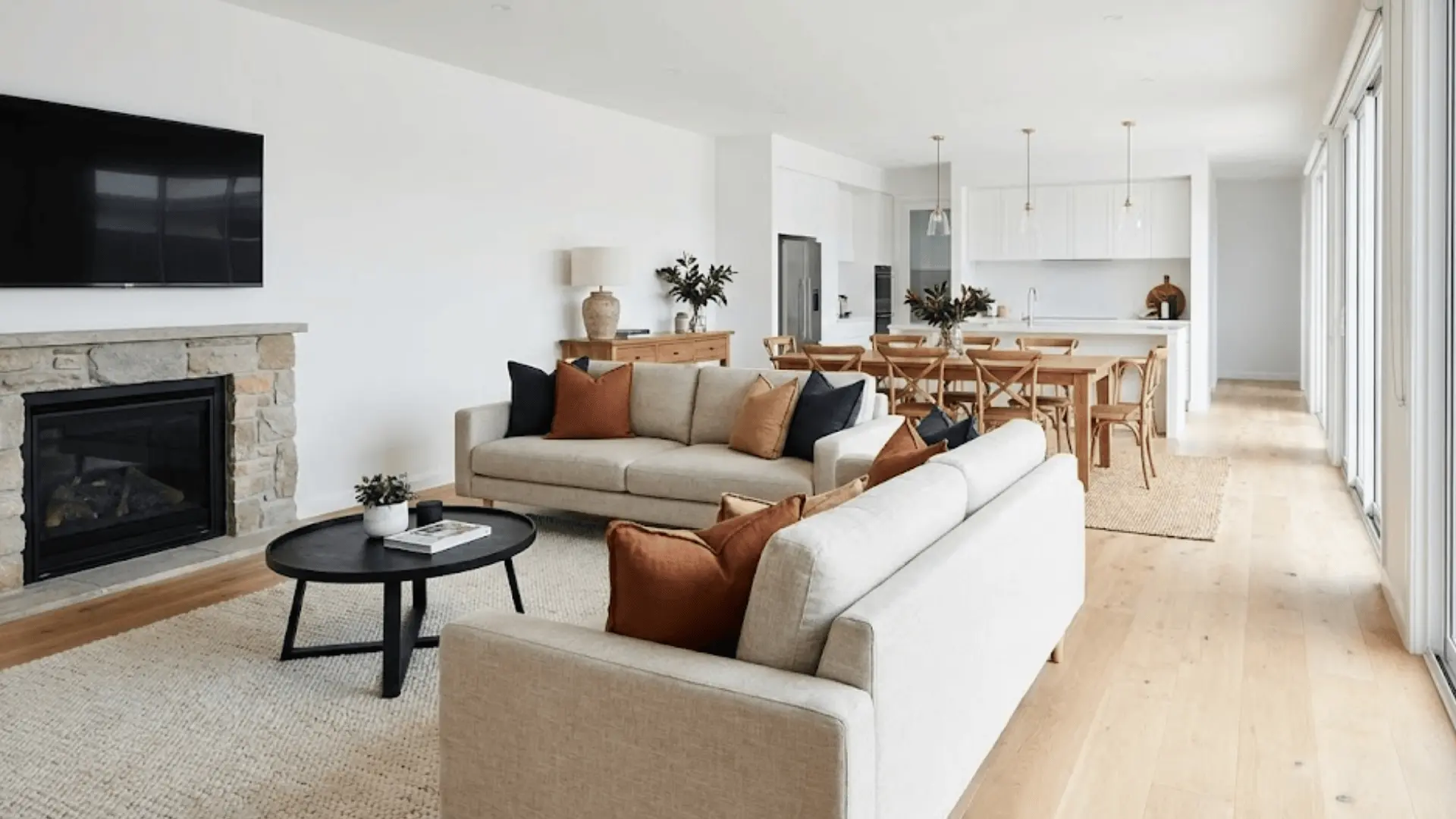
Placing two sofas back-to-back creates an instant room divider while maximizing seating. This works especially well between living and dining areas, with one sofa facing the TV and the other facing the dining table or kitchen.
Make sure both sides are styled attractively since they’re visible from multiple angles. The shared back creates a soft boundary without blocking light or conversation.
13. Add a Console Table Behind the Sofa
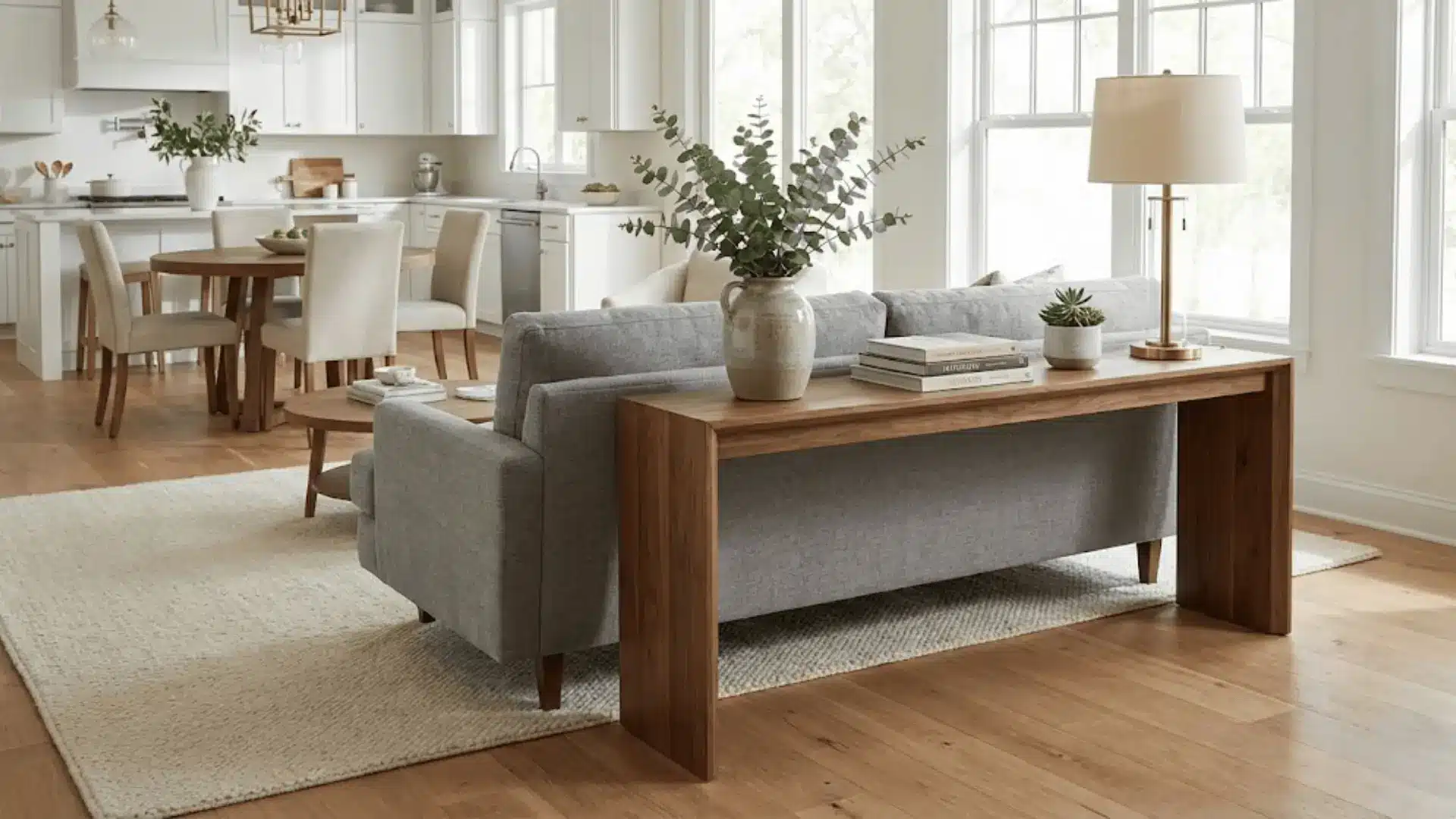
A console table tucked behind a floating sofa adds function and definition. Use it to display lamps, plants, or decorative objects that look good from the dining or kitchen side.
The surface creates a visual barrier at a comfortable height while providing storage for remotes, books, or serving pieces. Choose a table that’s roughly the same length as your sofa for balanced proportions.
14. Choose Low-Profile Furniture for Sightlines
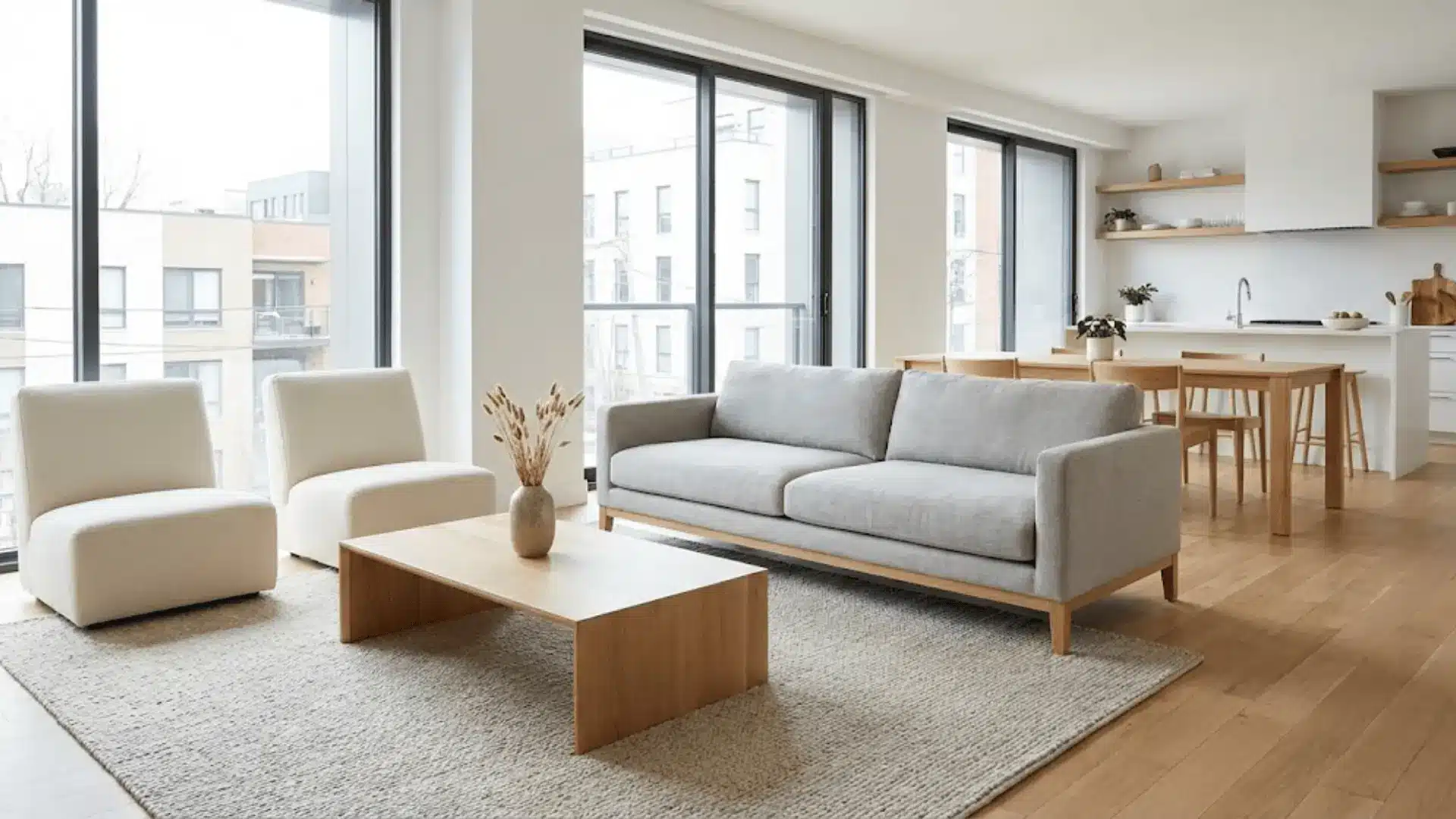
Keep furniture below eye level when seated to maintain the open, airy feeling. Low-slung sofas, armless chairs, and streamlined tables prevent visual clutter and let your gaze travel across the entire space.
This approach is especially important in smaller open floor plans where bulky furniture can quickly make things feel cramped. The horizontal emphasis creates a sense of calm and spaciousness.
15. Use Matching Accent Chairs for Balance
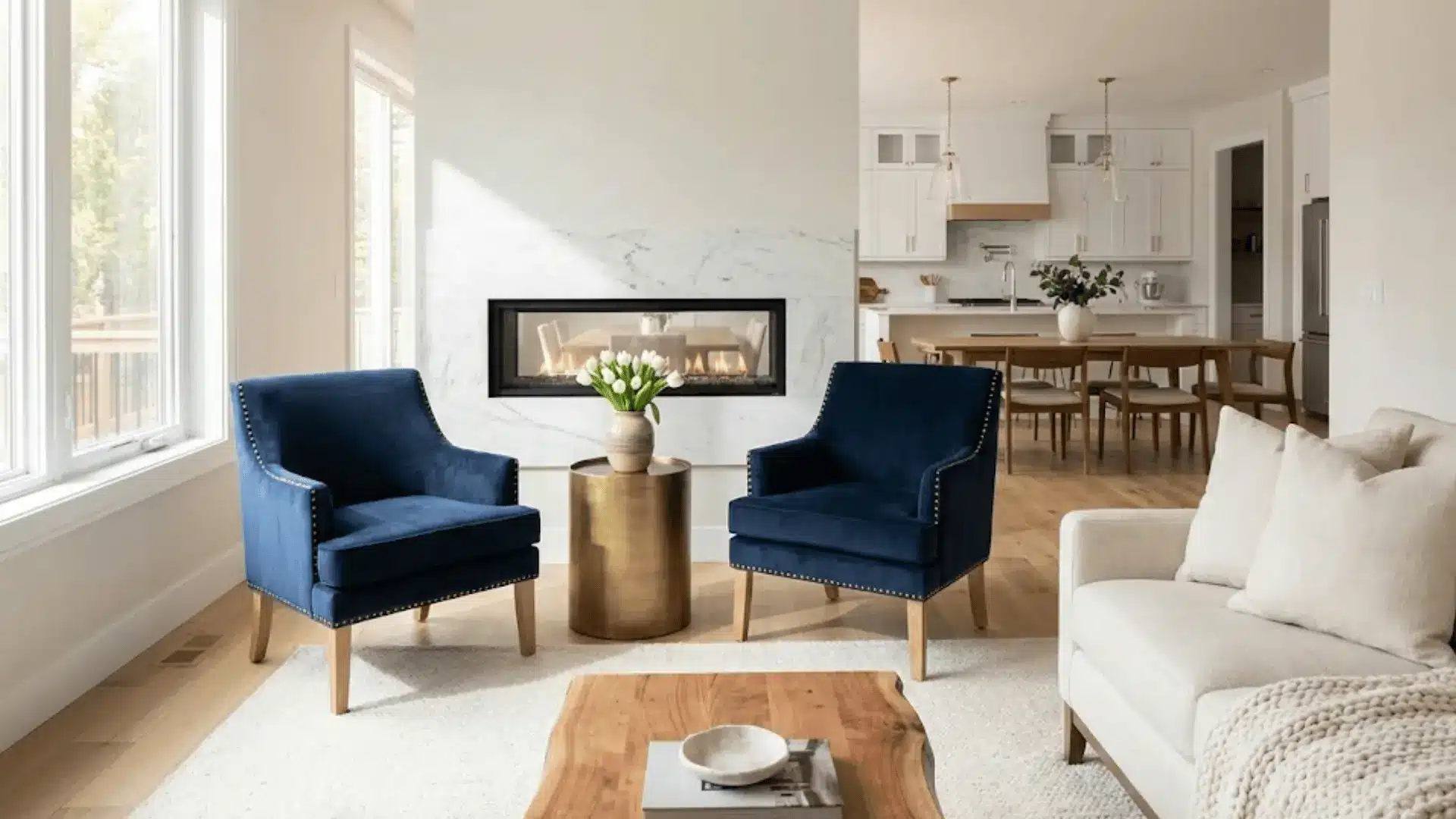
A pair of matching accent chairs creates symmetry and polish in open layouts. Flank a fireplace, position them across from a sofa, or place them at the edges of your living zone to frame the space.
The repetition feels intentional and grounding, especially in large open areas where too much variety can look chaotic. Choose chairs with exposed legs to keep the look light.
16. Create Symmetry Across Zones
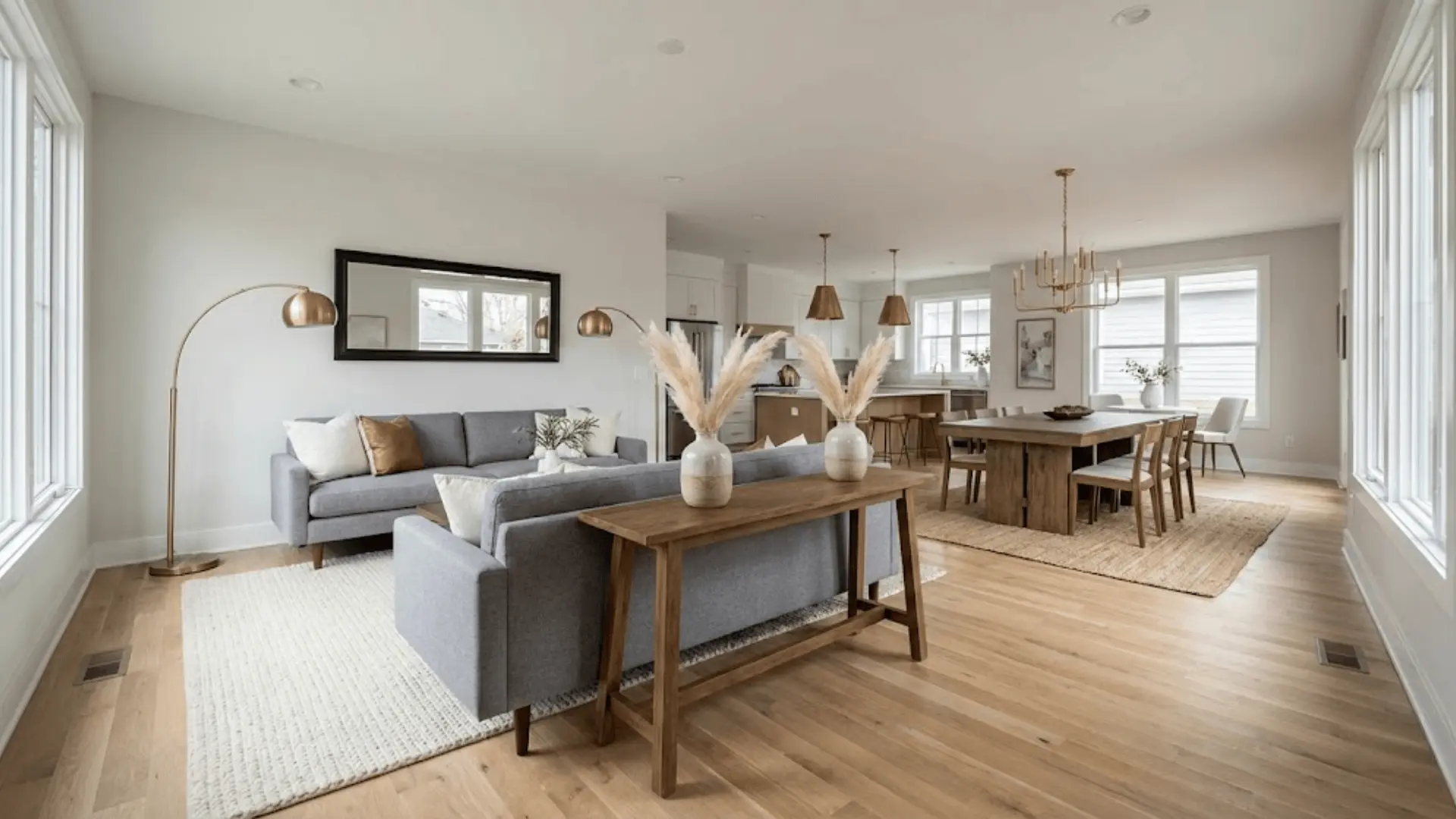
Balance different areas by repeating similar elements. If your dining area has a statement chandelier, echo it with a significant light fixture in the living space.
Match the scale of furniture across zones so no single area overwhelms the others. Symmetrical arrangements bring order to open layouts, making the whole space feel carefully considered rather than randomly assembled.
17. Incorporate Multifunctional Furniture
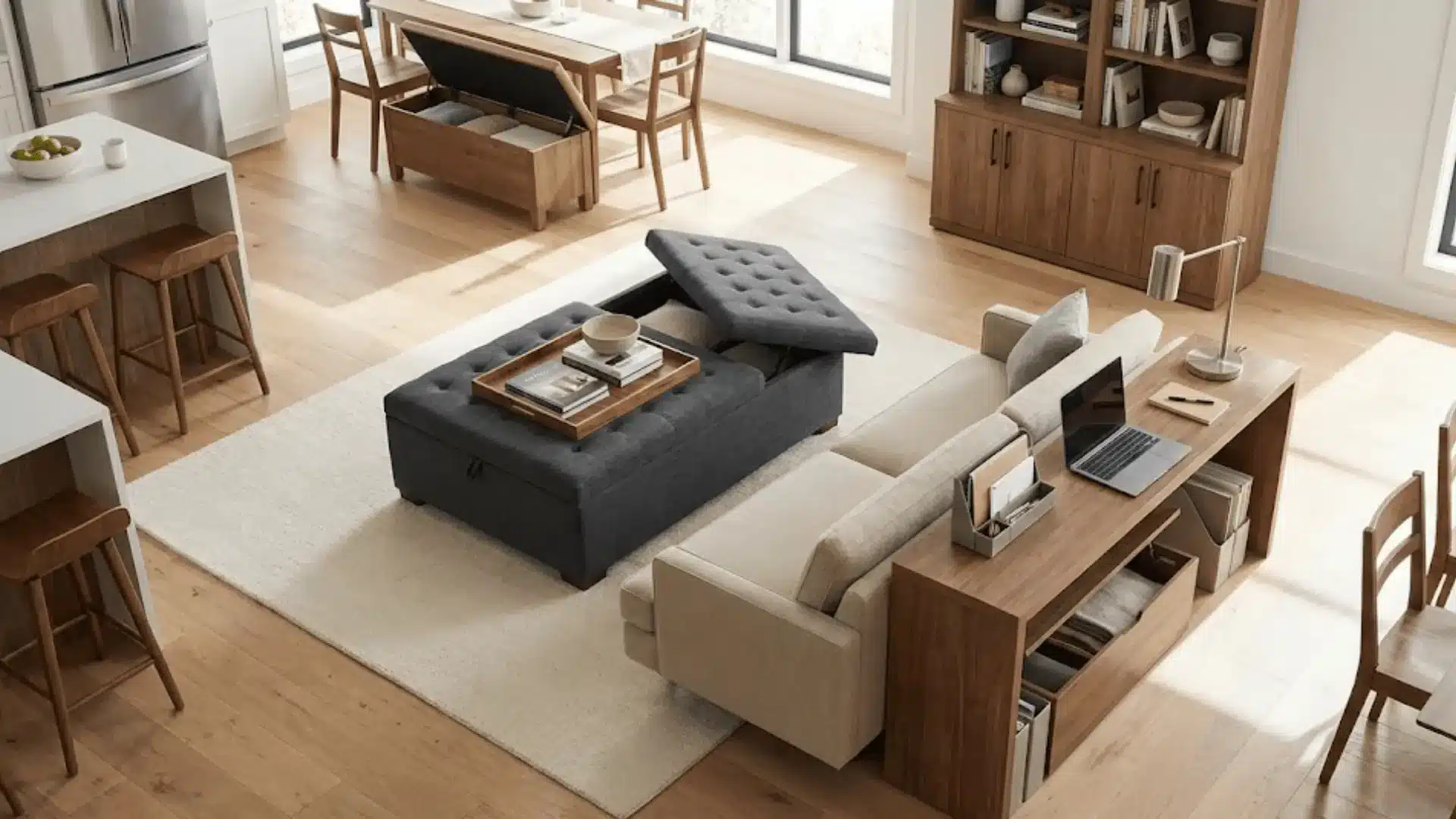
Pieces that serve double duty are essential in open floor plans. An ottoman with storage becomes extra seating and a coffee table. A dining bench tucks under the table but pulls out for overflow guests.
A console table behind the sofa works as a desk or serving station. Choosing versatile furniture keeps your space flexible and reduces clutter since everything earns its place.
18. Use Benches for Flexible Seating
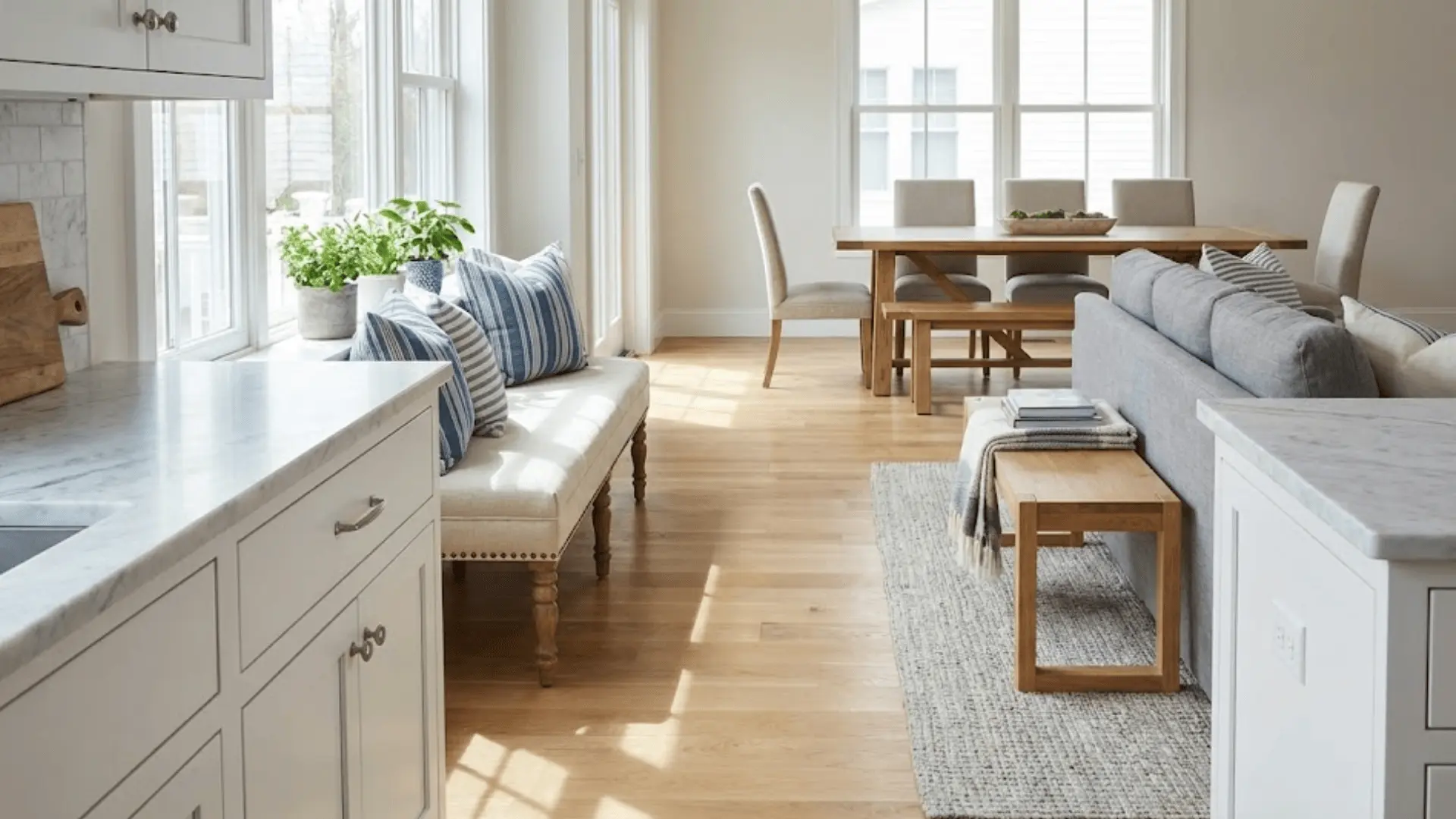
Benches move easily between zones, providing seating wherever you need it. Tuck one under a window for a reading nook, pull it up to the dining table for extra guests, or position it at the foot of your sofa.
They’re less visually heavy than chairs and can slide out of sight when not needed. Upholstered benches add softness while wooden ones bring architectural interest.
Visual Flow & Cohesion
Creating a unified look across an open floor plan takes intentional design choices. These ideas help everything feel like it belongs together.
19. Keep Flooring Consistent Throughout
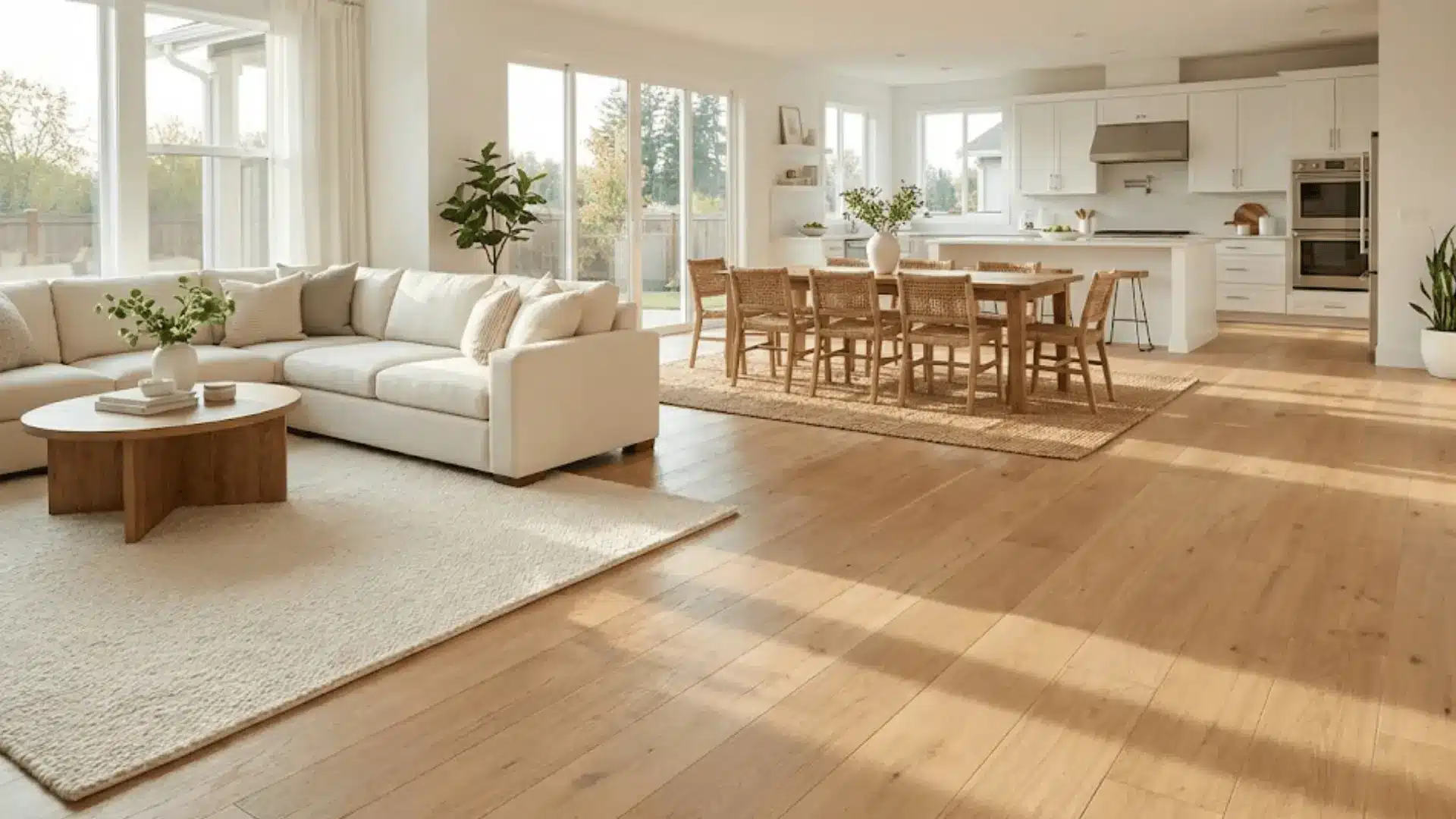
Using the same flooring throughout an open floor plan creates a seamless flow and makes the space appear larger. Continuous flooring like hardwood, vinyl, or concrete removes visual breaks that divide the space.
If you want subtle definition, use area rugs rather than changing floor materials. Consistent flooring also simplifies future design changes since you’re not locked into coordinating multiple surfaces.
20. Use a Unified Color Scheme
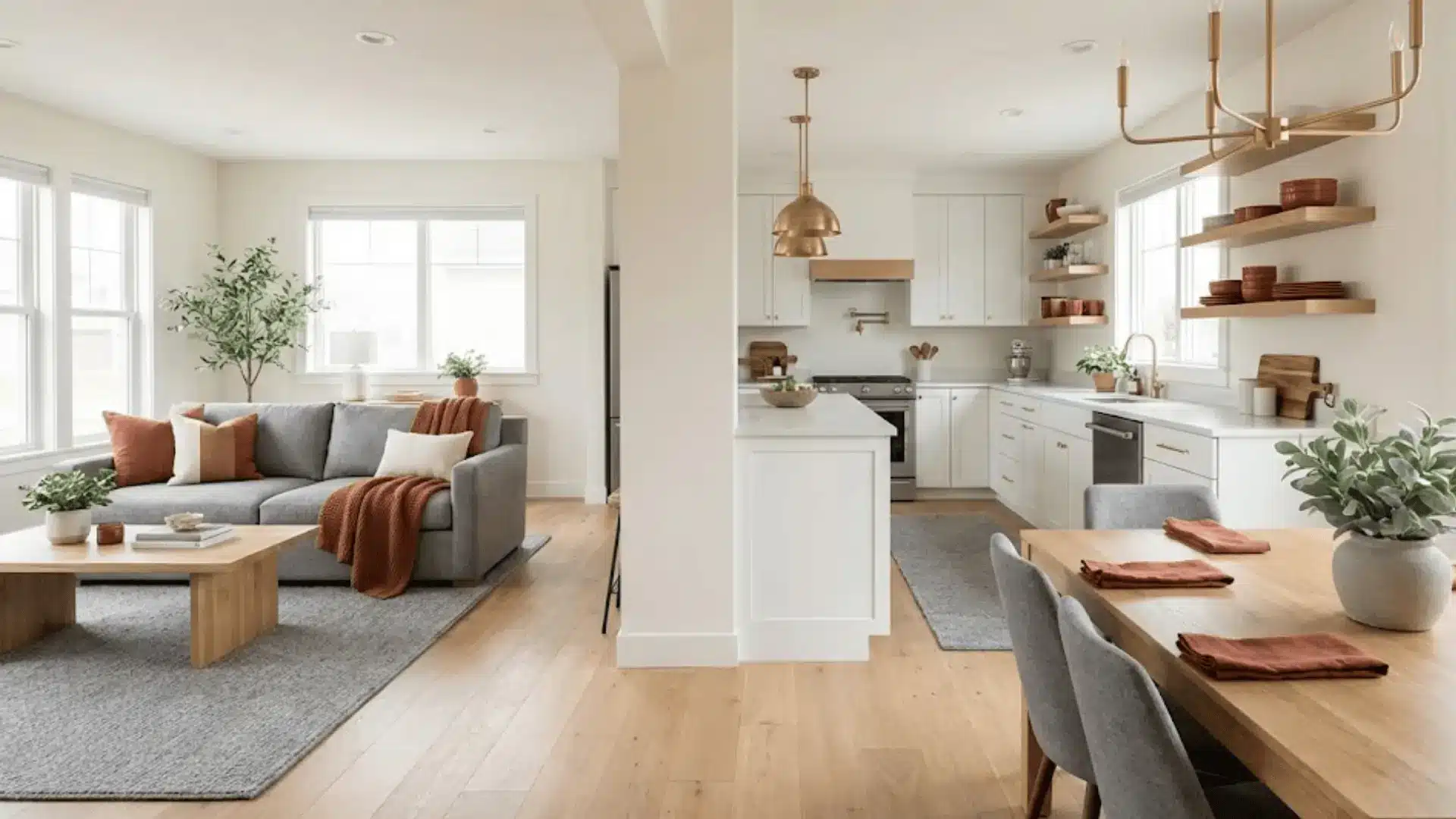
Carry the same color palette through all zones to create cohesion. Choose three to five colors and repeat them in different proportions across areas. Your living room’s accent color might become the dining area’s dominant shade.
This doesn’t mean everything matches exactly, but related tones create visual harmony. Stick to one neutral base and layer in coordinating colors through textiles, art, and accessories.
21. Add Repeating Textures Across Areas
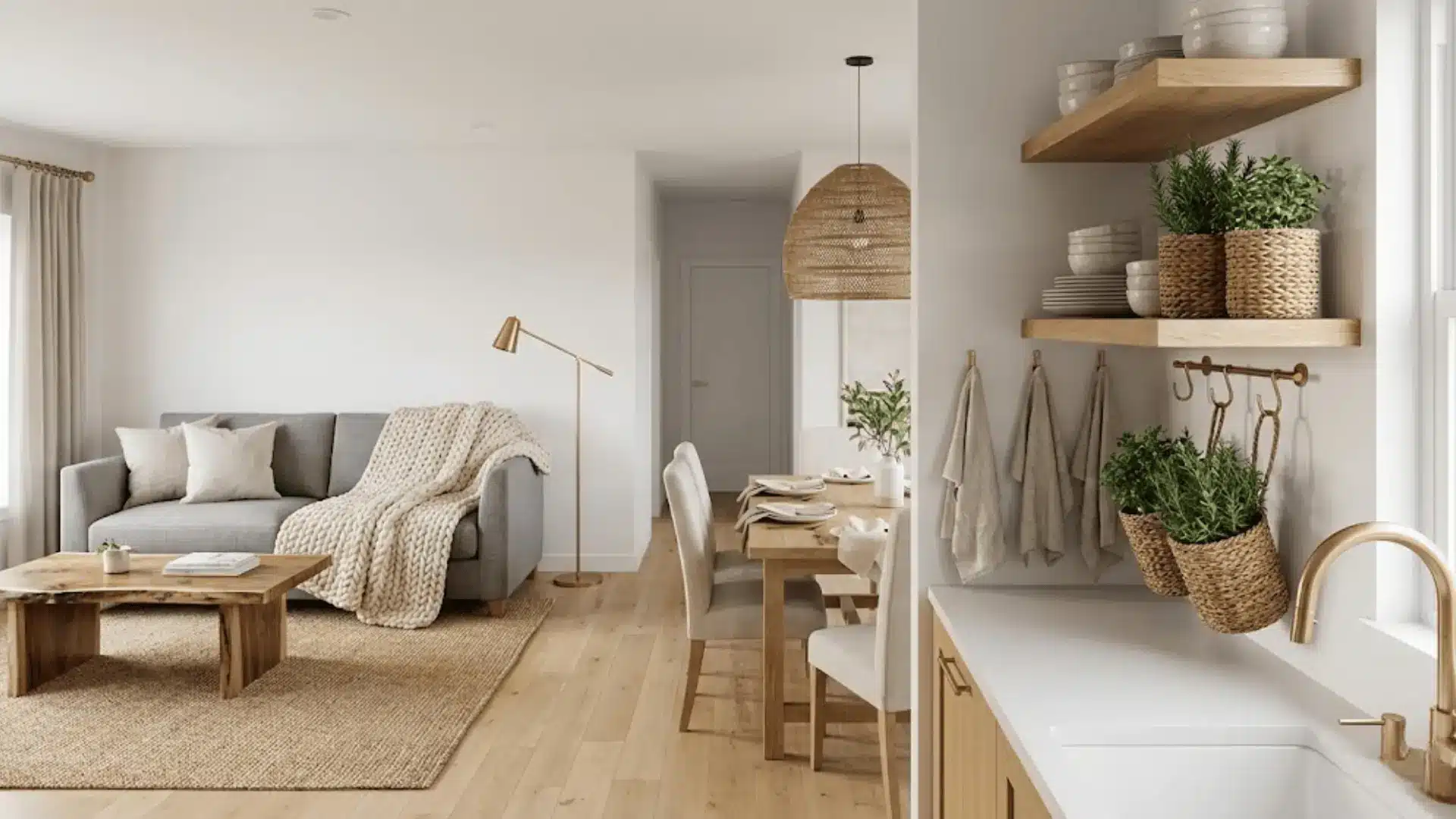
Echo textures throughout your open space to create subtle connections. If you have a chunky knit throw in the living room, add linen napkins in the dining area. Woven baskets in the kitchen pair with a jute rug in the living space.
These repeated tactile elements create rhythm and make the entire area feel intentionally designed. Mix different textures but keep them in the same family for cohesion.
22. Coordinate Metal Finishes
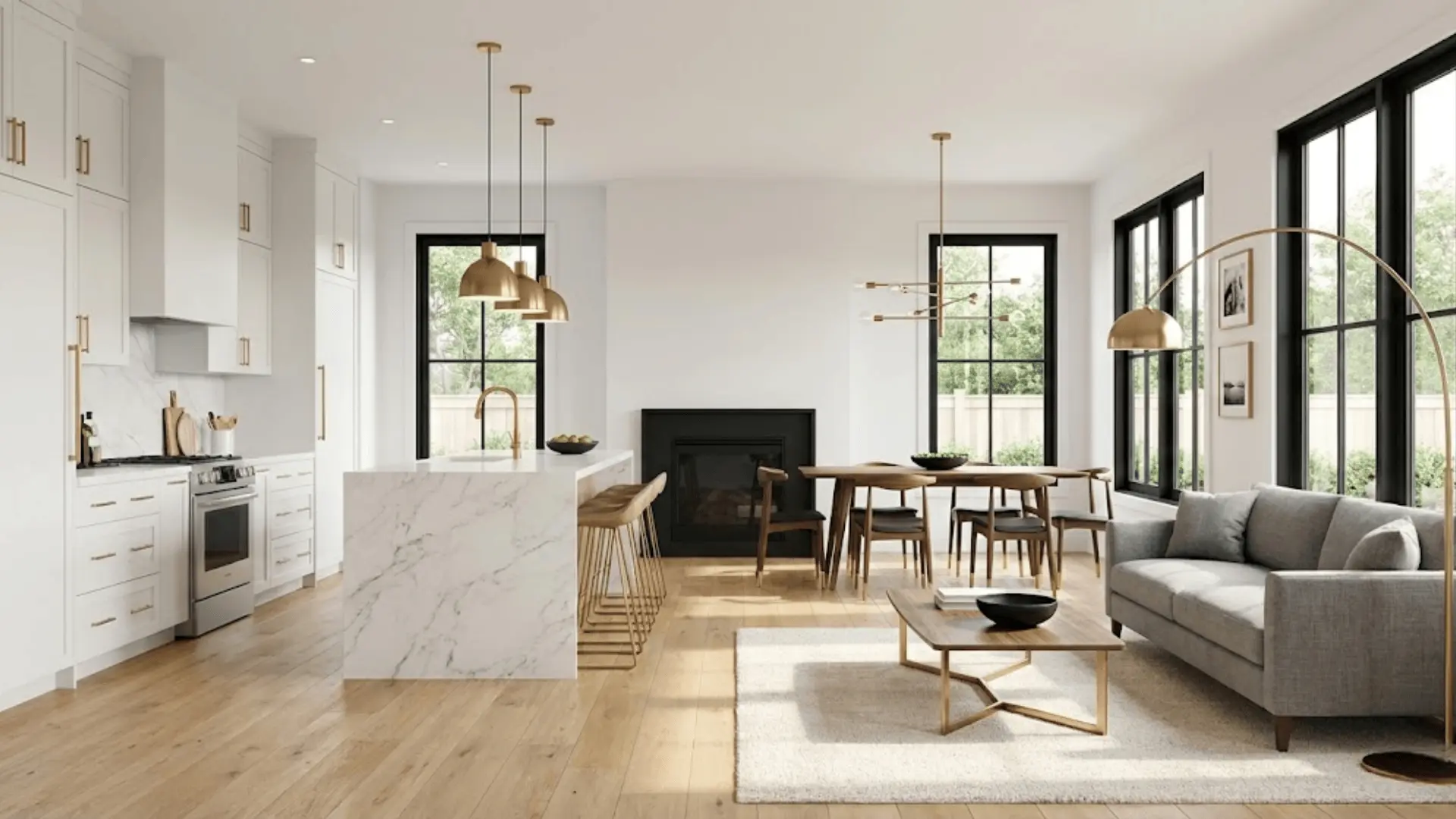
Limiting yourself to two or three metal finishes prevents visual chaos in open layouts. If you choose brass cabinet hardware in the kitchen, repeat brass in your living room lighting or dining chairs.
Mixing metals is fine, but stick to a consistent combination throughout. This creates a pulled-together look and makes design decisions easier since you have a framework to follow.
23. Maintain Similar Window Treatments
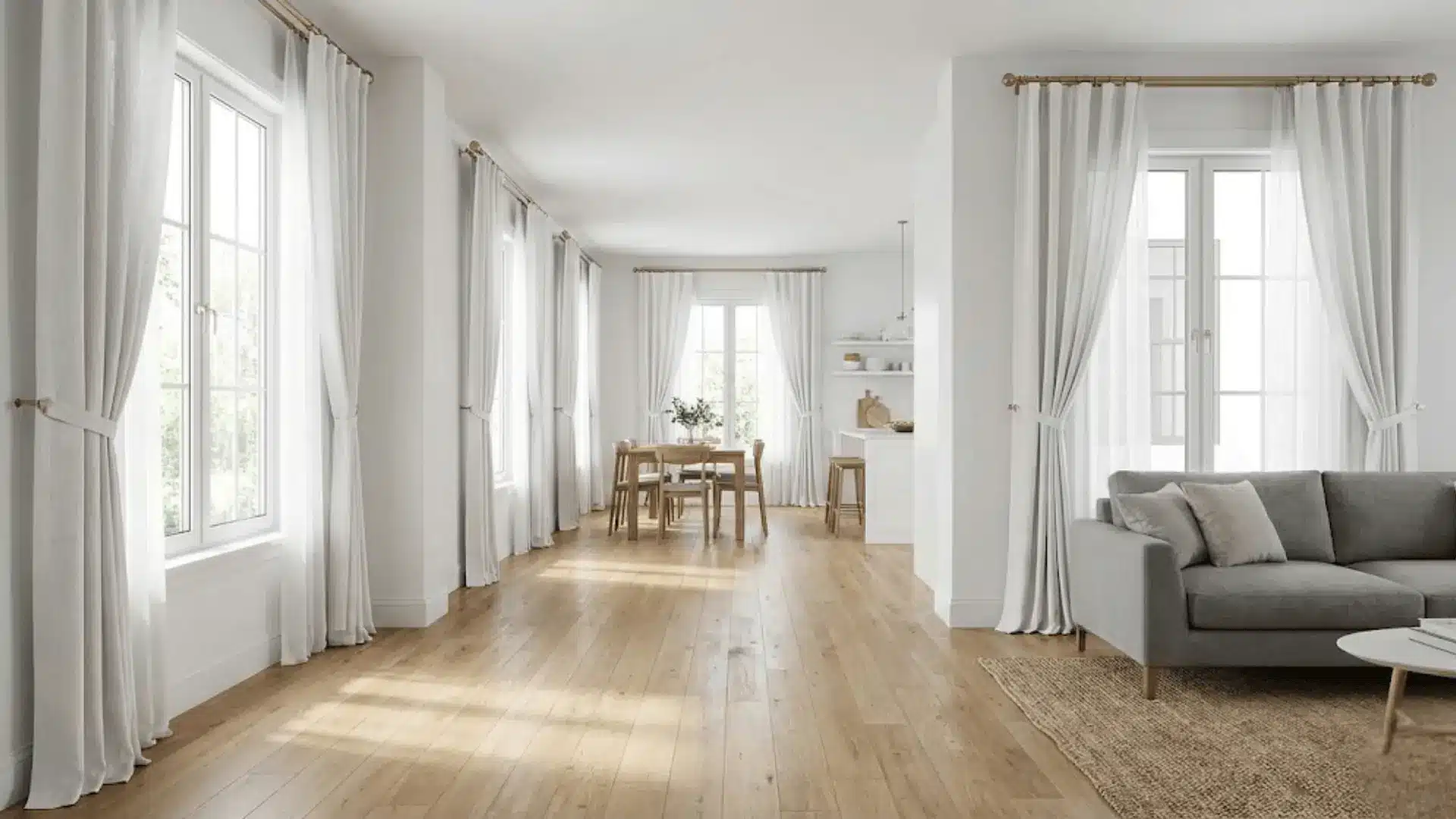
Consistent window treatments throughout an open floor plan create a unified exterior appearance and interior flow. Use the same style, fabric, or color across all windows visible from the main living areas.
This doesn’t mean every window needs identical curtains, but they should feel related. Floor-length panels in the same neutral shade work across zones, or choose Roman shades in coordinating fabrics.
24. Use Architectural Beams for Definition
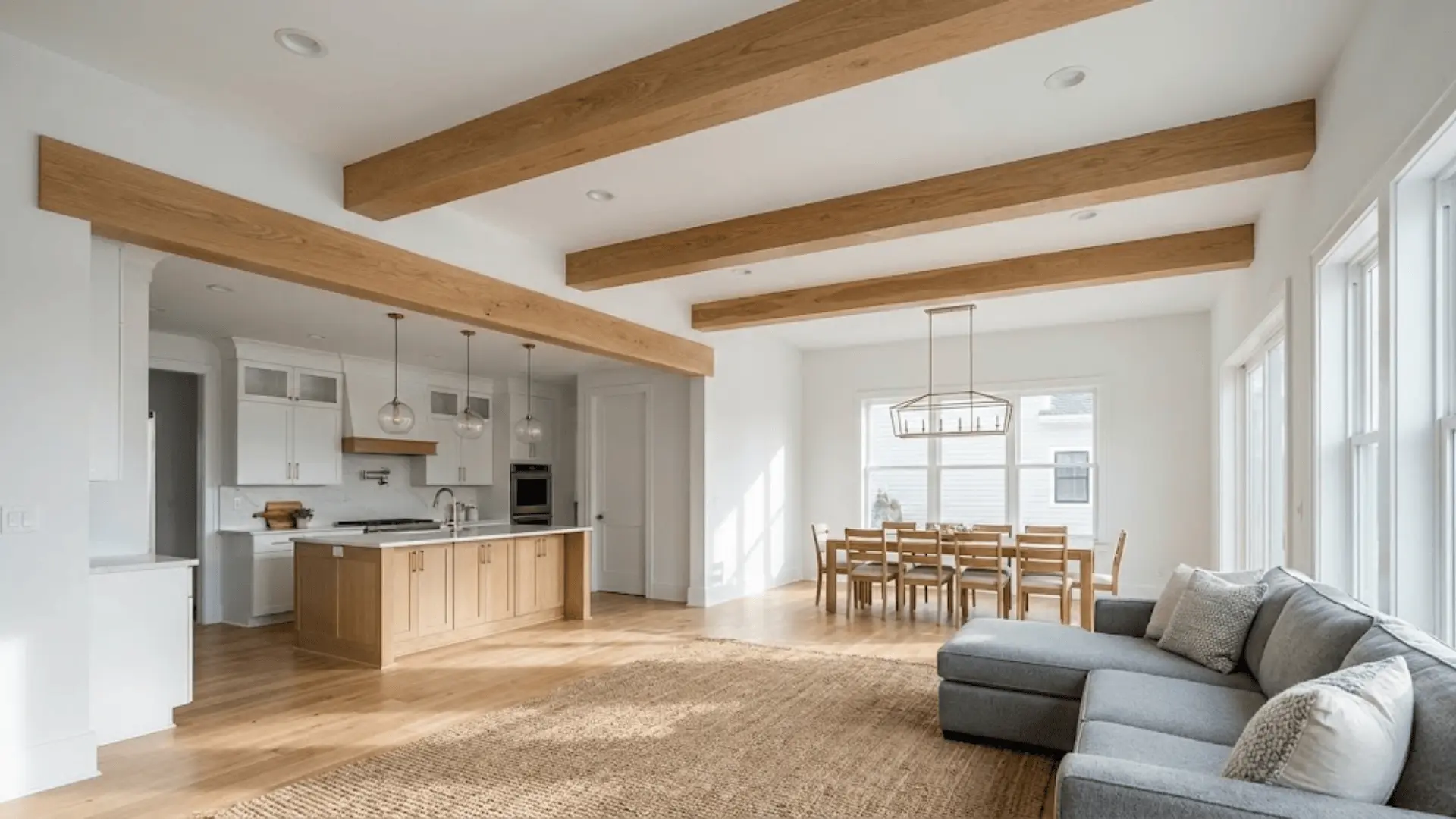
Exposed ceiling beams add character while subtly marking different zones. Position a beam above the transition between the kitchen and living areas, or use a series of beams to define the dining space.
Beams draw the eye upward and create visual interest in open layouts where walls don’t break up the ceiling plane. Stain them for warmth or paint them to match your ceiling for subtle definition.
25. Create a Feature Wall That Ties Areas Together
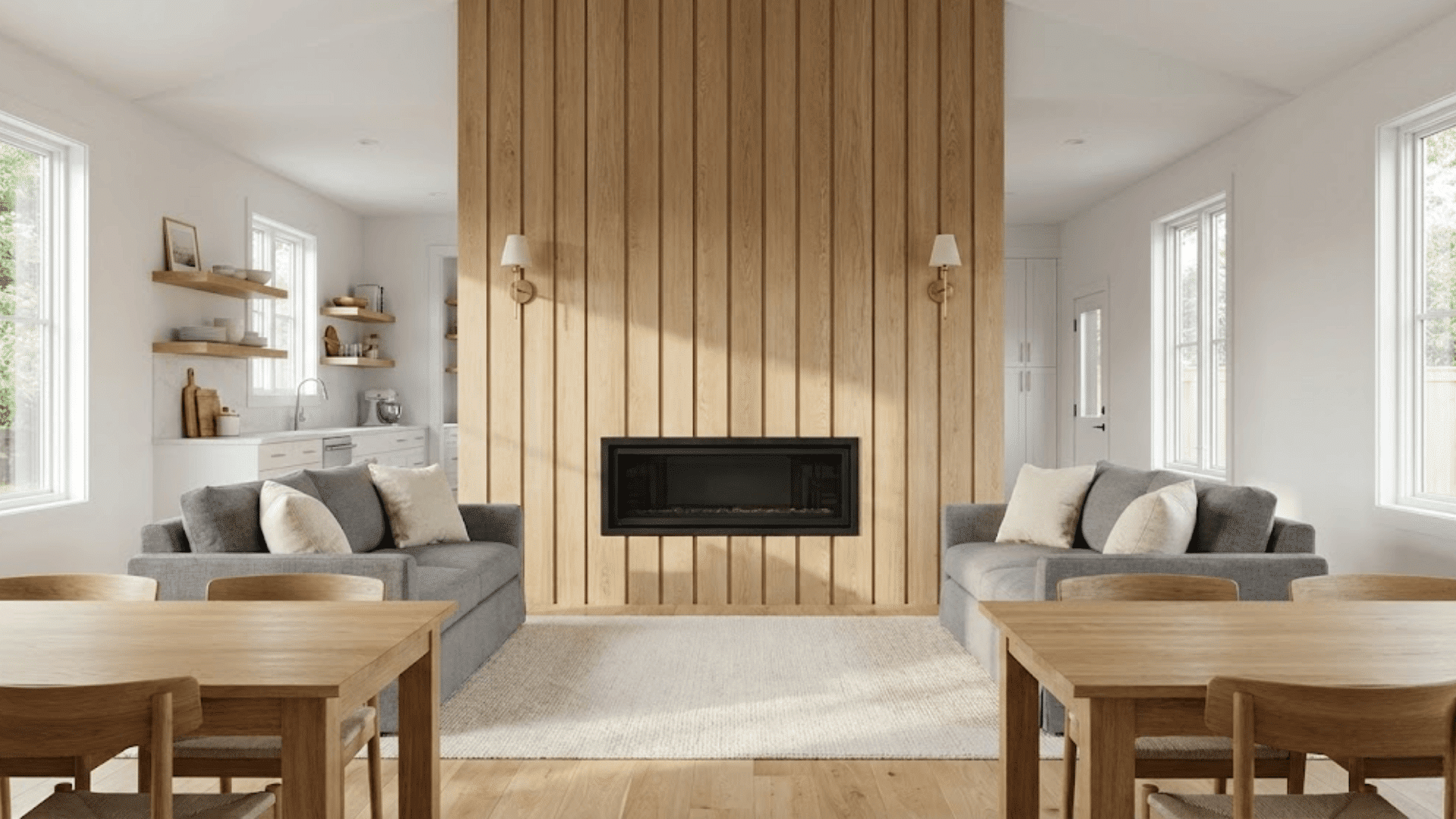
A striking accent wall visible from multiple zones acts as a unifying element. Position it behind the living room sofa where it’s visible from the dining and kitchen areas, or create a fireplace wall that anchors the entire space.
Use bold paint, textured wallpaper, or natural materials like shiplap or stone. The feature wall gives the eye somewhere to land and provides a color or texture you can pull from throughout the space.
Lighting Strategies
Thoughtful lighting makes open floor plans functional and beautiful. Layer different types to define zones and create the right mood in each area.
26. Layer Ambient, Task, and Accent Lighting
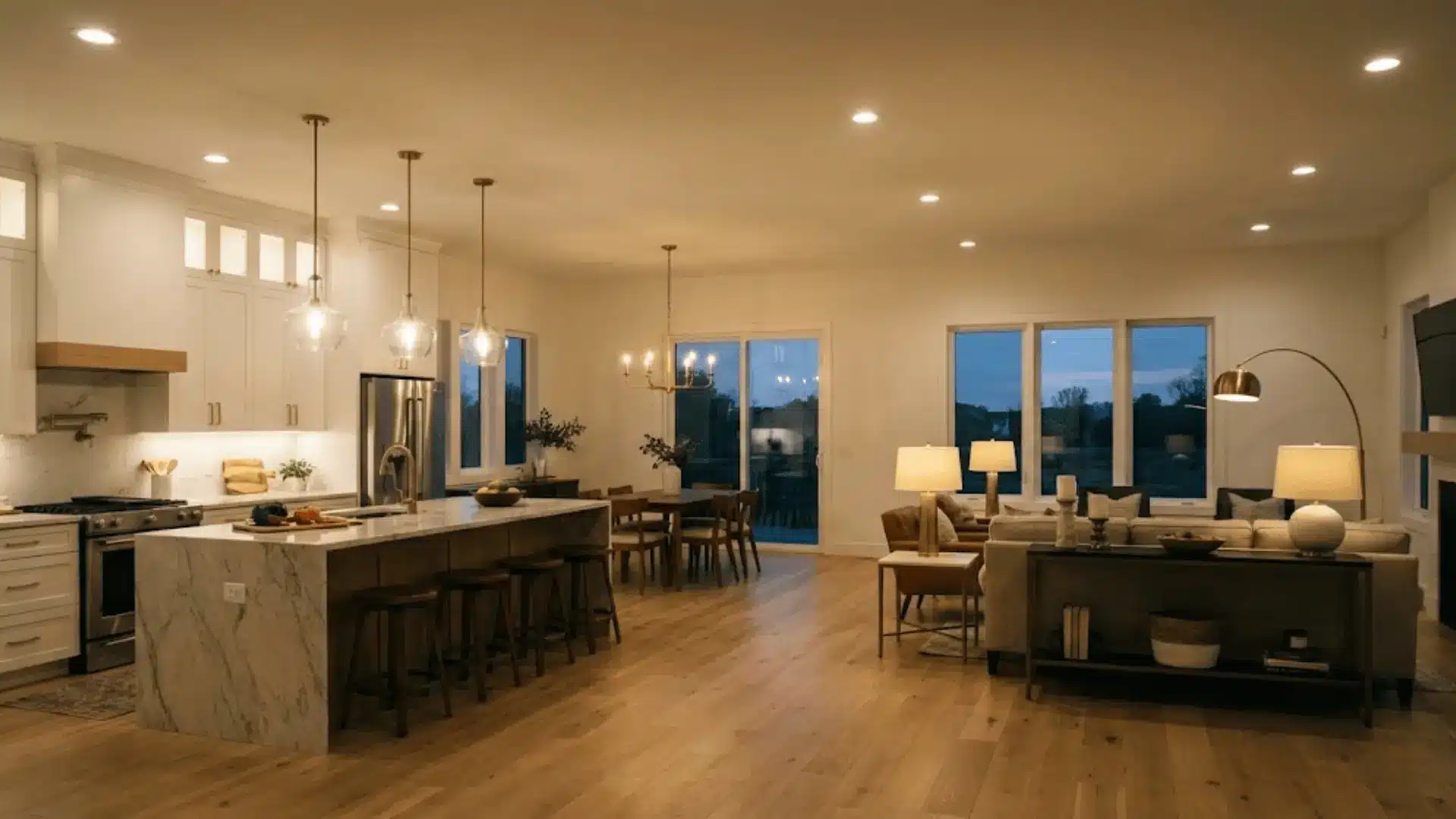
Successful lighting combines three types: ambient for overall illumination, task for specific activities, and accent to highlight features.
Begin with recessed or central lights for ambiance, add pendant lights over the island for tasks, and table lamps for accents. This layered setup allows independent mood and function control while keeping the space cohesive.
27. Install Pendant Lights Over Key Zones
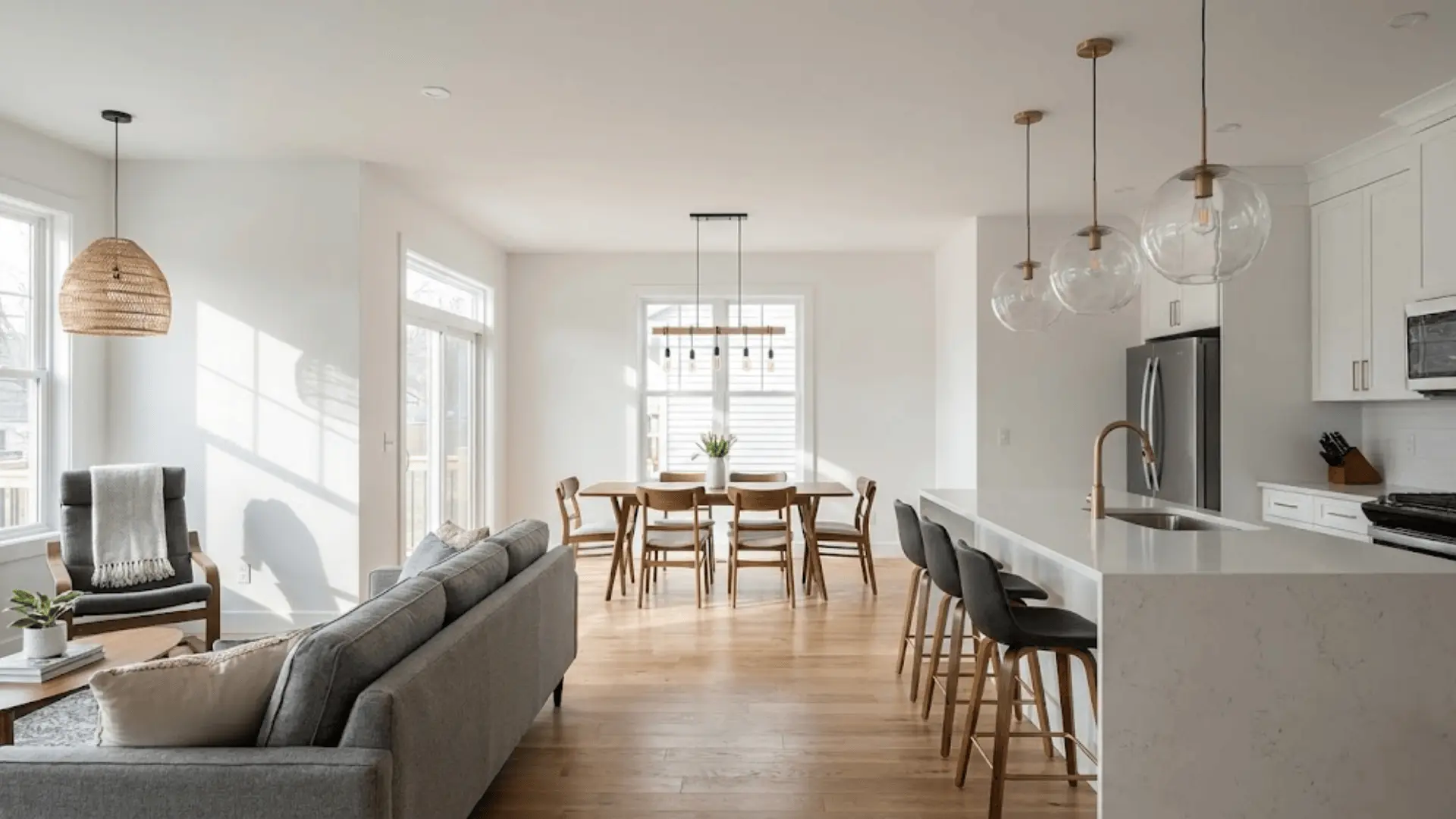
Pendant lights hanging at varying heights create visual interest and define specific areas. Cluster three over a kitchen island, hang a linear fixture above the dining table, or add a sculptural pendant in the living area.
The lights descend into each zone, marking boundaries without blocking views. Choose fixtures that complement each other in style or finish, even if they’re not identical, creating a connection through repetition.
28. Add Recessed Lighting for Even Coverage
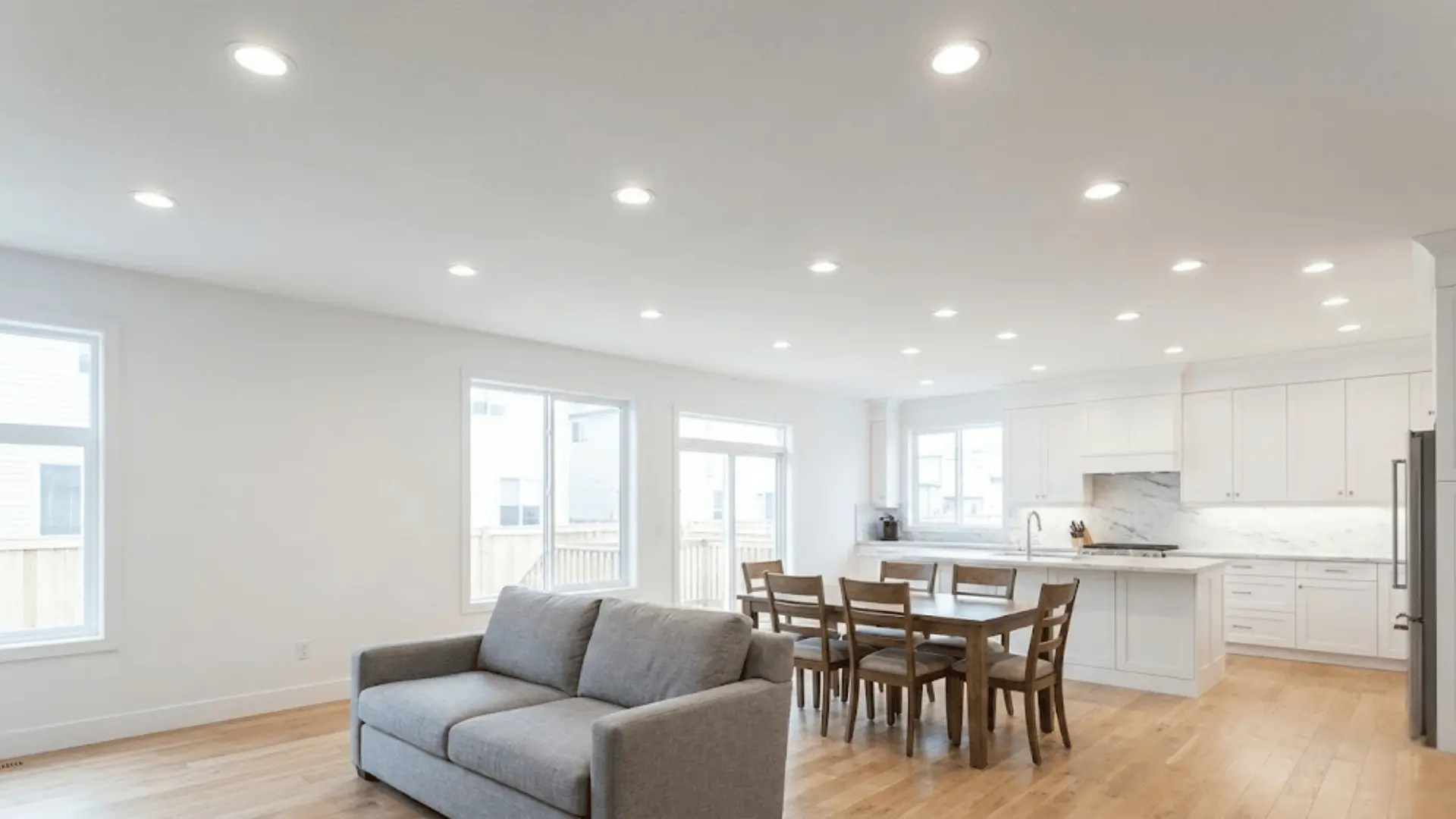
Recessed lights provide ambient illumination without taking up visual space, perfect for open floor plans where you want to minimize clutter. Space them evenly across the ceiling to eliminate shadows and dark corners.
Put them on dimmer switches so you can adjust brightness throughout the day. While recessed lights alone can feel clinical, they work beautifully as a base layer with accent lighting for warmth.
29. Use Floor Lamps to Define Corners
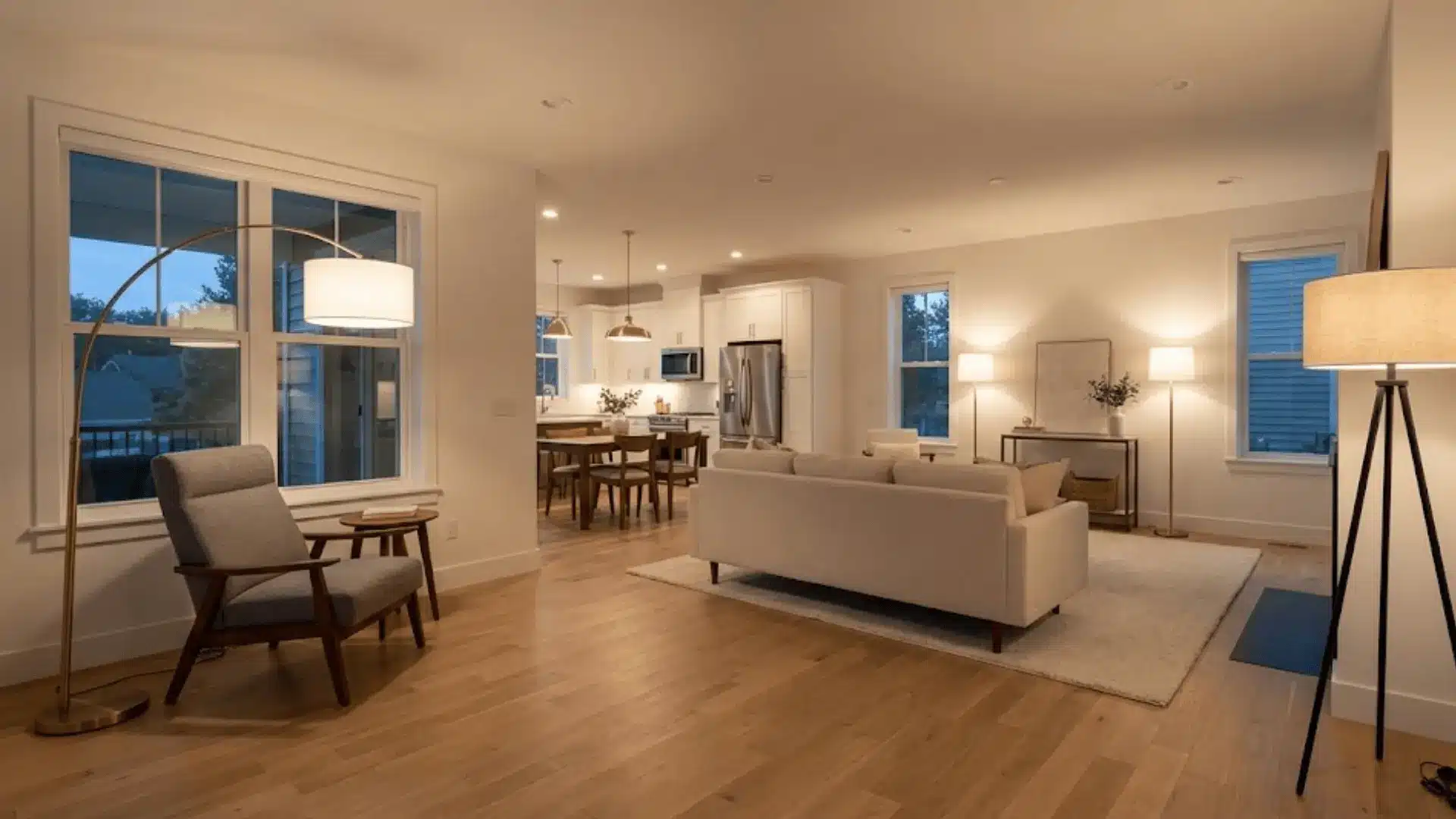
Floor lamps add vertical interest and mark the edges of zones in open layouts. Position one beside a reading chair to create a cozy corner, or place matching lamps on either side of a console table to frame the space.
Arc floor lamps extend over seating areas without taking up table space. The pools of light they create make specific spots feel intimate within the larger open area.
30. Incorporate Natural Light with Large Windows
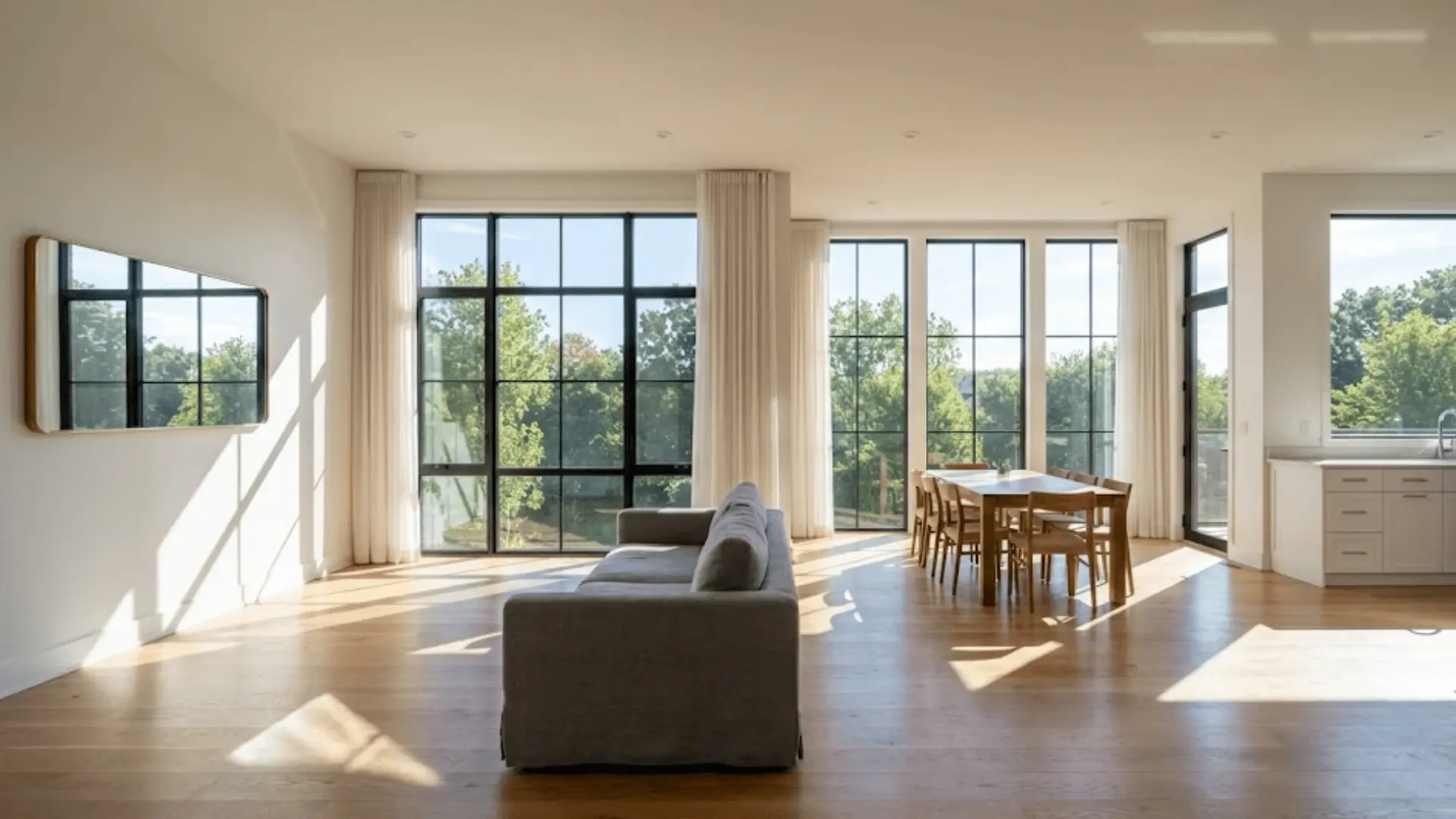
Maximize natural light with minimal window treatments or sheer fabrics that diffuse light. Large windows and glass doors flood open floor plans with sunshine, reducing the need for artificial lighting during the day.
Position mirrors across from windows to bounce light deeper into the space. Natural light enhances the airy feeling that makes open floor plans so appealing.
Storage & Functionality
Keeping open floor plans organized requires smart storage solutions. These ideas help you hide clutter and maintain that clean, spacious feeling.
31. Add Built-In Storage Walls
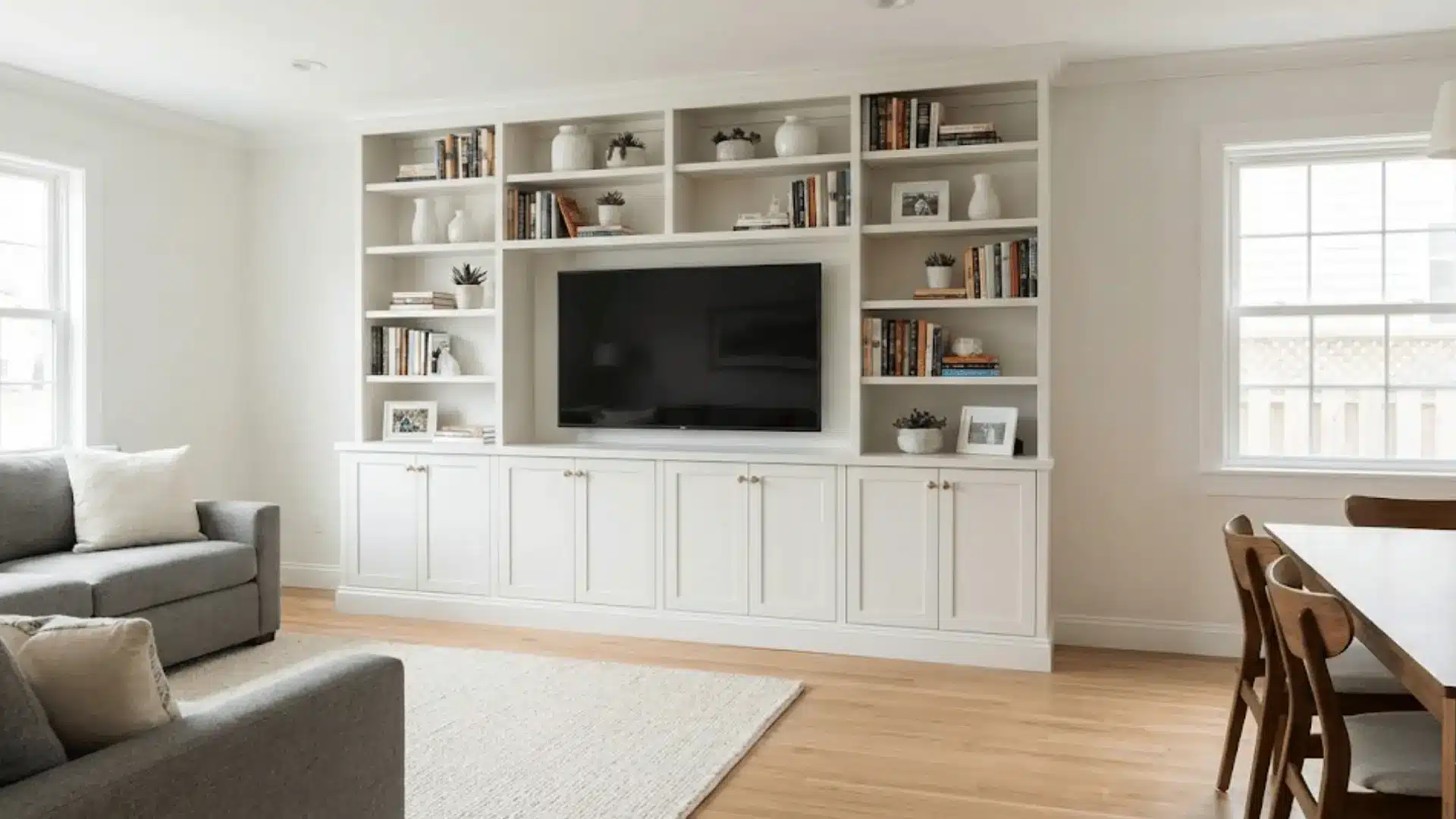
Floor-to-ceiling storage walls provide massive functionality without eating into your floor space. Include a mix of open shelving for display and closed cabinets to hide everyday items.
Built-ins can house everything from media equipment to dishware, keeping surfaces clear. Paint them the same color as your walls so they recede visually, or make them a feature with a contrasting color or natural wood finish.
32. Use Under-Stair Storage Solutions
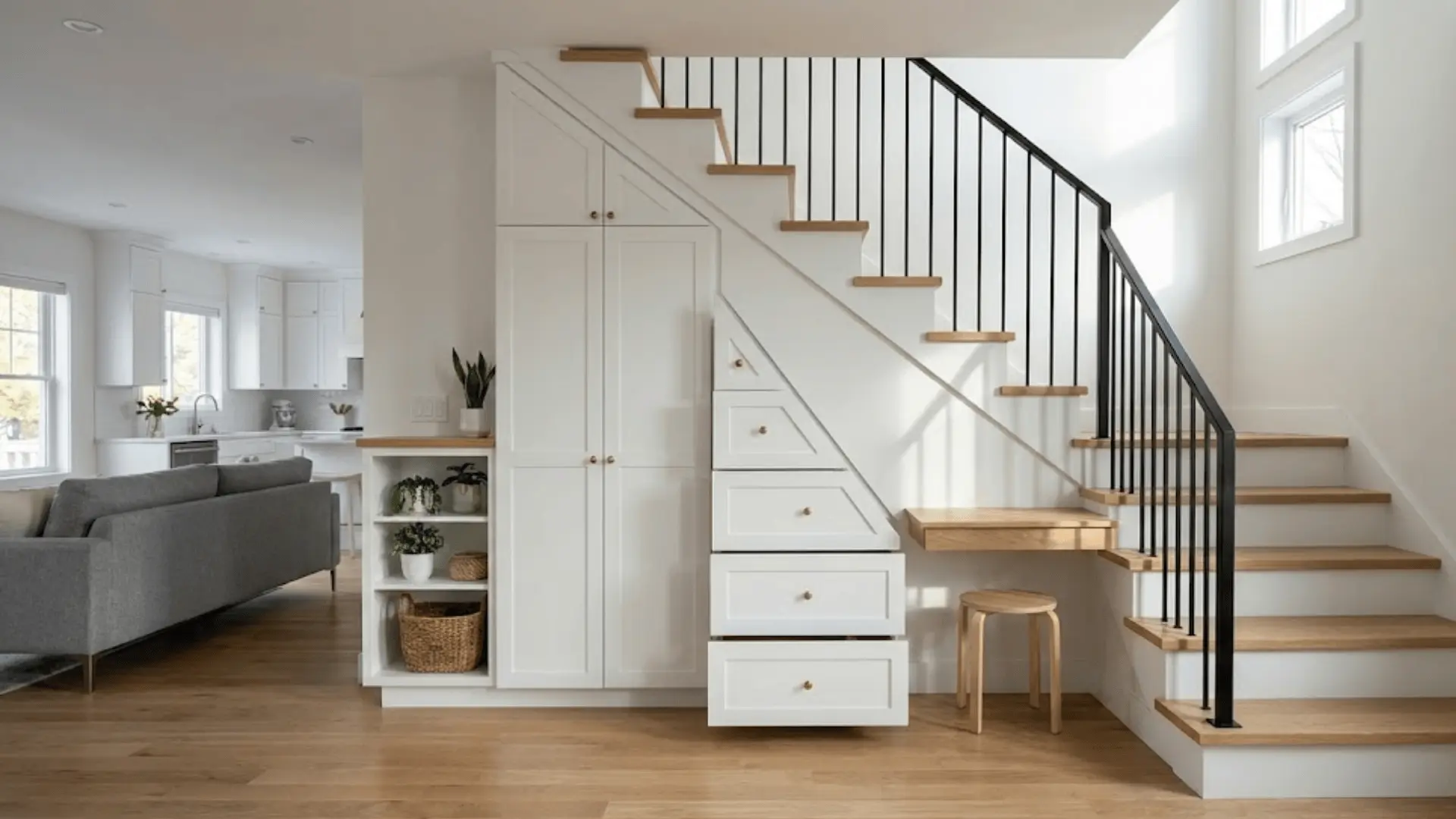
If your open floor plan includes a staircase, the space underneath is prime real estate for storage. Built-in cabinets or drawers that follow the angle of the stairs can house everything from shoes and coats to books and board games.
Open shelving under the stairs creates a display area for decorative items while keeping them accessible. For taller sections, consider adding a small home bar, beverage station, or even a compact desk nook.
33. Create a Mudroom Drop Zone
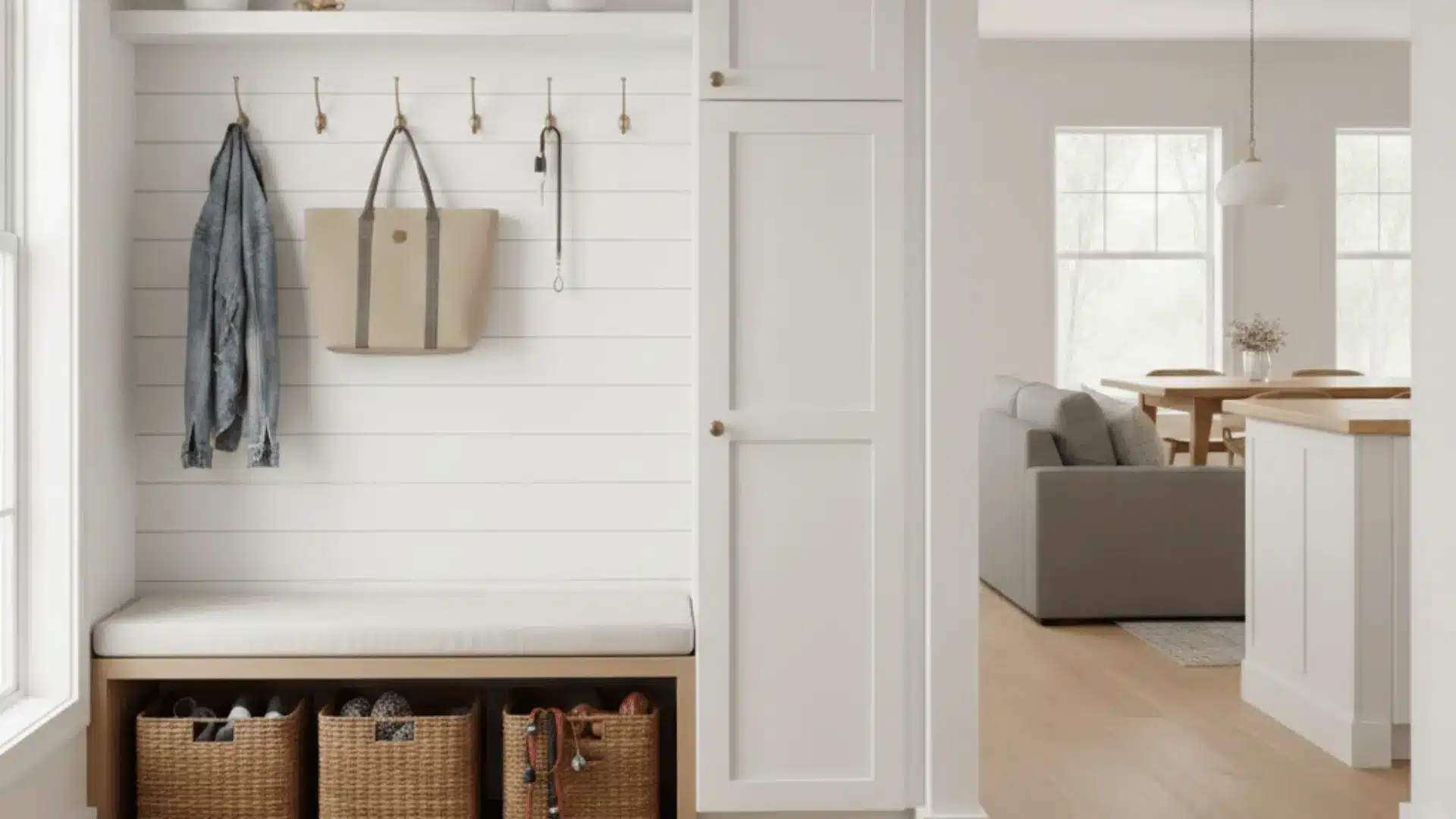
Designate an entry area with hooks, a bench, and baskets to manage coats, shoes, and bags. Without a mudroom, create a drop zone near your entrance to prevent clutter from spreading into the main living space.
Built-in cubbies or a simple console with storage underneath create a landing spot for everyday items, maintaining the clean look of your open space.
34. Incorporate Closed Cabinetry to Reduce Clutter
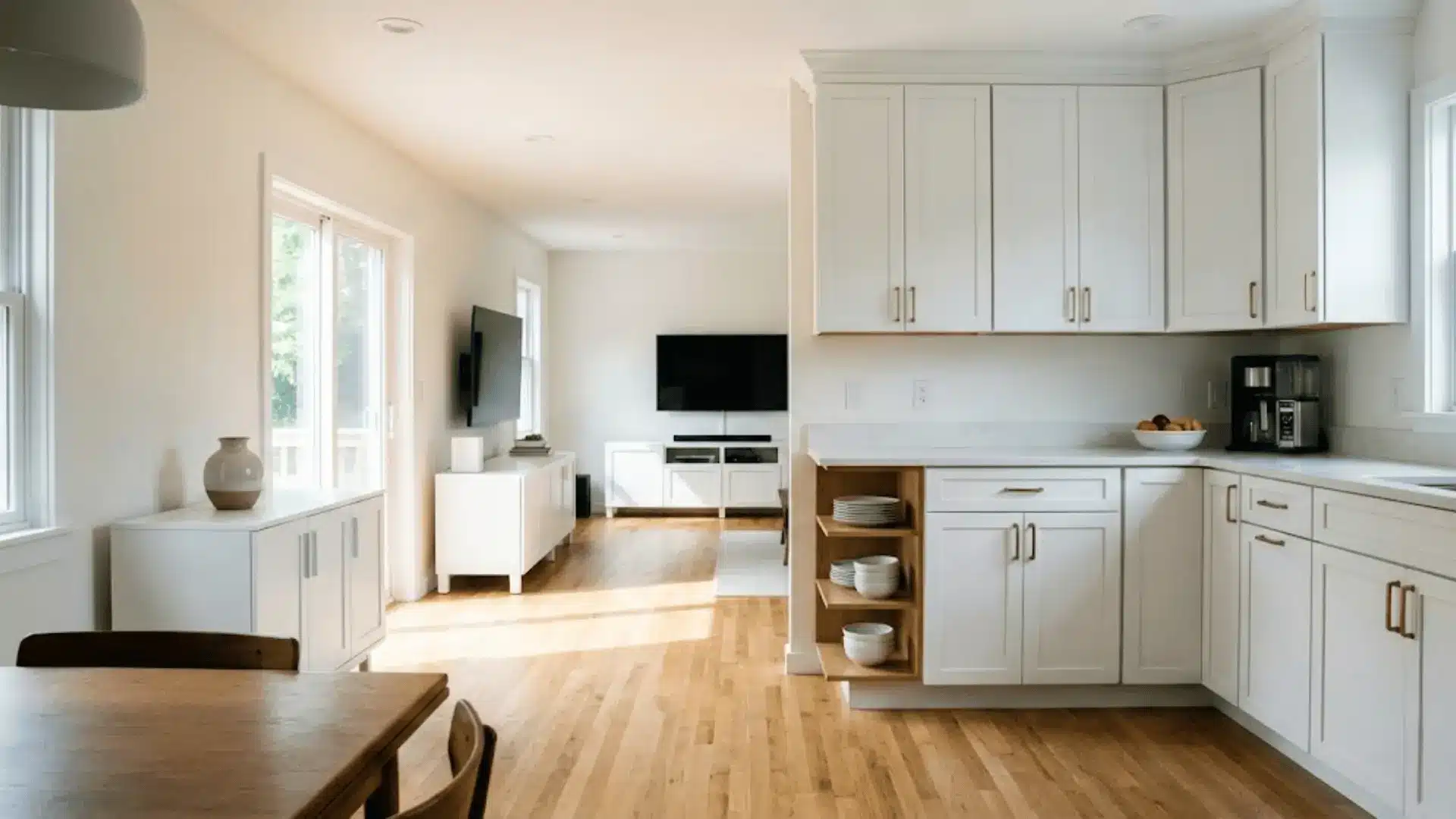
Balance open shelving with closed cabinets to hide less attractive necessities. In kitchens, upper cabinets conceal dishes and pantry items while lower cabinets hide pots and appliances.
In living areas, media consoles with doors tuck away electronics and cords. The closed storage gives your eyes a place to rest in an otherwise open environment, preventing visual overwhelm.
35. Add a Compact Home Office Nook
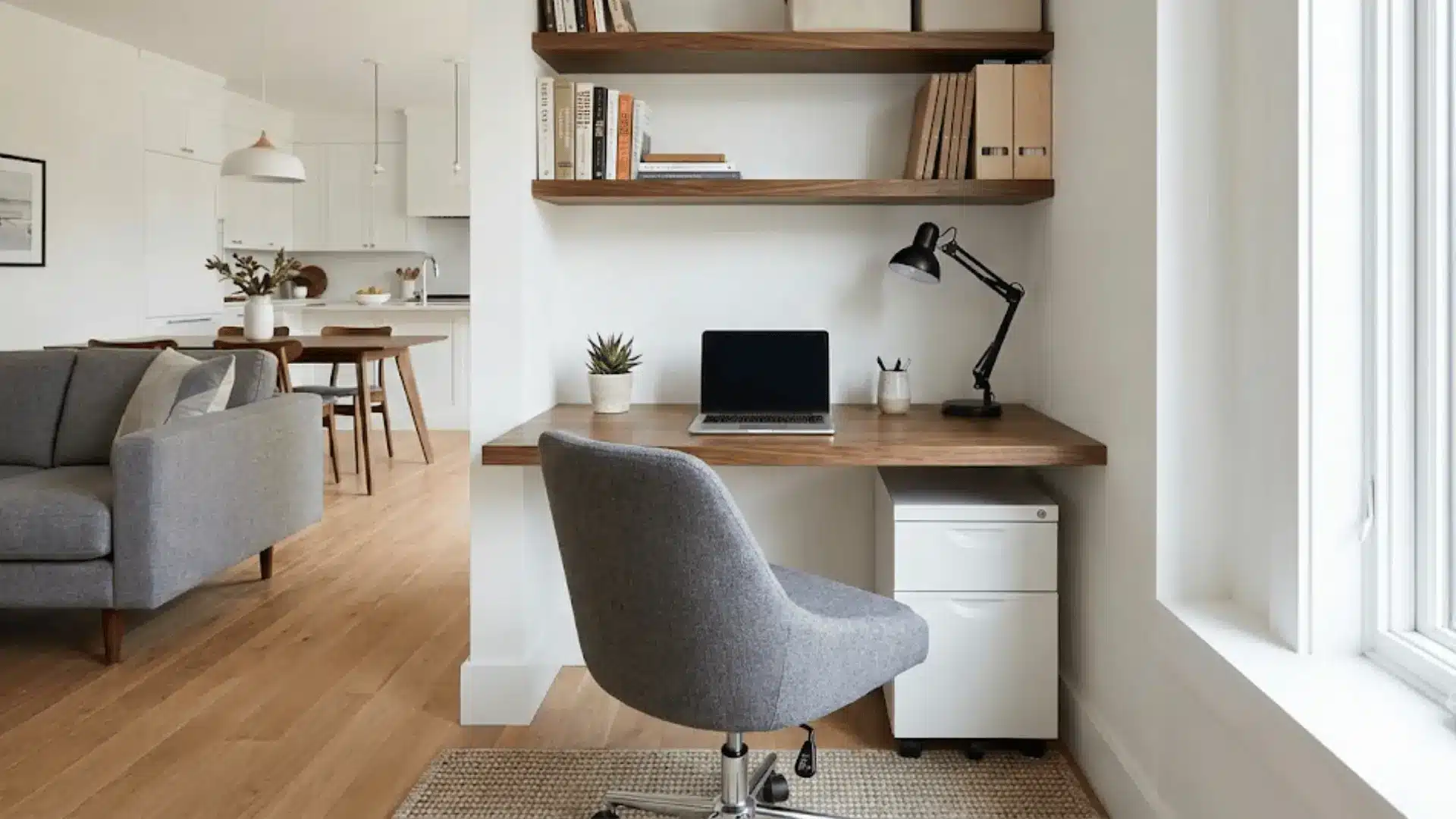
Carve out a small workspace within your open floor plan by floating a desk perpendicular to a wall or tucking one into an alcove. Add a task light and a comfortable chair to make it functional.
When work is done, the compact footprint doesn’t dominate the space. Choose a desk with drawers or pair it with a small filing cabinet to keep work materials contained and out of sight.
Style & Aesthetic Ideas
These design approaches show how different aesthetics work beautifully in open floor plans, each creating its own mood and personality.
36. Modern Minimalist Open Concept
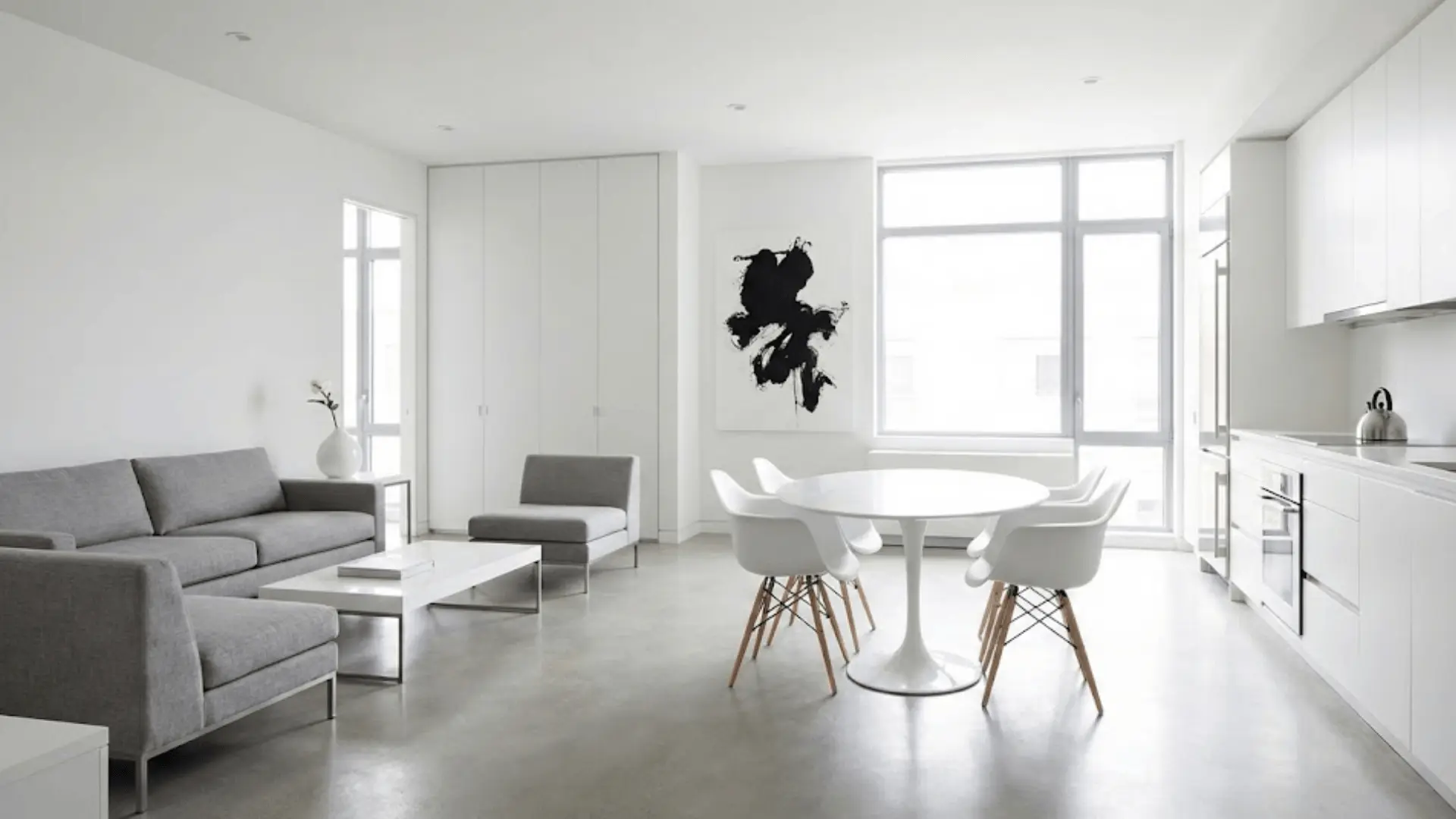
Clean lines, neutral colors, and clutter-free surfaces define modern minimalist open floor plans. Stick to a monochromatic palette with one or two accent colors, and choose furniture with simple silhouettes.
Keep decorative objects minimal, displaying only cherished pieces. The uncluttered design emphasizes architectural features and fosters a calm, intentional open space. Built-in storage and hidden compartments maintain streamlining.
37. Farmhouse-Style Open Floor Plan
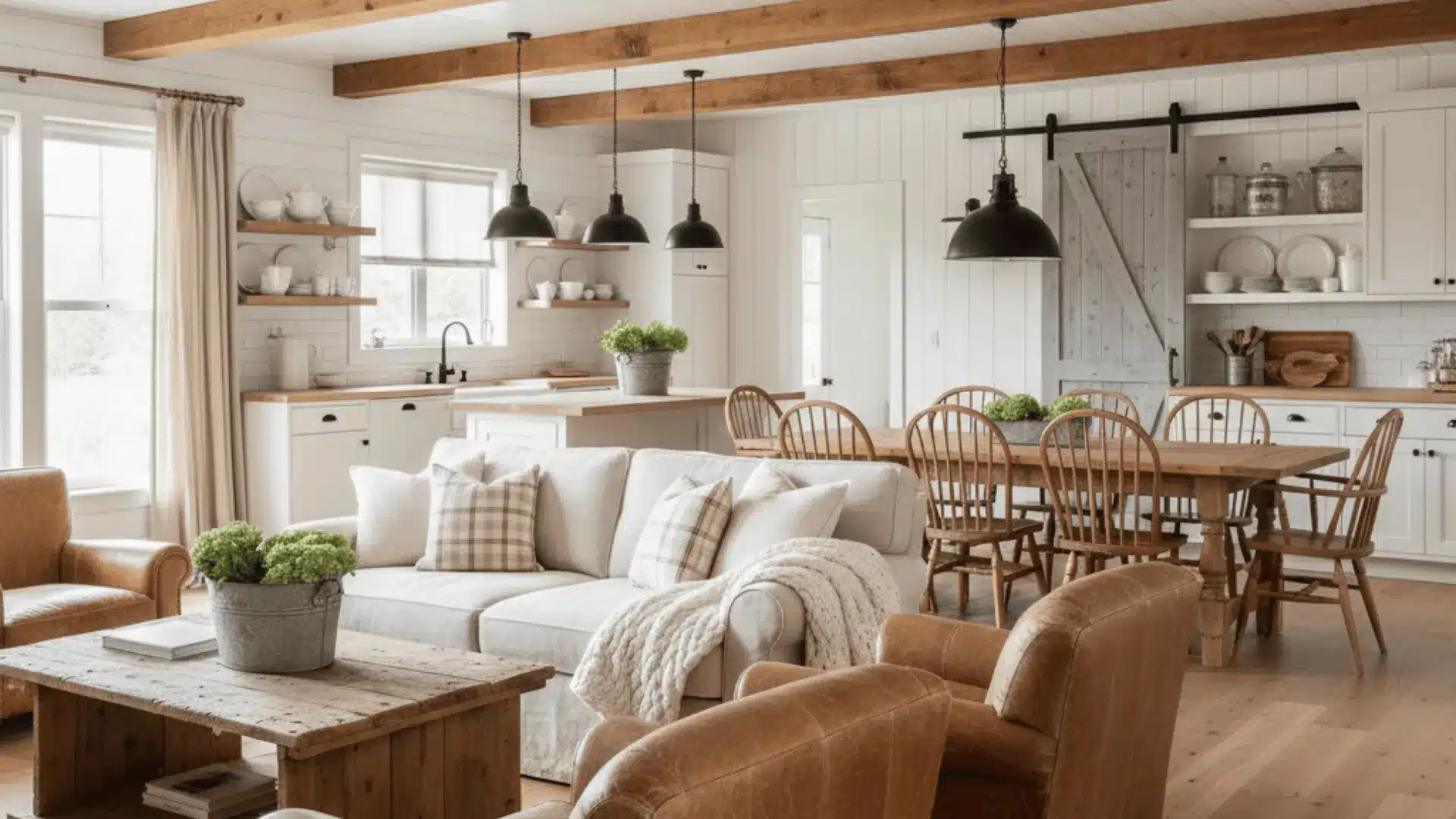
Warmth and texture characterize farmhouse open concepts. Expose natural wood beams, add shiplap accent walls, and incorporate vintage-inspired lighting like industrial pendants or wagon wheel chandeliers.
Mix rustic wood furniture with comfortable upholstered pieces in neutral linens and cottons. Open shelving displays dishware and cookbooks, while barn doors or sliding wood panels add character.
Open Floor Plan Decorating Tips That Make Spaces Feel Larger
The beauty of open floor plans is how spacious they feel, but poor decorating choices can quickly make them seem cramped.
Keep these tips in mind to maximize that sense of openness:
- Choose Furniture That Fits the Scale: Select pieces proportional to your space; oversized sectionals overwhelm small areas, while tiny furniture gets lost in large rooms.
- Leave Breathing Room Between Pieces: Resist the urge to fill every corner, allowing negative space to give your layout visual rest and make the area feel more expansive.
- Position Mirrors to Reflect Light: Hang mirrors across from windows or in darker corners to bounce natural light around and create the illusion of extra square footage.
- Keep Pathways Wide and Clear: Arrange furniture so there’s at least three feet of walking space between pieces, ensuring smooth traffic flow that doesn’t feel obstructed.
- Draw the Eye Upward With Vertical Elements: Use tall bookshelves, floor-to-ceiling curtains, or vertical artwork to emphasize ceiling height and make the space feel taller.
When you’re intentional about what you include and how you arrange it, your open floor plan will feel airy and expansive rather than cluttered and confined.
How to Add Privacy in an Open Floor Plan?
Even the most open layouts sometimes need privacy. Strategic furniture placement creates natural barriers by positioning a bookshelf perpendicular to the wall or angling a sofa to block sightlines between zones.
Folding screens or room dividers offer flexible separation you can move as needed, perfect for hiding a home office or creating a dressing area.
Floor-to-ceiling curtains on tracks let you close off sections temporarily while maintaining the airy feeling when drawn back.
Decorative partitions like slatted wood panels or metal screens add architectural interest while partially obscuring views, giving you privacy without sacrificing the openness that makes your floor plan work.
Open Floor Plan Ideas for Small Homes
Small homes benefit tremendously from open floor plans, where removing walls makes every square foot count.
Here’s how to maximize your compact space:
| Strategy | Key Benefit | Best Application |
|---|---|---|
| Compact Layouts | Maximizes usable space | Tight furniture groupings with functional pathways |
| Light Color Palettes | Creates an illusion of size | Whites, soft grays, and pale neutrals throughout |
| Minimalist Furniture | Keeps sightlines clear | Streamlined pieces with slim profiles and exposed legs |
| Space-Saving Dining Areas | Frees up floor space | Round tables or wall-mounted drop-leaf options |
That’s a Wrap
Your home should work for the way you actually live, and open floor plan ideas give you that flexibility.
From defining zones with smart furniture placement to layering lighting that sets the mood in each area, these strategies help you shape a space that feels both open and intentional.
Start with one or two changes that speak to your biggest challenges, and watch how quickly your layout comes together.
Maybe it’s adding a statement rug to anchor your living room or installing pendant lights over your kitchen island.
What’s your favorite way to style an open concept space? Drop a comment below and share what’s worked in your home.