Your cucumber vines deserve the best neighbors: plants that naturally shield them from pests, welcome eager pollinators, and encourage the most abundant harvest you’ve ever grown.
Companion planting is an age-old gardening wisdom that turns your patch into a thriving, balanced ecosystem.
Instead of growing cucumbers alone, strategic plant pairings create genuine harmony in your garden beds.
Blooms that attract beneficial insects and herbs that confuse cucumber beetles are waiting to become part of your garden story. You’re about to unlock the secrets to healthier vines and sweeter, more prolific cucumbers.
Let’s cultivate something beautiful together.
What is Companion Planting?
Companion planting is the practice of growing different plants together so they support each other’s health and productivity.
This technique has deep roots in agricultural history, with Native American communities perfecting the “Three Sisters” method: corn, beans, and squash growing in harmony.
The science is straightforward: certain plants naturally repel pests, attract pollinators, or improve soil conditions for their neighbors.
For your cucumber plants, the right companions deliver real benefits:
- Natural pest management without harsh chemicals
- Improved pollination through beneficial insect attraction
- Better space utilization with vertical and ground-level pairings
- Richer soil nutrients through nitrogen fixation
- Increased biodiversity that strengthens your entire garden
When you pair cucumbers with compatible plants, you’re creating a balanced ecosystem where each variety plays a role in protecting and nourishing the others.
Why Companion Planting Works for Cucumbers?
Cucumbers thrive in warm soil with consistent moisture and full sun, but they face several challenges that the right plant neighbors can address naturally.
Common problems that companion plants help solve:
- Cucumber beetles that chew leaves and spread disease
- Aphids that weaken vines and stunt growth
- Powdery mildew in humid conditions
- Poor pollination leading to misshapen fruit
- Space constraints with sprawling vines
Your companion planting toolkit includes herbs for pest deterrence, flowers for pollinator attraction, vegetables for space efficiency, and legumes for soil enrichment.
Each category brings unique strengths to support your cucumber patch.
21 Best Companion Plants for Cucumbers
These carefully selected plants work alongside your cucumbers to create a thriving, pest-resistant garden.
Each companion brings unique strengths to your beds, whether it’s deterring beetles, fixing nitrogen, or attracting essential pollinators.
1. Marigolds
Zones: 2-11 (annual)
Size: 6-36 inches
Exposure: Full sun
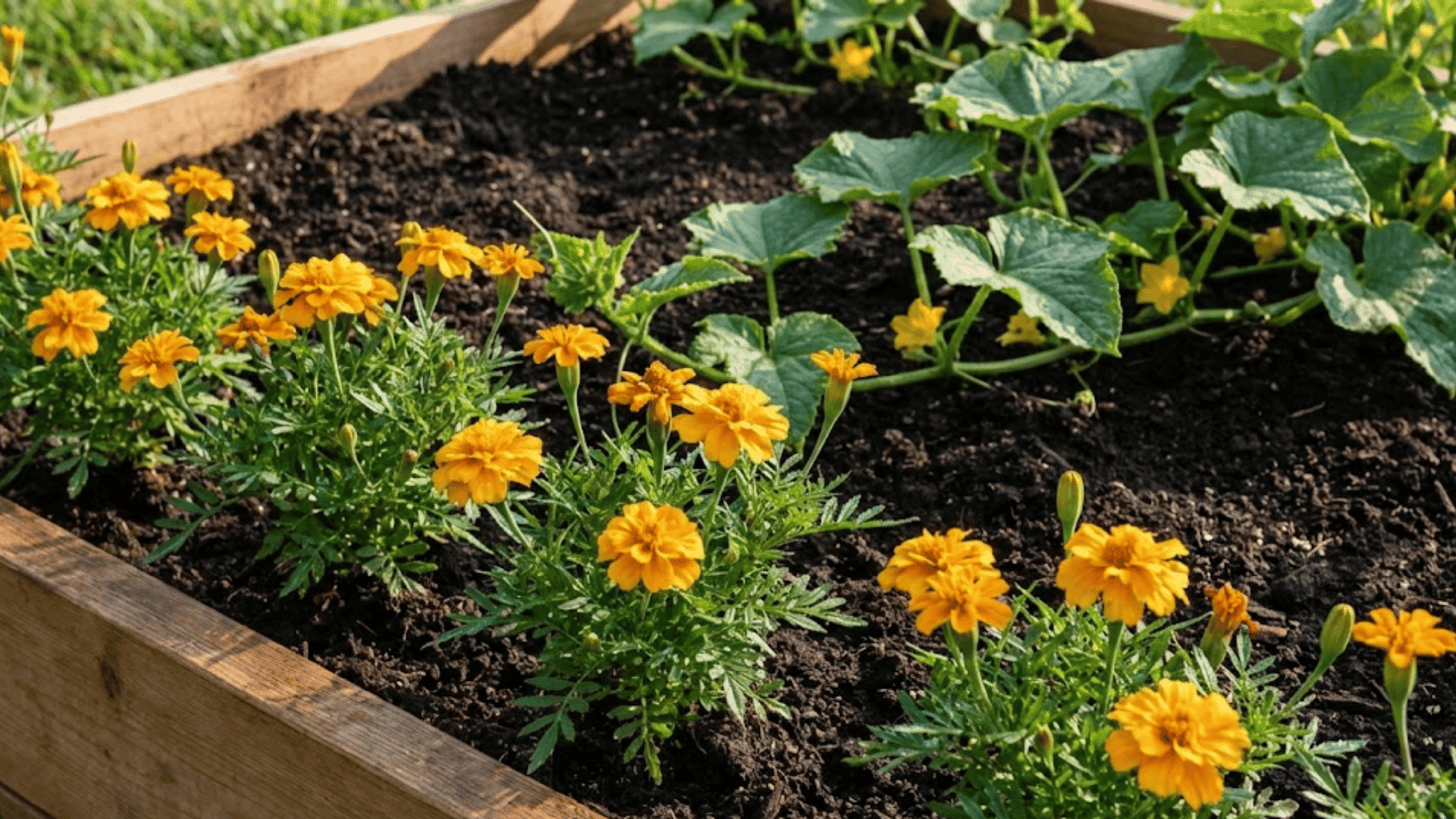
Marigolds release a pungent scent that cucumber beetles and aphids find repulsive, creating a protective barrier around your vines. Their roots also emit a substance that deters nematodes in the soil.
Plant them as a border around cucumber beds, spacing them 8-10 inches apart for continuous protection.
French marigolds work beautifully in compact spaces, while African varieties add height and drama. Their cheerful orange and yellow blooms attract hoverflies and parasitic wasps that prey on cucumber pests.
2. Nasturtiums
Zones: 2-11 (annual)
Size: 12-18 inches (bush), trailing varieties vine
Exposure: Full sun to part shade
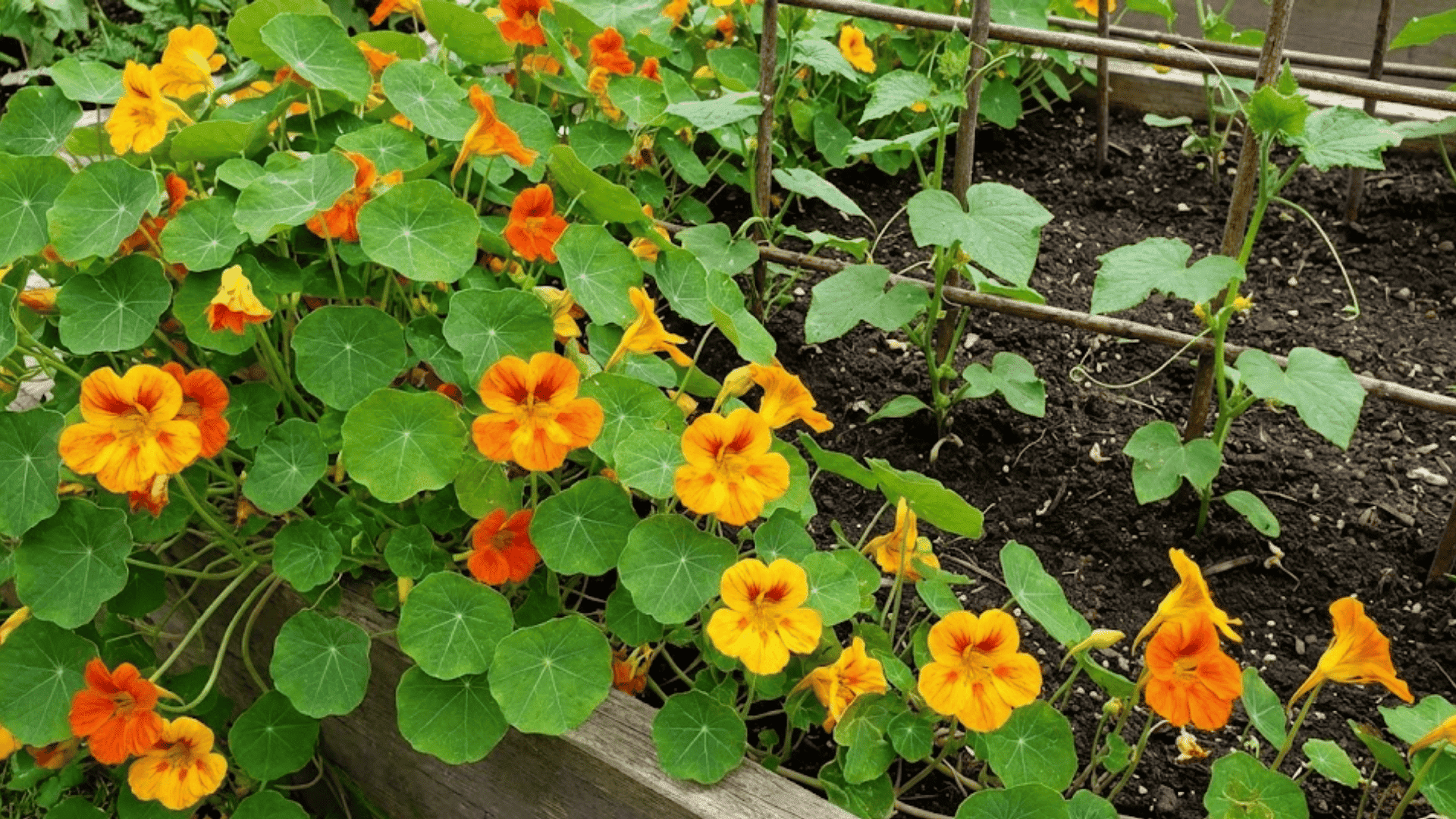
Nasturtiums act as a sacrificial trap crop, luring aphids away from your cucumber plants. Aphids prefer nasturtiums and will colonize them first, protecting your harvest.
Both the peppery leaves and vibrant flowers are edible, adding color to salads. These low-growing plants provide living mulch that retains soil moisture and suppresses weeds.
Scatter seeds around cucumber mounds or plant them along bed edges. They self-sow readily, returning year after year with minimal effort.
3. Radishes
Zones: 2-11 (cool season annual)
Size: 6-12 inches
Exposure: Full sun to part shade
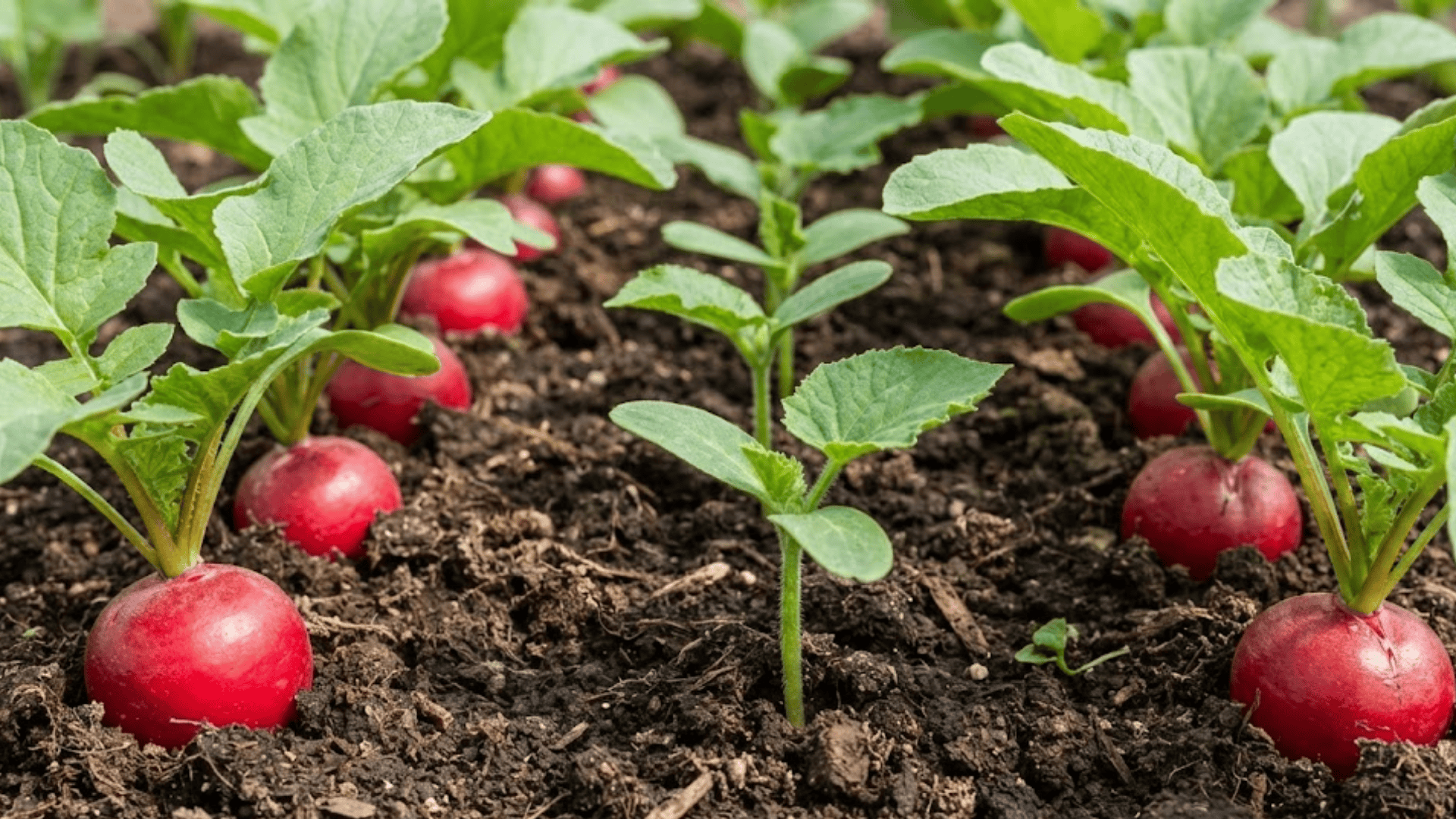
Radishes are speedy growers that mature in just 25-30 days, making them ideal space markers between cucumber seeds. Their pungent compounds naturally repel cucumber beetles while the plants establish.
Harvest radishes before cucumber vines spread, leaving behind loosened soil with improved aeration. Try succession planting: sow radish seeds every two weeks in early spring, then transition to cucumbers as temperatures warm.
‘Cherry Belle’ and ‘French Breakfast’ varieties work particularly well in this partnership.
4. Beans (Bush and Pole)

Zones: 3-10 (warm season annual)
Size: 12-24 inches (bush), 6-10 feet (pole)
Exposure: Full sun
Beans are nitrogen fixers, pulling this essential nutrient from the air and storing it in root nodules that feed hungry cucumber plants.
Bush beans stay compact and won’t compete for space, while pole beans can share vertical structures with cucumbers if properly managed. Plant beans two weeks before cucumbers to let roots establish their nitrogen-fixing relationship.
‘Provider’ bush beans and ‘Kentucky Wonder’ pole beans are reliable choices. Just ensure pole varieties don’t shade cucumber leaves during peak growing season.
5. Peas
Zones: 2-11 (cool season annual)
Size: 2-6 feet
Exposure: Full sun
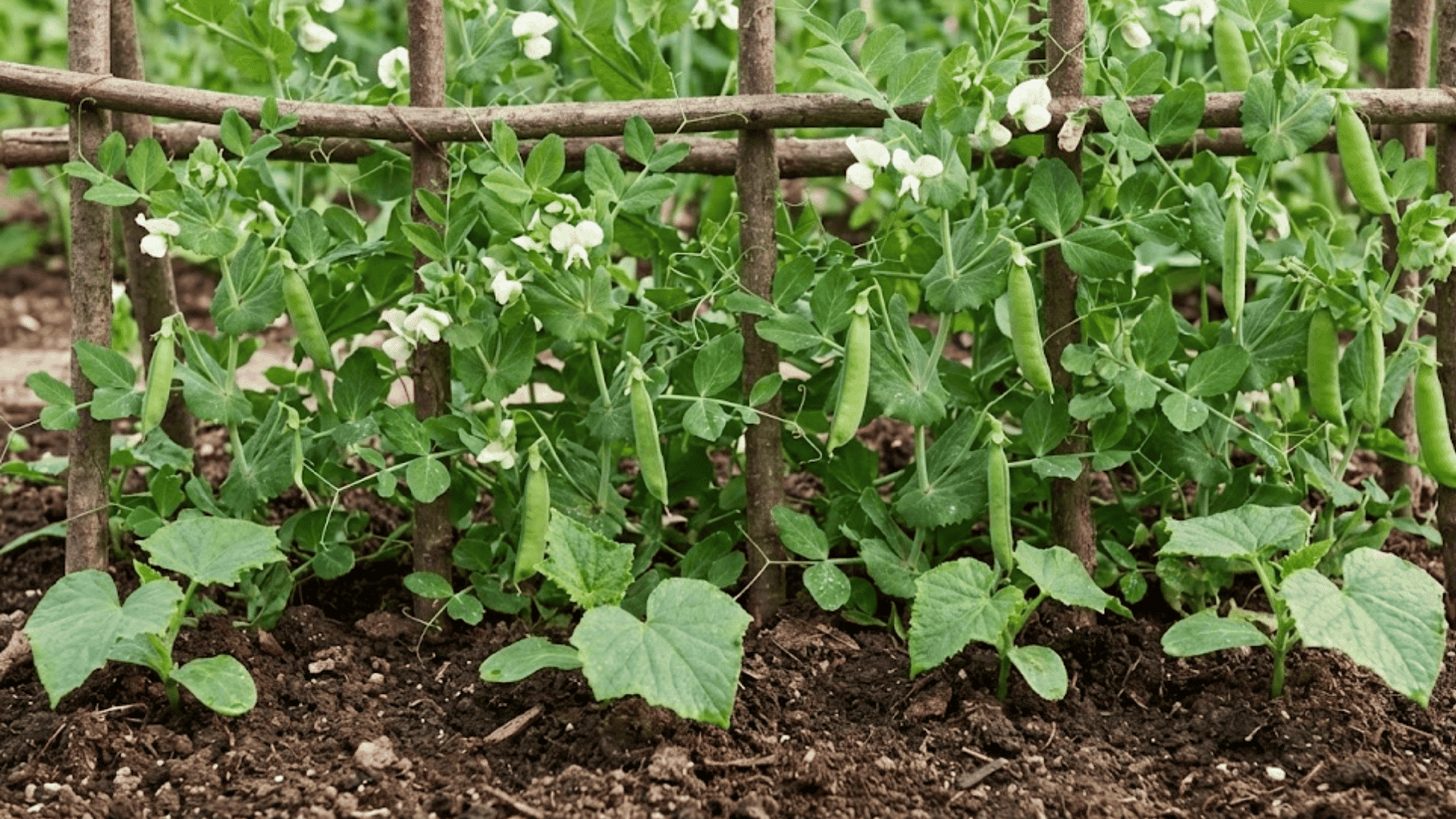
Peas shine as early-season companions that enrich the soil before cucumbers even go in the ground. Their roots deposit nitrogen in spring, then you pull spent pea plants just as cucumber seedlings need the boost.
This succession strategy maximizes your growing space across seasons. ‘Sugar Snap’ and ‘Oregon Sugar Pod’ peas produce heavily in cool weather.
Leave roots in the soil when harvesting to decompose and release stored nitrogen directly where cucumber roots will grow.
6. Corn

Zones: 3-11 (warm season annual)
Size: 5-8 feet
Exposure: Full sun
Corn stalks become a living trellis for vining cucumber varieties, echoing the Native American Three Sisters planting method. The sturdy stalks support cucumber vines while cucumbers shade the soil, reducing water loss.
Plant corn first, letting it reach 6 inches before adding cucumber seeds at the base. Space corn in blocks rather than rows for better pollination, with cucumbers winding between stalks.
‘Golden Bantam’ sweet corn and pickling cucumber varieties pair beautifully for simultaneous harvest.
7. Sunflowers

Zones: 2-11 (annual)
Size: 3-12 feet
Exposure: Full sun
Towering sunflowers support cucumber vines and provide shade with broad leaves during hot afternoons. Their blooms attract many pollinators, including native bees that pollinate cucumbers efficiently.
Plant sunflowers on the north side of cucumber beds to avoid excessive shading. ‘Mammoth’ varieties offer the sturdiest support, while branching types like ‘Autumn Beauty’ produce multiple smaller heads for pollinator attraction.
Larah, a Portland gardener, noted her cucumber yield doubled after adding sunflowers to her beds.
8. Dill
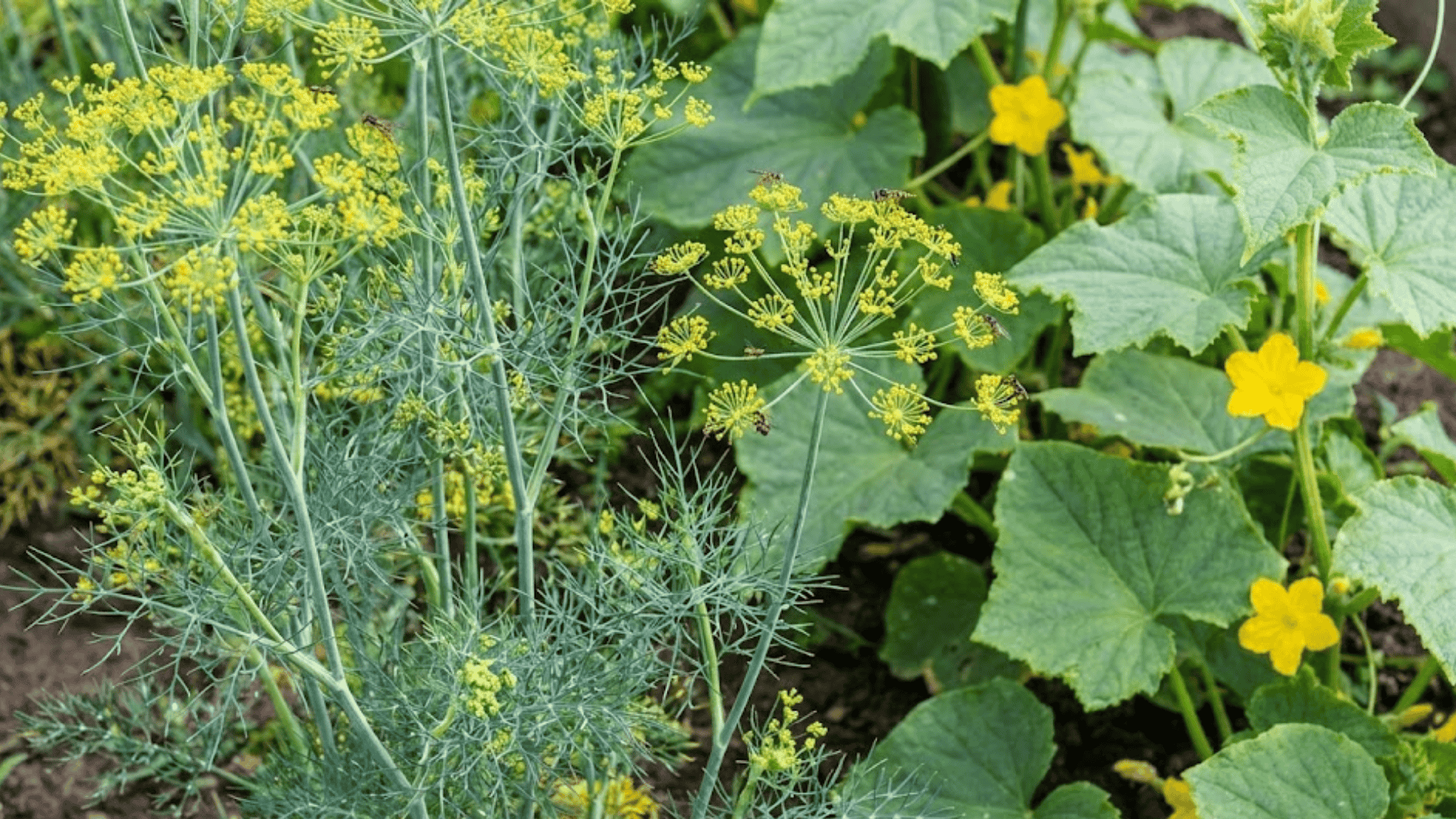
Zones: 2-11 (annual)
Size: 2-4 feet
Exposure: Full sun
Dill’s delicate umbels attract predatory wasps and ladybugs that feast on aphids, spider mites, and cucumber beetle larvae. This feathery herb also hosts swallowtail butterfly caterpillars, adding beneficial biodiversity.
Plant dill at bed edges rather than directly adjacent to cucumbers, as it can bolt quickly in heat and compete for nutrients.
‘Bouquet’ dill stays more compact than standard varieties. Harvest leaves regularly to encourage bushier growth and extended bloom time for beneficial insects.
9. Oregano
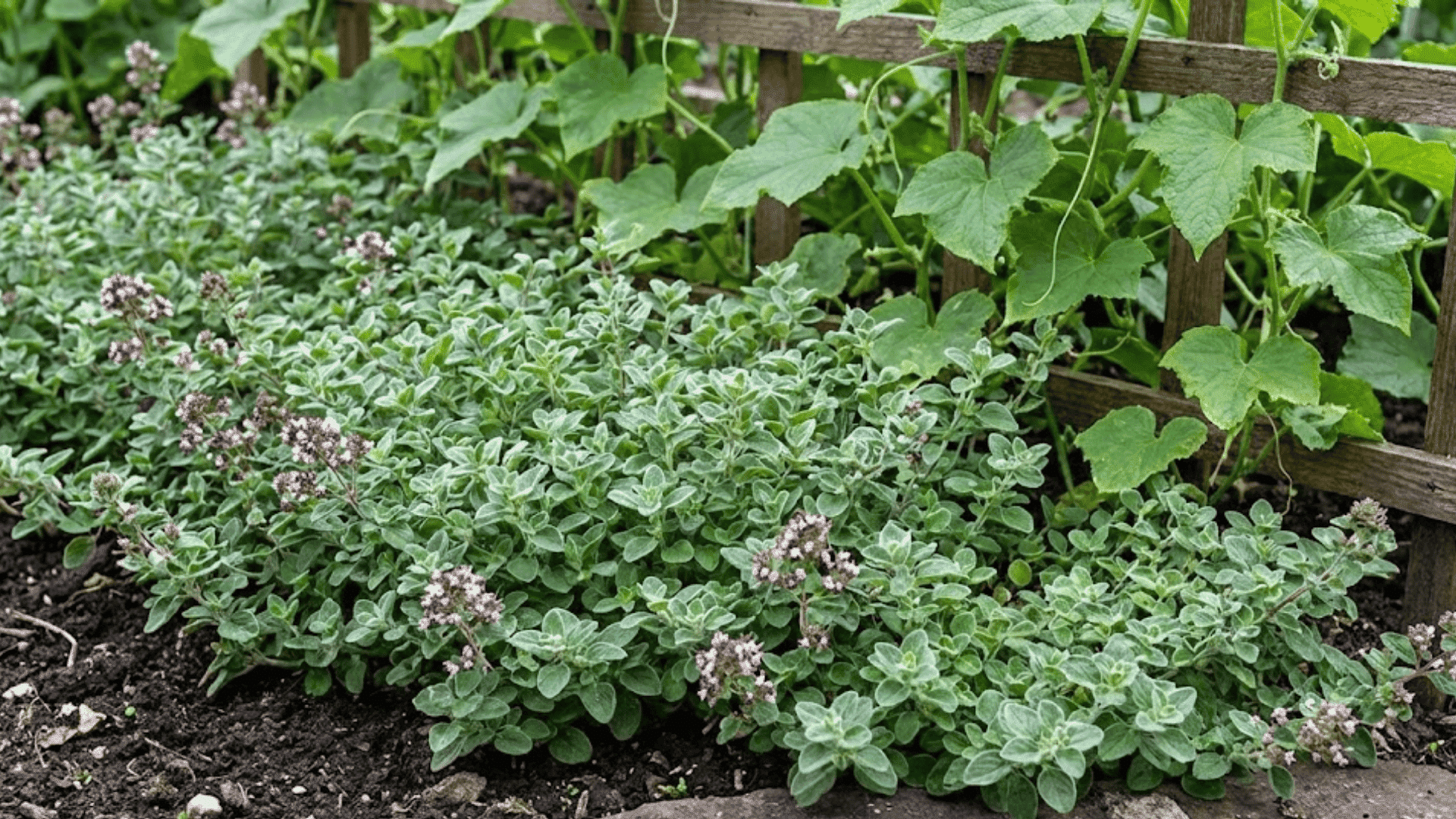
Zones: 4-10 (perennial)
Size: 12-24 inches
Exposure: Full sun
Oregano’s aromatic oils confuse and repel cucumber beetles, aphids, and spider mites while its sprawling habit creates living mulch. As a perennial, it returns each spring to protect cucumber plantings year after year.
Greek oregano offers the strongest scent and pest-deterrent properties. Plant it along bed borders where it won’t be disturbed during cucumber harvest.
Its low-growing nature means it never competes with cucumber vines for sunlight, and you’ll have fresh herbs all season.
10. Borage
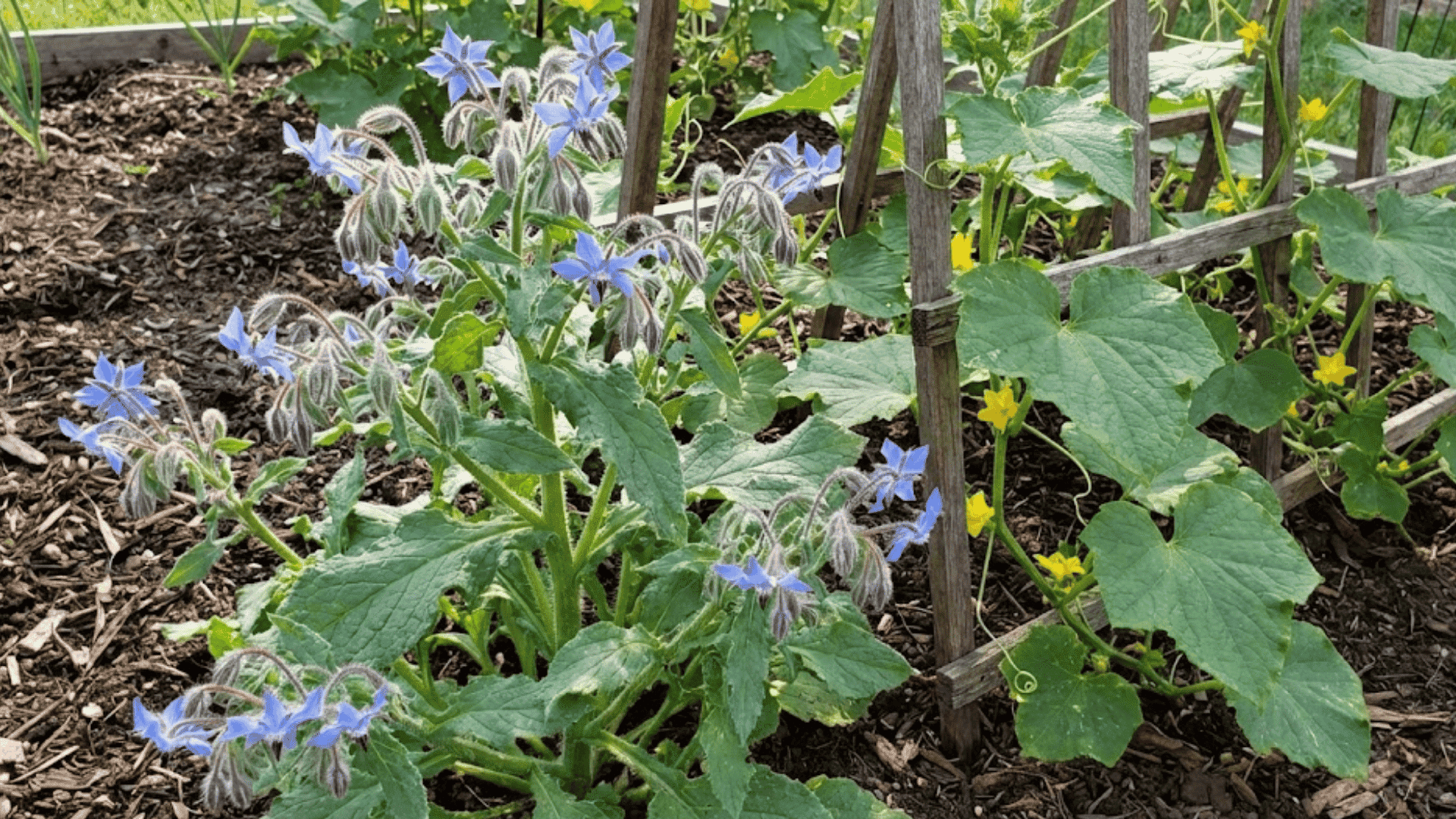
Zones: 2-11 (annual, self-sows)
Size: 2-3 feet
Exposure: Full sun to part shade
Borage is a pollinator powerhouse, with star-shaped blue flowers that bumblebees absolutely adore. These native bees are particularly effective at cucumber pollination.
Borage’s deep taproot mines nutrients from subsoil, making them available to shallow-rooted cucumbers.
The plant self-seeds enthusiastically, so deadhead spent blooms if you prefer controlled growth. Its fuzzy leaves deter soft-bodied pests. Space borage 18 inches from cucumber plants to give both room to flourish without crowding.
11. Lettuce
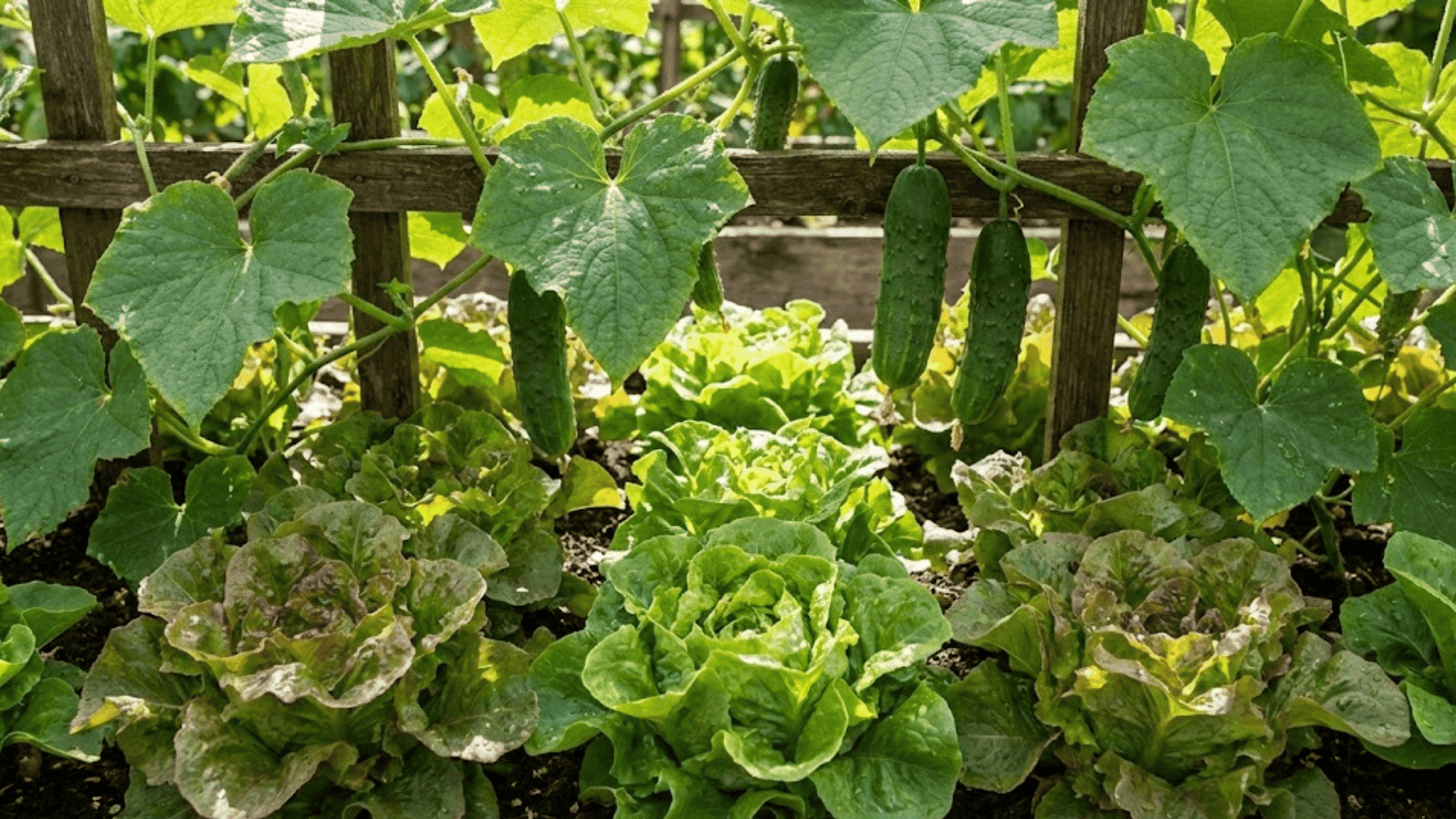
Zones: 2-11 (cool season annual)
Size: 6-12 inches
Exposure: Part shade to full sun
Lettuce thrives in the dappled shade created by mature cucumber vines, staying crisp and sweet longer without bolting. This partnership maximizes vertical and horizontal space beautifully.
Plant lettuce in early spring, then add cucumber seedlings nearby as the weather warms. The lettuce will be ready for harvest just as cucumbers begin sprawling. ‘Buttercrunch’ and loose-leaf varieties handle partial shade best.
The lettuce roots also help retain soil moisture that benefits both crops during summer heat.
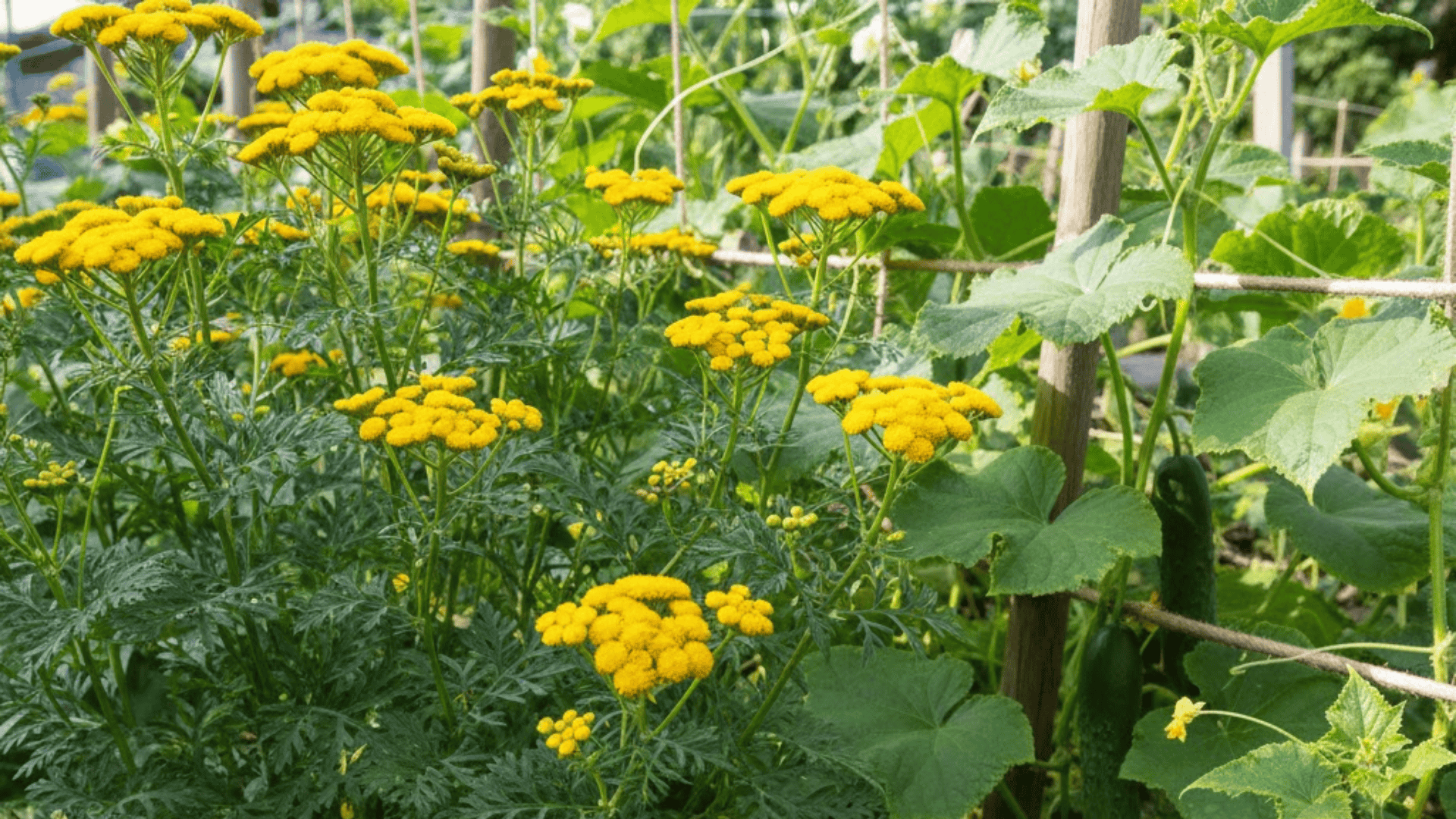
12. Tansy
Zones: 3-9 (perennial)
Size: 2-4 feet
Exposure: Full sun to part shade
Tansy is an aggressive pest repellent that deters cucumber beetles, ants, and squash bugs with its bitter compounds. However, this vigorous perennial can become invasive if left unchecked.
Grow tansy in containers placed near cucumber beds rather than planting directly in the ground. Its button-like yellow flowers add cottage garden charm while protecting your harvest.
Cut back tansy after blooming to prevent self-seeding. Despite containment needs, many organic gardeners swear by tansy’s protective powers.
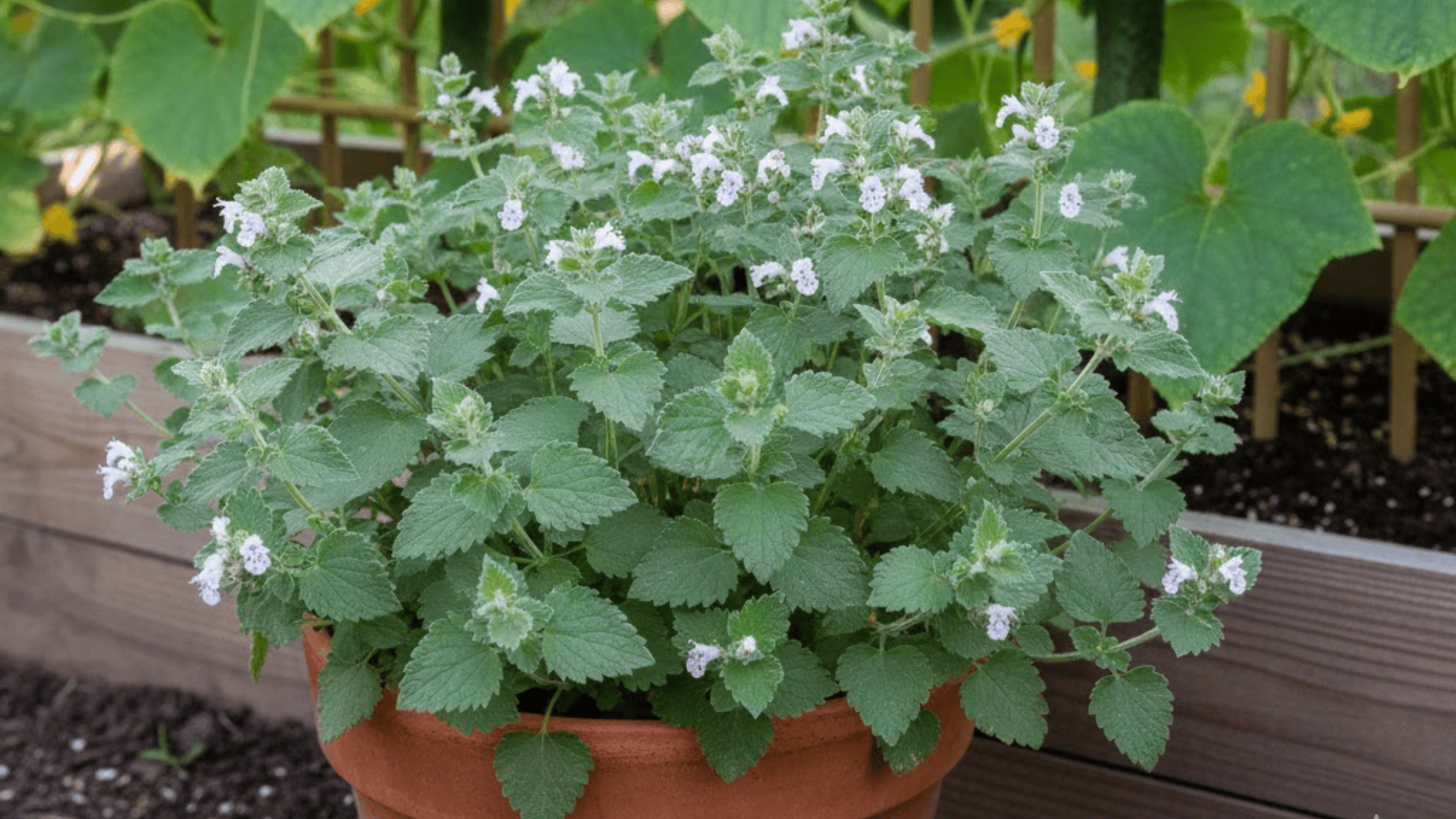
13. Catnip
Zones: 3-9 (perennial)
Size: 2-3 feet
Exposure: Full sun to part shade
Catnip’s potent scent repels aphids, flea beetles, and squash bugs while attracting beneficial predatory insects. Its minty aroma can overwhelm cucumber beetles’ ability to locate host plants.
Like tansy, catnip spreads aggressively, so container planting near cucumber beds works best. Your cats might appreciate this arrangement, too!
‘Citriodora’ catnip has a lemony scent that’s particularly offensive to pests. Prune regularly to keep plants bushy and prevent flowering, which reduces pest-repelling essential oils.
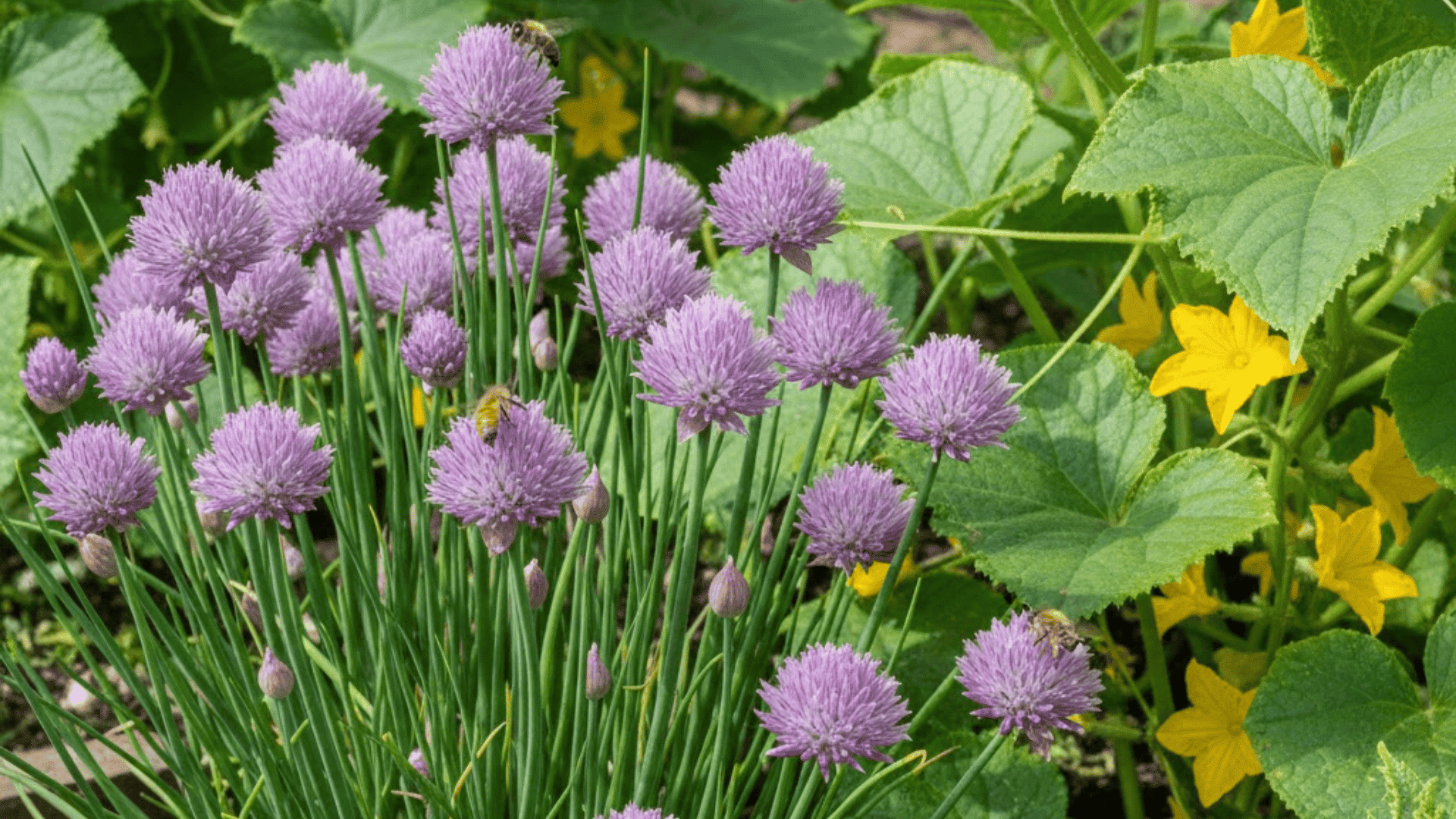
14. Chives
Zones: 3-10 (perennial)
Size: 12-18 inches
Exposure: Full sun to part shade
Chives release sulfur compounds that aphids find intolerable, creating a protective barrier when planted as a border around cucumber beds.
Their compact size and upright growth habit make them ideal edging plants that won’t interfere with cucumber harvesting. The purple pom-pom flowers attract pollinators in late spring.
Garlic chives offer even stronger pest-deterrent properties than common chives. Divide clumps every few years to maintain vigor, and snip leaves regularly for kitchen use while encouraging new growth.
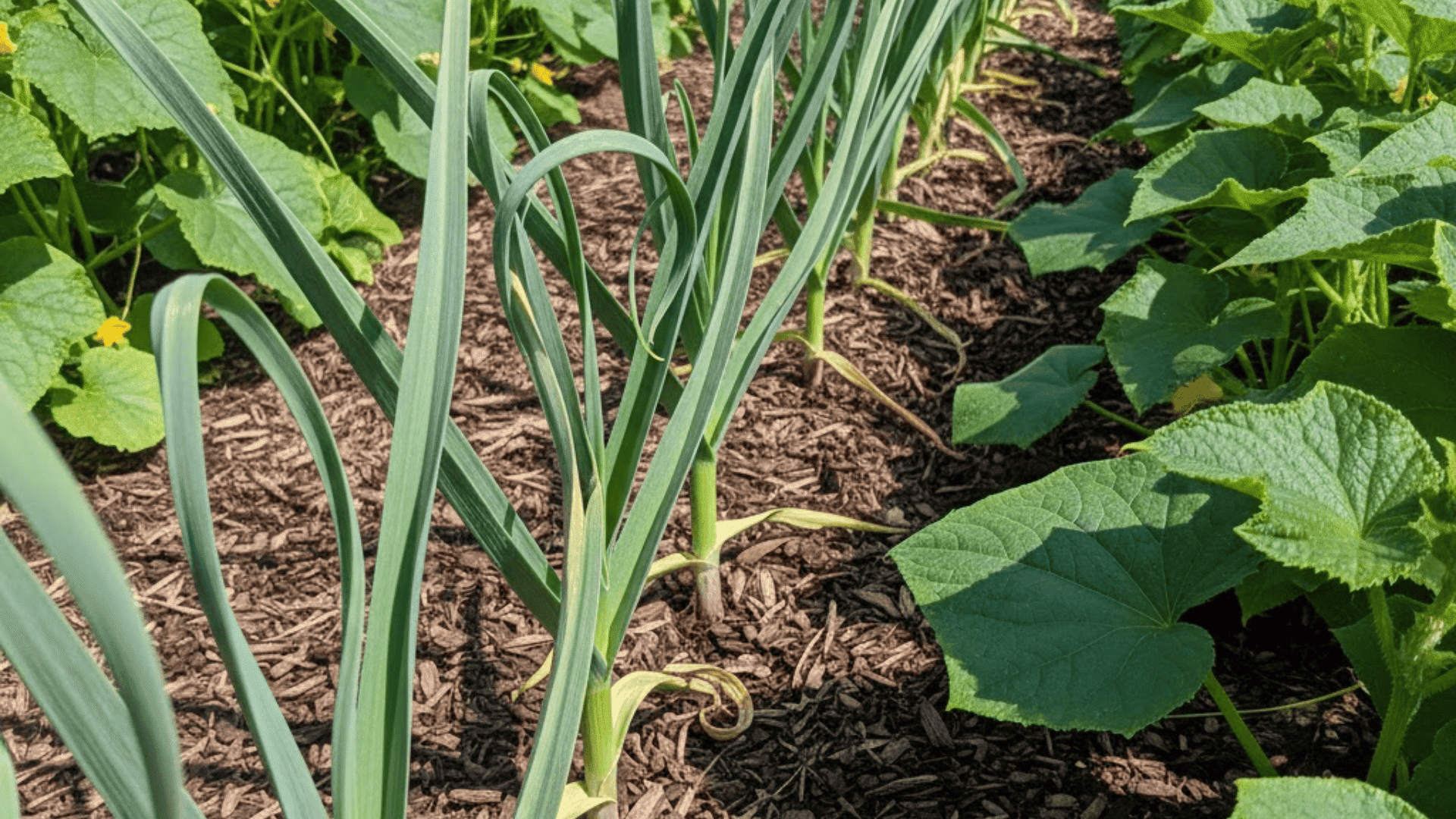
15. Garlic
Zones: 3-9 (plant in fall)
Size: 12-24 inches
Exposure: Full sun
Garlic is a powerful fungicide that helps prevent powdery mildew and downy mildew on cucumber leaves. Its pungent sulfur compounds also repel aphids and cucumber beetles.
Plant garlic cloves in the fall, and they’ll be ready to harvest just as cucumbers are going in the ground the following summer.
Hardneck varieties like ‘German White’ produce scapes in late spring that you can harvest without disturbing the bulbs. Space garlic 6 inches apart in rows flanking cucumber beds for maximum protective benefit.
16. Onions
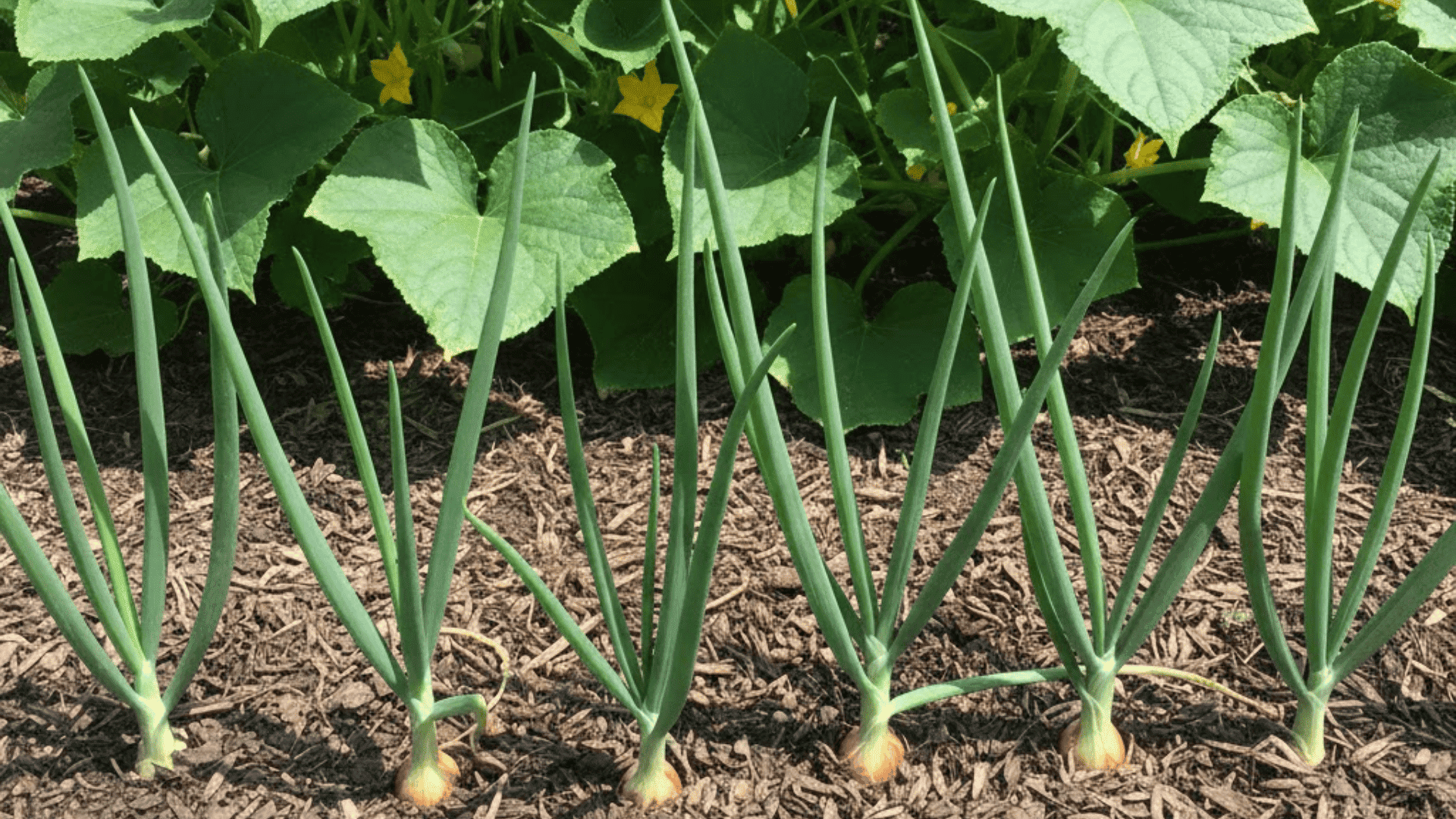
Zones: 3-10 (cool season biennial grown as annual)
Size: 12-18 inches
Exposure: Full sun
Onions emit sulfurous compounds that mask the scent of cucumber plants from beetle pests. Their slender, upright foliage takes minimal space while providing continuous pest protection throughout the growing season.
Plant onion sets or transplants in early spring around the perimeter of cucumber beds. ‘Walla Walla’ sweet onions and red storage varieties both work well.
The shallow roots of onions complement the cucumber’s deeper root system, reducing competition for water and nutrients in the soil profile.
17. Spinach

Zones: 2-11 (cool season annual)
Size: 6-10 inches
Exposure: Part shade to full sun
Spinach flourishes in cool spring conditions and tolerates the shade that developing cucumber vines create later. This succession pairing lets you harvest nutritious greens before cucumbers need full space.
Spinach’s broad leaves act as living mulch, suppressing weeds and keeping soil cool and moist. ‘Bloomsdale’ and ‘Space’ varieties handle partial shade particularly well.
Plant spinach four weeks before the last frost, then tuck cucumber transplants nearby as spinach reaches maturity. Jessica, a Seattle urban gardener, said her spinach remained sweet for weeks longer under her cucumber canopy.
18. Chamomile
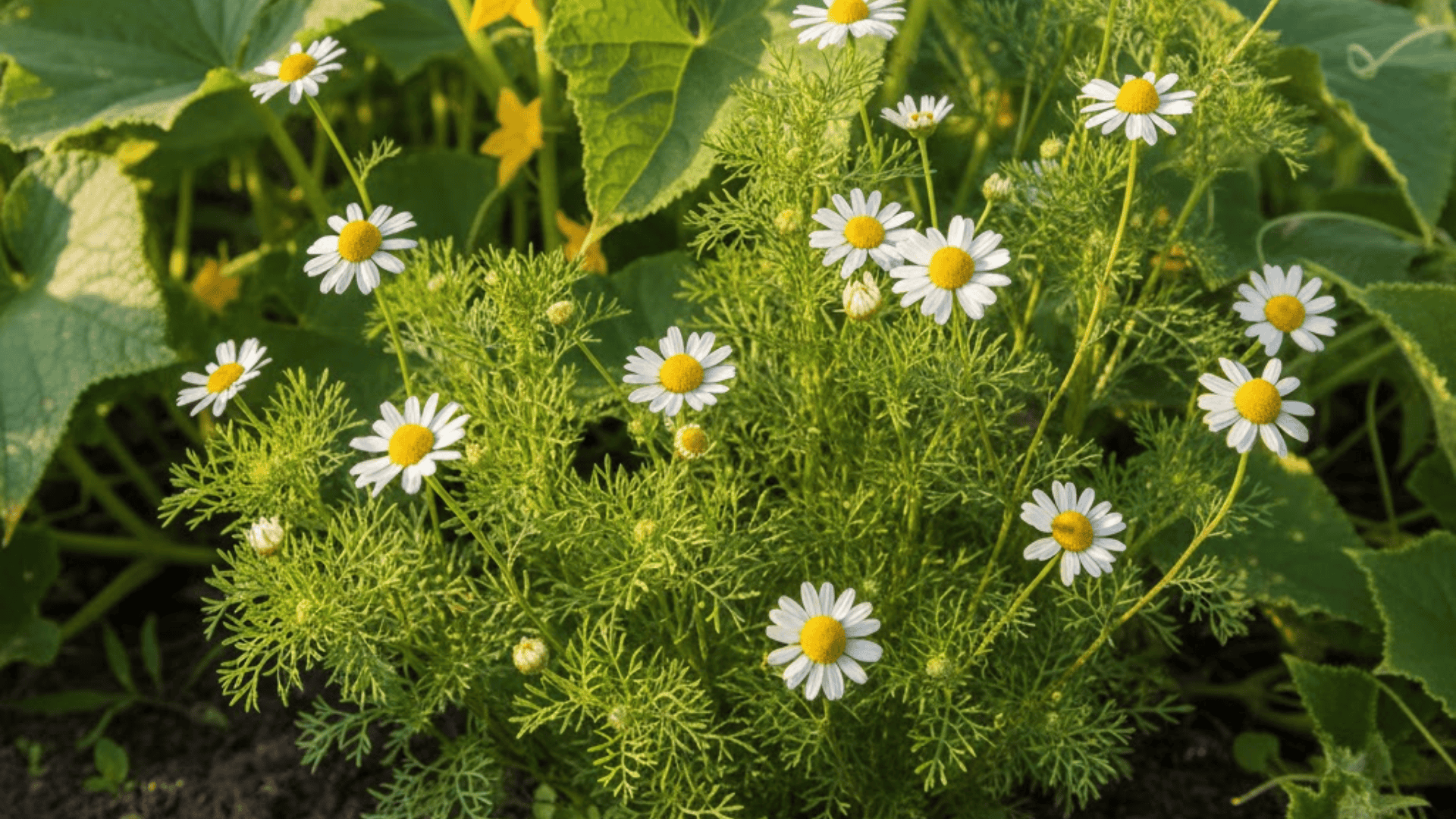
Zones: 2-9 (annual or short-lived perennial)
Size: 8-24 inches
Exposure: Full sun to part shade
Chamomile is known as the “physician plant” because it appears to improve the health and flavor of nearby vegetables. Its apple-scented flowers attract hoverflies, lacewings, and parasitic wasps that control aphid populations.
German chamomile grows taller and self-sows readily, while Roman chamomile stays low as a perennial ground cover.
Harvest flowers for soothing tea while leaving some blooms to support beneficial insects. Plant chamomile at cucumber bed corners where it won’t interfere with vine growth.
19. Celery
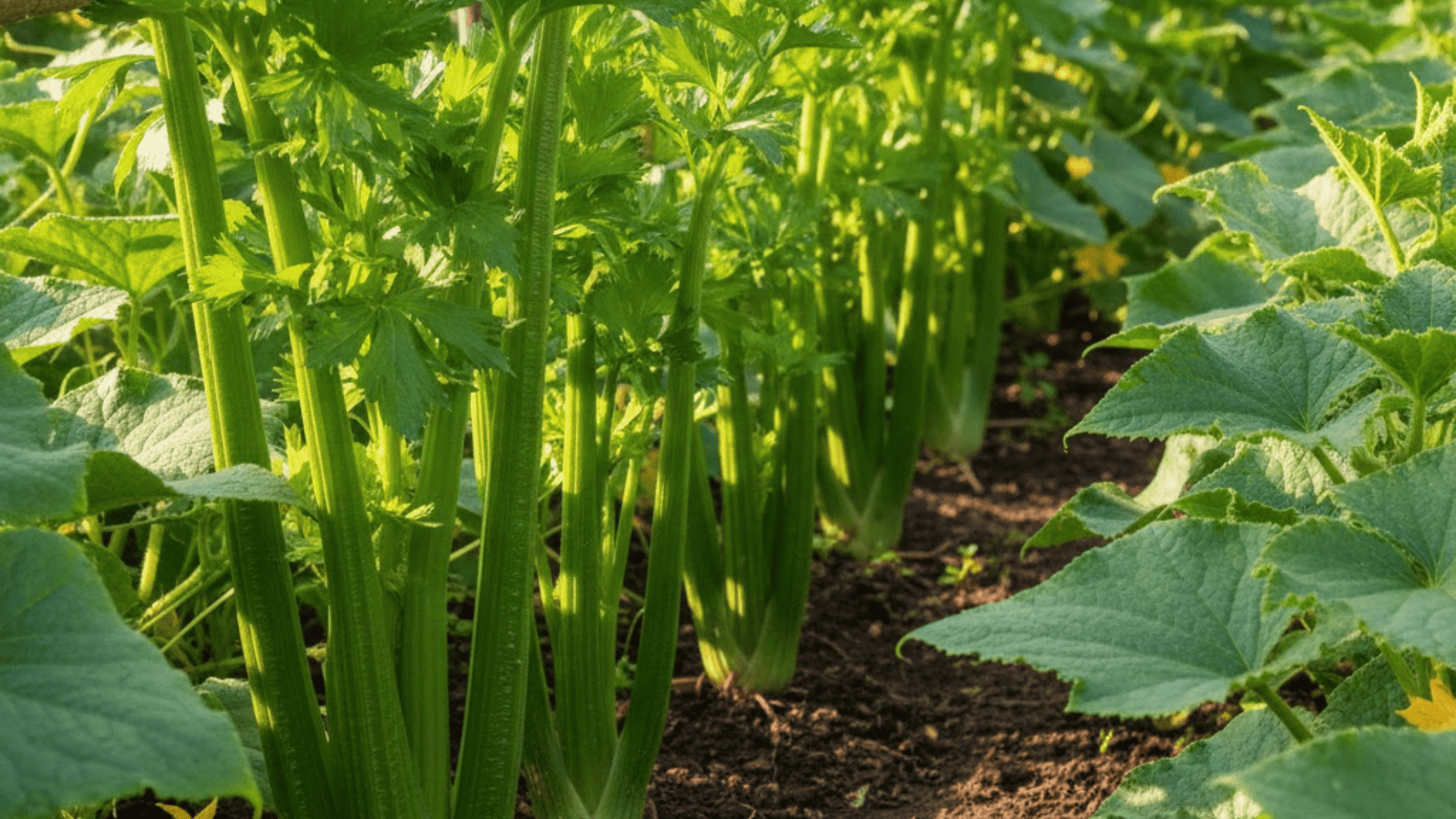
Zones: 2-10 (cool season biennial grown as annual)
Size: 18-24 inches
Exposure: Full sun to part shade
Celery’s strong scent repels whiteflies and cabbage moths that sometimes bother cucumbers. More importantly, celery and cucumbers share nearly identical water requirements, making irrigation management simple.
Both crops appreciate consistent moisture and fertile soil rich in organic matter. Plant celery transplants 6-8 inches apart alongside cucumber rows.
‘Tango’ and ‘Redventure’ varieties handle summer heat better than traditional types. The similar needs mean you can tend both crops with the same care routine.
20. Carrots
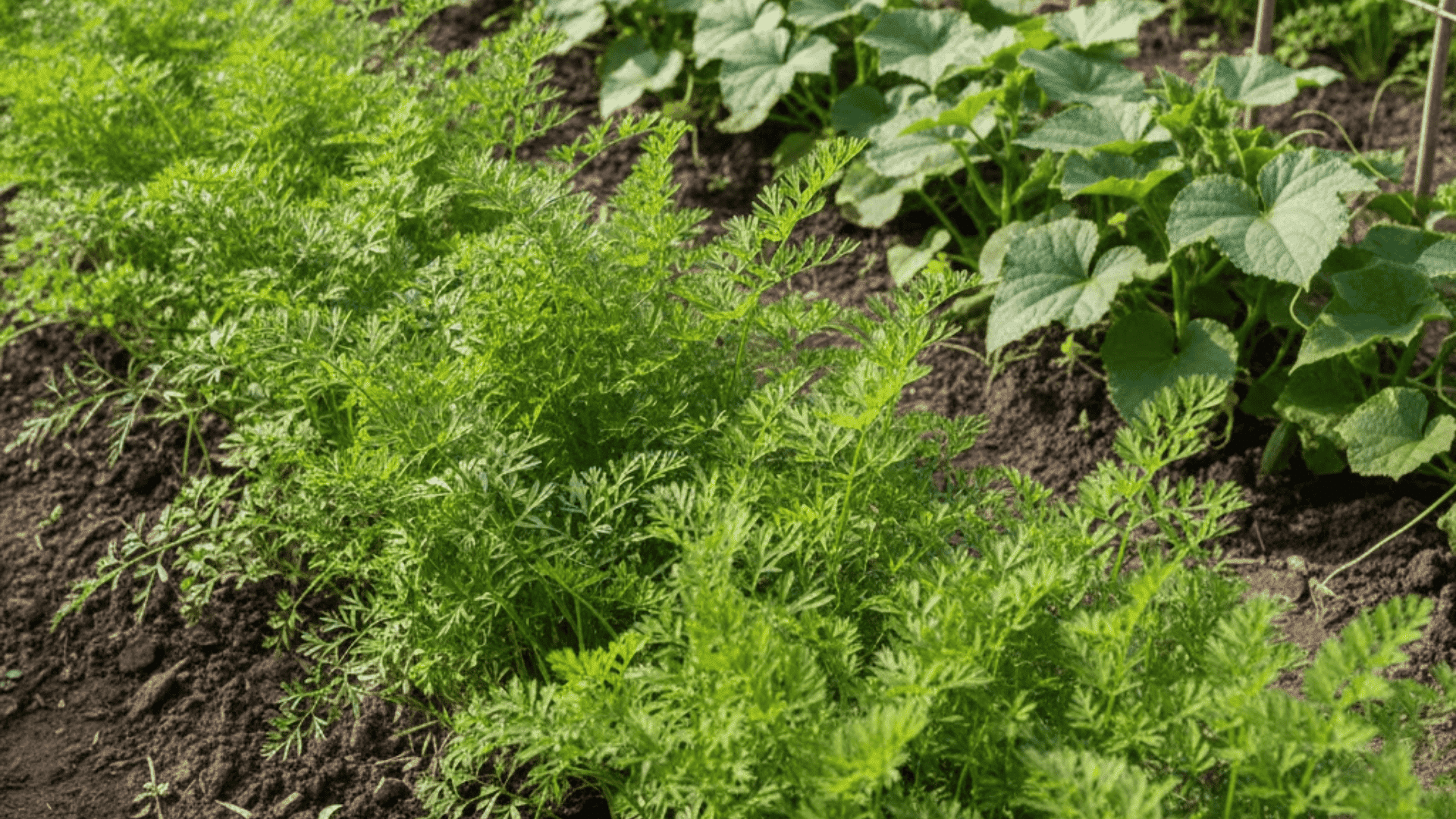
Zones: 2-11 (cool to warm season biennial grown as annual)
Size: 6-8 inches (tops)
Exposure: Full sun
Carrots’ deep taproots explore different soil layers than shallow cucumber roots, eliminating competition while aerating the soil. This root depth compatibility makes them ideal space-sharing partners.
Carrots also help break up compacted soil, improving drainage for both crops. Plant ‘Danvers’ or ‘Nantes’ varieties that tolerate some shade from cucumber foliage.
Direct sow carrot seeds between cucumber mounds in late spring. By the time carrots mature in the fall, cucumber vines are declining, creating perfect succession timing.
21. Zinnias and Cosmos
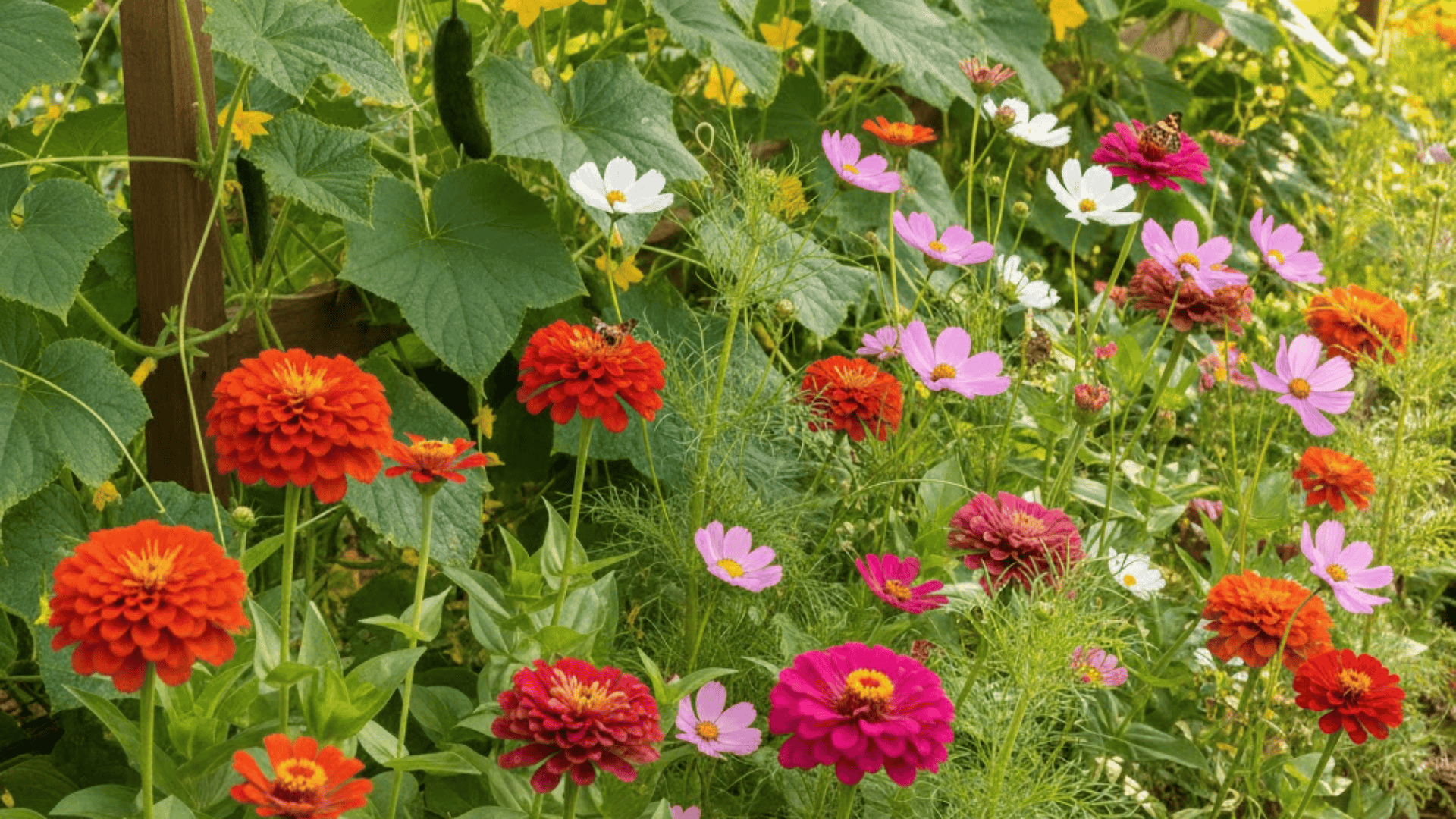
Zones: 2-11 (annuals)
Size: 12-48 inches
Exposure: Full sun
These cheerful flowers are pollinator magnets that draw bees, butterflies, and beneficial insects throughout the growing season.
Plant these flowers in clusters at bed ends or create a flowering border around cucumber patches. ‘Benary’s Giant’ zinnias and ‘Sensation Mix’ cosmos bloom prolifically from midsummer through frost.
Emma Rodriguez, a Texas homesteader, reported significantly fewer pest problems after adding a zinnia border to her cucumber beds.
Tips for Companion Planting With Cucumbers
Getting the timing, spacing, and succession right makes all the difference in your companion planting success. These practical tips will help you orchestrate a garden where every plant thrives alongside your cucumbers.
- Space companions 6-12 inches from cucumber plants, depending on mature size: compact herbs closer, larger flowers and vegetables farther out.
- Plant cool-season companions like peas, spinach, and lettuce 4-6 weeks before your last frost date, then add cucumbers after the soil warms to 65°F.
- Stagger plantings every 2-3 weeks with quick growers like radishes and lettuce to ensure continuous harvests throughout the season.
- Rotate cucumber beds to different garden spots each year, following them with nitrogen-loving crops that benefit from bean and pea residue.
- Reserve the sunniest spots for cucumbers and sun-loving companions, tucking shade-tolerant lettuce and spinach where mature vines will provide afternoon cover.
With these guidelines in place, you’ll create a productive garden rhythm where companions support each other through every stage of growth.
Plants to Avoid Near Cucumbers
Not every plant makes a good neighbor for cucumbers. Some compete aggressively for resources, while others attract the same pests or spread diseases that can devastate your harvest.
| Plant | Growing Family | Why to Avoid |
|---|---|---|
| Potatoes | Solanaceae (Nightshade) | Compete heavily for nutrients and water, creating stressed plants that produce poorly. |
| Brassicas (Broccoli, Cabbage, Kale) |
Brassicaceae (Crucifer) | Deep feeders that deplete soil nutrients cucumbers need, stunting vine growth. |
| Melons | Cucurbitaceae (Gourd) | Share cucumber beetles and powdery mildew, concentrating pest and disease pressure. |
| Squash | Cucurbitaceae (Gourd) | Attract squash bugs and vine borers that readily move to cucumber plants. |
| Pumpkins | Cucurbitaceae (Gourd) | Spread aggressively and harbor diseases that transfer easily to cucumbers. |
| Mint | Lamiaceae (Mint) | Invasive roots overwhelm cucumber plants and compete for moisture. |
| Sage | Lamiaceae (Mint) | Releases compounds that can inhibit cucumber growth and germination. |
Note: Keep cucurbit family members at least 20 feet apart to prevent cross-contamination of pests and diseases. If space is limited, choose just one cucurbit type per season and rotate locations annually.
The Closing Note
Companion planting for cucumbers isn’t just about following rules: it’s about creating a living community where each plant contributes something valuable.
Tucking radishes between seedlings, surrounding beds with marigold borders, or letting beans enrich your soil all work because nature designed these partnerships that way.
Start small this season with just a few companions that speak to you, observe what flourishes, and expand your pairings next year.
What companion plants have worked wonders in your cucumber patch? Share your experiences in the comments below!