
You can find pistachios in almost any grocery store, but spotting the tree they come from is much less common.
If you don’t live near an orchard, you’ve probably never seen one up close. I hadn’t either, so I got curious.
What does the plant look like, and what does it need from the people who care for it? How do pistachios actually grow?
Let’s walk through the process, from a young tree in the ground to the nuts you see in the store. You’ll find out why growing this snack takes a lot of patience.
How Do Pistachios Grow, and What Do They Grow On?
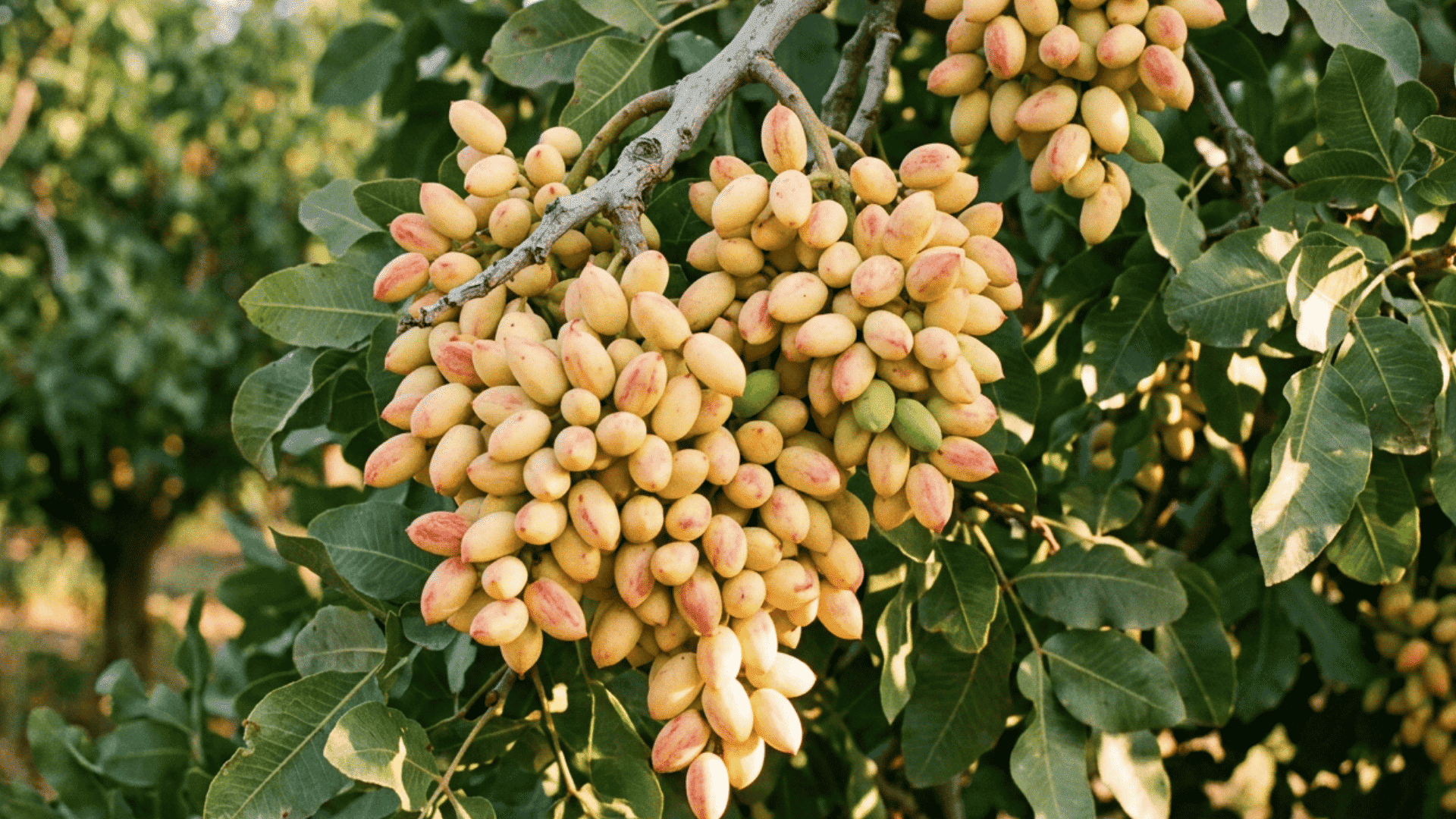
Pistachios grow in clusters on trees, not underground like peanuts or on low bushes.
Each female tree needs pollen blown in from a nearby male tree. This happens when the blossoms open in early April.
From May through June, the shell grows to full size and hardens. By July, the kernel fills it. The growing nut then splits the shell open. Growers shake the trees from late August onward, once the hull slips off easily.
A young tree needs about five to seven years to bear its first crop.
Each nut forms on wood that grew the year before. Side buds on those branches open into long, branched flower stalks.
One stalk can hold a hundred or more tiny blossoms, with no petals or bright colors. The leaves are thick and leathery, which helps the tree cope with heat and drought. A healthy tree also shows reddish tips on its new growth.
If you’re planting more than one, plan the spacing the way you’d lay out rows in a vegetable garden, just on a much larger scale.
How Do Pistachios Grow From Season to Season?
From the early planting years to the moment the shells finally split open, here is how pistachios develop:
1. Planting and Grafting
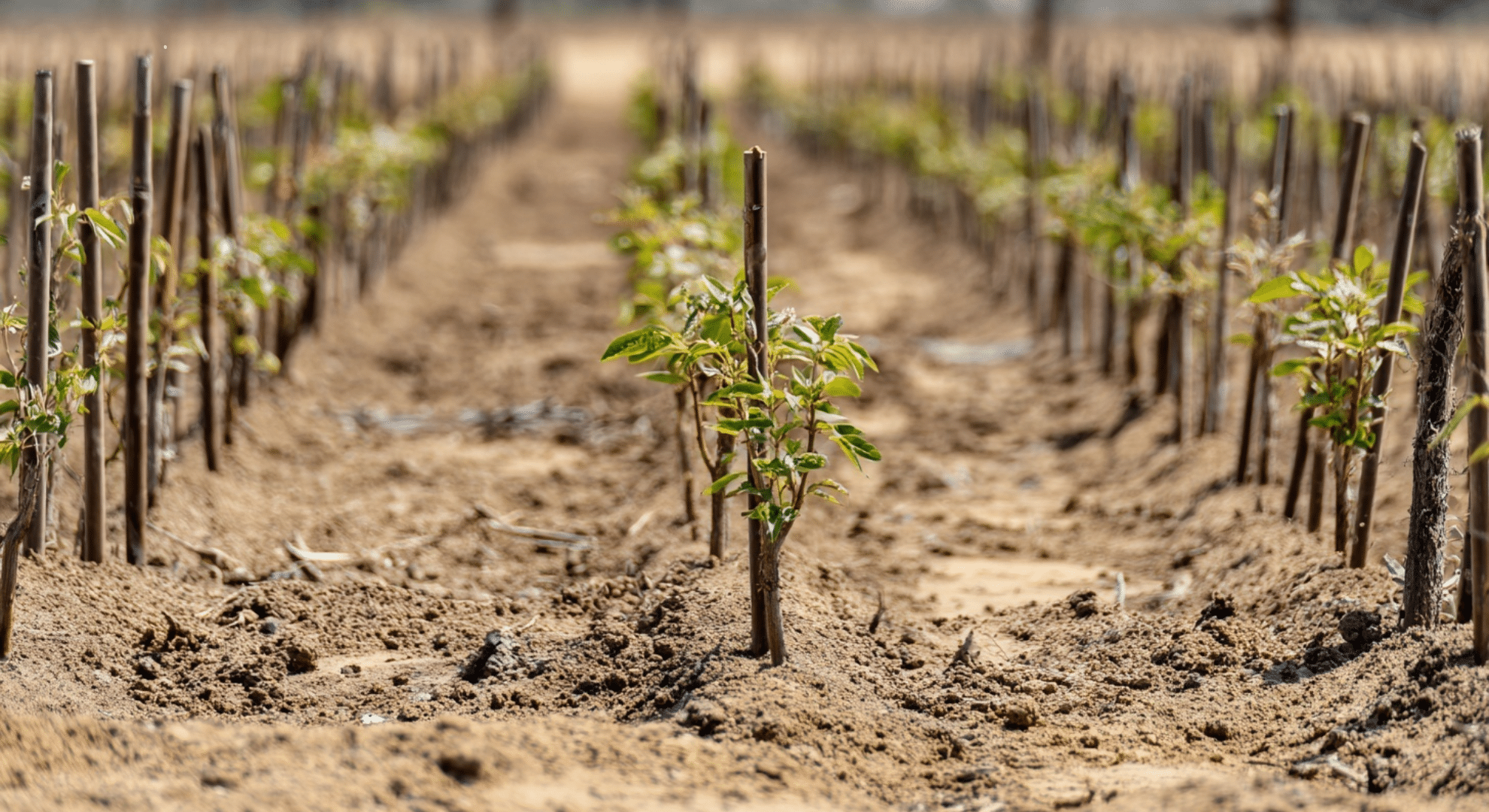
Most orchard trees are made by joining two plants, which is called grafting.
The top is a type that grows good nuts, like Kerman, or pollen, like Peters. The bottom is a sturdy root from a wild pistachio cousin that fights off tiny soil worms and a common root disease. Growers plant trees in January or February.
For the first four or five years, they grow only leaves and branches.
Farmers supply suitable water and care until the trees mature, and the trees reward them with well, not much, for a while.
2. Winter Dormancy
In fall, the leaves drop, and the tree rests, but it isn’t doing nothing.
Next spring’s flower buds formed last summer and wait on the branches all winter.
Growers use this quiet time to trim the tips, which helps new side branches grow. The trees can handle short cold snaps down to about 27°F, but early-fall or late-spring frost can damage leaves and flowers.
3. Bud Break and Bloom
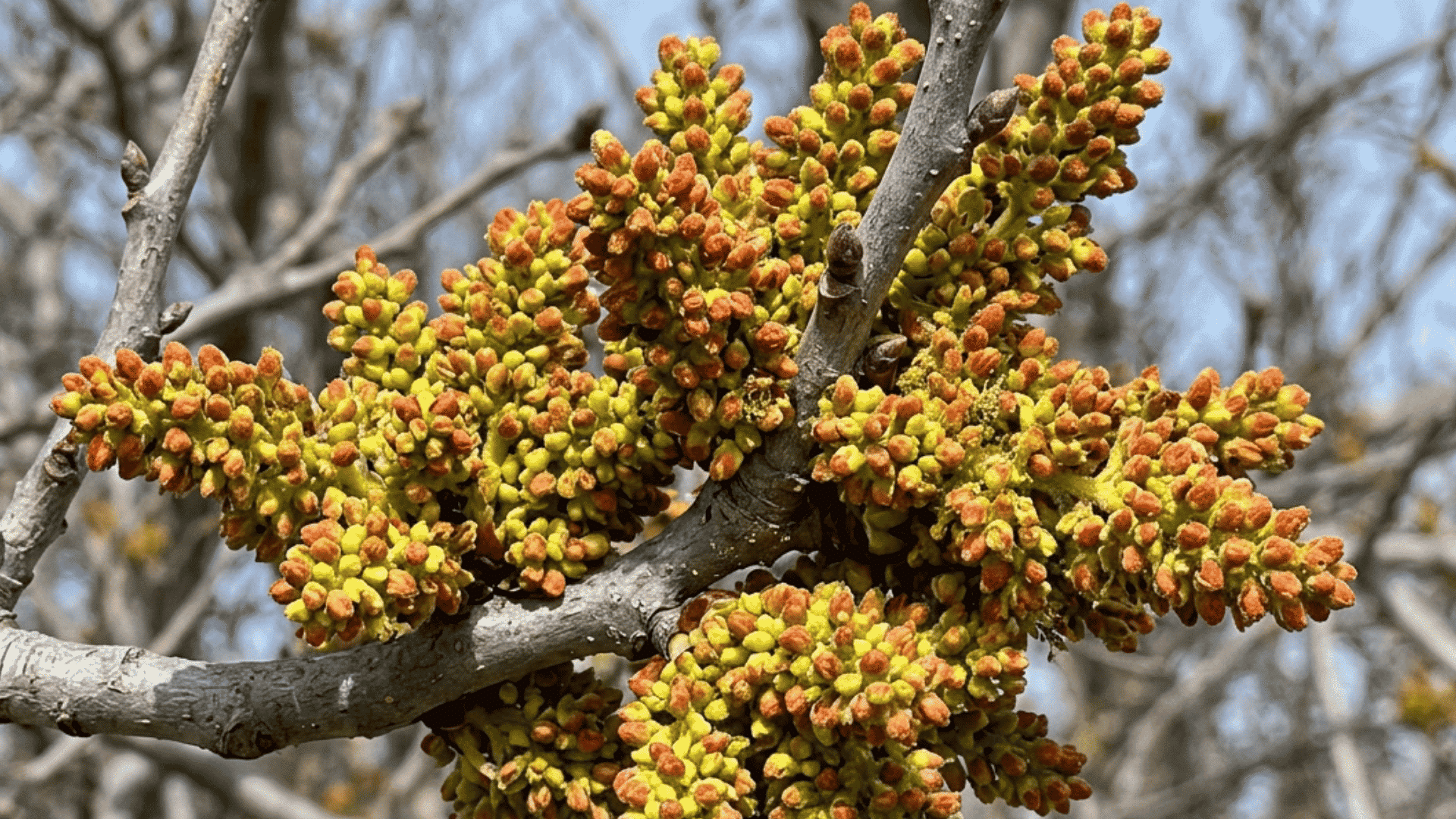
Each pistachio tree is either male or female, and an orchard needs both.
The females bear the nuts. The males supply pollen through their flowers, and that is their entire job. Pistachios are pollinated by wind rather than bees, which I find interesting. So growers plant the males close enough for the pollen to reach them.
In late March, the tree wakes up, and new shoots keep growing until late April or mid-May.
The flowers open before the new leaves are fully out.
Timing matters a lot, because some male and female types can bloom two to three weeks apart.
Growers pick pairs that bloom together. Peters is popular because it makes lots of pollen just as Kerman flowers open.
4. Shell Growth
After the flowers fade, the young nut builds its shell first.
If you cut one open in late spring, you would see a full-size shell that is almost empty, because the seed stays tiny for weeks.
The tree also gets much thirstier, and by mid-May a grown tree can drink about 40 gallons of water a day.
Plant bugs are a worry too, since they feed on the young nuts.
5. Kernel Fill
In summer, the seed inside finally starts to grow, and it takes about six weeks to fill the shell.
Hot, dry weather helps it grow well. The tree is hungry and thirsty now, and it needs the most food in July and August. A grown tree can drink up to 50 gallons of water a day. Without enough water, the nuts stay small and fewer shells split open.
6. Shell Split and Hull Ripening
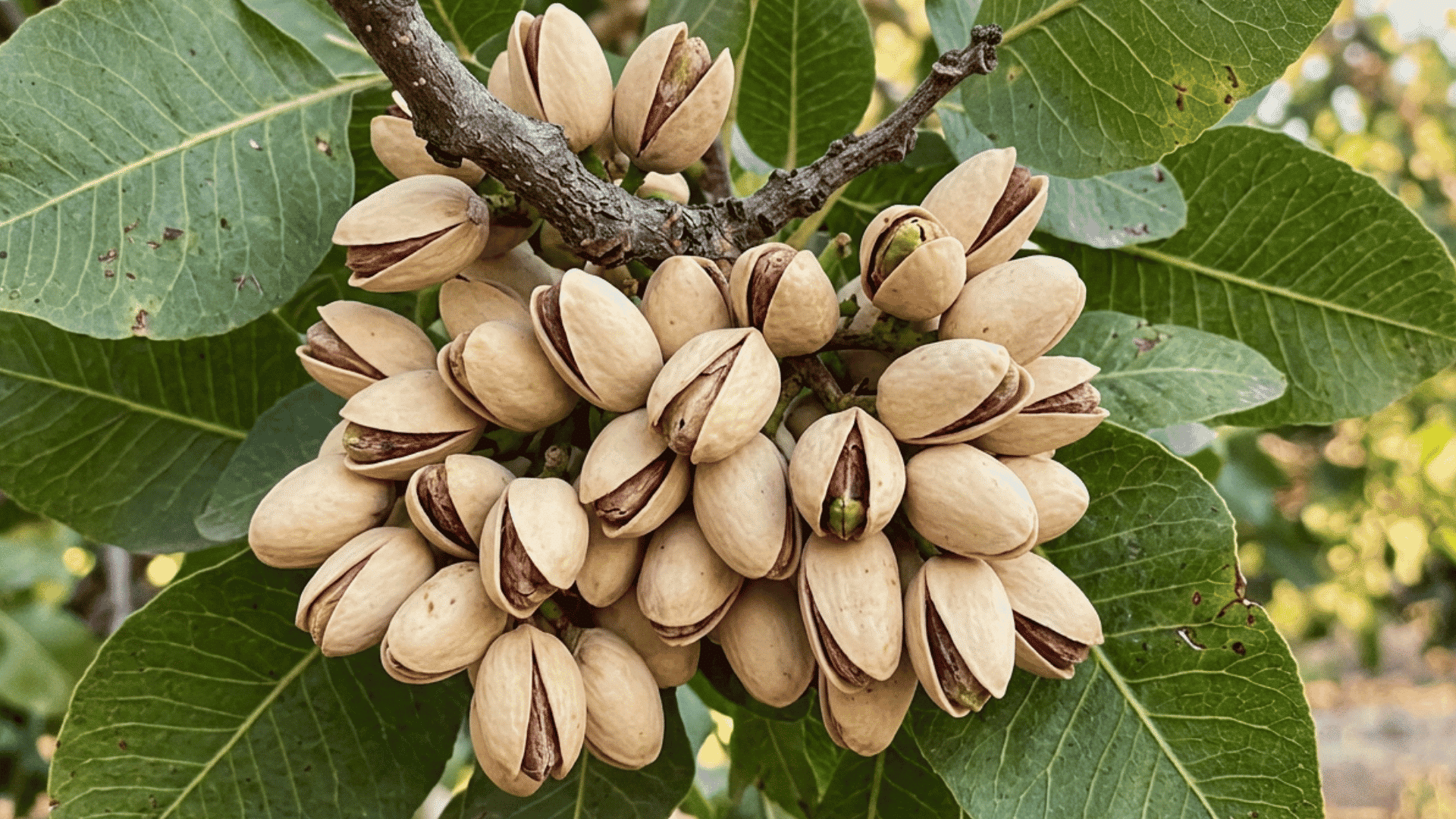
The shell starts to crack open at its tip, and the split then runs down both sides.
This can start in late July and last until harvest. The soft outer skin, called the hull, turns from green to yellow-red. To check if a nut is ready, squeeze it between your thumb and finger.
Some nuts never open, and in Kerman, 20 percent or more stay closed.
How Do Farmers Harvest Pistachios?
Most pistachios are harvested using machines, and in orchards, trunk shakers grab each tree and shake the nuts loose onto a catch frame that feeds a conveyor.
The harvest window runs from late August to early October, depending on weather and how fast the nuts ripen that year.
Growers look for two readiness signs: a split shell and a hull that loosens and comes off easily.


Machines are fast, and the nuts never touch the ground. Small orchards may hand-pick some of their crop, but that’s much slower.
Either way, processing has to follow immediately, since nuts that sit around risk spoilage and mold.
Where Do Pistachios Grow Best?
Pistachios grow best in places with long, hot, dry summers, cold winters, and low humidity. That’s why you only find large orchards in certain parts of the world. These trees need hot, dry summers to ripen the nuts.
But they also need cold winters so the trees can rest and start fresh each year.
Without both, the trees won’t grow right, and the nuts won’t form properly. Too much rain or humidity can even hurt the trees.
|
Place |
Why It Works for Pistachios |
|---|---|
|
California (Central Valley) |
Long, dry summers, cold winters, low humidity, and great soil |
|
Arizona (southern regions) |
Very hot and dry, but winter chill can be limited |
|
New Mexico |
Dry climate, sunny days, and well-drained soil |
|
Texas (western areas) |
Hot summers and dry air, but it needs careful water control |
|
Nevada (southern part) |
Hot and dry, but colder areas work better for winter chill |
|
Iran |
A top producer, with dry, sunny weather and cold winters |
|
Turkey |
Mild winters with good summer heat, long pistachio history |
|
Syria |
Warm and dry with enough chill in winter |
|
Greece |
Has warm summers and the right kind of dry climate for small farms |
|
Italy (Sicily) |
Famous for high-quality pistachios, hot summers, and mild but cool winters |
I noticed chill kept coming up as I put this together.
Chill hours are the hours a dormant tree spends below about 45°F each winter. Kerman needs about 850 chill hours, and Peters about 900. A warm winter that falls short can delay or weaken the bloom.
Pistachios also need dry weather leading up to harvest, since too much moisture can cause mold or damage the nuts.
What Happens After Pistachios Are Picked?
The clock starts the moment pistachios are picked because hulls must be removed within about 24 hours to prevent the shells from staining. Most processing plants follow the same sequence:
1. Hulling: Right after harvest, the outer hull is removed. If the hull stays on too long, it can stain the shell or cause mold, and stained nuts are the reason some in-shell pistachios are sold dyed or color-coated.
2. Floating: The hulled nuts go into a water tank. Empty, or blank, nuts float and get skimmed off, while filled nuts sink.
3. Drying: They still hold a lot of moisture after being picked. If they don’t remove that moisture quickly, the nuts can spoil.
Drying brings the moisture level down to around 4 to 6 percent, which helps them last longer without going bad.
4. Sorting: Once dry, the pistachios are sorted by size and quality, and machines separate split shells from closed ones.
5. Roasting and packing: Some may be roasted and salted, while others are left plain.
After that, they pack and store them until they are ready to sell.
Growing Timeline of Pistachios
Pistachios take years to grow, but once the trees mature, they can keep producing for generations.
Here’s what the process looks like over time:


Why isn’t Pistachio Production Steady?
Pistachio harvests go up and down because most pistachio trees produce many nuts one year and fewer the next.
This pattern is called alternate bearing.
When the tree has a big crop, it uses much of its energy to grow and ripen the nuts.
As a result, it may not have enough energy left for the next season. The following year, the tree spends more time recovering and getting stronger instead of producing many nuts. After that, the cycle repeats. Weather changes can make things harder.
For example, a warm winter or too much summer rain can reduce the harvest that year.
Pests and diseases can also damage the crop. If it rains a lot during pollination, blights like Botrytis and Alternaria can show up. To help prevent navel orangeworm, growers collect old nuts from the trees and the ground every winter.
Farmers work hard to care for their trees by pruning, watering, and feeding them the right way.
Can Pistachios Be Grown at Home?
Yes, you can grow pistachios at home, but it’s not easy.
The same climate test applies at home. Without enough winter chill, your tree may grow well and still bloom poorly.
You also need both male and female trees for pollination. This makes growing pistachios at home more of a long-term project than a quick hobby.
A home pistachio tree needs a few basics in place first:
-
You need a dry, sunny climate with cold winters.
-
Plant trees in well-drained soil.
-
A male tree needs to grow nearby, or you can graft a male branch onto your female tree.
-
Leave room for a tree that grows about as wide as it is tall.
-
Expect a long wait before getting any nuts.
Growing pistachios at home works best for serious gardeners in the right climate.
Like most fig varieties, pistachios need full sun, well-drained soil, and long, hot summers. But they’re pickier about climate and take much longer to produce their first harvest.
Wrapping It Up!
Growing pistachio trees takes a lot of effort; keep that in mind next time you see a small, expensive bag at the store.
The price is easier to understand when you know how much work goes into it.
If you’re thinking about planting your own, check with your local extension office first. They can tell you whether nut trees will grow well in your area and which nurseries offer healthy plants.
Sometimes, hearing “no” can save you years of waiting for a tree that never produces.
Have you tried growing a nut tree at home? Tell us about your experience in the comments.
Frequently Asked Questions (FAQs)
Can You Grow a Pistachio Tree from a Store-Bought Pistachio?
Yes, if it’s raw and unsalted. However, most store-bought pistachios are roasted, and even viable seeds may grow into male trees that never produce nuts.
How Many Pistachios Does One Tree Produce?
A young tree’s first harvest gives about 5 pounds of split nuts, and by the tenth harvest a tree may produce 50 pounds or more. Yields still swing with tree age, variety, weather, and the on-off bearing year.
Why Do Some Pistachio Shells Stay Closed?
Pistachio shells stay closed when kernels don’t develop enough to split them open. Summer water stress can contribute, and growers usually separate closed-shell nuts during processing.
Can Pistachios Grow in Humid or Tropical Climates?
Pistachio trees struggle to produce nuts in tropical climates because they need winter chilling. High humidity also increases the risk of fungal diseases and mold.



2 Responses
can pistacho grow in the Philippines?
where to buy seeds if possible to grow in the Philipines?