
A crawl space is an often-overlooked part of a home, but its condition can have a major impact on the comfort, air quality, and structural health of the entire property. Because crawl spaces are located beneath the living areas, problems such as excessive moisture, high humidity, condensation, and mold can remain unnoticed for a long time. By the time visible signs appear inside the home, the underlying moisture problem may already be significant.
Maintaining the right humidity level in a crawl space is therefore an important part of home maintenance. One of the most effective ways to manage excess moisture is to use a properly sized crawl space dehumidifier designed for the unique conditions found beneath a home.
What Is a Crawl Space?
A crawl space is a shallow area between the ground and the first floor of a house. It provides access to plumbing, electrical systems, ductwork, and other components that may require inspection or maintenance. Some crawl spaces are only a few feet high, while others may provide enough room for a person to move around comfortably.
Depending on the home’s construction and location, a crawl space may have a dirt, gravel, or concrete floor. It may also be ventilated to the outside or sealed as part of a moisture-control system.
While a crawl space serves a practical purpose, it can also become a source of moisture. Groundwater, humid outdoor air, plumbing leaks, and condensation can all contribute to elevated humidity. Without proper control, this moisture can affect the materials and systems located in the space.
Why Does Crawl Space Humidity Matter?
Humidity is not necessarily a problem by itself. However, consistently high humidity creates an environment where several unwanted issues can develop.
Excess moisture can encourage mold and mildew growth on wood, insulation, and other organic materials. It can also contribute to unpleasant odors and make the crawl space less healthy. Over time, prolonged moisture exposure may affect wooden structural components, particularly when ventilation and moisture barriers are inadequate.
Another concern is that air from the crawl space can influence indoor air quality. Homes naturally exchange air between different areas, meaning odors and airborne particles from a damp crawl space may eventually affect the living space above.
Keeping crawl space humidity under control can help reduce these risks and create a more stable environment beneath the home.
Common Sources of Crawl Space Moisture
Before choosing a moisture-control solution, it is important to understand where the water or humidity is coming from. Several sources can contribute to a damp crawl space.
Ground Moisture
Dirt floors can release moisture into the air, particularly when the surrounding soil is naturally damp. Even when there is no standing water, evaporation from the ground can increase humidity levels considerably.
A properly installed vapor barrier can help limit moisture migration from the soil. However, a vapor barrier alone may not address humidity already present in the crawl space.
Plumbing Leaks
Leaking pipes, plumbing connections, or drainage systems can introduce significant amounts of water into a crawl space. Even a small leak that continues for an extended period can create persistently damp conditions.
Regular inspections can help homeowners identify plumbing problems before they cause more extensive damage.
Outdoor Humidity
Ventilated crawl spaces can sometimes receive humid outdoor air. In warm and humid climates, opening vents does not necessarily dry the space. Instead, warm air entering the cooler crawl space can create condensation on surfaces.
This is one reason many homeowners and building professionals consider sealed crawl spaces with controlled humidity instead of relying entirely on traditional ventilation.
Condensation
Condensation occurs when warm, moist air comes into contact with a cooler surface. Pipes, ducts, concrete, and other surfaces can become wet when conditions are right.
Repeated condensation can increase the overall moisture level and contribute to mold growth or deterioration of building materials.
How a Dehumidifier Helps
A dehumidifier removes moisture from the air and collects or drains the resulting water. In a crawl space, this can help maintain a more consistent humidity level.
Unlike a standard portable household dehumidifier, equipment designed specifically for crawl spaces is generally built to operate in enclosed, challenging environments. These units can be designed for continuous operation and may include features that make them easier to drain and maintain.
The goal is not simply to make the crawl space feel dry. Instead, the objective is to maintain a controlled environment where excessive moisture does not continually create problems.
Choosing the Right Crawl Space Dehumidifier
Not every dehumidifier is appropriate for every crawl space. Several factors should be considered before selecting a unit.
Consider the Size of the Space
The size of the crawl space is an important consideration. A unit that is too small may struggle to maintain the desired humidity level, while an unnecessarily large unit may increase energy consumption without providing meaningful additional benefits.
Homeowners should consider the total area, height, moisture conditions, and whether the space is sealed or ventilated when determining the appropriate capacity.
Look at the Moisture Conditions
A crawl space with occasional humidity is different from one affected by constant moisture. If there is standing water, groundwater intrusion, or an active plumbing leak, those issues should be addressed first.
A dehumidifier is intended to control moisture in the air. It should not be considered a replacement for drainage improvements, plumbing repairs, waterproofing, or other necessary corrections.
Check Drainage Options
A crawl space dehumidifier can collect a considerable amount of water when humidity levels are high. For that reason, an appropriate drainage solution is important.
Many crawl space systems are designed to connect to a drain so collected water can be removed automatically. This reduces the need for homeowners to manually empty a water container.
The Importance of Crawl Space Encapsulation
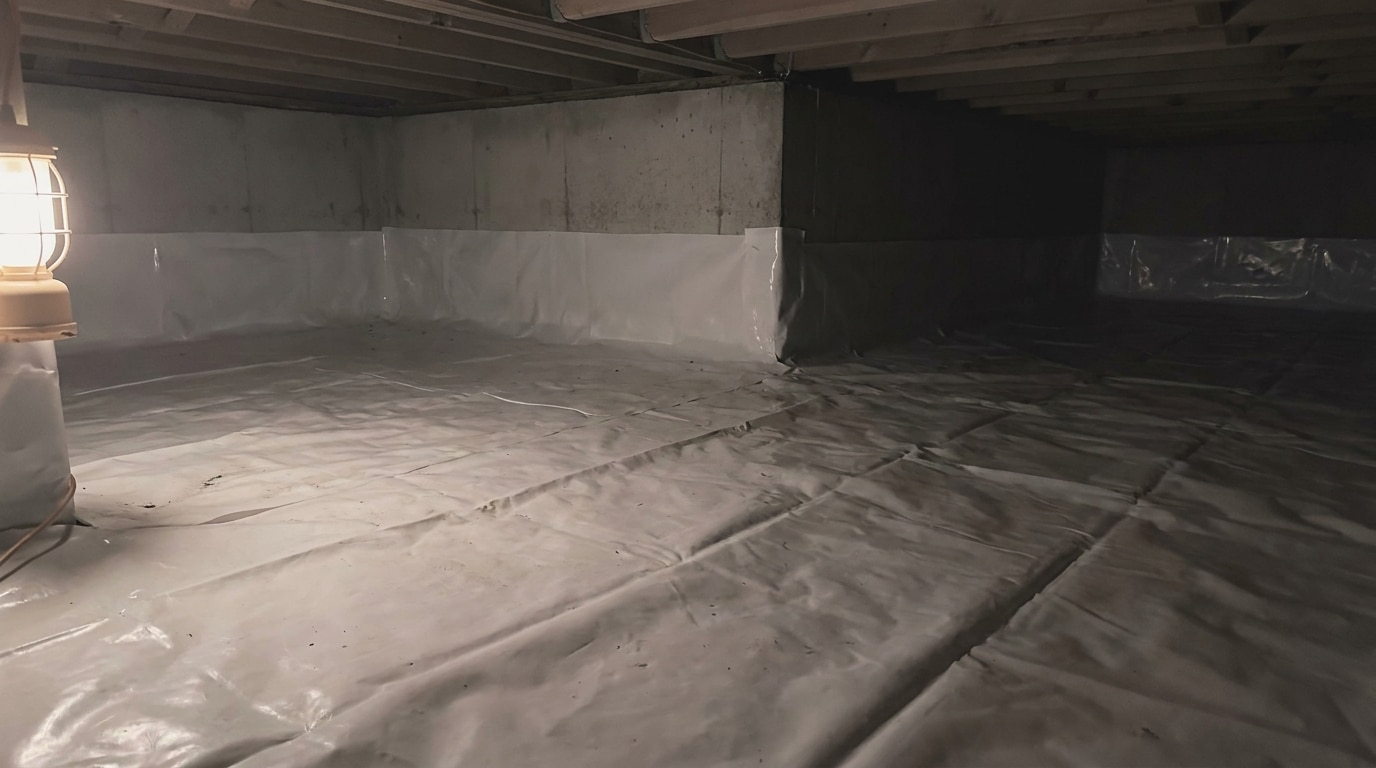
Dehumidification often works best when combined with proper crawl space encapsulation. Encapsulation typically involves sealing the crawl space from outside air and limiting moisture movement from the ground.
A vapor barrier or specialized crawl space liner can be installed over the floor and, depending on the design, portions of the foundation walls. Openings and vents may also be sealed to reduce uncontrolled air exchange.
Once the space is properly sealed, a dehumidifier can help maintain the desired humidity level more efficiently.
However, every crawl space is different. Factors such as climate, drainage, foundation design, and existing moisture problems should be evaluated before deciding which improvements are necessary.
Signs That Your Crawl Space May Have Too Much Moisture
Homeowners do not always need specialized equipment to notice that something is wrong. Several warning signs can indicate excessive crawl space moisture.
Common signs include:
- Musty or unpleasant odors
- Visible mold or mildew
- Damp insulation
- Condensation on pipes or ducts
- Wet or unusually soft wood
- Standing water
- Peeling or deteriorating materials
- Higher-than-normal indoor humidity
- Warped wood or other moisture-related damage
If these signs are present, it is better to investigate the source of the problem rather than simply masking the odor or visible symptoms.
How Alorair Supports Crawl Space Moisture Control
Alorair is a company known for moisture-control equipment designed for applications such as basements and crawl spaces. Homeowners researching crawl space solutions may also come across Aloraircrawlspace when looking for equipment and information related to controlling humidity beneath their homes.
The right equipment can be an important part of a broader moisture-management strategy. However, proper installation and an understanding of the crawl space itself are equally important. A dehumidifier will perform most effectively when major sources of water intrusion have already been addressed.
Maintenance Tips for a Drier Crawl Space
Installing a dehumidifier is only one part of maintaining a healthy crawl space. Regular inspections can help keep the system working properly and identify new moisture problems early.
Homeowners should periodically inspect the crawl space for leaks, standing water, unusual odors, mold growth, and signs of condensation. The dehumidifier itself should also be checked according to the manufacturer’s maintenance recommendations.
Drainage lines should remain clear, filters should be cleaned or replaced when required, and the unit should be inspected for any signs of malfunction.
It is also useful to monitor humidity levels with a reliable hygrometer. Rather than guessing whether the crawl space is too humid, homeowners can use actual readings to determine whether conditions are remaining within an appropriate range.
Can Ventilation Solve Crawl Space Humidity Problems?
Ventilation is sometimes viewed as a simple way to remove moisture from a crawl space. However, its effectiveness depends heavily on the local climate and the conditions outside.
In humid weather, opening vents can introduce additional moisture instead of removing it. This can make humidity control more difficult, especially when warm outdoor air enters a cooler crawl space.
For this reason, moisture management should be based on the specific construction and environmental conditions of the home rather than assuming that more ventilation is always better.
A Long-Term Approach to Crawl Space Health
The best crawl space moisture strategy usually combines several measures rather than relying on a single piece of equipment.
Homeowners may need to address drainage around the foundation, repair plumbing leaks, install a suitable ground vapor barrier, seal unnecessary openings, improve insulation, and use mechanical dehumidification when appropriate.
The objective is to create a controlled environment where moisture has fewer opportunities to accumulate. Once the major sources of water intrusion are addressed, maintaining stable humidity becomes much easier.
Conclusion
A crawl space may be hidden from everyday view, but it plays an important role in the overall condition of a home. Excessive humidity can contribute to mold, odors, condensation, and moisture-related deterioration, making proper moisture control an important part of long-term home maintenance.
A crawl space dehumidifier can help remove excess moisture from the air, particularly when it is used as part of a properly designed crawl space system. Sealing the space, controlling ground moisture, addressing leaks, and maintaining effective drainage can further improve moisture management.
For homeowners dealing with a consistently damp crawl space, understanding the source of the moisture is the first step. Once those causes are identified and corrected, the right combination of encapsulation, drainage, and dehumidification can help create a cleaner, more stable, and better-protected space beneath the home.