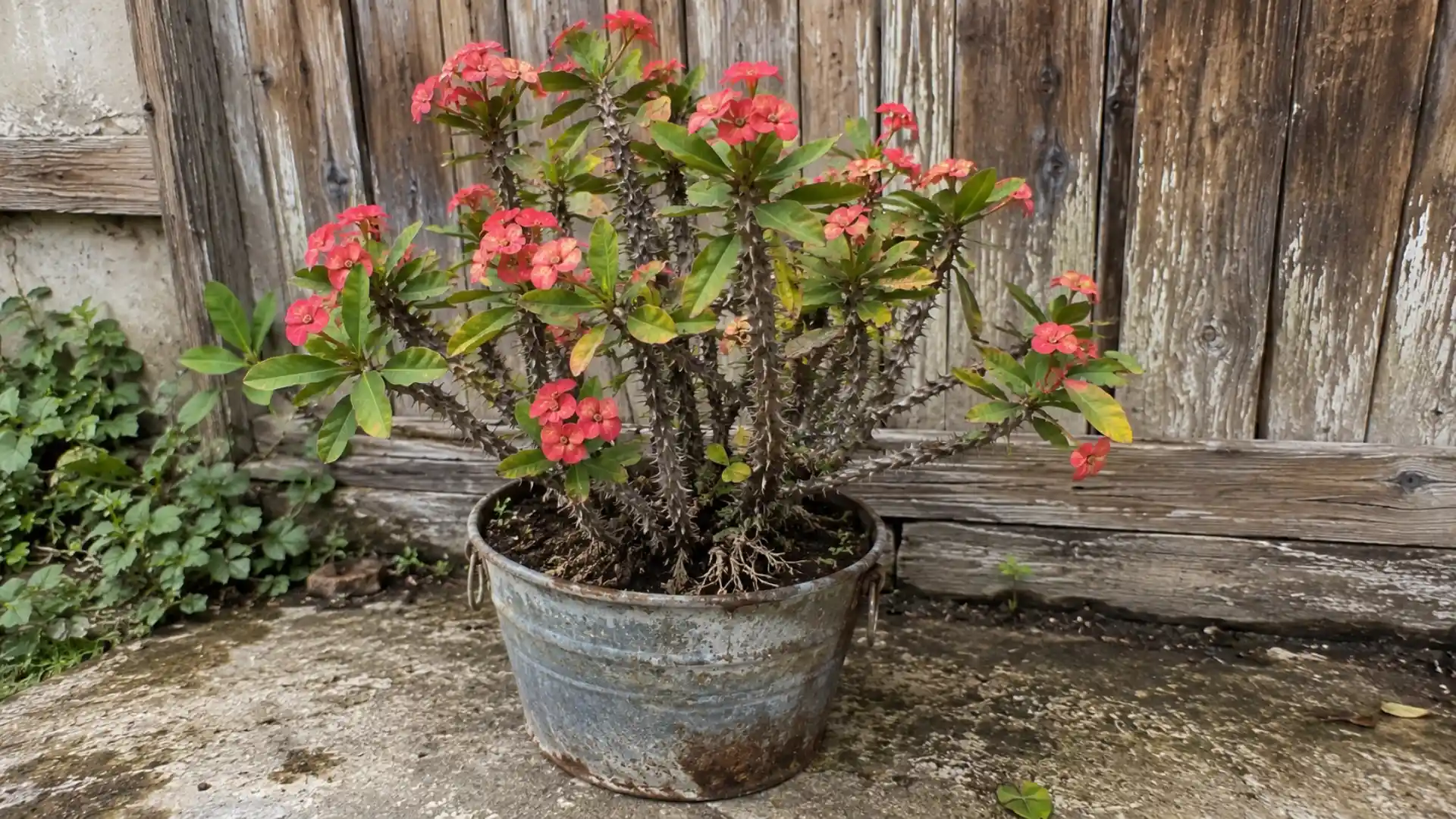
Crown of thorns stores water in its thick, spiny stems, the same way a cactus does. That is why a fixed watering schedule, the kind that works fine for a fern or a pothos, tends to backfire here.
I have grown this plant on a windowsill for long stretches. I did not pay it much attention, and it did fine.
The plants that struggled were usually the ones getting extra care, not less.
Forgetting to water it almost never caused a problem. Watering it on a fixed schedule, whether it needed water or not, usually did.
Crown of thorns plant care mostly comes down to matching the routine to what the plant is actually built for. Start with where it needs to live, since that decision shapes everything else.
Why is it Called ‘Crown of Thorns’?
The name comes from a legend that its thorny stems were used to form Christ’s crown at the crucifixion.
In Thailand, the plant carries a different story. It is treated as a good-luck charm, since a stem that blooms with a full cluster of eight flowers is believed to bring good fortune.
Botanically, this is Euphorbia milii, a succulent shrub native to Madagascar.
It is a slow grower. Left alone outdoors, it can reach 6 feet tall over the years. Indoors, expect 2 to 3 feet, with maybe a foot or two of growth a year even in good light.
One more thing before you get attached – the sap is toxic. So, keep the plant out of reach of kids and pets.
Crown of Thorns Plant Care Setup for Location and Containers
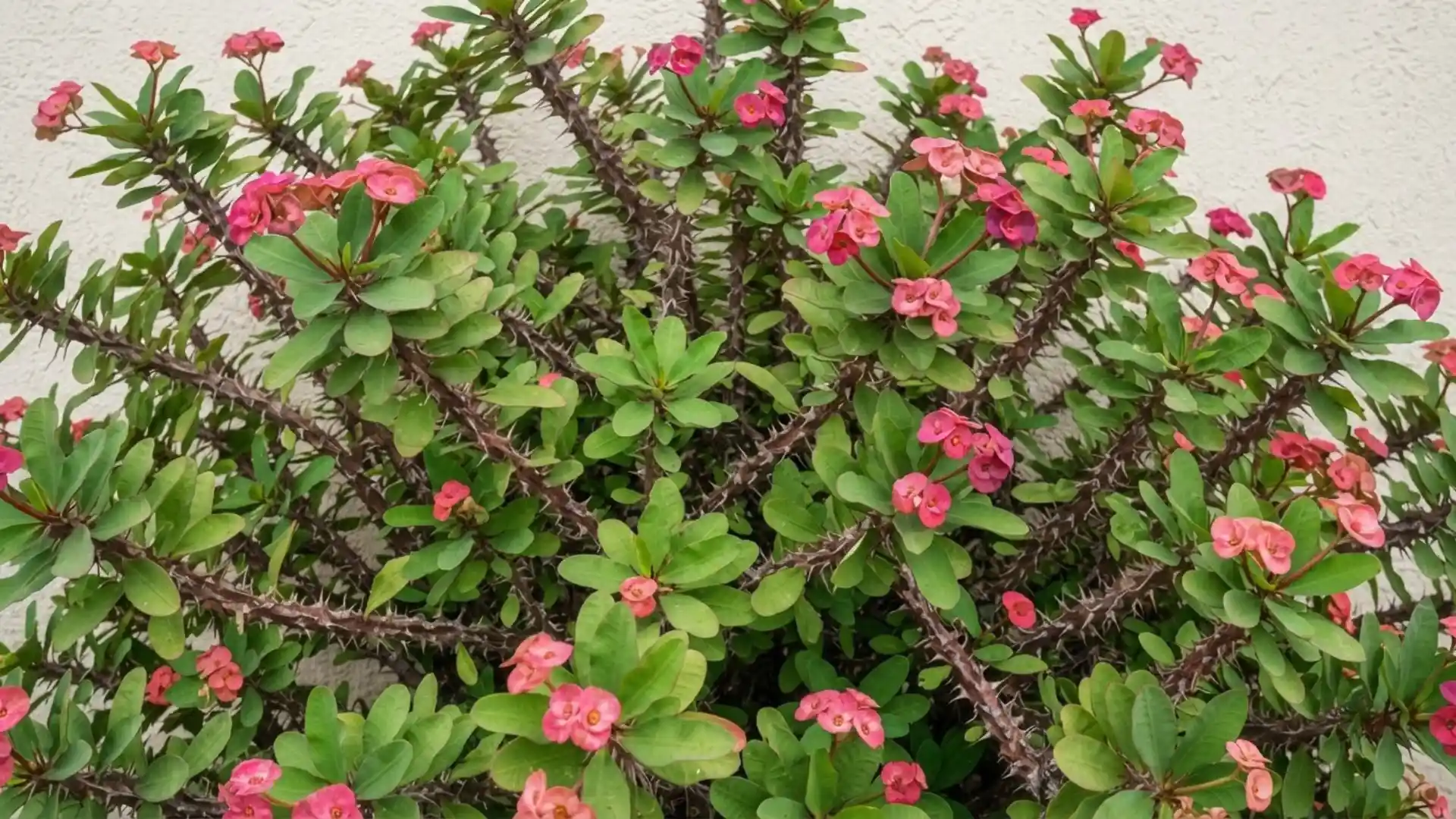
A crown of thorns plant care starts with the plant’s drought-tolerant nature, since that shapes everything about where it lives.
Get the location and container right before you touch water or fertilizer.
Light, Temperature, and Hardiness Zone
Three factors decide whether this plant settles in or struggles.
- Hardiness Zone: USDA zones 9 through 11 can keep it outside year-round. Everywhere else, treat it as an indoor plant, or a seasonal patio guest at best.
- Light: at least 3 to 4 hours of direct sunlight every day. Less light means fewer blooms, even if the plant technically survives.
- Temperature: 65°F to 75°F for steady growth. Below that range, growth slows, and the plant gets more vulnerable to stress.
Cold drafts and frost are the real danger, even in mild climates.
A drafty windowsill in winter can stress the plant just as much as a cold snap, so if you are outside the hardy zones, bring it in before temperatures drop near 50°F. Waiting until frost hits is usually too late.
Soil and Container Requirements
Use a fast-draining cactus or succulent mix, always. Regular potting soil holds too much moisture for this plant’s roots, so skip anything else.
The pot also needs a working drainage hole, no exceptions.
A pot without one is the most common setup mistake I see, since water pools at the bottom even in the right soil. That single oversight causes more root problems than anything else in setup.
The Ongoing Crown of Thorns Plant Care Routine
Crown of thorns plant care runs on two seasons. Spring and summer bring active growth, while winter brings dormancy.
Every part of the routine shifts depending on which one you are in.
Watering and Seasonal Dormancy
Overwatering kills far more crown-of-thorns plants than underwatering ever does. This drought-built succulent needs its soil to dry out completely between waterings, not just stay lightly moist.
- Why It Matters? Constantly wet soil pushes oxygen out of the roots and invites fungal rot, which spreads fast once it takes hold.
- How to Check? Push a finger an inch or two into the soil, and water thoroughly only once that layer feels completely dry.
- Winter Dormancy: The plant barely uses water in winter, so cut back sharply if the soil dries faster than usual. A schedule that worked fine in July can drown it in January, which is the most common way people kill this plant.
This kind of seasonal swing shows up across the wider succulent and cactus world too, and seasonal watering shifts in flowering cacti catch many new growers off guard.
Fertilizing Schedule
Feed every two weeks in spring and summer with a balanced liquid fertilizer, something like a 10-10-10 ratio, diluted to half strength.
Crown of thorns is a light feeder that blooms almost continuously when happy, so steady, light nutrition works better than heavy doses.
Taper to once a month in early fall as growth slows, then stop entirely for winter, which mirrors the same pullback you are already making with water.
If new stems start stretching out with long gaps between leaves, that’s a sign of overfeeding, so cut back the frequency or dilute further.
Pruning and Safety Handling
This is general plant-handling guidance, not medical or veterinary advice. If sap reaches eyes, skin, or gets ingested, treat it as an irritant exposure and contact a doctor, vet, or poison control if symptoms are severe.
Put on gloves before you make a single cut, and keep eye protection nearby too, especially for taller plants.
The milky sap is toxic and irritates skin and eyes on contact, and it can spray when a thick stem snaps or gets cut at an angle.
Prune in spring or early summer, while the plant is actively growing, since this is when it recovers fastest and pushes new growth quickest.
Target leggy or dead stems, cutting just above a node, which is the point where new branches will form.
Cutting this way encourages a bushier shape instead of one long, sparse stem, and a bushier plant also tends to produce more blooms over time.
Common Mistakes to Avoid in Crown of Thorns Plant Care
Most crown of thorns problems trace back to a handful of avoidable setup and routine mistakes.
Keep this checklist nearby for the first few months you own the plant.
- Using regular potting soil instead of a fast-draining cactus mix, which holds too much moisture around the roots.
- Skipping the drainage hole, so water pools at the bottom of the pot even in the right soil.
- Watering on a fixed schedule instead of checking soil dryness first, which drowns the plant during winter dormancy.
- Keeping the plant in weak or indirect light, which suppresses blooming even when the plant looks otherwise healthy.
- Planting a fresh, uncallused cutting straight into soil, which invites rot before roots can form.
- Pruning without gloves, since the sap is toxic and irritates skin and eyes on contact.
How Do You Propagate Crown of Thorns?
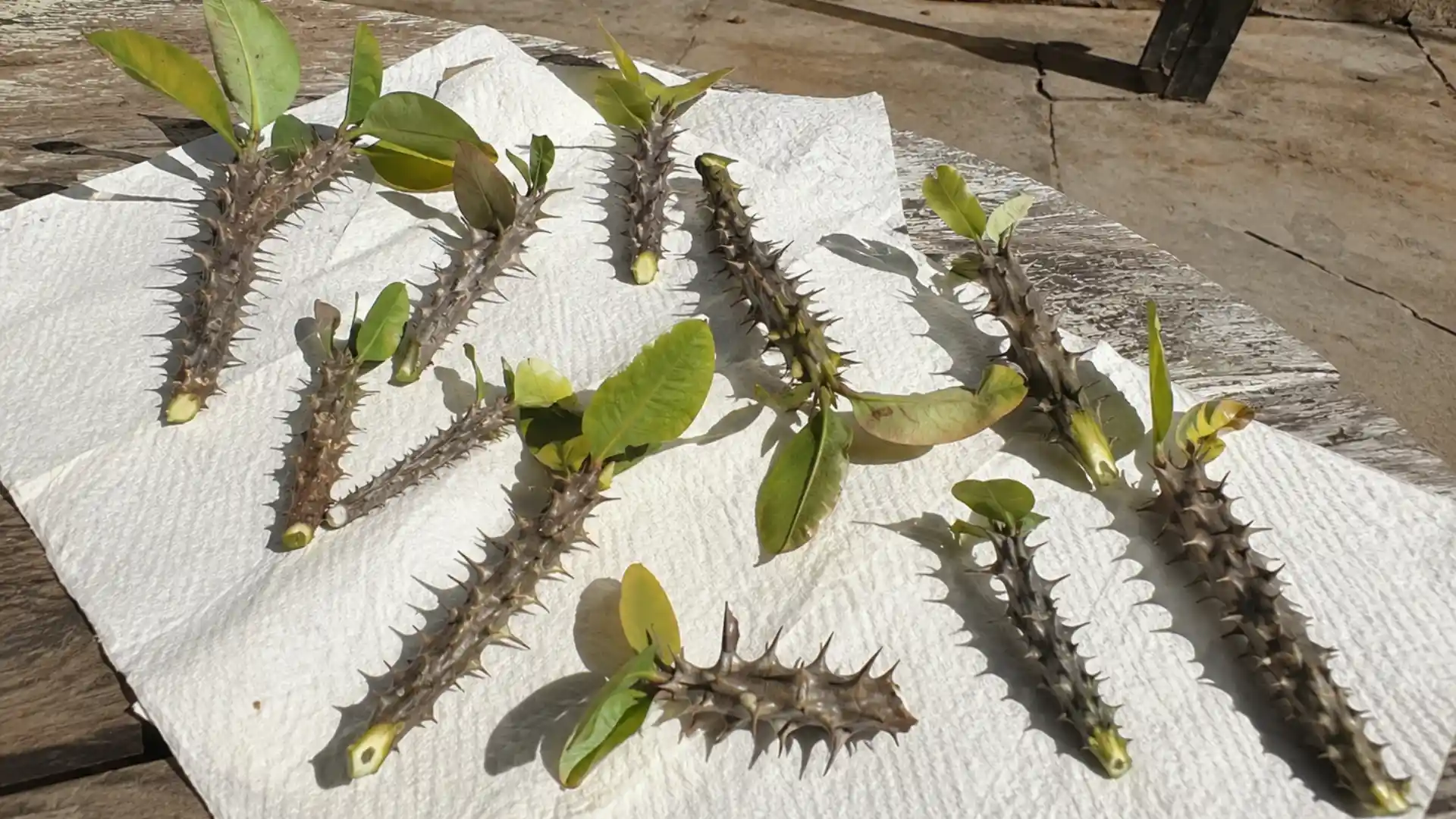
Spring and summer are the best times to try this, since the plant is actively growing and cuttings root faster with less risk.
Let’s look at the process, start to finish.
- Step 1: Put on gloves and grab a sterilized knife or pruning shears.
- Step 2: Cut a healthy 4- to 6-inch stem segment, just below a node.
- Step 3: Let the cutting sit in a shaded, dry spot for 2 to 3 days, until the cut end calluses over.
- Step 4: Dip the callused end in rooting hormone if you have it (optional, but it speeds things up).
- Step 5: Plant it in dry cactus mix, then place it somewhere warm with indirect light, ideally 75°F to 80°F.
- Step 6: Water sparingly for the next few weeks; too much moisture now invites rot, not roots.
- Step 7: Check for new leaf growth after 3 to 6 weeks, which signals the cutting has taken root.
Skipping the callus step is the mistake I see most. Plant a fresh, uncallused cut straight into the soil, and it rots before it roots.
Why Do Crown of Thorns Plants Stop Blooming or Start Dying?
Most problems trace back to weak light, excess water, or hidden pests.
When symptoms are hard to place, cross-checking them against common signs of stem and root disease can narrow down the cause faster.
| Symptom | Likely Cause | Fix |
|---|---|---|
| Healthy plant, but no blooms | Light intensity too low, even with long indoor hours | Move to full sun, or set it outdoors seasonally; blooming can start within a few weeks |
| Gradual leaf drop in cooler months | Normal seasonal shedding | No action needed |
| Sudden leaf loss with wilting | Cold drafts, temperature swings, or root stress | Move away from drafts and watch for recovery over a few days |
| Mushy stems, blackened roots, sudden collapse | Root rot from overwatering | Catch it early, cut back watering, and consider repotting into fresh, dry soil |
Common Pests
Crown of thorns does not attract pests easily, but it is not immune, and a few show up often enough to watch for.
Here is what to look for and what each one usually means.
- Mealybugs: Small, white, cottony clusters, usually tucked into stem joints.
- Spider Mites: Fine webbing between stems, often paired with speckled or dull leaves.
- Scale: Small brown bumps stuck to stems that do not brush off easily.
- Aphids: Clusters of tiny insects, often leaving a sticky residue behind.
Catch any of these early and treat with neem oil or insecticidal soap. Isolate the plant from your other houseplants while you treat it, since these pests spread fast.
For mealybugs specifically, clearing early-stage mealybug clusters before they spread to nearby pots saves the most time.
Is Crown of Thorns Safe Around Kids and Pets?
This section covers general safety awareness, not medical or veterinary advice. If a child or pet ingests crown of thorns or shows a severe reaction, contact a doctor, vet, or poison control right away.
Not entirely. The milky sap is mildly toxic, and it is worth taking seriously.
On skin or in eyes, it causes irritation, redness, and sometimes mild burns, so rinse the area right away if contact happens.
If a pet or child chews on the stems, it can cause vomiting or stomach upset, so keep the plant somewhere curious hands and paws cannot reach.
We covered glove and eye protection in the pruning section above, and the same caution applies any time the plant gets handled, not just at pruning time.
How Do You Know Your Crown of Thorns is Thriving?

A thriving crown of thorns does not just survive. It keeps pushing new stem growth and reblooms through the growing season.
There is also a small detail worth clearing up about those colorful blooms themselves.
Signs of Healthy Growth and Blooming
A healthy crown of thorns shows a few clear signs. Check for these before assuming a quiet stretch means something’s wrong.
- Fresh green tips branching off the main stems, which signal new stem growth.
- Repeat blooming across spring and summer, rather than one bloom cycle that stops for good.
- Bracts that stay full and colorful instead of fading or dropping early.
Bracts vs. True Flowers
Those colorful “petals” are not actually flowers. They are bracts, modified leaves that surround the plant’s tiny true flowers sitting at the center of each cluster.
This is also why bract color varies so much between cultivars, since reds, pinks, yellows, and bicolor variations all come down to bract pigmentation, not the flower itself.
The bracts carry the visual show. The true flowers quietly handle the reproducing.
When and How to Repot Crown of Thorns?
Repot once you see roots poking through the drainage hole, or roughly every two years, whichever comes first.
Either sign means the current pot has run its course, and spring is the right season for it, since the plant is entering active growth and recovers from the disruption fastest then.
Move it into a container only slightly larger than the last one, since a jump that is too big holds excess moisture the roots do not need.
Use the same fast-draining cactus mix from the original setup, and fresh soil at repotting time also helps flush out any buildup from the old mix.
Popular Crown of Thorns Varieties
If you want to go beyond the standard red bloomer, there is more variety than you would expect.
Here is how the popular types compare.
| Variety | Height | Bloom Color |
|---|---|---|
| ‘Splendens’ | 5 to 6 feet | Red |
| ‘Short and Sweet’ | 12 to 18 inches (dwarf) | Red |
| Thai hybrids | Varies by cultivar | Bold reds and pinks, larger blooms |
| Yellow crown of thorns | Standard | Gold yellow |
| Variegated crown of thorns | Standard | Cream-and-green leaves; standard bloom colors |
Any of these will grow the same way as the standard variety. The differences are cosmetic, not care-related.
The Bottom Line
Crown of thorns rewards a specific kind of attention, not constant attention.
Get the light, soil, and watering rhythm right, and the plant mostly takes care of itself from there. It is one of the few houseplants that punishes overcare more than undercare.
The bracts do the showy work, but new growth and repeat blooms are the real proof it is thriving.
Keep that in mind the next time it looks bare in the middle of winter, since dormancy is not a sign anything’s wrong.
Have you grown crown of thorns indoors, outdoors, or both?
Drop a comment with what’s worked for your plant, especially if you are gardening somewhere far outside its usual warm-climate range.
Frequently Asked Questions (FAQs)
Is the Crown of Thorns Plant Toxic to Pets?
Yes. The milky sap irritates skin, eyes, and mouths, and can cause vomiting if chewed, so keep the plant out of reach, wear gloves when pruning, and call a vet if ingestion is suspected.
How Often Should You Repot a Crown of Thorns?
Roughly every two years, or sooner if roots show through the drainage hole or circle the pot’s edge. Repot in spring with fresh, fast-draining cactus mix and a slightly larger container, and avoid repotting during winter dormancy.
Should I Cut Back My Crown of Thorns?
Yes, light pruning in spring or early summer keeps the plant bushy and encourages more blooms. Cut just above a node with clean tools, wear gloves since the sap is toxic, and avoid heavy pruning during winter dormancy.
Can I Put My Crown of Thorns Outside?
Only in USDA zones 9 to 11 can it stay outside year-round. Elsewhere, bring it in before temperatures near 50°F, though a summer outdoors can still boost blooming.