I still remember the first time I noticed a hole in one of my Monstera leaves. My first thought was that something had gone wrong.
It had not. The plant was just doing what it naturally does as it grows.
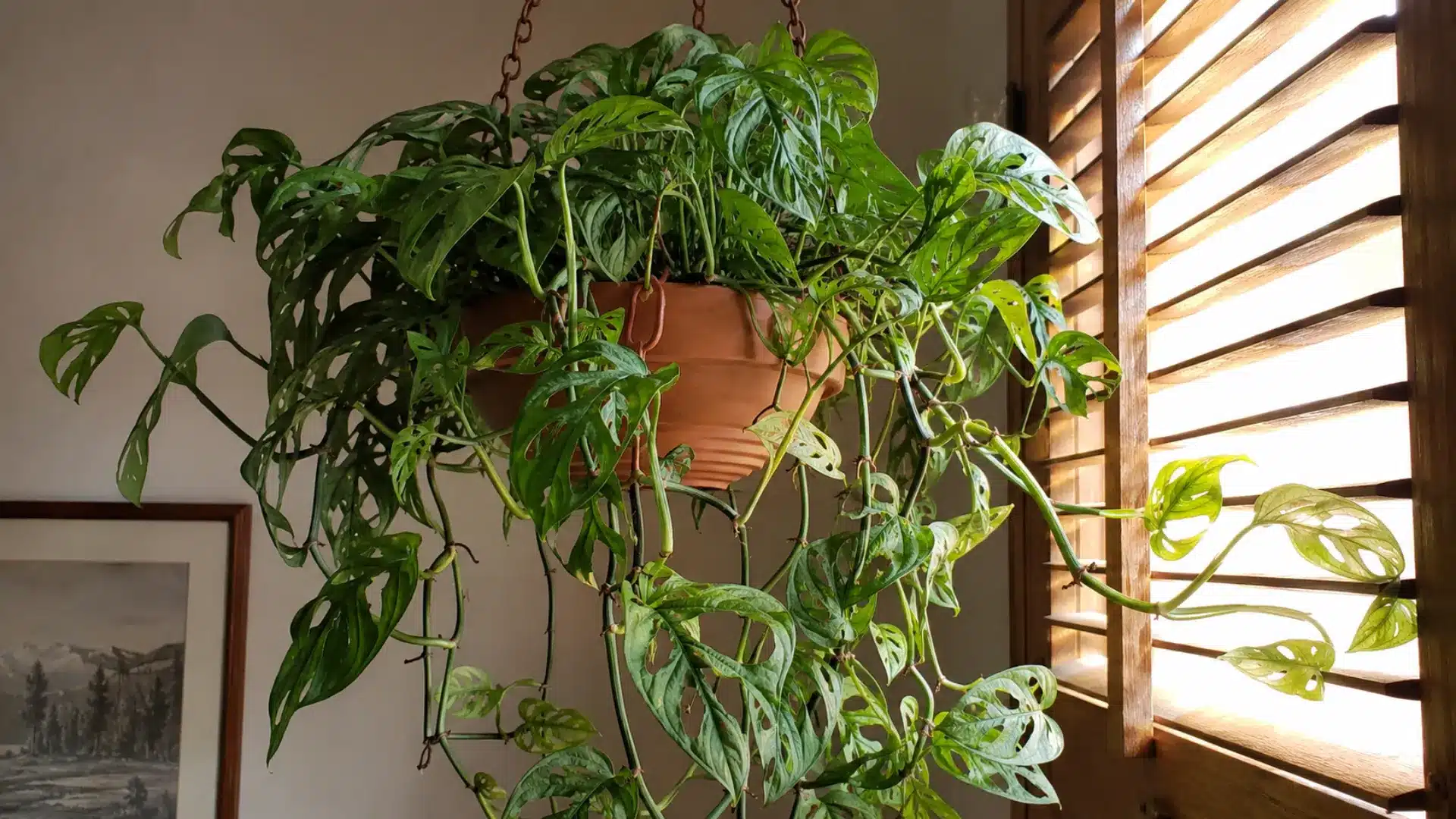
Those splits and holes are called fenestration, and they help the plant let light through to the leaves below as it climbs toward the sun.
So before you reach for the pruning shears or start second-guessing your watering, it helps to know which holes are normal and which ones actually need attention.
What Does It Mean When a Plant Has Holes in Its Leaves?
Botanists call these natural leaf holes fenestration, a term borrowed from the Latin word for “window.”
A Monstera leaf with natural holes is showing fenestration, not damage. Fenestration happens because Monstera grows as a climbing vine on a shaded rainforest floor, reaching through dense canopy gaps toward light.
The holes let sunlight pass to lower leaves, preventing one leaf from blocking light for the rest of the vine.
They let heavy rain and wind pass without tearing the leaf, as a solid leaf this size would act like a sail.
Some researchers believe the gaps help the leaf shed heat and moisture faster in humid air, while others think the pattern makes leaves look damaged, discouraging animals from eating them.
No single theory is fully proven. Most botanists see it as a mix of these pressures working together over time.
Monstera Adansonii: The Original Swiss Cheese Plant
The Swiss cheese plant is Monstera adansonii, prized for the many holes across its leaves. It is often mistaken for Monstera deliciosa, a larger relative with a similar growth pattern.
Both originate in Central and South American rainforests, starting on the forest floor and climbing trees as epiphytes, using bark for support.
| Feature | Details |
|---|---|
| Common Name | Swiss cheese plant / Swiss cheese vine |
| Scientific Name | Monstera adansonii |
| Often Confused With | Monstera deliciosa (“split-leaf philodendron”) |
| Origin | Central and South American rainforests |
| Growth Habit | Epiphytic, vining/climbing |
| Leaf Feature | Natural holes (fenestration) |
| Light Needs | Bright, indirect light |
| Care Level | Low maintenance |
| Propagation | Easy, via stem cuttings |
At What Age Do Monsteras Start Fenestrating?
Young Monstera plants start solid. Juvenile leaves are small, heart-shaped, and hole-free.
As the plant matures, new leaves grow larger and begin splitting.
Most plants need to reach two to three feet tall before fenestration shows.
Size and light matter more than actual age. A plant stuck in low light can stay juvenile for years. Once mature growth begins, each new leaf tends to show more holes than the last.
Root development plays a role too, since a stronger root system supports bigger, more complex leaves.
Indoors, this stage often arrives more slowly than it would in a plant’s native habitat.
Other Plants that Develop Holes or Large Leaf Openings
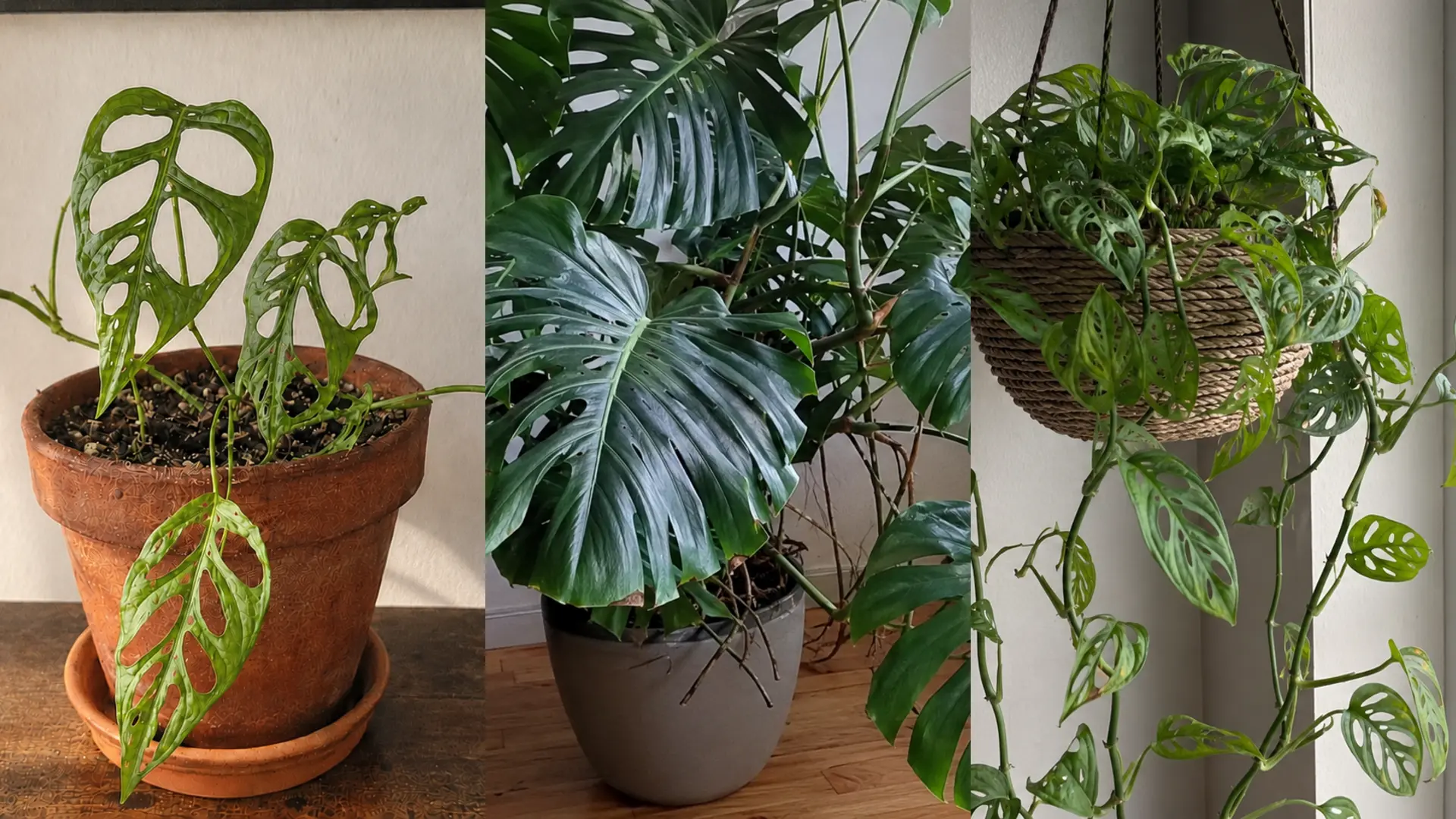
Not all fenestrated Monstera plants are identical.
Multiple species share the leaf trait but differ in leaf size, hole pattern, and ease of finding and cultivating them.
| Plant | Leaf Feature | Availability |
|---|---|---|
| Monstera dubia | Fenestrates only at maturity | Uncommon |
| Monstera epipremnoides | Long, narrow splits | Moderately rare |
| Philodendron pedatum | Deep, finger-like lobes | Somewhat available |
| Xanadu philodendron | Segmented, lobed leaves | Widely available |
While all three share the same fenestrated trait, their size, growth speed, and price set them apart.
Knowing these differences makes it easier to pick the right one for your space and budget.
How to Care for Your Swiss Cheese Plant?
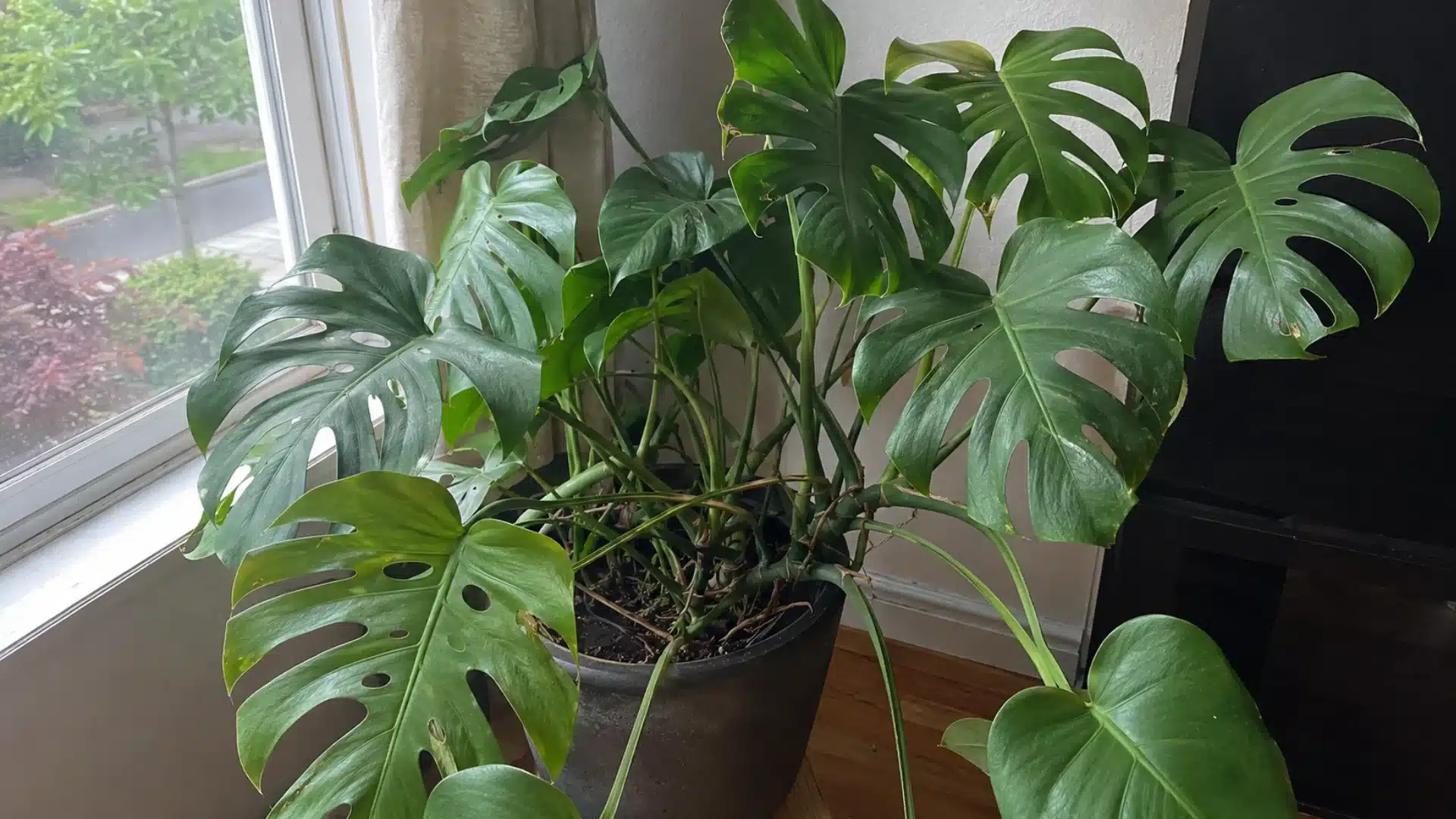
Getting the fundamentals right truly impacts the plant’s growth and the number of holes in its leaves over time.
Light Requirements
Bright, indirect light works best, close to dappled rainforest shade. East or north-facing windows are ideal.
- Direct afternoon sun burns leaves, causing brown patches to form.
- Low light inhibits growth and reduces fenestration.
- A grow light placed a few feet away can assist in dimly lit rooms.
- Sometimes rotate the pot to promote even growth.
Watering Schedule
Water once the top inch or two of soil dries out, roughly every one to two weeks. Always check the soil first; overwatering leads straight to root rot.
A finger test works better than a fixed schedule, since light and temperature shift how fast soil dries.
Winter cuts water needs further, since growth slows down. Drainage holes are non-negotiable, or water pools at the base and damages roots. Let excess water drain fully before setting the pot back in place.
Some growers find watering from the bottom keeps the topsoil drier and cuts down on root rot risk even further.
Soil and Potting Mix
This plant thrives in a well-draining, fertile mix.
Loose, chunky soil mimics the organic debris the plant naturally roots into in the wild.
- Regular potting soil plus perlite, orchid bark, or coco coir.
- Dense, heavy soil suffocates roots over time.
- Repot every one to two years, or once roots crowd the pot.
- Fresh soil at repotting time restores nutrients the plant has used up.
Humidity and Temperature
Warm temperatures of 65–85°F and moderate to high humidity match its rainforest roots.
Dry winter air causes crispy, brown edges. Sudden swings in either temperature or humidity stress the plant more than steady, moderate conditions do. A humidifier, grouped plants, or a nearby water tray all raise humidity.
Keep it away from cold drafts, AC vents, and sudden temperature swings.
Bathrooms and kitchens tend to retain humidity more effectively than other areas of the house.
Feeding and Fertilizing
Feed every four to six weeks in spring and summer with a half-strength, balanced fertilizer.
This builds steady growth and bigger, more fenestrated leaves.
Diluting to half strength protects roots from fertilizer burn while still delivering enough nutrients. Skip feeding in fall and winter, when growth naturally slows. Water first, then fertilize, to avoid burning the roots.
Excess fertilizer left in dormant soil can build up and damage roots before spring growth resumes.
Support Structures (Trellis, Moss Pole, Hanging Basket)
A moss pole or small trellis suits this natural climber and pushes leaves toward larger, more fenestrated growth.
Aerial roots grip the pole over time, giving the plant the stability it would find on a rainforest tree trunk.
No support still works, just grown differently: as a trailing plant in a hanging basket, vines cascading down on their own. Loose ties guide young vines toward a support as the plant matures.
Check ties every so often, since stems thicken with age and tight ties can cut into new growth.
Get these factors right, and steady, healthy growth follows, with each leaf a little bigger than the last.
How to Encourage More Fenestration?
Having a Monstera plant doesn’t automatically mean it has fenestration.
Several important growing conditions significantly influence whether new leaves develop more or fewer holes.
- Increase Light Intensity: Brighter, indirect light signals the plant to grow larger, more complex leaves.
- Prune Older, Smaller Leaves: Redirects energy to new, larger, more fenestrated leaves.
- Be Patient With Maturity: Holes develop on their own timeline, not a fixed schedule.
- Give it a Moss Pole or Trellis: Climbing support encourages the larger leaves that fenestrate more.
Small adjustments to light, pruning, and feeding often make the biggest difference over time.
How to Propagate a Swiss Cheese Plant?
Growing new plants from a Swiss cheese plant takes little more than a healthy cutting and a bit of patience.
| Method | What You Need | Best For |
|---|---|---|
| Water propagation | Node cutting, glass of water | Watching root growth directly |
| Soil propagation | Node cutting, moist potting mix | Skipping the water-to-soil transition |
| Sphagnum moss | Node cutting, damp moss, humidity | Higher success in dry indoor air |
Why Your Swiss Cheese Plant Has No Holes?
The most probable cause is a young plant. Juvenile leaves are fully developed before fenestration begins.
Low light is the next common cause.
Dim conditions push the plant to conserve energy instead of building complex leaves.
A rootbound pot or nutrient gap can slow things further. Recently repotted or propagated plants often pause growth entirely while they settle in, since their energy goes into root recovery first.
Stale, compacted soil can add to the delay too, since roots need room and airflow to support bigger leaves.
Better light, steady care, and patience usually solve the problem over time.
How Long Before New Growth Shows Fenestration
Roots typically develop within two to four weeks, followed shortly by new leaf growth.
Early leaves start small and solid. They mirror the parent plant’s juvenile stage, not its mature form.
Fenestration on a cutting takes several months to a year.
The plant needs to reach a certain size first, and indoor growing conditions often stretch that timeline further.
Propagation is easy, but it demands patience. New cuttings repeat the same juvenile-to-mature cycle as the original plant. A cutting kept in low light will lag well behind one grown in bright, indirect light.
Give each one time, light, and steady care, and the holes will come.
Common Problems with Plants with Holes in Leaves
Not every leaf issue is fenestration. Some problems point to care mistakes that need fixing, not patience.
- Yellowing Leaves: Overwatering, poor drainage, too much sun, or a nutrient gap.
- Brown Crispy Edges: Low humidity, heating vents, or fertilizer salt buildup.
- Drooping or Curling Leaves: Underwatering, or a spot that’s too cold or drafty.
- Leggy Growth, Small Leaves: Not enough light, so the plant stretches toward a source.
- Slow or Stalled Growth: A root-bound pot, tired soil, or the plant’s dormant season.
- Dark, Mushy Spots: Root rot or fungal issues from excess moisture and poor airflow.
A quick, regular leaf check catches most of these early, before they turn into bigger problems.
Common Pest Problems and How to Fix Them
Even when properly cared for, Swiss cheese plants may still attract some common pests. Catching pest problems early and treating them consistently minimizes damage and protects plant health.
Regularly inspecting the undersides of leaves and stems is the best way to prevent infestations.
For fungus gnats specifically, a few extra steps to get rid of gnats usually clear up an infestation within a couple of weeks.
| Pest | Signs | Fix |
|---|---|---|
| Spider mites | Fine webbing, pale speckled leaves | Wipe leaves down, apply neem oil |
| Mealybugs | White, cottony clumps at leaf joints | Dab with rubbing alcohol, follow with neem oil |
| Scale | Small brown bumps on stems | Scrape off, treat with insecticidal soap |
| Fungus gnats | Tiny flies near the soil surface | Let soil dry out more, use sticky traps |
Is a Swiss Cheese Plant Toxic to Pets and Humans?
Yes, the Swiss cheese plant is toxic to both pets and humans if ingested. It contains calcium oxalate crystals, which can cause mouth and stomach irritation, drooling, vomiting, or difficulty swallowing in cats and dogs.
In pets, this causes drooling, mouth irritation, vomiting, and trouble swallowing.
Children face similar risks, since they may put leaves in their mouths out of curiosity.
Reactions are usually mild oral irritation, not a medical emergency. Handling the plant is safe for most people. The sap can irritate sensitive skin, so gloves are worth using during pruning or repotting.
If you are building a pet-friendlier plant shelf, browsing pet-safe houseplant options first can save you some rearranging later.
This is for general awareness only. If someone ingests part of the plant, contact a vet or poison control.
Indoor vs. Outdoor Growth: How Leaf Holes Change
Indoor and outdoor Swiss cheese plants develop leaf holes at different rates due to light, humidity, and root space.
| Factor | Indoor Growth | Outdoor Growth |
|---|---|---|
| Light Exposure | Indirect, filtered through windows | Direct or bright dappled sunlight |
| Fenestration Rate | Slower, smaller holes | Faster, larger and deeper splits |
| Humidity Levels | Often low, needs a humidifier | Naturally high in warm climates |
| Root Space | Limited by pot size | Expansive, supports faster maturity |
| Growth Speed | Slower overall | Noticeably quicker |
| Leaf Size | Smaller on average | Larger and more developed |
Matching outdoor conditions as closely as possible indoors helps your plant reach its full fenestration potential.
Natural Holes vs. Pest Damage: How to Tell the Difference
Telling natural fenestrations apart from pest damage comes down to a few visible clues on the leaf surface.
- Natural holes have smooth, rounded edges, while pest damage shows jagged or torn edges.
- Fenestrations follow a symmetrical pattern near the midrib, but pest holes scatter randomly.
- Healthy splits show no discoloration, while pest damage often brings yellow rings or brown spots.
- Sap never leaks from natural holes, though chewed leaves may ooze or feel sticky.
- Flipping the leaf reveals eggs or larvae only when pests are the actual cause.
A quick leaf check every few weeks keeps small pest problems from turning into bigger ones.
The Bottom Line
A plant with holes in its leaves is not broken. It is just growing the way it is meant to.
Give it bright light, feed it through the warmer months, and let each leaf take its own time to fill out.
Not every leaf will fenestrate at the same pace, and that is normal.
The only things worth worrying about are mushy stems, pest damage, or sudden wilting. Everything else is just your plant doing its thing.
Has your Monstera started fenestrating yet? Let me know in the comments, or ask if something on your plant still has you second-guessing.
Frequently Asked Questions (FAQs)
How Fast Does a Swiss Cheese Plant Grow?
Under good conditions, it puts out roughly one to two feet of new growth per year.
Can a Swiss Cheese Plant Be Grown Outdoors?
Yes, in warm, humid climates (USDA zones 10–12); elsewhere it’s best kept indoors.
How Do You Clean Swiss Cheese Plant Leaves?
Wipe them with a damp cloth every few weeks to clear dust and keep pests away.
How Long Do Swiss Cheese Plants Typically Live?
With proper care, a decade or more indoors, growing larger and more fenestrated each year.