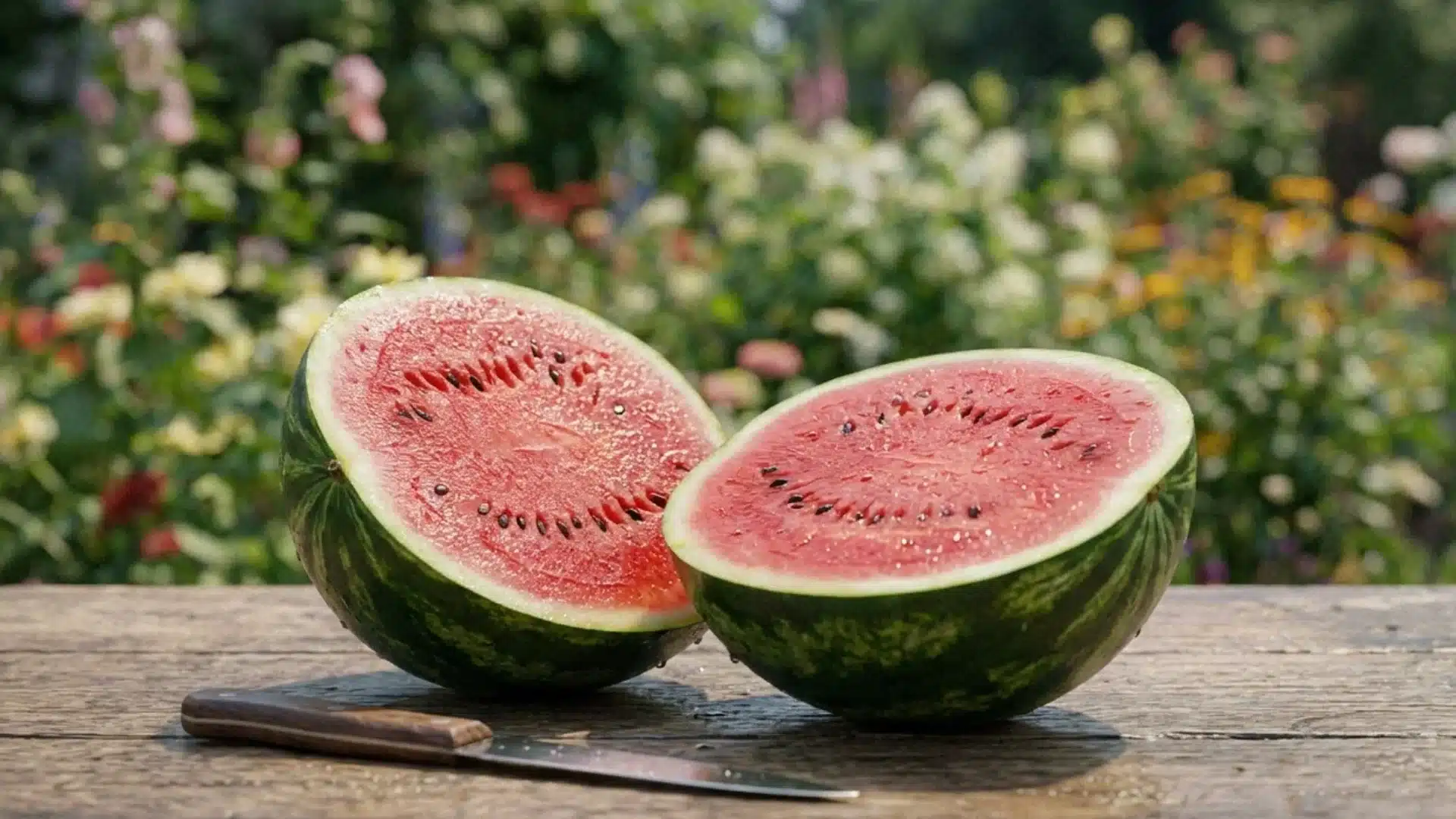
Watermelon does not ripen once it is off the vine. Unlike bananas or tomatoes, a melon picked too early stays exactly as underripe as the day you cut it, no matter how long it sits on the counter.
That is why knowing when to harvest watermelon matters more than it does for most produce.
The vine gives off a few clear signs before the melon is ready, like a drying tendril near the stem, a yellowing spot where it rests on the ground, or a certain weight in your palm.
Miss those signs and the melon stays underripe for good. Catch two or three of them at once, and you can pick with confidence instead of a guess.
When Are Watermelons Usually Ready to Harvest?
Timing shifts by region and local climate, not just the calendar month.
In warmer zones, fruit ripens sooner than in cooler areas, even when planting on the same date.
Late frost or a cool spring can push the entire timeline back by a week or two. Consistent heat speeds things along, while a cloudy, cool stretch slows sugar development near the end. Succession planting also matters.
Melons started a few weeks apart won’t ripen on the same day, even from identical seed packets.
Local extension offices track regional averages, serving as a useful cross-check against your garden’s signs.
How Long Does It Take a Watermelon to Grow?
Growth occurs in stages rather than all at once. Here is a detailed breakdown.
Many of the same choices made when getting seeds into the ground also shape how quickly a plant moves through the stages below.
| Stage | Duration | What’s Happening |
|---|---|---|
| Seed to Sprout | 3 – 10 days | Germination, first roots form |
| Sprout to Vine Growth | 2 – 3 weeks | Leaves and runners spread out |
| First Flowers | 4 – 5 weeks in | Male blooms open before female ones |
| Pollination to Fruit Set | 1 week | Female flower swells into a small fruit |
| Fruit Sizing Up | 3 – 5 weeks | Melon grows to near-full size |
| Final Ripening | 1 – 2 weeks | Sugar builds, skin and tendril change |
Most Reliable Signs a Watermelon is Ready to Pick
No single sign is completely reliable on its own, but combining two or three signs makes mistakes unlikely.
1. Stem Crack at the Base
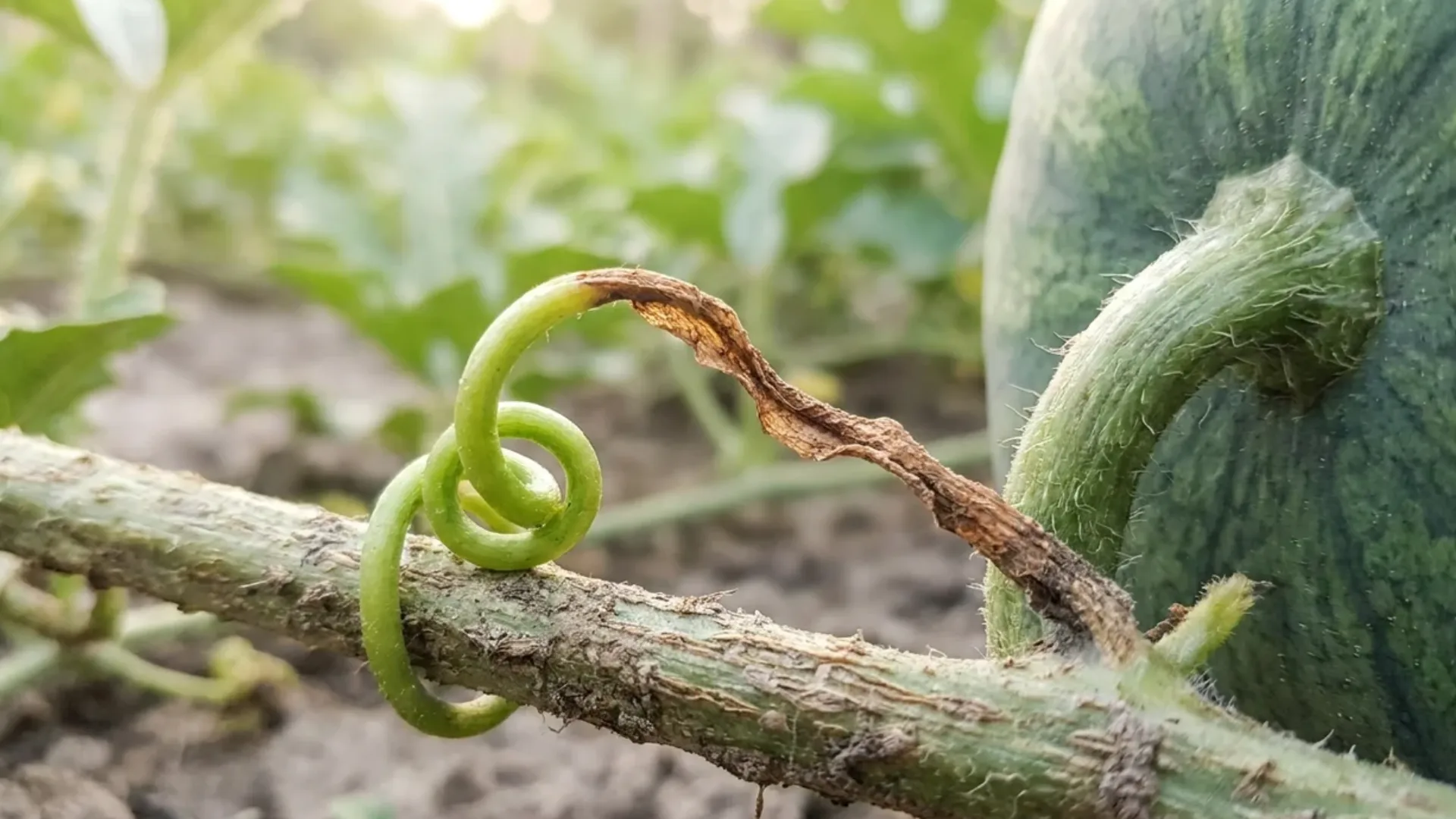
Look where the stem meets the vine. A small natural crack often forms there as the melon nears full ripeness.
This happens as the plant slows nutrient flow to the fruit.
A tight, uncracked stem usually means more time is needed. Check this alongside the tendril, since both draw from the same signal. Don’t force or snap the stem to test it. Let the crack form on its own.
Check every couple of days once the fruit reaches full size, so you don’t miss the window.
2. Leaf Yellowing Nearby
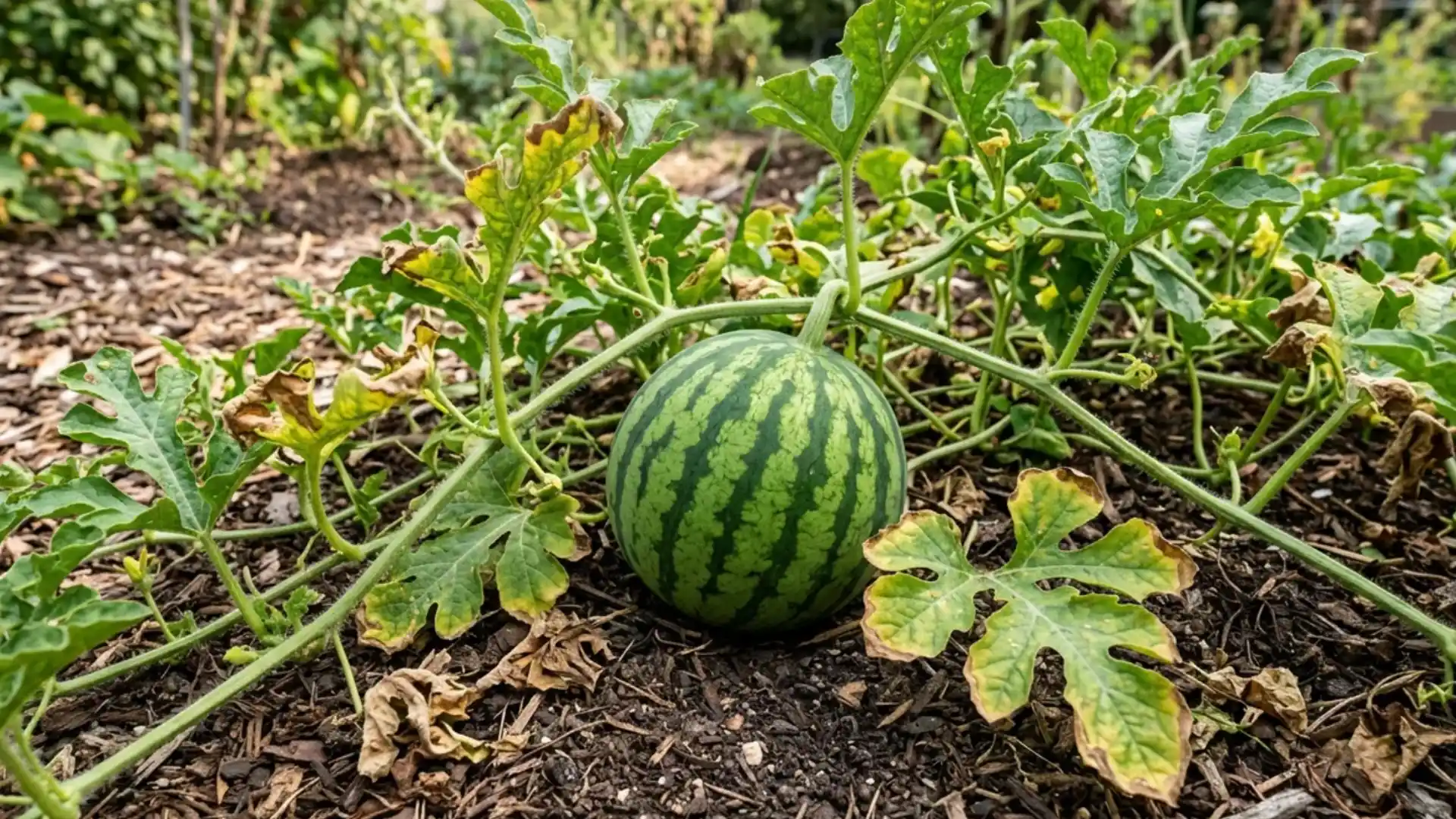
Watch the leaves closest to the fruit, not the whole vine.
Slight yellowing on these specific leaves often shows up as the plant redirects energy into ripening. Leaves further down the vine may still look green and healthy. This is a subtle clue, so pair it with the tendril or ground spot.
Whole-vine yellowing means something different and usually signals disease, not ripeness.
A healthy plant with just a few yellowing leaves near the fruit is a good sign, not a warning.
3. Look at the Ground Spot
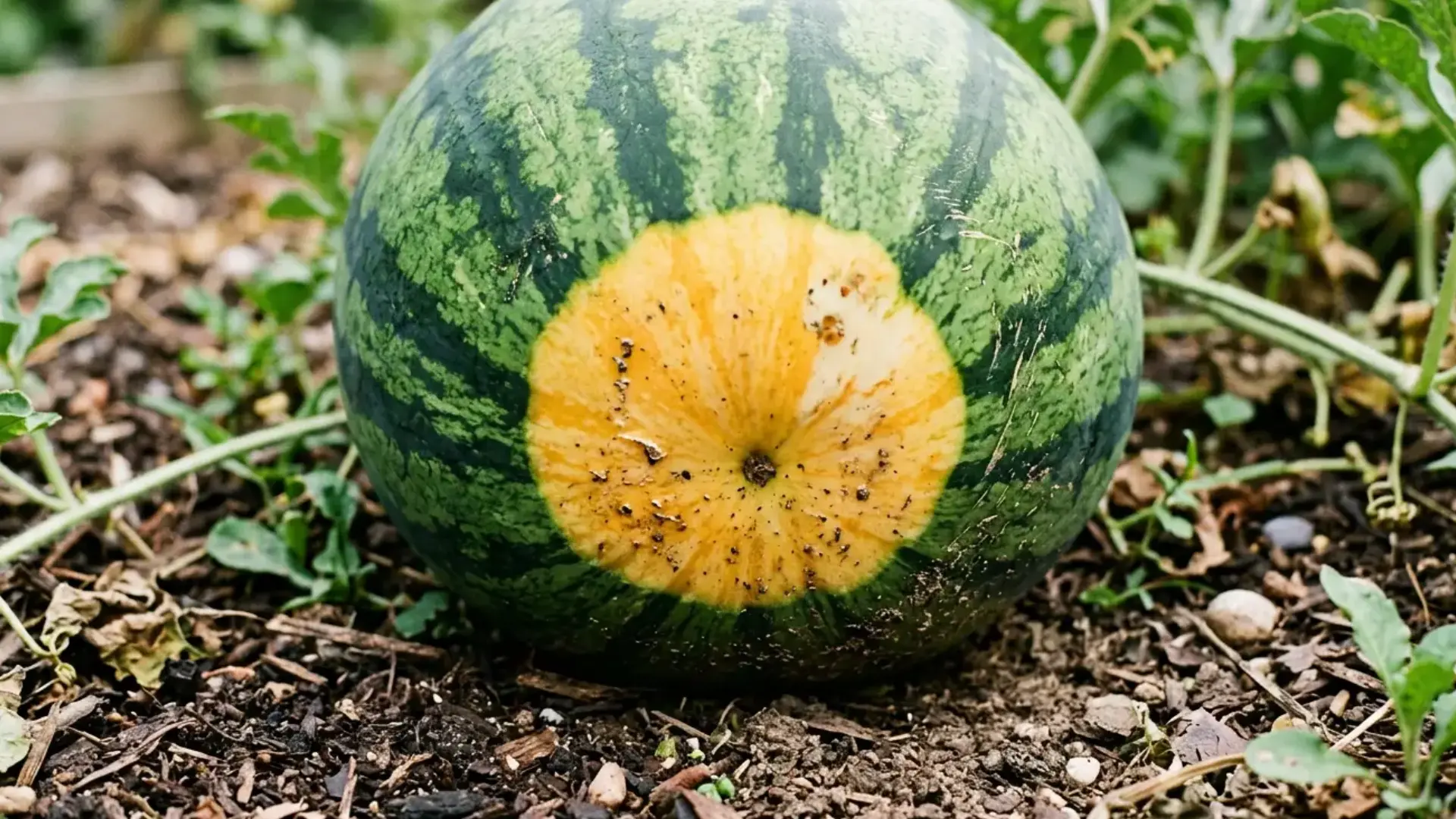
Every watermelon develops a spot on its underside where it rests against the soil.
On an unripe melon, this spot stays white or pale green. As the fruit matures, it shifts to a warm, buttery yellow.
This color change happens simply from sun exposure, or the lack of it, since the underside stays shaded against the ground while the rest of the fruit sits in the light.
Gently roll the melon to check the spot rather than lifting it, so you don’t put strain on the vine.
4. Thump Test
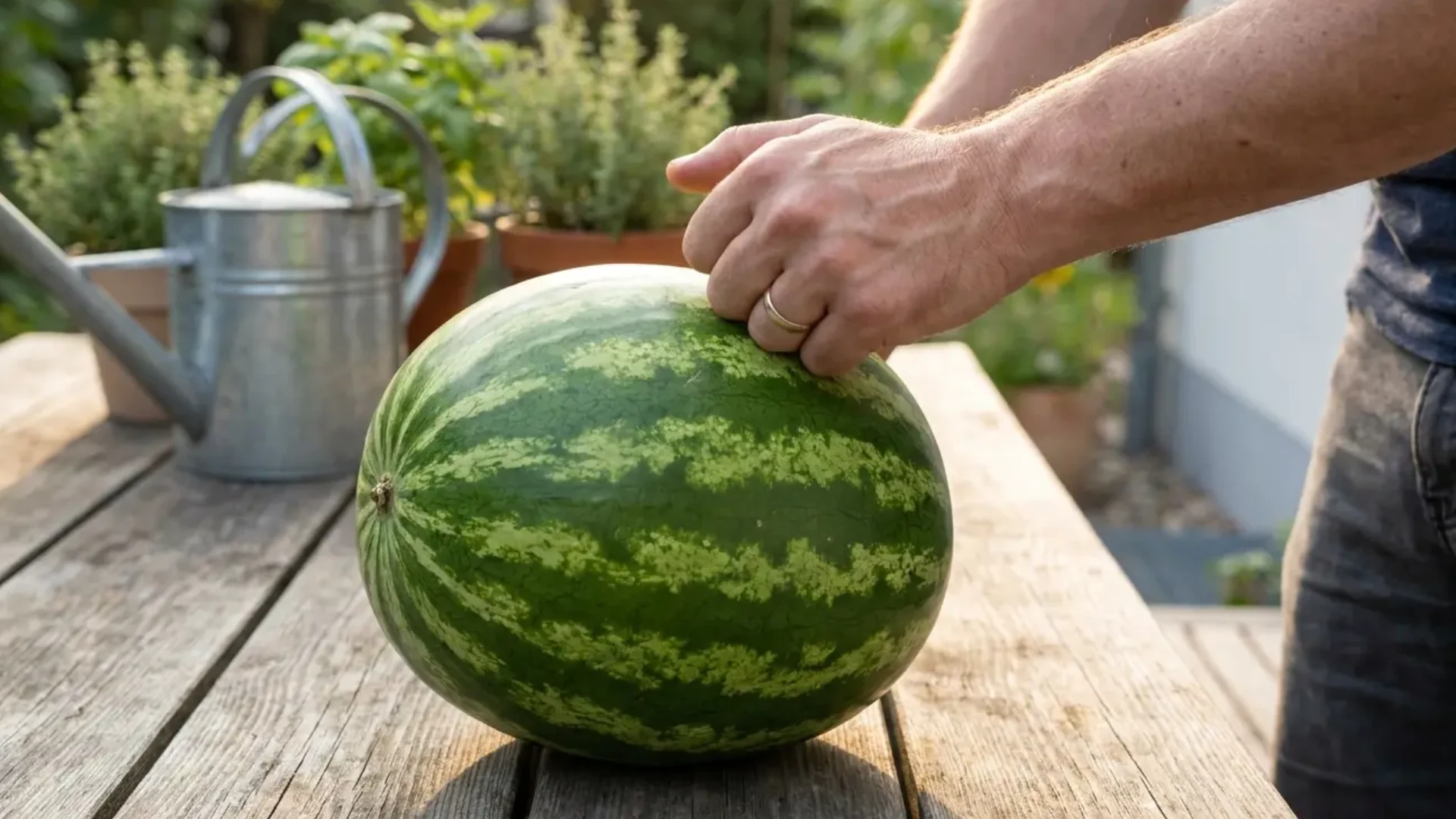
Give the melon a firm knock with your knuckle. An unripe one tends to sound sharp and high-pitched.
A ripe one gives back a deeper, hollow thud, almost like knocking on a solid wood door.
This method takes a little practice, so treat it as a second opinion rather than your main clue.
The sound changes because the flesh inside gets denser and juicier as it matures, and that shift affects how sound travels through it.
5. Check the Skin Texture
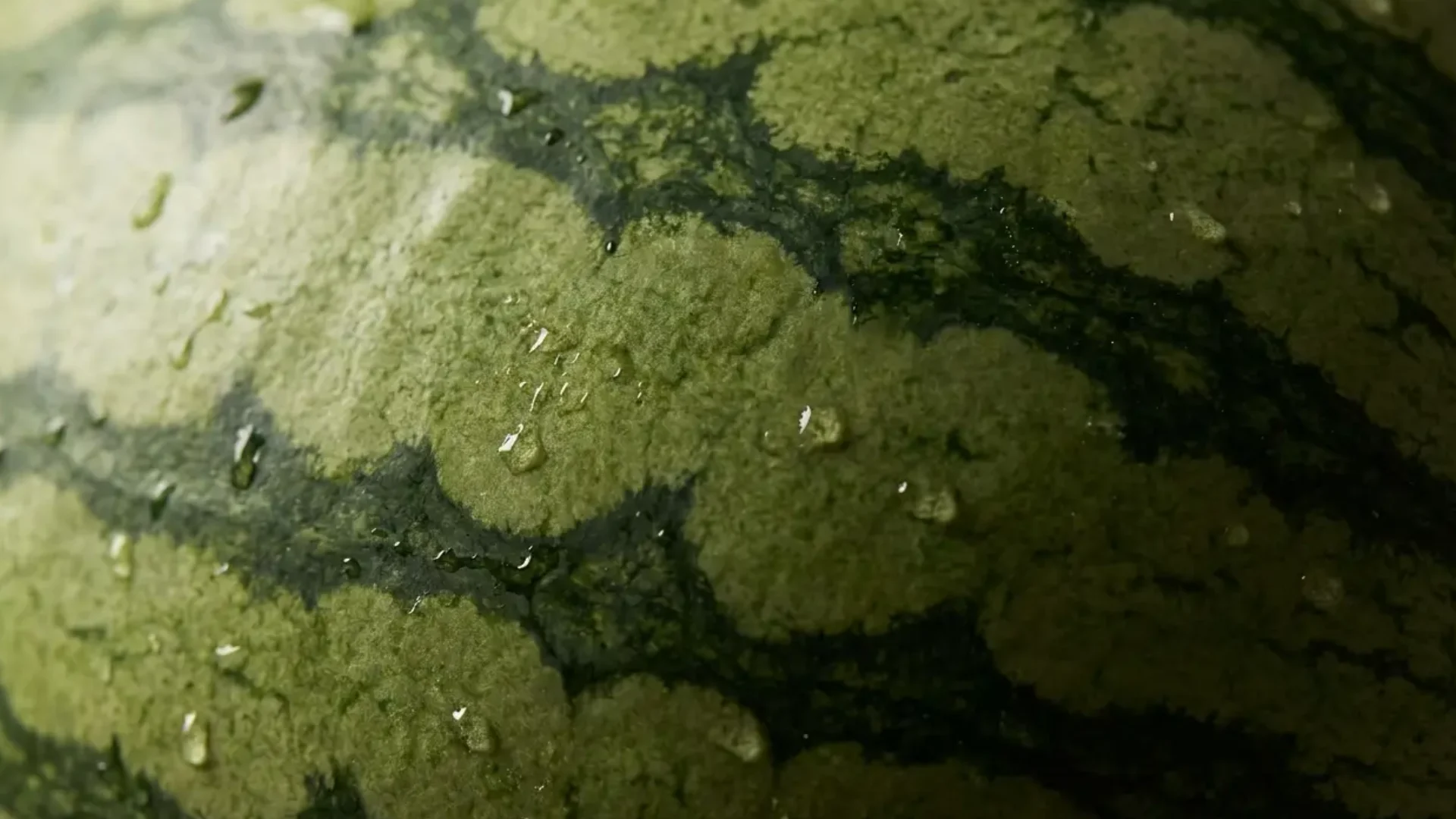
Run your hand across the surface. Unripe watermelons often have a slight shine to the rind.
As they ripen, the skin becomes duller and waxy, with more pronounced stripes. This happens because the rind hardens and thickens, causing the glossy look to fade.
It is a subtler sign than the tendril or ground spot, but worth a quick check before you commit to cutting.
6. Confirm the Days Since Planting
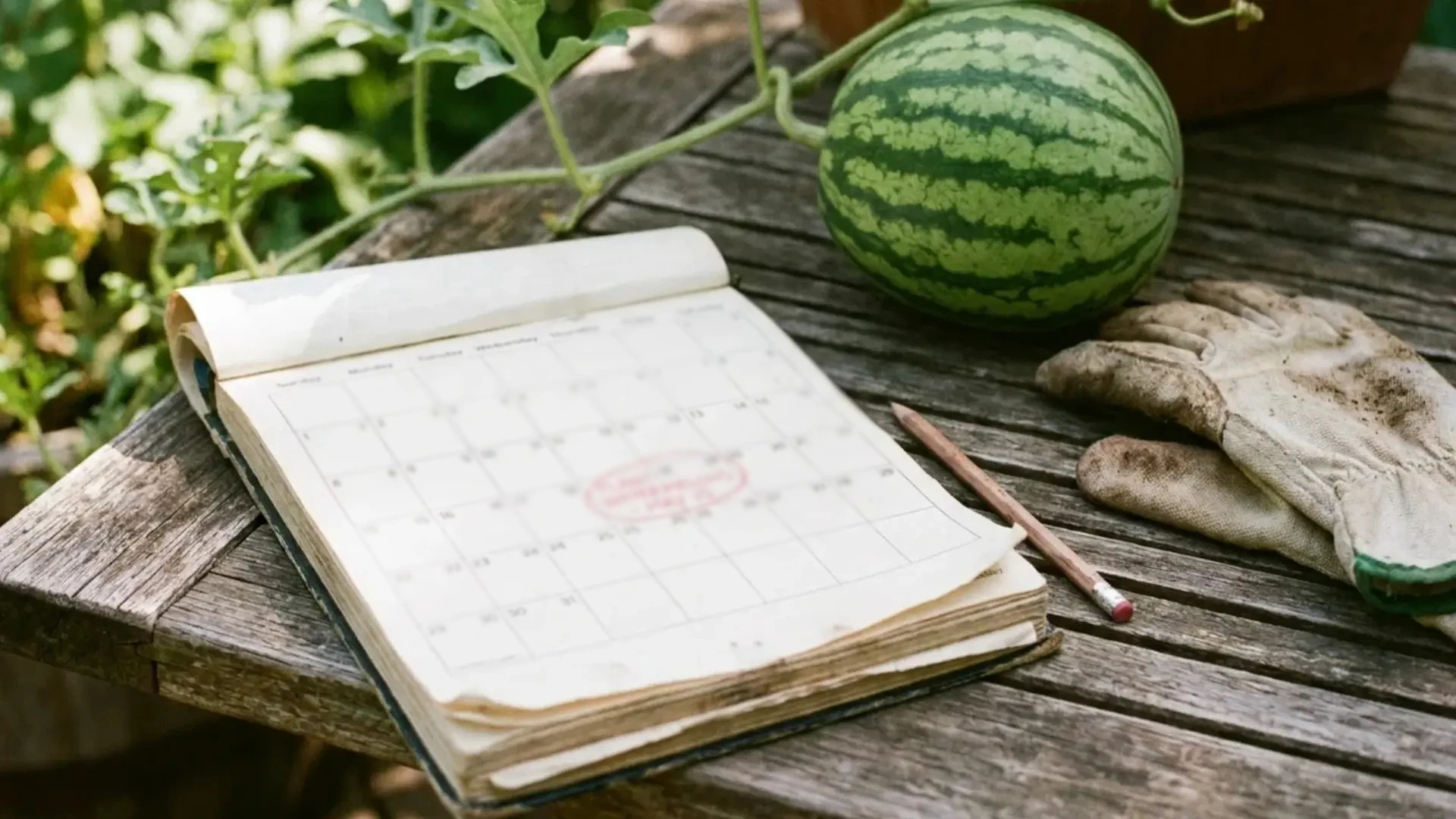
If you know when the flower was pollinated or planted, use that timeline to check everything else.
A melon that’s only 50 days along almost certainly isn’t ready, no matter how the tendril looks.
Jot the date down somewhere you won’t lose it.
This timeline won’t replace the physical checks, but it catches cases where the other signs are harder to read, or where a tendril looks close but isn’t quite there yet.
7. Stripe Contrast
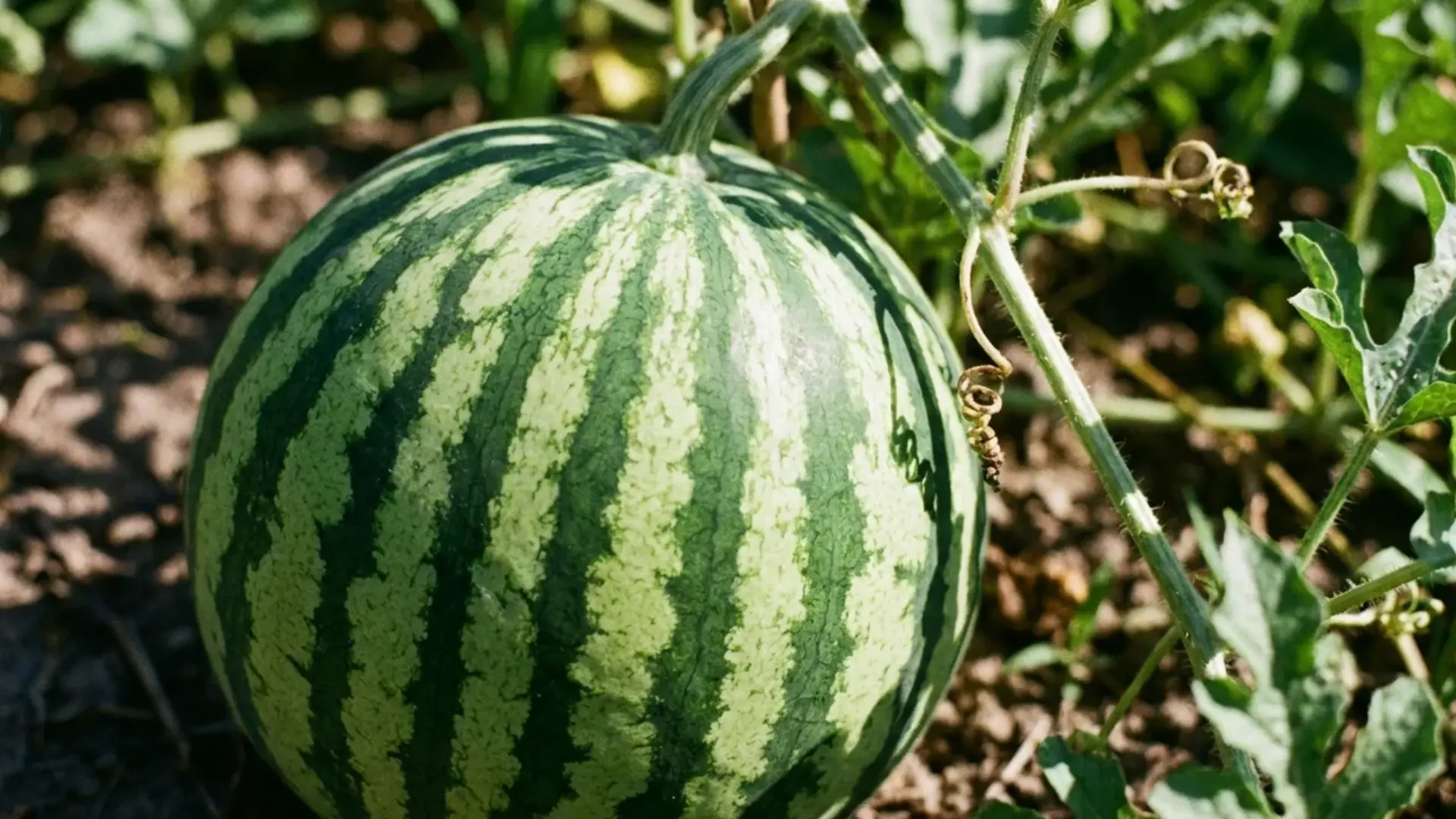
Look closely at the light and dark stripes on the rind.
As a melon ripens, the contrast between them often sharpens and deepens.
Unripe melons tend to show duller, more uniform coloring across the stripes. This sign varies by variety, so compare it against melons from the same plant rather than a general standard.
Use it as a supporting clue, not a standalone call. Check the rind in natural daylight, since indoor or shaded light can mute the contrast.
8. Sugar Spots or Webbing
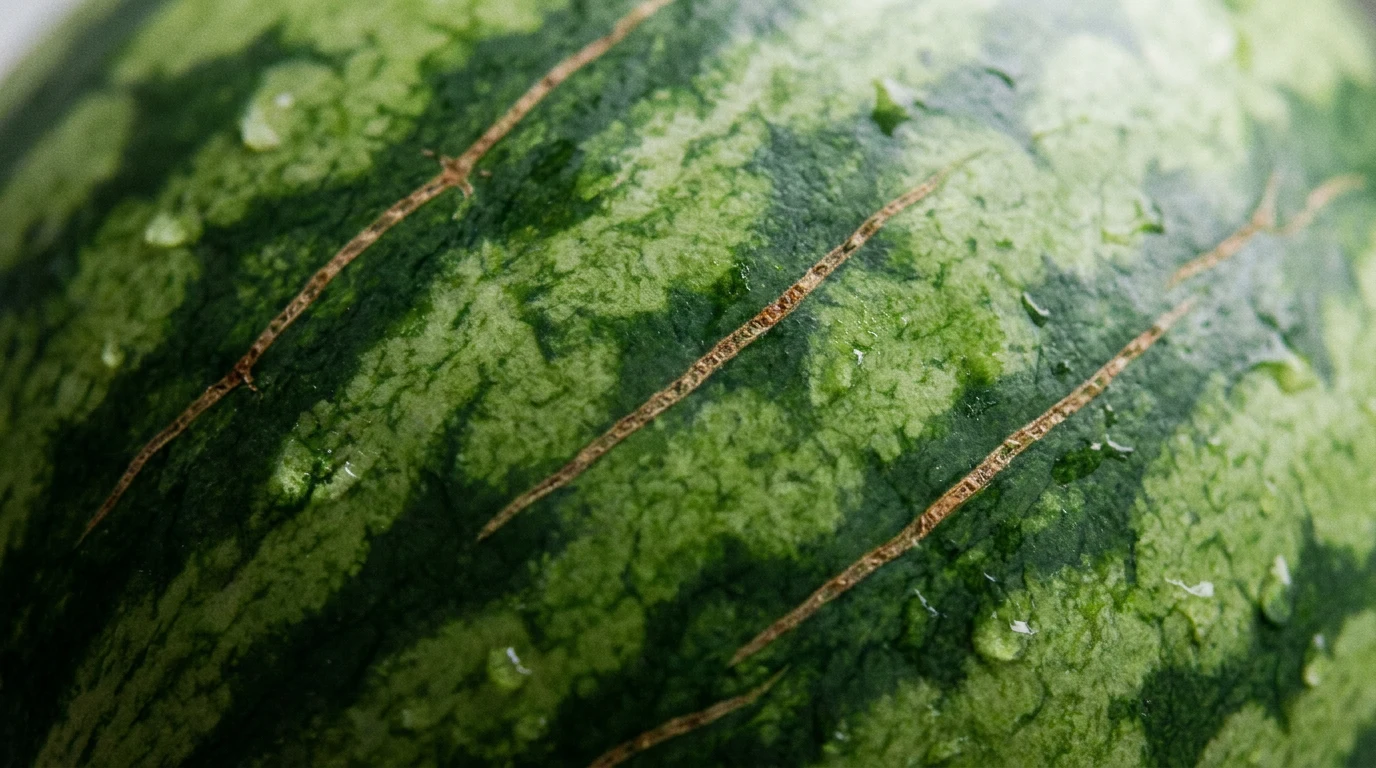
Some varieties develop a rough, brown, web-like patch on the rind as sugar content rises.
Gardeners sometimes call this a sugar spot. It looks like light scarring and feels slightly rough to the touch.
Not every variety shows this clearly, so do not rule out ripeness if it’s absent.
When present, it is a strong supporting signal alongside the ground spot. Avoid confusing it with actual pest damage, which tends to look torn rather than webbed.
9. Expected Size Reached
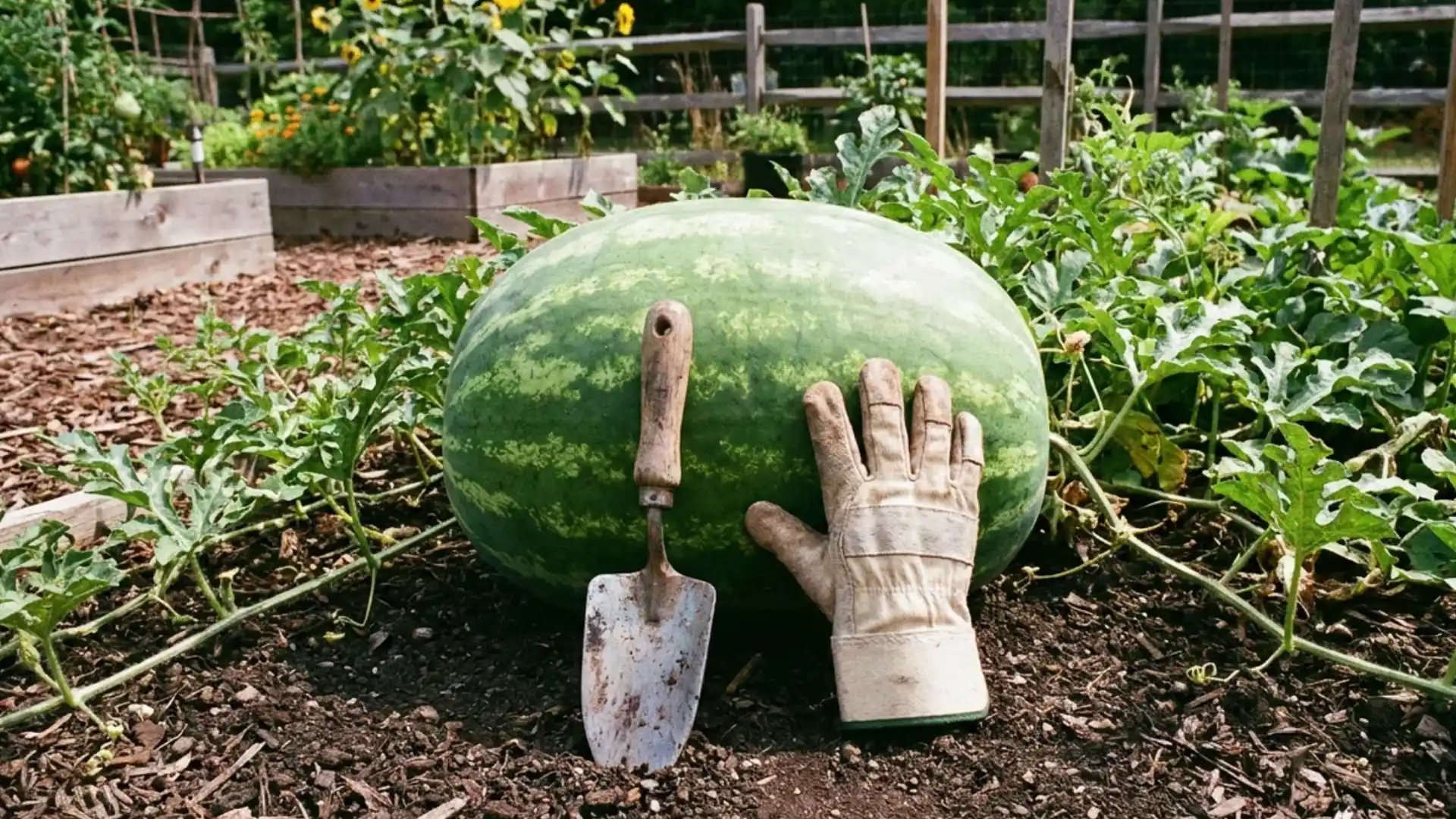
Track the melon’s size over a few days using a tape measure or your eye. Once it stops growing noticeably, the plant has likely shifted its energy toward sugar development instead of size.
A melon still visibly expanding week to week needs more time. This sign works best when you have been checking size regularly since the fruit first formed.
Vines that sprawl further than expected usually trace back to how much room was mapped out for them at planting time.
Note the measurement on the same day each week for a clearer comparison.
How to Harvest Watermelon Without Damaging the Fruit?
Cut early in the morning, while the fruit is still cool and firm. Never yank the melon off the vine.
Pulling can tear nearby vines and stress the plant. Slide one hand fully under the melon before lifting it.
Avoid gripping it by the rind alone, since fingers can bruise the flesh beneath. Set it down on a soft surface, like grass or a folded towel, not bare ground. Skip tossing or rolling it into a wheelbarrow or cart.
Carry it close to your body instead of at arm’s length, so a slip doesn’t turn into a drop.
Move it in one smooth motion. Sudden shifts or drops cause hidden cracks that show up only after cutting.
Common Watermelon Growing Timeline Mistakes
A few timing slip-ups account for most disappointing harvests. Many of these start with inconsistent habits carried over from the earlier seed-starting stage. Watch for these.
- Using one variety’s timeline for every melon, when Sugar Baby and larger types ripen at different speeds.
- Harvesting right after heavy rain, which dilutes sugar in the final ripening days.
- Treating the whole patch as one harvest day, when melons on the same vine ripen at different times.
- Skipping a planting or pollination log, which makes timing an easy guess instead of a check.
- Overwatering close to harvest, which waters down flavor even on a melon that looks ready.
- Judging ripeness by size alone, since a large melon isn’t always a ripe one.
- Waiting for a fully dried vine, since the whole plant dying back means picking is already overdue.
Can a Watermelon Ripen After You Pick It?
No. Once cut from the vine, a watermelon stops ripening for good.
Bananas and avocados keep converting starches to sugar after harvest. Watermelons do not have that reserve.
A melon picked too early stays underripe.
The flesh stays pale, watery, and bland, no matter how long it sits on the counter. This is why timing the harvest matters so much. Check the field spot, tendril color, and sound before you cut.
Once it is off the vine, there is no second chance to fix an early pick.
How to Tell If You Harvested Too Early or Too Late?
Check these signs to see which mistake happened, so you can adjust next season.
| Sign | Too Early | Too Late |
|---|---|---|
| Seed color | Seeds stay white or pale | Seeds turn dark brown or black, but flesh is already past its best |
| Rind firmness | Thumbnail barely dents the rind | Rind feels soft or gives too easily |
| Flesh texture | Crisp, almost hard to the bite | Grainy or mealy, not juicy |
| Center of melon | Firm all the way through | Hollow or separated in the middle |
| Overall feel | Dense but dry-tasting | Mushy, sometimes with a slightly fermented smell |
What to Do After Harvesting Watermelon?
Remove harvested watermelons from direct sunlight immediately.
Set them in a shaded, cool spot to prevent heat damage. Handle each fruit gently.
Avoid stacking or dropping it, since impact can bruise the flesh inside without leaving a mark on the rind.
Wipe off soil or debris with a dry cloth. Skip washing until you are ready to cut or eat the melon, since extra moisture on the rind can invite mold during storage.
Store whole melons at room temperature for short-term use.
If you are keeping one longer than a week, move it to the fridge instead. Refrigerate the cut melon immediately, wrapping the exposed flesh to prevent drying out or odor absorption.
Proper post-harvest handling preserves texture, flavor, and shelf life from harvest to table.
Frequently Asked Questions (FAQs)
How Long Until a Sugar Baby Watermelon is Ready to Harvest?
Around 75 to 80 days after planting. Check the tendril and ground spot before cutting, same as any other variety.
What Month Do You Harvest Watermelons?
Generally July–September (Northern Hemisphere) or December–March (Southern Hemisphere), depending on climate and planting date.
How to Know if a Watermelon is Ripe Before Cutting?
Look for a buttery yellow ground spot, dull rather than glossy skin, and a deep, hollow thump when you knock on it.
How Long Does It Take for a Watermelon to Grow After Flowering?
Roughly 30 to 45 days from pollination until the fruit is fully ripe and ready to pick from the vine.
Can You Ripen a Watermelon After Cutting It?
No. Ripening stops the moment it’s cut. Store it properly and just note the signs for next time.
End Note!
Timing a watermelon harvest isn’t about luck. It’s a handful of checks, done in the right order, at the right moment.
The tendril tells you first, the ground spot backs it up, and weight or a gentle press settles any doubt left over.
Once you have learned when to harvest watermelon on your own vines, that first cut stops being a gamble and turns into a sure thing every single season.
Make sure to note down a planting date somewhere.
Check your melons every few days as they grow; this small habit saves more harvests than any single sign.