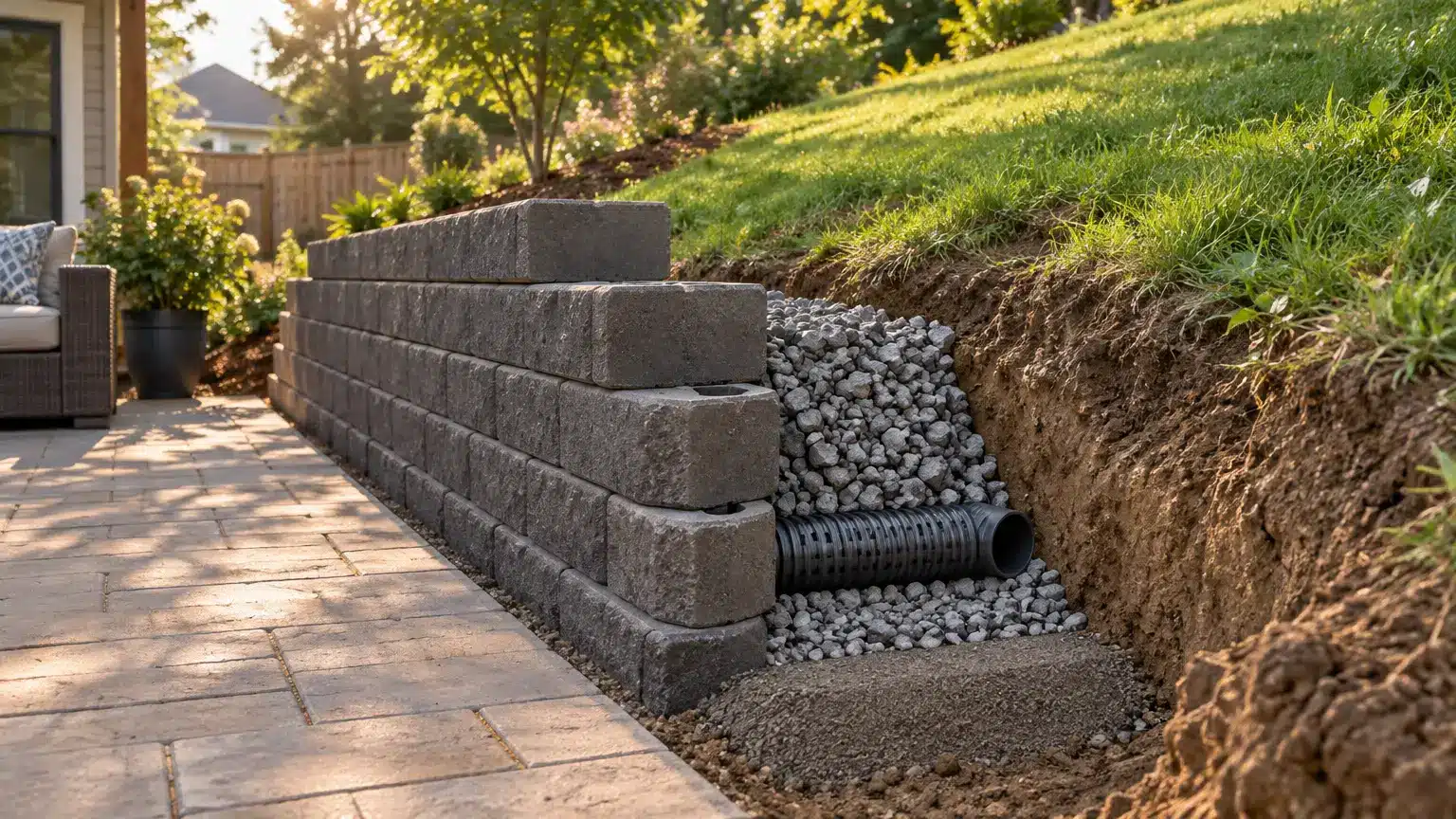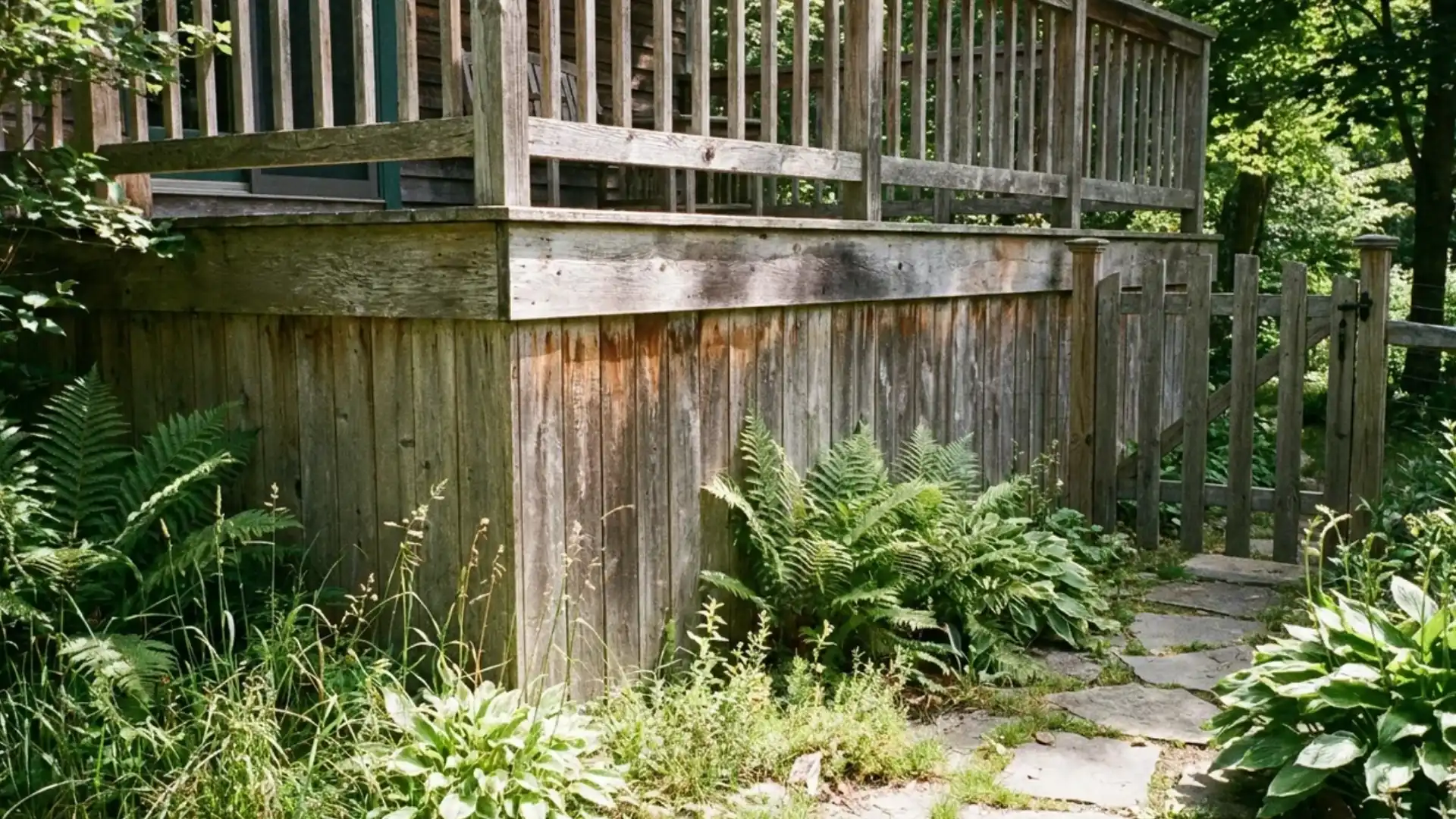
Every deck has a blind spot: the open strip between the frame and the ground.
Picking a look for that space rarely gets the same attention as the decking boards themselves. Some styles cost next to nothing and take a weekend to build, while others call in a contractor and a bigger budget.
Climate plays a role too, since a humid yard and a dry one call for different materials entirely.
A well-chosen skirt can pull in a color from the siding or echo a stone accent from the entryway.
What is Deck Skirting and Why Does It Matter?
Deck skirting serves more than just a decorative purpose.
Skip it, and utility lines running underneath sit exposed to weather and accidental damage.
Buyers walking a property often judge a deck’s condition from ground level first, before they ever step onto it.
A gap with no skirting reads as unfinished, even on an otherwise solid deck. Skirting also keeps kids and pets from crawling into a cramped space that was never built to hold weight or support movement.
Left open, that gap lets debris pile up against the frame, adding moisture where the structure can least afford it.
Things to Consider Before Choosing a Deck Skirting Design
Deck height changes what’s practical, since low decks limit which materials actually fit the gap.
- Check HOA or neighborhood rules before installing anything visible from the street.
- Confirm the frame can bear the material’s weight, especially for solid or stacked options.
- Factor in your own DIY skill level versus hiring it out.
- Think about pet-proofing, since small gaps invite animals to squeeze through.
A tidy, well-matched skirt gives the impression of a well-maintained, complete home to any future buyer touring the yard. Resale value is also important.
Classic Wood Skirting Ideas
Wood is the most popular choice for deck skirting because it’s affordable, easy to work with, and matches the deck’s natural look.
From lattice to board and batten, it suits any home style, whether polished or rustic.
1. Classic Wood Lattice
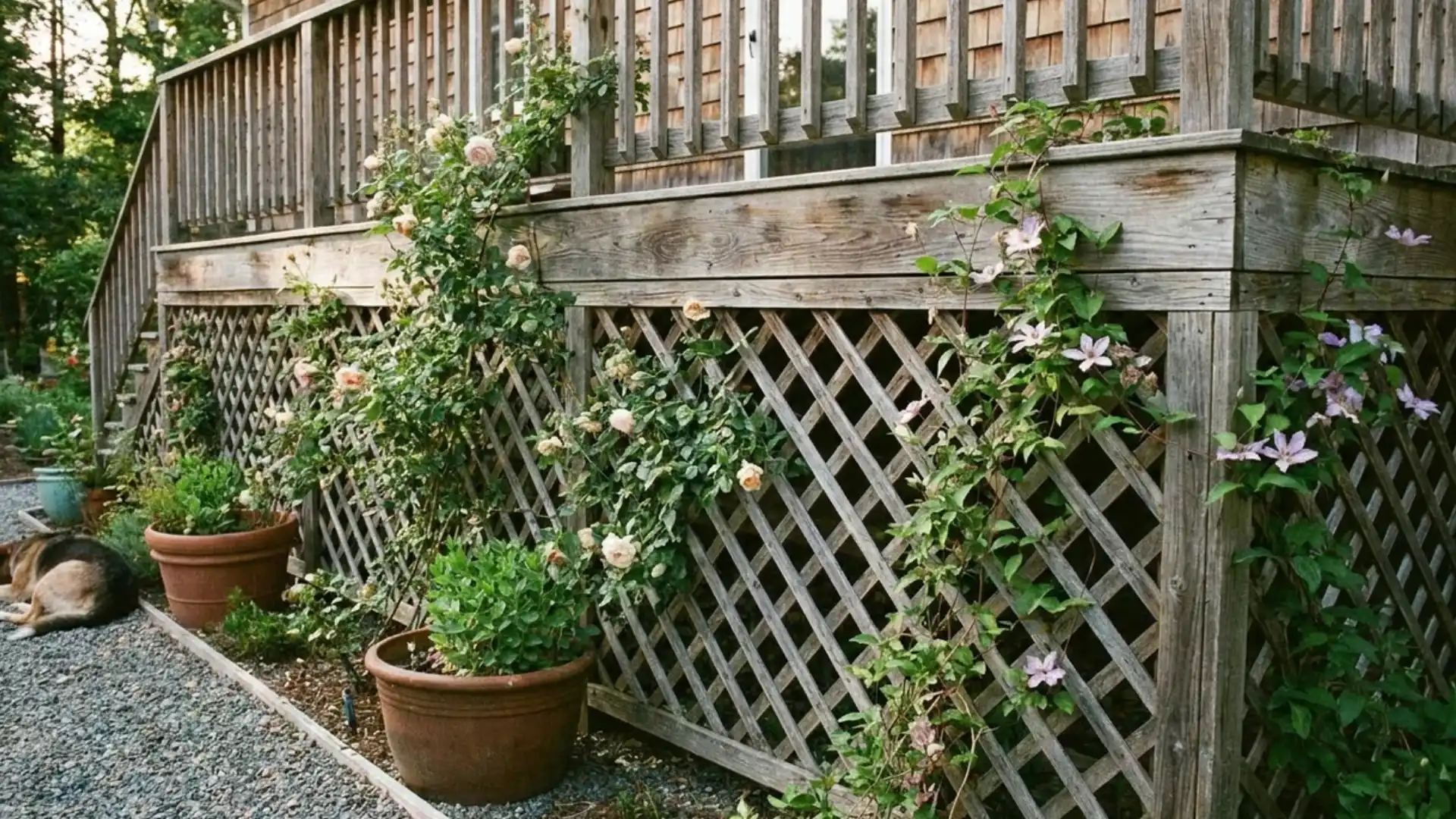
A crisscross pattern that is cheap, simple, and cuts easily to fit any perimeter.
Frame each panel before mounting to stop sagging, and expect to re-stain every couple of years to keep rot away.
Pressure-treated pine keeps the budget low, while cedar costs more upfront but resists rot on its own and holds stain color longer through repeated seasons outdoors.
Tip: Always frame panels prior to mounting to avoid sagging.
2. Vertical Board and Batten
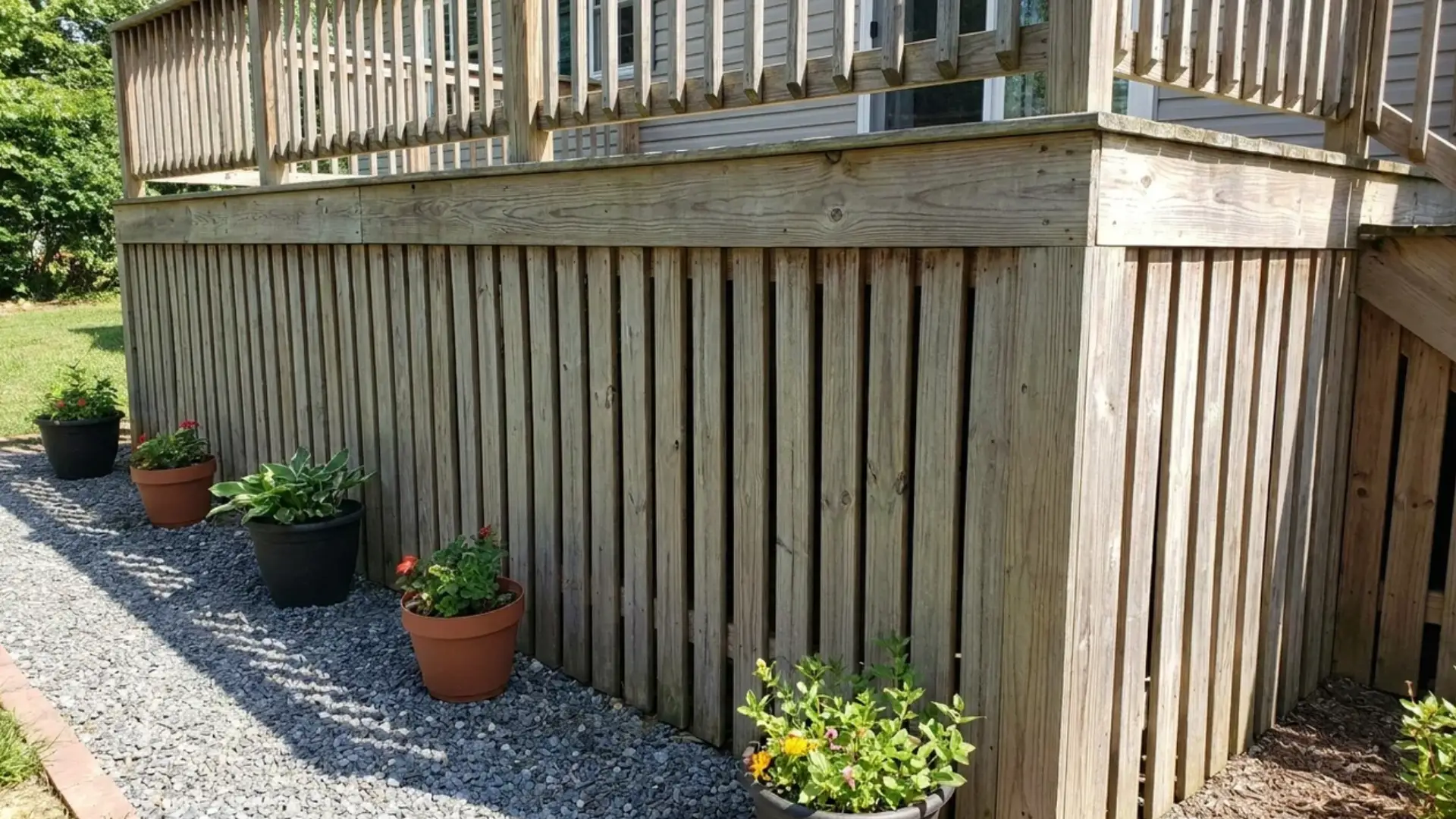
Vertical planks with thin battens over each seam give a farmhouse feel that suits cottage homes well.
Boards cut to one consistent length make this one of the more forgiving DIY builds, since the battens hide small measurement errors between boards.
It stays a solid pick for a first skirting project without much carpentry experience behind it.
Pro: Battens conceal minor measurement inaccuracies between boards.
3. Horizontal Wood Slats
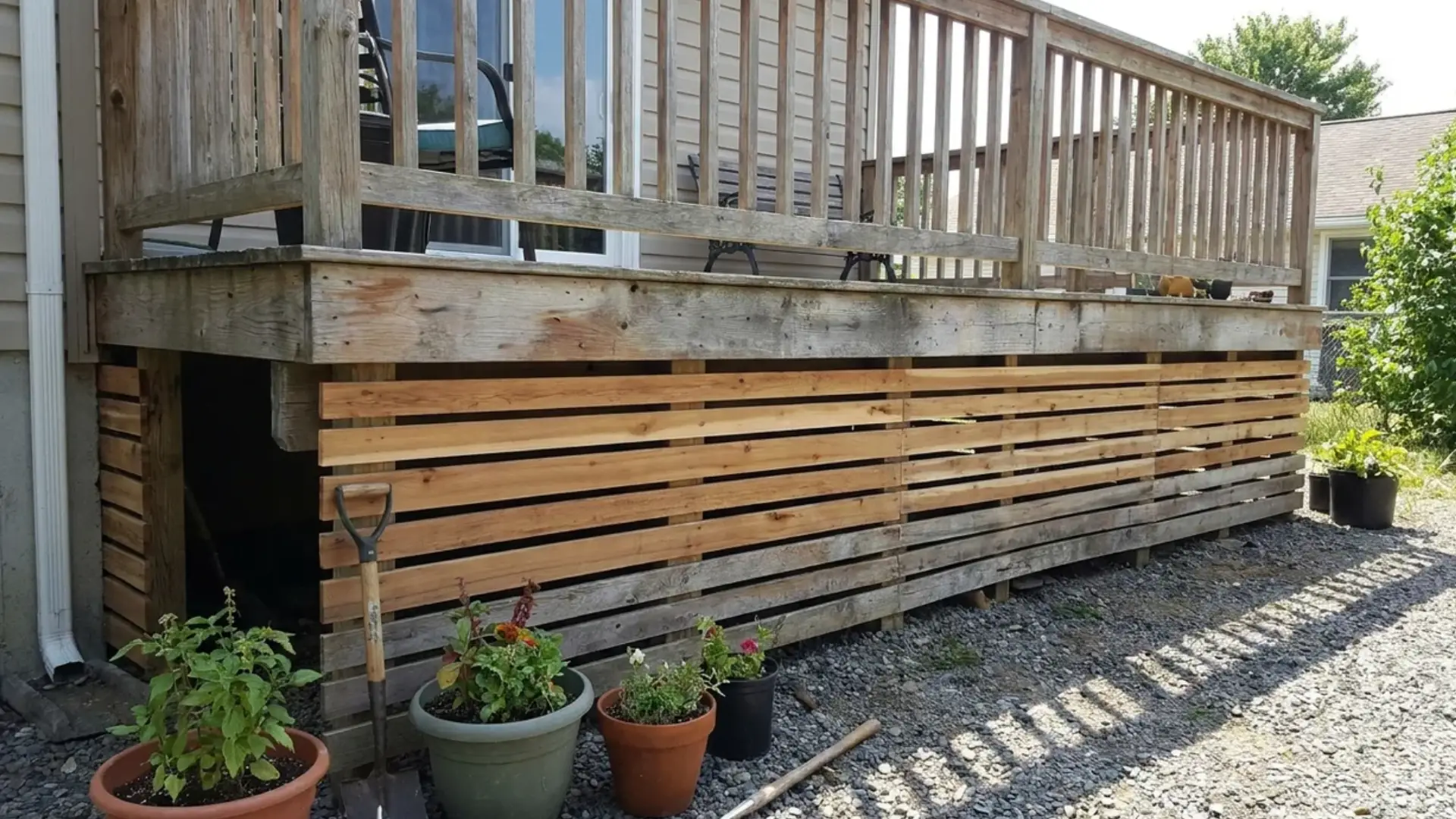
Horizontal boards create a clean, modern line that suits contemporary siding and horizontal railing alike.
Wider boards feel solid and add more privacy, while thinner slats let in more light and airflow underneath the deck.
Spacing is really the main design decision here, and it’s worth testing a small section before committing to a full run around the perimeter.
4. Board and Batten With Contrasting Fascia
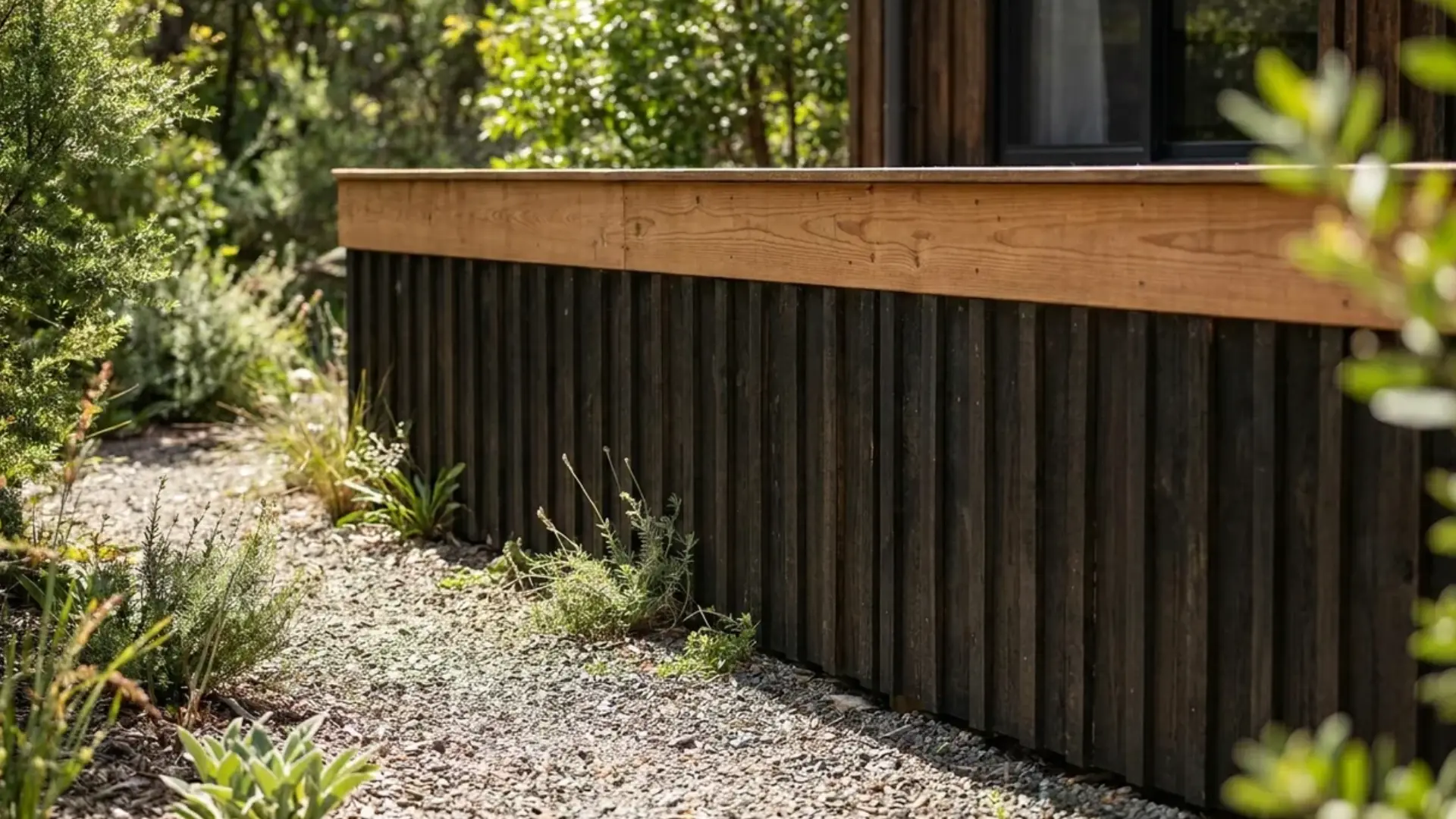
A fascia board in a different tone than the skirting creates a framed effect with the tiniest paint or a second board color.
It’s a small design touch that reads as intentional rather than accidental.
Darker fascia against lighter skirting adds visual weight near the ground, while a lighter fascia on darker skirting keeps the whole look airy instead of heavy.
Disadvantage: Needs ongoing matching paint or stain maintenance.
5. Recycled Pallet Wood
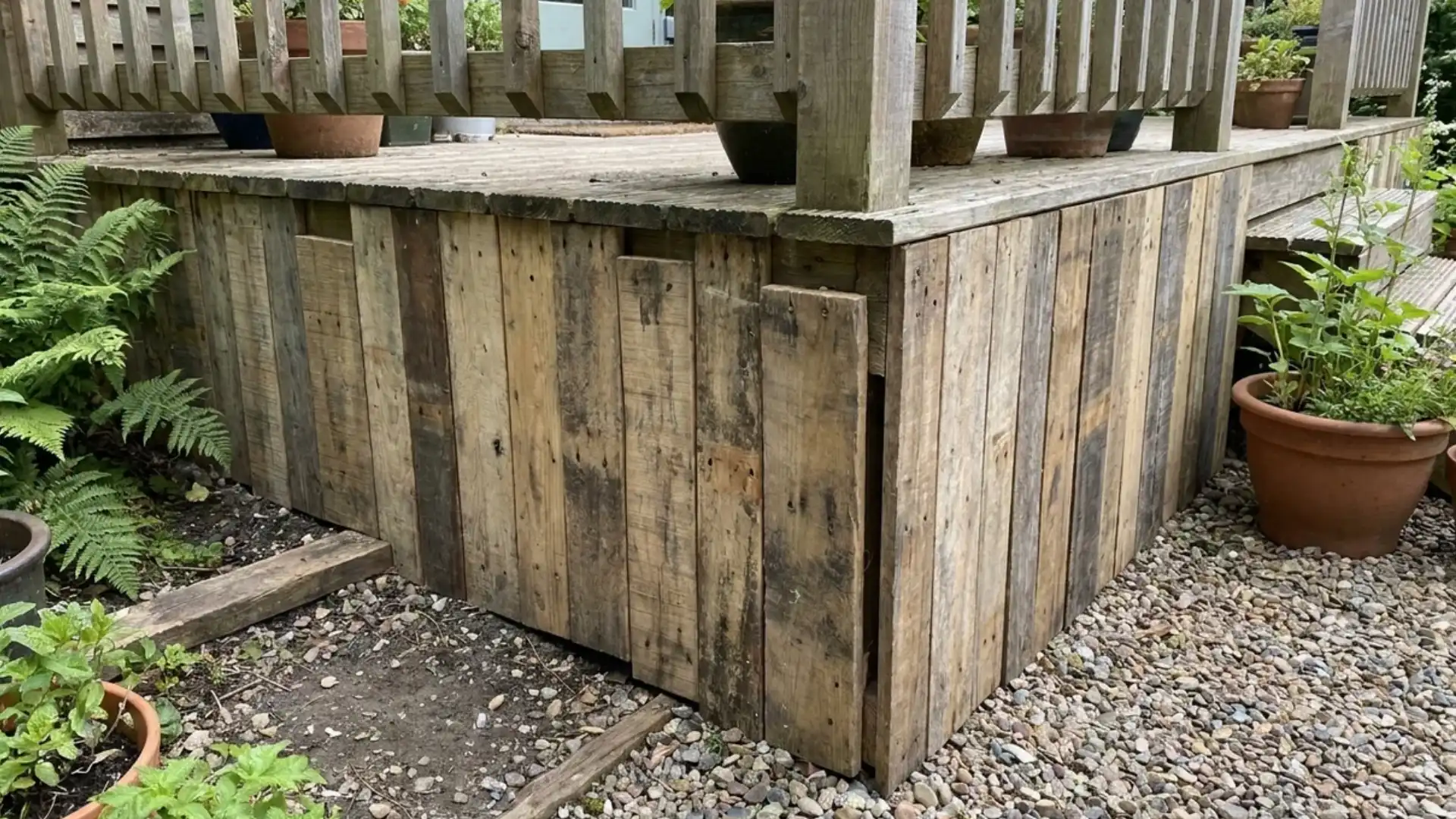
One of the most budget-friendly options, with a weathered look suited to rustic and industrial-farmhouse decks.
Sand the boards to remove splinters and treat them for outdoor exposure, since quality varies board to board.
Mixing boards from a few pallets adds tone variation that plays into the reclaimed look.
Con: The quality of the board varies, resulting in additional time needed for sanding and treatment.
6. Diagonal Herringbone Wood Lattice
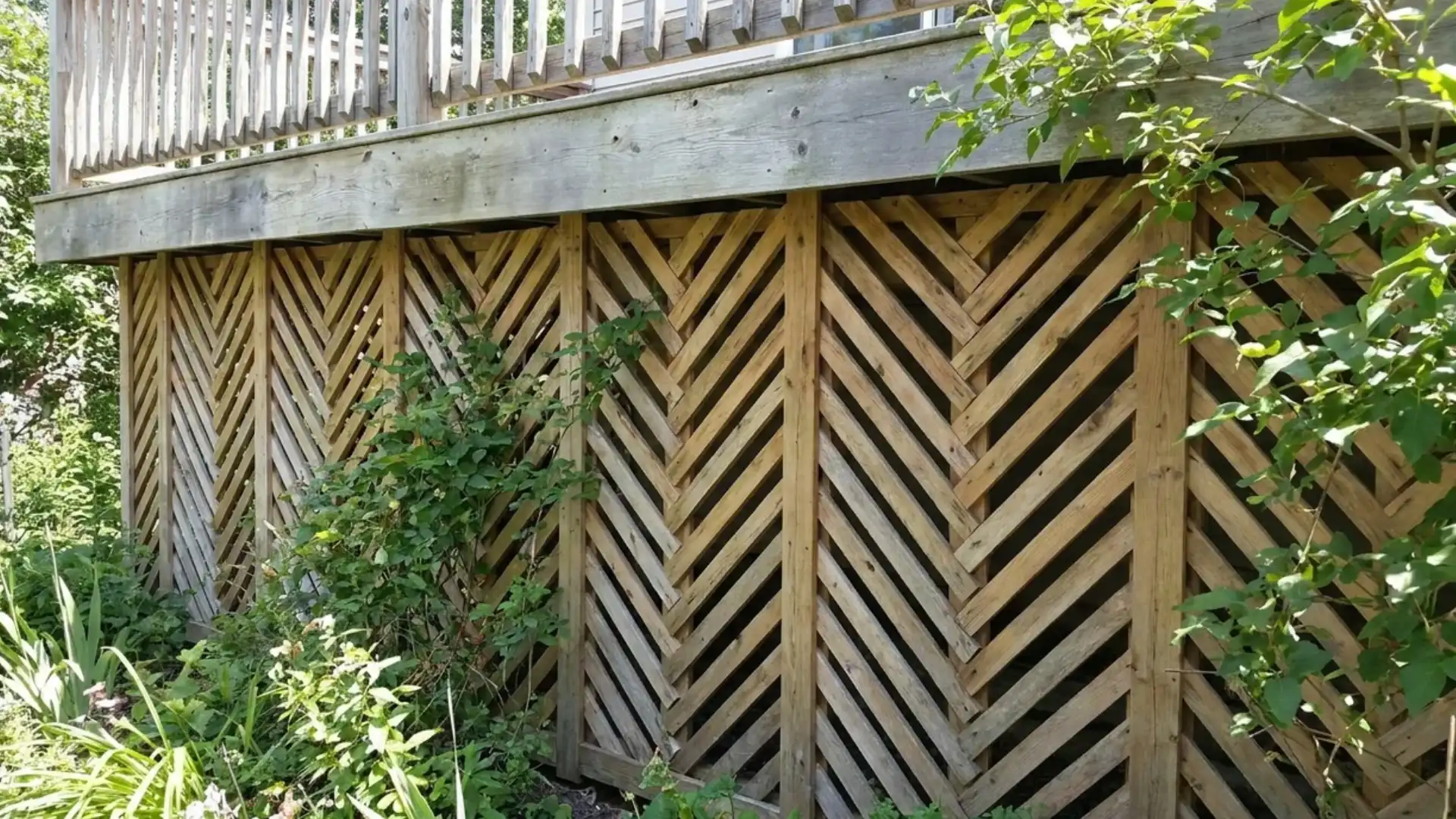
Angled lattice strips layered into a herringbone pattern give the same airflow as classic lattice while adding real visual texture to a plain skirting run.
Every strip needs an angled cut, which slows down installation and wastes more material than straight lattice does.
Ordering extra boards upfront helps avoid a mid-project supply run once the pattern is underway.
Suggestion: Purchase additional boards in advance to account for waste from angled cuts.
7. Shiplap Skirting
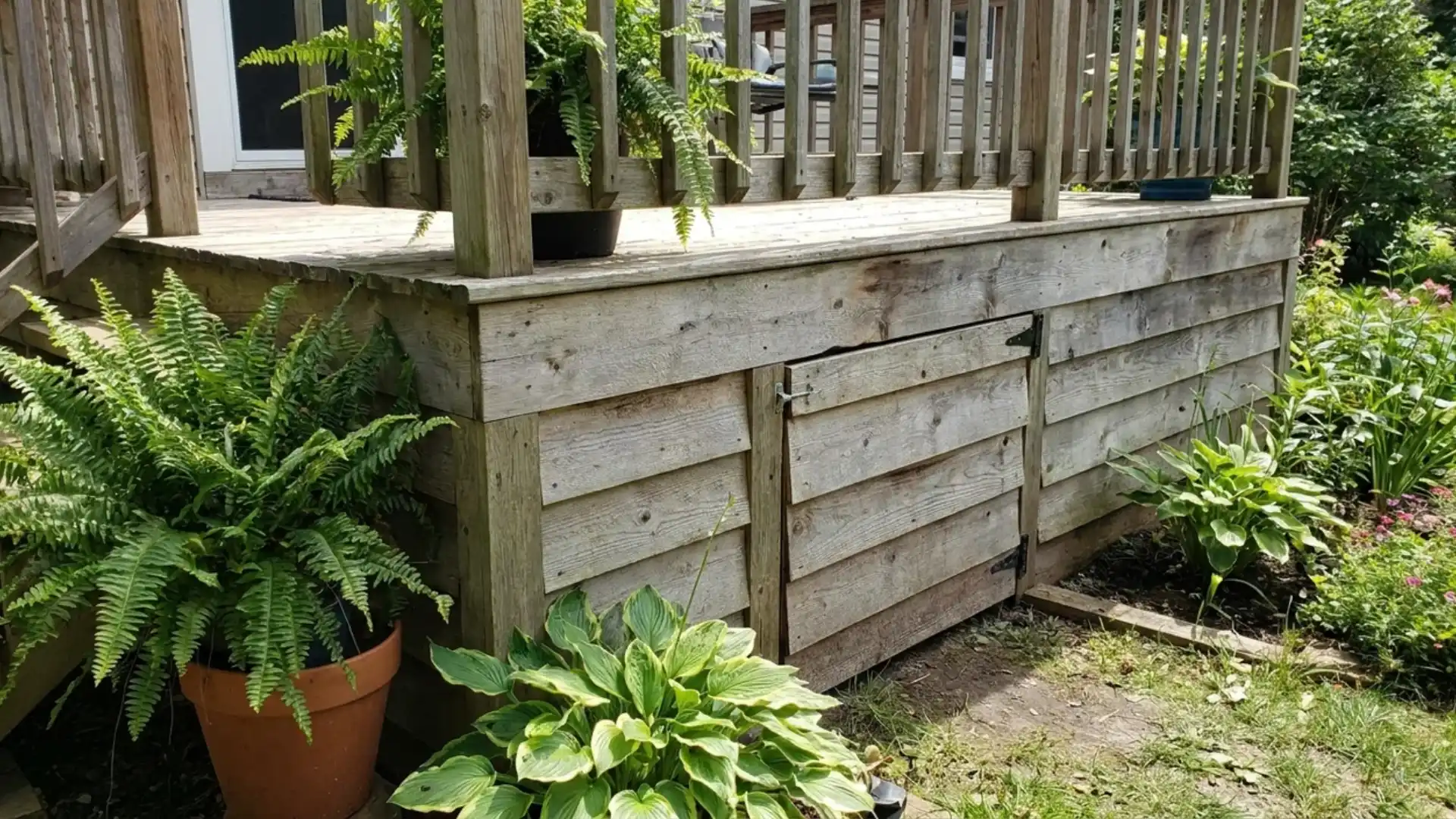
Overlapping horizontal boards create a rustic, coastal look with weather resistance built into the design.
Each board sheds water onto the one below rather than trapping it at the seams.
It needs less caulking than butt-jointed boards over time. Any board that isn’t leveled correctly will leave a visible gap, so careful measuring at the start really does pay off later.
Advantage: It naturally drains water, reducing the need for frequent caulking repairs over time.
8. Cedar Shake Shingle Skirting
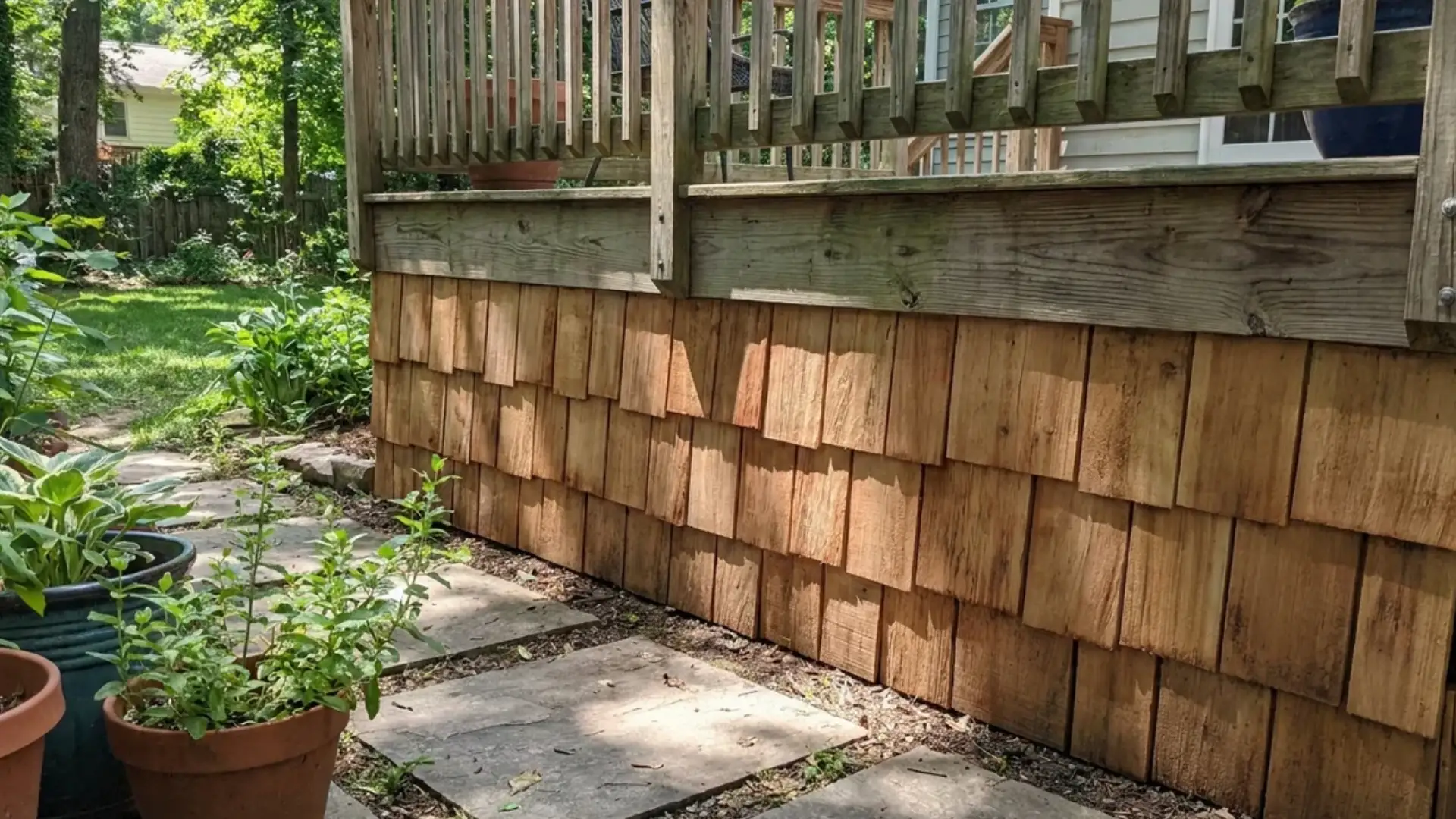
Small overlapping shingles applied in rows, much like a roof, give a cottage or coastal look with strong water shedding built into the layered design.
Installation takes noticeably longer than plank or lattice skirting since each row overlaps the one before it.
Cedar resists rot naturally, which cuts down on the yearly upkeep other wood styles usually demand.
Composite and Vinyl Skirting Ideas
Composite and vinyl trade some of wood’s warmth for near-zero maintenance over the long run.
These materials resist moisture and pests effectively. They are an ideal choice for durable, low-maintenance deck skirting that stays attractive for years. You get the look without wood’s constant upkeep.
9. Vinyl or Composite Lattice
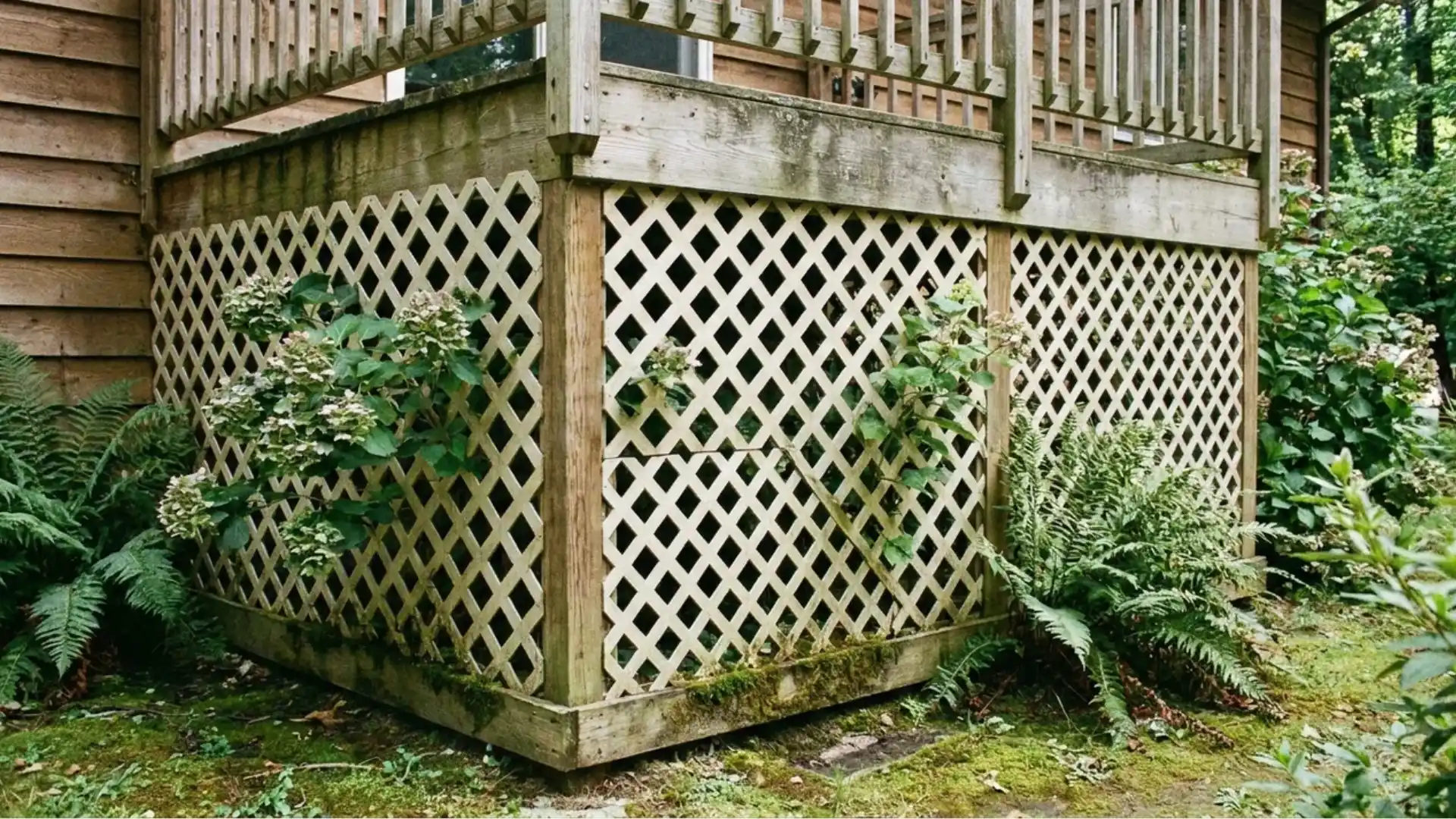
Vinyl lattice keeps the familiar crisscross look but drops the maintenance schedule almost entirely, since it won’t rot, warp, or attract insects.
A garden hose is usually enough to keep it clean through the season.
The tradeoff is a smaller range of colors and a slightly less organic look up close compared to real wood lattice.
Tip: Leave a small gap to allow for expansion during temperature changes.
10. Solid Composite Panels
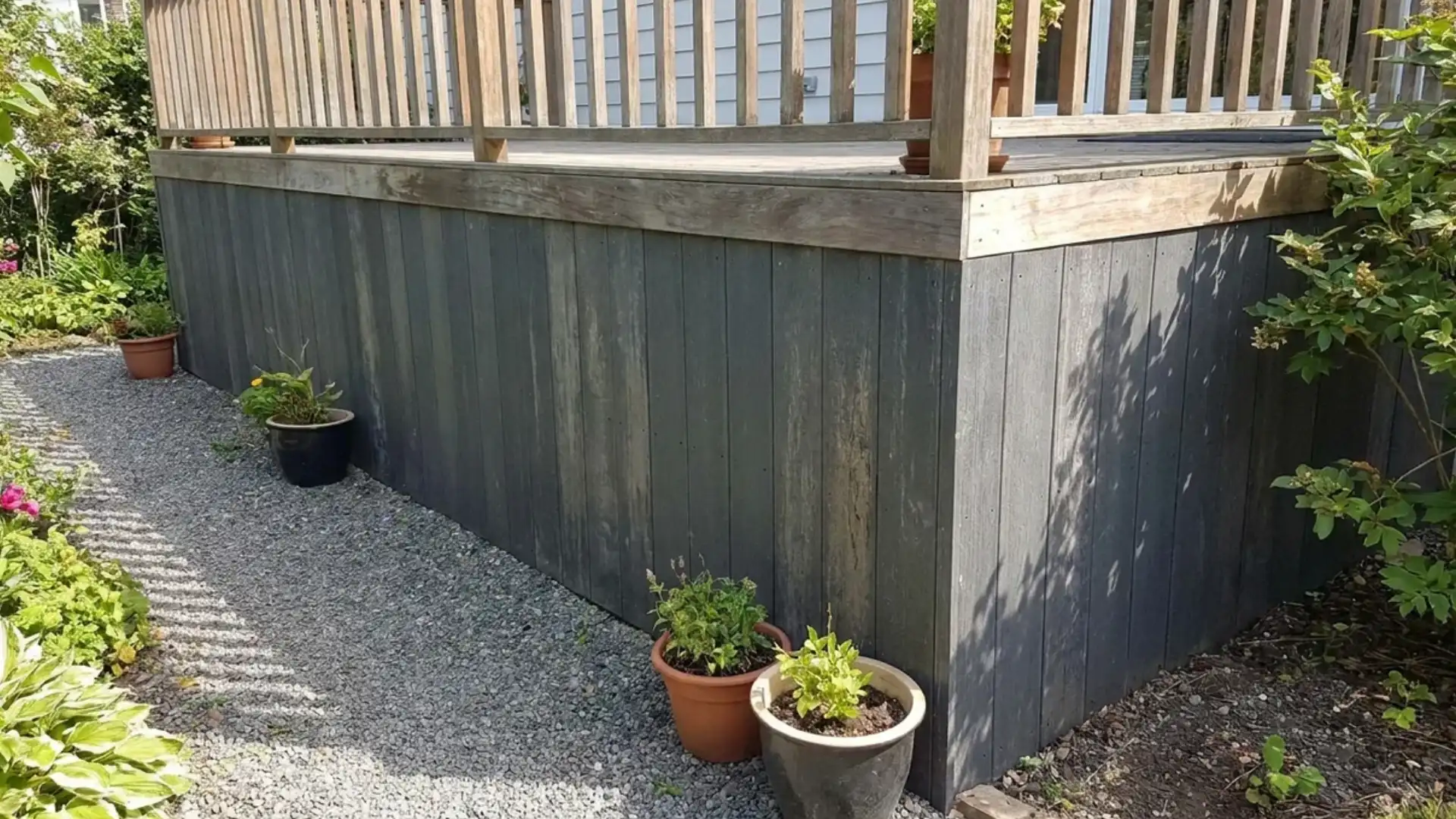
Solid composite skirting boards mimic the grain of natural wood without the upkeep.
They resist rot, insects, and fading, and most composite lines offer color options that can match or contrast with the decking above. Leave a small gap at the bottom edge for drainage and airflow even with solid panels.
Composite retains its color longer than painted or stained wood, making touch-ups infrequent.
11. Horizontal Composite Slats
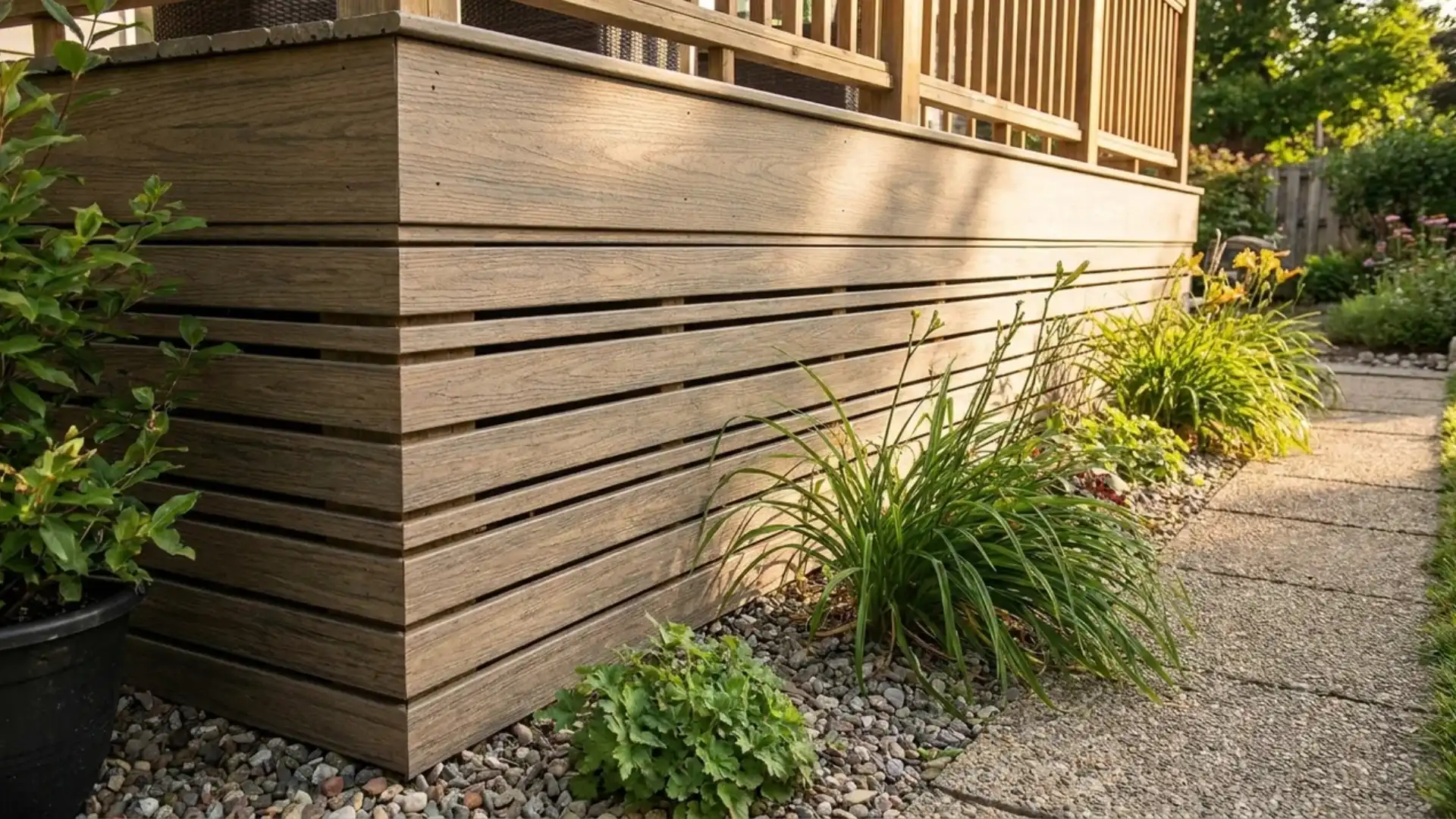
Composite boards run horizontally give the same clean, modern look as wood slats without the repainting schedule that comes with real lumber.
The material keeps its color and shape through repeated seasons of heat and moisture far better than wood does.
This makes it a strong match for decks in climates with heavy rain or intense sun.
Pro: Maintains shape and color despite heavy rain or sun exposure.
12. PVC Trim Wraps
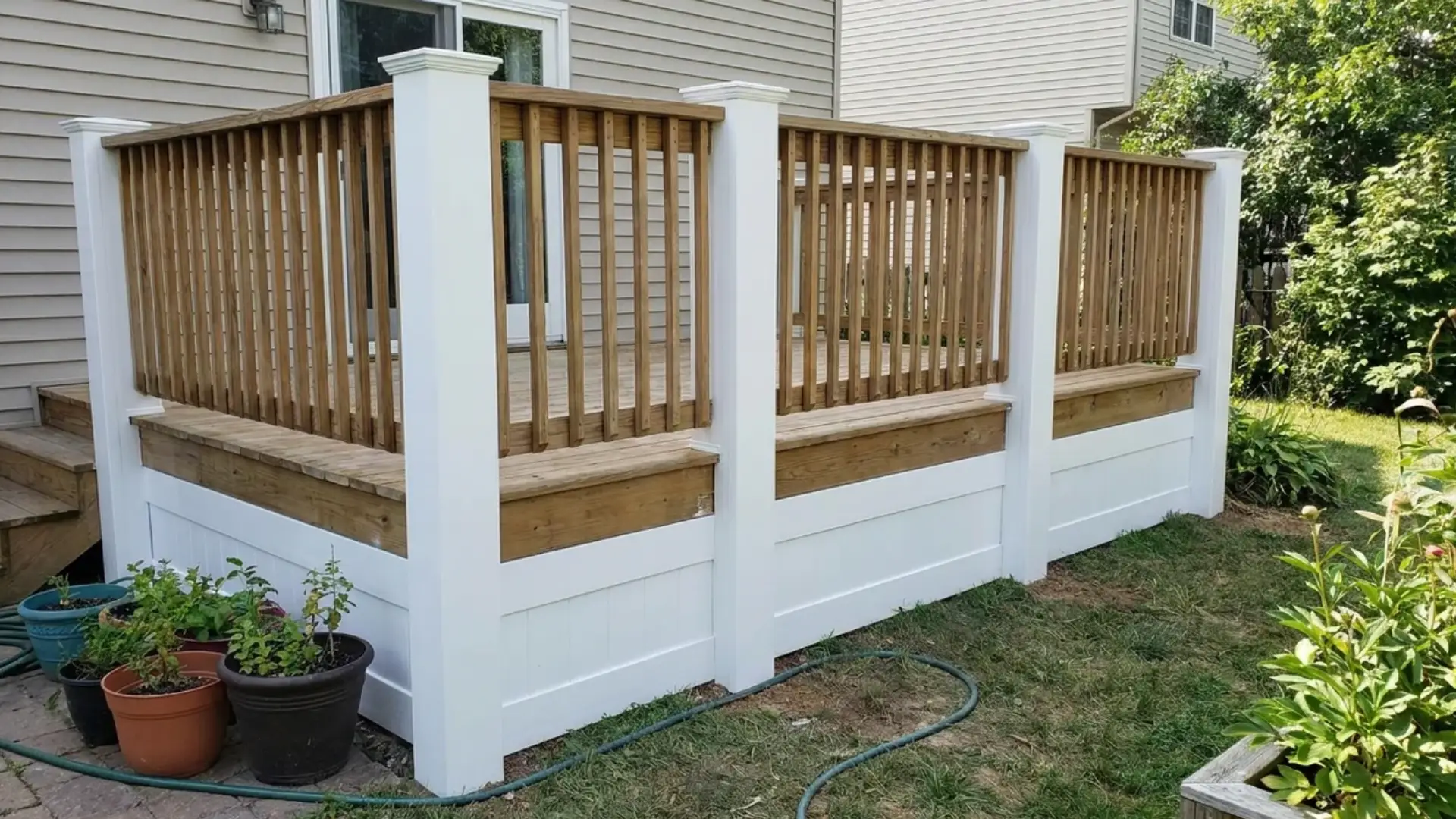
Cellular PVC trim, the same material often used on window and door trim, works as a crisp, bright-white skirting option that resists fading, staining, and mildew.
It’s a good match for homes that already use PVC trim elsewhere on the exterior.
The material stays rigid in heat and cold alike, so it holds a straight, clean line for years without warping or sagging.
Advantage: Maintains rigidity in both heat and cold without warping.
13. Board-on-Board Composite Privacy Fence Style
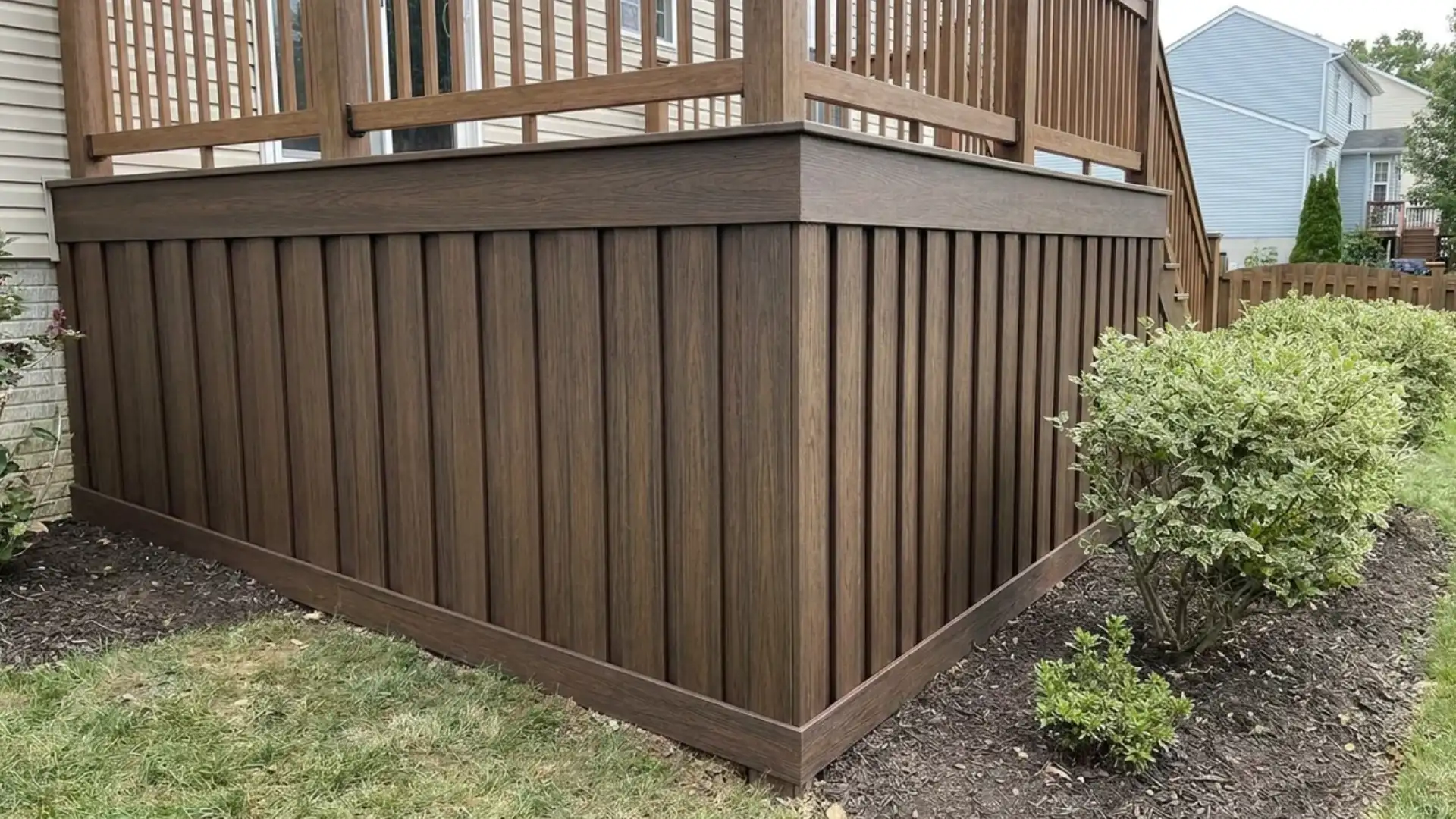
Overlapping composite boards arranged like a privacy fence effectively block sightlines beneath the deck, almost entirely obscuring visibility.
Each seam allows water to shed rather than collect, ensuring proper drainage.
This design is perfect for decks near shared property lines, prioritizing visual privacy over airflow through the skirting.
Con: Reduced spacing results in lower airflow compared to lattice or slats.
14. Wood-Grain Textured Composite Panels
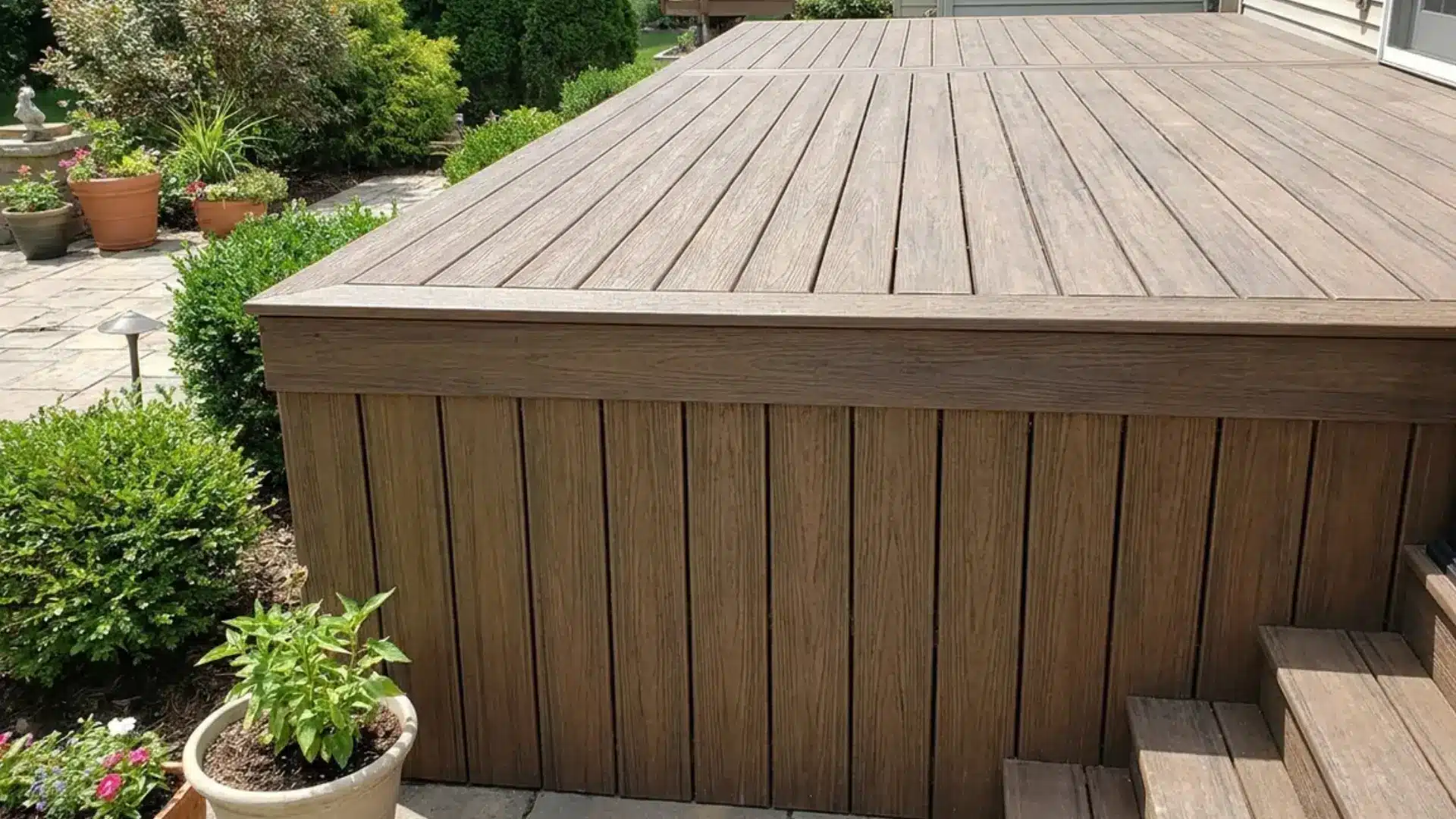
Newer composite panel lines feature a deeper, more pronounced wood grain compared to older standard models, bringing them closer in appearance to real lumber up close.
While they cost more per panel than smooth composite, they help avoid the flat, plastic-like appearance some people dislike in older composite skirting styles.
Con: Has a higher cost per panel compared to smooth composite options.
Stone, Brick, and Metal Skirting Ideas
These materials cost more upfront but are more durable than wood and composite.
Stone and brick veneer provide an architectural link to the house, especially when the exteriors match. Despite the higher cost, they improve curb appeal and durability.
15. Stone or Brick Veneer
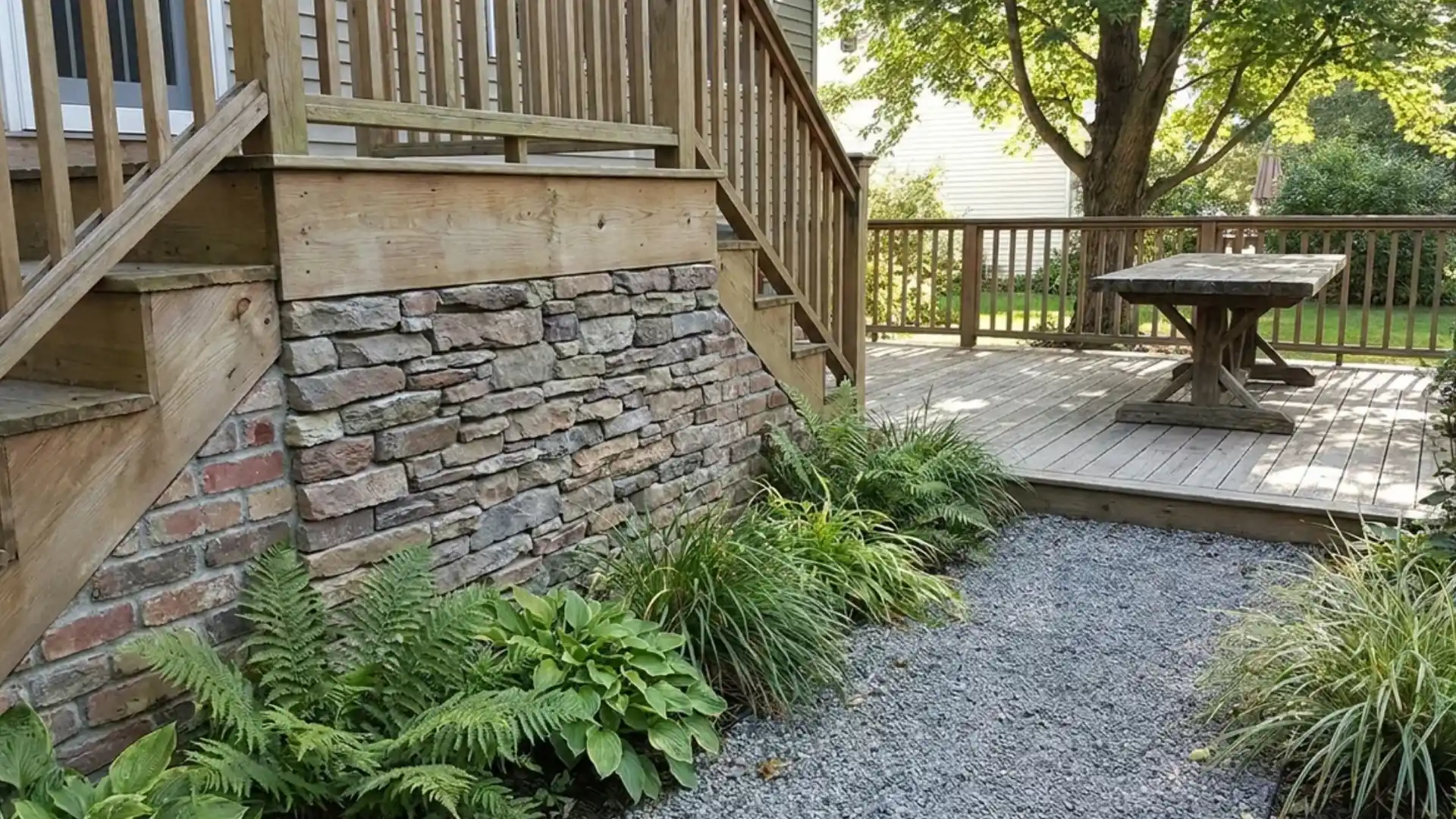
Stone and brick veneer panels provide a durable, luxurious appearance for the base of a deck.
Especially when the exterior already features either material, veneer panels being lighter and more affordable than full masonry still require mounting to a solid backing and sealing against moisture.
It is advisable to budget for installation assistance early in the planning process.
16. Corrugated Metal Panels
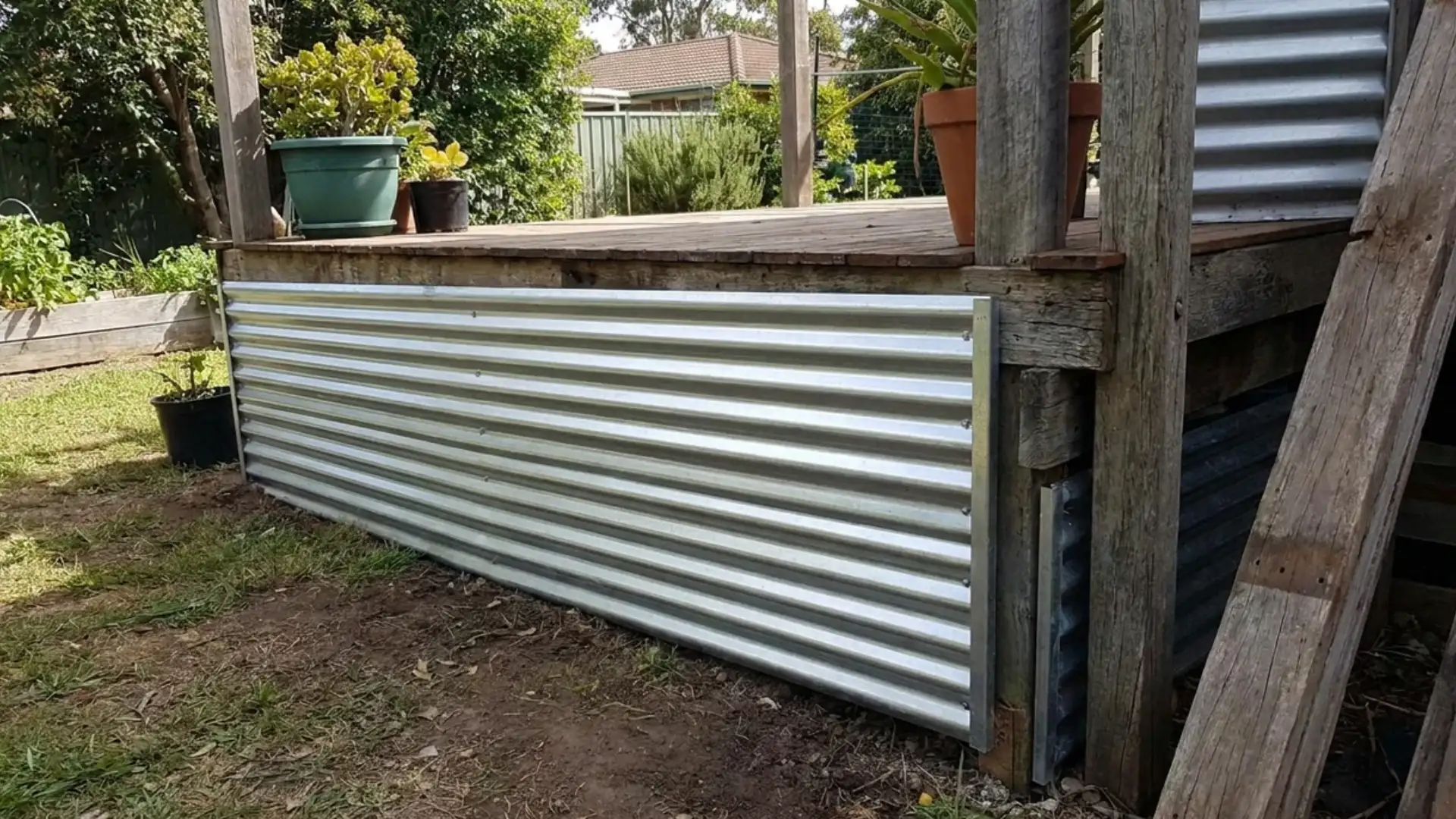
Corrugated metal skirting adds an industrial, modern-farmhouse touch, increasingly common on new builds.
It’s extremely weather-resistant and needs almost no maintenance, though it offers a narrower range of finishes than wood or composite. The cut edges are sharp enough to demand careful handling during installation.
Tip: Always wear gloves and use appropriate tools when cutting panels.
17. Decorative Cutout Panels
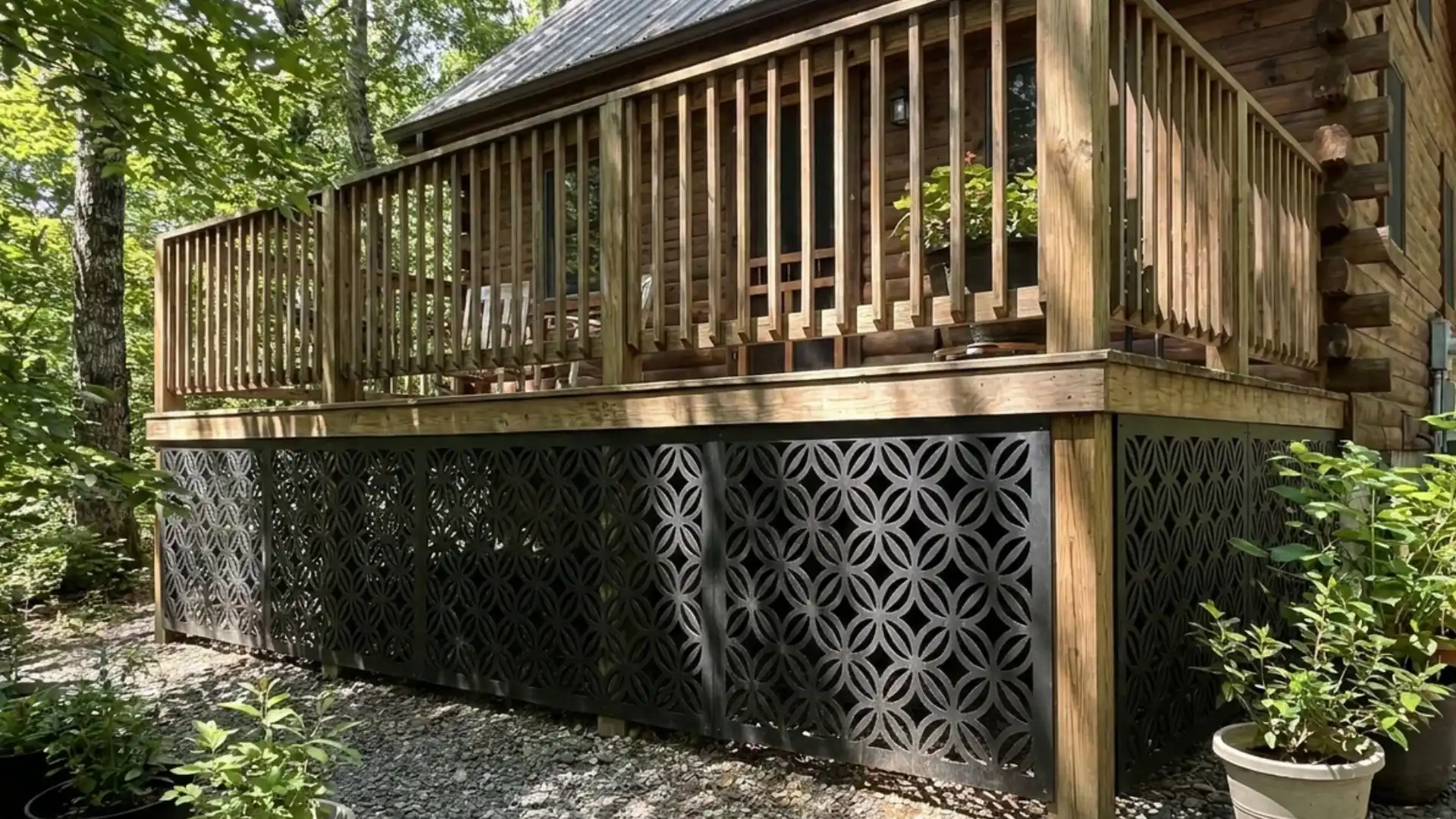
Panels with geometric or nature-inspired cutouts add a design touch that plain lattice or planks simply can’t.
Available in composite and metal, the pattern can be picked to complement other yard features like a matching pergola or railing detail.
Backlighting these panels at night turns the pattern into a lighting feature.
Pro: The backlighting turns the cutout pattern into a nighttime lighting feature.
18. Gabion Wall Skirting
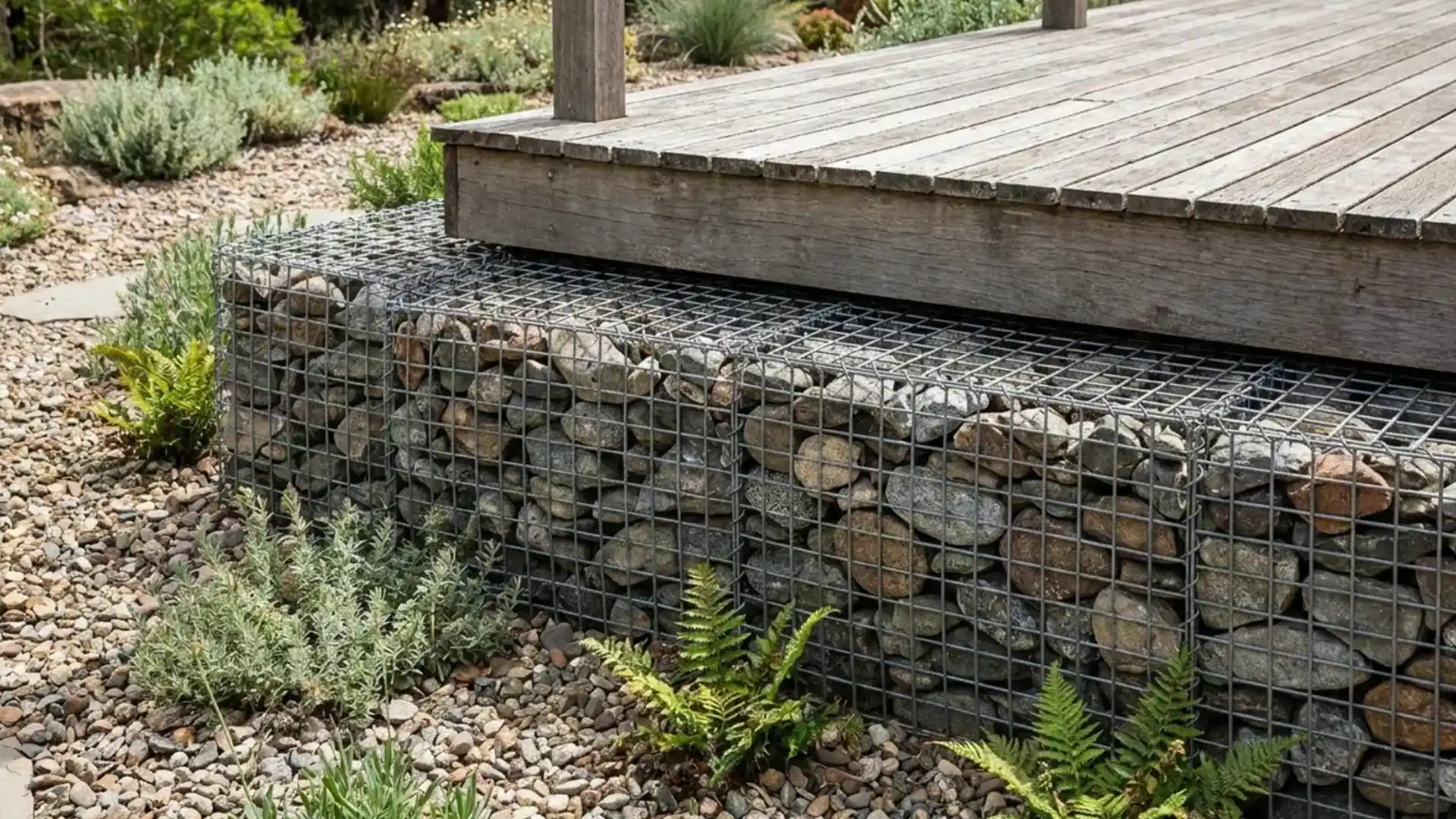
Wire cages packed with stone create a modern, textured base that reads as a built-in landscape feature rather than standard trim.
It pairs especially well with contemporary or industrial-style homes.
The material is heavy, so the deck’s frame needs a load-support check before installation begins.
Con: Heavier materials necessitate a preliminary frame load-support assessment.
19. Corten Steel Panels
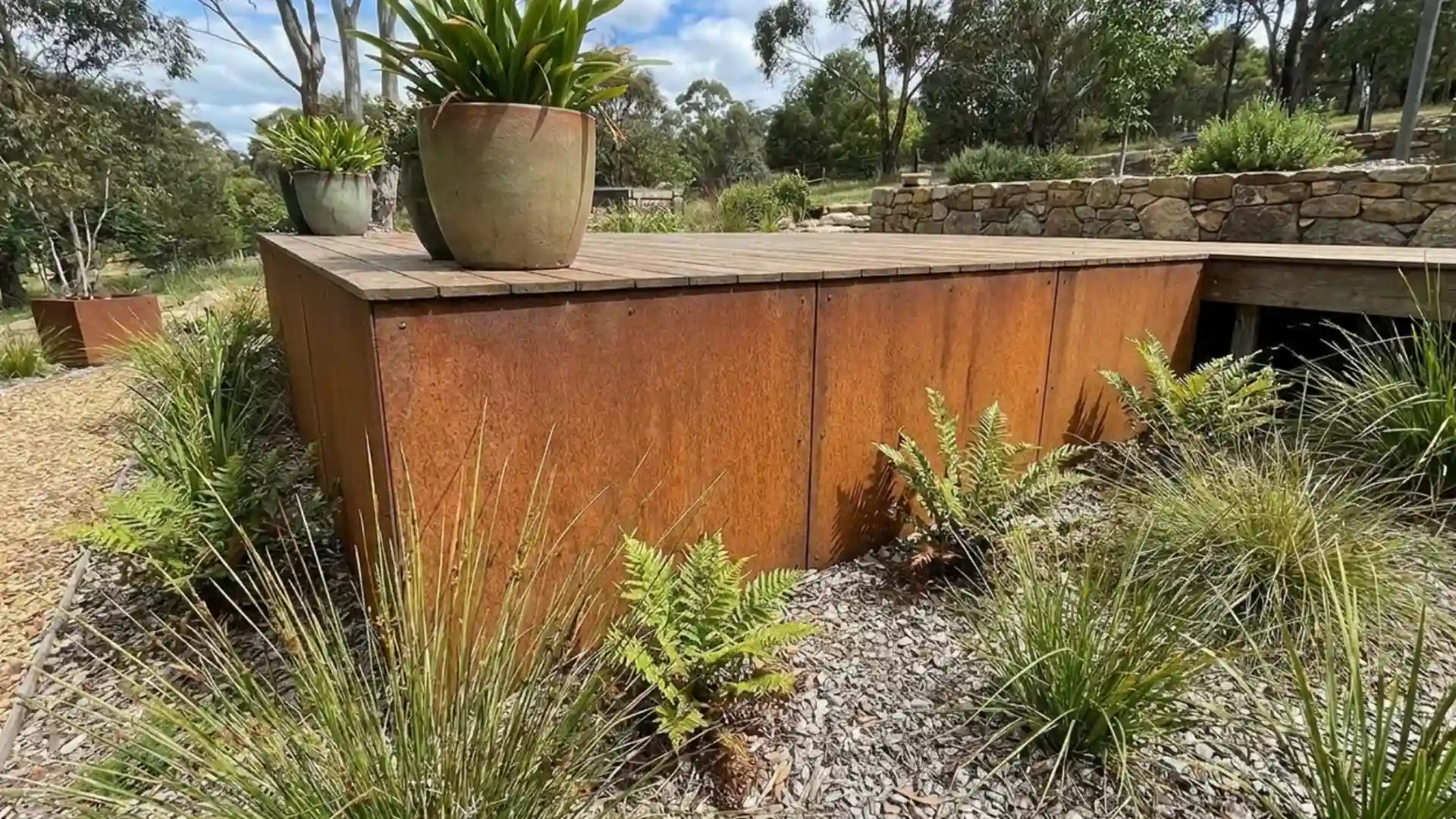
Weathering steel develops a rust-toned patina in its early months outdoors that then slows dramatically.
It provides a warm, industrial look that requires minimal maintenance afterward.
Early rust runoff can stain nearby concrete or pavers during that initial weathering period, so planning drainage matters before the panels go up.
20. Louvered Aluminum Panels
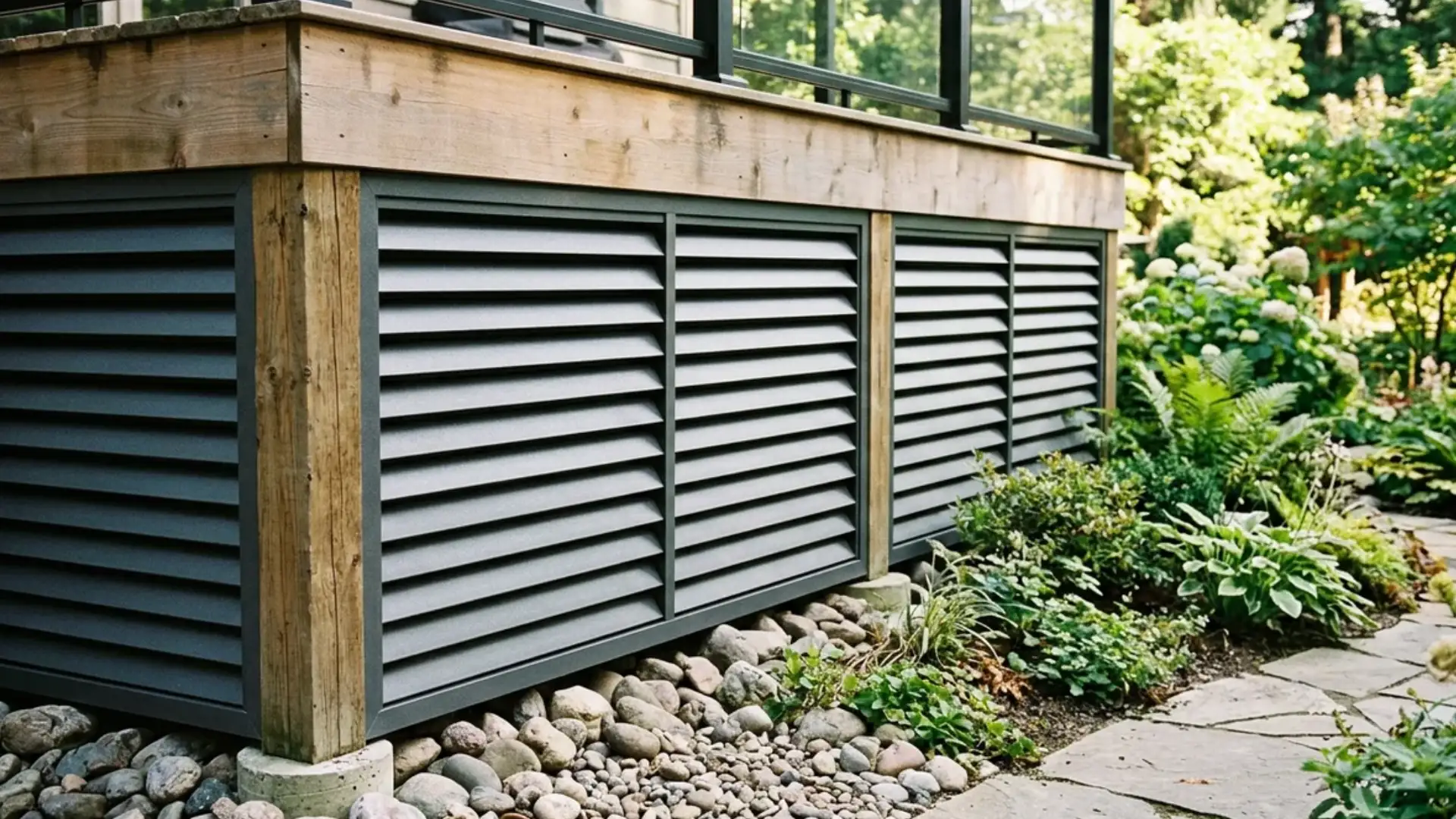
Angled slats offer airflow and a modern appearance while blocking direct sightlines into the space under the deck.
The material costs more upfront than wood or vinyl louvers of similar size.
But it won’t warp, rot, or need repainting down the line. That makes it a stronger long-term pick for decks in wetter or humid climates.
Advantage: Powerful airflow that never needs repainting.
21. Mosaic Tile Accent Skirting
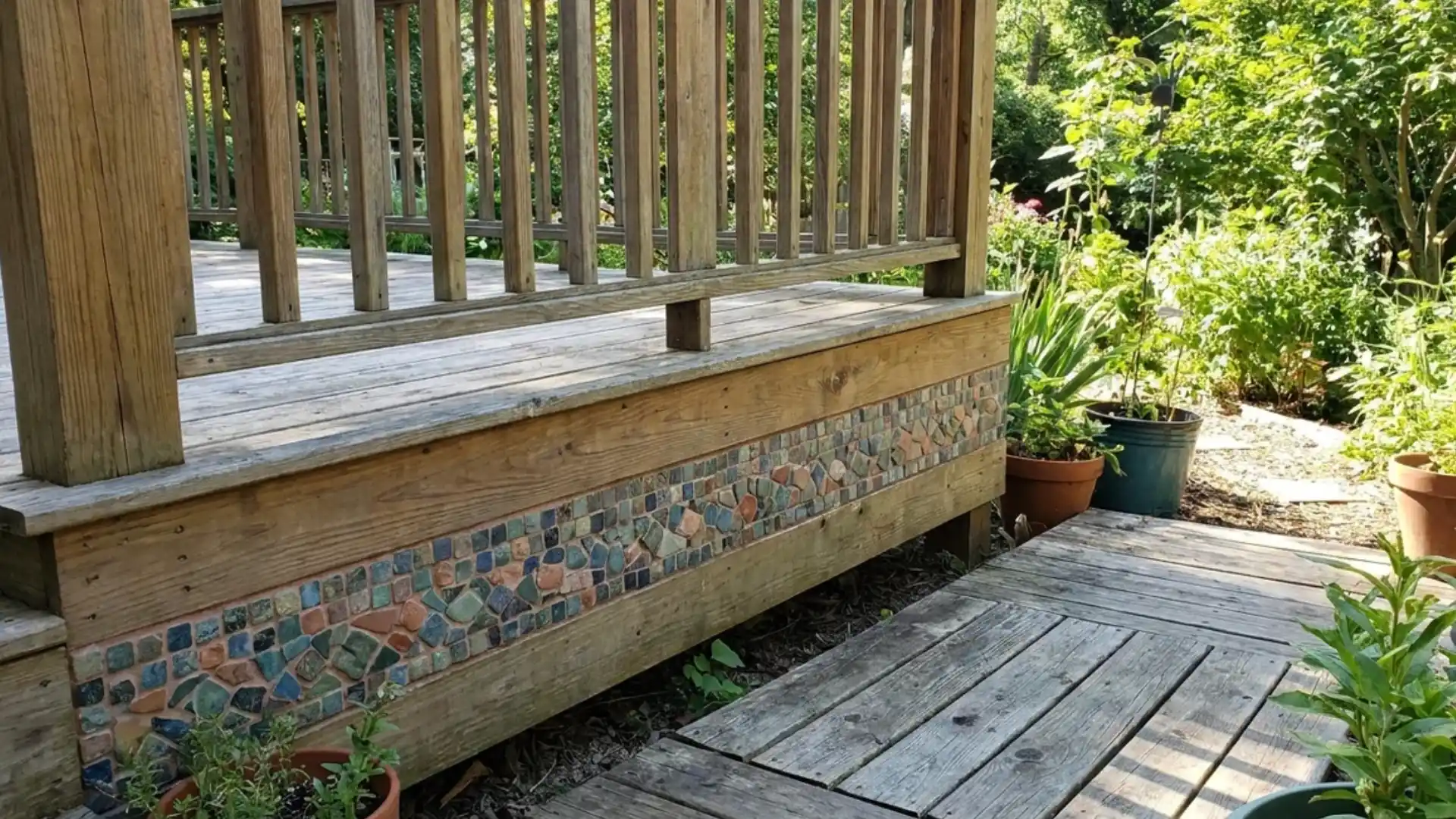
Small tile sections set into a metal or composite framework work best as a decorative accent rather than a material covering the whole skirt run.
It reads well as a highlight between sections of plain lattice or slats, since running tile across a full perimeter gets expensive and adds real weight.
Cons: Installing tile around an entire perimeter quickly becomes expensive.
Natural and Open-Air Skirting Ideas
People seeking breathable solutions can use bamboo and wire mesh.
These budget-friendly options suit humid climates with moisture buildup and give decks a soft, organic look, providing function without a closed-off feel.
22. Woven Willow Branch Panels
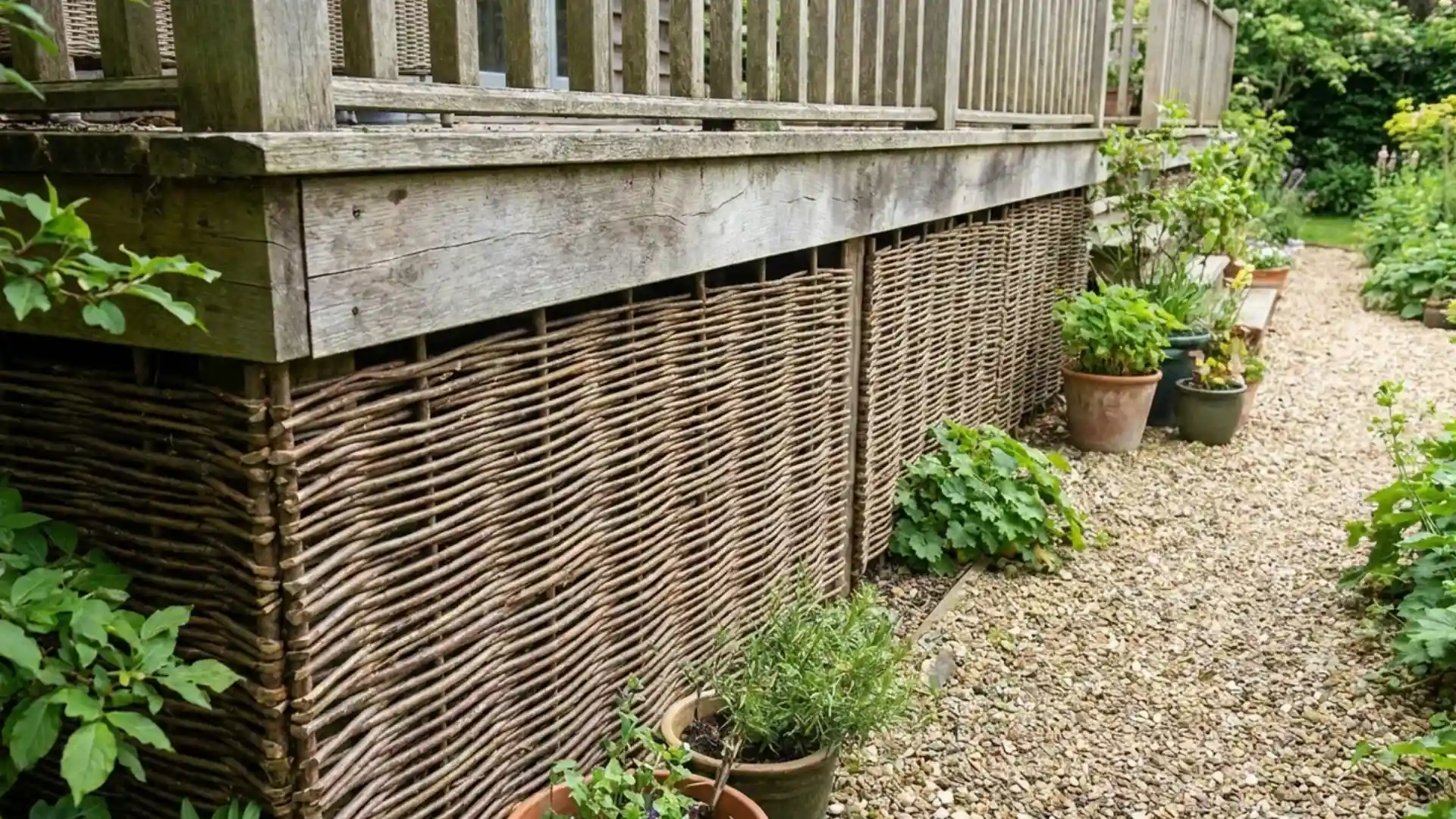
Hand-assembled panels provide a softer, organic cottage-garden texture compared to lattice or slat styles.
They break down faster than treated wood once exposed to repeated wet seasons. This style suits drier regions better, or deck sides with some roof coverage.
Full sun and rain exposure will wear them down faster.
23. Living Wall Skirting
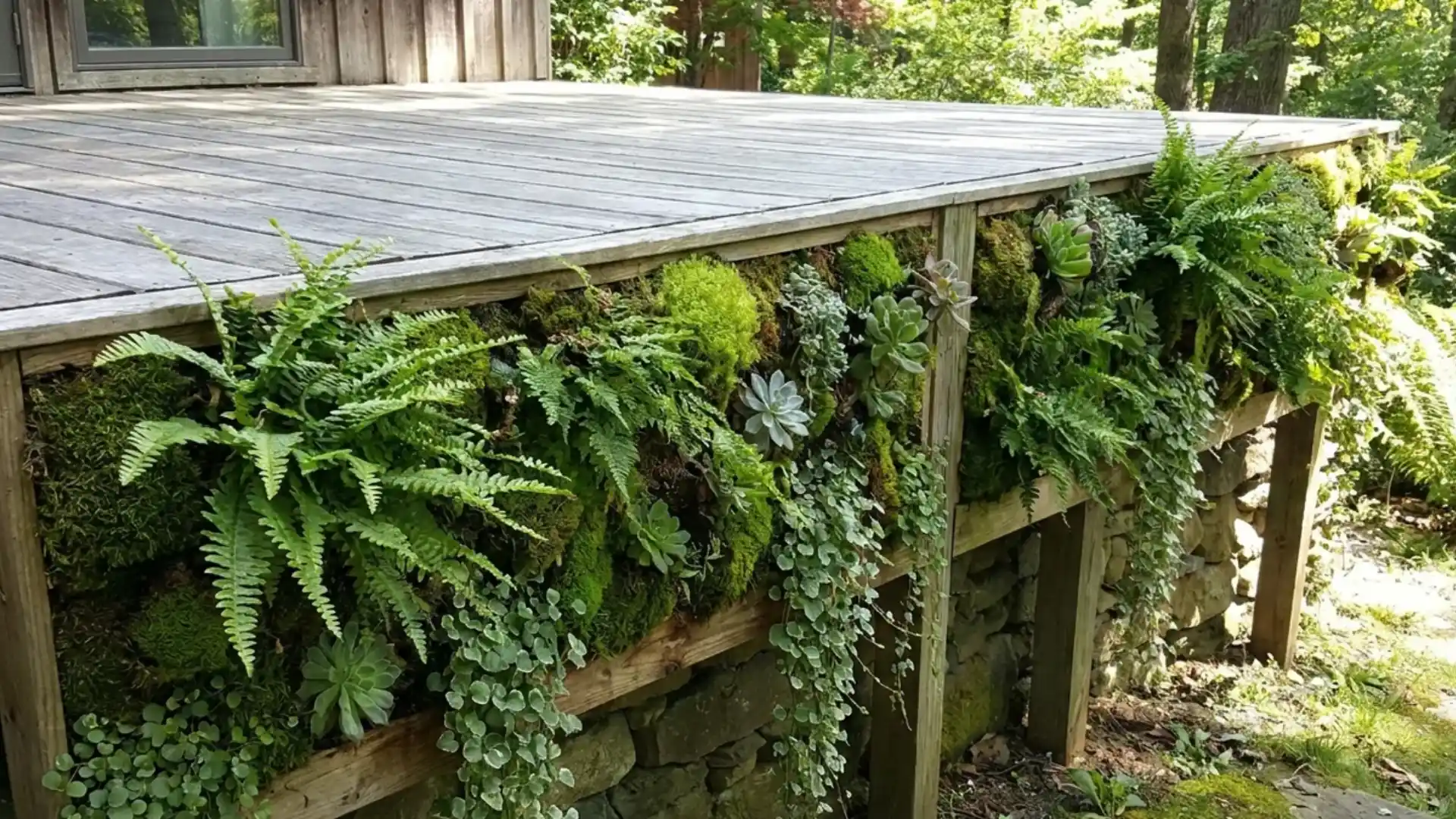
Try planting trailing vines along the skirt line, or install modular planter panels in place of solid material.
Either option turns the gap under the deck into a green feature instead of something hidden away.
It needs a working irrigation setup and adds ongoing plant care to the maintenance list.
Con: Requires an operational irrigation system and continuous maintenance for the plants.
24. Outdoor Fabric Screening
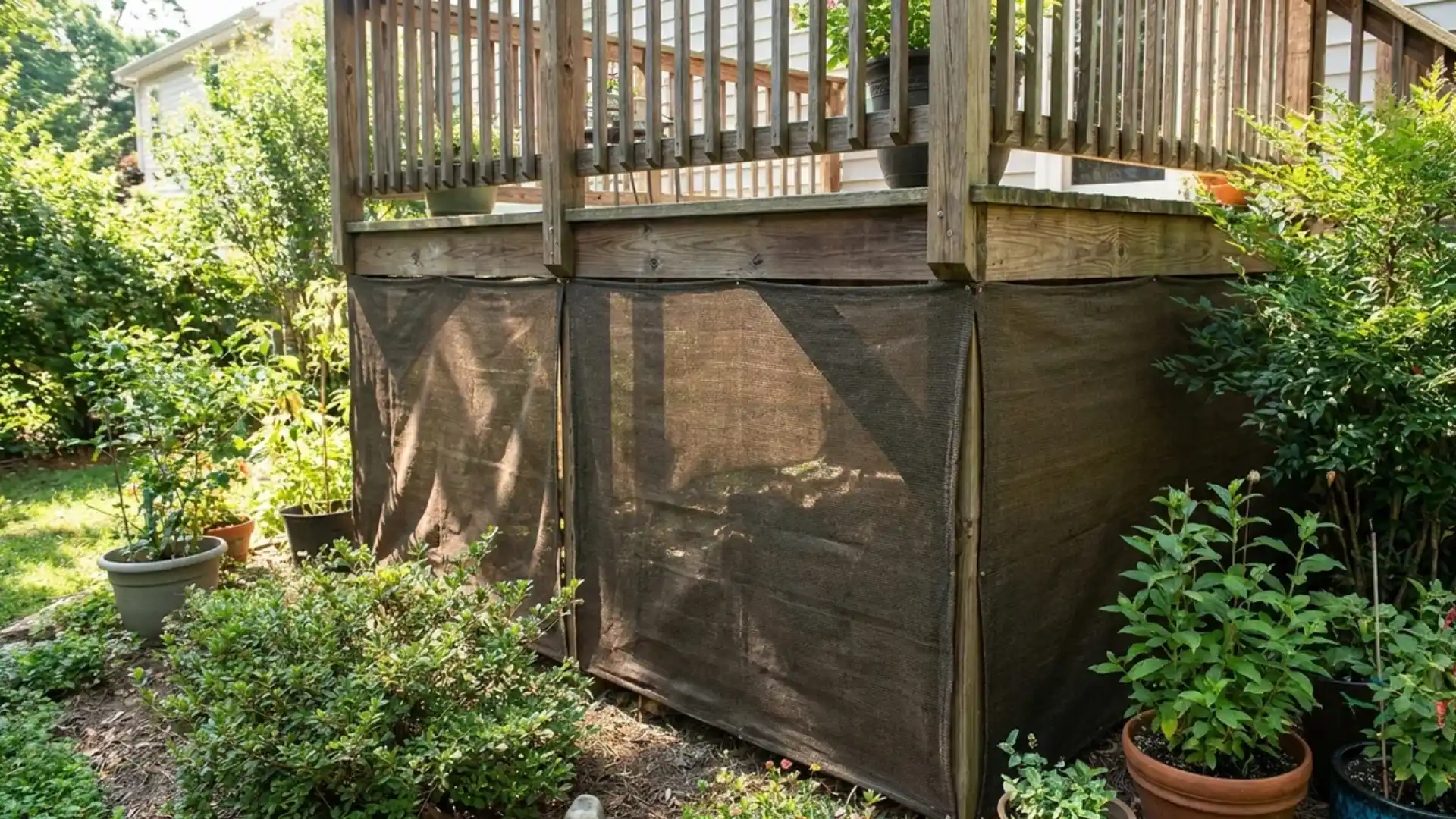
Weather-rated outdoor fabric stretched over a simple wood or metal frame gives a soft, tailored look for very little material cost compared to most other options on this list.
This is not a permanent fix since sun exposure accelerates fabric degradation more than solid materials.
It works well as a seasonal, rental-friendly, or temporary option while planning something more permanent.
25. Bamboo Fencing
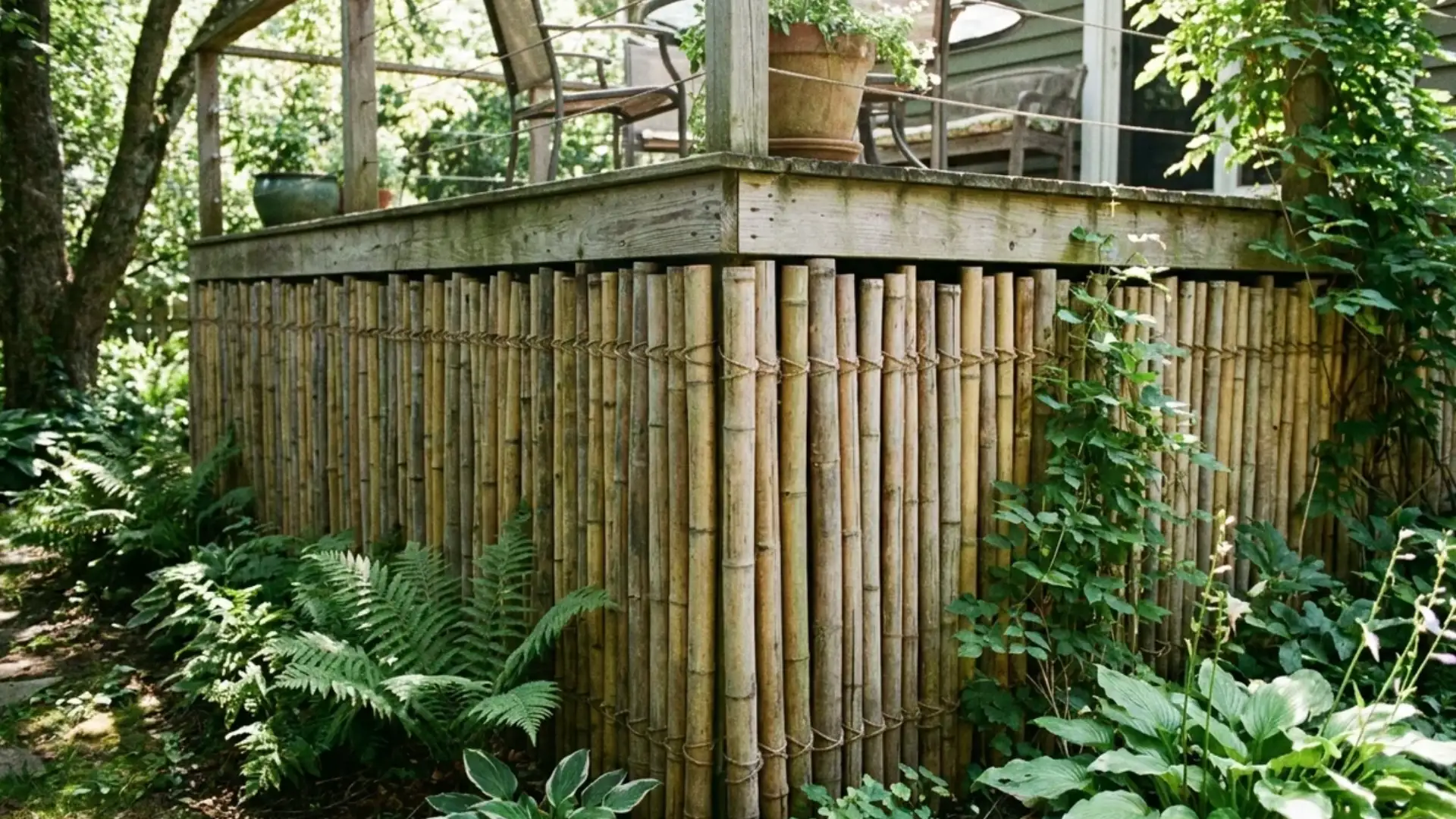
Rolled bamboo fencing is a fast, budget-friendly way to skirt a deck with a natural, slightly tropical look.
It is lightweight and easy to attach to a simple frame with zip ties or wire, though it needs a weatherproof sealant to hold up over multiple seasons outdoors.
Tip: Use a weatherproof sealant to help it last longer.
26. Wire Mesh Panels
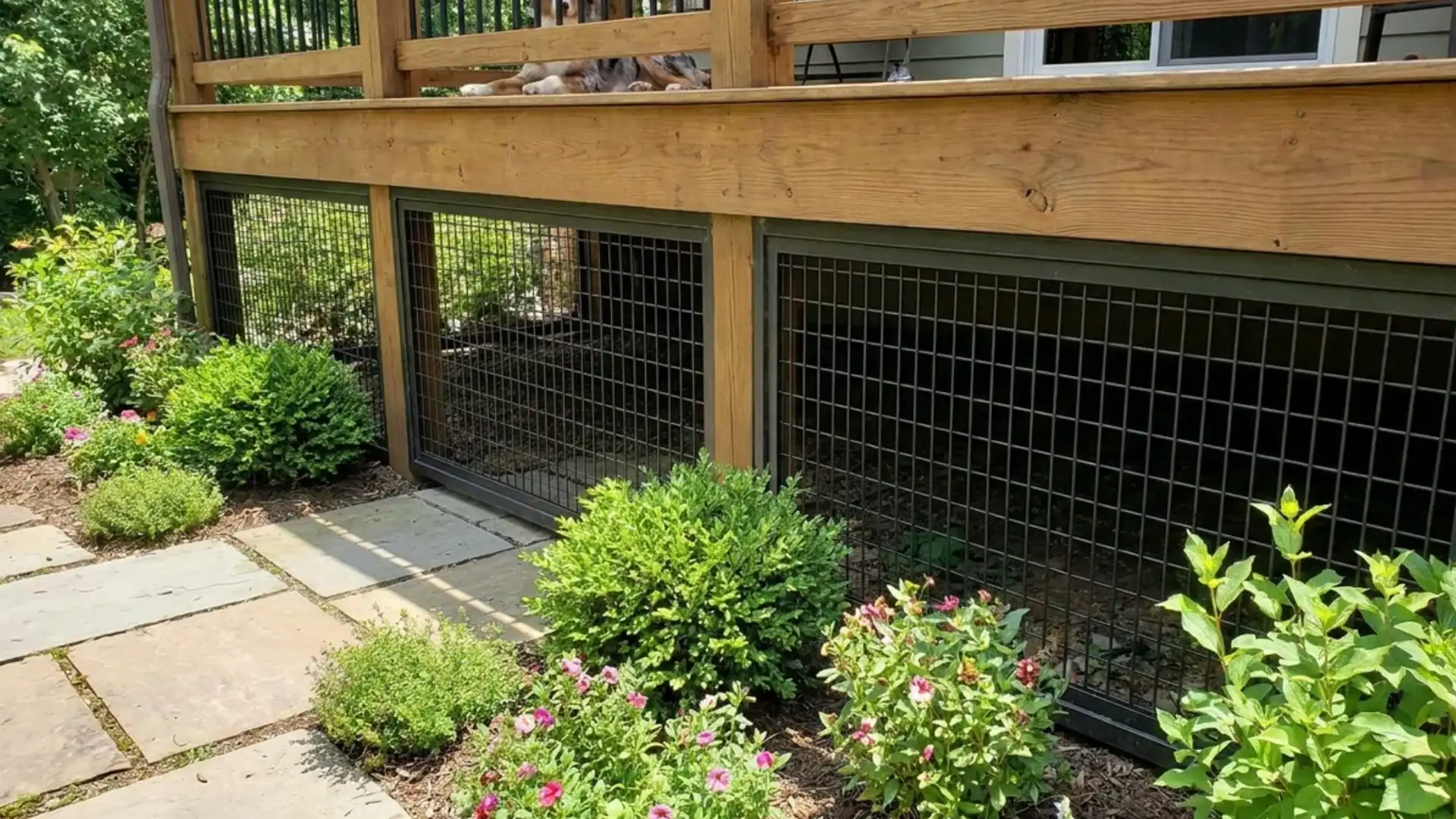
Wire mesh framed in wood or metal is a minimalist option that keeps animals out while letting air flow through almost completely unobstructed.
It won’t offer much privacy and reads more utilitarian than decorative, but it’s one of the least expensive ways to close off the space under a deck.
Con: Provides significantly less privacy than solid styles.
27. Landscaping in Place of Skirting
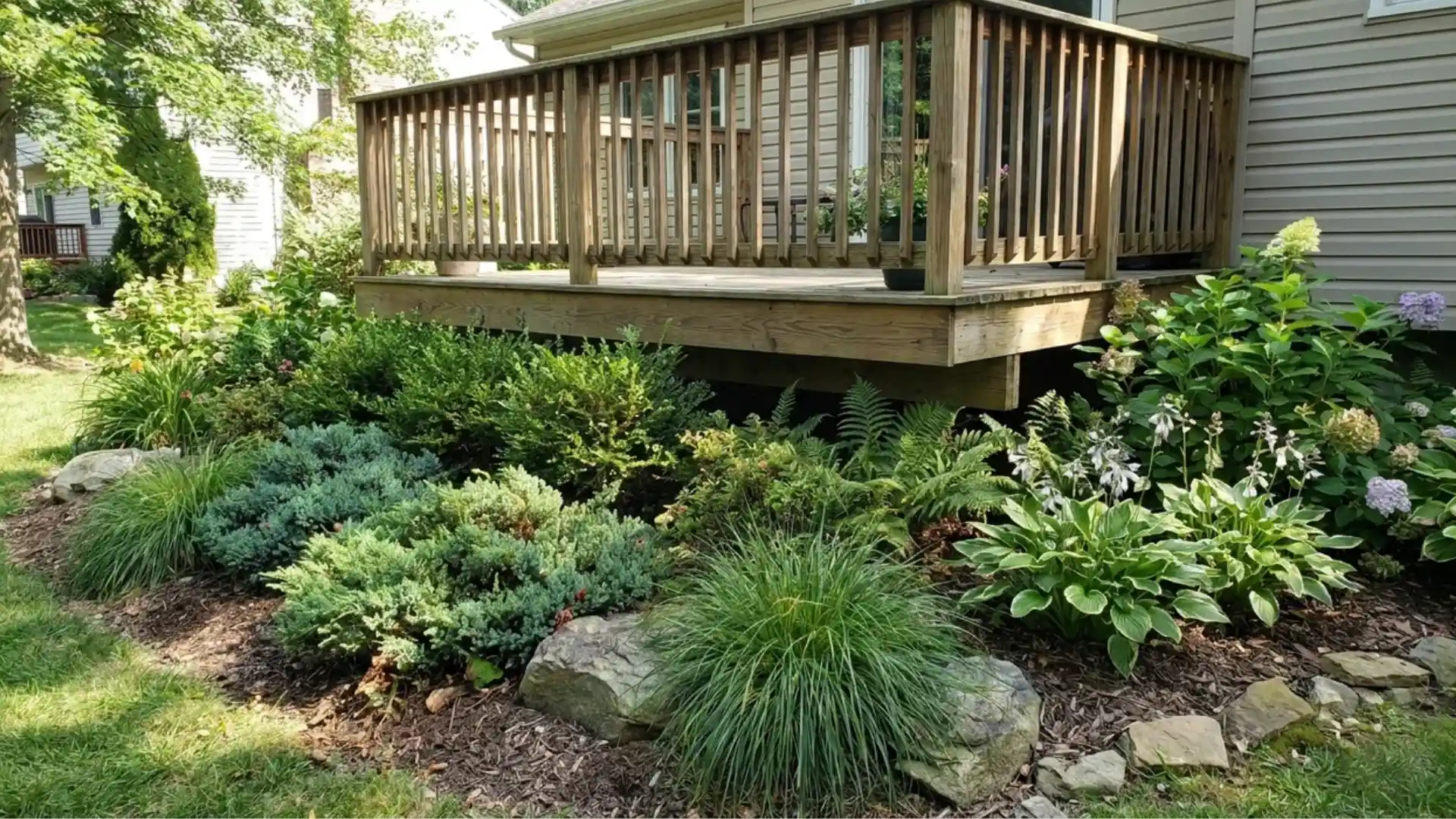
On low decks, dense shrubs or ornamental grasses planted along the perimeter can screen the substructure without any built skirting at all.
This only works well on decks with limited clearance and requires keeping plants a few inches back from the framing to prevent moisture from collecting against the wood.
It is a low-cost option that doubles as landscaping rather than a standalone building project.
Practical and Functional Skirting Ideas
Skirting does not have to be purely visual. A few approaches turn the space underneath into something usable.
These options add practicality alongside the finished look you’re after.
28. Skirting With a Built-In Access Door
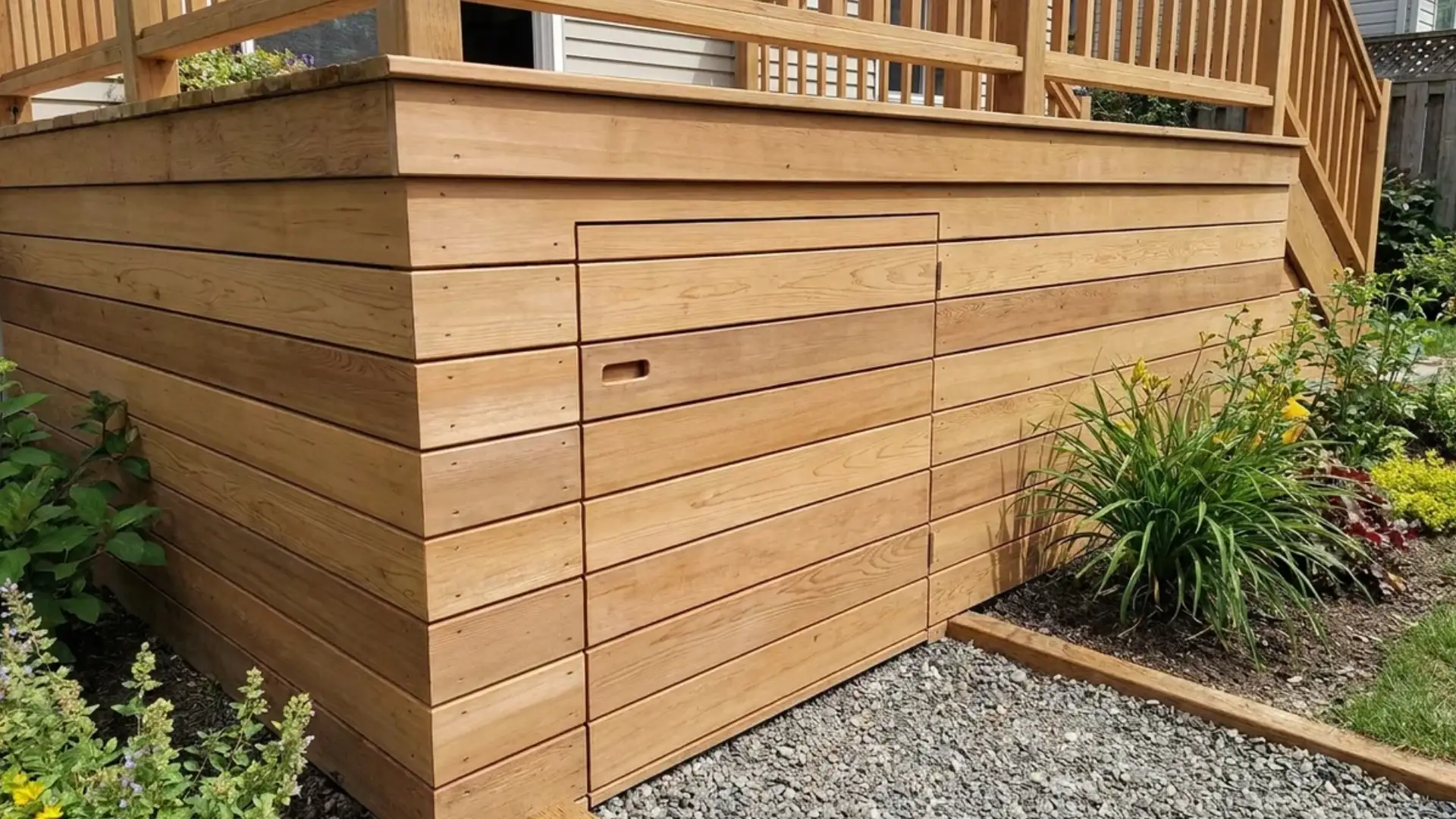
Adding a small hinged or sliding door into a lattice or plank section turns the dead space underneath into usable storage for tools, cushions, or seasonal furniture.
It requires more planning during framing but adds true functionality to a mainly visual feature.
A simple slide bolt or hasp keeps the door secure between uses.
Tip: Position the door on a less-visible side of the deck.
29. Wraparound Stairs as Skirting
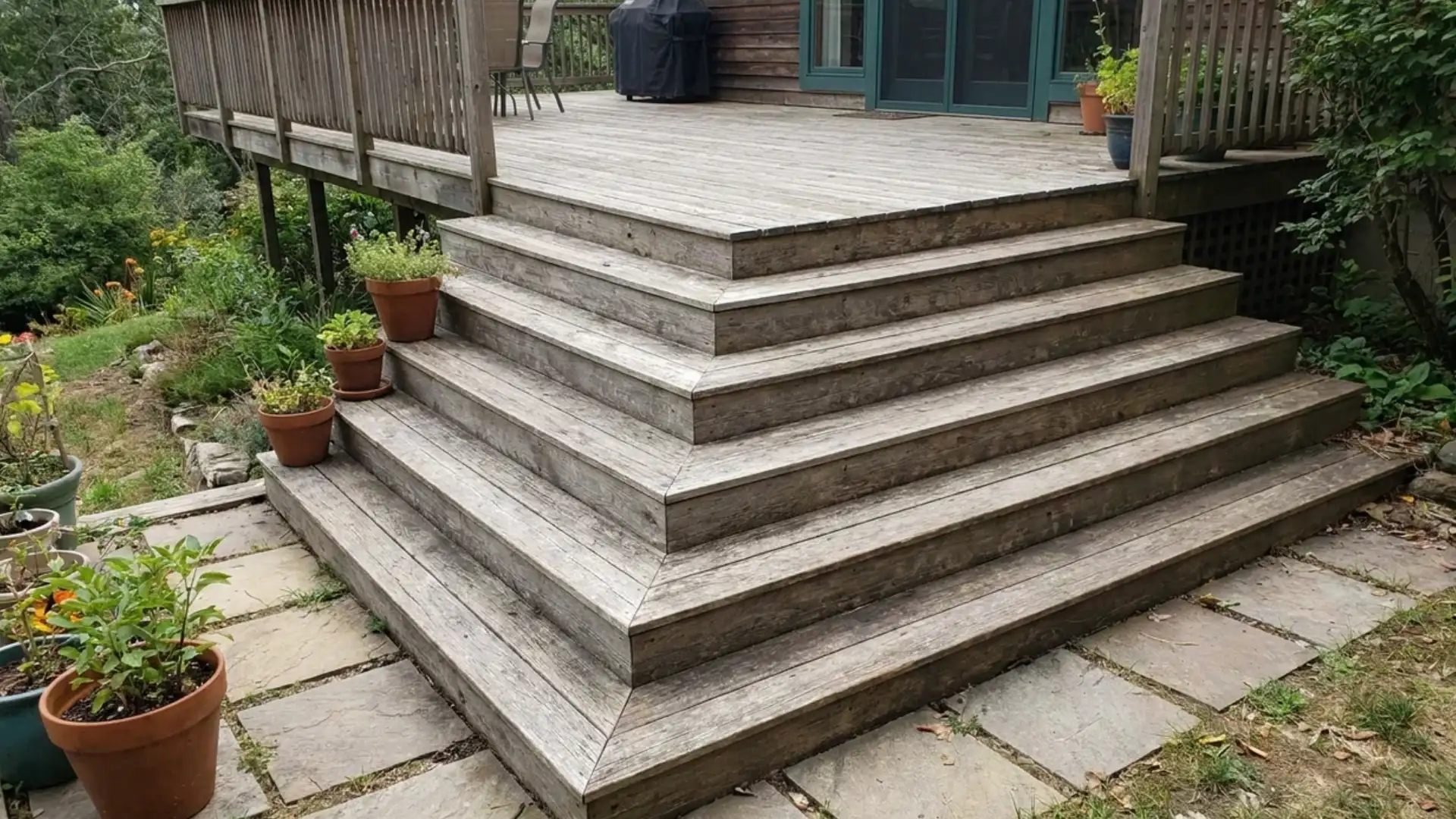
On decks that sit low to the ground, running stairs along one or more sides instead of traditional skirting eliminates the gap entirely while creating a smoother transition into the yard.
It works best on decks about three feet or less off the ground.
Stringers should still be pressure-treated even when stairs replace solid skirting.
Pro: Creates additional usable space around the deck’s edges.
30. Skirting With Built-in Planter Boxes
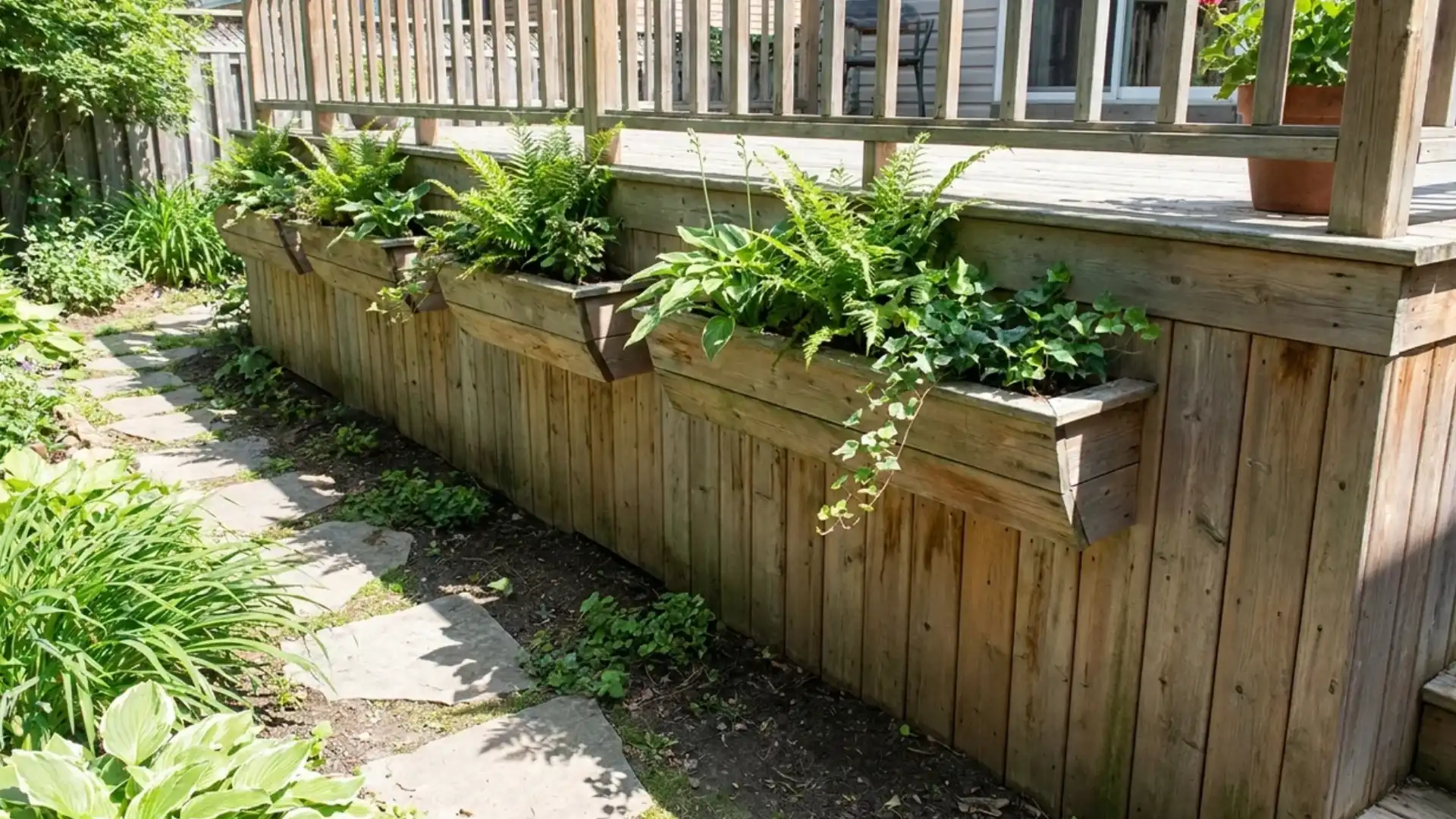
Attaching planter boxes directly onto the skirt frame combines the finished look of solid panels with a built-in spot for seasonal flowers or small herbs at ground level.
Make sure the boxes drain away from the skirting material to avoid damage. A gravel liner inside each box keeps roots from sitting in standing water.
31. Removable Utility-Access Panels
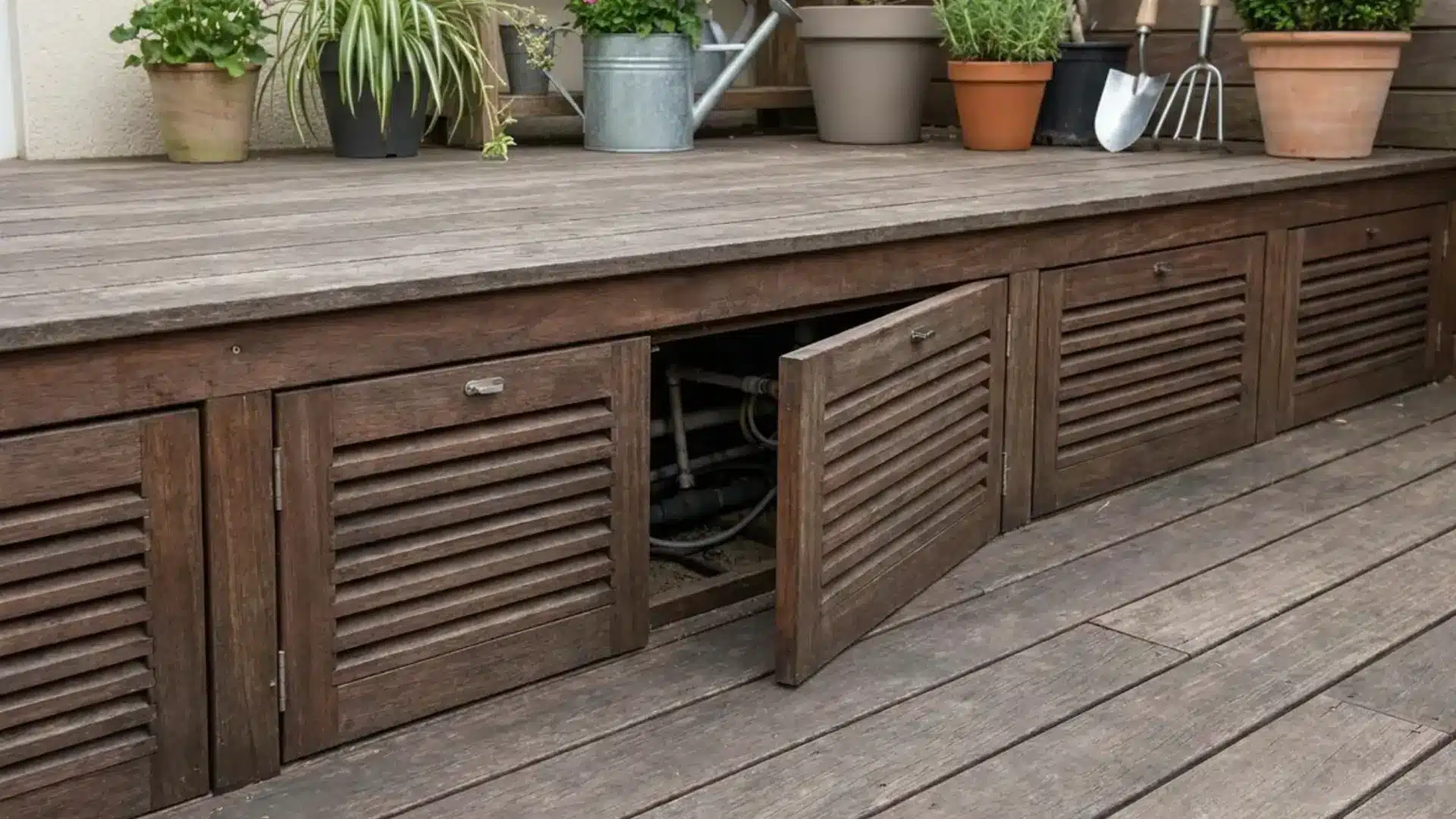
Sections of skirting built to pop out or unscrew give quick, repeatable access to plumbing, electrical, or irrigation lines routed underneath the deck without disturbing the rest of the finished skirt.
This is worth planning during framing on any deck with utilities running below it.
Labeling panel locations on a simple site map saves guesswork years later.
Tip: Install access panels during framing rather than after they are installed.
32. Skirting With Integrated Lighting Strips
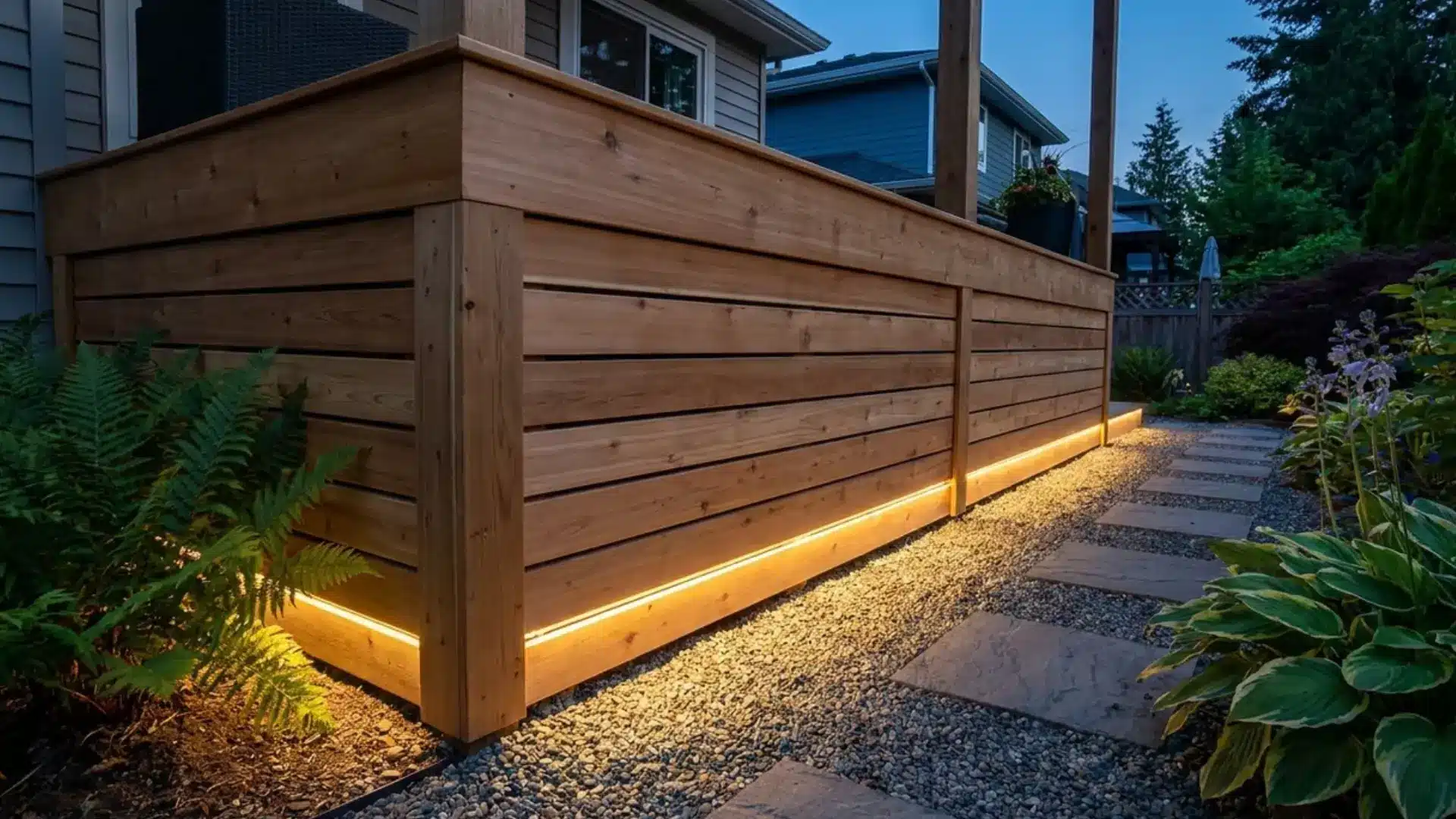
Installing low-voltage LED strip lighting along the inside top edge of the skirting produces a gentle glow that outlines the deck’s base after sunset.
Fixtures need a damp or wet-location rating since the area beneath stays humid even with ventilation.
A timer or smart switch keeps the effect consistent without manual toggling.
Decorative and Unique Accents
These ideas can serve as a complete skirting style or as a layered accent on an existing lattice or slat base, upgrading a deck’s look.
They cost little beyond hardware or labor, making them ideal for updating skirting.
33. Mixed-Material Combinations
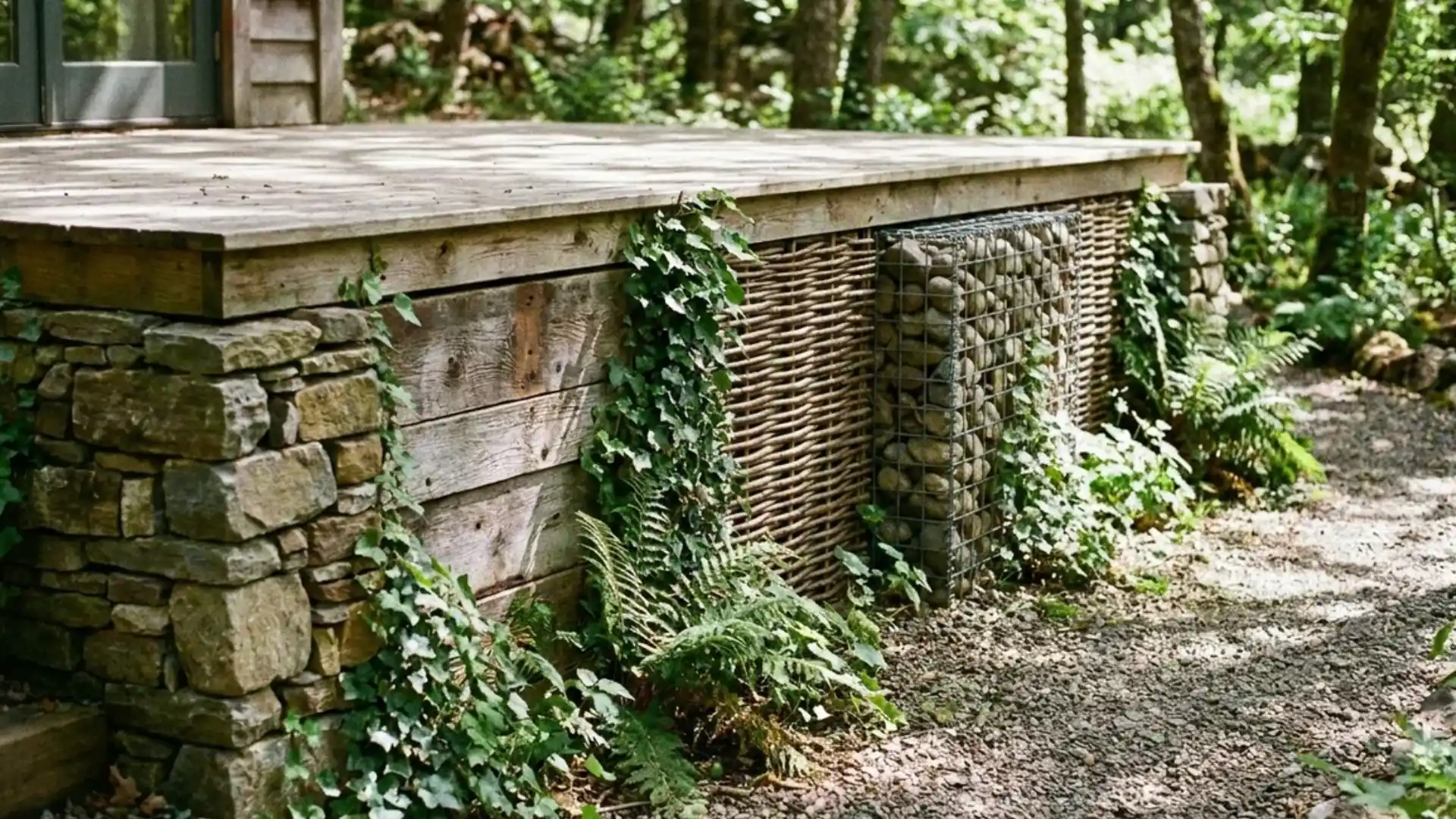
Pairing wood slats with metal accent strips, or stone veneer with composite panels, breaks up a long skirting run.
It adds visual interest without the full cost of one premium material covering the entire perimeter. Keeping the material split consistent across every side helps it read as intentional.
Sketching the layout beforehand prevents an uneven or lopsided material split.
Tip: Maintain consistent material separation on all sides.
34. Repurposed Vinyl Fence Panels
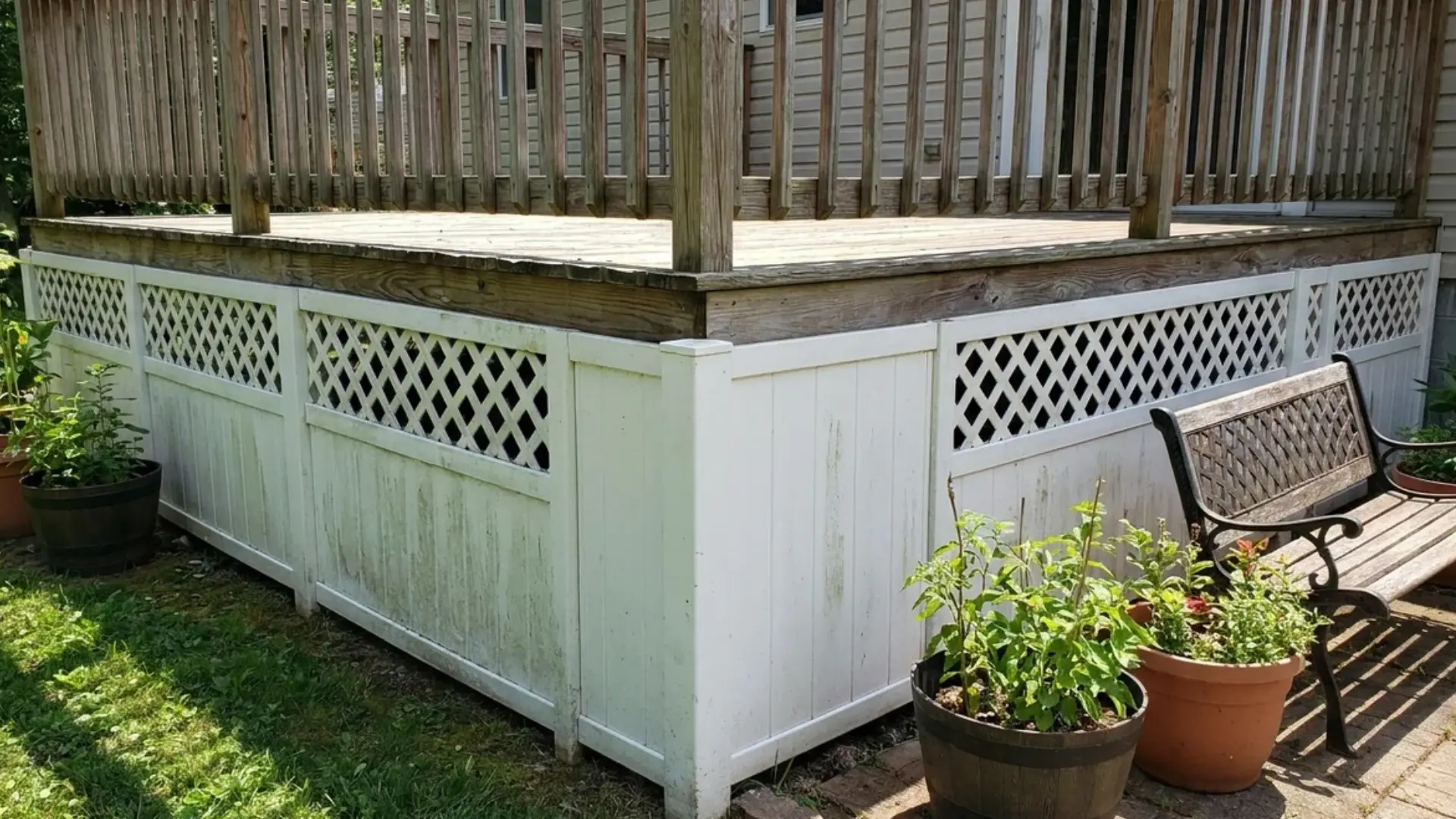
Leftover vinyl fence sections can be cut to skirting height for a low-cost, no-maintenance option that recycles usable material.
It is worth checking that the panel height actually works with the deck’s gap before cutting anything.
A fine-tooth blade keeps vinyl edges clean and chip-free.
A disadvantage is that vinyl does not reseal properly after being cut incorrectly.
35. Chevron Pattern Wood Skirting
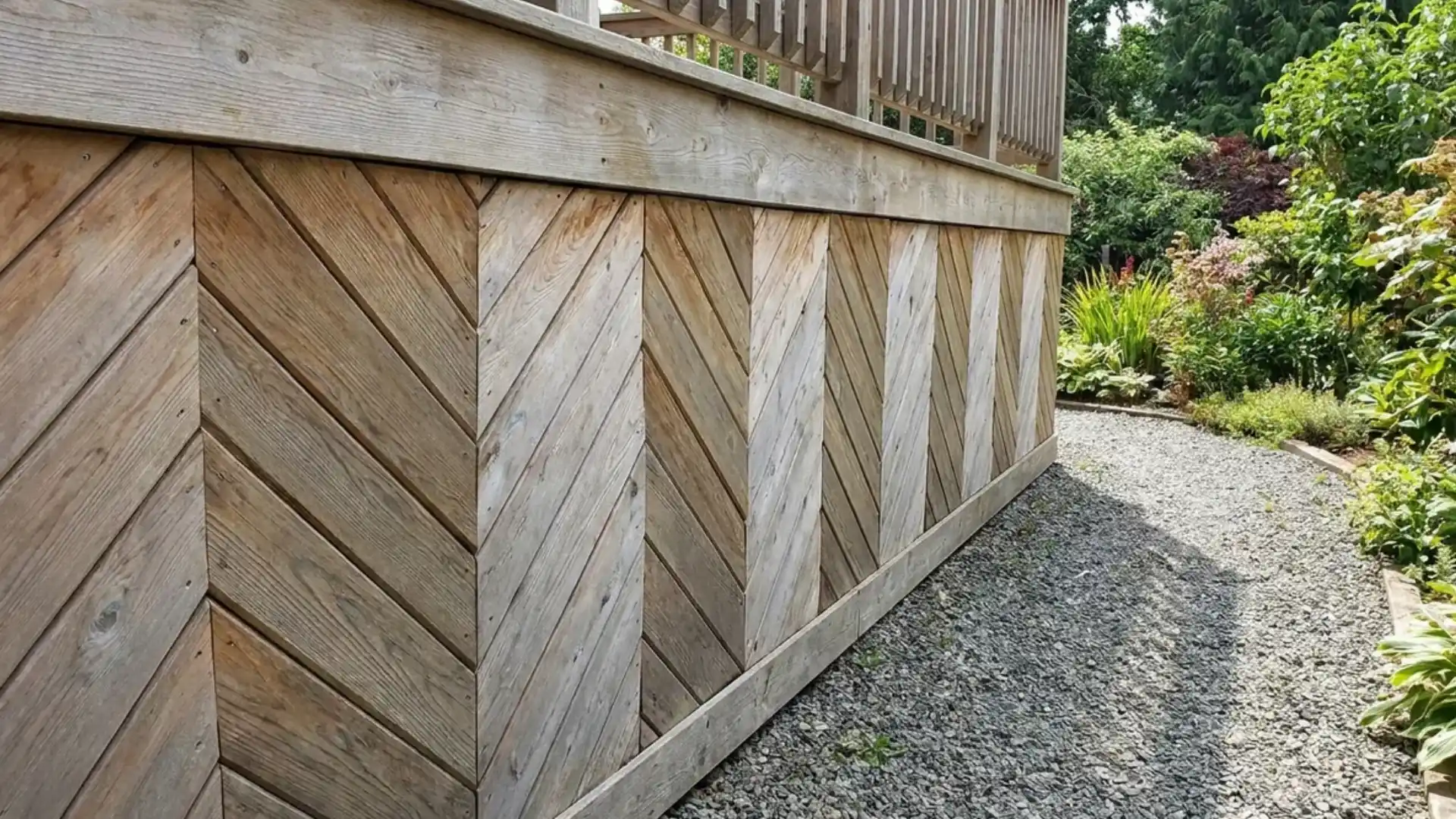
Angled boards meeting in a V pattern across each panel give a bolder, more graphic look than a straight herringbone layout, drawing the eye in a way flat slats don’t.
It uses more offcuts than standard horizontal slats, so it works best on shorter skirting runs.
A template jig keeps each angled cut identical across the panel.
Disadvantages: Consumes more material offcuts compared to standard horizontal slats.
36. Color-Blocked Skirting
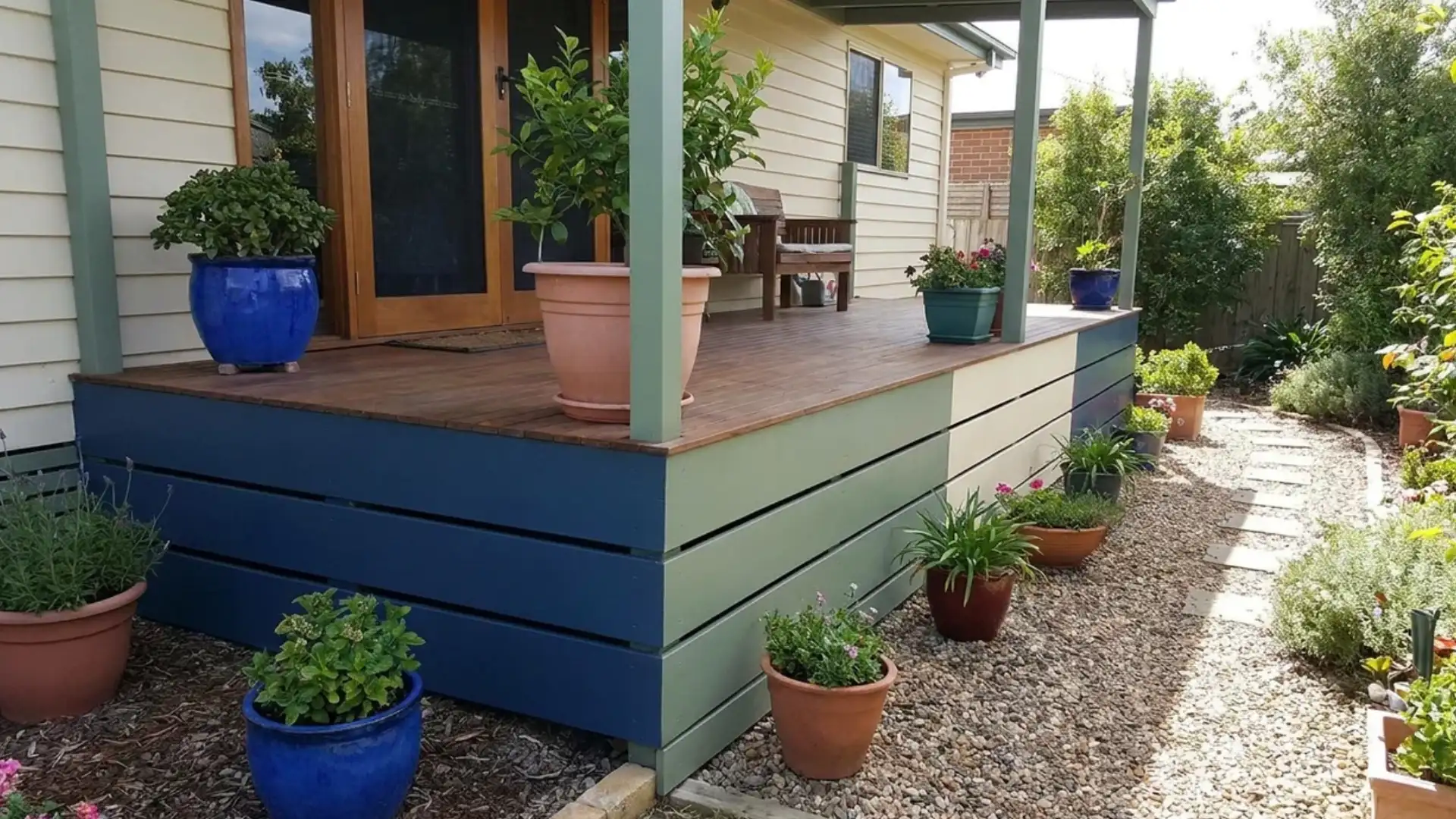
Try painting adjacent skirting panels in two or three coordinating tones instead of one uniform color.
This adds a custom, designed look for little more than the cost of paint and some extra planning time. It is one of the easiest updates to apply to existing skirting.
Painter’s tape keeps color transitions crisp between sections.
37. House Number or Address Accent Panel
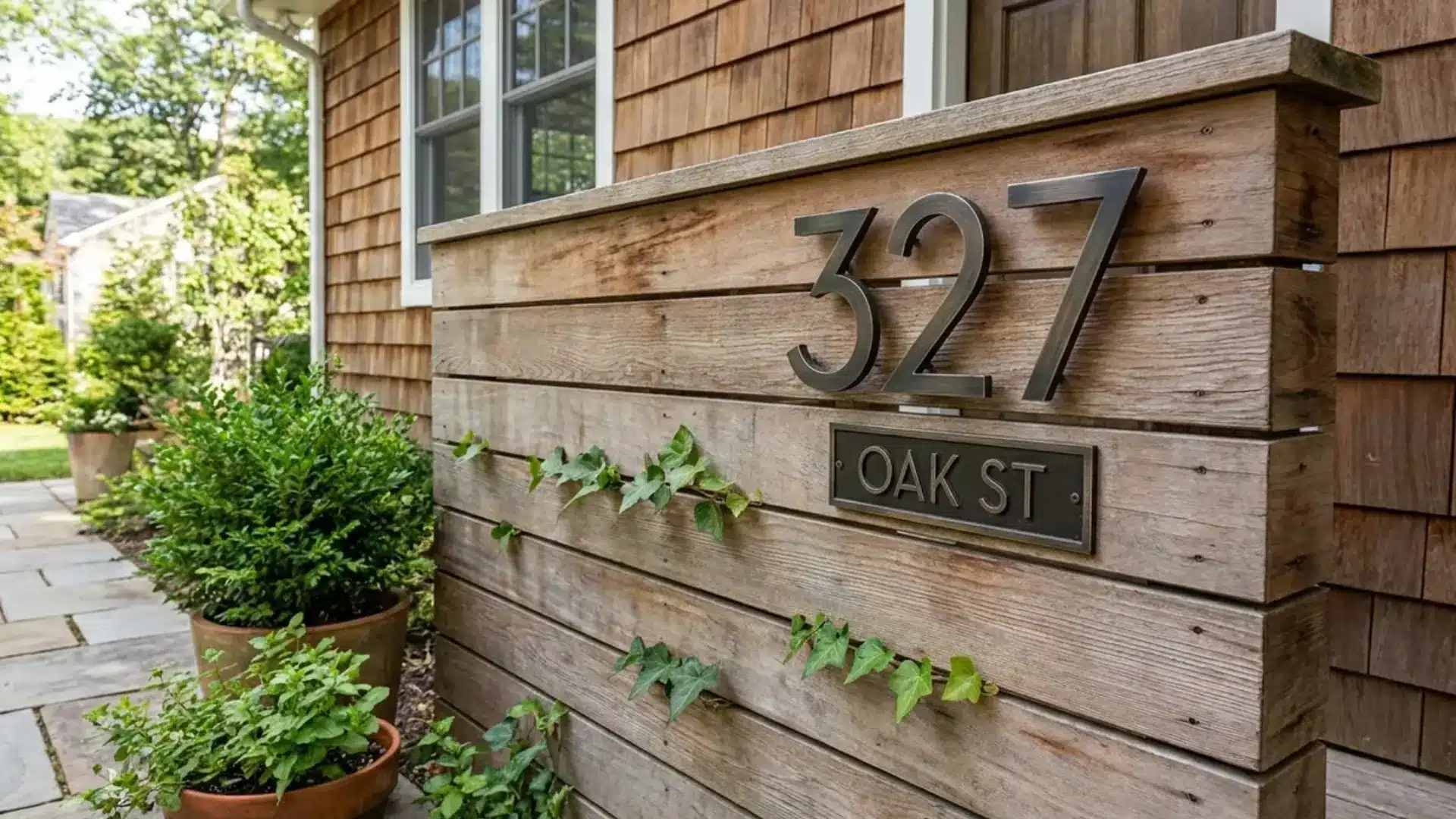
Building a single skirting panel around a house number or address plaque, lit or left unlit, adds a small functional detail near a front-facing deck that doubles as a design accent.
Keeping that panel in a different material helps it read as an intentional focal point.
Placing it near the main walkway keeps the address genuinely visible from the street.
Tip: Choose a different material to help the panel stand out.
38. Solar-Powered Accent Lights
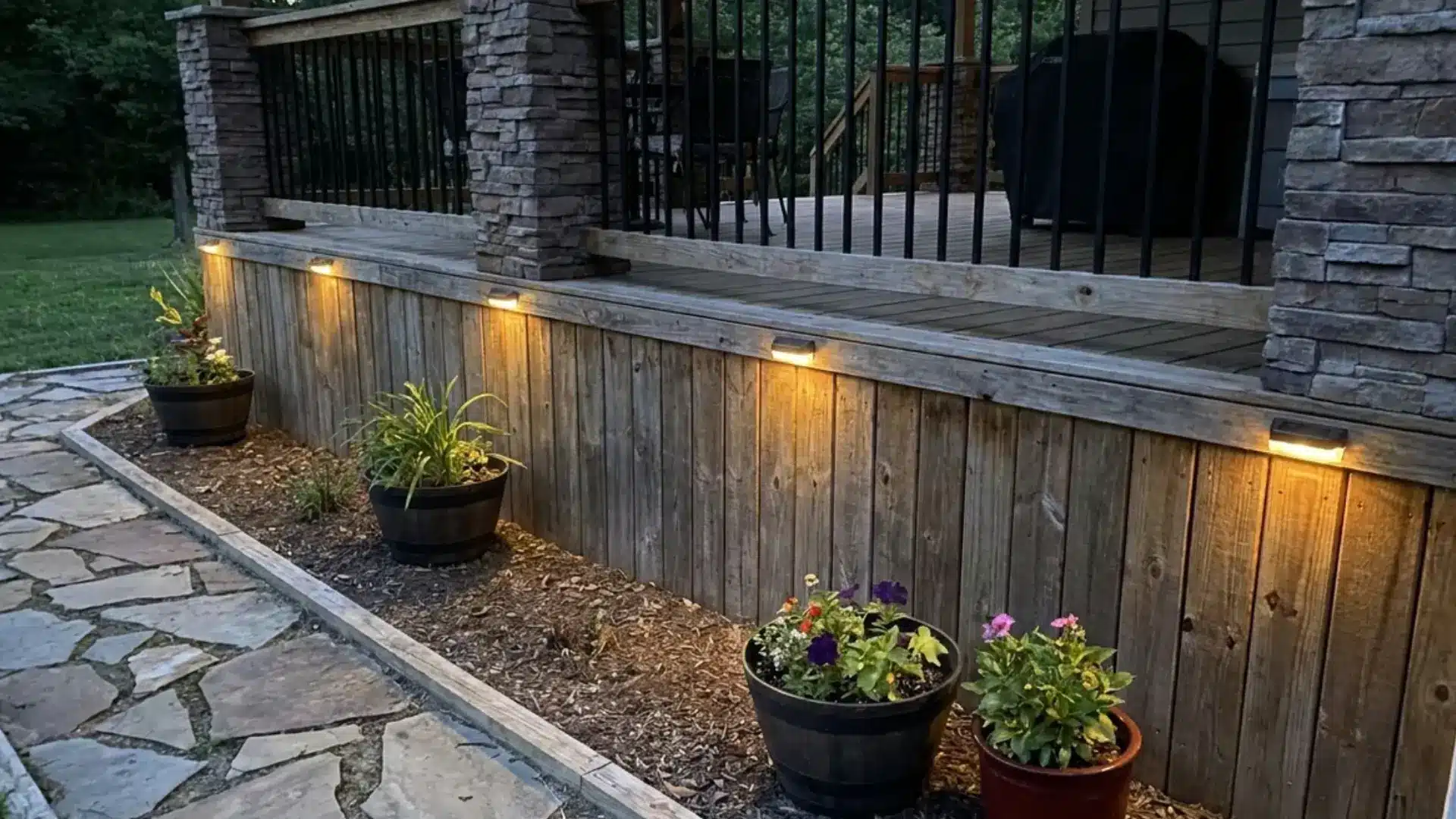
Small solar cap lights or puck lights mounted along the skirting’s top rail add nighttime definition to the deck’s base without running any wiring underneath the structure.
They produce a gentler, less intense glow compared to hardwired strip lighting, suiting a relaxed evening mood.
South-facing panels charge fastest and hold light longest into the evening.
39. Basketweave Wood Panels
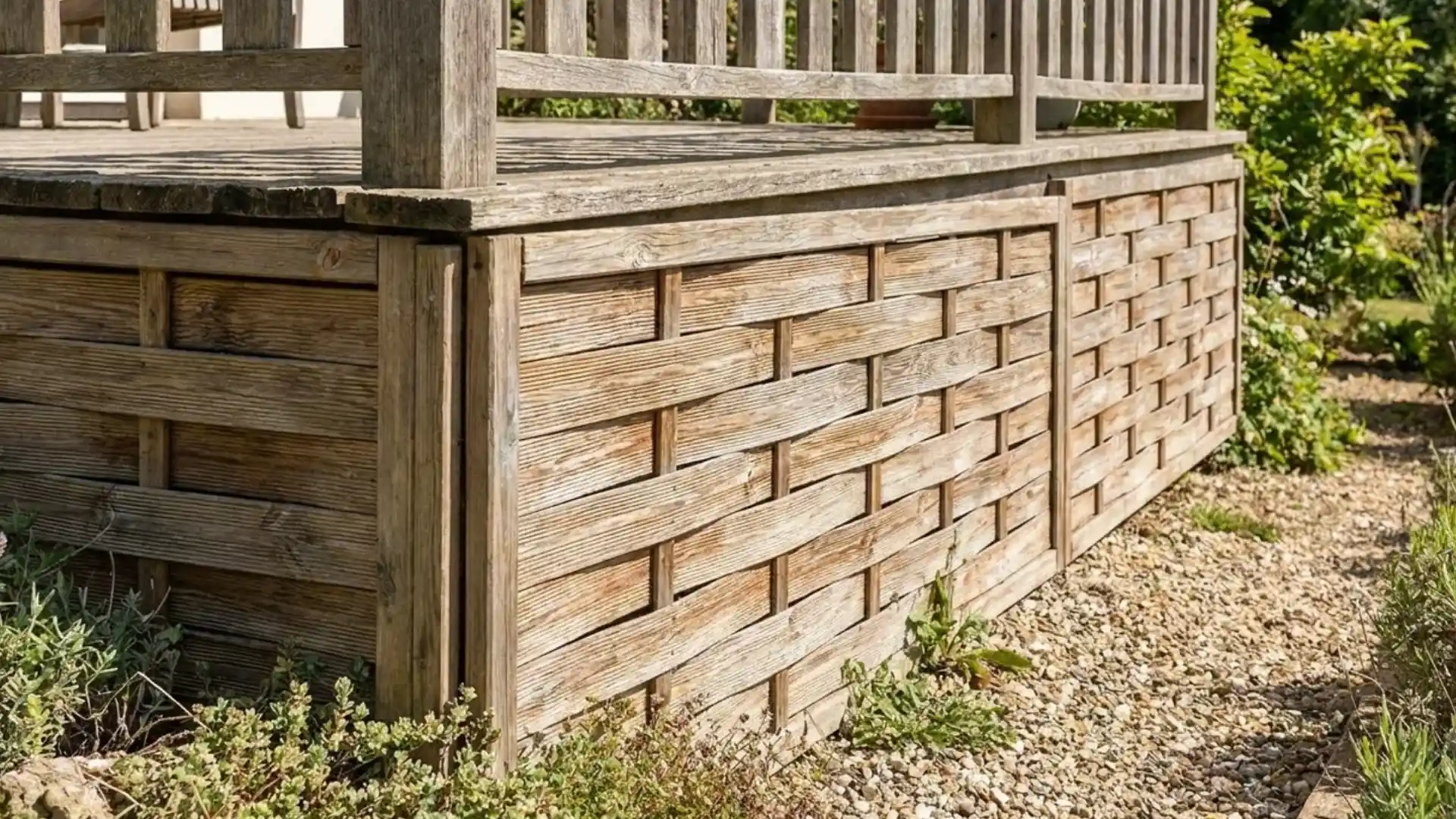
Thin wood strips in an over-under pattern create a textured look that sits between plain lattice and a solid panel.
Building this pattern takes noticeably longer than assembling standard lattice, so it suits smaller accent sections rather than covering a full deck perimeter.
A simple weaving jig speeds up keeping each strip evenly spaced.
Construction time is significantly longer compared to standard lattice.
Best Deck Skirting Materials Compared
Picking a material comes down to how it performs over years, not just how it looks on install day.
- Wood: Shortest lifespan of the group, typically 10-15 years even with regular sealing.
- Composite: Holds up 25+ years with almost no repair work needed.
- Vinyl: Cracks in extreme cold, so it’s a weaker pick for freeze-heavy regions.
- Metal: Dents rather than rots, making repairs a matter of panel swaps, not full rebuilds.
- Stone veneer: Heaviest option by far, and the hardest to patch if a section cracks.
DIY vs. Hiring a Professional for Deck Skirting
The right call depends less on budget and more on the tools and time you actually have.
| Factor | DIY | Professional |
|---|---|---|
| Tools needed | Basic saw, level, drill | Full framing and cutting equipment |
| Time | A weekend or two | Usually done in a day |
| Skill level | Fine for lattice or planks | Needed for stone, gabion, or veneer |
| Mistakes | Costly to redo alone | Covered under workmanship warranty |
| Permits | You handle the paperwork | Often pulled on your behalf |
Common Deck Skirting Mistakes to Avoid
Using indoor-rated hardware or fasteners outdoors leads to rust stains within a season.
Skipping a level base before installing panels causes uneven gaps that stand out immediately. Painting over unsealed wood traps moisture underneath the finish, speeding up rot instead of preventing it.
Blocking the only access point to a utility line forces costly demo work later.
Choosing a skirting tone that clashes with the siding makes the whole exterior look unplanned.
Rushing measurements on corners and slopes leaves visible seams where panels don’t quite meet.
Deck Skirting Maintenance Tips for Long-Term Durability
A few minutes of upkeep each season keeps small issues from turning into a full skirting replacement.
- Clear leaves and grass clippings from the base before they trap moisture against panels.
- Check fasteners for rust or loosening once a year, not just the panels themselves.
- Repaint or reseal in fall, before freeze-thaw cycles start stressing the material.
- Trim back sprinkler spray so it doesn’t hit the skirting directly.
- Watch for insect activity near seams, a sign moisture is already getting in.
Frequently Asked Questions (FAQ’s)
How Much Does Deck Skirting Cost?
Costs vary widely by material, roughly $5-$50 per linear foot installed.
Can I Install Deck Skirting Myself?
Yes, lattice and plank styles are DIY-friendly with basic tools and time.
Does Deck Skirting Need a Gap for Drainage?
Yes, leave a small base gap so water drains instead of pooling.
How Long Does Deck Skirting Last?
Wood lasts 10-15 years; composite and metal often exceed 25 years.
Does Deck Skirting Add Home Value?
It can, since a finished, well-matched skirt improves curb appeal and perceived upkeep.
Wrap Up!
Picking from deck skirting ideas comes down to matching material to climate, then matching style to the house.
A cedar lattice fits a farmhouse the same way stone veneer fits a brick colonial, so let the exterior lead the decision.
Budget sets real limits too, starting with bamboo or wire mesh now and upgrading to composite later. What matters most is closing that gap cleanly, with enough airflow to keep the frame dry for years.
Once it is done, the deck reads as finished from every angle, not just from the top down.