I still remember peering at my first tray of tomato seedlings and feeling my stomach drop.
They sprouted just fine, then turned pale and thin and leaned toward the window like they were begging for more light.
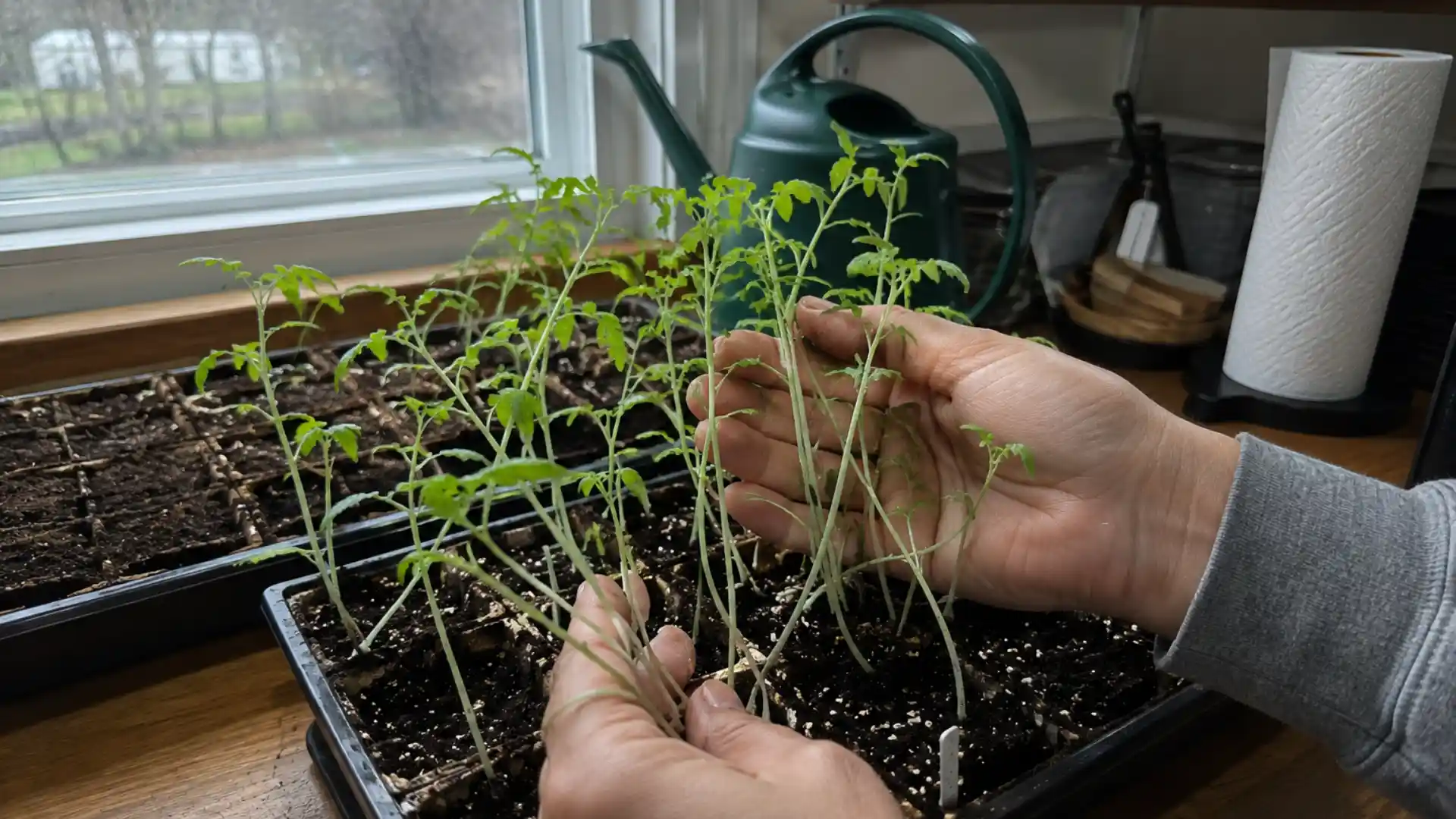
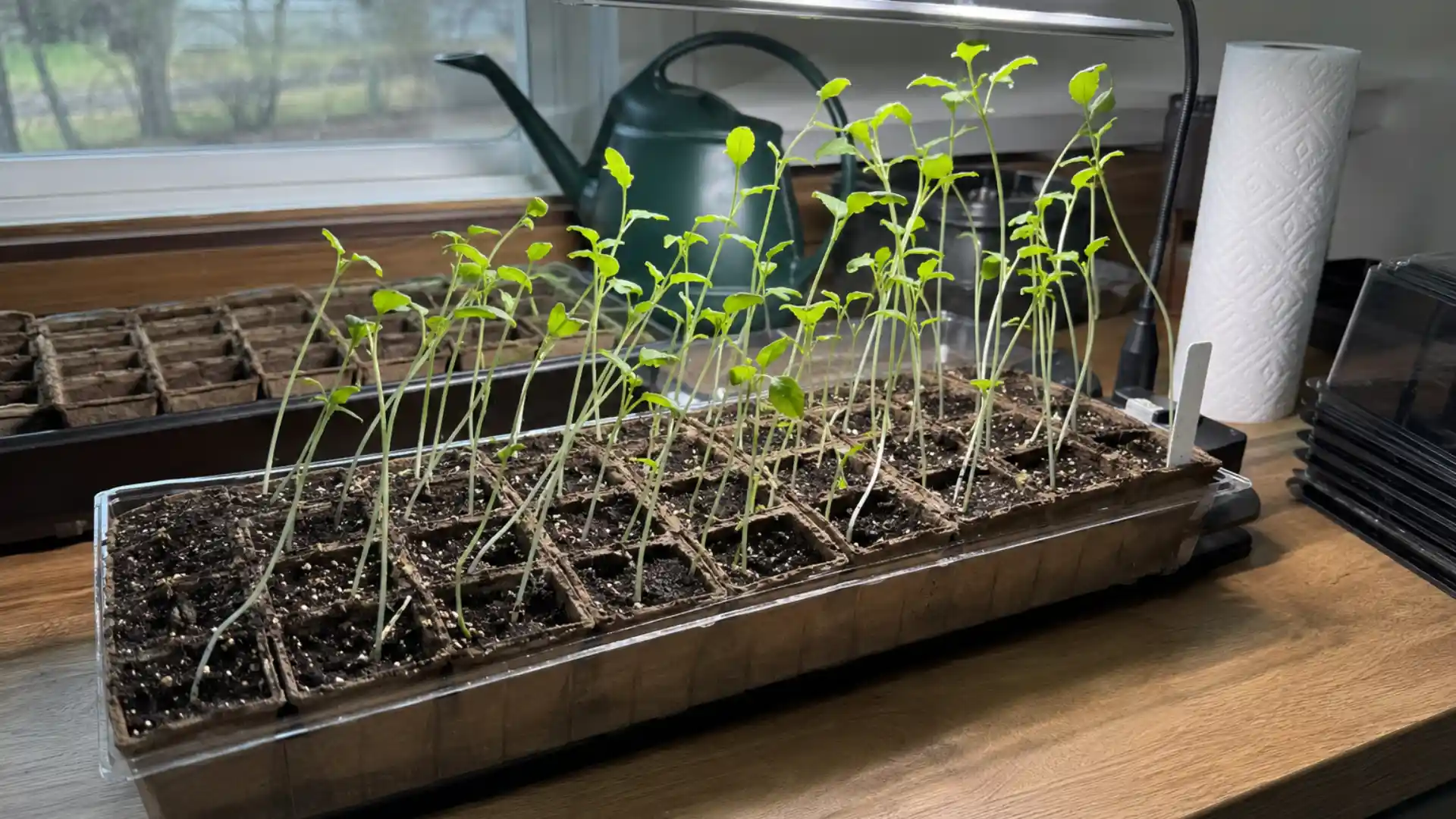
That stretched, weak look is what we call leggy seedlings, and it almost always comes down to light that is not bright or close enough.
Crowded trays and warm rooms make the stretching worse. Watering mistakes can weaken seedlings too, but that is rarely the real cause.
So can these lanky little sprouts still grow into something sturdy?
What are Leggy Seedlings?
Look for tall, thin stems, wide gaps between leaves, and a pale, washed-out color. Seedlings often lean hard toward the window, with weak stems that flop, and growth across the tray looks uneven.
| Healthy Seedling | Leggy Seedling |
|---|---|
| Short, sturdy stem | Long, thin stem |
| Compact leaf spacing | Long internodes |
| Upright growth | Leaning or flopping |
| Strong green color | Pale, stretched look |
| Balanced growth | Growth chasing light |
Do not confuse this with damping-off.
Illinois Extension notes seedlings affected by damping off often look healthy at first but collapse at the base of the stem shortly after emerging, since the pathogen infects them at or below the soil line.
That kind of sudden collapse points to excess moisture and poor airflow, not light, something I have learned to check for before assuming every floppy seedling is starved for light.
Why Do Seedlings Get Leggy?
At its core, legginess happens when a seedling’s growth outpaces the light it can actually use.
Here is what typically drives that imbalance:
- Not Enough Light – The single biggest cause, especially near windows.
- Grow Light Too Far Away – Intensity fades fast with distance.
- Too Much Warmth – Speeds up growth faster than the plant can support it.
- Overcrowding – Seedlings competing and shading each other.
- Overwatering or Excess Fertilizer – Weakens the plant, even if it isn’t the root cause.
Getting the light habits right from the start prevents a lot of this stretching before it begins. Sort out light and space first, since most other issues tend to ease up once those are fixed.
Ways to Fix Leggy Seedlings
Once you know what’s causing the stretch, fixing it usually comes down to a handful of practical adjustments. Pick the ones that match what is actually going on in your setup rather than trying all eleven at once.
1. Give Seedlings More Intense, Consistent Light
More hours of light would not help much if the intensity itself is weak, something I learned after leaving a lamp on for sixteen hours a day and still watching my basil stretch.
A dedicated grow light almost always outperforms a windowsill, since window glass filters out a good chunk of usable light and the angle shifts throughout the day.
If you are relying on natural light, a grow light is usually the single biggest upgrade you can make.
2. Move the Grow Light to the Correct Height
Distance quietly undoes a lot of otherwise good setups.
- Light intensity fades quickly the farther it sits from the plant.
- Follow the hanging distance your specific fixture recommends, since LEDs and fluorescents vary widely.
- Keep the light close enough that the whole tray gets even coverage, not just the center.
- Raise the fixture as seedlings grow so the canopy stays a consistent distance away.
3. Thin Crowded Seedlings
When several seedlings crowd one cell, they shade each other and stretch to compete.
Choose the strongest, healthiest-looking seedling to keep and remove the rest.
Snip the unwanted ones at the soil line instead of pulling them, since tugging can disturb the roots of the seedling you are trying to save. It feels harsh the first time, but the remaining plant grows noticeably sturdier for it.
4. Reduce Excessive Heat After Germination
Heat mats do their job well during germination, but they can work against you afterward. Once seedlings emerge, it is worth reassessing whether that extra warmth is still needed.
Keeping trays away from radiators, heating vents, or sun-baked windowsills also helps, since these spots run hotter than they look.
Every crop has a slightly different comfort range, so match the adjustment to what you are actually growing rather than a single fixed number.
5. Give Seedlings Better Air Circulation
A little movement in the air does more than people expect.
- A small fan on its lowest setting encourages thicker, sturdier stems.
- Run it for a few hours a day rather than constantly.
- Skip strong, direct airflow, which can dry out or stress young seedlings.
- Remember, airflow supports strong growth but won’t fix a light problem on its own.
6. Correct Overwatering and Poor Drainage
This is where watering habits genuinely matter, even if they are not the main cause of legginess.
Keep the growing medium evenly moist without letting it sit saturated, and make sure containers actually drain rather than holding water at the bottom.
I got into the habit of checking the soil with a finger before watering on any kind of schedule, since watering by routine rather than by need is an easy way to overdo it. Excess moisture weakens roots and opens the door to damping-off.
7. Pot Up Seedlings That Have Outgrown Their Containers
Seedlings that have gotten root-bound or crowded in small cells benefit from more room to grow.
Potting up makes sense once roots start circling the container or growth clearly stalls. That said, a bigger pot won’t undo stretching caused by poor light.
Think of this as giving a seedling the space it needs going forward, not a fix for what already happened.
8. Plant Certain Leggy Seedlings Deeper
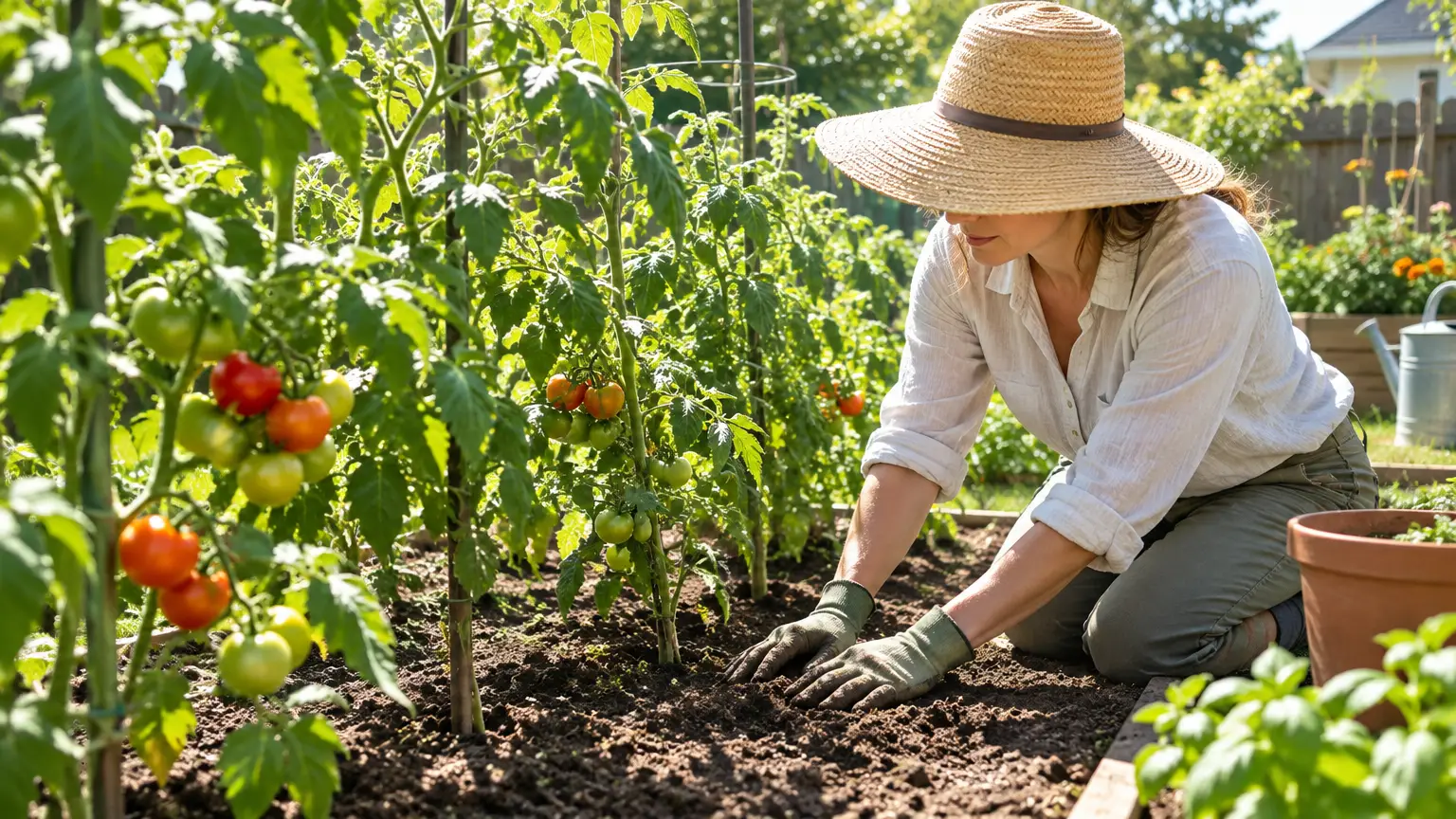
Tomatoes are the standout example here, since they grow adventitious roots along any buried section of stem, turning a stretched section into extra root mass instead of wasted growth.
This trick does not translate to every crop, though, and burying stems that cannot root that way just invites rot.
| Seedling | Can it be planted deeper? |
|---|---|
| Tomatoes | Yes, readily |
| Tomatillos | Yes |
| Peppers | Only slightly, if at all |
| Cucumbers | No |
| Lettuce | No |
| Most flowering annuals | No |
9. Support Seedlings That Are Already Flopping
A thin stake, a bit of twine, or even a toothpick can keep a floppy stem from snapping while you work on the actual cause.
This is purely protective, not corrective.
It would not make the stem shorter or sturdier on its own, but it buys time for better light and conditions to do their job without losing the plant to mechanical damage in the meantime.
10. Improve the Seedling’s Growing Space
Sometimes the fix is not one single thing but the overall setup.
- Give each seedling enough space so leaves don’t touch their neighbors.
- Clear away anything casting shade over part of the tray.
- Improve airflow around the whole growing area, not just one corner.
- Rotate trays if one side is getting noticeably less light.
- Avoid packing shelves or windowsills so tightly that some plants are shortchanged.
11. Harden Off Recovered Seedlings Before Moving Them Outdoors
Even a seedling that has bounced back indoors is still tender compared to what is waiting outside. Moving it straight into full sun and open wind can undo weeks of careful recovery in a single afternoon.
Introduce outdoor conditions gradually, starting with an hour or two in a sheltered, shaded spot and building up over a week or so.
Seedlings that were already stressed by stretching need this transition even more than healthy ones do.
Can Leggy Seedlings Recover?
Yes, many mildly to moderately leggy seedlings can go on to grow just fine, though the stretched part of the stem stays exactly as it is.
Recovery looks like the stretching stops, new growth comes in stronger, and the plant settles into steadier root and shoot development.
I have nursed plenty of lanky tomato starts back to health this way, so do not give up on them too quickly.
Signs a Leggy Seedling Can Recover
- Stem is still firm to the touch
- Growing tip is intact and undamaged
- Leaves look reasonably healthy, not shriveled
- Roots appear white and healthy
- No collapse at the soil line
- Stretching happened recently, not over weeks
Signs It May Be Better to Start Over
- Stem is extremely thin and fragile
- Seedling has already collapsed
- Stem looks pinched, brown, or water-soaked
- Roots are badly damaged or rotted
- Damping-off is spreading through the tray
- Growing point itself is damaged
- Plant stays severely weak even after fixing light and heat
How to Tell What is Wrong With Your Seedlings?
Sometimes the fastest way to fix a leggy tray is to just match what you are seeing to the likely cause, something I wish I’d had a cheat sheet for during my first few seasons of guesswork.
| What You See | Most Likely Issue |
|---|---|
| Tall, thin stem leaning toward the window | Insufficient light |
| Tall growth plus excessive warmth | Too much heat, often paired with weak light |
| Several seedlings stretching together | Crowding and light competition |
| Stem collapses right at soil level | Possible damping-off |
| Wet soil with a weak, wilting plant | Root or moisture problem |
| Seedling keeps stretching even under a grow light | Light may be too weak, too far away, or uneven |
How to Prevent Leggy Seedlings?
Prevention is really just the fixes above, applied before stretching ever starts.
After a few seasons of trial and error, this is the routine I stick to now:
- Set up grow lights before seeds even germinate, not after you notice a problem.
- Give emerging seedlings strong light immediately, since the first few days matter most.
- Avoid overcrowding by giving each seedling its own space from the start.
- Remove heat mats once germination is done, unless your specific crop needs otherwise.
- Water according to actual moisture levels, not a fixed schedule.
- Provide gentle air movement with a low fan setting to encourage sturdier stems.
- Monitor new growth closely rather than waiting until stretching becomes obvious.
Get these habits in place early, and potting up at the right time becomes the only real intervention your seedlings ever need.
The Bottom Line
Leggy seedlings look discouraging, but they are rarely a lost cause. A little more light, a bit more space, and some patience are usually all it takes to turn things around.
Watch for firm stems and healthy roots before deciding whether to nurse a seedling along or start fresh, and let each tray teach you something for next season.
Gardening is full of these small corrections, and getting comfortable with them is half the fun.
Have you managed to save a leggy seedling before, or watched one bounce back on its own? Share your experience in the comments below.
Frequently Asked Questions (FAQs)
Can Leggy Seedlings Still Produce a Good Harvest?
Often, yes, especially crops like tomatoes that can be planted deep enough to bury the stretched stem. Once new growth comes in strong and roots establish well, yield usually is not affected much.
How Long Does It Take for a Leggy Seedling to Recover?
New, sturdier growth typically shows up within one to two weeks after you fix the light and environment. The stretched portion itself never shortens, but everything the plant grows after that point should look normal.
Can I Cut off the Leggy Part of a Seedling?
Trimming the top of a leggy seedling can sometimes encourage bushier growth, but it is risky on young plants with only a few true leaves. It is usually safer to fix the underlying cause first and let the plant grow through it.
Do All Leggy Seedlings Need to Be Thrown Away?
No, most mildly to moderately leggy seedlings recover just fine with better light and conditions. Only seedlings that have collapsed, rotted, or become extremely fragile are usually not worth saving.
Does Legginess Affect Flowering or Fruiting Later on?
In many cases, a recovered seedling flowers and fruits normally once it is established in the garden. Severely stretched plants that stay weak can lag behind, but they often catch up if given enough time.