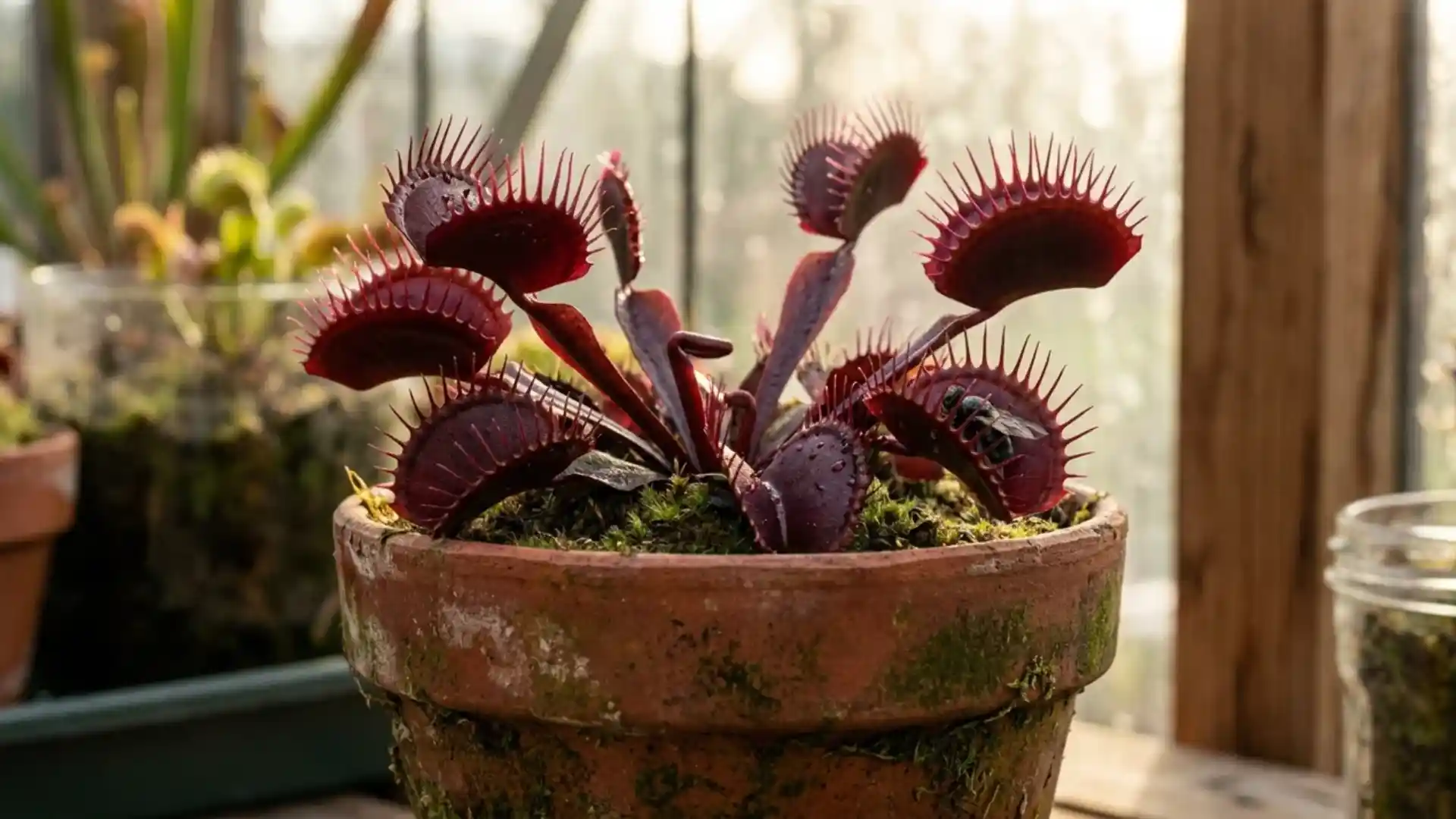
Venus flytraps look otherworldly, but their care rules are refreshingly specific once you know them.
Most plants die within their first year, not because owners neglect them, but because they treat them like an average houseplant: tap water, rich potting soil, low light.
That’s the opposite of what actually keeps a flytrap alive.
Get the sunlight, water, soil, and feeding right, mimicking the nutrient-poor bog habitat this plant evolved in, and you’ll have a thriving, snapping flytrap for years instead of weeks.
What Makes Venus Flytraps Different From Other Houseplants?
Venus flytraps aren’t like the average houseplant you can water on a schedule and forget.
Native to the nutrient-poor bogs of North and South Carolina, Dionaea muscipula evolved to trap and digest insects because its soil lacks the nitrogen most plants get for free.
That single adaptation shapes everything about its care: it needs intense, direct light, mineral-free water, nutrient-poor soil, and even a winter dormancy period to survive in the long term.
Understanding this bog-plant biology is the foundation for keeping one alive for years.
How Much Sunlight Do Venus Flytraps Need?
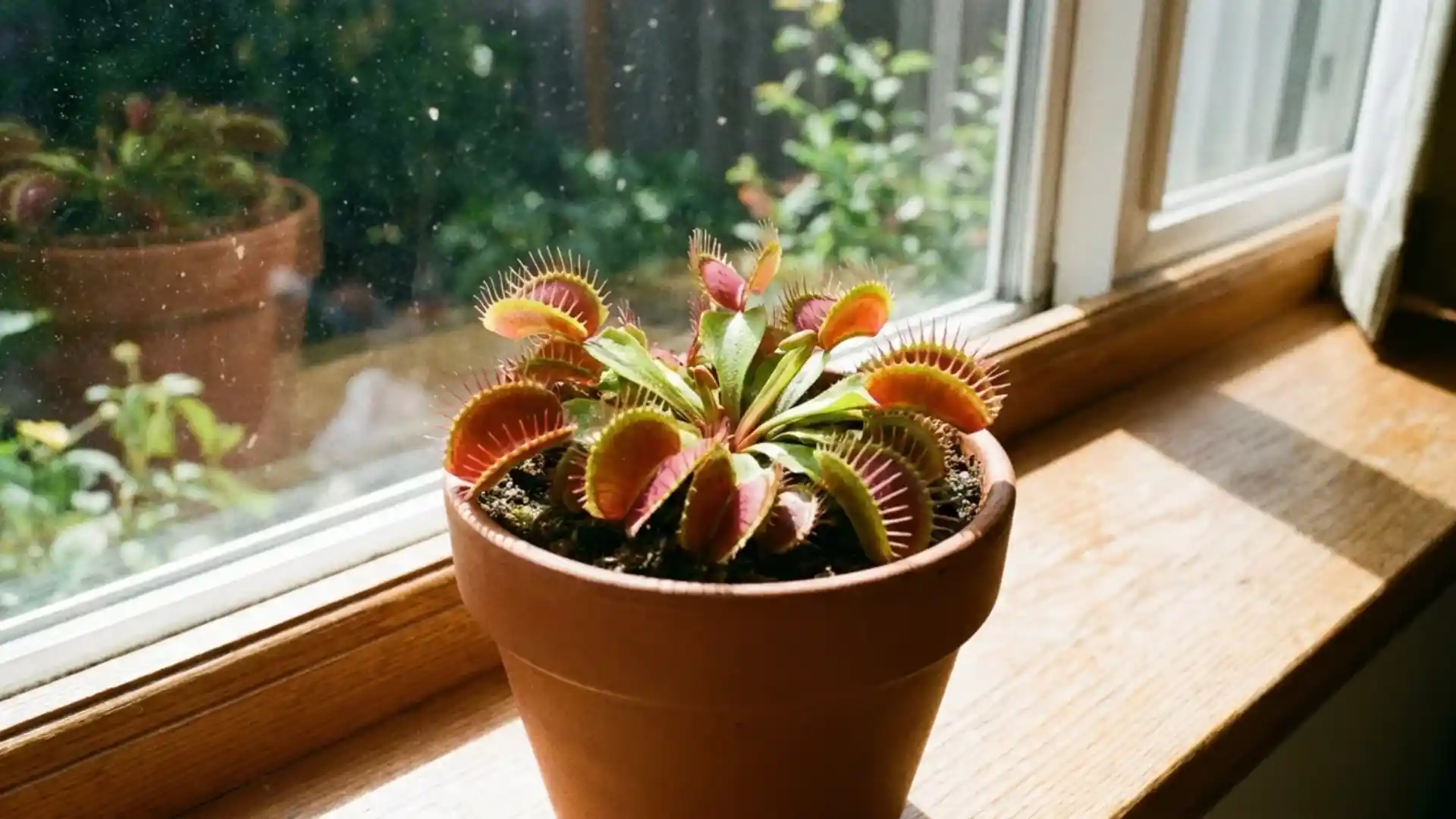
Light is the single biggest factor in whether a Venus flytrap thrives or slowly declines.
Do Venus flytraps need sun? Absolutely, and how much they need depends on if your plant lives indoors or outdoors.
Indoor Light Requirements
Indoor flytraps need to sit in the brightest spot in the house, ideally a south-facing window. A windowsill alone often isn’t enough, so supplementing is common.
Steps to follow
- Place the plant in a south-facing window, the best orientation for direct sun in the US
- Ensure it gets at least 6 hours of direct sunlight daily
- If leaves look pale or thin despite a sunny window, add a full-spectrum LED or T5 grow light
- Run the grow light for 12–16 hours a day to make up for weak natural light
Indoor growers should treat grow lights as a requirement, not an optional extra, for consistent results.
Grow light wattage for an indoor garden depends on fixture type and distance from the foliage, and matching it to the space matters more than picking the biggest bulb available.
Outdoor Light Requirements
Outdoor flytraps generally get healthier growth since sunlight outside is far stronger than anything filtered through glass. Full sun exposure is the standard.
Steps to follow
- Place the plant somewhere it gets at least 6 hours of direct sunlight per day.
- Expect some traps to “burn” briefly after the transition to full sun- this is normal.
- Let the plant grow new, stronger traps to replace burned ones, usually within a few weeks.
- Keep sunlight exposure consistent day to day for steady growth.
Outdoor plants also tend to self-feed by attracting insects, making this the lower-maintenance option overall as long as light stays consistent.
Signs of Insufficient Light (and Using Grow Lights to Fix It)
A Venus flytrap starved of light shows clear warning signs before it’s too late. This is often the clearest answer to whether Venus flytraps need sun – without it, growth stalls almost immediately.
Leaves grow long, thin, and pale green instead of compact and red-tinged. Traps remain small, open sluggishly, or fail to form altogether, since the plant lacks the energy to build them.
If a windowsill isn’t cutting it, add a full-spectrum LED or T5 grow light positioned close to the foliage and run it 12–16 hours daily.
Consistent artificial light often reverses weak growth within a few weeks, restoring color and trap size.
Best Water Types for Venus Flytraps
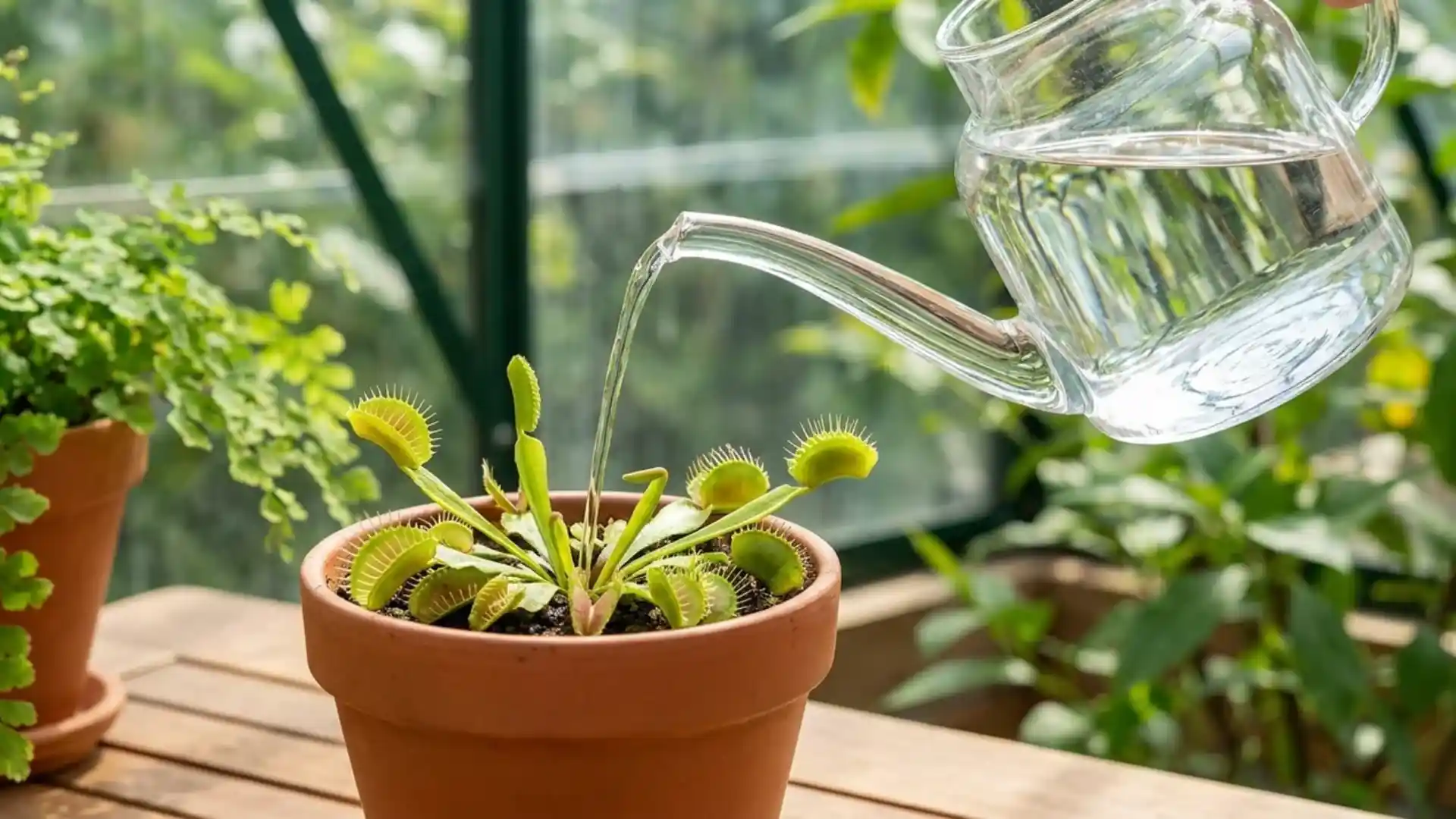
Water quality can make or break a Venus flytrap’s health, since even small amounts of dissolved minerals can accumulate in the soil over time.
Tap water is usually the culprit, carrying dissolved salts and chlorine that the plant can’t tolerate.
Instead, stick to water sources that mimic the pure rainfall of its native bogs:
- Distilled water- reliably mineral-free and widely available
- Rainwater- natural and free, if collected in a clean container
- Reverse osmosis (RO) water is ideal for growers who want consistency
Using the wrong water is one of the most common reasons flytraps decline slowly, so getting this right early prevents long-term damage.
How to Water a Venus Flytrap?
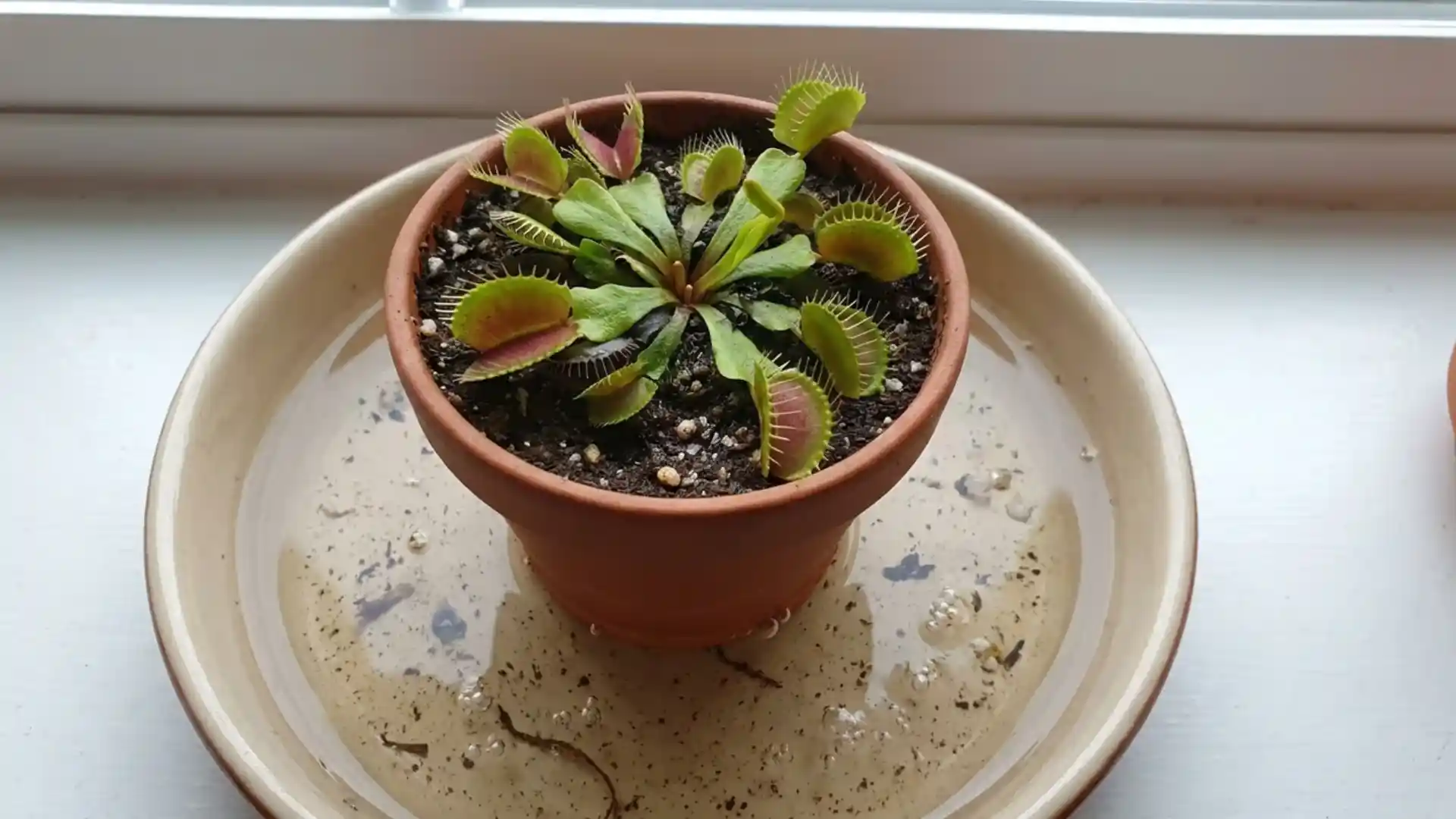
Getting the water source right is only half the equation -how you actually water your flytrap matters just as much.
Unlike typical houseplants, these bog natives need consistent moisture without ever drying out or sitting in stagnant, waterlogged soil.
The Tray/Saucer Method
Bottom-watering through a tray mimics the natural bog conditions flytraps evolved in, keeping roots consistently hydrated without disturbing the traps.
Steps to follow
- Place the pot in a shallow saucer or tray
- Fill the tray with about ½ to 1 inch of water
- Let the soil absorb water from below rather than pouring it over the top
- Refill the tray as the water gets absorbed, keeping it consistently topped up
This method is the most reliable way to maintain steady moisture without risking rot or trap damage from overhead watering.
Bottom-watering to prevent root rot follows the same logic for most houseplants, not just carnivorous ones.
Temperature and Humidity Needs
Light, water, and soil get most of the attention, but temperature and humidity matter too.
During the growing season, Venus flytraps do well in typical warm-weather conditions, roughly 70 to 95°F during the day, and tolerate a cooler drop at night without any issue.
Keep the plant away from heating vents, air conditioning drafts, and radiators, since sudden temperature swings stress the plant more than a stable, slightly cooler room would.
Humidity is more forgiving than people expect. Venus flytraps prefer humidity above 50 percent but generally adapt to normal indoor humidity levels as long as the soil stays consistently moist through the tray method.
In very dry climates, a humidity tray or occasional misting around the plant, not directly into the traps, can help.
Choosing the Right Soil Mix
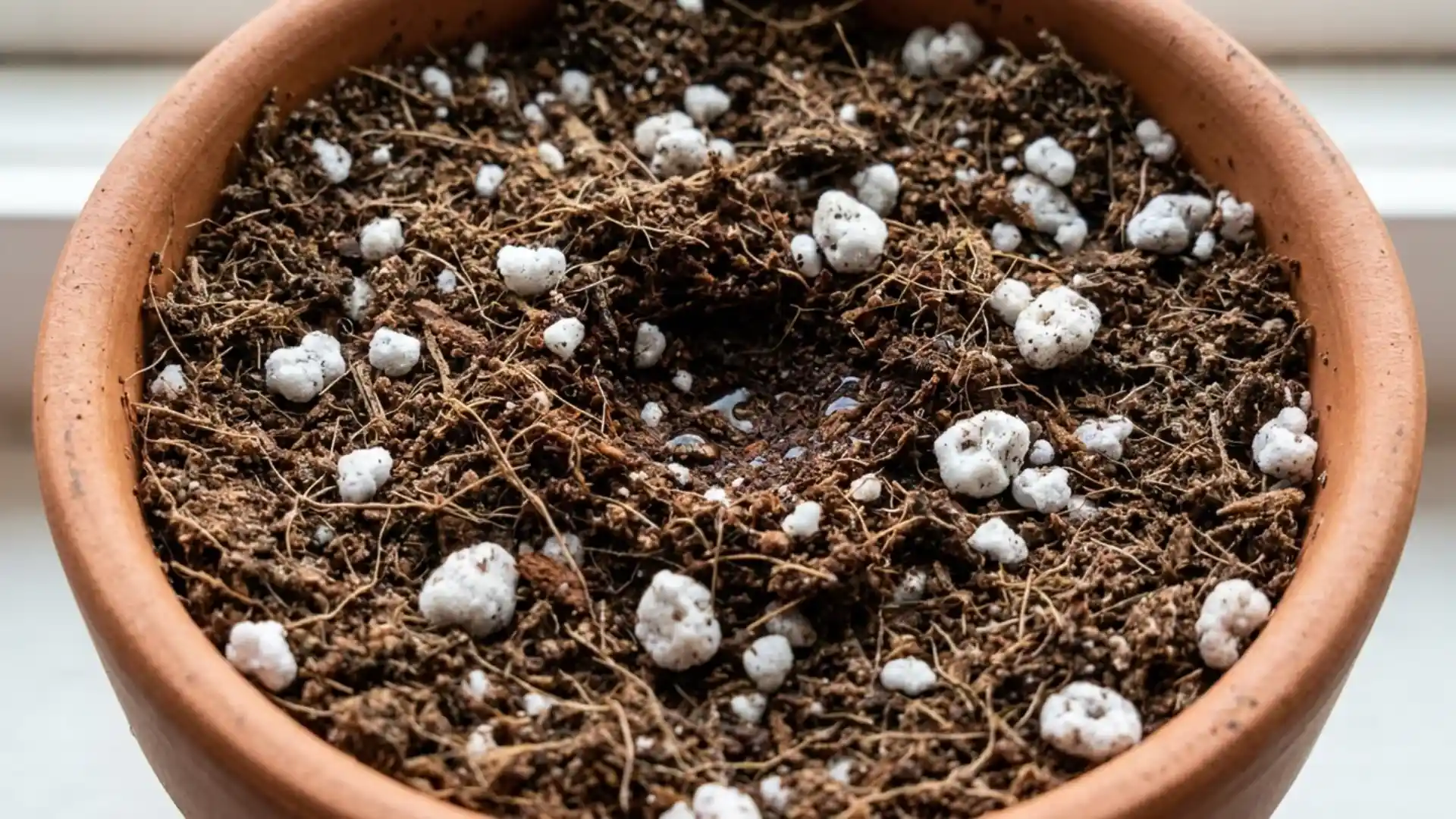
Soil is where most new growers unknowingly go wrong, since Venus flytraps need nutrient-poor, acidic conditions that are almost the opposite of typical potting mixes.
Getting the base ingredients right- and avoiding common additives-sets the foundation for years of healthy growth.
Recommended Soil Ingredients
A simple, low-nutrient mix is all a Venus flytrap needs to thrive. The table below breaks down the most commonly recommended ingredients and their role in the mix.
| Ingredient | Purpose | Typical Ratio |
|---|---|---|
| Sphagnum Peat Moss | Retains moisture and keeps the soil acidic. | 50–80% of the mix |
| Perlite | Improves drainage and aeration. | 20–50% of the mix |
| Long-Fiber Sphagnum Moss | Alternative base that promotes healthy root growth. | Can be used alone |
| Silica Sand (Horticultural Grade) | Adds structure and improves drainage. | Optional substitute for perlite |
What to Avoid
Some materials that work well for typical houseplants can quietly damage a Venus flytrap over time.
For reference:
- Fertilizer: Even small amounts can burn roots and are unnecessary since the plant gets nutrients from insects.
- Regular potting soil: Too nutrient-dense and often retains too much or too little moisture.
- Vermiculite: Contains trace minerals that build up and slowly poison the plant.
Sticking strictly to peat moss, perlite, or sphagnum moss keeps the growing medium safe and mimics the low-nutrient conditions flytraps need to stay healthy long-term.
Do Venus Flytraps Need to Be Fed?
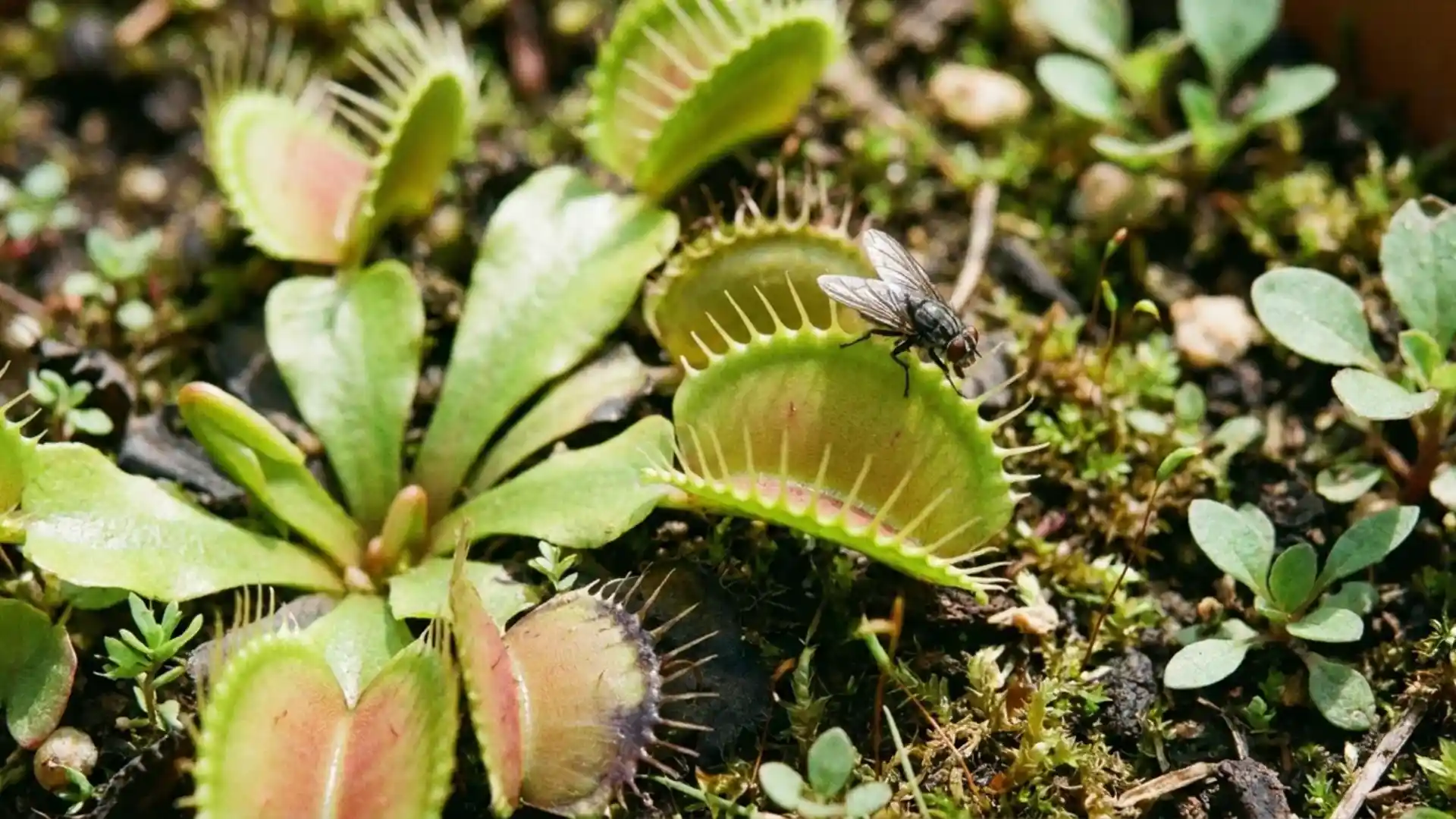
Not necessarily. It depends entirely on where the plant lives. Outdoor flytraps usually catch more than enough insects on their own and rarely need supplemental feeding.
Indoor plants, however, have far less access to prey, so occasional feeding helps them grow stronger and produce healthier traps over time.
What to feed one depends on whether it’s catching its own insects or relying on you for food.
What to Feed a Venus Flytrap
Feeding isn’t complicated, but choosing the right food matters just as much as choosing the right water or soil.
The goal is to mimic what the plant would naturally catch in the wild, while avoiding anything that can rot inside the trap instead of being digested properly.
| Food Type | Recommendation |
|---|---|
| Live Insects | Flies, crickets, and spiders are ideal because movement triggers full digestion. |
| Freeze-Dried Bloodworms | A suitable substitute when rehydrated and gently placed into the trap. |
| Human Food | Avoid feeding meat, cheese, or other non-insect foods, as they can rot and damage the trap. |
| Oversized Prey | Avoid insects that are too large, as they may rot before the trap finishes digesting them. |
Sticking to appropriately sized, protein-rich insects keeps the feeding process safe and supports steady, healthy growth.
Why Does Winter Dormancy Matter?
Venus flytraps aren’t like typical houseplants that grow year-round- they’re perennials that need a genuine winter rest to survive long-term.
In the wild, cooler temperatures and shorter days signal the plant to slow down, stop producing new traps, and conserve energy.
Skipping this dormancy period, especially for indoor plants kept warm all year, gradually weakens the plant and often shortens its lifespan.
Providing a proper dormant season isn’t optional maintenance- it’s a biological requirement for a healthy, long-living flytrap.
How to Prepare Your Plant for Dormancy?
Preparing a Venus flytrap for dormancy means recreating a cool, low-light winter period, then knowing what natural changes to expect once spring arrives.
Indoor Dormancy Methods
Indoor growers need to manually trigger dormancy since central heating prevents the natural temperature drop.
- Move the plant to a cool garage or unheated room between 35–50°F
- Alternatively, remove the plant, wrap roots in damp sphagnum moss, seal in a bag, and store in the refrigerator from October to February
- Check periodically to ensure the moss stays slightly moist and mold-free
- Keep the plant in low light or darkness during this period- active growth isn’t expected
What to Expect When It Wakes Up in Spring
Coming out of dormancy involves visible changes that are completely normal, not signs of a dying plant.
Leaves and traps may appear black or shriveled during dormancy, while new, smaller growth typically appears in late February to March.
Resume regular watering, gradually increase exposure to full sunlight as new traps emerge, and handle repotting now if needed.
Transitioning back to normal light and watering routines as growth returns helps the plant settle smoothly into its active growing season.
Repotting a Venus Flytrap
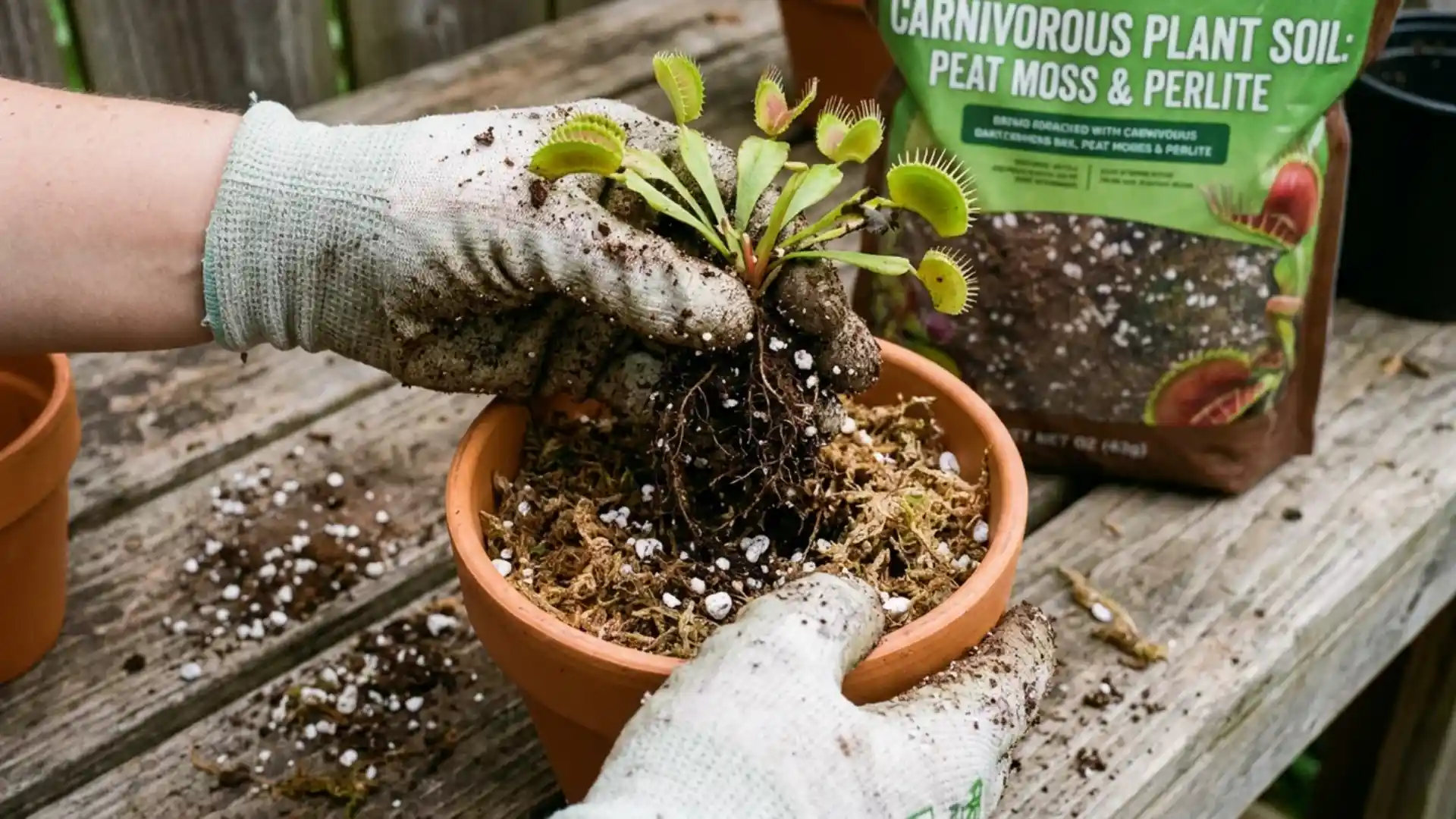
Venus flytraps grow slowly, so repotting isn’t an annual necessity, but it does matter for long-term health.
Most growers repot every 1 to 2 years, ideally in early spring, right as the plant wakes from dormancy, to refresh nutrient-poor soil and prevent mineral buildup from watering.
Repotting Steps
- Remove the plant gently, holding it by the base rather than the traps to avoid triggering them
- Shake off old soil, trim any rotted roots, then place it into a fresh peat moss and perlite mix at the same depth as before
- Water thoroughly from the bottom immediately after repotting
- Keep the plant in indirect light for a few days before returning it to full sun
Repotting plants without stress comes down to handling roots gently and moving quickly, a rule that holds across houseplants, flytraps included.
Troubleshooting Common Problems
Even with good care, Venus flytraps occasionally show signs of stress. Most issues stem from light, water quality, or overwatering, and knowing what’s normal versus what needs fixing can save your plant early on.
| Problem | Likely Cause | Solution |
|---|---|---|
| Black, dying traps | Natural aging after several feedings | Trim dead traps; new ones will replace them. |
| Plant turning black | Low light, poor water quality, or stress | Increase sunlight and use distilled or RO water. |
| Mold on soil | Excess moisture and organic debris | Remove affected soil, improve airflow, and reduce watering. |
| Root rot | Overwatering or standing water | Repot in fresh soil, trim damaged roots, and water less. |
| Traps won’t close | Triggered without prey or trap exhaustion | Avoid unnecessary triggering and allow the trap to recover. |
Final Words
A Venus flytrap isn’t hard to keep alive once you stop guessing and start mirroring its natural bog conditions. In my experience, most flytrap deaths trace back to one of two things: tap water or leftover fertilizer sitting in the soil.
Strong light, mineral-free water, lean soil, and a genuine winter rest aren’t optional extras. They’re what separates a plant that fades in a season from one that thrives for decades.
Most failures trace back to small mismatches with what this plant evolved to need, not a lack of effort or attention.
Get the setup right, and day-to-day care becomes second nature. You’ll watch it snap, grow, and thrive for years, turning one of nature’s strangest plants into one of the more rewarding ones in your collection.
Have you managed to keep a flytrap thriving past its first year, or is dormancy the part that trips you up? Let us know what’s working, or what isn’t, in the comments below.
Frequently Asked Question( FAQs)
How Long Do Venus Flytraps Live?
With proper care, Venus flytraps can live 20 years or more. Their slow growth means they rarely outgrow their pots, making them long-term perennials rather than short-lived novelty plants.
Where Do Venus Flytraps Grow Naturally?
Venus flytraps are native only to the coastal bogs of North and South Carolina. Wild populations are now endangered, so plants sold commercially are nursery-grown rather than collected from the wild.
Should I Let My Venus Flytrap Flower?
It’s best to cut off flower stalks early. Flowering drains significant energy from the plant, weakening trap production, unless you’re specifically trying to collect seeds for propagation.
Can Venus Flytraps Be Grown in a Terrarium?
Yes, terrariums work well because they boost humidity, but growers must still provide strong light and respect winter dormancy requirements; otherwise, the plant will weaken over time indoors.
How Big Do Venus Flytraps Get?
Most adult traps grow around 1 inch long, though giant cultivars like ‘B52’ can reach over 2 inches.