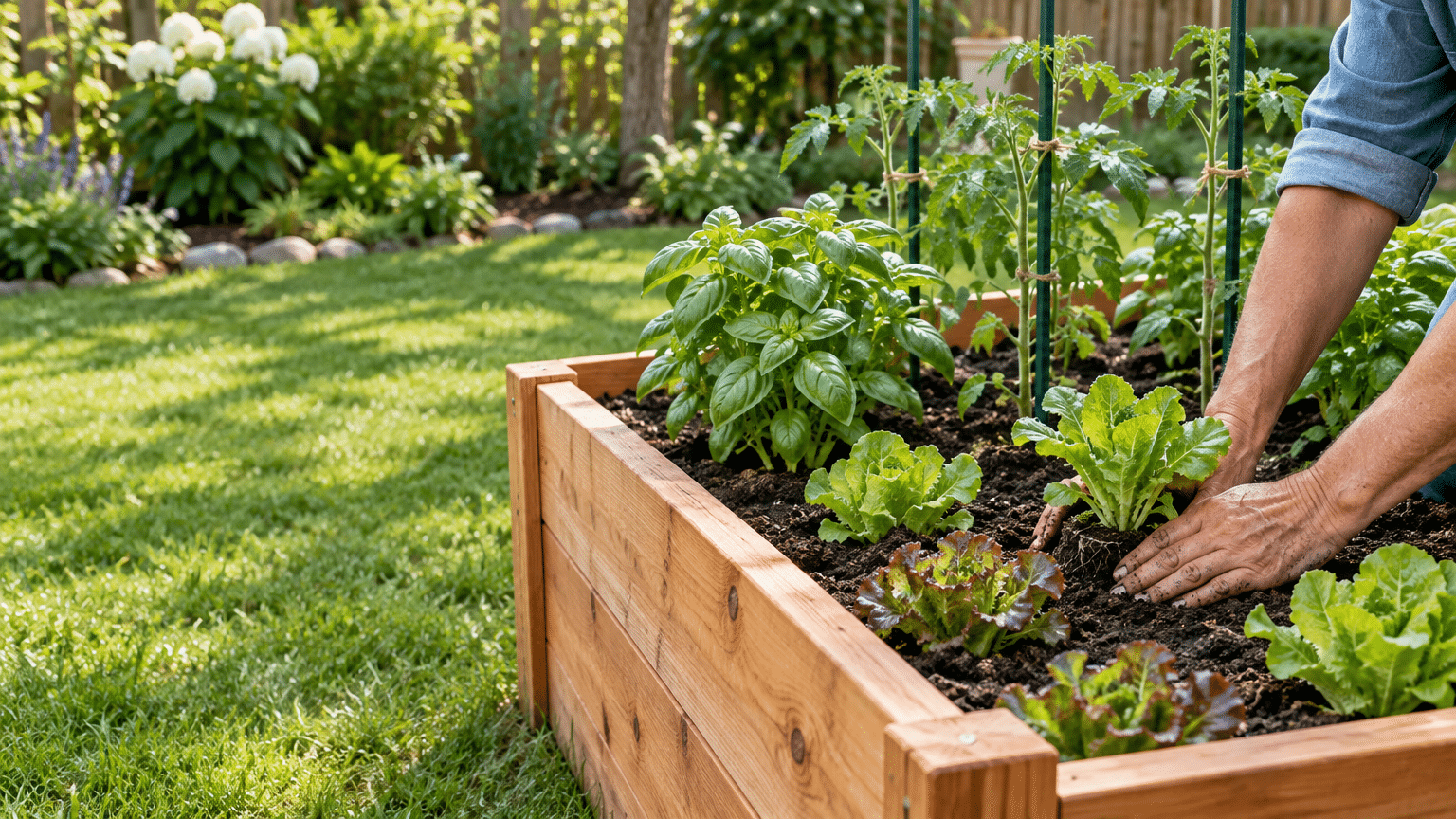
Most backyard trees don’t die from one big storm. They die slowly, over five or ten years, from small things we did with good intentions. A little too much mulch. One hard pruning to “tidy it up.” A string trimmer that bumped the trunk every week all summer.
The tricky part is that trees hide damage well. By the time leaves thin out or a limb drops, the real problem started years ago. So let’s go through the mistakes I see most, and what to do instead.
1. Topping the Tree to Make It “Safer”
Topping makes a tree more dangerous, not less. It feels logical. The tree is big, it’s near the house, so you cut the top off. But good crews simply won’t do it. A certified arborist team like Panorama Tree Care in Tampa prunes to ANSI A300 standards instead, the industry rulebook for how and where cuts are made. If a company offers to “top it for cheap,” that’s your sign to call someone else.
Here’s why. A topped tree panics. It pushes out a crowd of fast, skinny shoots right below each cut, and those shoots are only attached at the outer layers of wood. A few years later, you have a taller, bushier tree full of weakly attached limbs, plus open stubs where decay moves in.
The International Society of Arboriculture ranks topping among the most harmful pruning practices there is, and its tree pruning guidance for homeowners explains the better option: reduction pruning, where a limb is cut back to a side branch big enough to take over as the new tip. That keeps the tree’s shape and strength.
2. Building a Mulch Volcano
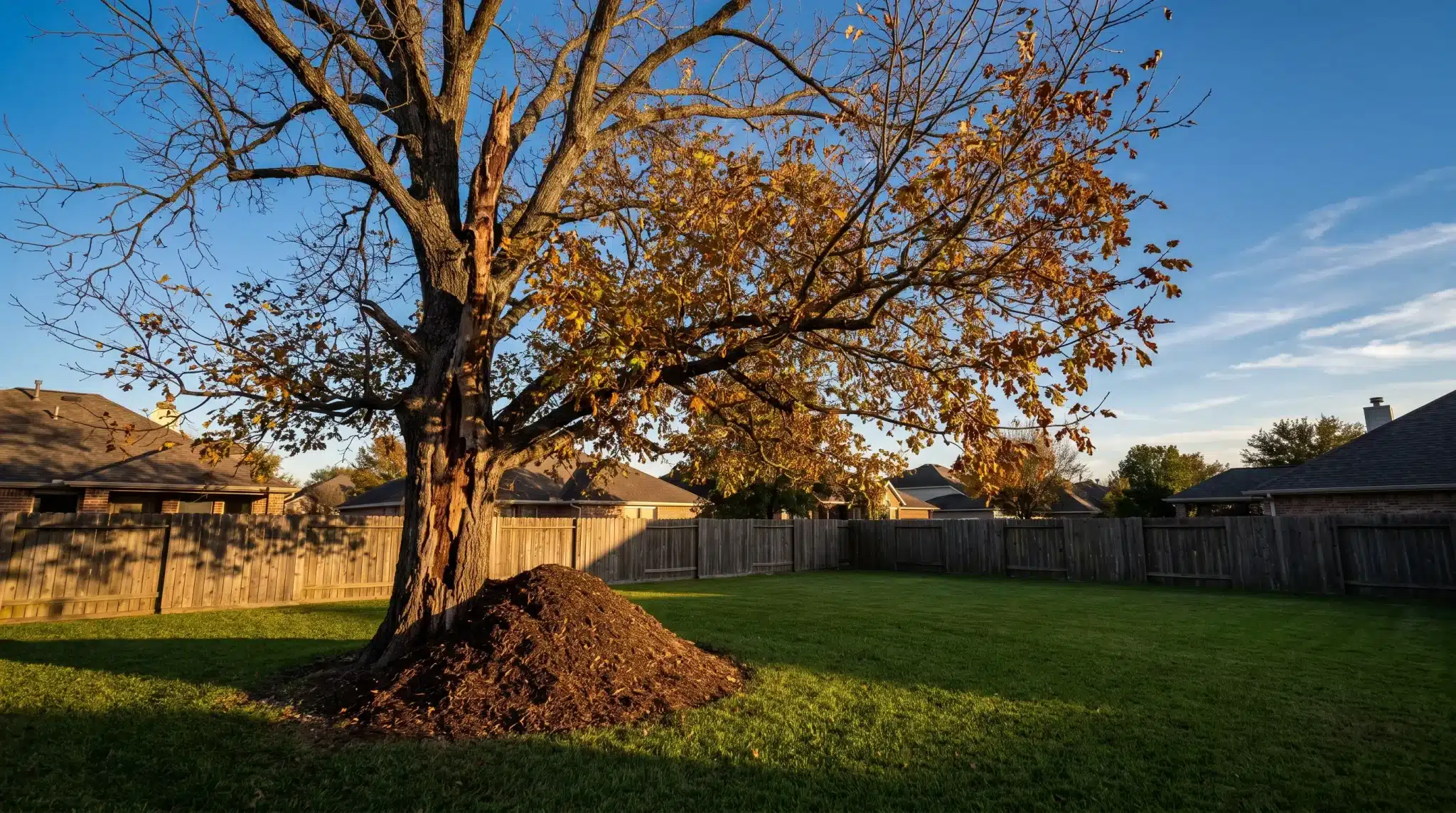
Mulch should look like a donut, not a volcano. You’ve seen it in parking lots and front yards: a tall mound of mulch piled right up against the trunk. It looks neat, but it keeps the bark wet all the time. Wet bark softens and rots, bugs and rodents move in, and roots start circling up into the mulch instead of down into the soil.
Here’s the fix:
- Spread mulch 2 to 4 inches deep in a wide ring
- Pull it back a few inches from the trunk so the base can breathe
- Go as wide as you can, ideally out toward the edge of the canopy
A wide, flat ring does everything a mulch pile promises, without the rot.
3. Planting Too Deep
If you can’t see the flare at the base of the trunk, the tree is probably planted too deep. Healthy trees widen out right where the trunk meets the roots. When a tree goes into the ground like a fence post, that flare gets buried, and the roots up top struggle for air.
It doesn’t take much, either. According to the University of Maryland Extension, trees planted too deeply can run into trouble with as little as one extra inch of soil, and the bark at the soil line slowly breaks down. Because the decline takes a few seasons, most people never connect it back to planting day.
When you plant, set the root ball so the flare sits at soil level or a touch above it. With nursery trees, you may need to scrape away extra soil on top of the root ball to find it. Dig wide, not deep.
4. Nicking the Trunk With the Mower or Trimmer
Every bump from a mower or string trimmer is a wound the tree has to seal. The layer that carries water and food up and down the tree sits right under the bark. Chew through it all the way around, and you’ve basically strangled the tree, even if it takes a year or two to show.
That mulch ring from mistake #2 solves this too. No grass near the trunk means no reason to mow or trim there. It’s the easiest tree insurance you’ll ever buy.
5. Stripping Out the Inside Branches
Pruning the inside of a tree bare and leaving leaves only at the ends makes limbs weaker. People call this “lion-tailing,” because the branches end up looking like a lion’s tail: bare stick with a puff at the end. It moves all the weight out to the tips, so the wind gets more leverage on every limb.
A few simple pruning rules help:
- Cut dead, broken, and crossing branches first
- Don’t take off too much live growth in one go; spread big jobs over a few years
- Cut just outside the branch collar, the slightly swollen ring where a branch meets the trunk
- Skip the pruning paint; it doesn’t help the wound close
If a limb is too big to hold with one hand, or you need a ladder to reach it, that’s a job for a pro.
6. Crushing or Burying the Root Zone
A tree’s roots spread much wider than its branches, and most of them live in the top foot or so of soil. So when you park a truck under a tree, dump a load of fill dirt for a new flower bed, or trench for an irrigation line, you’re working right on top of its roots.
Packed soil squeezes out the air roots need. A few inches of new fill can smother them. And a trench cuts through roots in a single afternoon. The damage often shows up two or three years later as thinning leaves and dieback at the top of the crown, long after anyone remembers the project.
Before any backyard build, mark off the area under the canopy and keep heavy equipment out.
7. Watering the Wrong Way
Trees want a slow, deep soak across the root zone, not a quick splash at the trunk. The roots that actually drink are spread out wide, not bunched up at the base. Short, daily sprinkler runs keep the surface wet and encourage shallow roots, while the deeper soil stays dry.
Instead, water less often but longer. Let a hose trickle in a few spots around the outer canopy, or lay a soaker hose in a loop. New trees need the most help, usually through their first couple of growing seasons.
When to Stop DIY and Call an Arborist
Some tree problems aren’t a weekend project. Call a certified arborist if you notice:
- Mushrooms or conks growing at the base or on the trunk
- Deep cracks, splits, or a cavity in the trunk
- A tree that suddenly starts leaning, or soil heaving on one side
- Dead limbs hanging over your roof, driveway, or play area
- Any branch near power lines
These can point to decay you can’t see from the ground, and an arborist can tell you whether the tree can be saved or has become a real risk.
Give Your Trees a Few Easy Wins
Good tree care is mostly about what you don’t do. Skip the topping, flatten the mulch, keep the mower back, and leave the roots alone. Do that, and the tree in your yard has a real shot at outliving the house it shades.