
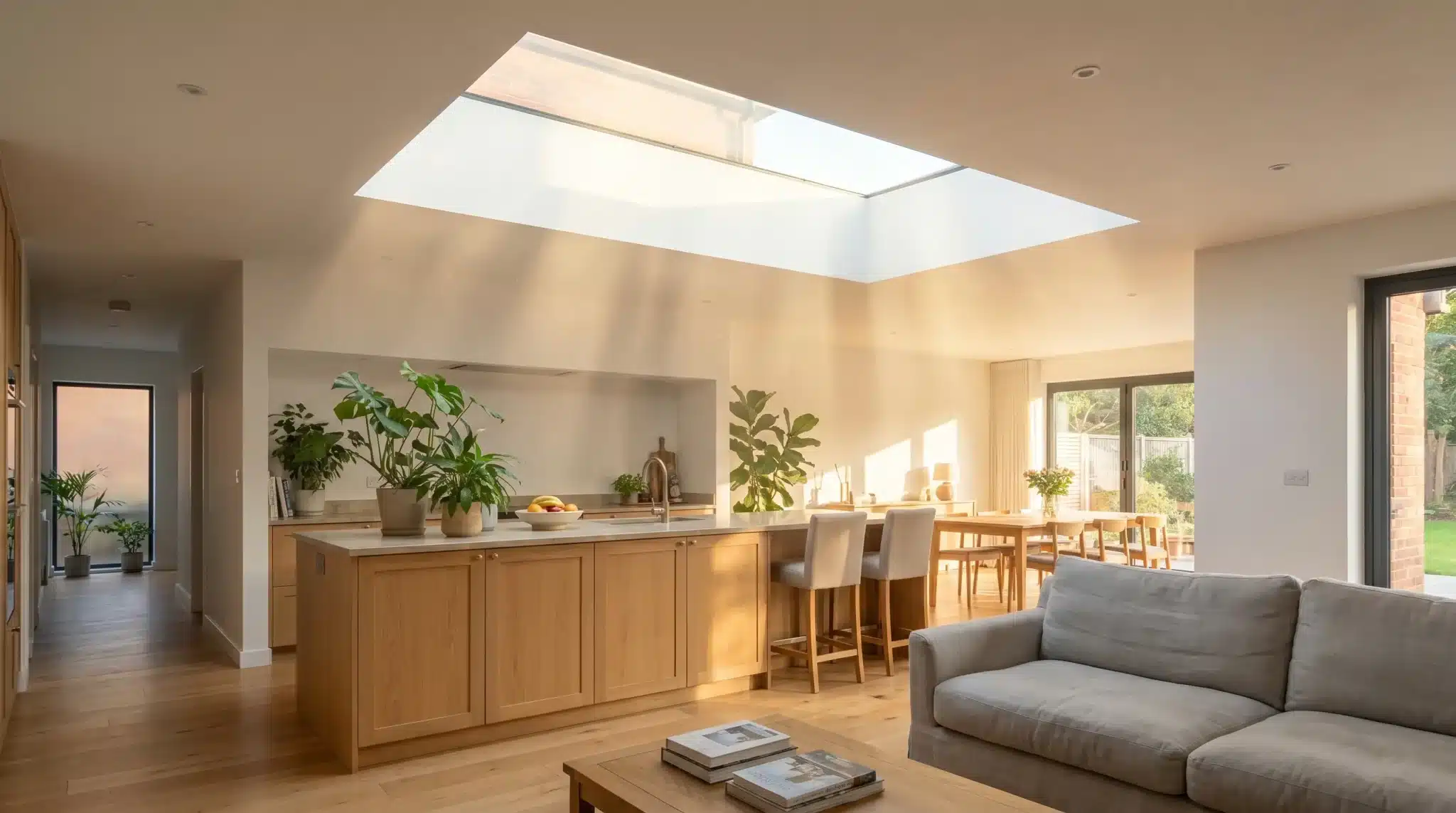
Daylighting isn’t just about making a room feel brighter. Done properly, it changes how a home performs – thermally, visually, and in terms of long-term running costs. These five strategies treat light as a structural decision, not a decorative one.
1. Get Orientation Right Before Anything Else
The orientation of windows plays a more substantial role than the window-to-wall ratio. North light is the nicest to work in: its cool, even light causes the least amount of glare and heat gain. It’s also the easiest to control: you’ll be able to stay productive without having to adjust blinds or air conditioning.
Windows facing east and west receive the low morning and afternoon sun, so shades and air conditioning are often used when it’s most uncomfortable to stay by the window. If you’ve ever sat in a room facing one of these directions, you likely moved across the room to escape the harsh sun for at least a few hours each day.
2. Use Overhead Glazing to Reach Rooms That Windows Can’t
Windows that are set vertically can merely let daylight penetrate a certain part of a building’s plan. Flat rooflights and skylights function differently. Horizontal windows can welcome up to three times more daylight as compared to a window that’s vertically positioned at the same size. This is because it establishes a more direct connection with the sky during the entire day.
This makes overhead glazing the optimal answer for extensions, open-plan kitchens, and rooms that are located too far from an external wall to benefit from regular windows. For windowless locations such as internal bathrooms or hallways, it pays to consider tubular daylighting devices. These devices trap sunlight on the roof and transfer it through highly reflective tubes right down to locations where it’s not possible to make any structural changes.
In shopping for flat rooflights, frames that are thermally broken or double or triple glazing shouldn’t be treated as if they are optional add-ons. They serve as the line between a rooflight that is functioning well and one that results in a cold spot during winter or even contributes to overheating in the summer. Leading manufacturers like www.sunsquareskylights.com specialize in flat rooflights that have been constructed in compliance with current building standards. They also include proper thermal breaks and glazing specifications.
3. Treat Thermal Performance as Part of the Daylighting Brief
Introducing windows to a property continually jeopardizes the thermal envelope if not adequately managed. The U-value and the Solar Heat Gain Coefficient (SHGC) are the two key figures to look at. The U-value calculates the amount of heat transferred through the glazing unit and so the lower, the better. The SHGC calculates how much solar radiation is let into the building as heat. This is the issue that can cause summer overheating.
High-performance low-E glass filled with argon gas achieves both. It permits visible light to penetrate the building and reflects long-wave heat radiation back into the building in winter. Importantly, it also blocks the solar radiation that causes interior temperatures to rise in summer. Residential lighting energy can be halved, and cooling requirements reduced when daylighting is correctly managed with effective shading (U.S. Department of Energy). Mess up the glazing spec and you lose most of those benefits.
4. Plan How Light Moves Once It’s Inside
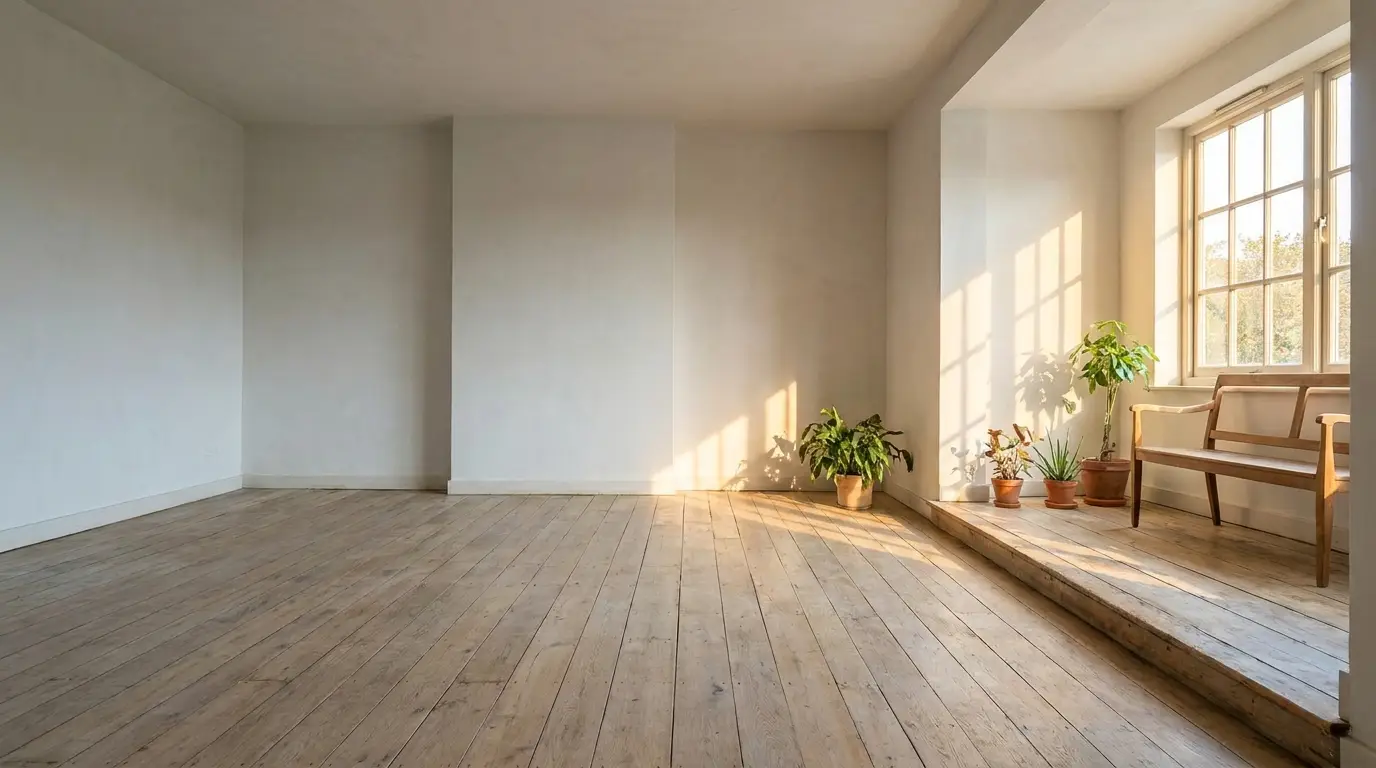
The light coming in from a new window or a skylight doesn’t stop at the frame. What’s crucial is the surface it meets or misses just past the divide. Pale walls, light ceilings, and light or reflective floors all help guide light deeper into a room. Darker, absorbing surfaces will keep it tethered to its point of entry.
Surfaces characteristics concerning light reflectance values (LRV) are significant not just when considering the orientation of new glazing but also when interior finishes are chosen as part of the daylighting strategy of a renovation. A dark hallway connecting to a well-lit extension will feel no different if the surfaces in it absorb light rather than reflect it. Pairing new glazing with an LRV review of adjacent spaces is a simple step that most renovation plans entirely skip, and it costs almost nothing compared to the actual work.
Open-plan internal layouts also benefit from the fact that there are fewer walls in the way of daylight reaching an adjoining space. Cohesive loops of lateral daylighting within a floor plate are a realistic ambition with this kind of layout. If and when internal walls are necessary, putting them parallel to the window wall is better than running them out into the floor plate.
5. Add Solar Control so the System Can Adapt
Even if it’s well-oriented and well-specified glazing, some kind of solar control is necessary to deal with the conditions a building faces over a year. The best answer depends on the problem. Generally the more design orientation and high performance the glazing is, the more thermally effective the solar control needs to be. Anything that lets the heat in before blocking it (a problem with internal blinds) is killing your performance edge, for example.
At the easy-to-implement low end, shading devices that block high-angle summer sun but not low-angle winter sun are easy to get right away and can be the most effective solution – though on the downside they can be disproportionately bulky or industrial-looking if you oversize. It’s not always an option but using more fits-the-design motorized or crankable adjustable devices can also help cut their appearance impact.
At the higher end, electrochromic glazing – glass that tints dynamically based on electrical input or solar intensity – eliminates the need for physical blinds in some applications. It’s not cheap, but for rooflights or south-facing glazing that’s difficult to shade externally, it solves a problem that nothing else handles as cleanly.
Getting daylighting right means treating it as a system – orientation, glazing performance, light distribution, and solar control working together. Any one of those elements done well but without the others will leave results on the table.