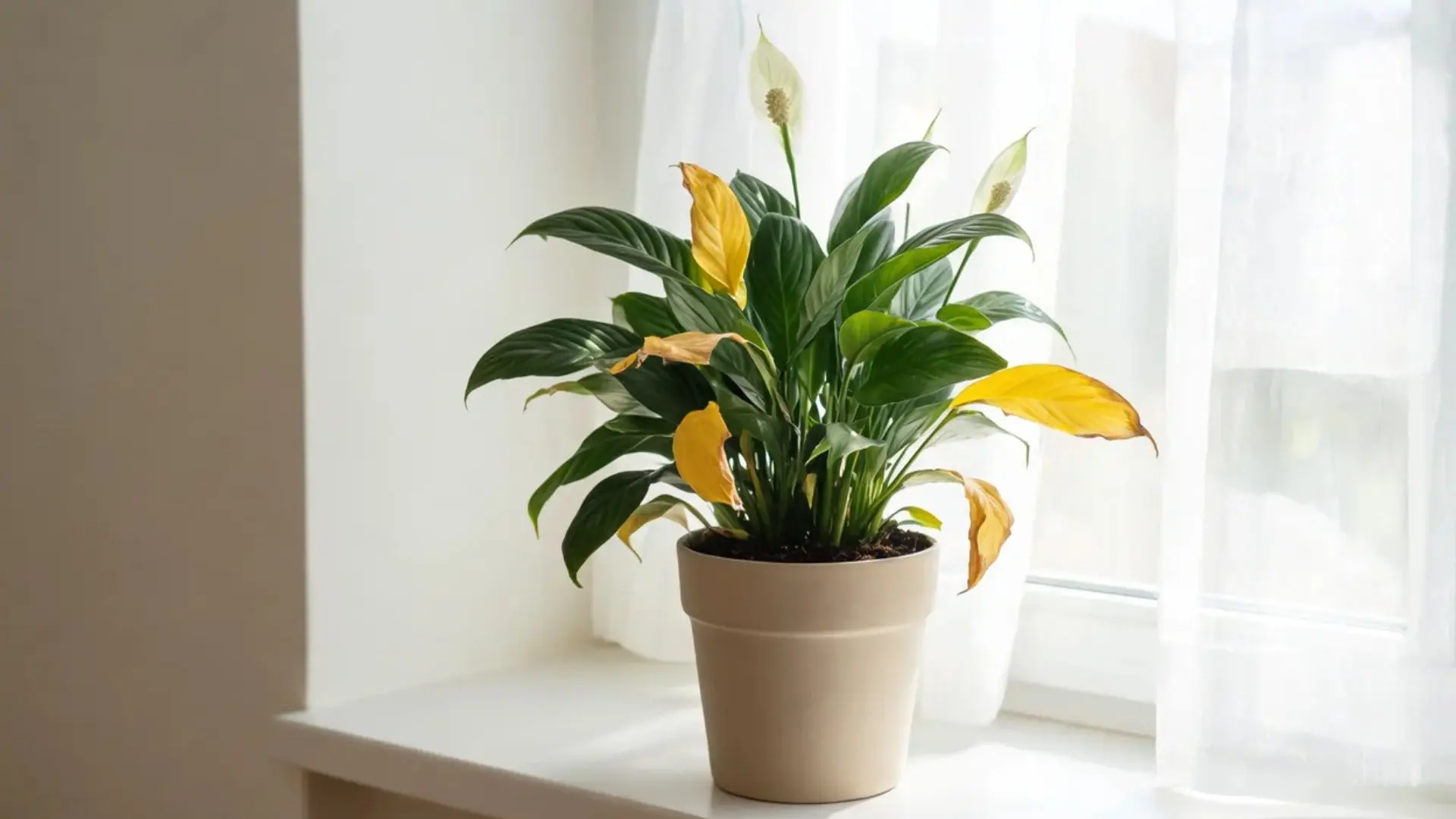
Yellow leaves can show that your peace lily is reacting to something around it or in its care. The change may appear slowly, suddenly, or only on leaves.
Peace lily yellow leaves can have several causes, and the right fix depends on what you notice. I will help you understand the signs without making the process confusing.
You will learn what yellowing patterns can mean and what details are worth checking first. I will also explain what actions can help and which changes may cause stress.
By the end, you should have a clearer idea of what your plant needs. You can then respond with more confidence and less guesswork.
What Does Normal Peace Lily Leaf Growth Look Like?
Peace lily leaves grow from the base of the plant, not from long woody stems. New leaves appear tightly rolled and slowly open as they grow taller.
Fresh leaves often look lighter green and feel softer than older leaves. As they mature, the color deepens, and the leaf surface becomes firmer.
Peace lilies grow in clumps, so new leaves may appear from several points near the soil. This makes the plant look fuller over time without spreading far outward.
Indoors, healthy growth is steady rather than fast. You may notice a few new leaves at a time during active growth. Slower growth is normal in cooler months or lower light.
Common Causes of Peace Lily Yellow Leaves
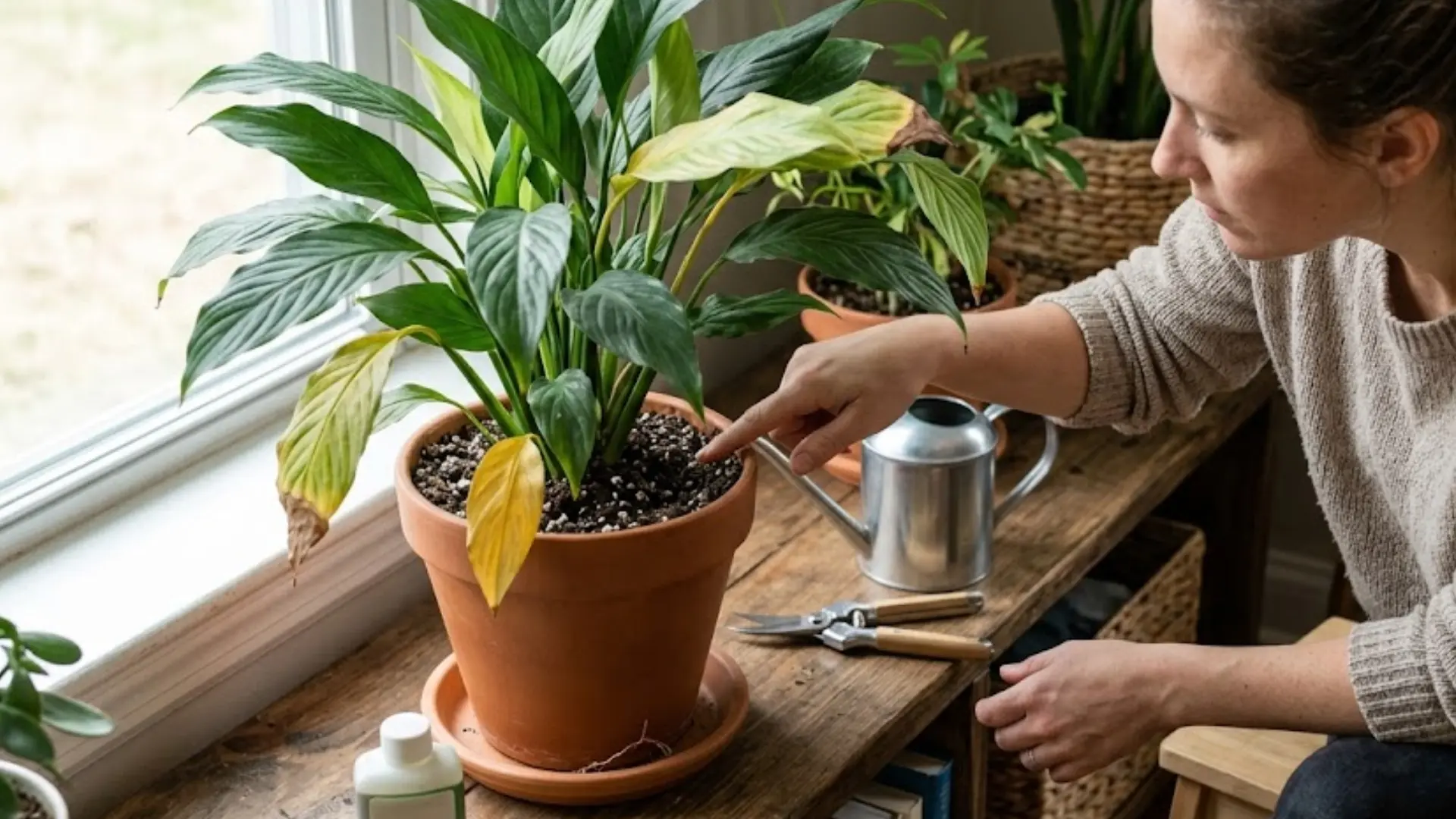
When I find myself asking, “why is my peace lily turning yellow,” I first check the soil, leaf pattern, and recent care. Here are the most common causes I look at first:
1. Overwatering
Overwatering is one of the most common reasons peace lily leaves turn yellow. When watering indoor plants, giving too much water can leave the soil constantly wet and reduce airflow around the roots.
The roots then struggle to absorb water and nutrients properly. Several leaves may turn yellow together, and the plant may droop. The soil may also stay wet for many days after watering.
How to Fix:
- Stop watering until the topsoil begins to dry.
- Check that the pot has open drainage holes.
- Empty extra water from the saucer after watering.
- Remove badly damaged roots if root rot has started.
2. Underwatering
Peace lilies can also develop yellow leaves when the soil stays dry for too long. The plant often droops before serious damage appears.
Leaves may become yellow, curled, or brown along the edges. The soil may feel very dry and pull away from the pot. Repeated dry periods can slowly weaken the whole plant.
How to Fix:
- Check the soil a few inches below the surface.
- Water slowly until extra water drains from the pot.
- Check the soil more often during warm weather.
- Avoid letting the entire root ball dry out completely.
3. Too Much Direct Sunlight
Peace lilies prefer bright light without strong sun hitting their leaves. Direct sunlight can bleach the green color and create pale yellow patches.
If the exposure continues, brown, dry spots may develop. Leaves nearest the window are often affected first. Strong afternoon sunlight can cause damage faster than softer morning light.
How to Fix:
- Move the plant out of strong, direct sunlight.
- Place it near a bright window with filtered light.
- Use a sheer curtain if sunlight remains intense.
- Trim badly scorched leaves after the plant settles.
4. Too Little Light
Peace lilies tolerate lower light, but very dark spaces can weaken their growth over time. New leaves may appear less often or stay smaller.
I usually check the light first when I notice this kind of slow growth or yellowing. Older leaves can sometimes begin turning yellow.
Low light also makes the soil dry much more slowly, which can increase the risk of overwatering even if your usual watering schedule has not changed.
How to Fix:
- Move the plant closer to a bright window.
- Keep it away from strong direct afternoon sunlight.
- Rotate the pot sometimes for more even light.
- Reduce watering if the soil now dries more slowly.
5. Natural Leaf Aging
A yellow leaf does not always mean something is wrong with your peace lily. Older leaves naturally turn yellow as they reach the end of their life.
These leaves usually grow near the bottom of the plant. One or two may yellow while the rest stay green. Healthy new growth should still appear from the plant’s base.
How to Fix:
- Check whether only one or two older leaves are yellow.
- Look for healthy new growth near the plant’s base.
- Cut the yellow leaf near the soil with clean scissors.
- Continue normal care if everything else looks healthy.
6. Nutrient Deficiency
Potting soil slowly loses nutrients as a peace lily grows and uses them.
When identifying diseases or other plant problems, it helps to consider whether old soil may no longer provide enough nutrients for healthy leaves.
Foliage can become pale, yellow, or smaller than usual, and growth may slow down. Nutrient problems are more likely when the plant has stayed in the same soil for several years without feeding.
How to Fix:
- Check how long the plant has used its current soil.
- Apply a balanced houseplant fertilizer at a mild strength.
- Feed only during periods of active plant growth.
- Repot into fresh soil if the mix is very old.
7. Fertilizer Burn
Too much fertilizer can harm the sensitive roots of a peace lily. Extra salts can build up inside the potting soil over time. This may cause yellow leaves, brown tips, or dry leaf edges.
You might also notice a white crust on the soil. Frequent or strong fertilizer applications make this problem more likely.
How to Fix:
- Stop fertilizing the plant for several weeks.
- Flush the soil well with clean water.
- Let all extra water drain from the pot.
- Use weaker fertilizer applications when feeding begins again.
8. Root-Bound Conditions
Peace lily roots can become tightly packed when the plant stays in one pot too long. Crowded roots leave less space for soil, water, and air.
The pot may begin drying much faster than before. Growth can slow, and older leaves may yellow. Roots may circle inside the pot or grow through the drainage holes.
How to Fix:
- Slide the plant out and check the root system.
- Choose a pot only slightly wider than the old one.
- Loosen tightly circling roots gently with your fingers.
- Repot using fresh, well-draining indoor plant soil.
9. Repotting Shock
Peace lilies sometimes look stressed after being moved into a new pot. As with repotting plants in general, handling the roots can temporarily affect how well they take up water.
If I see drooping or yellowing soon after repotting, I first think about how much the roots were disturbed during the move.
Leaves may look less firm for a while, and a much larger pot or complete soil change can add stress, but mild symptoms often improve once the roots settle.
How to Fix:
- Keep the plant in stable light after repotting.
- Avoid moving it to several new locations.
- Water when the upper soil starts becoming dry.
- Avoid fertilizer until healthy new growth appears.
10. Cold Exposure
Peace lilies prefer warm, steady indoor temperatures and do not handle cold conditions well. Cold windows, open doors, or strong drafts can stress the leaves.
Foliage may yellow, droop, or develop damaged patches after exposure. Sudden temperature drops can cause more trouble. Cold soil also stays wet longer, increasing the risk of root problems.
How to Fix:
- Move the plant away from cold windows and doors.
- Keep it away from air conditioning vents.
- Maintain a steady, comfortable indoor temperature.
- Remove badly damaged leaves once conditions improve.
11. Heat Stress
Very high temperatures can make a peace lily lose moisture faster than its roots can replace it. Leaves may droop, curl, or start turning yellow. The soil can also dry much quicker than expected.
Heat from radiators, vents, or hot windows can make things worse. Long periods of high heat may slowly weaken the plant.
How to Fix:
- Move the plant away from heaters and radiators.
- Keep it away from very hot sunny windows.
- Check soil moisture more often during warm periods.
- Keep room temperatures as steady as possible.
12. Low Humidity
Peace lilies usually prefer moderate humidity around their leaves. Very dry indoor air can cause the plant to lose moisture faster. Brown tips often appear first, followed by yellowing in stressed leaves.
Dry air is common near heaters and air vents. The problem can become worse when the soil is also allowed to stay too dry.
How to Fix:
- Move the plant away from heating and cooling vents.
- Group it with other houseplants to raise nearby humidity.
- Use a room humidifier if your indoor air is very dry.
- Water steadily without keeping the soil constantly wet.
13. Pest Infestation
Houseplant pests can feed on peace lily leaves and slowly weaken the plant. Spider mites may leave tiny pale or yellow spots. Mealybugs often look like small white cotton patches.
Scale insects appear as brown or tan bumps. A larger infestation can cause whole leaves to yellow, especially when pests remain unnoticed for several weeks.
How to Fix:
- Check both sides of every leaf for visible pests.
- Separate the affected plant from other houseplants.
- Wipe small pest groups away with a damp cloth.
- Use a suitable houseplant pest treatment as directed.
14. Fungal or Bacterial Disease
Some fungal or bacterial problems can cause yellow leaves along with dark spots or damaged tissue. Leaves may also wilt or develop soft, wet-looking areas.
Disease can spread more easily when foliage stays wet for long periods. Poor airflow and constantly wet soil can also create better conditions for some plant diseases to develop.
How to Fix:
- Remove badly affected leaves using clean cutting tools.
- Avoid splashing water over the leaves when watering.
- Improve airflow around the plant without creating cold drafts.
- Check the roots if the plant continues declining.
15. Physical Leaf Damage
Peace lily leaves can yellow after you bend, crush, tear, or rub them against nearby objects. The yellow area often stays close to the damaged tissue.
One injured leaf usually does not mean the whole plant is unhealthy. Damage can happen while moving the pot or cleaning leaves. Badly damaged tissue will not turn green again.
How to Fix:
- Move the plant where leaves have enough open space.
- Avoid folding or pressing leaves while moving the pot.
- Trim badly damaged leaves with clean scissors.
- Leave small harmless tears alone if the leaf stays green.
16. Chemical Damage
Household cleaners, strong sprays, and incorrectly mixed pesticides can damage peace lily leaves. Yellow, brown, or pale patches may appear where the product touched the foliage.
Damage may happen soon after spraying or cleaning the plant. Even products made for plants can cause problems when applied too strongly or used more often than the label recommends.
How to Fix:
- Stop using the product that may have caused damage.
- Wipe affected leaves gently with clean water.
- Follow label directions when using plant treatments.
- Never use household leaf cleaners unless they are plant-safe.
17. Sudden Change in Growing Conditions
Peace lilies may show yellow leaves after a quick change in their surroundings. Moving the plant can change its light, temperature, humidity, and airflow at once.
A few leaves may yellow while it adjusts. This often happens after bringing a new plant home. Moving it between very different rooms can cause a similar short-term response.
How to Fix:
- Place the plant in a stable indoor location.
- Avoid moving it repeatedly while it adjusts.
- Keep watering and temperature conditions as steady as possible.
- Watch for healthy new growth before making more changes.
What to Do After Your Peace Lily Starts Recovering
Once your peace lily starts improving, focus more on new growth than old damaged leaves. These signs can help you tell if recovery is moving in the right direction:
- Check new leaves: Fresh leaves should open green, firm, and free from new yellow patches.
- Watch yellowing: Fewer leaves should turn yellow as the plant returns to healthier growth.
- Check soil drying: The soil should begin drying at a steady and normal rate between waterings.
- Look at growth and roots: Leaves should stay more upright, while roots should look firm and healthy.
- Keep moisture steady: Watering needs should become more predictable without the soil staying constantly wet or very dry.
Older damaged leaves may never look healthy again, and that is normal. What matters most is how the new leaves develop.
What Peace Lily Owners Notice About Yellow Leaves
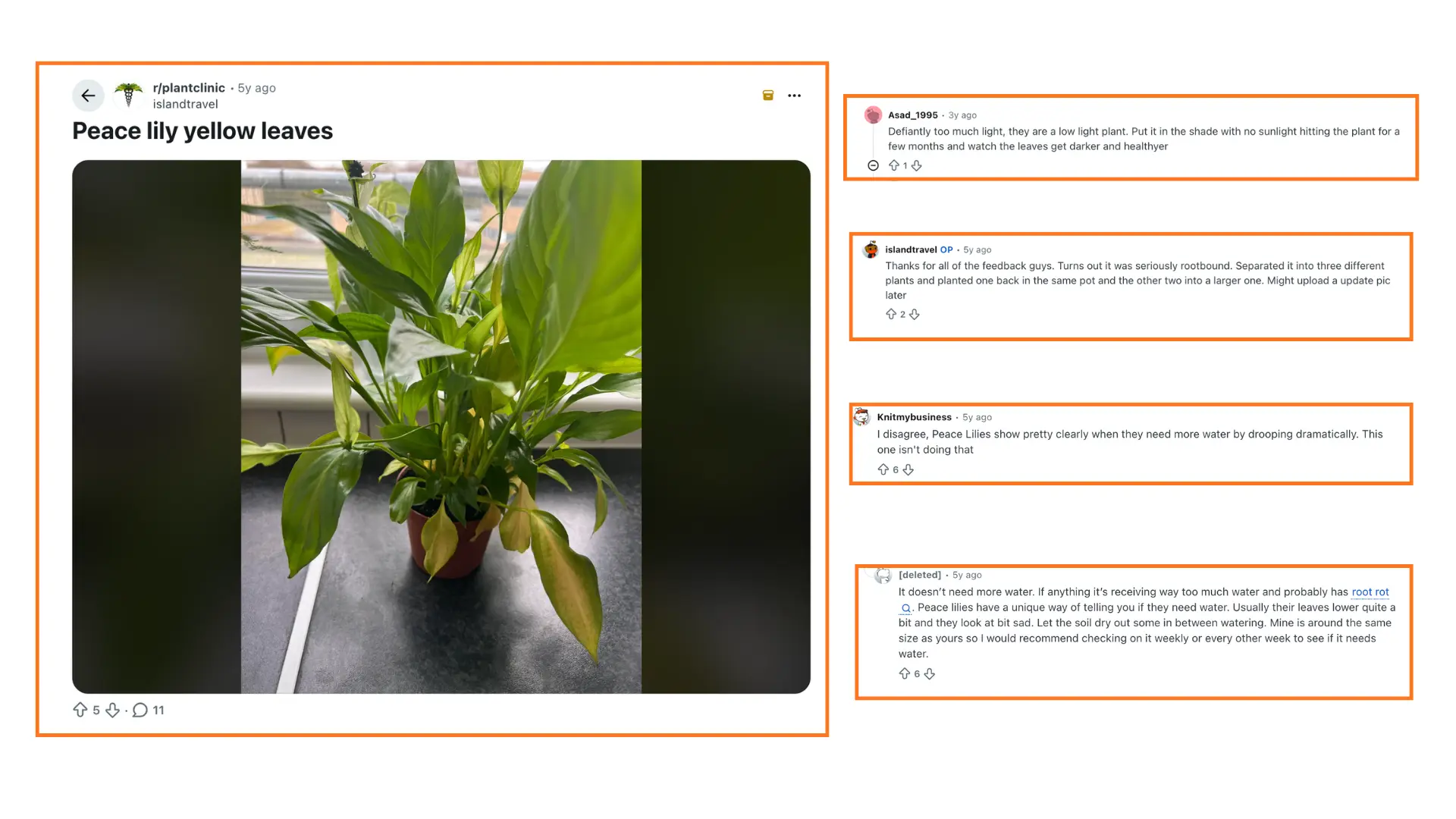
I read through the Reddit discussion, and people pointed to several possible reasons for the yellow leaves. Some thought the plant was being watered too often.
Others said yellow outer leaves can be normal, as fresh leaves grow from the center. I also noticed several comments about the pot looking small and the roots being crowded.
One person mentioned the plant looked pale and might need fresh soil or fertilizer. Another thought was that strong light could be adding stress.
The owner later shared that the plant was seriously root-bound. They divided it into three plants and repotted them. Most comments focused on watering, roots, pot size, light, and natural leaf aging.
The Bottom Line
Peace lily yellow leaves can point to several care or growing issues. Looking at the whole plant can help you understand what needs attention.
You can check the soil, light, roots, and recent changes before adjusting anything. These simple checks can help you avoid making the problem worse.
I suggest making one change at a time and watching how the plant responds. That makes it easier to know what is actually helping.
Healthy new growth is usually the best sign that your peace lily is improving. Keep your care steady and avoid making too many changes at once.
Share what worked for your peace lily in the comments below.