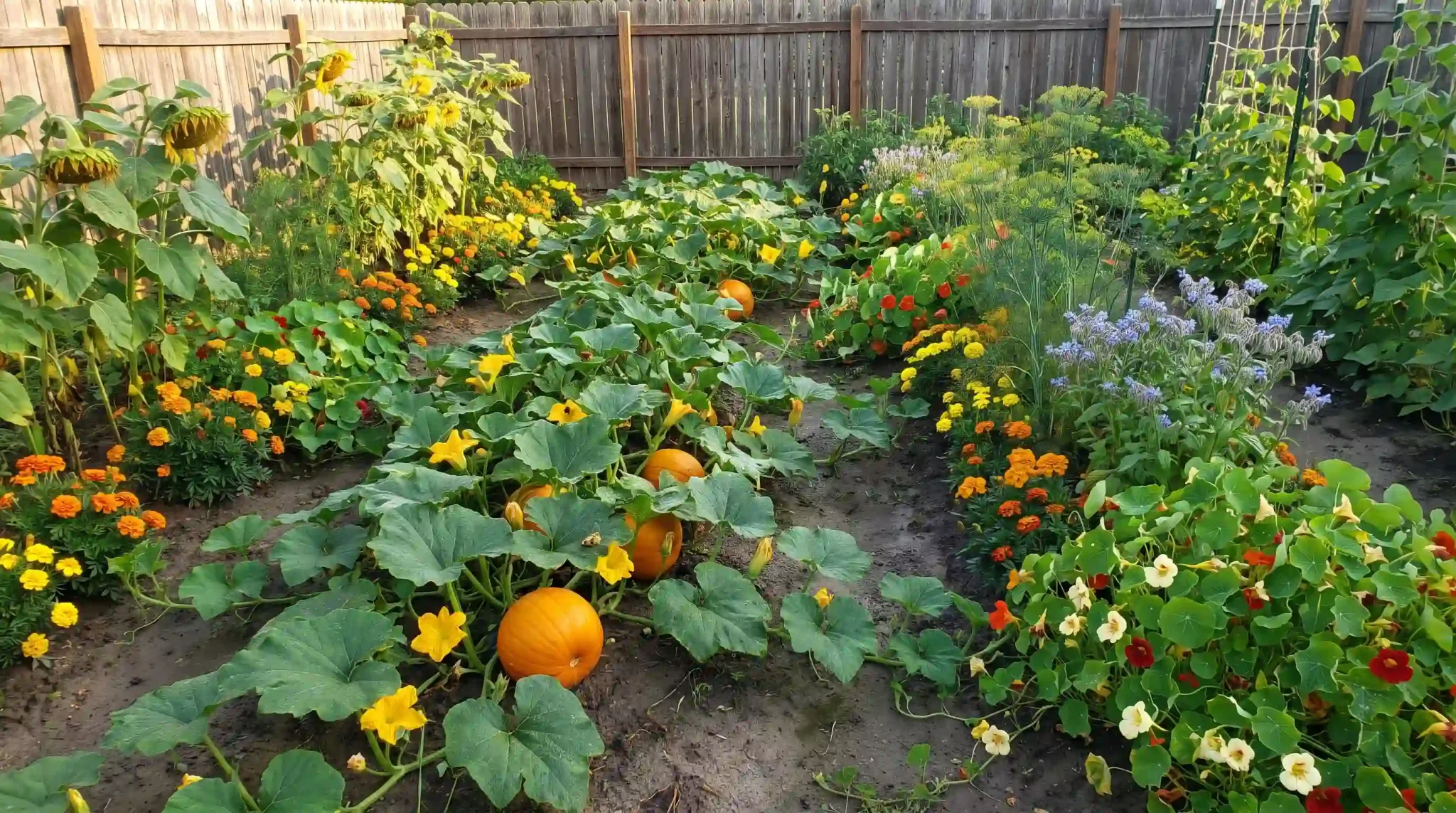
Pumpkins take up more room than most plants in your garden. Their vines stretch out and cover a lot of ground. That spreading habit is why your plant choices around them matter.
Pumpkin companion plants can keep your patch tidy and manageable. I always tell gardeners to plan spacing before vines take over.
You want plants that support pumpkins instead of fighting them for space. Some plants pull in helpful bugs like bees. Others stay small and stay out of the way.
Choosing smart neighbors saves you trouble later on. Check out which plants deserve a spot beside your pumpkins.
What Makes Pumpkins Different in a Mixed Garden?
Pumpkins grow very differently from most garden vegetables. Instead of growing upright, pumpkin plants sprawl out across the ground.
Long, running vines stretch far beyond the original planting spot. Large leaves spread out and shade a wide area of soil. Fruit forms along these vines, not close to the main stem.
I have watched a single pumpkin plant take over a whole bed by mid-summer. As the plant matures, its presence in the garden changes a lot.
A small seedling can turn into a sprawling patch within weeks. Pumpkins need far more open space than compact vegetables. Planning your bed layout first makes fitting companions in much easier.
The Best Pumpkin Companion Plants
I always pick pumpkin companion plants that attract pollinators, support helpful insects, or use space wisely without crowding the vines. Here are the picks I recommend for your patch:
1. Marigold

Marigolds bring bright color to the pumpkin patch while attracting hoverflies, parasitic wasps, and other useful insects. These insects may help control aphids and several soft-bodied garden pests.
French marigolds may also help suppress certain root-knot nematodes when grown as part of a planned rotation. Plant marigolds around bed edges without allowing them to crowd young pumpkins.
2. Nasturtium

Nasturtiums can act as trap crops because aphids may gather on their tender leaves instead of spreading immediately to pumpkins. Their colorful flowers also attract bees and other visiting pollinators.
Check nasturtiums regularly because heavily infested plants can become a source of pests rather than protection. Place them near the patch edge and remove severely damaged growth when necessary.
3. Beans

Beans use bacteria in their root nodules to turn air nitrogen into a usable form. But growing beans don’t instantly feed nitrogen to nearby pumpkin vines.
I only see the soil payoff later, once the roots and old plant material break down.
So don’t expect a quick boost for your pumpkins. Choose pole beans for vertical gardens or bush beans along outer borders where pumpkin vines cannot smother them.
4. Peas

Peas are cool-season legumes that can occupy a pumpkin bed before warm weather arrives. Their roots associate with nitrogen-fixing bacteria, although most nitrogen supports the peas during active growth.
Cut finished pea plants near soil level and leave healthy roots underground to decompose. This method creates space for pumpkins while preserving organic material and reducing unnecessary soil disturbance.
5. Sunflowers

Sunflowers attract bees that may also visit the separate male and female flowers produced by pumpkins. Coordinating flowering periods gives pollinators additional food while pumpkin blossoms require regular visits.
Plant sunflowers north of the pumpkin patch so their tall stems do not shade the vines. Leave adequate root space because large sunflower varieties can compete strongly for moisture.
6. Oregano

Flowering oregano attracts small beneficial insects, including hoverflies, lacewings, bees, and parasitic wasps. Its strong fragrance does not guarantee pest prevention, but its flowers improve insect diversity nearby.
Established oregano spreads and may compete with young pumpkin roots if planted too closely. Keep it along a border, inside a container, or in a permanent herb bed nearby.
7. Chamomile

Chamomile produces small flowers that attract hoverflies, parasitic wasps, and other beneficial insects. These visitors may help manage aphids while supporting greater biological diversity around the garden.
Its relatively light growth makes chamomile easier to place than large companion crops. Grow it near the patch border and prevent excessive self-seeding if you want an orderly bed.
8. Corn

Corn grows vertically while pumpkin vines spread across the soil, allowing both crops to use different levels of space. Pumpkin leaves may also shade the ground and slow moisture loss.
Both plants are demanding feeders, so this combination requires fertile soil and dependable watering. Provide enough spacing and avoid allowing heavy pumpkin vines to bend or smother young corn stalks.
9. Eggplant

Eggplants and pumpkins both like warm conditions, full sun, and consistently moist soil. From what I’ve researched, they can share a large garden but don’t pair well in tight spaces.
Both crops need heavy feeding and can compete once their root zones overlap. Keep eggplants outside the pumpkin vine’s main spread and feed each crop based on its own needs.
10. Radish

Radishes mature quickly and occupy little space during the pumpkin plant’s early growth. Many can be harvested before expanding vines create heavy shade across the surrounding soil.
Claims that radishes reliably repel pumpkin pests are not strongly supported, so treat that benefit cautiously. Their real value comes from efficient space use and an early edible harvest.
11. Dill

Flowering dill attracts hoverflies, lacewings, lady beetles, and small parasitic wasps. These beneficial insects can prey upon aphids or parasitize certain pests found throughout vegetable gardens.
Let several dill plants flower instead of harvesting every stem for cooking. Position them near the pumpkin bed’s edge because tall plants growing among vines can become difficult to reach.
12. Borage

Borage produces abundant blue flowers that attract bees throughout its long blooming period. Increased pollinator activity near the patch can support better pollination of female pumpkin flowers.
The plant grows wide and may self-seed readily, so it requires thoughtful placement. Give it room beside the bed rather than planting it directly against a young pumpkin stem.
13. Lovage

Lovage develops tall stems and umbrella-shaped flower clusters that attract many beneficial insects. Mature flowers may bring hoverflies, parasitic wasps, and other predators close to your pumpkin patch.
Because lovage becomes a large perennial, it can overwhelm a small raised bed. Plant it along an outer boundary where its roots and foliage will not compete with pumpkins.
14. Catnip

Catnip flowers attract bees and other helpful insects, while its aromatic foliage may discourage certain insects. However, it should not replace physical barriers or regular squash bug inspections.
This hardy perennial spreads through seeds and expanding clumps when left unmanaged. Keep it in a container or separate border to prevent it from taking over valuable pumpkin space.
15. Lavender

Lavender attracts bees and pollinators that help pumpkin flowers set fruit better. Its strong scent may discourage certain pests. Start lavender from seed indoors early, before pumpkin vines take over the bed.
As a perennial, lavender only needs to be planted once and keeps returning each year. Give it space along a bed border since it does not tolerate constantly wet or shaded soil.
16. Kohlrabi

Kohlrabi develops deeper roots than pumpkins, so the two plants generally avoid competing for water and nutrients. This makes it a practical neighbor in a bed with heavy-feeding pumpkin vines.
As a medium feeder, kohlrabi fits well alongside pumpkins without demanding excessive fertilizer. Harvest it relatively early, before pumpkin vines spread enough to shade the surrounding soil.
17. Tansy

Tansy is often grown near pumpkins for its reputation of helping deter squash bugs and certain beetles. Its flowers also draw in beneficial insects that support a more balanced garden.
This perennial can spread aggressively once established, so give it a defined space. Keep it contained along a border or in a bed where it will not crowd young pumpkin vines.
Pumpkin Companion Plants to Avoid
Some plants can compete with my pumpkins and reduce their access to water, nutrients, and growing space. Here’s a quick look at the plants I avoid and why:
|
Plant |
Why Avoid It |
Recommended Distance |
Better Alternative |
|---|---|---|---|
|
Potatoes |
Compete for nutrients and may disturb pumpkin roots during harvest. |
Separate bed, 4+ feet away |
Beans or peas |
|
Fennel |
May inhibit growth and compete for root space. |
Separate bed, 4+ feet away |
Marigolds |
|
Brassicas |
Compete heavily for nutrients, water, and space. |
Separate bed, 4+ feet away |
Corn |
Keeping these plants in separate beds gives your pumpkin vines more room and resources to grow successfully.
Matching These Companions to Your Growing Method
Your growing method determines which companion plants will fit without competing with pumpkin vines for sunlight, water, nutrients, or space.
- Trellised pumpkins leave open ground beneath their raised vines. Plant shallow-rooted companions such as radishes below, but maintain good airflow around the pumpkin base.
- Ground-grown pumpkins spread widely and can quickly smother smaller plants. Place flowers and herbs around the bed’s outer edge instead of directly beneath the vines.
- Raised beds provide limited soil and root space for multiple crops. Choose one or two compact companions, such as marigolds or radishes, to prevent overcrowding.
- Container-grown pumpkins need most of their pot space for their own roots. Grow companion flowers in separate nearby pots to attract pollinators without creating competition.
Matching each companion to your available space helps the pumpkin vines grow freely while allowing nearby plants to provide meaningful benefits.
Frequently Asked Questions (FAQs)
Does Epsom Salt Help Pumpkins Grow Bigger?
Epsom salt only helps pumpkins when soil is magnesium deficient. It will not enlarge pumpkins growing in balanced soil, and excessive use may disrupt nutrient uptake. Test soil before applying.
Is It Safe to Plant Pumpkins in the Same Spot Every Year?
Avoid planting pumpkins in the same spot yearly because diseases and pests accumulate while nutrients decline. Rotate them with unrelated crops, waiting three years before returning cucurbits to that bed again.
Can Pumpkins and Squash Share the Same Companion Plants?
Yes, pumpkins and squash share similar pollination needs and pests, so they make good companions with proper spacing.
Final Thoughts
Your pumpkin patch now has a solid lineup of plants to grow beside it. You know which plants help and which ones cause trouble. Your pumpkins need room to breathe and grow without a fight.
Give them neighbors that pull their weight instead of stealing space. I have seen bees and helpful bugs show up more once the right plants go in.
Your garden will feel more balanced and easier to care for. Keep testing what works best for your own space. Pumpkin companion plants can turn a plain patch into a thriving one.
Save this list and try a new pairing this season!