Due to the multifaceted benefits of sports to different policy areas such as public health, youth engagement, urban development, international visibility, and economic activity beyond the playing field, governments support funding sports initiatives.
Public Money, Jobs, and Long-Term Returns
The state financing of sport is often part of an overall national economic strategy rather than simply a competitive one. Thus, with regard to Jordan, public expenditure on the construction of sports cities, youth centers, clubs, and sporting facilities has been supported by government investment. The Ministry of Youth manages a nationwide network of youth organizations and sporting associations. This structure of support is reflected within the mobile sports service sector as well. The ease of accessing the MelBet app (Arabic: تطبيق المراهنات), with its Arabic menu, localized payment methods, minimalistic design, and ability to seamlessly move from viewing football, basketball, tennis etc. whilst seeing all the relevant real-time scores/market updates, also represents this pattern.
Infrastructure (both physical and digital) is important for this reason alone. The cost of building stadiums and the creation of stadium-related jobs are rarely just one-time costs. Contracts, maintenance jobs, transportation needs, security personnel, food vendors, and television coverage are some examples of how sports-related spending may continue beyond stadium construction. With digital follow-up, there is an additional layer added to sports-related activities. This includes fan engagement using applications, live event information, and other digital platforms that relate to specific sporting events.
The newest way for regional governments to develop their economies is by developing sports projects as part of a larger project or package. For example, in the Kingdom of Saudi Arabia, sports have been identified as one of several areas of growth in its vision for “Saudi 2030”, which is intended to promote both economic diversity and tourism, primarily through the private sector. Post World Cup utilization of major event venues was identified as an area of potential future opportunity by the Government of Qatar. As such, they have utilized those venues for schools, clinics, community centers, ongoing event hosting, and additional sports development projects.
A few recent examples make that pattern clearer.
|
Country |
Publicly backed sports project |
Main policy goal |
|
Jordan |
Upgrading sports cities and youth facilities |
Wider access and local economic activity |
|
Saudi Arabia |
Vision 2030 sports investment and event strategy |
Diversification, tourism, private-sector growth |
|
Qatar |
Legacy use of World Cup venues |
Long-term community and event value |
|
UAE |
International event hosting and venue development |
Visibility, tourism, and service-sector growth |
This kind of project funding allows governments to anticipate a return in multiple ways: new jobs created, increased business activity, improved perception of the country, and better local infrastructure.
Health, Youth Policy, and Social Stability
Sport is also funded because it serves as a low-cost public health instrument compared with the long-term cost of inactivity. The World Health Organization continues to stress the health value of regular physical activity, and governments in the region increasingly connect sports policy with prevention rather than treatment, while MelBet sits in the same digital stream where match-related posts, short updates, and direct platform links are gathered in one feed, making sports activity easier to follow without moving across multiple pages. That approach is especially relevant in younger societies, where school-age participation can shape habits early.
Much of Jordan’s Ministry of Youth’s public function revolves around this idea. Local community centers help fill the gap of organized youth activities that are available across the country. The Ministry offers programs and activities at no cost. When local governments invest in sports halls, pitches, coaching, and competitions, they are investing in structures that provide a level of organized, supervised participation.
Several motives usually sit behind this kind of spending:
- lower long-term pressure on public health systems
- more organized youth engagement outside school hours
- safer community spaces for girls and boys
- stronger local ties through clubs, leagues, and public events
The social effect is not abstract. In both small towns and busy cities, local amenities establish frequent meeting points and social activities, which are very important. An example is a busy sports center, which serves as a social meeting point in areas where public space is scarce or where youth services are limited.
Why Governments Care About Image and Recognition
Many sports programs receive funding as they allow countries to showcase their ability and their desire to be leaders. International sports events such as major tournaments, venues that run well, and athlete support provide nations a platform to demonstrate their capabilities and build international credibility. In addition, international sports events are often easily seen by citizens, providing governments with a highly visible way to display their success both internationally and domestically (i.e. completion of a venue, development of youth centers, etc.).
A great example of combining image policy and long-term planning can be found in the Post-FIFA World Cup Qatar Legacy Plans. The venues used for a single World Cup were constructed so that after the games, they could be reused for future events instead of being abandoned. On the other hand, Saudi Arabia chose a different method, using event acquisition and large amounts of money to make itself a leader in the international sports community.
What Jordan does may be on a slightly smaller scale, but the principle remains. The national team reached the final of the AFC Asian Cup in 2024, and that brought attention not just to the footballing success but also to the footballing value that had been acquired through consistent investment in infrastructure, the youth system, and administration. Governments notice those moments because they connect domestic spending to international recognition.
Facilities Are Built for More Than Match Day
A plain reason for government investment in sporting initiatives is that the built facilities have many uses. A stadium or sports complex can accommodate high-class competitive activity, school activities, national festive activities, community activities, and individual recreational activities throughout the year. That makes sports infrastructure easier to justify than a single-purpose project.
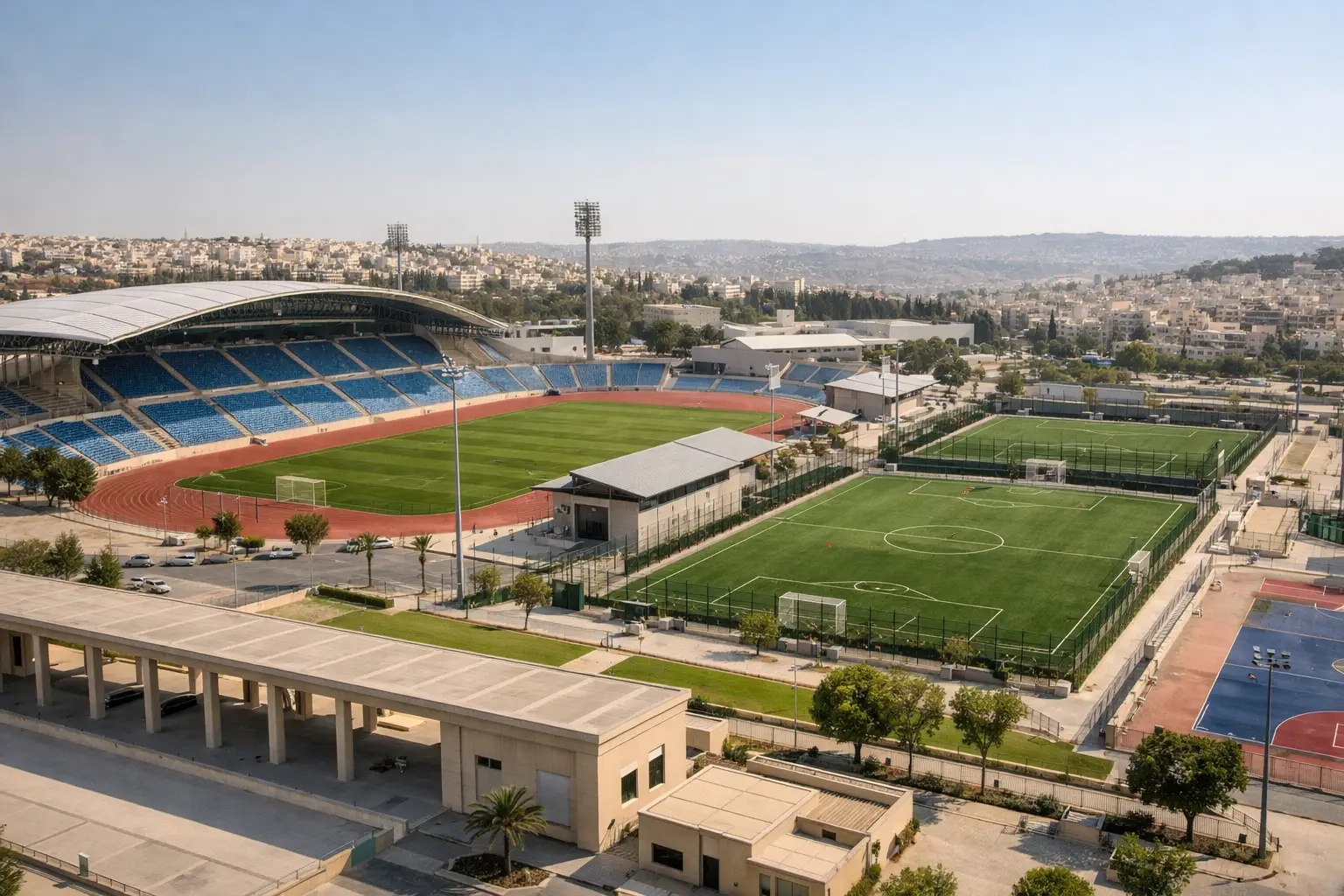
Jordan’s Al Hussein Youth City illustrates that long-horizon logic well. The site, established in 1964 in Amman, covers roughly 1,200 dunums and combines sports facilities with public space and gardens. Projects of that type matter because they work as civic infrastructure, not only as athletic venues.
When public authorities plan sports infrastructure, the work usually includes:
- building or renovating main venues and training grounds
- linking facilities to schools, federations, and local clubs
- budgeting for upkeep instead of only ribbon-cutting
- opening parts of the complex for community and youth use
That last point is often decisive. A government-funded venue is easier to defend politically when it remains active between major events and serves people outside professional sport.
The Digital Layer of Modern Sports Funding
Government-backed sports projects now include much more than concrete and seating. Registration systems, digital scheduling, event platforms, mobile ticketing, venue access control, and digital accreditation have become normal parts of sports administration. Public money increasingly pays for software and access tools alongside physical construction.
That change follows both audience behaviour and institutional need. Match updates move through apps and social platforms, but ministries, federations, and clubs also need shared calendars, participant databases, digital forms, and traceable records that can be checked quickly when events scale up.
The administrative value is substantial. Digital systems minimize paperwork, ease the registration process, and streamline the management of athlete records, event calendars, licenses, and public messaging. Smaller organizations, along with large federations, benefit from digital systems because they typically have fewer staff and budgets.
This is effectively why governments continue to fund the digital aspects of sport rather than seeing it as an optional add-on. Without those systems, the management of facilities is cumbersome, the organization of events takes longer, and the initial investment in the infrastructure yields poor returns.

Governance, Administration, and Everyday Access
A final reason governments fund sports projects is administrative. Sports systems are poorly developed to deal with fragmented records, unsystematic scheduling, and coordination based on paper documents. Consequently, funding is directed to the less apparent side of sport, which includes accreditation, licensing, calendaring, registration, maintenance planning, and the communication continuum from federations through to clubs, schools and ministries.
That work rarely attracts headlines, yet it shapes whether a system functions. Faster registration, clearer records, better scheduling, and more consistent communication lower friction across the whole sector. For public institutions, that kind of efficiency matters because it protects earlier spending on facilities, staff, and programs.
Certain government-supported sporting initiatives achieve multiple objectives simultaneously. They enhance accessibility, reinforce health policy, advocate for youth, lift a nation’s profile, and create enduring infrastructure beyond short-term visibility. This is the reason for continued government funding; sport is one of their more policy-flexible tools.