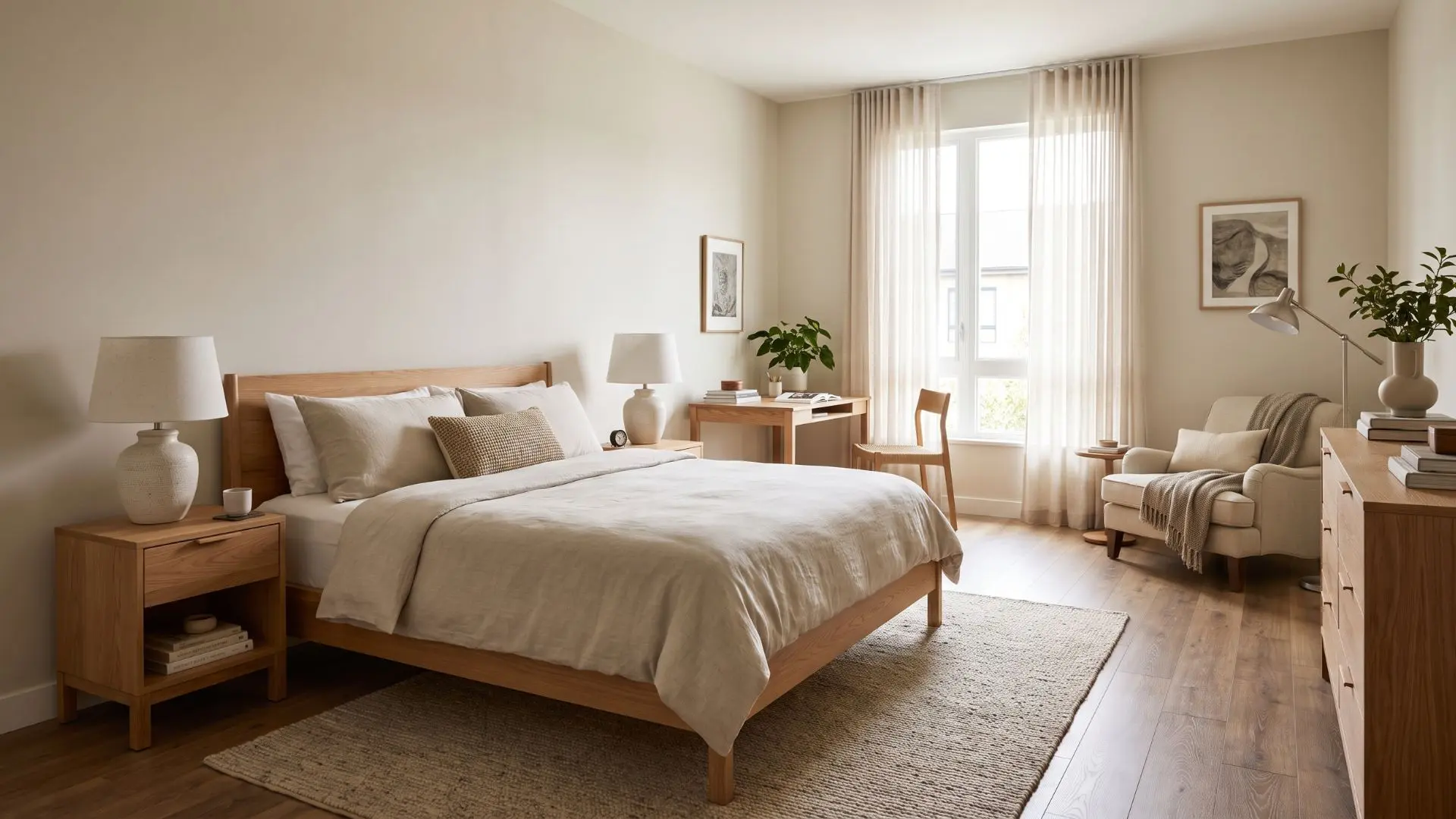
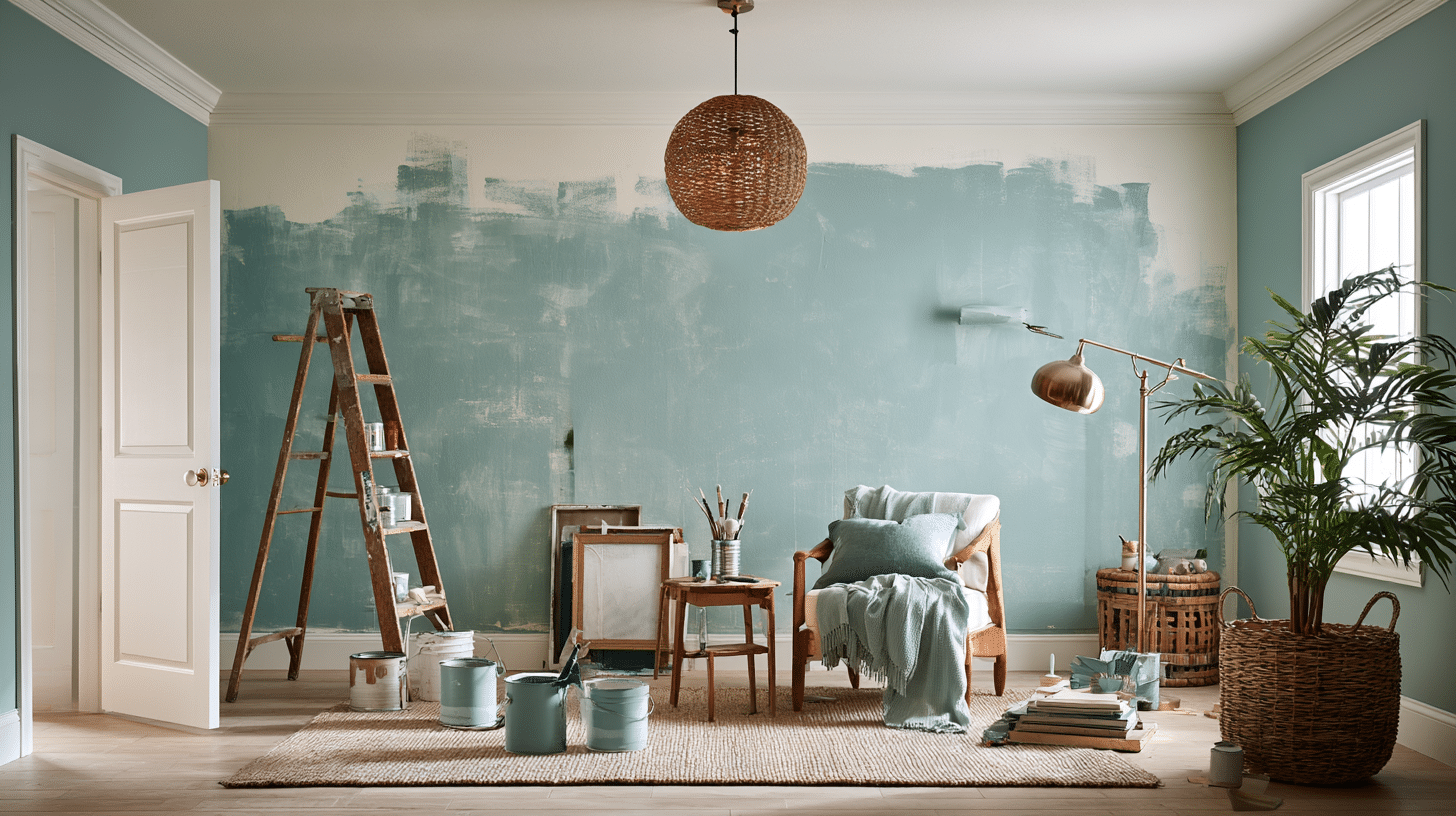
Choose a paint color by working backward from everything that isn’t changing: floors, cabinets, stone, tile, the roof, the siding. Then filter your candidates by the room’s light, the color’s depth, the final sheen, and a large physical sample you live with for two days. The color that survives all of that is the one to buy.
Two terms recur in this article. Undertone is the subtle hue hiding inside a “neutral,” visible only by comparison. LRV (Light Reflectance Value) is a 0 to 100 scale defined by how much light a color reflects. The method suits one room or a whole home, and the approach is elimination rather than inspiration.
Step 1: Which Fixed Finishes Should Your Paint Colors Work With?
Paint is usually the cheapest surface in the room, so it should respond to the expensive materials rather than fight them. Start by photographing or listing everything staying put:
- Flooring and exposed wood tones
- Cabinets and countertops
- Tile, brick, and stone
- Large upholstered furniture and rugs
- Roof, window frames, and siding
- Trim you aren’t repainting
Sort every candidate into three piles: clear match, uncertain, clear conflict. That beats trying to name every undertone perfectly. Room size and purpose narrow things further; a north-facing bedroom and a south-facing kitchen with white quartz are not the same problem.
How Does Natural Light Change How Paint Colors Look Through the Day?
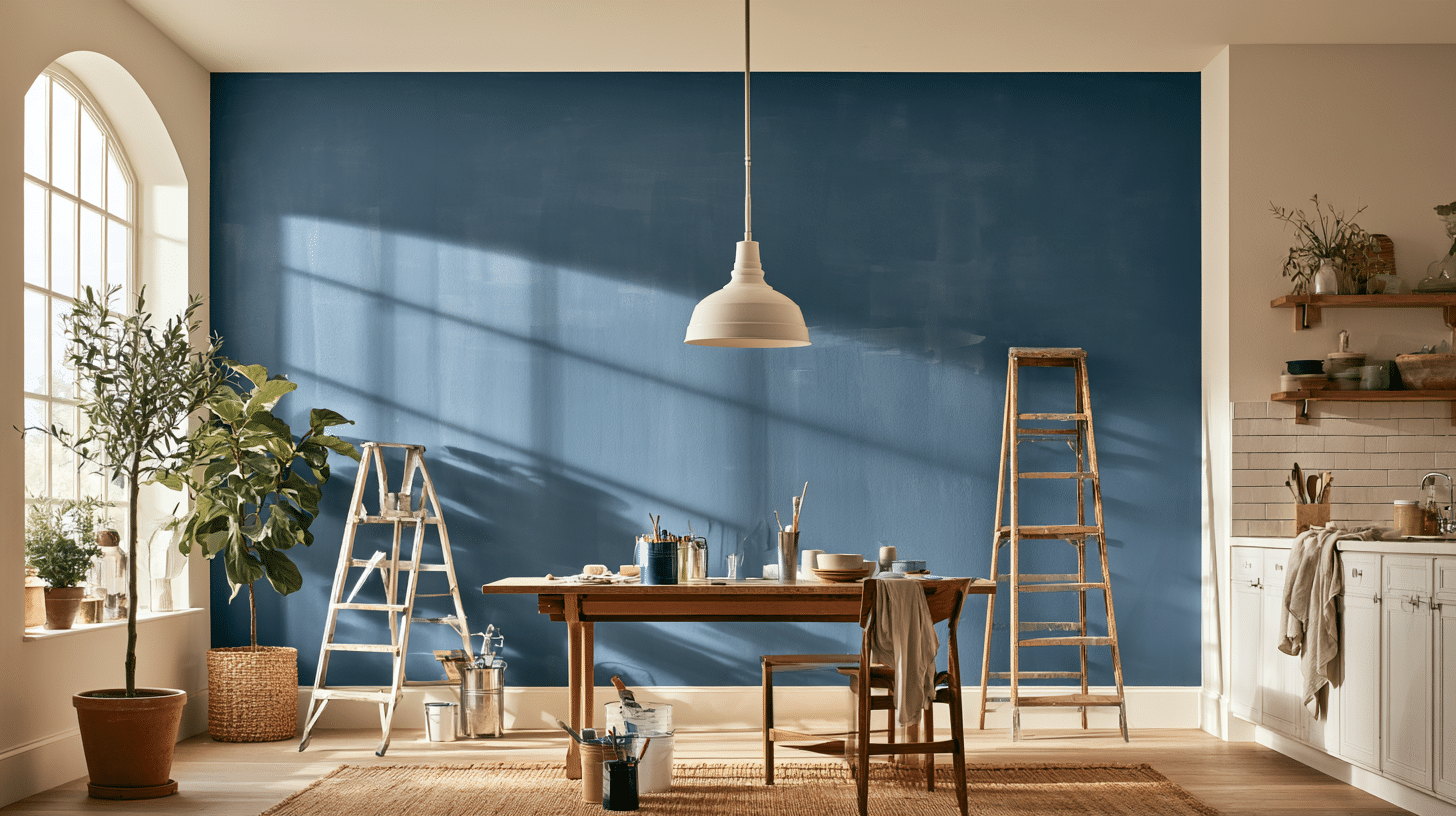
One color reads differently by window direction, time of day, and which of multiple walls it sits on. North-facing rooms usually receive cooler, less direct light. South- and west-facing rooms catch warmth at some point. A beige that looks balanced at 10 a.m. can turn yellow under evening lamps.
NIST points out that lighting shapes how we see color, and that two people can read the same color differently under identical light. Practically: judge colors in the setting where they’ll live, under the bulbs the household actually uses.
Step 3: How to Read Undertones and Use LRV Without Overthinking It
Understanding undertone comes down to comparison, not labels. A beige can read pink beside yellow-toned limestone and green beside red-toned oak. To find it:
- Hold each sample vertically against the dominant fixed material.
- Compare similar candidates together, not one at a time.
- Cut anything that makes the permanent material look dirty, oddly yellow, pink, or green.
Benjamin Moore recommends a white paper border around chips so the existing wall color doesn’t skew your read. LRV is the percentage of light a surface reflects, 0 being theoretical black and 100 theoretical white. Use it to compare depth only. It won’t name the undertone or manufacture daylight in a dim room. Light colors open a space up, with deeper ones making a large room feel more intimate, though no number guarantees either effect.
Step 4: Why Sheen Matters Before You Approve the Color
Sheen changes how a color looks and how it holds up, so lock it in before final approval.
- Flat or matte: softens minor wall flaws, minimal glare.
- Eggshell or satin: cleanable, the default for everyday rooms.
- Semi-gloss or gloss: sharpens trim and doors, but exaggerates uneven surfaces.
ASTM D523-25 specifies specular gloss measurement at 20, 60, and 85 degrees. One catch: liquid samples often come in one predetermined sheen, often eggshell, so a matte or high-gloss final product won’t match the sample exactly.
Step 5: How Big Should Paint Samples Be, and How Long Should You Test?
Three finalists, maximum. Two coats each. Boards of at least 12 inches square, with manufacturer sampling guidance pointing to roughly a 2×2-foot area. Use movable white foam-core boards rather than painting the wall, so you can carry them around and skip covering patches later.
- Leave a white border if the existing wall color is strong.
- Set the boards against flooring, cabinetry, stone, and key textiles.
- Move them to the brightest and darkest walls.
- Check morning light, afternoon sun, and evening lamplight.
- View from the doorway and from where people actually sit.
- Leave them up through two full day/night cycles, then confirm the winner in the intended product and sheen.
|
Color |
Daylight | Evening | Flooring | Cabinets/stone | Adjacent room | Sheen |
Verdict |
| A | |||||||
| B | |||||||
| C |
Digital visualizers generate lots of ideas and are useless for approval, since a shade you love on a screen still has to survive on a real wall. The EPA estimates about three-quarters of U.S. homes built before 1978 still contain some lead-based paint, so don’t sand old coatings to prep a test patch.
Choosing Paint Colors for a Whole House: Flow, Trim, and Trends Like Sage Green
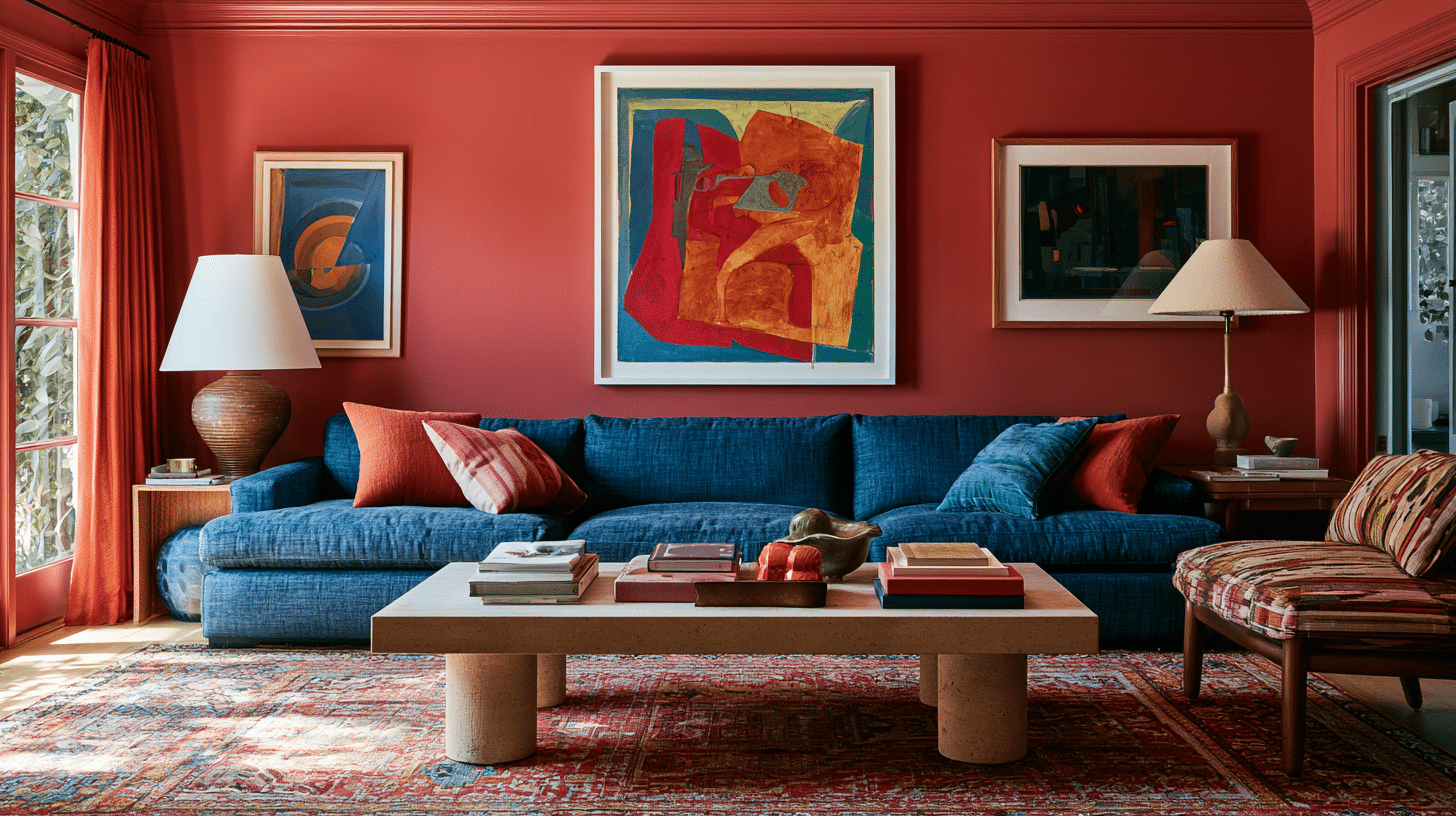
Cohesion in interiors comes from one repeated trim, door, and ceiling color while wall colors vary within a family. Start with hallways, stairwells, and open-plan sightlines, which touch the most rooms.
Creating a color schedule keeps it straight: main connecting color, trim and doors, ceiling, secondary rooms, one or two accents, each listed with product, sheen, color name, and code. Shades people feel inspired by right now, sage green or heritage smoky navy and deep gray, shouldn’t override your fixed-element and lighting filters. Warm tones can feel energizing and cool ones calming, though a 4,598-participant study across 30 nations found those associations vary by language and region.
Exterior Colors: Why You Check the Material Before You Pick the Shade
v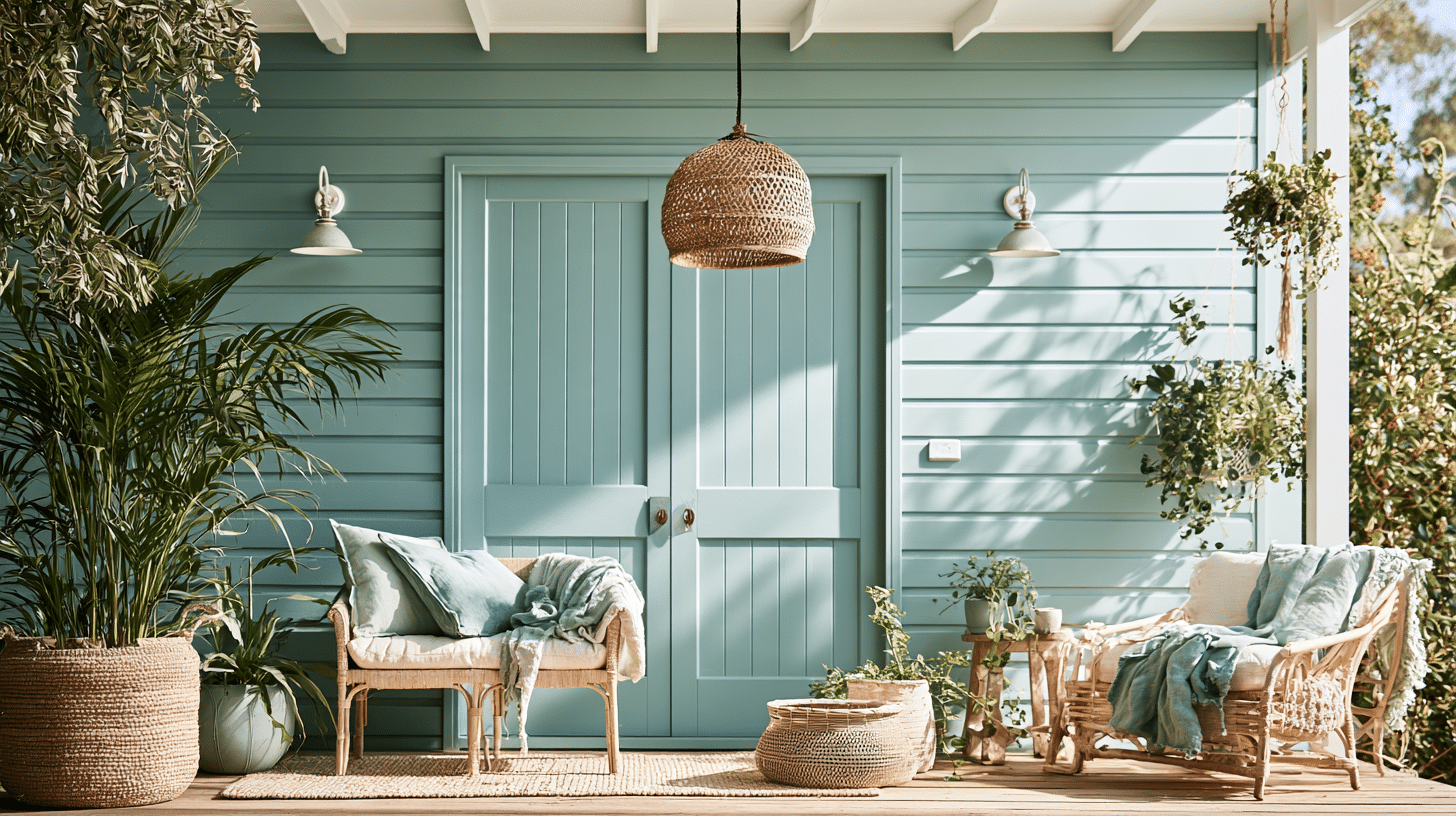
Exterior color is partly a building-material decision. Account for the roof, brick, stone, hardscape, window frames, factory-finished trim, sun exposure, and any HOA or historic-district rules.
One exterior coating’s technical data sheet warns against painting vinyl darker than its original color or below an LRV of about 55, unless you use an approved vinyl-safe color and follow the siding manufacturer’s rules, because heat absorption can warp panels. That figure is product-specific, not universal. Fading, chalking, paint that starts to peel, rot, and cupping aren’t color problems, either. If a color change coincides with aging siding or damaged window trim, siding and window specialists such as Pro Superior Construction can judge whether repairs should come before color selection.
When is professional help worth it?
Bring someone in for whole-house or commercial repaints, exteriors that are hard to access, pre-1978 buildings needing lead-safe prep, rot or coating failure, and multi-room color schedules. For larger jobs, a licensed Painting Company can prepare bigger mockups for clients, confirm the specified product and sheen, and flag repairs that affect the finished look. That conversation often starts with the condition of the surface rather than the color.
Frequently Asked Questions About Choosing Paint Colors
What Is the 60-30-10 Rule for Painting?
Roughly 60% of a space in the dominant wall color, 30% in a secondary color across trim, large furnishings, or cabinetry, and 10% in a bolder accent. It balances proportion; it doesn’t pick the colors for you.
What Is the 3 Color Rule in Interior Design?
Limit a space to about three coordinated colors so the palette reads intentional. It pairs with 60-30-10 and works best across adjacent rooms.
What Color Is Replacing Grey in 2026?
Warm neutrals, greige, soft earth tones, and muted greens like sage are widely cited. Let the fixed finishes and light in your own home decide.
What Color Makes a House Look Expensive?
No single color does it. The effect comes from restraint: a limited palette, consistent trim and door color, the right sheen, and clean prep.