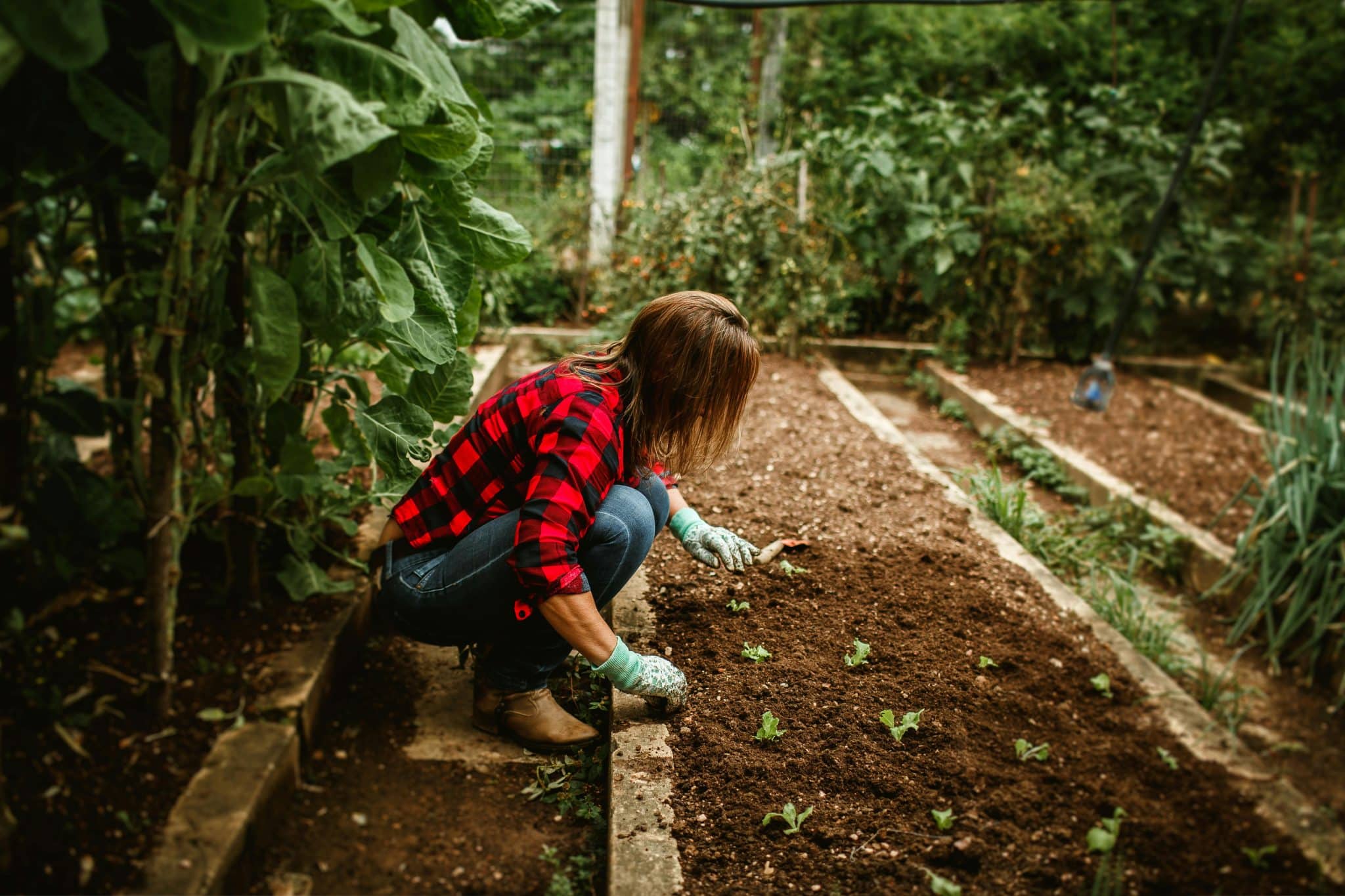
Ever wonder why some gardens seem to burst with life while others struggle?
Look down at that dark, crumbly layer beneath your feet. That’s topsoil, the uppermost zone of the earth where all the growing happens.
This nutrient-rich layer is packed with organic matter and beneficial microbes that keep plants thriving. It’s not just dirt. Topsoil holds moisture, feeds roots, and makes the difference between a struggling lawn and a vibrant landscape.
In this guide, we’ll break down what makes topsoil so essential, how to tell if yours needs help, and the best ways to use it for your outdoor projects.
What is Topsoil Made of?
Topsoil is a living blend that changes based on location and climate. At its core, you’ll find three key components working together: organic matter, mineral particles, and countless microorganisms.
The organic matter (decomposed leaves, roots, and plant material) feeds the soil and holds moisture. Minerals like sand, silt, and clay determine texture and drainage.
Then there are the invisible workers: bacteria, fungi, and earthworms breaking down nutrients for plants to absorb.
Most topsoil develops naturally over centuries, forming a layer typically two to eight inches deep through weathering and organic decomposition.
| Component | Typical Depth/Presence | Function |
|---|---|---|
| Organic matter | Top 2–4 inches | Provides nutrients, retains moisture, feeds microbes |
| Sand particles | Throughout layer | Improves drainage, prevents compaction |
| Silt particles | Throughout layer | Balances water retention and aeration |
| Clay particles | Throughout layer | Holds nutrients, retains water long-term |
| Microorganisms | Concentrated in the top 3 inches | Break down organic material, cycle nutrients to plant roots |
Common Types of Topsoil
Not all topsoil performs the same way. The type you need depends on your soil’s mineral makeup and what you’re planting.
Here’s how the main varieties stack up:
- Loam Topsoil: Balanced mix of sand, silt, and clay. Ideal for most plants with excellent drainage and nutrient retention.
- Sandy Topsoil: Light and drains quickly. Works for drought-tolerant plants and root vegetables, but needs frequent watering and fertilizing.
- Clay Topsoil: Heavy and nutrient-dense, but drains slowly. Best for moisture-loving plants, though it can compact easily.
- Peat Topsoil: Acidic and moisture-retentive. Great for acid-loving plants like blueberries and azaleas.
- Chalk Topsoil: Alkaline and free-draining. Suit plants that thrive in alkaline conditions.
Why Loam is Preferred: Most gardeners reach for loam because it adapts to different plants and climates without demanding constant amendments or special care.
What is Topsoil Used For?
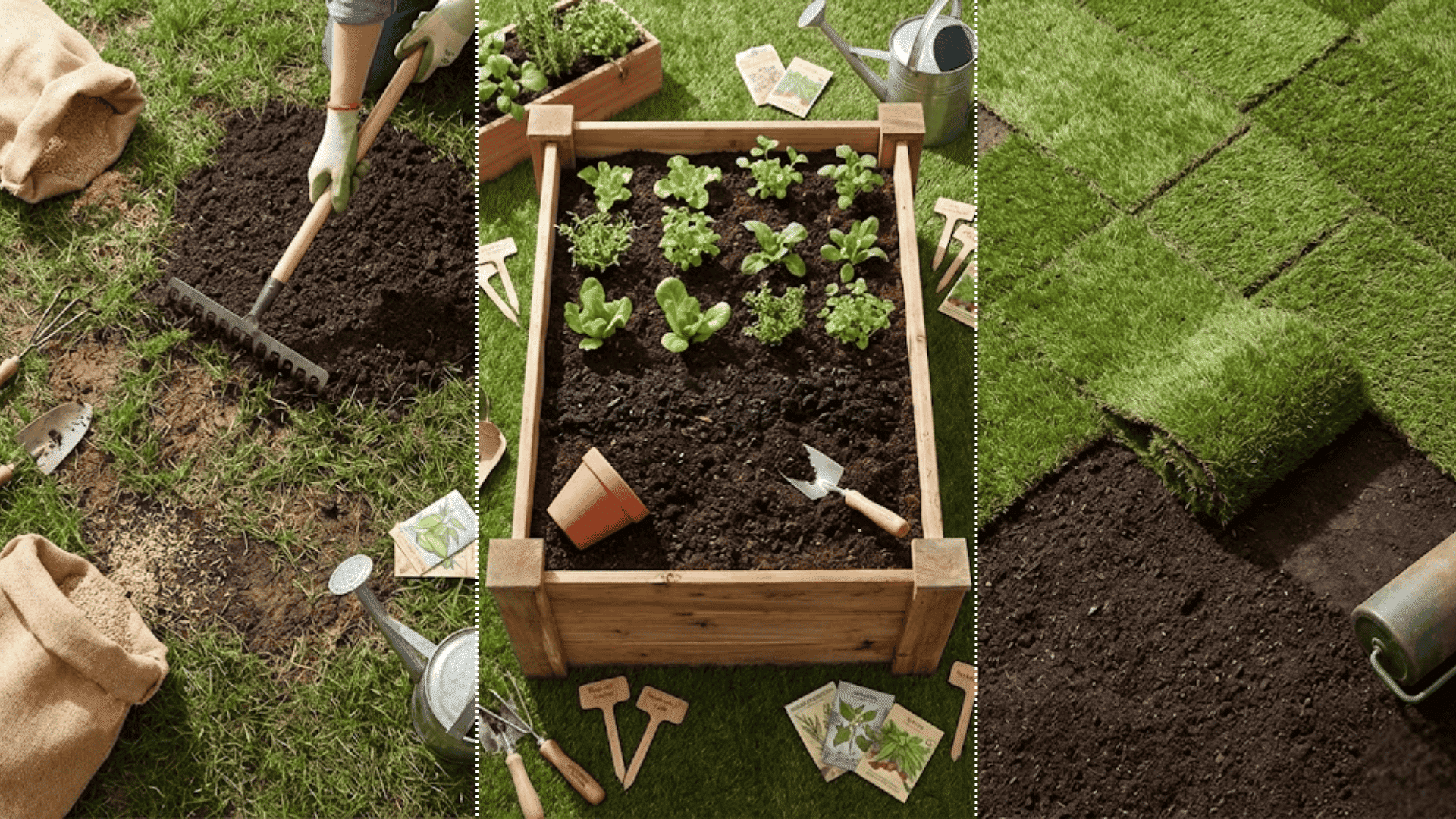
Topsoil is the workhorse of outdoor projects. It fixes patchy lawns, builds garden beds, and creates the foundation plants need to thrive while solving drainage and fertility issues.
1. Re-Seeding and Leveling Lawns
Thin or uneven grass benefits from a fresh topsoil layer, known as top-dressing. Spread a quarter to half-inch layer over existing turf for filling low spots, improving soil structure, and helping new seed germinate.
Spring and early fall are ideal times since grass grows actively and roots establish faster. Avoid piling too much topsoil at once, as it can smother existing grass and create compaction problems.
2. Building Garden Beds and Raised Beds
Garden beds need nutrient-rich soil to support vegetables, flowers, and shrubs. Topsoil provides the bulk and structure, especially when mixed with compost.
Raised beds work best with at least six to eight inches of quality topsoil, giving roots room to spread. This setup improves drainage in heavy clay areas and warms up faster in spring, extending your growing season.
3. Landscaping and Turf Installation
New lawns require a solid base. Spread two to three inches of topsoil before laying sod or seeding for even coverage and healthy root development.
Topsoil also works for grading around foundations, filling in after construction, and controlling erosion on slopes. Lightly compact after spreading to prevent settling, but avoid squeezing out roots’ necessary air pockets.
Topsoil vs. Other Soil Types: Key Differences
Confused about which soil product you actually need? Each serves a distinct role in your garden.
Here’s the breakdown.
| Type | Purpose | Texture | Nutrient Profile | Typical Price |
|---|---|---|---|---|
| Topsoil | Base layer for planting | Dense, mineral-heavy | Low to moderate nutrients; pH varies by source | $ (bulk) |
| Garden Soil | Improved topsoil with amendments | Medium, slightly crumbly | Enriched with compost; balanced pH | $$ |
| Potting Soil | Lightweight growing medium | Light, airy, soilless mix | High nutrients; pH-balanced with added fertilizers | $$$ |
| Compost | Organic nutrient booster | Dark, crumbly, rich | Very high in organic matter and nutrients | $$ |
| Mulch | Surface protector | Coarse, chunky (wood, bark, straw) | Minimal nutrients; breaks down slowly | $ to $$ |
Quick Takeaway: Use topsoil for bulk and foundation work, garden soil for ready-to-plant beds, and potting soil for containers. Compost enriches any soil type, while mulch protects the surface after planting.
How to Choose Quality Topsoil?
Not all topsoil is created equal. Picking the right batch means checking for signs of fertility and avoiding contaminated or low-quality fill dirt disguised as the real thing.
- Look for Dark, Rich Color: Quality topsoil appears nearly black or deep brown, indicating high organic matter content that plants need for growth.
- Check the Texture: It should feel crumbly and loose in your hand, not compacted or clay-heavy, allowing roots to penetrate easily and water to drain properly.
- Smell the Soil: Fresh, earthy aroma signals healthy decomposition and microbial activity, while sour or chemical odors indicate contamination or poor quality.
- Inspect for Debris: Avoid batches loaded with large rocks, wood chunks, roots, or trash, which dilute nutrient value and make spreading difficult.
- Ask for Soil Analysis or Certification: Reputable suppliers provide testing results showing pH levels, nutrient content, and absence of weed seeds or harmful contaminants.
Steer clear of dirt labeled simply as “fill dirt” being marketed as topsoil, and be wary of unusually cheap bulk offers that likely contain low-grade material. Always buy from established suppliers who stand behind their product quality.
How to Test and Amend Topsoil?
Even good topsoil needs tweaking sometimes. Testing reveals what your soil lacks, while amendments fix drainage issues, boost nutrients, and adjust pH for healthier plant growth.
Testing Your Topsoil: DIY Steps
Understanding your soil’s pH and nutrient levels takes the guesswork out of gardening.
Here’s how to test it yourself or get professional results.
- Step 1: Collect samples by digging down three to four inches in multiple spots across your planting area, then mix them together in a clean container.
- Step 2: Remove debris like rocks, roots, and sticks, then let the soil dry out completely before testing for accurate results.
- Step 3: Use a home pH test kit with color-coded strips or probes, following package instructions to measure acidity or alkalinity levels.
- Step 4: For detailed nutrient analysis, send samples to a local extension office or soil testing lab, which costs around $15 to $30.
- Step 5: Review results to identify deficiencies in nitrogen, phosphorus, potassium, or other nutrients, plus whether pH needs adjusting up or down.
How and When to Add Amendments?
Compost works year-round for boosting organic matter and fertility. Mix two to three inches into topsoil before planting or spread one inch as top-dressing around established plants each spring or fall.
Sandy soil benefits from added compost or clay to improve water retention, while heavy clay needs sand or organic matter for better drainage.
Top-dress lawns with a quarter-inch layer, but replace topsoil entirely if it’s severely depleted or contaminated.
How to Apply Topsoil: Step-by-Step for Common Jobs
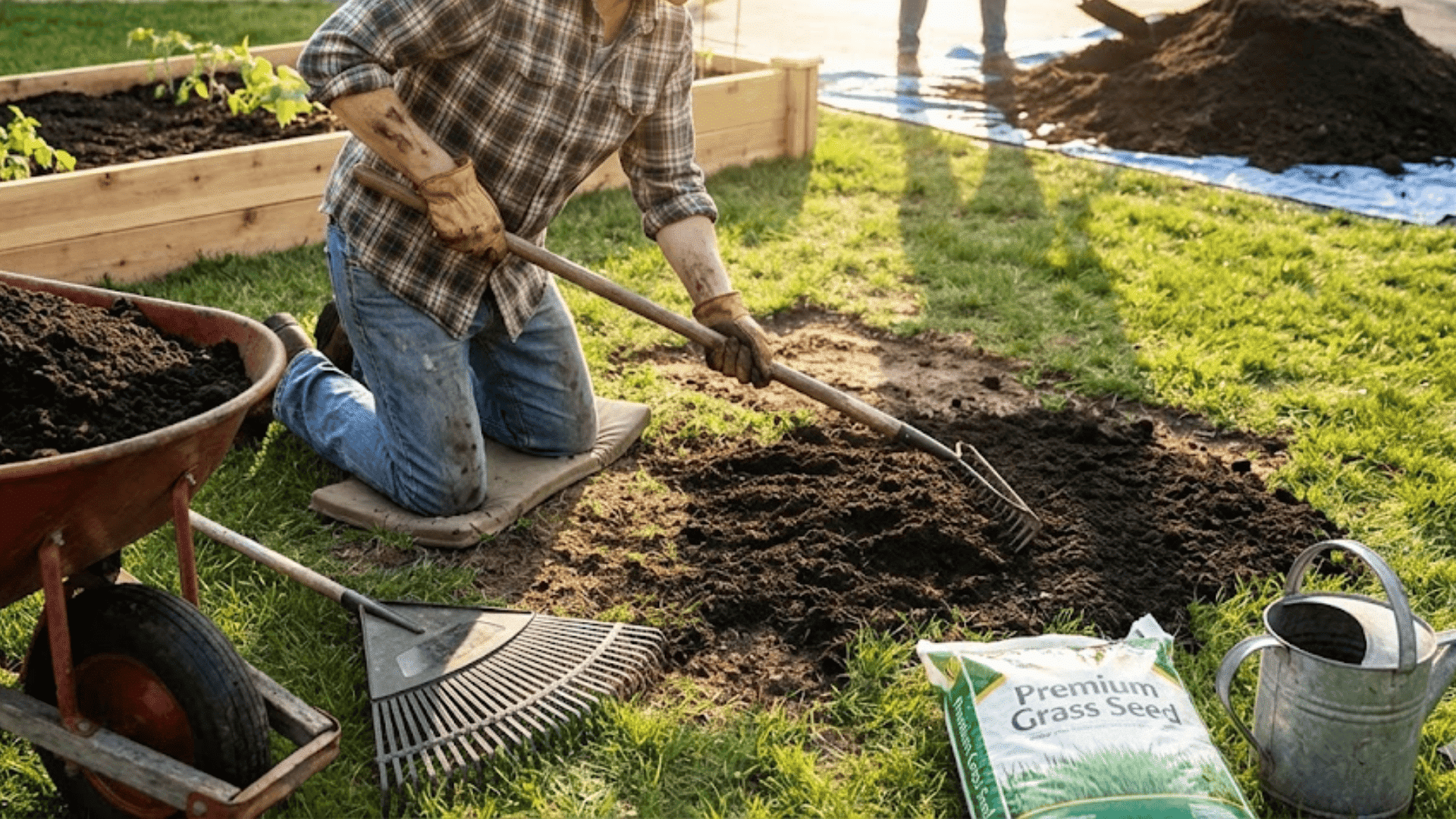
Applying topsoil correctly makes the difference between plants that struggle and those that flourish. Here’s how to handle the most common outdoor projects with proper technique and timing.
1. Patching Bare Lawn Spots
Thin or bare patches in your lawn need fresh topsoil and seed to fill in correctly and match the surrounding grass.
- Step 1: Clear the bare area by removing dead grass, weeds, and debris, then loosen the existing soil surface with a rake.
- Step 2: Spread two to three inches of quality topsoil evenly across the patch, creating a level surface that blends with the surrounding turf.
- Step 3: Tamp down the topsoil lightly with your feet or a lawn roller to eliminate air pockets without over-compacting.
- Step 4: Scatter grass seed at the recommended rate for your variety, then rake gently to cover seeds with a thin topsoil layer.
- Step 5: Water thoroughly and keep the area consistently moist for two to three weeks until new grass establishes roots.
2. Building Raised Beds
Raised beds perform best with a balanced soil mix that drains well while holding moisture and nutrients for vegetables or flowers.
- Step 1: Fill the bed with a blend of 60% topsoil, 30% compost, and 10% sand or perlite for optimal drainage and fertility.
- Step 2: Mix components thoroughly before adding to the bed, ensuring even distribution of nutrients and proper texture throughout.
- Step 3: Fill the bed, leaving one to two inches below the rim to prevent soil spillage when watering or during heavy rain.
3. Large Landscaping Projects
Bulk topsoil delivery saves money on big jobs but requires planning for placement, grading, and proper distribution across your property.
- Step 1: Calculate how much topsoil you need by measuring length, width, and desired depth in feet, then multiply and divide by 27 for cubic yards.
- Step 2: Schedule delivery for a dry day and designate an accessible drop spot on a tarp or driveway to protect the existing lawn.
- Step 3: Spread topsoil with a wheelbarrow and rake, working in sections and maintaining proper slope for drainage away from structures.
- Step 4: Grade the area so water flows naturally downhill, avoiding low spots where puddles form, or soil erodes over time.
- Step 5: Compact lightly by watering or using a roller, then let it settle for a few days before seeding or planting to prevent future sinking.
Always work the topsoil when it’s slightly moist but not saturated, as wet soil compacts easily and dry soil creates dust clouds. Test a handful by squeezing it; properly moist topsoil holds shape briefly, then crumbles apart when touched.
Cost & Where to Buy Topsoil?
Topsoil pricing varies widely based on quality, quantity, and delivery distance. Choosing between bulk and bagged depends on your project size and budget.
| Purchase Type | Average Cost | Best For | Key Advantage | Main Drawback |
|---|---|---|---|---|
| Bulk Topsoil | $10–$50 per cubic yard (plus delivery) |
Large landscaping, grading, multiple beds | Cost-effective for volume | Requires accessible drop spot; minimum orders |
| Bagged Topsoil | $2–$8 per bag (0.5–1 cubic foot) |
Small patches, containers, and raised bed touch-ups | Easy transport and storage | Expensive per cubic foot |
| Premium Blends | $50–$100+ per cubic yard |
Specialty gardens needing specific pH/nutrients | Pre-tested, tailored quality | Significantly pricier |
Where to Buy?
Local landscape suppliers and garden centers offer both options with expert advice on quality. Big-box stores stock bagged topsoil year-round but rarely carry bulk.
Municipal composting facilities sometimes sell screened topsoil blends at budget prices.
Environmental & Sustainability Notes
Topsoil takes centuries to form naturally, making it a non-renewable resource we can’t afford to waste. Removing or degrading topsoil leads to erosion, nutrient loss, and increased runoff that pollutes waterways.
Construction and poor land management strip away this vital layer faster than nature can replace it. Preserve what you have by adding compost instead of constantly importing new topsoil.
Mulching, cover cropping, and minimizing tilling also protect existing topsoil from wind and water erosion.
When you do need topsoil, source it locally and choose suppliers who harvest responsibly without depleting natural landscapes or farmland.
Wrapping Up
Understanding topsoil goes beyond just knowing it’s the dark stuff on top. It’s about recognizing how this living layer supports everything you grow and shapes your outdoor space.
Whether choosing the right type for your project, testing pH levels, or sourcing responsibly, small decisions add up to healthier plants and better soil over time.
Ready to get your hands dirty?
Start by checking what’s already beneath your feet, then build from there. Got questions or tips about working with topsoil? Drop a comment below and let’s keep the conversation growing.