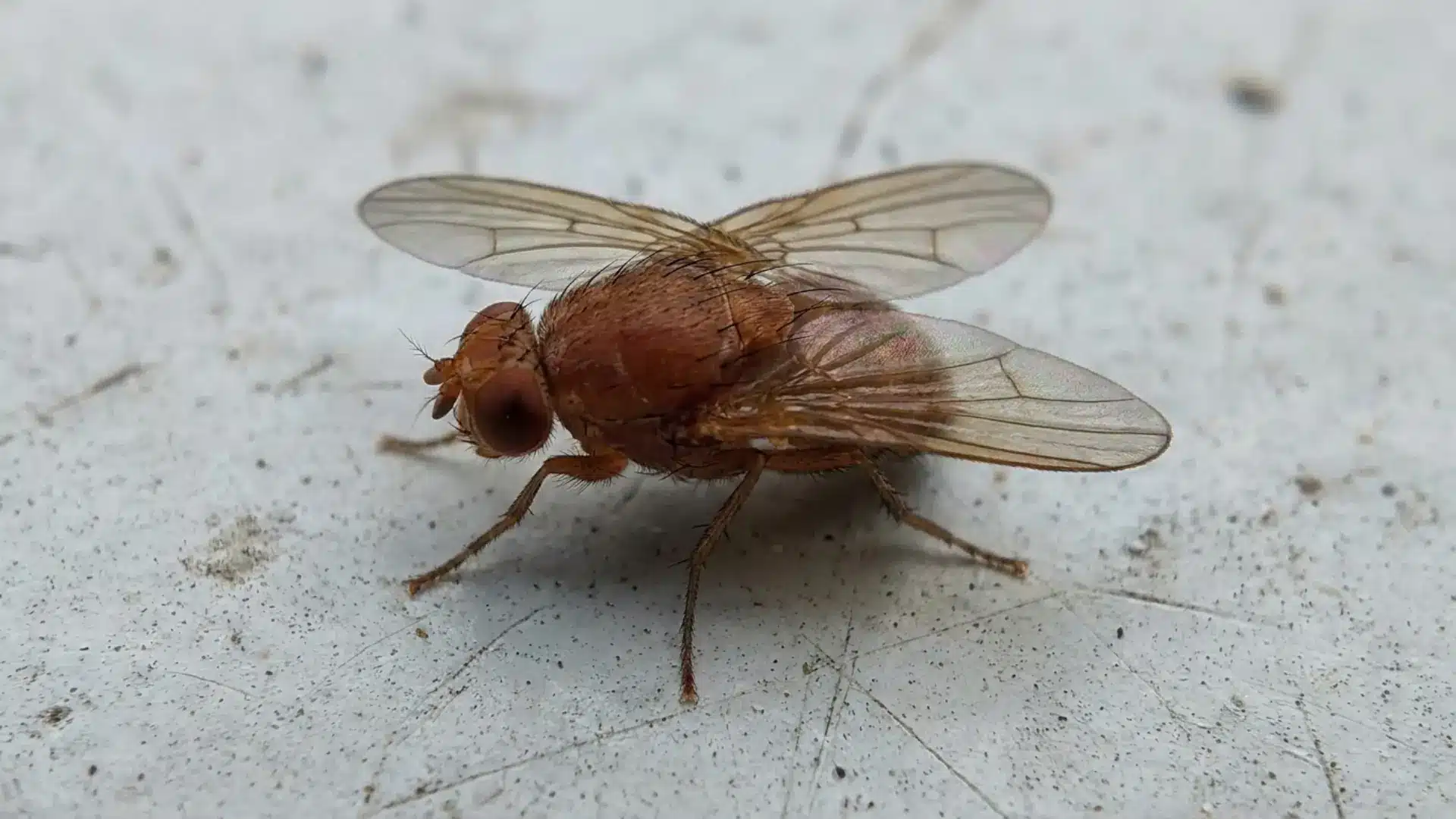
People kill fruit flies with little thinking, these are a mere nuisance that haunts the fruit bowl, but they affect our world in a major way.
These pesky little insects, which are so easily dismissed, have contributed to numerous scientific discoveries in their short lifetime.
They may be small, but they have value, and the study of their short life is far more interesting than you might imagine.
This blog post details what you need to know, lifecycle of a fruit fly, the fruit fly lifespan, and the factors that influence them, giving the information on these little insects you won’t find anywhere else.
What is the Lifecycle of a Fruit Fly?
Fruit flies typically live around 8 to 15 days once they reach adulthood, though some stick around for up to 40 to 50 days under the right conditions.
Warm temperatures speed things up, so flies in a hot kitchen tend to burn through their life cycle faster than ones in a cooler spot.
Cooler air, around 60°F, can stretch that lifespan out considerably. Food access matters too.
A fruit fly surrounded by ripening produce or a dirty drain has everything it needs to keep feeding and laying eggs, which means it lives longer and multiplies faster than one stuck in a picked-clean kitchen.
Life Cycle Of A Fruit Fly
Fruit flies go through four distinct stages between hatching and death, and each one looks and behaves nothing like the last. The entire process moves fast, often wrapping up in just over a week under warm conditions.
If the flies you’re seeing don’t quite match this pattern, confirming what’s actually breeding in your kitchen is worth doing before treating for the wrong pest.
1. Egg Stage
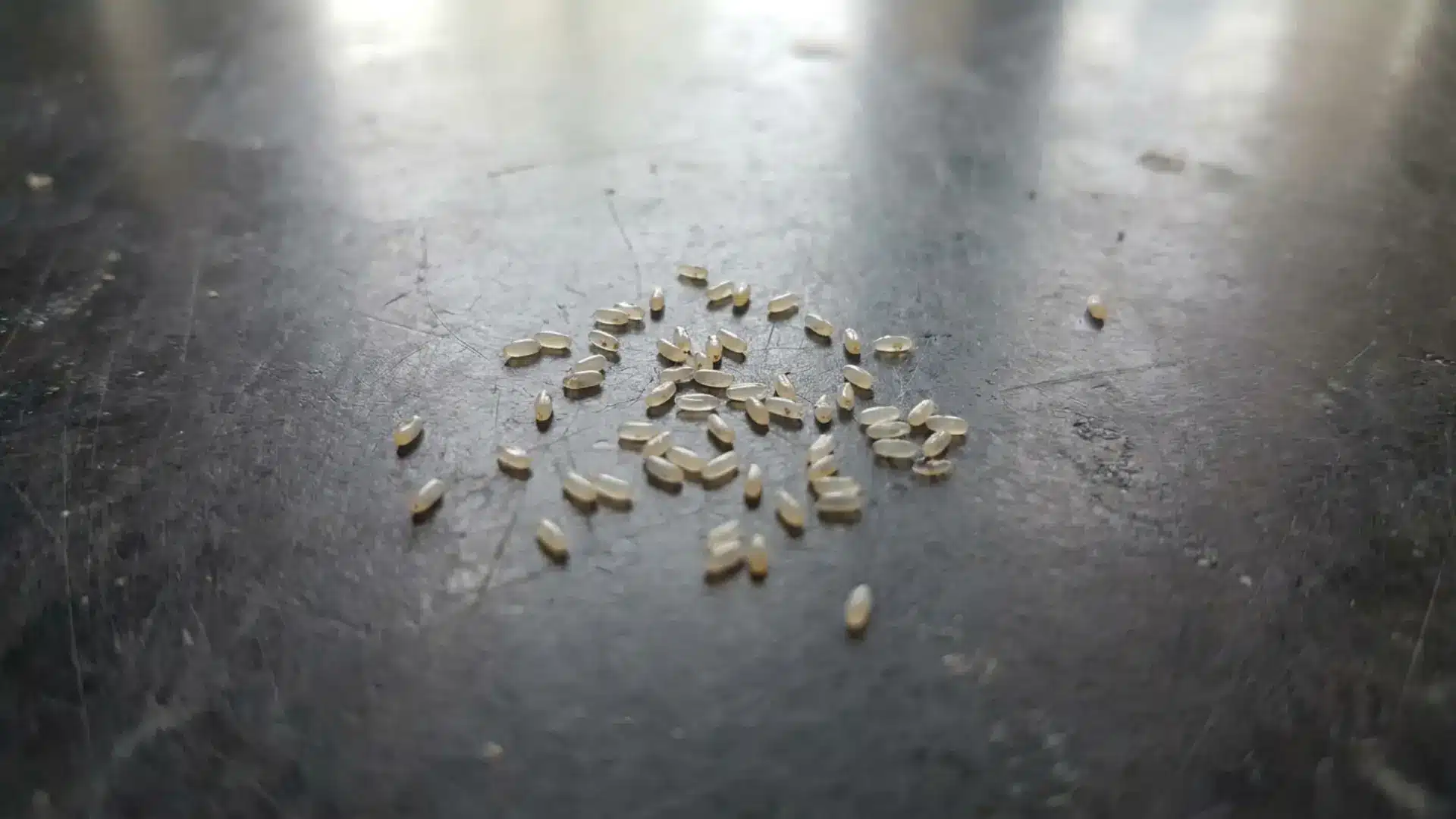
Female fruit flies lay their eggs directly on or near soft, ripening fruit, inside garbage cans, or along the edges of drains where organic residue builds up.
A single female can lay hundreds of eggs over her lifetime, often depositing 20 or more in a single sitting.
The eggs are tiny, oval, and nearly impossible to spot without a closer look.
Given warm room temperature, hatching happens fast, sometimes in as little as 12 to 15 hours, though it can stretch to a full day depending on conditions.
2. Larva Stage
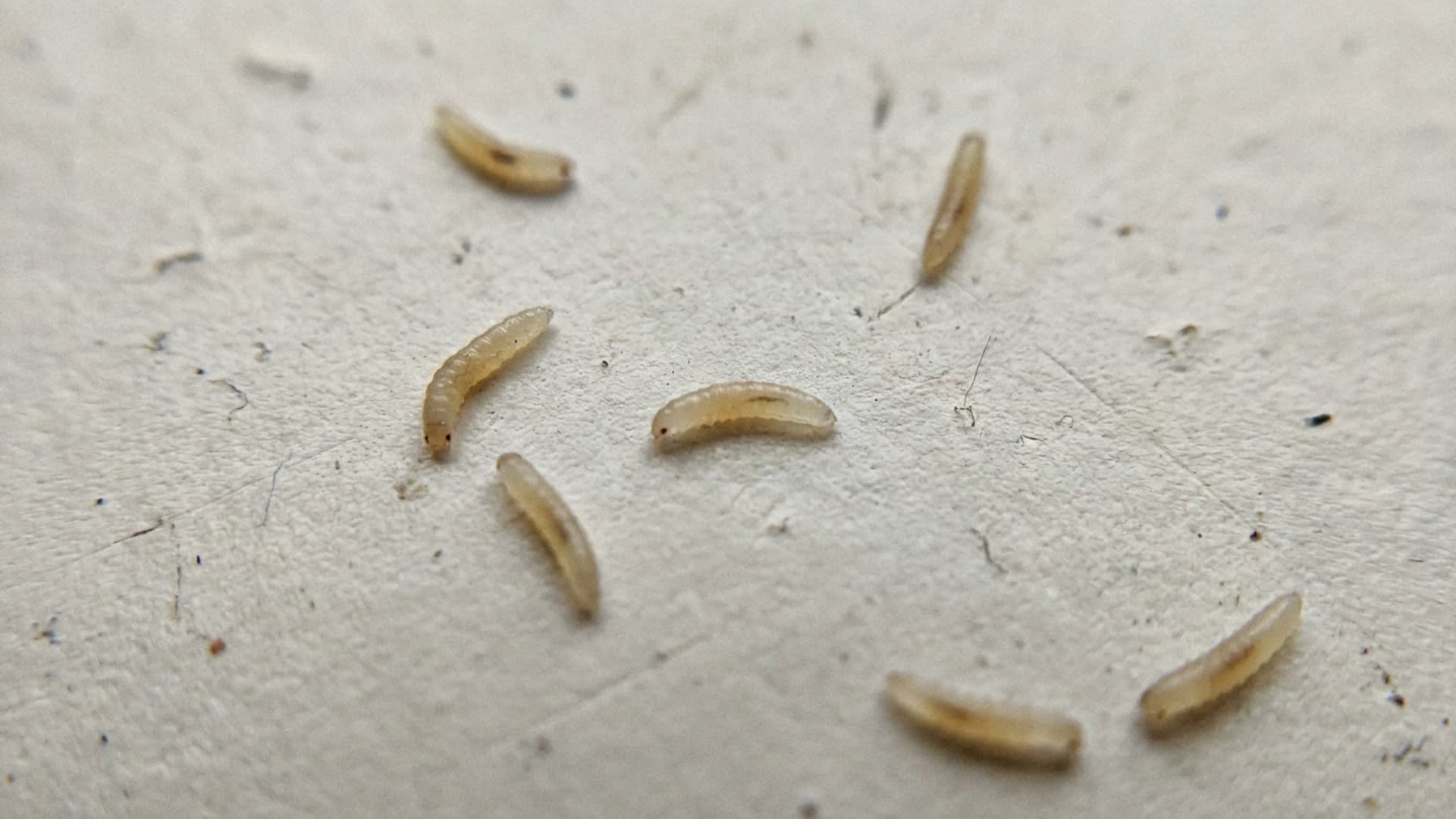
Once hatched, the larvae immediately start feeding on the decaying fruit or organic matter surrounding them. They appear as small, pale, worm-like creatures that burrow into soft food sources to feed nonstop.
This stage is all about growth, and the larvae molt several times as they increase in size. It typically lasts around 4 days, though it can run longer in cooler environments.
By the end of this stage, the larvae have stored up enough energy to prepare for the next major change.
3. Pupa Stage
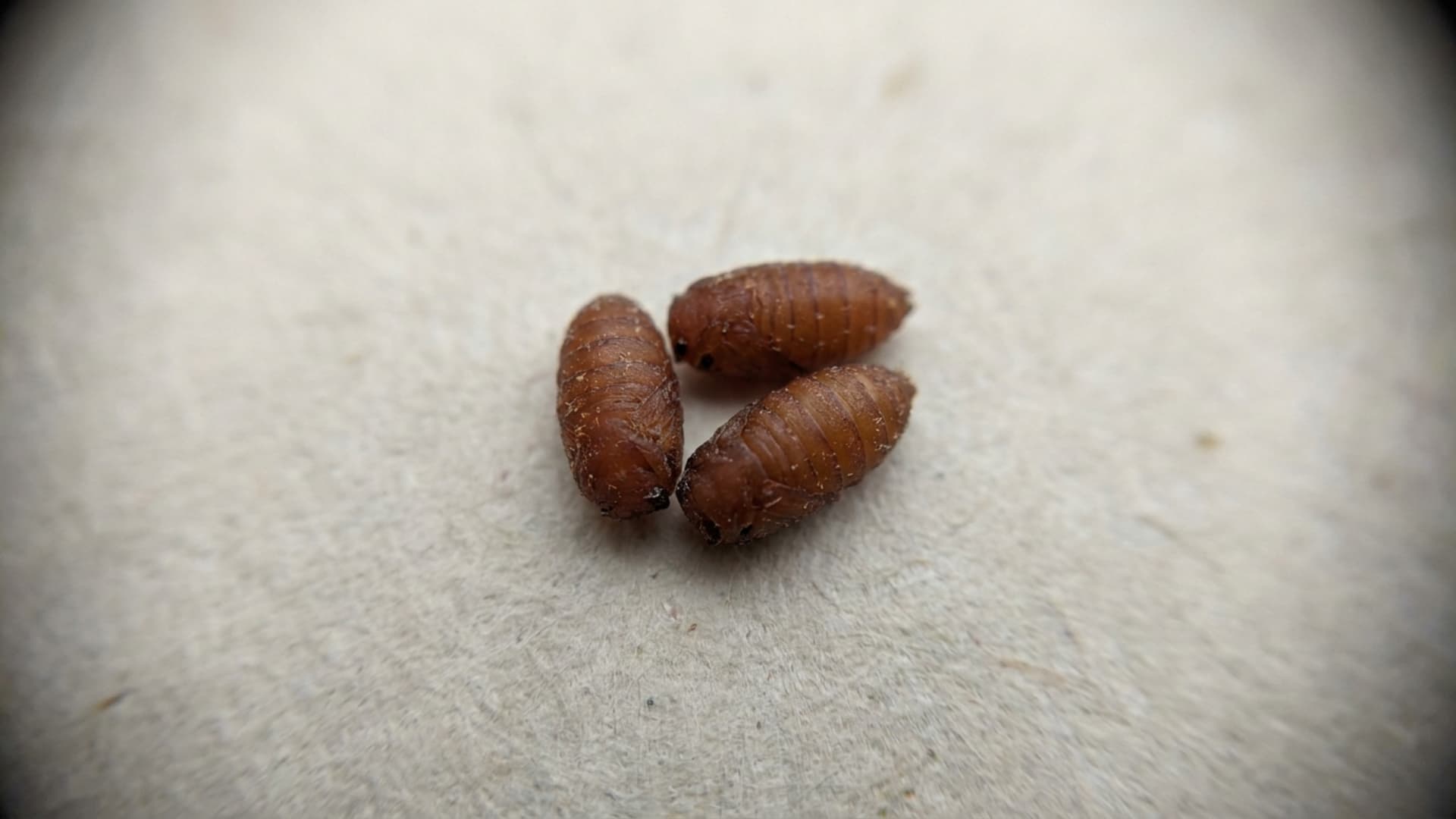
When a larva has fed enough, it moves to a drier spot, often crawling away from the food source toward a wall, container edge, or other nearby surface.
There, it forms a hard, oval-shaped casing around itself and enters the pupa stage. Inside this casing, the body undergoes a complete transformation, rearranging itself into the adult form.
This stage generally lasts 4 to 5 days, though warmer temperatures can shorten it while cooler air extends it.
4. Adult Stage
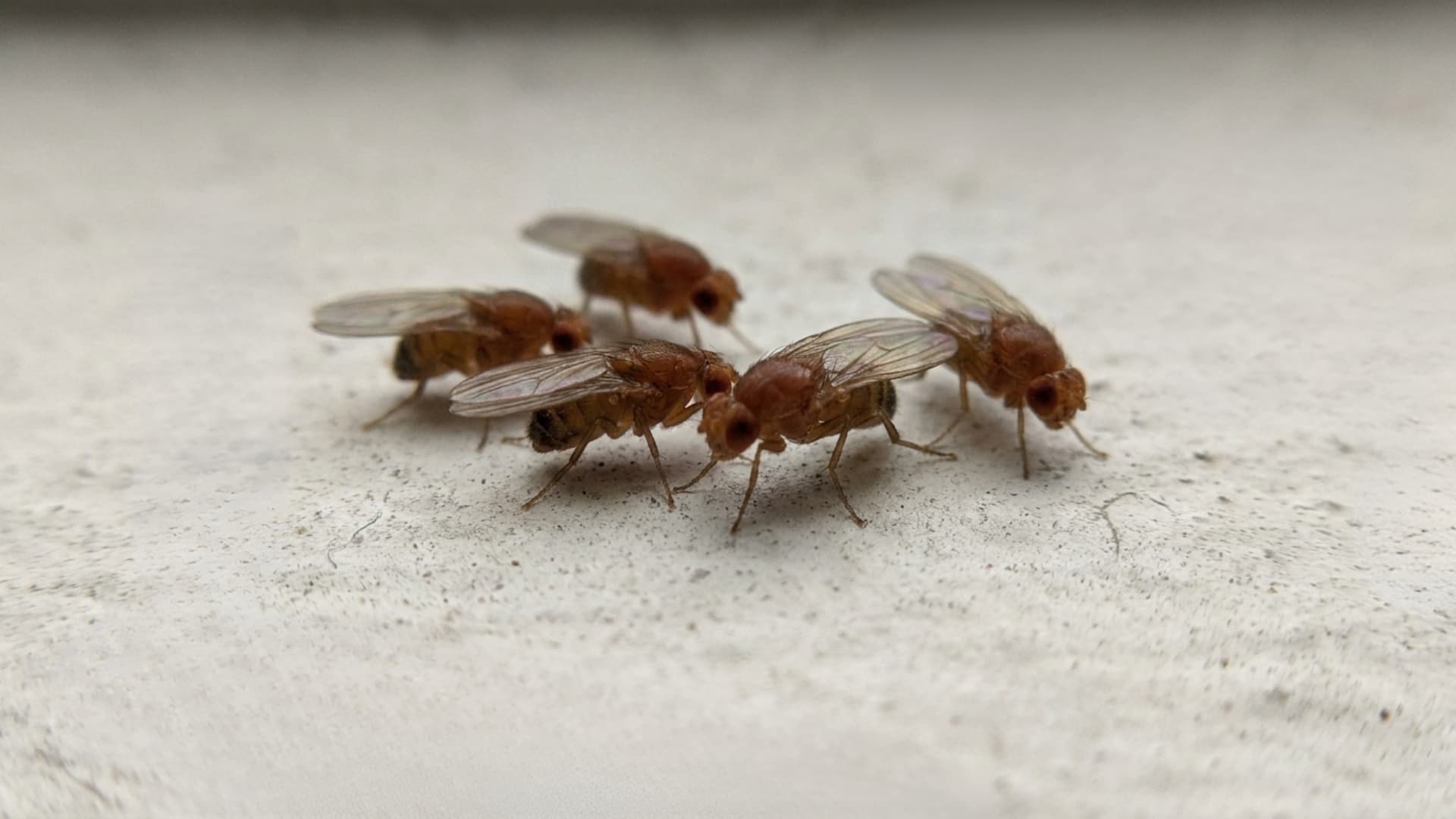
Once an adult fruit fly emerges from its pupal casing, it reaches reproductive maturity remarkably fast, often within just 1 to 2 days.
This quick turnaround is a major reason infestations spiral out of control so quickly. From there, adults live anywhere from 8 to 15 days on average, though some survive several weeks longer under favorable conditions.
During this window, females lay eggs continuously, restarting the entire cycle before the current generation has even finished dying off.
What Affects Fruit Fly Lifespan?
A few key conditions decide whether a fruit fly lives a short, unremarkable life or sticks around for weeks longer than expected.
- Temperature: Warm rooms, especially anything above 80°F, speed up development and shorten overall lifespan since the body burns through its life cycle faster.
- Humidity: Fruit flies thrive in moist environments. Higher humidity keeps their small bodies from drying out, supporting longer survival, while dry air shortens their time considerably.
- Food source availability: Constant access to ripening fruit, fermenting liquids, or organic waste gives fruit flies the fuel they need to keep feeding and reproducing.
- Species differences: Not all fruit flies are built the same. Some species have naturally shorter life cycles built for rapid reproduction, while others last noticeably longer even under identical conditions.
- Population density: Overcrowded breeding sites can lead to competition for food, which shortens lifespan for individual flies within a large colony.
How Fast Do Fruit Flies Reproduce?
Fruit flies reproduce at a pace that catches most people off guard.
A single female can lay up to 500 eggs during her lifetime, often depositing 20 to 30 at a time on ripening produce or damp organic matter.
Since eggs hatch within a day and the entire life cycle wraps up in about a week to ten days under warm conditions, one female’s offspring can already be laying their own eggs before her generation has died off.
That overlap is what turns a couple of stray flies into a full-blown infestation within just one to two weeks.
By the time the swarm becomes noticeable around the kitchen, several generations may already be breeding at once, which is why early action matters so much.
How To Get Rid Of Fruit Flies Fast
Getting rid of fruit flies quickly means attacking both the adults flying around and the breeding sites you can’t see.
|
Method |
How It Works |
|---|---|
|
Vinegar trap |
Fill a small bowl or jar with apple cider vinegar, cover tightly with plastic wrap, and poke a few small holes in the top. Flies get drawn in but can’t find their way back out. |
|
Dish soap mix |
A drop of dish soap in vinegar or wine breaks the surface tension, causing flies to sink instead of floating on top. |
|
Sealed food storage |
Store ripening fruit in the fridge or in sealed containers rather than leaving it out on the counter. |
|
Drain cleaning |
Scrub kitchen and bathroom drains with a brush since organic buildup inside pipes is a common hidden breeding ground. |
|
Frequent trash removal |
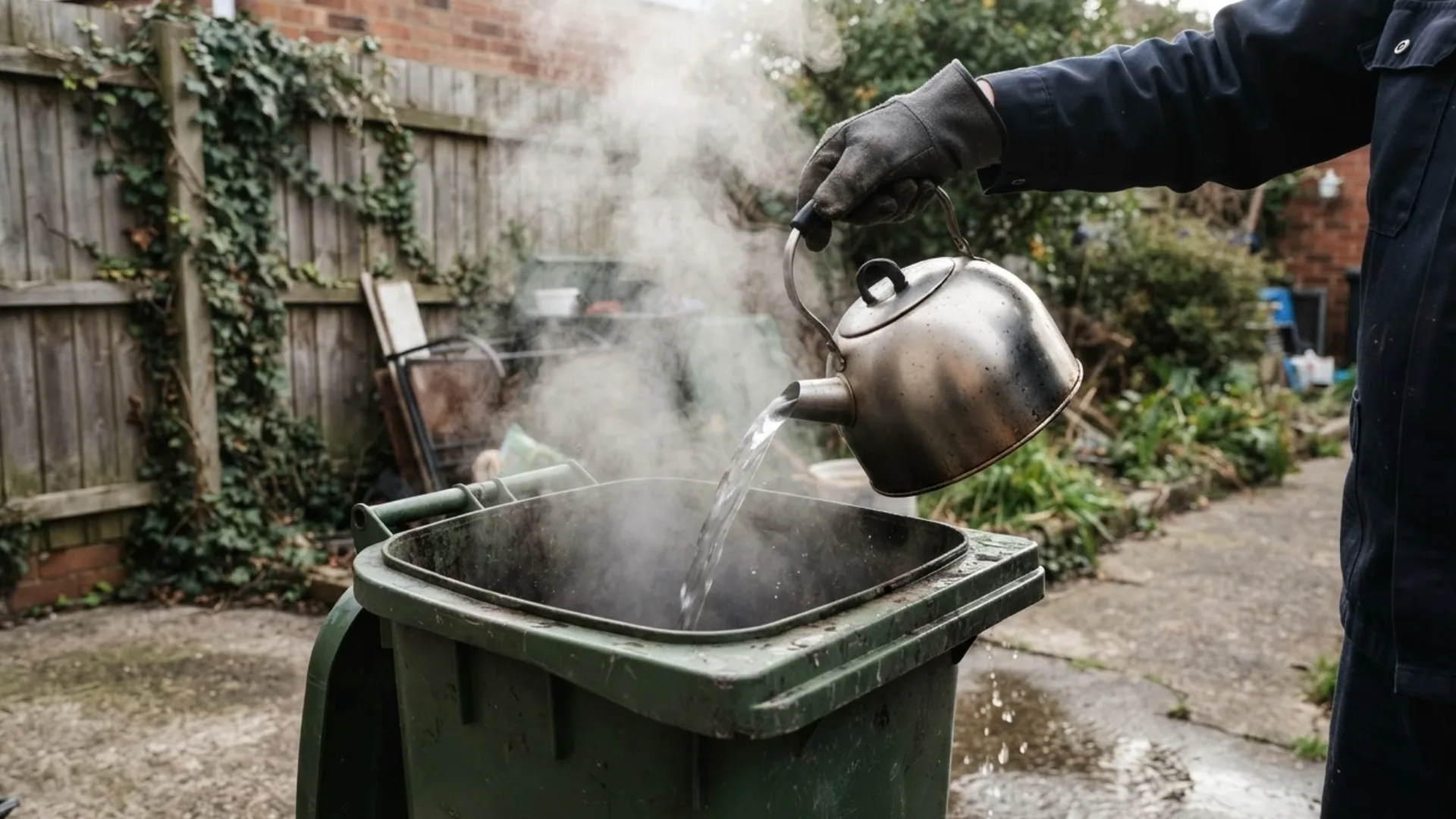
Garbage cans and recycling bins holding food residue give fruit flies a steady place to lay eggs. |
How To Keep Fruit Flies From Coming Back
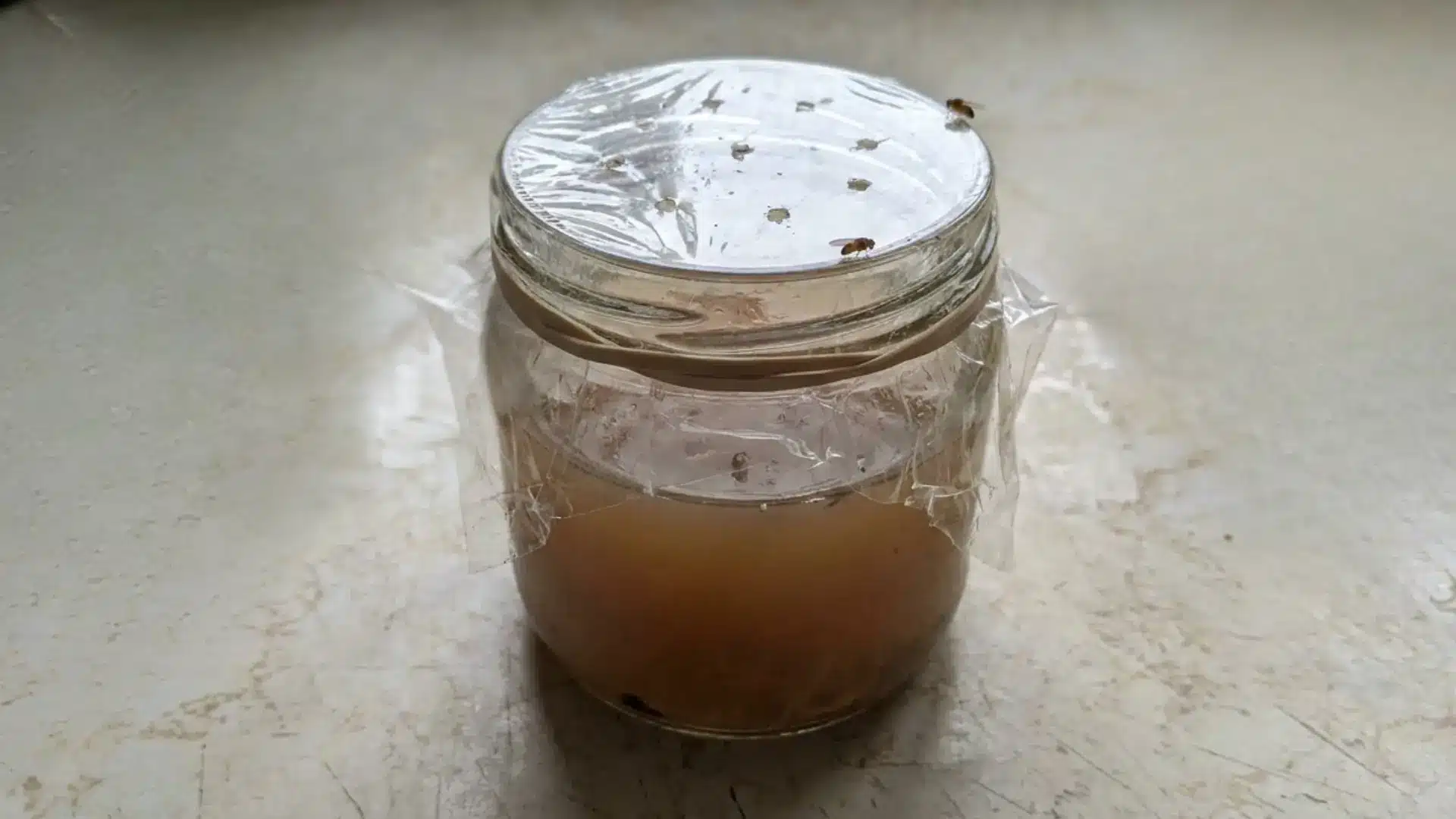
Keeping fruit flies away for good comes down to removing the conditions that let their life cycle continue in the first place.
- Wipe Down Counters: Clean up spills right after they happen, especially anything involving fruit juice or fermenting liquid.
- Rinse Recyclables: Rinse containers before tossing them in the bin so leftover residue doesn’t attract egg-laying females.
- Check Under Sinks: Look around drains periodically, since damp, hidden spots are common places for eggs to go unnoticed.
- Avoid Soaking Dishes: Standing water with food residue for long stretches creates an ideal breeding ground.
- Cover Fruit Bowls: Use mesh covers if produce needs to sit out at room temperature.
- Take Out Trash Often: Regularly empty trash and compost, since both give female flies an easy, moist surface to lay eggs on.
Small habits like these break the cycle before it starts, keeping the next generation from ever hatching in the first place.
If flies keep showing up with no obvious source in sight, checking less obvious breeding spots around the kitchen usually turns up the culprit.
Can Fruit Flies Live Without Food or Water?
Fruit flies can only survive about 2 to 4 days without food or water. Their bodies are small and lose moisture quickly, so they need constant access to sugary liquids and damp surfaces to stay alive.
Without food, they grow weak fast and stop reproducing.
Water is just as important. Even if food is available, they won’t live long without moisture. Dry conditions shorten their lifespan and stop eggs from hatching.
This is why cleaning up spills, sealing fruit, and drying out sinks or drains can help get rid of them.
Once their basic needs are removed, fruit flies die off quickly and stop coming back in large numbers.
Common Myths About Fruit Fly Lifespan
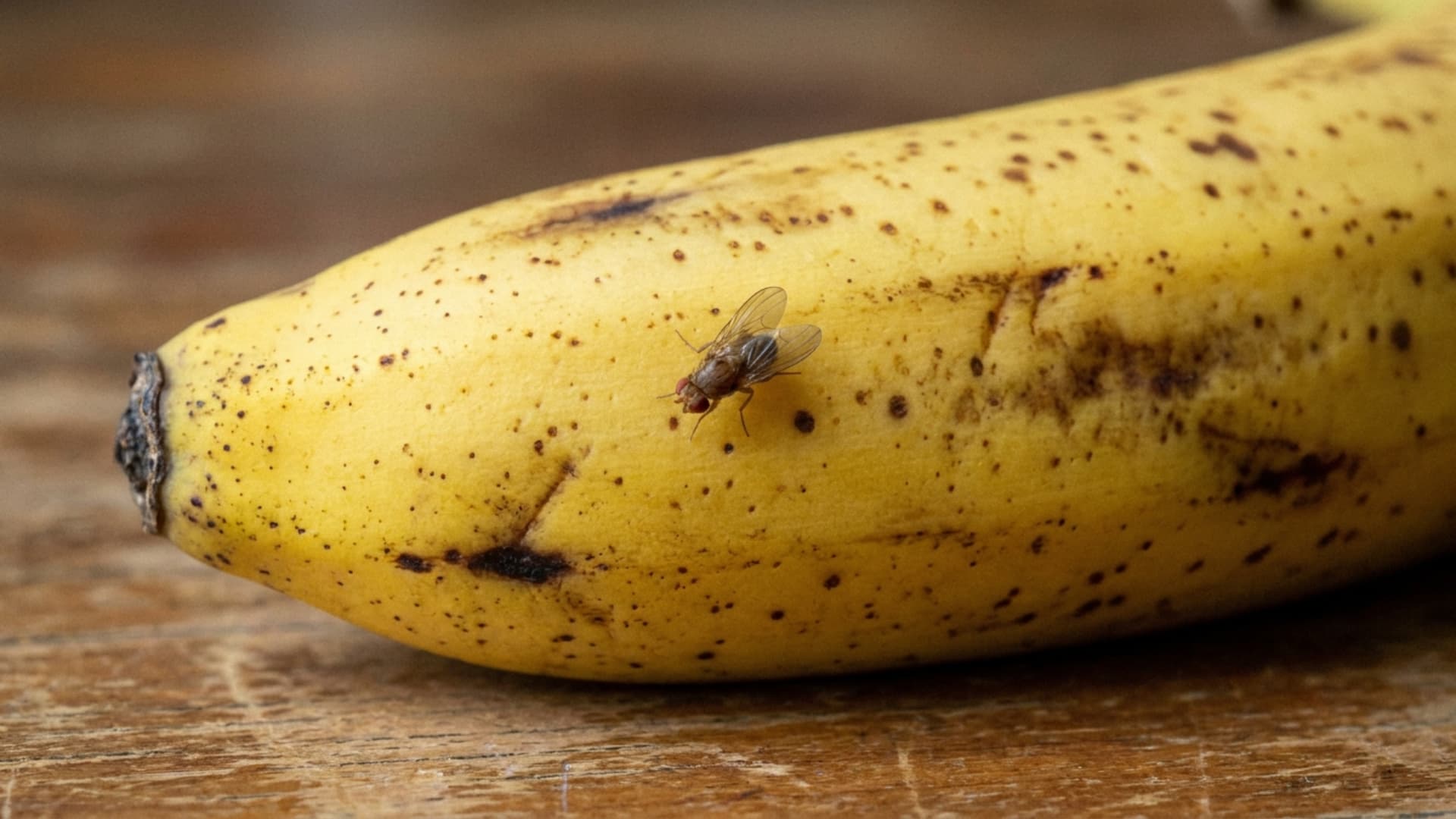
There are many misunderstandings about how long fruit flies live and how they behave. These myths can lead to missed steps and make infestations harder to control:
- Fruit Flies Only Live for a Day: In reality, adults can live for 30 to 40 days in good conditions.
- Killing the Adults Ends the Problem: Eggs and larvae stay behind and grow into more flies.
- They Appear out of Nowhere: Most come from produce, drains, or trash where eggs were already laid.
- Cold Kills Them Right Away: Cold slows them down, but it doesn’t always kill them quickly.
- They only Lay Eggs on Fruit: They also lay eggs in damp places like drains, mops, and trash bins.
- They’ll Go Away if Ignored: Waiting usually gives them more time to multiply.
These myths make control harder. Knowing the facts helps you act early and stop fruit flies for good.
Frequently Asked Questions
Do Fruit Flies Die On Their Own?
Yes, fruit flies have a naturally short lifespan and will die off on their own within a few weeks even without intervention.
Can Fruit Flies Live In Cold Weather?
Cold temperatures slow their development significantly and can kill them outright if exposed for extended periods.
How Many Eggs Can One Fruit Fly Lay?
A single female fruit fly can lay up to 500 eggs over the course of her lifetime.
What Attracts Fruit Flies The Most?
Ripening fruit, fermenting liquids, and damp organic waste are the biggest draws for fruit flies.
Final Thoughts
Fruit flies may seem like a small nuisance, but their fast life cycle and quick reproduction rate explain why they seem to multiply overnight.
Knowing fruit fly lifespan and what speeds up or slows down that process makes it easier to catch an infestation early and stop it at the source.
Removing breeding sites, sealing off food, and staying on top of drains and trash go a long way toward keeping them out for good. A little consistency in cleaning habits makes all the difference over time.
Have your own tricks for keeping fruit flies away? Drop them in the comments below.